





Workplace Safety Standards in Dentistry
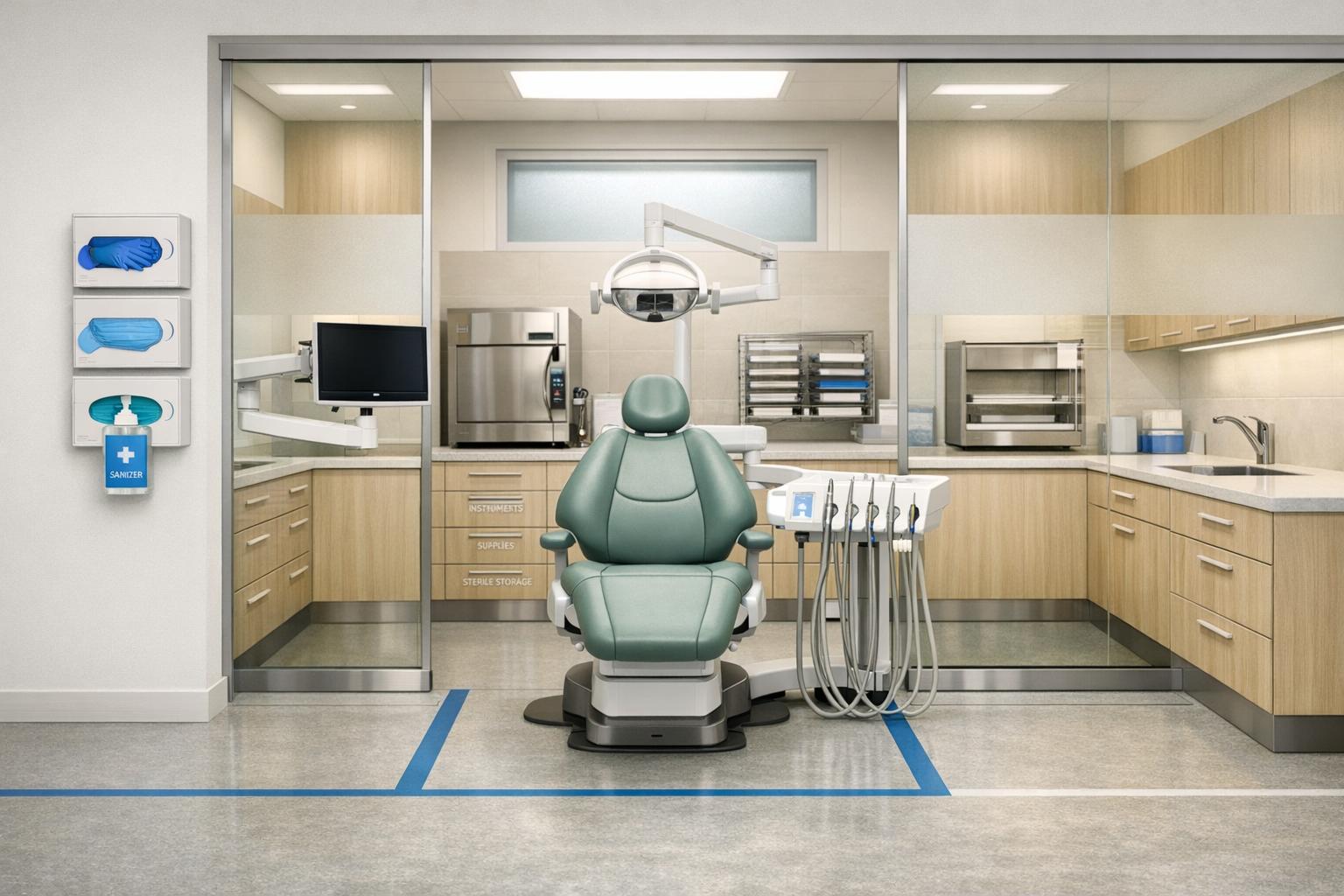
Maintaining safety in dental clinics is essential for protecting staff, patients, and visitors while meeting Australia’s legal requirements. Dental practices must comply with Workplace Health and Safety (WHS) laws, infection control guidelines, and professional standards. Key points include:
- WHS Compliance: Clinic owners (PCBUs) must identify and minimise risks. Each state enforces WHS laws through local regulators like SafeWork NSW or WorkSafe Victoria.
- Infection Control: Adherence to cleaning protocols, sterilisation standards (AS/NZS 4187), and the ADA’s 2025 infection guidelines is mandatory.
- PPE: Proper use of gloves, masks, protective eyewear, and gowns is required to reduce exposure to hazards.
- Training: Staff must undergo training in hazard management, PPE use, and emergency response, with CPD ensuring skills stay current.
- Facility Design: Clinics should have ergonomic layouts, safe material storage, and accessibility features under the Disability Discrimination Act.
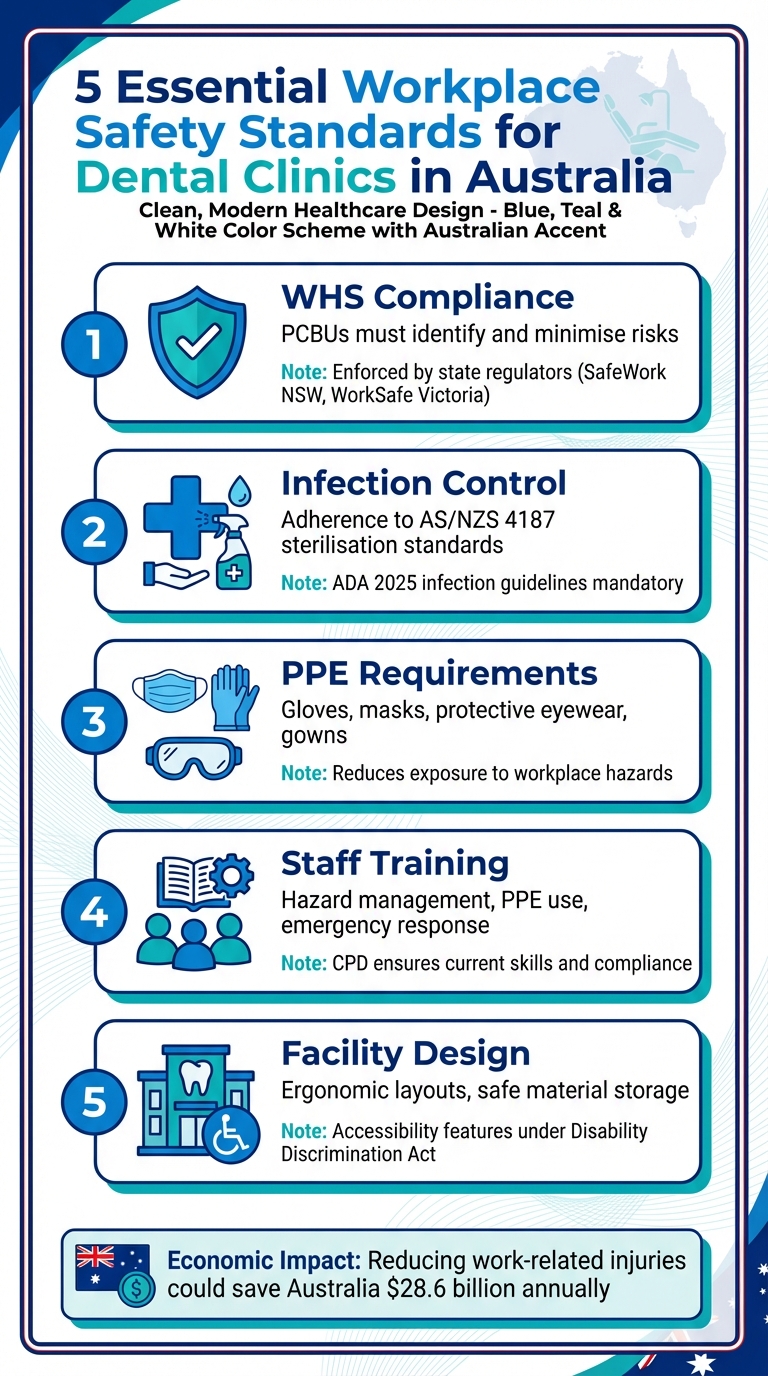
5 Essential Workplace Safety Standards for Dental Clinics in Australia
Dental Offices & Laboratories – Occupational and Environmental Exposure Concerns
Australian Regulations for Dental Workplace Safety
Dental practices across Australia operate under a framework combining professional standards, Workplace Health and Safety (WHS) laws, and technical guidelines. Navigating these overlapping requirements is crucial for ensuring compliance and maintaining safe, effective operations.
Dental Board of Australia and AHPRA Guidelines

The Dental Board of Australia (DBA) and the Australian Health Practitioner Regulation Agency (AHPRA) establish the standards that all registered dental practitioners must follow. These organisations issue specific codes, guidelines, and policies that directly impact clinic operations and safety protocols [5].
Practitioners are obligated to report instances of notifiable conduct, such as practising under the influence or serious breaches of ethical standards. Staying up-to-date with the latest policies, codes, and guidelines is a critical part of maintaining professional accountability [5].
Workplace Health and Safety (WHS) Laws
The Model WHS laws underpin workplace safety requirements in Australia. This includes the Model WHS Act, Model WHS Regulations, and associated Codes of Practice [1][6]. Recent updates to these laws highlight the need for dental practices to monitor and adapt to legislative changes [1].
WHS laws are not enforced at the national level; instead, each state and territory has its own regulatory body, such as SafeWork NSW or WorkSafe Victoria. According to Safe Work Australia, "The Commonwealth, states and territories regulate and enforce WHS laws" [1]. Clinics must consult their local regulator to understand specific compliance requirements and penalties [3].
Dental practices are responsible for addressing workplace hazards like sterilisation chemicals, manual handling risks, and psychosocial factors [1]. A noteworthy change on the horizon involves airborne contaminants: the updated Workplace Exposure Limits (WEL) list becomes mandatory from 1 December 2026. This will require clinics to revise their hazardous chemical management plans [4].
AS/NZS 4187 and NSQHS Standards
Technical standards provide detailed guidance for dental settings. The AS/NZS 4187 standard focuses on the reprocessing of reusable medical devices, outlining strict sterilisation protocols that clinics must follow. Similarly, the National Safety and Quality Health Service (NSQHS) standards set expectations for clinical environments, including surgical areas.
While these technical standards are separate from professional registration requirements, compliance with AS/NZS 4187 and NSQHS standards is essential for maintaining safe practices and meeting professional obligations.
Safe Work Australia plays a key role in shaping WHS policies by developing an evidence base to inform workers’ compensation and safety practices. As the agency explains, "One of our core functions is developing and maintaining an evidence base to inform WHS and workers’ compensation policy and practice" [1]. However, enforcement and direct workplace advice remain the responsibility of state and territory regulators [3].
Infection Control Requirements
Adhering to workplace health and safety (WHS) standards and regulations, infection control measures are crucial for maintaining safe dental practices. The ADA Guidelines for Infection Prevention and Control (Fifth Edition), introduced as the primary reference in 2025, set clear protocols that every dental clinic must follow [10]. These guidelines cover everything from surface cleaning to instrument sterilisation, creating a comprehensive approach to safeguard both patients and staff.
Cleaning and Disinfection Protocols
Dental clinics should be divided into ‘clean’ zones (e.g., waiting areas, offices, storage) and ‘contaminated’ zones (e.g., treatment areas) to minimise the risk of cross-contamination [8].
Surface cleaning is a key priority. Clinical contact surfaces like light switches, drawer handles, and chair controls must be cleaned and disinfected with hospital-grade products daily and between patients unless covered by barriers [8]. For items that are challenging to clean, use disposable plastic covers or surface barriers, replacing them after each patient [7][8].
Instrument reprocessing involves a strict cycle: pre-soaking, cleaning, inspecting, packaging, sterilising, and maintaining records. Organic residues can shield microorganisms, making proper cleaning essential before sterilisation [7][8]. Steam sterilisation (autoclaving) is the preferred method, generally performed at 121°C for 20–30 minutes or 134°C for 2–10 minutes [7]. Research has shown that 67% of sampled dental impressions, crowns, and wax rims contained microorganisms, emphasising the importance of disinfecting laboratory items [7].
Dental unit waterlines (DUWL) also require attention to prevent biofilm buildup. The water used during treatment must have ≤ 500 CFU/mL of heterotrophic bacteria [8]. Flushing waterlines daily and between patients helps maintain this standard [8].
These cleaning protocols are complemented by stringent hand hygiene practices to further reduce infection risks.
Hand Hygiene Standards
The Australian Commission on Safety and Quality in Health Care underscores the importance of hand hygiene, stating:
"Hand hygiene is an essential infection prevention and control strategy" [14].
Staff must follow a "bare below the elbows" policy, which includes avoiding wristwatches, jewellery (except plain wedding bands), artificial nails, or nail polish, and keeping nails short and clean [7][9]. Alcohol-based hand rub (ABHR) should be readily available at the point of care for quick and effective hand decontamination [14]. Hand hygiene must be performed during the Five Moments: before patient contact, before aseptic tasks, after exposure to body fluids, after patient contact, and after touching the patient’s surroundings [9].
The National Hand Hygiene Initiative (NHHI) supports compliance with a structured approach, including education, monitoring, and performance feedback [14]. Regular audits using the NHHI Dental Hand Hygiene Auditing Rules ensure adherence to these practices [11].
Infection Prevention Measures
Infection control relies on standard precautions for all patients and additional measures for those with confirmed or suspected infections [14]. As highlighted by the Australian Commission on Safety and Quality in Health Care:
"Standard precautions are basic infection prevention and control strategies that apply to everyone, regardless of their perceived or confirmed infectious status" [14].
Pre-procedural rinsing with 0.12% chlorhexidine gluconate or a similar antimicrobial mouthwash reduces the microbial load in aerosols [7][8]. Since the COVID-19 pandemic, there has been greater focus on using high-volume evacuation (HVE), dental dams, and effective aerosol management techniques [8].
Proper waste management is another critical aspect. Waste segregation must be precise: offensive (non-infectious) waste goes in tiger bags (yellow with a black stripe), clinical infectious waste in orange bags or UN-approved boxes, and sharps in yellow, puncture-resistant containers [9]. Items marked with a "2" in a circle with a diagonal cross must never be reused or reprocessed [9]. Additionally, all items leaving the clinic – such as impressions, prostheses, and appliances – must be rinsed and disinfected before being handled in a laboratory [7][8].
Reusable medical devices must be cleaned, stored, and transported according to AS 5369:2023 standards [12][13]. Clinics are also required to document all infection control procedures and make an annual compliance declaration to the Dental Board of Australia during registration renewal [12].
Personal Protective Equipment (PPE) Requirements
Personal protective equipment (PPE) plays a critical role in maintaining safety within dental practices. Safe Work Australia defines PPE as:
"Personal protective equipment (PPE) is anything used or worn for safety" [15].
It is the responsibility of the person conducting a business or undertaking (PCBU) to provide PPE to all workers and clinical visitors [17][16]. This ensures compliance with WHS laws and ADA guidelines. Below, we explore the various types of PPE, their correct usage, and proper disposal to help minimise risks in dental clinics.
Types of PPE for Dental Practices
The type of PPE required in dental settings largely depends on the procedures being performed. For instance:
- Gloves are essential for all patient interactions and must be replaced between patients or whenever they become torn or contaminated [18].
- Protective eyewear, such as goggles or face shields, protects against splashes and aerosols commonly produced during dental work [17][18].
- Respirators or surgical masks are chosen based on the task’s need for fluid resistance or filtration [17].
- Protective clothing, like clinical gowns or aprons, serves as a barrier against contamination. It’s important to note that standard uniforms are not classified as PPE [17][19].
The PCBU must ensure that all PPE is task-appropriate, fits well, and is reasonably comfortable for workers [16][19]. When multiple pieces of PPE are used together – such as masks and protective eyewear – they should be compatible and not interfere with each other’s functionality [16].
Dental clinics should also provide clear signage to indicate where and when specific PPE is required [16][19]. This helps reinforce proper usage and enhances overall safety.
Correct PPE Usage and Disposal
Proper use of PPE is essential and must be paired with rigorous infection control measures. The PCBU is responsible for providing detailed instructions on how to correctly don, remove, clean, store, and maintain PPE [16][17]. Workers, in turn, must follow these guidelines diligently [16][19]. Safe Work Australia highlights the importance of compliance:
"Workers could face disciplinary action or prosecution if they refuse to wear or use their PPE, or intentionally misuse or damage their PPE" [16].
Regular evaluations of PPE ensure it remains effective against identified hazards. Any damaged or worn-out equipment must be repaired or replaced promptly [16].
To prevent self-contamination, workers should carefully follow the doffing procedures they learned during training. After removing PPE, immediate hand hygiene is crucial and should align with established infection control protocols. This step is vital for maintaining a safe and hygienic work environment.
sbb-itb-2be92ed
Facility Design and Accessibility Requirements
The design of a dental clinic plays a crucial role in ensuring both workplace safety and high-quality patient care. Clinics must comply with the Model WHS Act and Model WHS Regulations to create environments that promote safe practices and minimise risks for everyone on-site. Here’s how thoughtful design and accessibility contribute to meeting WHS compliance.
Design Standards for Dental Clinics
A well-designed dental clinic helps identify and manage potential hazards. This starts with layouts that prioritise ergonomics and the safe positioning of equipment. For example, storage areas for chemicals and hazardous materials should be located in a way that reduces exposure risks.
Emergency preparedness should also be a key consideration. Clinics need to have clear, unobstructed emergency exits and easily accessible safety equipment. Emergency plans should be built into the design to ensure quick and safe evacuations. Since WHS laws vary across states and territories, clinic owners are encouraged to consult local regulators to ensure their facilities meet all regional requirements.
The placement of equipment is another important factor. The layout should allow staff to move freely between treatment areas while maintaining proper infection control zones. Safe Work Australia’s Codes of Practice provide helpful guidance for creating an effective floor plan. Additionally, recent regulatory updates – like the ban on engineered stone – may impact the choice of materials for clinical surfaces and laboratory spaces, reducing the risk of exposure to hazardous dust.
While safety is a top priority, clinics must also focus on making their facilities accessible to all patients.
Accessibility under the Disability Discrimination Act
Beyond meeting WHS standards, dental clinics are required to provide accessible facilities for patients with disabilities, as outlined in the Disability Discrimination Act. This includes features like wider doorways, spacious reception areas, and treatment rooms that can comfortably accommodate wheelchairs and mobility aids. Accessibility should also extend to emergency procedures, ensuring that all patients can safely evacuate if needed.
Staff Training and Compliance Requirements
Training plays a critical role in ensuring safety within dental workplaces. All registered dental practitioners in Australia must maintain active registration with the Dental Board of Australia through AHPRA under the National Registration and Accreditation Scheme [20]. This registration confirms practitioners meet essential safety requirements, including holding a minimum of $1 million in professional indemnity insurance coverage [20].
Employers also have a duty to identify, assess, and manage workplace hazards. This responsibility involves training staff in hazard management, correct PPE usage, and interpreting Safety Data Sheets (SDS) [1].
Required Training for Dental Staff
Beyond meeting regulatory standards, targeted training helps staff handle everyday risks effectively. Mandatory training programs must cover key areas such as infection control, emergency response, hazard management, and safe equipment use. Emergency plans and incident reporting procedures should also be included in training modules, as required by model WHS laws [1].
Since WHS regulations vary across states and territories, dental practices need to account for local requirements. The Safe Work Australia Codes of Practice offer national guidance, which can be incorporated into training materials to promote consistency within the practice [1].
Continuous Professional Development (CPD)
Continuous Professional Development (CPD) ensures dental professionals stay updated on evolving regulations and best practices. The Australian Work Health and Safety Strategy 2023-2033 provides a national framework for aligning long-term training goals with industry standards [1]. For example, updates to model WHS laws – such as those introduced on 5 December 2025 – should be reviewed and integrated into CPD programs to maintain compliance [1].
Effective CPD programs prioritise practical skills. Training should focus on real-world scenarios, such as identifying hazards and responding to safety incidents. Analysing incident reports and near-miss data can highlight knowledge gaps and tailor training to address specific risks within the clinic. Resources like the Safe Work Australia Consultation Hub offer valuable insights into emerging WHS topics and can guide the development of relevant training content [1].
In addition to technical competencies, CPD should include training on legal and privacy responsibilities.
Privacy and Record-Keeping Requirements
Dental staff must be well-versed in their obligations under privacy laws and the Guidelines for mandatory notifications issued by AHPRA [5]. These guidelines should be incorporated into induction programs to ensure all practitioners understand their reporting responsibilities from the outset. Record-keeping training should address both patient information management and workplace safety documentation, such as incident reports and hazard assessments. Accurate record-keeping not only supports clinic safety but also ensures regulatory compliance.
Training materials should reference the official Codes of Practice published by safety regulators to ensure staff have access to current compliance standards [1]. Regularly reviewing these resources helps keep training programs accurate and relevant. Considering that reducing work-related injuries and illnesses could save the Australian economy an estimated $28.6 billion annually, investing in comprehensive staff training benefits both individual practices and the broader community [1].
Conclusion
Ensuring workplace safety in dental clinics isn’t just about meeting legal requirements – it’s a shared responsibility that safeguards both staff and patients. PCBUs are required to manage and minimise risks as much as reasonably possible, while workers are expected to take reasonable care of their own safety and that of their colleagues. Together, these efforts uphold strong safety standards that benefit everyone involved[2].
The consequences of neglecting safety are clear – avoidable injuries, fatalities, and costly compensation claims. This highlights the importance of identifying hazards, using PPE correctly, and providing thorough staff training. These aren’t just regulatory requirements; they’re essential steps for running a safe and efficient dental practice.
Effective safety management doesn’t just protect individuals – it also has a broader economic impact. By reducing workplace injuries and illnesses, Australia sees an estimated $28.6 billion in economic benefits annually[1]. Importantly, today’s WHS standards go beyond physical safety, addressing mental health risks and recognising the importance of tackling psychosocial hazards alongside clinical ones[2].
Regular communication with staff about health and safety is key to fostering a culture of collaboration and proactive risk management. Keeping Safety Data Sheets updated, having clear emergency protocols, and using resources like the Safe Work Australia Consultation Hub can help dental practices stay compliant with evolving regulations.
Maintaining a safe dental workplace requires ongoing effort – through training, hazard control, and open communication. A comprehensive approach that includes infection control, proper PPE use, thoughtful facility design, and continuous staff education ensures a safer environment for everyone. By prioritising these measures, dental clinics not only protect their teams and patients but also contribute to a stronger, more resilient healthcare system in Australia.
FAQs
What infection control measures are required in Australian dental clinics?
Australian dental clinics are required to adhere to stringent infection control protocols to protect both patients and staff. This involves creating and upholding comprehensive infection prevention strategies, ensuring reusable instruments are properly sterilised, and complying with regulations like AS 5369:2023. Additionally, clinics must apply transmission-based precautions tailored to specific clinical scenarios.
Keeping the environment clean and hygienic is a top priority, bolstered by regular staff training in infection control practices, including vaccinations where needed. Key measures include meticulous hand hygiene, correct use of personal protective equipment (PPE), and the safe disposal of waste. Regular risk assessments and maintaining detailed, traceable records of infection control activities are equally important to ensure compliance and maintain a high standard of safety.
How does a dental clinic’s design impact workplace safety?
The layout of a dental clinic plays a key role in ensuring workplace safety, shaping how efficiently tasks are performed while reducing risks. A smartly designed space provides clear walkways, easy access to emergency exits, and dedicated zones for specific activities. These elements help avoid slips, trips, and overcrowding, creating a safer environment for both staff and patients.
Equally important are facilities for sterilisation, waste disposal, and the safe storage of hazardous materials. These features are essential for maintaining hygiene and preventing contamination. Add to that proper lighting, good ventilation, and ergonomic workstations, and you have a setup that reduces fatigue, improves visibility, and allows staff to work safely and effectively. A well-thought-out clinic design doesn’t just tick the safety boxes – it creates a workplace that’s functional and free from unnecessary hazards.
Why is continuous professional development important for workplace safety in dental clinics?
Continuous professional development (CPD) plays a key role in ensuring workplace safety within dental clinics. It helps dental professionals stay informed about the latest techniques, regulations, and safety protocols. In Australia, CPD isn’t just encouraged – it’s a mandatory requirement for maintaining professional registration and delivering safe, high-quality care.
Through CPD, practitioners can deepen their understanding of infection control, refine clinical procedures, and familiarise themselves with new and emerging technologies. It also ensures they remain aligned with the policies and guidelines established by the Dental Board of Australia. This ongoing commitment to education fosters a sense of accountability and encourages continuous improvement. Ultimately, it bolsters patient safety and strengthens public trust in dental care services.
Related Blog Posts
- Compliance Audits in Australian Dental Practices
- Australian Standards for Dental Tool Disinfection
- Australian Rules for Dental Waste Disposal
- Guide to Laser Safety in Periodontal Care
Important Notice: Any surgical or invasive procedure carries risks. Before proceeding, you should seek a second opinion from an appropriately qualified health practitioner.
Individual results may vary. The information provided in this article is for educational purposes only and does not constitute medical advice.
Checkout Related Blogs




Get in touch with us
For more information, call us now to start feeling better. Or fill the form below to make appointment
The Latest News from Complete Smiles
How to Clean Clear Plastic Retainers
Checklist for Choosing Wearable Dental Devices
Checklist for Choosing Cloud AI Platforms in Dentistry
Complete Smiles Bella VistaAccepts All Major Health Funds, Including





