





Compliance Audits in Australian Dental Practices
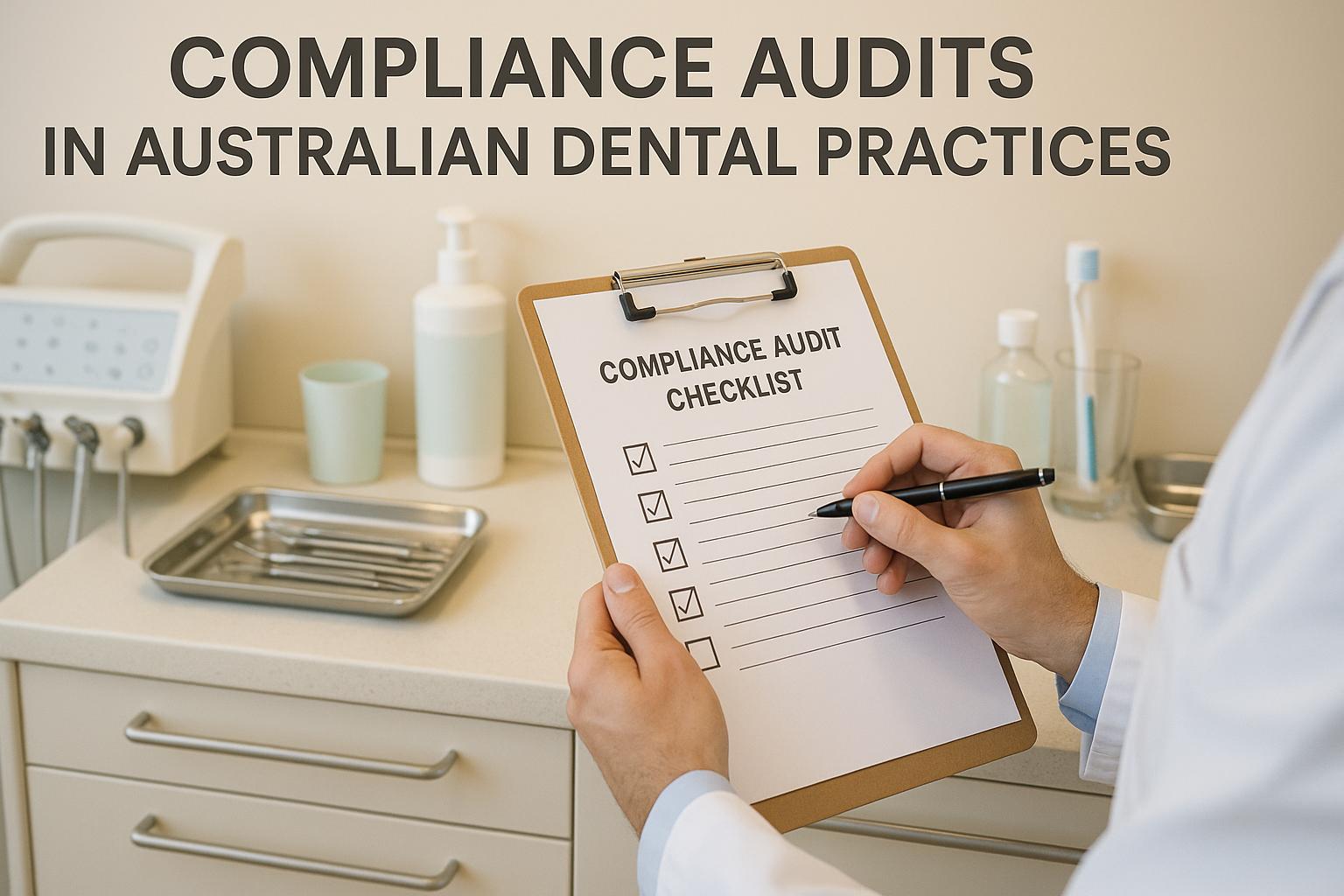
Compliance audits are critical for ensuring Australian dental practices meet legal, regulatory, and patient safety standards. These audits focus on infection control, staff training, and adherence to advertising and sterilisation guidelines. Non-compliance can lead to financial penalties, legal issues, or reputational harm. Key regulatory bodies like the Dental Board of Australia and AHPRA oversee these processes, while tools like the ADA’s guidelines help practices stay aligned with current requirements.
Key Takeaways:
- Main Focus Areas: Infection control, advertising compliance, staff training, and sterilisation.
- Consequences of Non-Compliance: Legal penalties, reputational damage, and patient safety risks.
- Supporting Bodies: Dental Board of Australia, AHPRA, and ADA.
- Preparation Tips: Maintain up-to-date documentation, conduct regular self-audits, and ensure staff training.
By prioritising audits and quality assurance programs, dental practices can ensure compliance, improve safety, and build trust with patients.
S1 EP5 | Streamlining Sterilisation & Inventory Management with Steri ‘n’ Stock | Damien Drummond
Key Regulations and Standards for Australian Dental Practices
Australian dental practices must adhere to a range of regulations designed to uphold patient safety and maintain professional standards. Familiarity with these rules is essential, particularly when preparing for compliance audits, as they form the benchmark for assessment.
Infection Control Standards
The Dental Board of Australia’s infection control guidelines are a cornerstone of clinical safety. These guidelines require practitioners to follow strict protocols for infection prevention, including hand hygiene, the use of appropriate personal protective equipment (PPE), and the sterilisation of instruments [5].
Dr John Lockwood AM, Chair of the Dental Board of Australia, emphasised the importance of these standards:
"We take breaches in infection control standards seriously." [6]
This commitment to safety was demonstrated when the NSW Dental Council suspended eight dental practitioners and imposed conditions on six others after patient complaints triggered investigations. Practitioners are also expected to follow the National Health and Medical Research Council‘s Australian Guidelines for the Prevention and Control of Infection in Healthcare [6]. Additionally, compliance with Australian Standards, such as AS 5369:2023 for reprocessing reusable medical devices, is mandatory [5].
Required Documentation and Policies
Proper documentation is critical for demonstrating compliance. Practices must maintain both hard copy and electronic versions of essential records to ensure accessibility for all practitioners [2].
Key documents include the ADA’s Guidelines for Infection Prevention and Control (5th Edition) and a practice-specific Infection Prevention Policy & Procedure Manual. These should reflect daily workflows and serve as reference materials during staff training [2]. Other essential documents include the Dental Board of Australia’s Code of Conduct, Infection Control Fact Sheet, and Reflective Tools [5]. Practices should also have access to the Australian Immunisation Handbook and the Communicable Diseases Network Australia‘s guidelines [5].
State-specific requirements add further complexity. For instance, Queensland mandates the development and maintenance of an Infection Control Management Plan (ICMP) in addition to federal requirements. Practices in Queensland must also keep a staff register and records of annual infection prevention training [2].
These documentation practices support the safety frameworks outlined in the NSQHS Standards.
National Safety and Quality Health Service (NSQHS) Standards
Although primarily aimed at hospitals and larger healthcare facilities, the NSQHS Standards are becoming increasingly relevant for dental practices. These standards prioritise patient safety, quality improvement, and effective information governance. For dental practices, this includes implementing comprehensive Data and Information Management and Data Breach Response Plans [7].
Navigating this regulatory environment requires collaboration among AHPRA, professional dental organisations, and dental practitioners. The intricate web of standards highlights the need for thorough preparation and continuous attention to compliance to meet audit requirements successfully.
The Compliance Audit Process
The compliance audit process is built on established standards and guidelines to ensure dental practices meet regulatory requirements. By understanding this process, dental practices can better prepare and respond when audits take place. The process includes several stages, from initial preparation to post-audit reporting, with clearly defined roles for every team member.
Types of Compliance Audits
In Australia, dental practices typically face three main types of compliance audits, each with a specific purpose to uphold regulatory standards.
- Internal audits: These are conducted within the practice to proactively identify compliance gaps [8]. They allow practices to review and improve their operations, ensuring they align with their objectives.
- External audits: Independent auditors or regulatory bodies carry out these audits to confirm compliance with industry regulations. For example, practices may be assessed against the National Safety and Quality Primary and Community Healthcare (NSQPCH) standards [8]. Successfully completing these audits often results in official certification, signifying adherence to required standards [10].
- Self-audits: These are part of ongoing quality assurance efforts, involving regular checks to ensure staff follow consistent procedures [2]. Self-audits help identify issues that need immediate attention between formal audits.
Together, these audits provide a structured framework for maintaining compliance and preparing for more formal assessments.
Steps in the Audit Process
The compliance audit process is systematic, starting long before the auditors arrive and continuing after the audit is completed.
- Preparation phase: This step involves gathering all relevant documentation, ensuring it meets NSQPCH requirements [8]. Key documents include infection control policies, staff training records, incident reports, and quality assurance materials. Using digital tools can make retrieving and organising these documents more efficient [8].
- On-site inspection: Auditors visit the practice to review records, interview staff, and observe daily operations. They assess how well the practice adheres to laws, regulations, and industry standards [10]. Key areas of focus include infection control protocols, staff competencies, and incident management procedures.
- Post-audit reporting: After the audit, findings and recommendations are formally presented. These reports highlight compliance issues, suggest resolution measures, and outline controls to address deficiencies [10]. Practices are often required to create action plans to resolve non-compliance areas [9].
Each phase relies on clear communication and defined roles to ensure smooth execution.
Roles and Responsibilities
For an audit to succeed, everyone in the dental practice needs to understand their responsibilities.
- Practice owners and management: They are primarily responsible for ensuring that compliance systems are in place and effective. This includes adhering to the National Law, implementing auditor recommendations, and allocating resources to maintain standards [4][10].
- Compliance auditors: These independent professionals evaluate the practice’s adherence to regulations and internal policies [10]. They identify risks, recommend corrective actions, and work with management to implement necessary changes.
- Clinical staff and support personnel: All team members must be prepared to demonstrate compliance during audits. This includes maintaining proper training and certifications for infection control procedures [9]. Practitioners must meet the regulatory requirements set by AHPRA [4].
- Infection Control Coordinators: These individuals play a key role during audits, often acting as the primary point of contact for auditors. They manage essential documentation, oversee staff training, and liaise with auditors throughout the process [2].
Implementing a quality assurance program further supports compliance by establishing a "checking, proving, and recording" methodology [2]. This approach ensures all team members are clear on their responsibilities and can confidently demonstrate compliance during audits.
sbb-itb-2be92ed
Main Areas Assessed in Compliance Audits
Compliance audits in Australian dental practices focus on key operational areas that are crucial for maintaining patient safety and meeting regulatory standards. By understanding these focus areas, practices can better prepare and ensure they consistently uphold high standards. Below, we break down the main areas that auditors closely examine.
Infection Prevention and Control
Infection prevention and control is a top priority during compliance audits. Auditors thoroughly review documentation, including the infection control management plan (IPMP), sterilisation validation records, and daily monitoring logs [3].
The sterilisation process is under intense scrutiny, with auditors ensuring that practices comply with AS 5369:2023 standards for reprocessing reusable medical devices [5]. This includes checking maintenance logs for equipment, biological test results, and staff competency in operating sterilisation tools. Quality assurance programs must include detailed records of daily monitoring to meet audit requirements [3].
Personal protective equipment (PPE) protocols are another key focus. Practices must demonstrate strict adherence to these protocols, and hand hygiene compliance rates are reviewed. Accredited practices, for instance, report higher hand hygiene compliance rates (63%) compared to non-accredited facilities (48%) [11].
Auditors also assess environmental cleaning practices, reviewing cleaning schedules, product specifications, and staff training records. Proper handling of contaminated instruments, waste disposal, and surface disinfection protocols are essential. Research highlights that accredited dental practices achieve an average infection prevention and control compliance score of 83%, compared to 76% for non-accredited practices [11].
Staff Training and Competency
Auditors place significant emphasis on staff training and competency to ensure all team members are equipped to maintain compliance. Clinical staff are required to complete annual infection control training and undergo regular competency assessments, especially when new equipment or procedures are introduced [3].
The Australian Dental Council‘s professional competencies serve as the benchmark for evaluating whether practitioners are prepared for safe practice [13][12]. Training documentation should cover a wide range of topics, including infection control, emergency protocols, and updates on regulatory requirements. Additionally, training often includes components on health promotion to support preventive care and patient education [14].
Incident Management and Quality Assurance
Auditors also evaluate how practices manage clinical incidents, focusing on systems that ensure learning and improvement while reinforcing a commitment to patient safety.
Clinical governance frameworks are a critical part of this process. Auditors assess how practices implement structured approaches to maintain safety and quality, including risk management and incident response procedures [16].
Quality assurance programs play a major role here. Auditors review systematic monitoring and evaluation processes that help practices maintain minimum quality standards. This includes examining regular review cycles, corrective action plans, and evidence of ongoing improvement initiatives [16].
Incident reporting systems are another area of focus. Auditors ensure that these systems clearly define reporting responsibilities and that documentation tracks incident analyses, recommendations, and follow-up actions [15]. Practices are expected to use incident data to drive quality improvement efforts and update their systems in response to regulatory changes.
Maintaining Compliance and Preparing for Future Inspections
Staying compliant isn’t just about passing audits – it’s about having systems in place that ensure ongoing adherence to regulations and a commitment to safe patient care. Dental practices that prioritise continuous monitoring and improvement are better equipped to meet these expectations consistently.
Regular Self-Audits and Continuous Improvement
Self-audits are a cornerstone of effective compliance management. The Dental Board of Australia underscores this responsibility, stating:
"As a registered dental practitioner it is your responsibility to ensure that you comply with the requirements of the Board’s Guidelines. The Board has developed the tool so you can reflect on how well you comply with the requirements in your workplace" [17].
By conducting regular self-audits, practices can identify compliance gaps and address them through discussions with colleagues or employers [17]. This systematic review ensures operations align with current standards and highlights areas for improvement.
External audits and self-assessment tools can further validate compliance. For example, the Dental Board of Australia offers tools specifically designed to help practitioners evaluate and enhance their infection control practices [18].
Documentation plays a critical role in self-audits. Audit reports should be securely maintained for regulatory purposes and reviewed regularly to support ongoing improvement efforts. A strong quality assurance programme can integrate a "checking, proving, and recording" approach across all practice operations [2].
In addition to audits, updating policies and training staff are essential steps for maintaining long-term compliance.
Policy Updates and Staff Development
Keeping practice policies up to date with changing regulations is non-negotiable. The introduction of AS 5369:2023 is an excellent example of how practices must adapt. Released in December 2023, this standard replaces AS/NZS 4815:2006 and AS/NZS 4187:2014, establishing uniform requirements for cleaning, disinfecting, and sterilising reusable medical devices.
To align with AS 5369:2023, practices should conduct a gap analysis to assess their current reprocessing methods. According to Advisory PCHS24/01, this analysis must be completed by 30 June 2025. After identifying gaps, practices should implement risk mitigation strategies and prioritise necessary changes – ideally during routine updates like validation cycles [19][20].
Training staff is just as important as updating policies. As one guideline emphasises:
"It is imperative that all staff understand the importance of the infection control procedures and why they must follow them exactly and consistently. The onus remains, however, on you as the registered dental practitioner to ensure that the infection control procedures are in place and are routinely followed" [5].
Regular professional development focused on infection control is key. The Australian Dental Association (ADA) supports practitioners with resources such as the Guidelines for Infection Prevention and Control and an Infection Control Manual Template [5].
Practices should document identified gaps, prioritise corrective actions, and ensure all staff are familiar with changes. The ADA’s Guidelines for IPC 5th Edition highlight updates in blue text, making it easier to spot adjustments [20].
Quality Assurance Programs
Once policies are updated and staff are trained, a robust quality assurance programme becomes essential. As the ADA Board explains:
"Clinical governance frameworks provide an environment for dental practitioners to provide optimal clinical care. Dental practices should ensure good clinical governance systems are in place to ensure quality and safety of care" [16].
Quality assurance involves systematically monitoring and evaluating services to ensure that minimum standards are consistently met [16]. This not only supports compliance but also reinforces high-quality care across all operations.
Risk management, including incident management, should be part of these frameworks. Appointing an Infection Control Coordinator can significantly enhance quality assurance efforts. This role is responsible for implementing and reviewing the Infection Control Management Plan (ICMP) and ensuring infection control procedures are consistently followed.
Regularly reviewing and updating the ICMP – at least once a year – is crucial [2]. Consistency in quality care depends on standardised procedures across the team. As the ADA notes:
"Continuity of quality care can only be assured if all staff undertake and perform tasks in the same manner" [2].
Achieving this requires clear procedures, comprehensive training, and ongoing monitoring.
Quality assurance activities should be adaptable for both private and public dental practices. Online self-assessment tools can complement these efforts by identifying areas for improvement and reinforcing the "checking, proving, and recording" methodology central to effective quality assurance [2].
Conclusion
Compliance audits play a vital role in ensuring high-quality patient care while safeguarding the reputation of dental practices. These audits are not just about meeting regulations – they’re about improving care standards and streamlining operations across Australian dental practices.
A recent report from the NSW Environment Protection Authority highlighted a concerning gap: many dental practices and professionals lack a full understanding of their legal and regulatory responsibilities. This shortfall can lead to serious risks, including regulatory penalties and compromised patient safety[1]. Compliance audits provide a clear path to address these challenges, helping practices close those gaps and improve on multiple levels.
By embracing compliance audits as opportunities for continuous improvement – through regular self-assessments, thorough staff training, and strong quality assurance systems – dental practices can set themselves up for long-term success. These efforts not only help identify areas needing attention but also reinforce existing best practices, creating a workplace culture where meeting regulations becomes second nature[21].
To succeed, practices should focus on a few key strategies: staying informed about regulatory updates, consistently applying the "checking, proving, and recording" method to ensure compliance, and standardising procedures across all staff. As regulations change, the ability to adapt and respond proactively is crucial.
Beyond meeting legal requirements, investing in robust compliance management builds trust – whether it’s with patients, team members, or regulatory authorities. This commitment to safety and governance strengthens the foundation for sustainable growth, professional fulfilment, and improved patient outcomes across the dental sector in Australia.
For practices aiming to raise their compliance standards, resources such as established guidelines, self-assessment tools, and professional development opportunities are readily available. When used strategically, these audits can drive excellence in both patient care and practice management.
FAQs
What are the common compliance challenges faced by dental practices in Australia during audits?
Australian dental practices face a range of compliance hurdles during audits. Some of the most common include incomplete patient records, falling short on infection control standards, and violating advertising regulations. These issues often stem from poor documentation, incorrect sterilisation practices, or promotional materials that don’t align with regulatory expectations.
Other notable challenges include overloading autoclaves, lacking proper radiation licences, and not adhering to occupational health and safety requirements. Tackling these concerns head-on is crucial for maintaining compliance, ensuring patient safety, and delivering top-notch care.
What steps can Australian dental practices take to prepare for a compliance audit?
To get ready for a compliance audit, Australian dental practices need to ensure they’re meeting the standards set by the Dental Board of Australia and other regulatory authorities. A good starting point is to review critical areas such as infection control protocols, sterilisation procedures, and the accuracy of policy and procedure documentation.
Regular internal audits are a smart way to spot and fix any compliance issues before they become a problem. Keeping comprehensive records is equally important – this includes staff training logs, audit findings, and documented practice policies. These records serve as proof of your commitment to meeting required standards. Additionally, ongoing staff education about compliance requirements ensures everyone is well-prepared and up to date.
By aligning daily operations with national guidelines and staying on top of documentation, dental practices can approach compliance audits with confidence, all while maintaining top-notch patient care and safety.
Why is staff training essential for infection control compliance in Australian dental practices?
Staff training plays a key role in maintaining compliance with infection control standards in Australian dental practices. It ensures team members are well-informed about the latest guidelines provided by organisations like the Australian Dental Association (ADA) and the Dental Board of Australia. This training covers essential areas such as sterilisation methods, disinfection procedures, and the correct use of personal protective equipment (PPE).
Ongoing education does more than just minimise the risk of infection – it also ensures practices meet both legal and professional obligations. By attending workshops and courses, staff can stay updated on changing protocols, safeguarding the health of patients and the dental team alike.
Related Blog Posts
- Cultural Sensitivity in Dentistry: Key Challenges and Solutions
- Dental Equipment Inspection: Key Requirements
- Best Practices for Dental Patient Pamphlets
- How AHPRA Enforces Dental Advertising Rules
Important Notice: Any surgical or invasive procedure carries risks. Before proceeding, you should seek a second opinion from an appropriately qualified health practitioner.
Individual results may vary. The information provided in this article is for educational purposes only and does not constitute medical advice.
Checkout Related Blogs




Get in touch with us
For more information, call us now to start feeling better. Or fill the form below to make appointment
The Latest News from Complete Smiles
How to Clean Clear Plastic Retainers
Checklist for Choosing Wearable Dental Devices
Checklist for Choosing Cloud AI Platforms in Dentistry

Complete Smiles Bella VistaAccepts All Major Health Funds, Including





