



Best Practices for Dental Patient Pamphlets
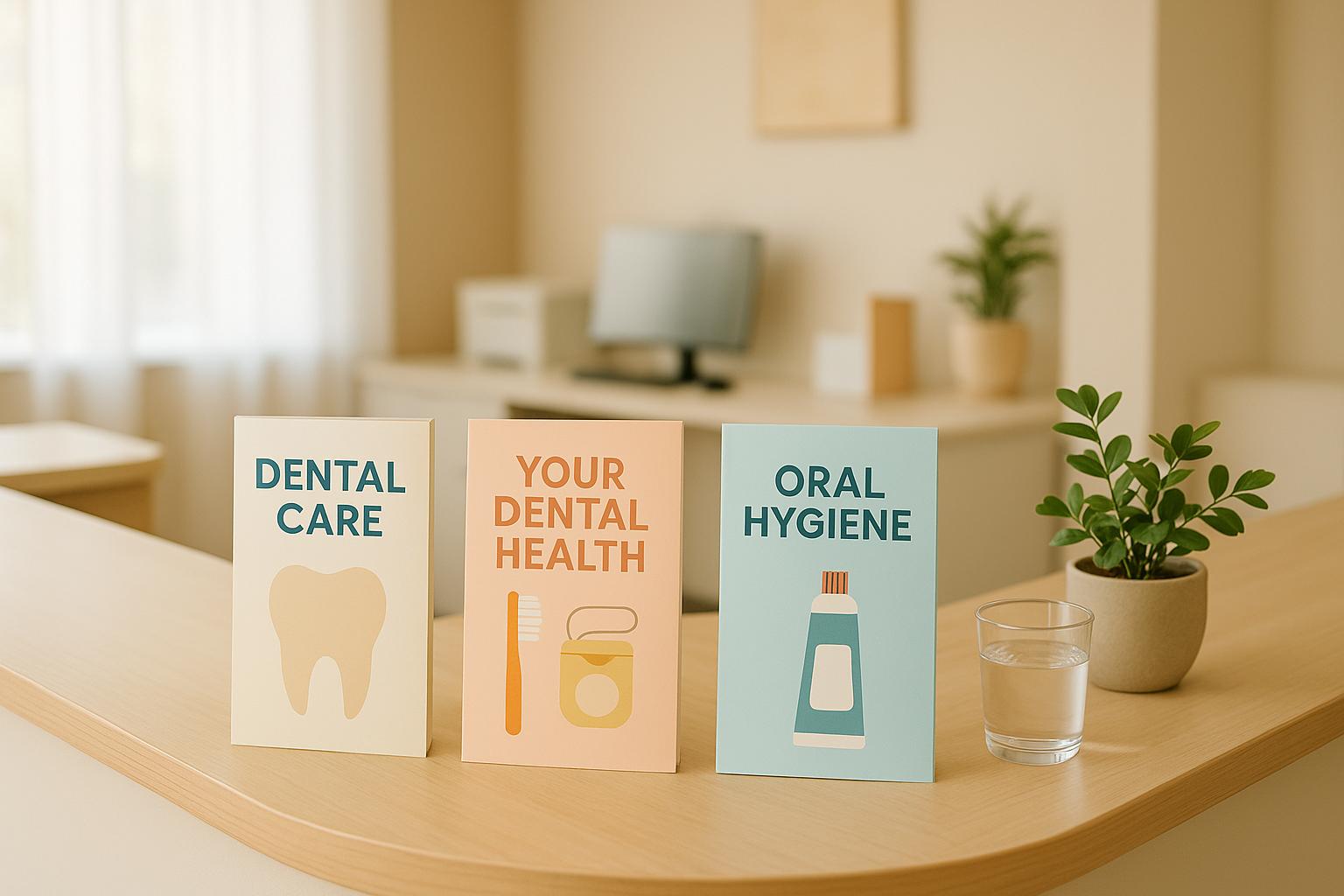
Creating dental pamphlets that are clear, compliant, and helpful is crucial for improving patient understanding and oral health outcomes. Here’s what you need to know:
- Use Plain English: Avoid medical jargon like "periodontal disease." Stick to simple terms like "gum disease."
- Design for Readability: Use large fonts, clear layouts, and visuals to break down complex information.
- Reflect Diversity: Include culturally relevant content and offer translations for non-English speakers.
- Ensure Accessibility: Use high-contrast colours, readable fonts, and easy-to-follow formats for patients with disabilities.
- Keep Content Accurate: Regularly update pamphlets to align with current Australian dental guidelines and standards.
- Engage Patients: Gather feedback to improve materials and address real patient concerns.
Following these steps ensures your pamphlets are effective, easy to understand, and meet Australian regulations.
Patient Education for Dental Health
Common Problems When Creating Dental Pamphlets
Creating dental pamphlets that are both compliant and engaging for patients can be tricky. Australian dental practices often face challenges due to the complexity of dental information and the diverse needs of their patients. Addressing these common issues can lead to more effective communication tools.
Avoiding Medical Jargon
One of the biggest hurdles is the use of medical jargon, which can confuse and alienate patients. Research shows that up to 79% of patients struggle to understand medical terms, particularly younger individuals, urban populations, and those with less formal education [2]. For instance, terms like "periodontal disease" instead of "gum disease" or "prophylaxis" rather than "cleaning" can overwhelm readers. This confusion often leads patients to disengage or seek unreliable information elsewhere.
Medical professionals, on average, use two jargon terms per minute when speaking with patients [3]. As Courtney Genovese, RN, from Cleveland Clinic Hillcrest Hospital, explains:
"Terms like ‘ambulate’ instead of ‘walk’ and ‘erythematous’ instead of ‘red’ can lead to misunderstandings and put unnecessary distance between caregivers and their patients. On the other hand, simple, clear language improves communication and empowers patients to make better decisions about their own healthcare." [4]
Interestingly, while 99% of dentists claim to use simple language, only 7% regularly employ teach-back techniques to confirm understanding [3]. This gap highlights the ongoing difficulty in making dental information truly accessible. Striking the right balance between detail and simplicity remains an ongoing challenge.
Balancing Information and Readability
Dental pamphlets often struggle to provide enough detail without becoming overwhelming. Materials designed for lower literacy levels sometimes lack depth, while more comprehensive brochures often require advanced reading skills. Many dental pamphlets are written at a reading level higher than Year 12, far exceeding the recommended sixth-grade level for health materials [13, 17]. In fact, one study found that the average Flesch-Kincaid reading grade level of dental brochures was 9.15 [5].
When pamphlets try to cover too many topics at once, patients may feel overloaded and abandon the material. Dense text, small fonts, and cluttered layouts can make matters worse. Research has shown that low literacy levels are linked to increased use of emergency care and hospitalisation, as well as higher healthcare costs [6]. Addressing these readability and design issues is crucial to ensure all patients can benefit from the information.
Meeting Accessibility and Diversity Needs
Australia’s multicultural population adds another layer of complexity to dental pamphlet design. Patients from various linguistic and cultural backgrounds may find direct translations unhelpful if they fail to account for cultural nuances. Approximately 9% of the US population has limited English proficiency [7], and similar challenges are present in Australia. Poorly translated materials can lead to misunderstandings and reduce the pamphlet’s effectiveness.
Accessibility also includes designing for patients with disabilities. Choices like font size, colour contrast, and layout can make a significant difference for individuals with visual impairments. Cultural differences also play a role – imagery and language that resonate with one group may not be as effective for another. Tailoring materials to reflect these differences can improve their impact.
In addition to design improvements, staff training is essential. Ensuring that team members are equipped to explain and distribute materials effectively can bridge communication gaps and make pamphlets more useful for patients from all backgrounds.
How to Create Effective Dental Pamphlets
Creating dental pamphlets that effectively communicate with patients requires careful consideration of language, design, and content accuracy. By addressing common challenges and adhering to Australian healthcare standards, you can ensure your pamphlets are both helpful and professional.
Using Plain English and Australian Standards
Clear and simple language is key to effective communication. The Australian Dental Association (ADA) emphasises the importance of using plain English in patient education materials, helping individuals better understand dental health information and make well-informed decisions [9]. Replace technical jargon with everyday terms to ensure clarity.
It’s also crucial to align pamphlets with Australian standards. This includes using Australian spelling (e.g., "colour" instead of "color"), metric measurements (such as millimetres for tooth dimensions), the Australian date format (DD/MM/YYYY), and the correct display of currency in Australian dollars ($). Phone numbers should follow Australian formatting conventions as well.
Adhering to these standards ensures that your materials are accessible and relevant to Australian patients.
Improving Visual Design and Layout
A well-designed layout can significantly enhance the readability and impact of your pamphlet. Breaking down complex information into dot points or short sections makes it easier for patients to digest [10]. Adding visuals like diagrams, photos, or labelled images can further aid understanding, especially for complex dental concepts [10].
Research shows that simple layouts with plenty of white space and clearly formatted bullet points or numbered lists are more effective for delivering health messages [10]. While bright colours and creative fonts can grab attention, it’s important to maintain a balance between visual appeal and professionalism. Always use a font size of at least 12 points and ensure strong contrast between text and background to accommodate patients with visual impairments.
Including Evidence-Based Content
Accuracy is just as important as presentation. All information in your pamphlet must be factual, up-to-date, and based on reliable sources. This not only builds trust but also ensures compliance with Australian healthcare guidelines.
The ADA’s Therapeutic Guidelines: Oral and Dental serve as a benchmark for evidence-based practices in dentistry [11]. Consulting these guidelines can help you provide accurate and relevant information. As the ADA advises, "the advice should be used in conjunction with clinical judgement and within the scope of practice of the clinician" [11].
To maintain accuracy, establish a regular review process for your pamphlet content. This could involve periodic updates to reflect current clinical guidelines, consulting dental specialists for complex topics, and removing outdated information that could mislead patients.
When discussing treatment options or outcomes, provide realistic timelines, factual descriptions, and evidence-backed success rates. Avoid creating unrealistic expectations or promoting unnecessary procedures. This approach ensures transparency and helps patients make informed choices about their dental care.
sbb-itb-2be92ed
Ways to Improve Patient Engagement and Access
Improving patient engagement isn’t just about good content and design – it’s also a way to make dental care more accessible. For dental pamphlets to work effectively in Australia, they need to reflect the nation’s cultural diversity while presenting information in a way that’s easy to understand and act on.
Using Design That Reflects Cultural Diversity
Incorporating the cultural richness of Australian communities into dental materials can make a big difference. When people see their own experiences and backgrounds reflected in the content, they feel acknowledged and are more likely to engage. This isn’t just about using diverse images – it’s about recognising different health beliefs and communication styles. For example, in Greater Western Sydney, where 6.6% of the population speaks Arabic at home [10], tailoring materials to include culturally relevant content can help connect with this community more effectively.
Offering Information in Multiple Languages
Language barriers are a common issue that can delay access to dental care. A Sydney study from 2017 showed that many new migrant families often turn to emergency departments for non-urgent issues because they don’t understand how to access other health services [12]. Providing pamphlets in multiple languages – like those created by Healthdirect Australia or Bankstown-Lidcombe Hospital – can make a huge difference. Dual-language pamphlets, featuring simplified English alongside translations, are particularly useful. Pairing these efforts with plain-language explanations of dental procedures ensures that the information is clear and accessible to everyone.
Breaking Down Complex Dental Information
Dental care can seem complicated, but making the information simple and visual can bridge the gap. Tools like diagrams, X-rays, and animations can help patients better understand procedures. Analogies, like comparing a treatment plan to a roadmap, can also make explanations relatable. Including checklists, tables, and step-by-step guides, supported by visuals, helps clarify procedures, risks, and aftercare instructions. By presenting information in manageable chunks, patients are more likely to feel informed and confident about their care.
Keeping Pamphlet Content Current and Accurate
With dental care constantly evolving, outdated pamphlets can quickly lose their relevance. Keeping your pamphlets current ensures patients receive the most accurate information, empowering them to make informed decisions about their oral health.
Setting Up a Review Process
A structured approach to reviewing your pamphlets helps ensure they remain accurate and relevant. Dental practitioners should regularly update all patient communication materials, including pamphlets. Start by creating a review calendar that aligns with regulatory requirements. For instance, infection control protocols are reviewed annually, so update your materials promptly whenever new regulations or significant treatment advancements emerge.
"As a registered dental practitioner, you have a legal obligation to comply with the Dental Board of Australia’s policies and guidelines on infection control." [13]
Develop a quick audit checklist to evaluate accuracy, compliance, and readability. This checklist should include verifying procedure descriptions and ensuring references to government dental schemes, like the Child Dental Benefits Schedule, are up to date. Assign responsibilities to team members: for example, a practice manager could handle administrative updates, while clinical staff focus on medical accuracy and treatment details.
Getting Feedback from Patients and Staff
Pamphlets work best when they address the actual concerns and questions of patients. Regular feedback is essential for identifying gaps between the information provided and what patients need to know.
"In the fast-changing world of healthcare, patients’ happiness and opinions have become crucial for improving medical services." [14]
Gather feedback from patients through methods like suggestion boxes in waiting areas, appointment surveys, and staff observations. Train your reception and clinical teams to notice when patients seem confused by pamphlet content – such as when they repeatedly ask questions about topics already covered or struggle with preparation instructions. Document these observations during team meetings and analyse them to identify recurring issues. After making updates, follow up with patients to show that their input matters and to confirm the changes improve clarity.
"Patient feedback is crucial for ongoing performance improvement. Practices can use feedback data to track progress over time. Identifying trends helps in making informed decisions about changes needed." [15]
Incorporate patient feedback alongside verified guidelines to refine your pamphlets further.
Using Trusted Australian Sources
Ensure your pamphlet content is based on reliable, evidence-based guidelines from respected Australian organisations like the Australian Dental Association and the Department of Health. Always check publication dates and author credentials to maintain accuracy.
The Australian Dental Association is an excellent resource for patient education materials. It provides professionally developed pamphlets on topics like wisdom teeth and root canal treatments, written in plain English to ensure accessibility. These materials are regularly reviewed by dental experts and comply with Australian advertising standards.
Similarly, the Australian Government Department of Health offers essential information on national dental programs, including the Child Dental Benefits Schedule and public dental services. Using these trusted sources ensures your pamphlets accurately outline what patients can expect regarding government-funded treatments and eligibility.
"The Australian Dental Association provides members with valuable support, national advocacy, and connection to a professional community. We empower our members to thrive in an evolving professional landscape to shape the future of dentistry." [16]
When updating your pamphlets, cross-check information with official sources and address any discrepancies in guidelines. Establish a source verification process requiring staff to confirm publication dates and author credentials before incorporating new details. This ensures even reputable materials reflect the latest best practices.
Conclusion
Designing dental pamphlets that truly serve their purpose requires clear communication, adherence to regulations, and user-friendly design. Research consistently shows that well-crafted educational materials can improve oral health outcomes while fostering stronger connections between dental practices and their patients.
The statistics paint a stark picture of accessibility challenges. In the US, 26% of adults live with a disability, yet only 3% of the internet is accessible to them [8]. Closer to home, a 2021 study found that 85% of general dental practitioner websites in Australia failed to meet at least one legal or regulatory advertising requirement [1]. These figures highlight the pressing need for patient materials that are both compliant and inclusive.
Adhering to Australian regulations isn’t just about avoiding penalties – it’s about protecting patients and practices alike. In 2021 alone, more than 11,400 lawsuits were filed against businesses for failing to comply with accessibility laws on their digital platforms [8].
Well-designed pamphlets do more than inform – they simplify complex procedures, alleviate patient anxiety, and document informed consent. These benefits translate into better oral health outcomes and a more positive patient experience.
"A person should develop the ability and self-consciousness to obtain information related to healthcare… Several studies have demonstrated that health consumers with low health literacy fail to understand the available health information, which would increase health levels and, consequently, their quality of life. Therefore, one of the major health strategies must be focused on the positive interactions between modern healthcare and the population, to establish an integrated health promotion plan focused on disease prevention." – Nélio Jorge Veiga et al. [17]
By prioritising accessibility, compliance, and clarity, dental practices can create pamphlets that go beyond meeting legal requirements – they empower patients. Using plain English, clear visuals, and keeping materials up to date ensures that these resources are not only compliant but genuinely helpful.
Everyone deserves access to understandable dental care information. When practices commit to crafting inclusive and compliant materials, they not only meet diverse patient needs but also contribute to improved oral health outcomes for the broader community.
FAQs
How can dental clinics make their pamphlets accessible for patients with disabilities?
To ensure dental pamphlets are easy to understand, clinics should prioritise clear and straightforward language. Incorporating Easy Read formats can help accommodate varying literacy levels. It’s also crucial to provide materials in accessible formats, such as large print, Braille, or digital versions that work with screen readers.
Beyond just the pamphlets, the clinic environment itself should be welcoming and accessible. This includes features like wheelchair-friendly spaces and ensuring staff are well-trained to assist patients with different needs. Taking these measures supports inclusive communication and accessibility, aligning with best practices in Australia.
How can dental practices gather useful patient feedback to improve pamphlet content?
To make your dental pamphlets more engaging and useful, it’s crucial to involve your patients in the process. A great way to do this is by collecting feedback through quick post-visit surveys sent via email or SMS. Ask targeted questions about how clear and helpful the pamphlets are. You can also invite patients to share their opinions during their appointment, explaining that their input plays a key role in enhancing patient education.
To encourage more responses, consider small tokens of appreciation, like discounts on future visits. These efforts not only provide valuable insights into what patients want but also help you create pamphlets that are better aligned with their needs.
Why is it important for dental pamphlets to follow Australian healthcare standards?
Ensuring dental pamphlets meet Australian healthcare standards is key to delivering accurate, evidence-based information that aligns with national safety and quality guidelines. This approach promotes clear communication, supports informed consent, and provides content that resonates with the diverse cultural backgrounds of Australian patients.
By following these standards, dental practices can build greater trust with patients and prioritise their safety. It also helps minimise medico-legal risks by ensuring that all information aligns with national policies, making it easier for patients to understand and engage with their dental care.
Related Blog Posts
- Cultural Sensitivity in Dentistry: Key Challenges and Solutions
- How to Check Dental Ads for Section 133 Compliance
- AHPRA Advertising FAQs for Dentists
- ISO Standards for Dental Materials
Important Notice: Any surgical or invasive procedure carries risks. Before proceeding, you should seek a second opinion from an appropriately qualified health practitioner.
Individual results may vary. The information provided in this article is for educational purposes only and does not constitute medical advice.
Checkout Related Blogs



Get in touch with us
For more information, call us now to start feeling better. Or fill the form below to make appointment
The Latest News from Complete Smiles
How to Clean Clear Plastic Retainers
Checklist for Choosing Wearable Dental Devices
Checklist for Choosing Cloud AI Platforms in Dentistry
Complete Smiles Bella VistaAccepts All Major Health Funds, Including