





Sterilisation Monitoring: Australian Standards Explained
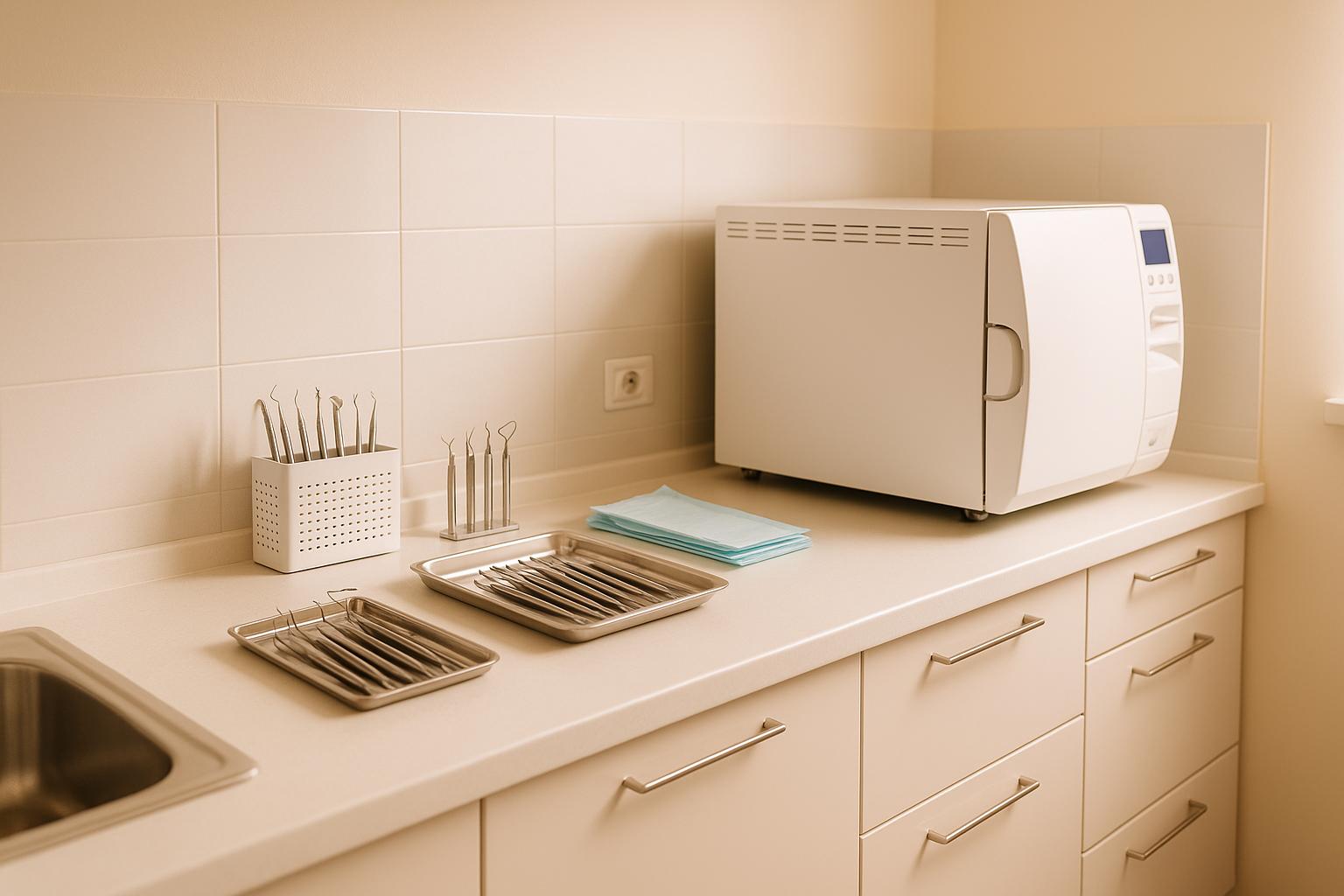
Sterilisation monitoring ensures dental instruments are safe for use by eliminating microorganisms, including resistant bacterial spores. In Australia, this process follows strict standards, including AS/NZS 4815:2006, AS/NZS 4187, and the updated AS 5369:2023, which focuses on chemical indicators. These standards outline methods like physical monitoring, chemical indicators, and biological indicators to validate sterilisation effectiveness.
Key updates in AS 5369:2023 include:
- A risk-based classification system for instruments (critical, semi-critical, non-critical).
- Enhanced protocols for chemical indicators.
- Requirements for validation of new equipment and processes.
Compliance is overseen by the Therapeutic Goods Administration (TGA), supported by state health departments and the Australian Dental Association (ADA). Dental practices must maintain detailed records of sterilisation cycles, including indicator results and equipment maintenance logs.
Routine monitoring involves:
- Chemical indicators for immediate cycle feedback.
- Biological indicators for sterility confirmation.
- Daily tests like the Bowie-Dick test for air removal in sterilisers.
Proper clinic layout, staff training, and adherence to protocols are crucial for maintaining safety. Detailed documentation and regular equipment maintenance ensure compliance and patient safety while minimising risks of cross-contamination.
Australian Sterilisation Standards Overview
AS/NZS 4815:2006 and AS/NZS 4187
Australia’s sterilisation monitoring framework is built on two key standards tailored to different healthcare settings. AS/NZS 4815:2006 outlines the minimum sterilisation requirements for office-based practices, while AS/NZS 4187 is designed for hospitals and larger healthcare facilities.
Both standards require dental practices to implement documented, multi-level monitoring systems. This involves maintaining detailed records for every sterilisation cycle, including equipment maintenance logs, indicator test results, and any corrective actions taken when sterilisation parameters fall outside acceptable limits.
Adding to these standards, AS 5369:2023 introduces updated protocols specifically focused on chemical indicators.
Changes in AS 5369:2023
The introduction of AS 5369:2023 marks an important step forward in sterilisation monitoring, particularly in the use of chemical indicators. A key feature of the update is the adoption of a risk-based instrument classification system, which groups dental instruments based on their infection risk and the type of patient contact.
Under this system:
- Critical instruments, which penetrate sterile tissues, require the most rigorous sterilisation monitoring.
- Semi-critical instruments, which contact mucous membranes, have slightly less stringent requirements.
- Non-critical instruments, which only touch intact skin, require the least intensive monitoring.
This classification system allows dental practices to allocate resources efficiently while maintaining high safety standards.
The updated standard also brings Australian terminology into alignment with international practices and local conditions. It refines the performance requirements for chemical indicators to ensure better reliability and consistency across various steriliser types used in dental settings.
Another major focus of AS 5369:2023 is on validation protocols. Dental practices must validate new equipment and sterilisation processes to confirm they meet required microbial kill standards before they are put into routine use. This modernised approach integrates seamlessly with the established three-tier monitoring system, ensuring all instruments are sterilised to the appropriate level.
Regulatory Bodies and Compliance
Australia’s sterilisation standards are strictly enforced to ensure consistent practices across the healthcare sector. The Therapeutic Goods Administration (TGA) is the primary regulatory authority overseeing sterilisation compliance, particularly for medical devices used in sterilisation.
In November 2021, the TGA introduced new rules for system or procedure packs (SOPPs). As of 25 November 2021, SOPPs are classified as medical devices in their own right and must be listed in the Australian Register of Therapeutic Goods (ARTG) [2]. The TGA ensures that manufacturers meet safety and performance standards, comply with post-market monitoring requirements, and maintain detailed compliance records. They can request these records at any time to verify adherence to regulations [2].
The Australian Dental Association (ADA) complements the TGA’s work by providing infection prevention and control (IPC) guidelines. These guidelines simplify complex regulations into practical, actionable steps for dental practices [1].
At the practitioner level, AHPRA and the Dental Board of Australia enforce compliance. Dental professionals must uphold sterilisation standards as part of their professional duties, with non-compliance potentially leading to sanctions.
State health departments add another layer of oversight by conducting inspections and offering guidance on how to implement national standards locally. Together, these bodies create a robust regulatory system that ensures patient safety and professional accountability across the healthcare landscape.
RiskMatters: E/Prof Laurie Walsh – Changes to Infection control guidance, what they are and what …
Sterilisation Validation and Monitoring Protocols
This section outlines the key steps for validation, routine monitoring, and documentation that ensure sterilisation processes are effective and comply with Australian standards. Dental practices are required to validate and monitor their sterilisation procedures and maintain detailed records for every cycle.
Validation Steps
Validation involves several key stages to ensure sterilisation equipment operates as intended:
- Operational Qualification (OQ): Confirms that the steriliser functions within the specified parameters. OQ checks temperature, pressure, and cycle timing against manufacturer guidelines and Australian standards using calibrated instruments.
- Performance Qualification (PQ): Tests typical instrument loads – both wrapped and unwrapped – using chemical and biological indicators to confirm sterilisation effectiveness.
- Installation Qualification (IQ): Documents that the steriliser has been installed correctly, adhering to manufacturer instructions and local regulations.
These validation steps establish a solid foundation for consistent sterilisation monitoring through routine testing and detailed record-keeping.
Routine Monitoring Indicators
Routine monitoring relies on a variety of indicators to verify sterilisation:
- Bowie-Dick Tests: Used for pre-vacuum sterilisers, these tests assess air removal and steam penetration. Special test packs with chemical indicators change colour to confirm proper function. These tests are typically performed at the start of the day, with any failures investigated immediately.
- Chemical Indicators: Provide immediate visual confirmation of exposure to sterilisation conditions through colour changes.
- Biological Indicators: Often containing Geobacillus stearothermophilus spores, these provide a more rigorous measure of sterilisation effectiveness. Regular testing with biological indicators is recommended, and rapid-readout systems can deliver results within 24 to 48 hours.
Additional checks, such as leak testing, steam quality testing, and air removal tests, are also part of routine monitoring to ensure the steriliser is functioning correctly.
Documentation and Record-Keeping
Comprehensive documentation is critical for verifying compliance with Australian sterilisation standards. Each sterilisation cycle must be recorded, with a unique numbering or coding system linking instrument sets to their corresponding records. This allows for quick identification and recall if an issue arises.
Key details to document include:
- Operator identity
- Cycle parameters (temperature, pressure, and duration)
- Results of chemical and biological indicators
- Maintenance logs
Modern sterilisers often provide printouts or electronic records, which must be reviewed to ensure all parameters meet the required standards before instruments are released for use.
Maintenance logs are equally important, tracking routine servicing, repairs, and calibrations to prevent potential failures. Validation certificates from the initial qualification, along with revalidation records following repairs or modifications, should also be retained.
Records must be stored for the duration specified by state regulations, generally between three and seven years. Electronic record-keeping systems are acceptable, provided they include reliable backup measures and safeguards to prevent unauthorised changes to historical data.
sbb-itb-2be92ed
Chemical Indicators: Types and Uses
Chemical indicators offer an immediate visual signal that sterilisation conditions have been met. These tools change colour or appearance when exposed to specific parameters like temperature, steam, or chemical vapour. Let’s take a closer look at their types and how they compare to biological indicators.
Types of Chemical Indicators
Chemical indicators are grouped into six classes under international standards, each designed for a specific purpose:
- Class 1: Basic process indicators, such as tape strips, that change colour when exposed to heat or steam.
- Class 2: Bowie-Dick test indicators, used to evaluate air removal and steam penetration.
- Class 3: Single-parameter indicators, which monitor conditions like temperature.
- Class 4: Multi-parameter indicators, reacting to combinations like time and temperature.
- Class 5: Advanced integrating indicators that respond to all critical sterilisation parameters, including time, temperature, and steam quality. These closely align with biological indicators, making them ideal for routine monitoring.
- Class 6: Cycle-specific indicators, designed to respond to the exact parameters set by the steriliser manufacturer.
The choice of indicator depends on the sterilisation process and equipment. Dental practices often use a mix of Class 1 indicators for basic monitoring and Class 5 indicators for detailed verification.
Chemical vs Biological Indicators
To fully understand sterilisation monitoring, it’s important to compare chemical and biological indicators:
| Aspect | Chemical Indicators | Biological Indicators |
|---|---|---|
| Response Time | Immediate visual results | 24-48 hours for results |
| Cost | Lower cost per test | Higher cost per test |
| Monitoring Scope | Confirms physical parameters | Confirms microbial destruction |
| Routine Use | Used for every sterilisation cycle | Weekly or periodic testing |
| Reliability | Verifies exposure conditions | Provides definitive sterility proof |
| Regulatory Role | Required for process monitoring | Required for validation and quality assurance |
Chemical indicators are great for quick feedback and are cost-effective, making them perfect for daily use. However, they only verify exposure to sterilisation conditions, not the actual elimination of microbes. Biological indicators, on the other hand, use bacterial spores to confirm sterility but take longer and require more resources. Together, they form a comprehensive sterilisation monitoring system: chemical indicators for daily checks and biological indicators for periodic validation.
Australian Standards for Chemical Indicators
In Australia, AS 5369:2023 outlines the requirements for chemical indicators in dental practices. The standard mandates that Class 1 indicators be used with every sterilisation load to distinguish between processed and unprocessed items. For critical loads, Class 5 indicators are recommended for routine monitoring.
The Australian Dental Association (ADA) also highlights the importance of proper storage and handling of chemical indicators. Keep them in a cool, dry place and ensure they are used before their expiration date. Always interpret results according to the manufacturer’s instructions – unclear or partial colour changes should be treated as failures, requiring further investigation before instruments are released for use.
Proper placement of indicators is crucial. Place them centrally in packs to ensure effective monitoring of steam penetration. Additionally, staff must be trained in the correct use, interpretation, and documentation of results to maintain compliance with Australian standards.
Practical Considerations for Dental Clinics
Ensuring effective sterilisation monitoring in dental clinics relies heavily on day-to-day operations. Success requires a well-thought-out clinic design, strict adherence to protocols, and a steadfast focus on patient safety.
Clinic Layout and Zoning
The physical layout of a clinic plays a key role in maintaining effective sterilisation. Keeping contaminated and sterile zones separate is crucial to avoid cross-contamination. The sterilisation area should be divided into specific sections for instrument collection, cleaning, sterilisation, and storage of sterile items.
The "dirty" zone, where contaminated instruments are handled, must have proper ventilation and surfaces that are easy to clean. This area often includes separate sinks for initial cleaning and may use ultrasonic cleaners for deeper decontamination. To maintain sterility, clean instruments should never pass through contaminated spaces.
The "clean" zones, designated for sterilised instruments, require controlled access, proper lighting for inspections, and climate control to protect against moisture damage. Storage areas should safeguard instruments from dust and contamination while making it easy to track expiry dates and load details.
The sterilisation room itself should accommodate autoclaves, provide ventilation to manage steam, and include sufficient bench space for safely loading and unloading instruments. Water quality is another critical factor – hard water can damage equipment and reduce sterilisation effectiveness. Many clinics address this by installing water treatment systems that meet manufacturer standards. These elements seamlessly align with the procedural validations discussed earlier.
Common Compliance Issues
Operational challenges can undermine sterilisation efforts, even with a well-designed layout. Issues such as overcrowding steriliser chambers can block steam penetration, while using incorrect cycle settings may either fail to sterilise instruments or damage them [5]. Human errors, like skipping indicator tests, and improper maintenance further compromise results.
Autoclaves need regular servicing, calibration, and timely replacement of worn parts to function properly. Incomplete or inaccurate documentation can complicate regulatory inspections, while failing to dry wrapped instruments adequately may compromise sterility. These issues emphasise the importance of consistent adherence to protocols.
Patient Safety Standards
Patient safety is non-negotiable, as outlined in AS 5369:2023 and supported by the Australian Dental Association (ADA). Autoclave compliance is critical to preventing cross-contamination and maintaining a clinic’s reputation [3]. The updated AS 5369:2023 standard, which replaced AS/NZS 4187:2014, provides detailed guidance on reprocessing reusable medical devices to minimise infection risks in dental practices [1].
Many modern clinics now use advanced autoclave systems equipped with remote and automated monitoring. These systems provide real-time alerts for cycle failures and maintain digital records, simplifying compliance with regulations [3]. AI-powered maintenance alerts are also becoming more common, helping clinics predict and address equipment issues before they occur [3].
Staff training is evolving as well. Virtual reality-based simulations are now being used to teach dental teams how to operate autoclaves and handle compliance scenarios in a controlled environment [3]. For example, Complete Smiles Bella Vista follows these standards by implementing comprehensive sterilisation monitoring protocols to prioritise patient safety.
Dental clinics are encouraged to adhere to Australian & NZ Standards 4815 and 4187, as well as the Australian Dental Association Guidelines for Infection Control [4]. Regular audits, continuous staff training, and rigorous equipment maintenance are key to maintaining effective sterilisation practices. These measures not only reduce infection risks but also ensure the clinic operates efficiently and sustainably.
Sterilisation Monitoring: Main Points
Sterilisation monitoring is a cornerstone of infection control in dental practices, and its success hinges on the use of chemical indicators and precise record-keeping.
Chemical indicators not only verify that sterilisation has occurred but also provide critical documentation for infection control protocols. Class 1 indicators are basic tools that change colour to confirm that equipment has been exposed to a sterilisation cycle, signalling that the process has occurred. Level 2 indicators, such as the Bowie Dick Test, are used during routine morning checks to ensure proper air removal from sterilisation chambers. Meanwhile, Level 6 indicators visually confirm that all key sterilisation parameters – time, steam, and temperature – have been met[6].
Accurate documentation of these indicator results is crucial. It allows for the swift identification and resolution of any sterilisation issues before instruments are released for use. These records play a pivotal role in maintaining infection control standards and serve as essential medico-legal evidence[6].
Daily checks, including the Bowie Dick test and Level 6 indicator assessments, are non-negotiable for ensuring both safety and compliance in dental practices.
FAQs
What are the main updates in sterilisation standards AS/NZS 4815:2006, AS/NZS 4187:2014, and AS 5369:2023 in Australia?
The Australian sterilisation standard, AS 5369:2023, has officially replaced both AS/NZS 4815:2006 and AS/NZS 4187:2014. This new standard introduces a risk-based approach to the reprocessing of reusable medical devices, aiming to align sterilisation practices with modern healthcare needs.
The updated guidelines place a stronger focus on infection control by implementing stricter protocols. These include longer sterilisation cycles at higher temperatures, improved documentation processes, and compulsory training for staff involved in reprocessing.
Some of the key updates feature refined reprocessing procedures, more comprehensive risk management strategies, and a heightened emphasis on compliance to prioritise patient safety. These changes are designed to reflect current advancements in healthcare while ensuring consistent sterilisation practices across all healthcare facilities in Australia.
What improvements does the risk-based classification system in AS 5369:2023 bring to sterilisation monitoring in dental practices?
The risk-based classification system outlined in AS 5369:2023 takes sterilisation monitoring to the next level by grouping reusable medical devices according to their potential infection transmission risk. This approach ensures that sterilisation methods and monitoring protocols are specifically aligned with the risk level of each device, boosting infection control efforts while adhering to Australian safety standards.
In addition, the standard brings in tougher requirements for water quality and emphasises the need for continuous staff training. Together, these updates aim to reinforce sterilisation practices and create safer conditions in dental clinics throughout Australia.
How do chemical and biological indicators help ensure compliance with Australian sterilisation standards?
Chemical and biological indicators are essential tools for ensuring dental clinics comply with Australian sterilisation standards. They help verify whether sterilisation processes are working effectively to maintain a safe environment.
Chemical indicators offer a quick, visual confirmation that key sterilisation parameters – like temperature, pressure, and exposure time – have been met during each cycle. These indicators provide an efficient way to monitor the conditions inside sterilisation equipment.
Biological indicators take it a step further by using microbial spores to confirm that the sterilisation process has successfully destroyed microorganisms. These are widely regarded as the most reliable method for evaluating sterilisation effectiveness and are critical for meeting standards such as AS 5369:2023.
Together, these indicators play a vital role in routine monitoring, validating equipment loads, and upholding strict infection control protocols, ensuring dental clinics meet Australia’s stringent safety requirements.
Related Blog Posts
- Dental Equipment Inspection: Key Requirements
- Orthodontic Sterilization Tools: Guide
- Common Causes of Sterilization Failures
- Australian Standards for Dental Tool Disinfection
Important Notice: Any surgical or invasive procedure carries risks. Before proceeding, you should seek a second opinion from an appropriately qualified health practitioner.
Individual results may vary. The information provided in this article is for educational purposes only and does not constitute medical advice.
Checkout Related Blogs




Get in touch with us
For more information, call us now to start feeling better. Or fill the form below to make appointment
The Latest News from Complete Smiles
How to Clean Clear Plastic Retainers
Checklist for Choosing Wearable Dental Devices
Checklist for Choosing Cloud AI Platforms in Dentistry

Complete Smiles Bella VistaAccepts All Major Health Funds, Including





