





Top AI Software for Dental Cost Planning
Dental practices in Australia are adopting AI tools to improve cost planning, reduce errors, and save time. These systems integrate with local practice management software, calculate accurate pricing with health fund rebates, and enhance treatment planning using clinical data. Here’s a quick overview of the top AI tools:
- Diagnocat: Analyses X-rays and CBCT scans, automates reporting, and provides evidence-based cost estimates. Pricing starts at $215 AUD/month.
- Oryx Dental with Pearl and Overjet AI: Offers TGA-approved diagnostic imaging and financial tools. Plans begin at $375 AUD/month for standalone AI.
- Smilepass: Focuses on insurance verification and payment plans but has limited Australian compatibility. Pricing is custom.
- OraQ AI: Supports clinical decision-making but requires TGA compliance for Australian use. Pricing details unavailable.
- Sensei Cloud: Combines clinical workflows with financial tracking but lacks clear Australian regulatory alignment. Tiered pricing available upon request.
Each tool has strengths and limitations, with compliance to Australian standards being a key consideration. Below is a comparison to help you decide.
Quick Comparison
| Tool | Key Features | Australian Compatibility | Pricing (AUD) |
|---|---|---|---|
| Diagnocat | AI imaging, automated reports, cost estimates | TGA compliance to verify | From $215/month |
| Oryx Dental | TGA-approved diagnostics, financial tools | Fully compatible | From $375/month |
| Smilepass | Insurance verification, payment automation | Limited compatibility | Custom quote |
| OraQ AI | Clinical support, AI-driven treatment plans | TGA compliance to verify | Contact vendor |
| Sensei Cloud | Workflow integration, financial tracking | Limited compatibility | Contact vendor |
Choose a tool that aligns with your practice’s needs, ensuring it meets Australian regulations and integrates seamlessly with your existing systems.
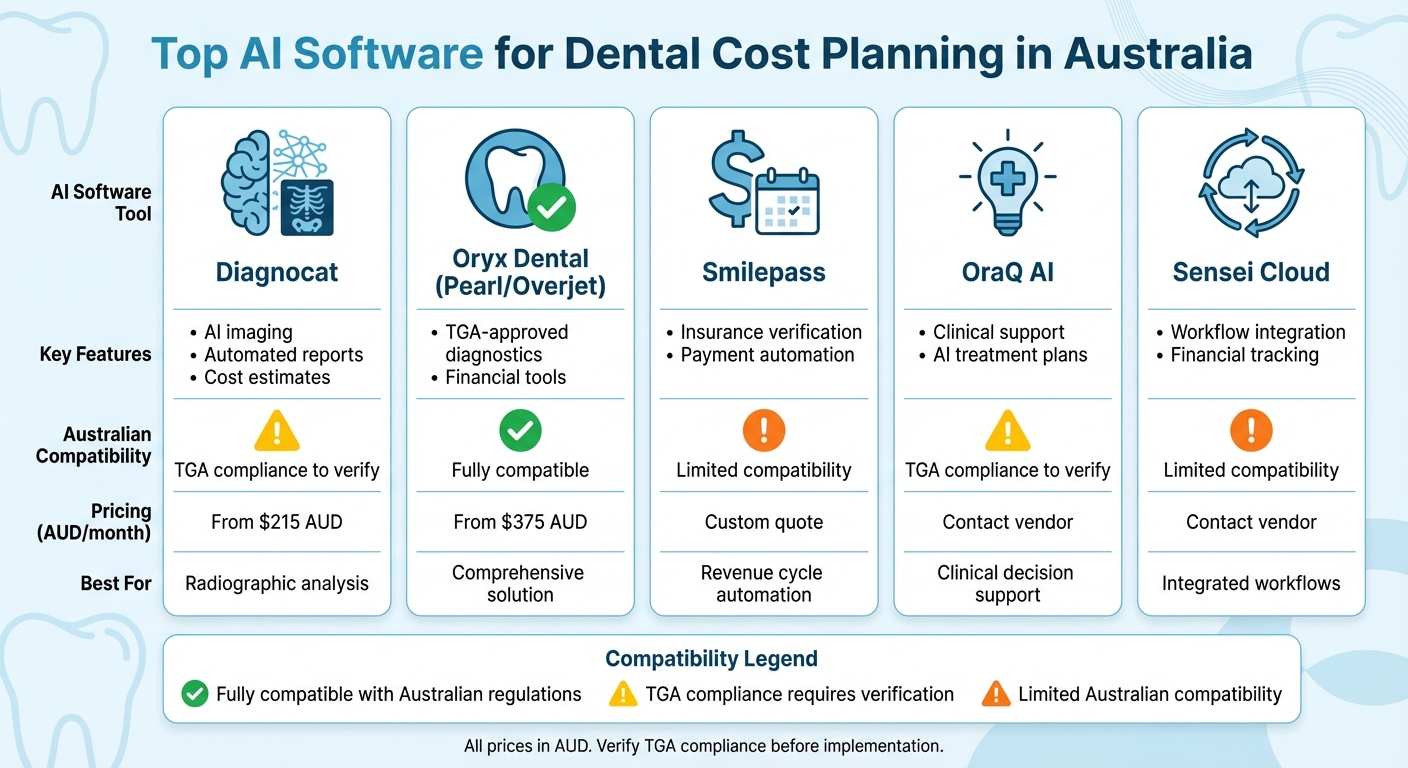
Comparison of Top 5 AI Dental Cost Planning Software for Australian Practices
Best Dental Softwares for Principals and Associates? – AJ007
sbb-itb-2be92ed
1. Diagnocat
Diagnocat is a browser-based AI platform designed to analyse both 2D images (like intraoral X-rays and OPGs) and 3D CBCT scans. It can detect over 60 conditions in 3D images and more than 40 in 2D, with accuracy rates of 100% for impactions and fillings, 96% for endo-treated teeth, and 87% for periodontal bone loss [2]. Developed with input from 55 dentists and oral radiologists, Diagnocat processes radiographs in as little as 10 seconds and up to 6 minutes [2][3]. This speed and precision make it a standout option among similar platforms.
Cost Features
Diagnocat automates the creation of radiological, implant, and orthodontic reports, eliminating manual steps and reducing the need for external reporting. Its DICOM-to-STL conversion simplifies the transition from CBCT scans to 3D treatment planning software, bypassing the need for manual segmentation [2][3]. Additionally, the AI automates periodontal charting, identifying bone loss, calculus, and furcation lesions, which helps practices provide accurate cost estimates for dental implants and other minimally invasive treatments [3].
AI Capabilities
The platform also serves as a second opinion, helping dentists catch missed diagnoses and present evidence-based treatment options [2][3]. Colour-coded reports make complex dental issues easier to explain during chairside consultations, aiding in the move to active treatment plans. Dr Byron Park from the Institute of Digital Dentistry has highlighted Diagnocat’s strength in CBCT segmentation, calling it "arguably the best", and noted its role as a "neutral third party" that improves treatment plan acceptance [6]. This efficiency in processing and reporting reduces treatment planning time and minimises errors, ultimately helping practices manage costs more effectively.
Australian Suitability
Diagnocat is already in use by the Institute of Digital Dentistry in New Zealand and supports ISO (FDI) tooth numbering, which aligns with Australian standards [6]. These features make it well-suited to the needs of Australian dental practices, including compliance with local numbering systems and regulations. Although Diagnocat achieved FDA clearance in the USA in October 2025 and complies with HIPAA and SOC 2 standards, Australian practices should verify TGA (Therapeutic Goods Administration) compliance directly with the provider before integrating the software [2][4].
Pricing in AUD
Diagnocat offers two main subscription plans. The 2D Practice Plan is priced at approximately $215 AUD per month (€129) and includes up to 500 FMX and 500 panoramic AI reports, along with 10 GB of cloud storage. The 3D Practice Plan, costing around $415 AUD per month (€249), adds 5 CBCT AI reports, DICOM-to-STL conversion, and 100 GB of cloud storage [3][5]. Larger practices can request custom pricing for additional CBCT reports or API integration.
2. Oryx Dental with Pearl and Overjet AI
Oryx Dental is a cloud-based practice management system that incorporates two advanced AI imaging tools: Pearl’s Second Opinion and Overjet’s Dental AI Assist. These platforms analyse radiographs in real-time, identifying issues like caries, calculus, bone loss, and periapical radiolucencies directly within Oryx’s imaging module [7][8]. For Australian practices, Pearl stands out as it is TGA-approved, making it the first real-time radiologic AI platform cleared by the Therapeutic Goods Administration in Australia and New Zealand [11]. Gamma Tech, Pearl’s distributor in the ANZ region, offers local demonstrations and support [11]. This integration not only simplifies image analysis but also enhances cost planning with automated financial tools.
Cost Features
The AI integration streamlines treatment cost management through features like automated insurance verification and visual tools for patient education. Overjet’s AI mimics insurance payor logic, providing detailed surface data that significantly reduces claim denials and speeds up approvals by up to five times [8]. Pearl’s Precheck feature builds trust with patients by offering accurate cost estimates and a full breakdown of insurance coverage before treatment starts [7]. This transparency is similar to the upfront value offered in a gap-free new patient pack, which simplifies initial diagnostic costs. Additionally, "Power Codes" simplify frequently performed procedures, while phased treatment planning for complex cases helps clarify expenses. However, Australian practices should note that some financial automation tools – such as auto-populated coverage books and auto ERA posting – are currently only available in the US [9].
AI Capabilities
Pearl’s AI has shown a 37% improvement in disease detection rates and a 28% decrease in misdiagnosed conditions [7]. Practices using Pearl report a 29% boost in production, while Overjet users achieve a 25% higher care acceptance rate and an average 18x return on investment [8]. These diagnostic advancements also lead to more accurate cost planning.
Dr Mark Sivers, Chief Clinical Officer at Aligned Dental Partners, remarked: "What really excites me is Overjet’s ability to create a common language between providers and payers, so our business can move much faster. We’ve seen our average reimbursement period drop dramatically" [10].
Pearl uses colour-coded bone measurements – white (0–2.5 mm), yellow (2.5–4 mm), and amber (>4 mm) – to help practitioners explain disease severity during consultations [11]. Other features include AI voice-activated periodontal charting, AI-generated exam notes, and automated diagnoses based on Kois-aligned protocols, which reduce both administrative workloads and manual errors [9].
Australian Suitability
Pearl’s TGA approval and Gamma Tech’s local support make it a strong choice for Australian dental clinics [11]. Oryx offers a 30-day free trial for adding Pearl or Overjet to an existing plan, giving practitioners the chance to see which platform fits best with their workflow [7][8]. That said, Australian clinics should confirm which automated features are functional locally, as many of Oryx’s "Automate" tools are designed for the US insurance system and may not be as effective in Australia [9].
Pricing in AUD
Oryx Dental provides three key subscription options. The Oryx AI Plan, priced at about $2,100 AUD per month ($1,399 USD), includes AI imaging powered by Pearl or Overjet, AI voice perio charting, and AI clinical scribe capabilities [9][13]. The Oryx Automate Plan costs approximately $1,350 AUD per month ($899 USD) and focuses on automated workflows but does not include advanced AI imaging [9][13]. For standalone AI integration outside of Oryx, Pearl or Overjet typically cost between $375–$750 AUD per month ($250–$500 USD) [12].
3. Smilepass
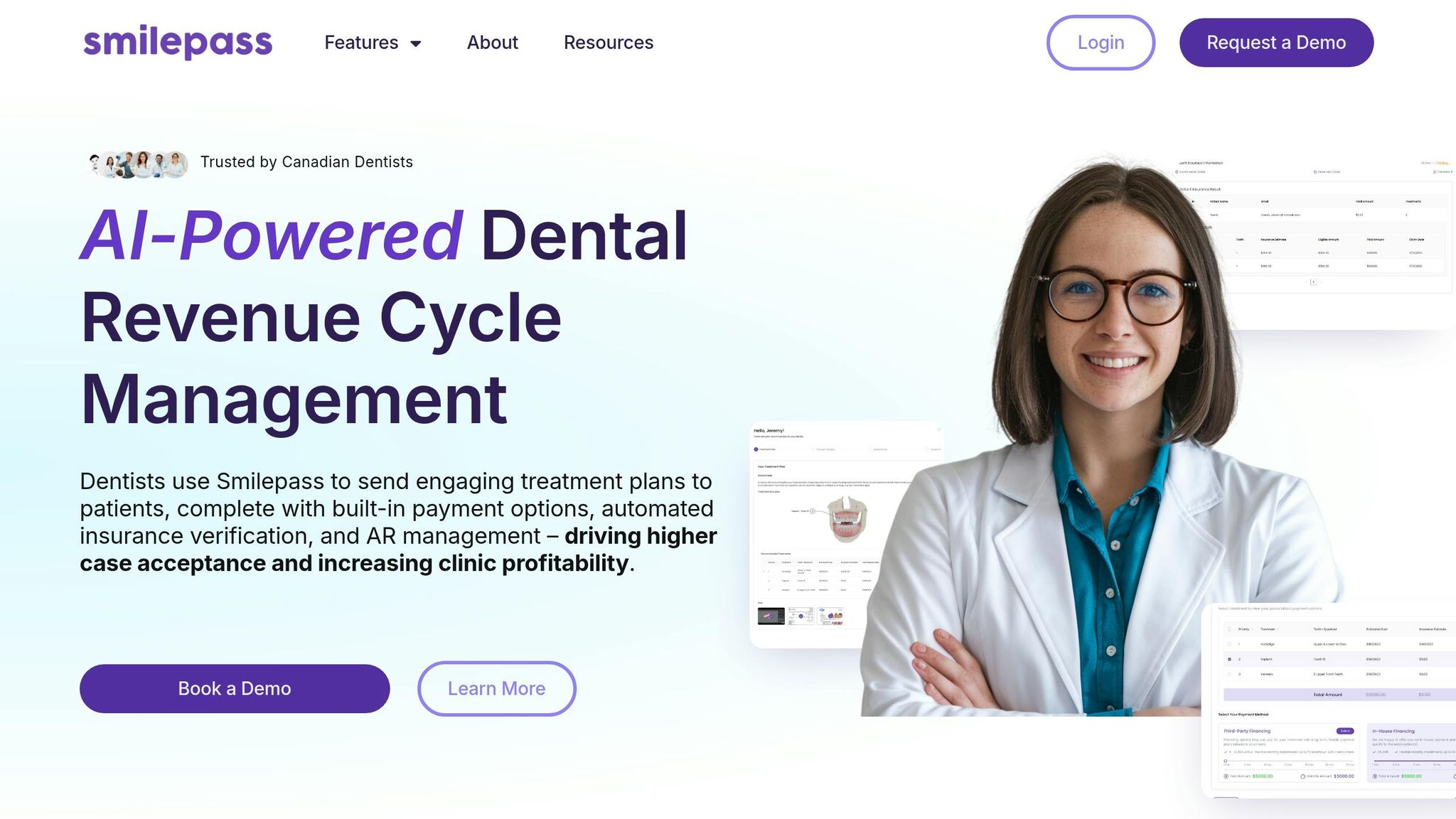
Smilepass is designed to streamline revenue cycle tasks like insurance verification and payment collection. It also creates digital treatment plans that include insurance estimates and clear procedure costs, helping patients understand their financial responsibilities before treatment begins [14]. Users of Smilepass report a 25% increase in revenue and an 80% time reduction in handling insurance eligibility checks [14].
Gary, a Practice Owner, highlights that Smilepass improves case acceptance rates and significantly cuts down the time spent on payment reminders [14].
Here’s a closer look at some of the key cost-related features.
Cost Features
Smilepass automates insurance verification, checking patient coverage details such as plan maximums, deductibles, co-pays, and remaining benefits ahead of appointments. This helps practices avoid unexpected financial issues at the last minute [14]. By embedding insurance estimates into digital treatment plans, the platform has been linked to a 20% increase in case acceptance [15].
The platform also supports built-in financing options, including third-party financing with rates starting at 0% APR, as well as customisable in-house payment plans. These features can further boost case acceptance by up to 30% [16]. Additionally, Smilepass uses an AI-powered accounts receivable management system to automate payment reminders via email and text, reducing the workload of tracking unpaid balances [16].
Australian Suitability
Although Smilepass offers powerful automation tools, its Canadian focus raises questions about its suitability for Australian practices. It is promoted as "Trusted by Canadian Dentists" and is headquartered in Toronto, Canada [14]. The automated insurance verification system is tailored to Canadian insurance providers, with no indication of compatibility with Australian health funds like HICAPS, Bupa, or HBF [15].
Before adopting Smilepass, Australian practices should confirm whether it complies with the Australian Privacy Principles (APPs) and AHPRA regulations. Additionally, it’s essential to verify its integration with local practice management systems.
Pricing in AUD
Smilepass does not provide standard pricing in AUD. Instead, custom quotes are available upon request [17]. Since the company operates from Canada, pricing may be subject to currency fluctuations if billed in CAD or USD [14].
4. OraQ AI
OraQ AI is a clinical decision support system designed to integrate seamlessly with practice management workflows. Its primary role is to identify potential treatment opportunities and generate tailored treatment plans based on clinical data [18][19][20]. By automating this process, OraQ AI helps reduce the chance of missing treatments, ensuring a more comprehensive approach to patient care [20]. Additionally, its AI-powered voice recognition simplifies clinical note-taking, making documentation faster and less cumbersome. This streamlined functionality also brings regulatory considerations into focus.
Australian Suitability
For Australian dental practices, ensuring compliance with local regulations is essential before implementing OraQ AI. Specifically, the software must be registered with the Australian Register of Therapeutic Goods (ARTG) to meet the Therapeutic Goods Administration (TGA) requirements [1][22].
"Using [unapproved] devices can lead to significant risks including patient harm and financial loss for the dentist if something goes wrong, as their medical indemnity insurance may not cover them." – TGA Spokesperson [22]
In addition to TGA compliance, practices must ensure adherence to the Privacy Act 1988 (Cth) and the 13 Australian Privacy Principles (APPs) to safeguard patient data [1]. These regulatory precautions not only protect patients but also improve the reliability of dental treatment cost estimation provided during treatment planning. Practices should also revise their informed consent procedures to explicitly include the use of AI-driven tools, as required by Australian regulations [21].
"AI should be viewed as a supportive tool, not a replacement for professional judgment. Practitioners must ensure that AI-generated insights are critically evaluated before being incorporated into treatment decisions." – Dr. Raj DK Dhaliwal, Community Relations Manager and Professional Consultant, ADAVB [21]
Pricing in AUD
Once regulatory and operational requirements are addressed, pricing becomes a key factor. Unfortunately, specific pricing details in AUD are not publicly available. Interested practices should contact the vendor directly to obtain regional pricing information and confirm support for local currency transactions.
5. Sensei Cloud
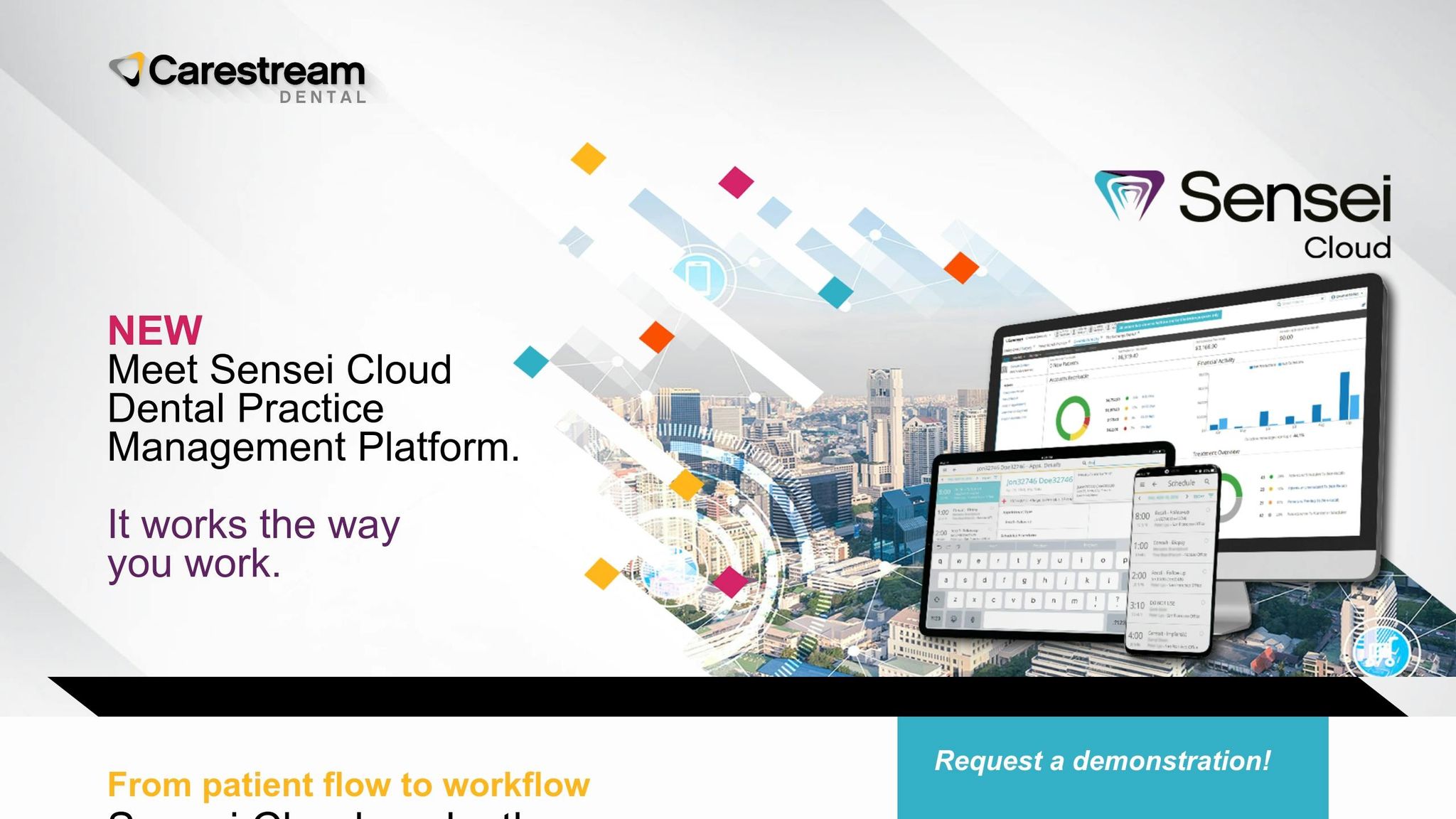
Sensei Cloud takes a step further by combining clinical and financial management, providing a streamlined approach to treatment cost planning. Developed by Carestream Dental, it is designed to integrate clinical workflows with financial tracking, making it a practical tool for dentists, oral surgeons, and orthodontists and Invisalign specialists[25].
Cost Features
The platform’s Treatment Manager helps practitioners stay on top of treatment planning by tracking follow-ups for accepted or deferred treatments. Meanwhile, the Insights Manager delivers real-time analytics on financial performance, making it easier to spot revenue opportunities and keep an eye on overall business health[24]. Additionally, integrated tools like eClaims and eVerifications aim to reduce claim rejections by ensuring clinical documentation aligns with billing standards[24].
AI Capabilities
While not all of its features are explicitly marketed as AI-driven, Sensei Cloud does use intelligent automation in several key areas, such as patient intake, scheduling, and communication workflows[24]. The Sensei Imaging feature is particularly noteworthy, offering cloud-based access to clinical data and enabling practitioners to create virtual patient models for remote treatment planning[24][25].
Australian Suitability
For Australian practices, it’s important to note that Sensei Cloud’s documentation highlights compliance with GDPR and the Privacy Shield but does not specifically address Australian regulations like the Privacy Act 1988[24][25]. Unlike some competitors, it doesn’t list integrations with local systems such as HICAPS or Medicare[20]. Practices should carefully verify the platform’s compliance with Australian privacy laws and confirm whether it meets Therapeutic Goods Administration (TGA) registration requirements before implementation.
Pricing in AUD
Sensei Cloud is available in three tiered packages: Yellow Belt (basic features with training and support), Black Belt (which adds automation tools, electronic forms, and text reminders), and Dojo (a premium option featuring two-way texting and email marketing)[24]. For specific pricing in AUD, contact Carestream Dental directly.
Advantages and Disadvantages
This section explores the broader benefits and challenges of using AI for dental cost planning in Australia, building on the detailed reviews above. For Australian dental practices, ensuring regulatory compliance, maintaining data privacy, and applying clinical oversight are critical when integrating AI tools for cost planning. One promising solution, supported by current evidence, is Oryx Dental, which combines Pearl and Overjet AI technologies. Below is a summary of its performance across three key areas: cost estimation accuracy, AI-powered features, and alignment with Australian regulations.
| Tool | Strengths | Weaknesses | Australian Compatibility |
|---|---|---|---|
| Oryx Dental (Pearl/Overjet) | Improves treatment acceptance rates by 7–15% through visual evidence and reduces diagnostic variability[28] | Risk of automation bias if practitioners overly rely on AI outputs[1][28]; requires high-quality digital imaging and AI-powered radiology | Must be TGA-registered for clinical use and adhere to Australian Privacy Principles[1][27] |
Regulatory accountability is a critical consideration. Under the guidelines of the Dental Board of Australia, practitioners remain responsible for any errors in treatment plans or cost estimates, even if AI tools are involved. To address issues such as inaccuracies stemming from incomplete or low-quality data, regular audits are essential[1][27].
"Practitioners must apply human judgement to any output of AI"[1]
In addition to tool-specific insights, the financial and operational benefits of AI are notable. AI-driven cost estimation can deliver a return on investment (ROI) of up to 800%, while diagnostic AI has the potential to increase revenue by 5–9%. However, achieving these outcomes requires proper setup, thorough staff training, and ongoing compliance monitoring[26][28].
Conclusion
The AI tools reviewed offer a range of options tailored to different needs in cost planning for dental practices. Diagnocat stands out for its radiographic analysis and automated reporting capabilities, while Oryx Dental, paired with Pearl and Overjet, provides TGA-approved diagnostic imaging alongside seamless insurance integration. Smilepass focuses on revenue cycle automation, OraQ AI prioritises support for clinical decisions, and Sensei Cloud combines clinical workflows with financial tracking.
It’s essential to ensure that any chosen AI solution complies with TGA registration and adheres to the Australian Privacy Principles. Additionally, confirm that patient data is securely stored on Australian servers [1][23][27]. Regardless of AI involvement, practitioners remain responsible for all treatment plans and cost estimates under the guidelines of the Dental Board of Australia.
Whether you’re managing a single clinic or multiple locations, regulatory compliance and integration with your practice’s operations are crucial. Many vendors offer free trials, providing an opportunity to evaluate staff adoption and compatibility with your existing Practice Management Software using a checklist for AI dental software before committing to long-term contracts.
FAQs
Do these AI tools need TGA approval in Australia?
AI tools designed for dental cost planning in Australia don’t need approval from the Therapeutic Goods Administration (TGA) unless they’re classified as medical devices. However, if the software is used for purposes like diagnosis, treatment, or monitoring, it must pass a pre-market assessment and be listed in the Australian Register of Therapeutic Goods (ARTG). It’s crucial to verify the regulatory classification to ensure everything complies with the rules.
How do I check if an AI tool meets Australian privacy laws?
To ensure an AI tool complies with Australian privacy laws, it must align with the Australian Privacy Act and the Australian Privacy Principles (APPs). Key considerations include:
- Data hosting within Australia: This ensures the tool adheres to Australian data sovereignty requirements.
- Encryption: Verify that data is encrypted both during transit and when stored, providing an added layer of security.
- Privacy policy and security measures: Review the provider’s privacy policy closely to understand how data is handled and protected.
For extra assurance, it’s worth reaching out to the provider directly to confirm compliance with the most up-to-date regulations.
Will these tools integrate with my practice software and health funds?
Many AI tools aimed at dental cost planning are built to work hand-in-hand with practice management software and health fund systems. Tools like Dentally, Smilepass, and Flowdent come equipped with features such as automated billing, insurance verification, and tools to simplify workflows. However, since compatibility can differ, it’s a good idea to check with the provider to ensure these tools will integrate smoothly with your current systems.
Related Blog Posts
- Checklist for AI Dental Software
- AI in Tooth Replacement: Economic Benefits
- Ultimate Guide to AI in Dental Implant Radiology
- AI Tools for Dental Practice Management
Important Notice: Any surgical or invasive procedure carries risks. Before proceeding, you should seek a second opinion from an appropriately qualified health practitioner.
Individual results may vary. The information provided in this article is for educational purposes only and does not constitute medical advice.
Checkout Related Blogs




Get in touch with us
For more information, call us now to start feeling better. Or fill the form below to make appointment
The Latest News from Complete Smiles
How to Clean Clear Plastic Retainers
Checklist for Choosing Wearable Dental Devices
Checklist for Choosing Cloud AI Platforms in Dentistry

Complete Smiles Bella VistaAccepts All Major Health Funds, Including





