





AI-Powered Radiology: What Dentists Need to Know
AI in dental radiology is reshaping how dentists diagnose and plan treatments. By using machine learning to analyse X-rays and scans, it detects issues like cavities, bone loss, and pathologies with precision. It also simplifies workflows by automating image reviews, measurements, and documentation, saving time while improving accuracy. Key benefits include:
- Improved diagnostics: AI spots subtle issues dentists might miss, like early-stage cavities or small bone changes.
- Faster workflows: Automates tasks like image analysis, treatment planning, and report generation.
- Consistency: Ensures uniform documentation and reporting for patient records and insurance claims.
- Patient communication: Creates annotated images, making it easier to explain diagnoses and treatments.
To integrate AI, dentists need TGA-approved software, secure data storage, and team training. While AI supports decision-making, it doesn’t replace professional judgement. Following Australian regulations ensures safe, effective use.
AI is transforming dental care, offering faster, more precise diagnostics and smoother workflows for clinics.
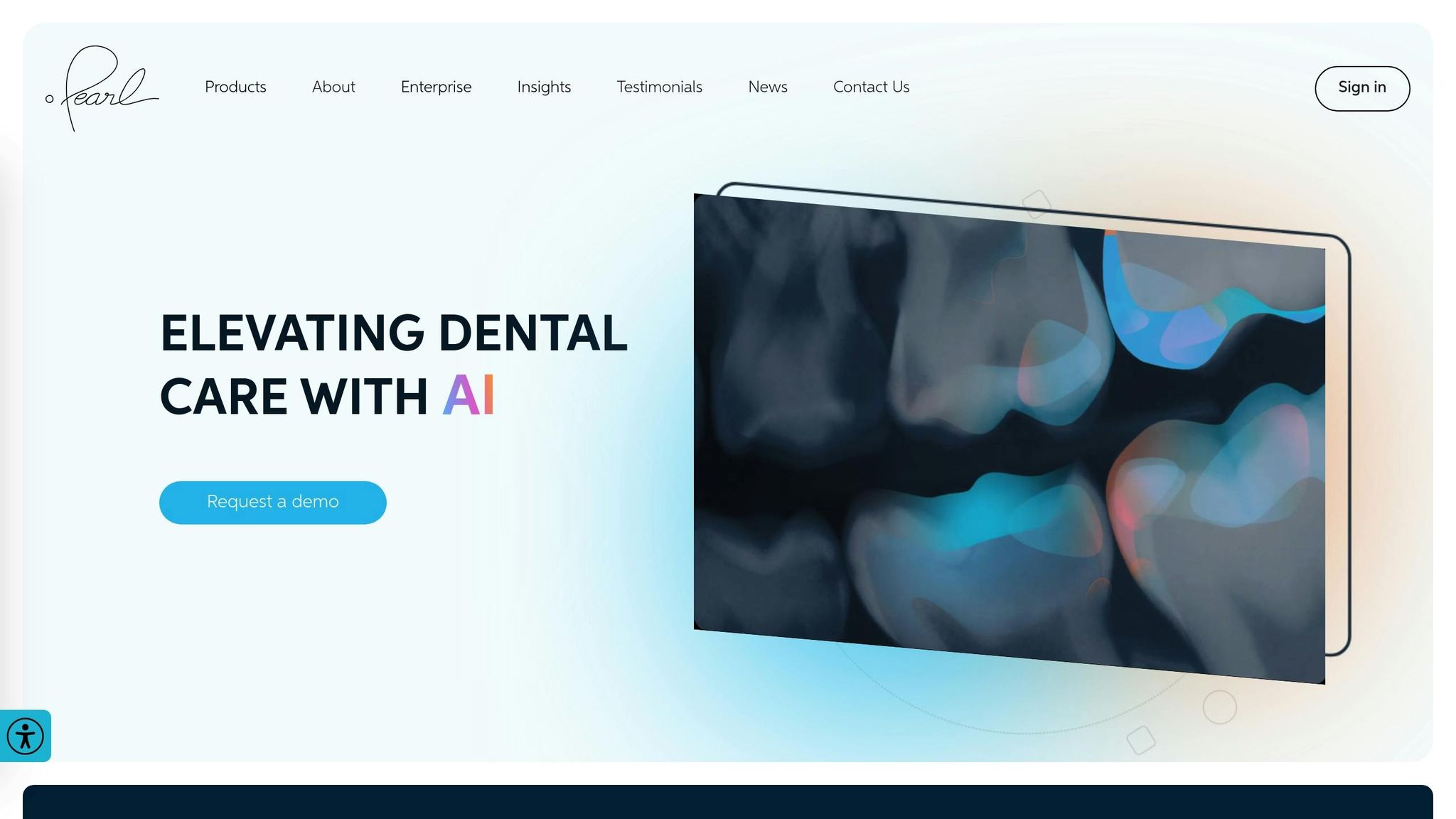
Pearl‘s AI technology helps a dentist spot caries (cavity) that dentists sometimes miss in x-rays
Core AI Tools and Technologies in Dental Radiology
At the heart of AI-powered dental radiology are digital imaging systems and secure data storage solutions, which streamline diagnostic workflows. These modern tools are essential for integrating AI into clinical practice, enabling quick image capture and supporting more precise diagnostics.
Key Hardware and Tools
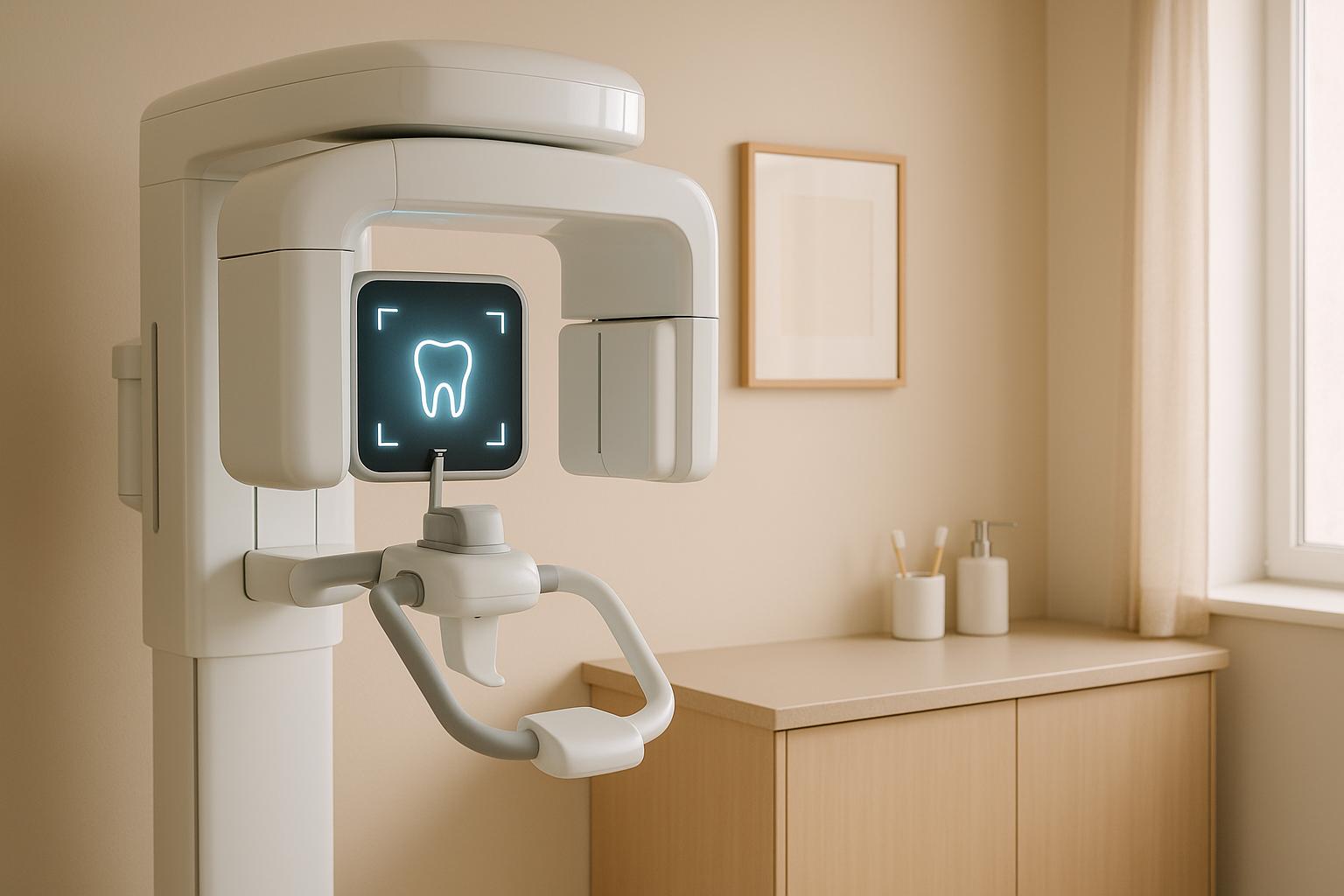
Digital radiography systems play a pivotal role by capturing images instantly, which allows AI algorithms to process and analyse them in real time. This rapid imaging capability enhances diagnostic accuracy and speeds up clinical decision-making. Additionally, Cone Beam Computed Tomography (CBCT) machines provide the detailed 3D datasets needed for complex surgical planning, offering clinicians a comprehensive view of the treatment area.
To handle the large volumes of imaging data generated, cloud-based storage solutions are indispensable. They ensure that images are securely stored, easily accessible, and ready for AI processing. This combination of advanced imaging tools and robust storage infrastructure enables faster, more accurate diagnoses, improving patient care significantly.
How AI Improves Dental Radiology Workflows
AI is reshaping dental radiology by simplifying processes from capturing images to planning treatments. This not only saves time but also boosts accuracy and consistency across the board.
Changing Current Workflows
AI steps in right from the image acquisition stage, where it adjusts exposure settings automatically and offers real-time guidance for positioning. This feedback helps dental assistants and hygienists capture high-quality images on the first attempt, reducing the need for retakes.
When it comes to analysis, AI algorithms quickly highlight areas that might need attention. This allows dentists to focus their reviews on specific flagged regions, making the process more efficient and precise.
For treatment planning, AI takes over tasks like anatomical mapping and measurements. It automates calculations, such as assessing bone structure or determining the best implant placement, and integrates this data seamlessly into treatment planning software.
Even documentation gets a boost. AI automates report generation, ensuring consistency in how findings and measurements are recorded. These advancements not only improve workflow efficiency but also enhance diagnostic and clinical outcomes.
Specific Workflow Benefits
One standout feature of AI in dental radiology is its ability to detect anomalies in real time. For instance, it can spot early signs of caries or periodontal changes during image capture, enabling dentists to address issues during the same visit.
AI also reduces the need for manual calculations by automating the recording of diagnostic data. This ensures measurements are accurate and consistent, cutting down on administrative tasks and potential errors.
Another benefit lies in the generation of uniform reports. AI ensures findings, measurements, and observations are documented consistently, which is particularly helpful in practices with multiple clinicians or when referring patients to specialists.
Patient communication improves as well. AI can create annotated images and visual aids that make it easier for patients to understand their dental conditions and the treatments being suggested.
Before and After Workflow Comparison
Looking at traditional workflows versus AI-enhanced ones highlights the advantages AI brings. Conventional methods often involve several manual steps, like adjusting imaging settings, spending significant time reviewing images, and performing manual calculations. These steps can vary depending on the practitioner, leading to inconsistencies.
With AI, every stage – from image capture to analysis, documentation, and treatment planning – becomes more streamlined. This reduces delays, ensures greater consistency, and increases overall efficiency in dental radiology.
sbb-itb-2be92ed
Clinical and Business Benefits of AI Integration
Bringing AI into dental radiology has transformed both clinical outcomes and the way practices operate. These advancements are making a noticeable difference for both dentists and their patients.
Better Diagnostic Accuracy
AI offers a level of consistency in diagnostics that humans simply can’t match. While human interpretations can vary due to experience, fatigue, or time constraints, AI delivers objective and reliable analysis every time.
One of AI’s standout strengths is its ability to detect issues early, which means treatments can begin sooner and are often less invasive. This proactive approach leads to better patient outcomes and more manageable procedures.
By tapping into vast databases of case studies, AI can spot patterns or anomalies that might otherwise go unnoticed. This capability helps dentists consider potential diagnoses they may not have initially thought of, enriching their decision-making process.
These improvements in diagnosis naturally lead to more effective and efficient patient care.
Improved Patient Care
AI speeds up the journey from diagnosis to treatment. Instead of waiting for a detailed radiographic review, patients can often receive preliminary findings during their appointment, enabling same-day treatment decisions in many cases.
The technology also makes patient communication much clearer. Using annotated images and visual aids, dentists can show patients exactly where issues lie, making it easier to explain treatment options. When patients understand their condition, they’re more likely to follow through with recommended treatments and preventive care.
AI-guided imaging systems also reduce radiation exposure. By optimising exposure settings for each patient and minimising the need for retakes, the technology ensures safer imaging practices.
Additionally, AI supports personalised treatment plans by analysing each patient’s unique anatomy. This tailored approach not only improves the precision of care but also boosts patient satisfaction by delivering more predictable results.
Business and Financial Benefits
The benefits of AI aren’t limited to clinical improvements – it also brings measurable advantages to the business side of dental practices.
AI streamlines routine tasks, freeing up time for dentists to focus on more complex cases or see more patients. This increased efficiency can lead to higher revenue and better use of resources. Tasks like documentation and report generation become quicker, allowing more time for patient care or practice development.
When it comes to insurance claims, AI shines by producing detailed reports with precise measurements and clear imaging evidence. These comprehensive documents help reduce claim rejections and speed up approvals. Insurance providers increasingly value AI-generated documentation as reliable proof of treatment necessity.
AI also reduces liability risks by ensuring thorough and consistent documentation. In cases of disputes or liability claims, AI-backed records can serve as strong evidence of proper evaluation and care.
The technology enhances case presentations too. With AI-generated reports and annotated images, dentists can create professional, easy-to-understand presentations for patients and referring practitioners, which can improve case acceptance rates and elevate the practice’s reputation.
AI-guided imaging boosts staff productivity as well. Dental assistants can independently capture high-quality images, maintaining consistent standards without needing constant oversight.
Finally, AI contributes to long-term cost savings. By reducing the need for retakes, minimising equipment wear, and lowering expenses on film or sensor replacements, practices can cut operational costs. Plus, AI systems often provide ongoing learning opportunities, reducing the need for extensive continuing education investments for the team.
How to Implement AI in Dental Practices
Integrating AI into dental practices effectively requires a balanced approach that combines the right technology, thorough staff training, and strict adherence to regulatory standards. These three pillars – technology, training, and compliance – are essential for ensuring smooth implementation and optimising the benefits of AI.
Technology and Infrastructure Requirements
To integrate AI into your dental practice without disrupting workflows, you need software that seamlessly connects with your existing practice management and imaging systems. This compatibility allows your team to adopt AI tools without the need to overhaul well-established processes.
Your data infrastructure must be capable of handling various image formats – such as bitewing, periapical, panoramic, and cephalometric – along with their metadata. This ensures the AI system can analyse all radiographic images your practice produces.
Cloud-based platforms are ideal for supporting AI, offering the necessary processing power while maintaining strong encryption to safeguard patient data. These systems must comply with Australian privacy laws to ensure data security.
Before implementing any AI software, confirm that it has been cleared by the Therapeutic Goods Administration (TGA). TGA approval guarantees that the software meets Australian standards for safety and effectiveness in medical devices.
Once the technological foundation is established, the next step is preparing your team to work effectively with these tools.
Staff Training and Education
Proper training is key to ensuring your team can maximise the benefits of AI. Training should cover both clinical and administrative applications, tailored to the diverse roles within your practice. This means dentists, hygienists, and administrative staff should all receive instruction specific to their responsibilities.
It’s crucial that your team understands AI’s role as a supportive tool rather than a replacement for professional judgement. AI can provide valuable insights, but dental practitioners must critically assess these insights in the context of a patient’s overall clinical situation.
Equipping your team to communicate effectively with patients about AI is equally important. They should be prepared to explain how AI contributes to diagnoses or treatment plans, as well as its limitations and potential risks. This helps patients make informed decisions about their care. Training should also include secure record-keeping practices to ensure data is managed responsibly.
Improving digital literacy across your team is essential for adapting to the new roles and technologies that come with AI integration.
Australian Regulatory Compliance
Adhering to Australian regulatory standards is non-negotiable when implementing AI in dental practices. Compliance with the guidelines set by AHPRA and the Dental Board of Australia ensures patient safety and maintains the quality of care.
AI applications in clinical care must always be supervised by a qualified Dental Practitioner, as ultimate responsibility for patient care lies with them. AI should be seen as a tool to assist, not replace, clinical decision-making.
Transparency is another key aspect. Both practitioners and patients need to clearly understand AI’s role in diagnosis or treatment planning. Patients should be informed about how AI contributes to their care, including its benefits, limitations, and risks, so they can make educated choices.
Clinical decisions based on AI outputs must be made solely by a Dental Practitioner. These decisions should consider the patient’s full clinical picture, including their history, examination results, and relevant tests.
Data privacy and security are critical. Any data used by AI systems must be collected with proper consent, handled according to strict privacy controls, and stored securely in line with the Australian Privacy Principles and the guidelines set by the Office of the Australian Information Commissioner (OAIC).
For practices using generative AI, its application should be limited to non-clinical, low-risk tasks like drafting clinical notes, reports, or patient communications. All outputs must be reviewed and verified by a Dental Practitioner or authorised staff. Generative AI should never be used independently for clinical decision-making.
As AI technology in dentistry evolves, practices must regularly review and adapt to meet new regulations and best practices. This ongoing effort is essential for maintaining compliance and ensuring the safe and effective use of AI tools.
Conclusion
AI-powered radiology is transforming dental practices by improving diagnostic precision, streamlining daily workflows, and enhancing patient care – all while supporting the expertise of dental professionals.
Key Takeaways
Integrating AI into radiology offers tangible benefits across diagnostics, operations, and business management. With improved diagnostic accuracy, dentists can detect issues earlier, often enabling less invasive treatments. Workflow enhancements save time on tasks like image analysis and report preparation, allowing practitioners to dedicate more attention to patient care and treatment planning. Additionally, AI ensures consistent analysis, reducing variations in diagnostic interpretations.
From a business standpoint, AI boosts practice efficiency and patient throughput while maintaining excellent care standards. It also simplifies documentation processes, aiding clinical continuity and regulatory compliance.
That said, adopting AI successfully requires adhering to AHPRA and Dental Board of Australia guidelines. It’s important to remember that AI serves as a supportive tool, complementing – not replacing – professional judgement and decision-making.
These insights provide a clear roadmap for integrating AI into your practice.
Next Steps for Dentists
To harness the benefits of AI in your radiology workflow, follow these practical steps:
- Evaluate your practice’s needs: Identify areas where AI can make the most impact, such as addressing workflow bottlenecks, managing high patient volumes, or improving specific radiographic procedures.
- Explore TGA-approved AI solutions: Look for platforms that align with your existing digital systems and imaging equipment. Seamless integration is key to ensuring a smooth transition.
- Develop an implementation plan: Create a phased approach that includes budgeting, staff training, and a timeline. Starting with a pilot program focused on one or two radiographic procedures can help you test the waters before full-scale adoption.
- Train your team: Educate your staff about AI’s capabilities, limitations, and proper usage. Establish clear protocols for data management and patient consent, and regularly update these to stay compliant with evolving regulations and best practices.
AI is becoming an integral part of dental radiology. By thoughtfully incorporating these tools, practices can elevate patient care and maintain the highest professional standards, ensuring long-term success in a rapidly advancing field.
FAQs
How does AI enhance accuracy in dental radiology compared to traditional methods?
AI-driven systems in dental radiology are achieving levels of precision that often rival, or even surpass, those of experienced dentists. They can process vast amounts of radiographic data swiftly and consistently, minimising human errors and inconsistencies. This means diagnoses – especially for conditions like dental caries and alveolar bone loss – are more dependable and accurate.
By spotting potential issues earlier and with greater consistency, these systems play a key role in improving treatment planning and boosting patient care outcomes. Incorporating AI into radiology workflows doesn’t just sharpen diagnostic precision; it also frees up dentists to devote more time to providing tailored care for their patients.
How can dentists effectively integrate AI technology into their practice?
Integrating AI technology into a dental practice begins with clearly defining your goals. Whether you’re aiming to boost diagnostic precision, simplify workflows, or enhance patient care, these objectives will guide your choices. Select AI tools that not only meet these goals but also work well with your current systems. A smooth transition also depends on adequately training your team to use the new technology confidently.
It’s equally important to ensure compliance with Australian regulations, particularly regarding privacy and data security. Opt for solutions that fit seamlessly into your practice’s daily operations. Engaging your staff in the process can help unlock the full potential of AI, leading to improved efficiency and more accurate diagnostics.
How can AI in dental radiology improve communication with patients about their treatment plans?
AI is transforming dental radiology by helping dentists present radiographic findings in a way that’s easier for patients to grasp. By creating detailed visual representations of a patient’s oral health, it bridges the gap between technical data and patient understanding. These visuals not only clarify the condition but also help patients feel more confident about the recommended treatment, building trust in the process.
Beyond visuals, AI can break down complex radiology data into concise, easy-to-read summaries. This makes technical information more accessible, encouraging patient engagement and ensuring they feel informed and actively involved in decisions about their care.
Related Blog Posts
- AI vs. Traditional Methods: Impacted Teeth Detection
- AI-Powered Dental Imaging: Future Trends
- How AI Improves Diagnostic Consistency in Dentistry
- AI in Dentistry: Benefits of Personalised Oral Health Insights
Important Notice: Any surgical or invasive procedure carries risks. Before proceeding, you should seek a second opinion from an appropriately qualified health practitioner.
Individual results may vary. The information provided in this article is for educational purposes only and does not constitute medical advice.
Checkout Related Blogs




Get in touch with us
For more information, call us now to start feeling better. Or fill the form below to make appointment
The Latest News from Complete Smiles
How to Clean Clear Plastic Retainers
Checklist for Choosing Wearable Dental Devices
Checklist for Choosing Cloud AI Platforms in Dentistry

Complete Smiles Bella VistaAccepts All Major Health Funds, Including





