





AI in Dentistry: Benefits of Personalised Oral Health Insights
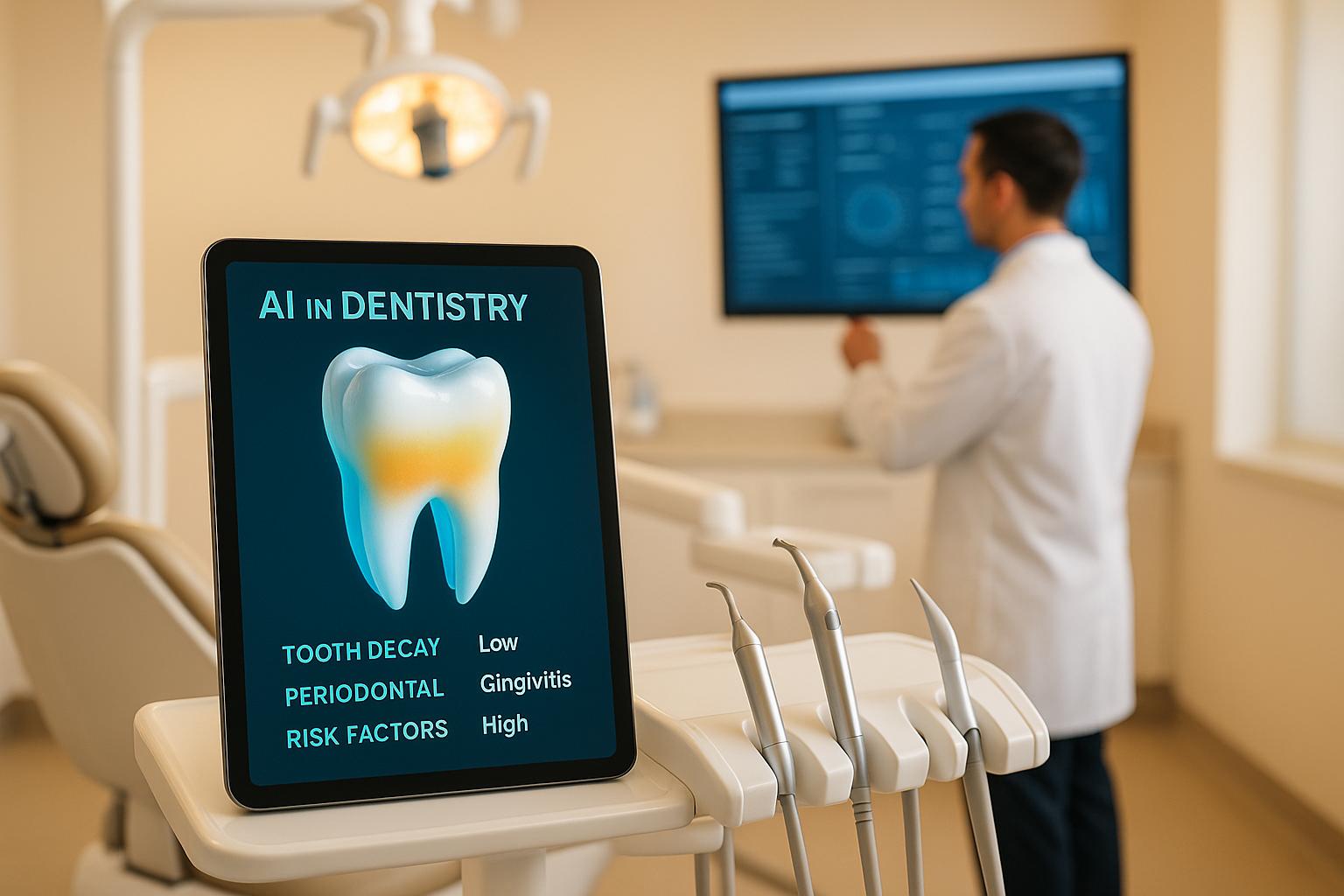
AI is reshaping dentistry by improving early detection of dental issues, creating tailored treatment plans, and encouraging better oral health habits. Here’s how it’s making a difference:
- Early Problem Detection: AI analyses X-rays and imaging to catch issues like decay or gum disease earlier than traditional methods.
- Personalised Care: By using patient data – like medical history, lifestyle, and habits – AI delivers recommendations specific to individual needs.
- Smart Tools for Patients: Devices like AI-enabled toothbrushes and saliva sensors provide real-time feedback to help users improve daily oral care.
- Streamlined Dental Practices: Automation tools handle scheduling, diagnostics, and treatment monitoring, freeing up time for dentists to focus on patients.
These advancements not only improve diagnosis and treatment outcomes but also help patients take an active role in their oral health. AI is transforming dental care into a more precise, data-driven, and patient-focused practice.
How AI is Transforming Dentistry | Future of Dental Care
How AI Creates Personalised Oral Health Insights
AI is reshaping dentistry by turning piles of patient data into practical, customised recommendations. By analysing individual information, AI crafts strategies that tackle specific risks, laying the groundwork for thorough patient assessments and ongoing monitoring.
AI Analysis of Patient Data for Custom Recommendations
Today’s AI systems dig deep into dental records, X-rays, clinical notes, and even lifestyle habits to create detailed risk profiles. These algorithms can spot patterns that might otherwise go unnoticed – like gradual bone density loss or links between certain medications and oral health issues. By comparing this information with thousands of similar cases, AI delivers tailored risk assessments and prevention strategies.
For example, if a patient has diabetes and poor brushing habits, the system might flag a higher risk for periodontal disease. In response, it could recommend more frequent cleanings or specific treatments to address those risks. This kind of customisation ensures preventive care focuses on what matters most for each individual.
Smart Devices for Live Oral Health Monitoring
AI isn’t just about crunching data – it’s also making everyday oral care smarter. AI-enabled dental devices are changing how people manage their oral health between dentist visits, offering real-time feedback and tracking.
Take smart toothbrushes, for instance. These devices analyse brushing habits on the spot and provide instant feedback via connected apps. They can point out missed areas, track how much pressure you’re applying, and even monitor brushing duration [1]. Over time, this helps users fine-tune their technique for better results.
Then there are wearable oral sensors, which bring continuous monitoring to the next level. From smart mouthguards to implantable sensors, these devices can measure pH levels, detect bacterial activity, and track biomarkers in saliva that might signal early signs of disease.
Some recent innovations include mouthguards that change colour when they detect volatile sulfur compounds (a sign of bacterial activity) and saliva sensors that monitor biomarkers for early disease detection.
One example is a pacifier biosensor designed for infants. It uses saliva to monitor glucose levels non-invasively, with a disposable electrode and a system that automatically collects and removes saliva. Another is the "Cavitas sensor", which tracks saliva glucose while protecting against contamination and interference from substances like ascorbic acid and uric acid [2].
Together, these devices create a feedback loop, reinforcing earlier personalised recommendations and helping patients stay on top of their oral health.
AI Reports That Make Oral Health Data Clear
One of AI’s standout features is its ability to turn complex data into easy-to-understand insights. It can generate visual, colour-coded reports that highlight risks, track improvements, and provide trend analysis, making it easier for patients and dentists to act proactively.
These reports pull data from multiple sources – smart devices, clinical exams, imaging studies – and compile it into a comprehensive oral health dashboard. Patients can see how their daily habits affect their oral health, which often motivates positive behavioural changes.
With predictive analytics, these reports can even flag potential problems before they become serious. For example, they might detect early signs of gum inflammation or identify areas at risk for cavities. This gives both patients and dentists the chance to address issues early, avoiding more extensive treatments down the line.
Better Patient Participation Through AI Tools
AI is playing a growing role in helping patients take charge of their oral health by offering immediate, tailored feedback. These tools go beyond just providing insights – they actively encourage individuals to make better choices for preventive care. This kind of real-time guidance works hand-in-hand with the personalised insights discussed earlier, creating a more proactive approach to oral health.
Instant Feedback to Encourage Prevention
Devices like AI-enabled smart toothbrushes are a great example. They track brushing habits in real time and notify users if they’re not brushing correctly [3]. This kind of instant feedback helps reinforce good habits, making it easier for people to stick to effective oral care routines over time.
sbb-itb-2be92ed
Clinical Advantages of AI in Dental Practice
AI is transforming dental care by helping dentists detect issues earlier, tailor treatment plans to individual needs, and improve overall patient outcomes.
AI for Early Detection of Dental Problems
AI is making early detection of dental issues more precise and reliable. While traditional visual exams are effective, they can sometimes miss early-stage problems that aren’t yet visible or symptomatic.
AI systems, with their advanced pattern recognition capabilities, excel at analysing dental X-rays and intraoral images. They can spot subtle changes in tooth structure that may signal the beginning stages of decay, even before it becomes noticeable to the human eye. Similarly, these tools can detect early signs of gum disease by identifying changes in gum tissue and bone density visible in radiographs.
AI is also proving to be a game-changer in oral cancer screening. By analysing tissue abnormalities, these systems can highlight areas that need closer examination, helping dentists identify serious conditions at their earliest – and most treatable – stages.
What sets AI apart is its consistency. Unlike human practitioners, who might overlook subtle signs due to fatigue or workload, AI provides consistent and precise analysis. This reliability supports more effective treatment planning and helps ensure no early warning signs are missed.
Custom Treatment Plans for Better Results
AI’s ability to process large amounts of data enables dentists to craft highly personalised treatment plans. These plans take into account a patient’s complete oral health history, genetic predispositions, lifestyle factors, past treatment responses, and even personal preferences.
In orthodontics, AI analyses facial structure, tooth alignment, and jaw positioning to predict how teeth will move over time. This allows for more accurate treatment planning, potentially shortening treatment durations and identifying complications before they arise.
In restorative dentistry, AI helps determine the best materials and techniques based on factors like bite force, grinding habits, and the restoration’s location. This tailored approach often results in longer-lasting repairs and reduces the likelihood of future issues.
Standard Methods vs AI-Powered Approaches
AI-powered approaches bring a level of precision and efficiency that traditional methods often cannot match.
| Aspect | Standard Methods | AI-Powered Approaches |
|---|---|---|
| Problem Detection | Relies on visual exams and practitioner experience | Uses pattern recognition to identify subtle, early-stage issues |
| Treatment Planning | Based on guidelines and clinical judgement | Leverages patient-specific data and predictive models for tailored plans |
| Consistency | Varies with practitioner experience and workload | Delivers consistent results regardless of external factors |
| Data Integration | Manual review of patient history | Automatic analysis of comprehensive patient data, including genetics and lifestyle |
| Preventive Focus | Reactive, addressing problems as they arise | Proactive, identifying risks and enabling early intervention |
| Treatment Monitoring | Periodic check-ups and visual assessments | Continuous data tracking and real-time progress updates |
These AI-driven approaches stand in stark contrast to traditional methods, offering a more proactive and data-driven way to enhance patient care.
Adding AI to Modern Dental Clinics
AI technology is making waves in the dental industry, bringing new levels of efficiency, precision, and patient-focused care. Across Australia, dental clinics are increasingly realising that AI isn’t just a futuristic idea – it’s a practical tool addressing everyday challenges in modern dentistry.
Streamlining Dental Workflows with AI
AI is reshaping the daily operations of dental clinics by automating repetitive tasks and optimising clinical processes, giving dentists more time to focus on their patients.
One of the most immediate benefits is administrative automation. AI-powered scheduling tools can handle appointment bookings, helping to minimise no-shows and keep clinics running smoothly. These systems can also extract data from forms, insurance documents, and medical records, reducing the risk of entry errors. This frees up reception staff to concentrate on patient care and coordination.
On the clinical side, AI is transforming diagnostic workflows. Advanced imaging systems can quickly analyse X-rays, flagging potential issues so dentists can prioritise urgent cases and dedicate more time to complex treatments. This not only speeds up routine screenings but also ensures critical conditions are addressed without delay. These tools often work hand-in-hand with clinical decision support systems, boosting overall efficiency.
Treatment planning has also become more seamless with AI integration. By optimising treatment schedules, clinics can better allocate resources and ensure patients receive timely, appropriate care.
Supporting Evidence-Based Patient Care with AI
AI is a powerful ally in evidence-based dentistry, giving practitioners access to vast clinical databases to help them make informed decisions while staying aligned with Australian healthcare standards.
With clinical decision support, AI provides real-time insights into the latest research and treatment protocols. By analysing patient-specific data alongside successful outcomes from similar cases, these systems can suggest treatment options that adhere to best-practice guidelines, such as those set by the Australian Dental Association.
AI also plays a key role in treatment monitoring, comparing patient progress to expected benchmarks. This enables dentists to adjust treatment plans as needed, improving outcomes and refining care strategies over time. Additionally, AI can identify patients at higher risk of complications, allowing for more targeted monitoring and preventive care – an approach that aligns with Australia’s emphasis on proactive health management.
When it comes to quality assurance, AI systems review treatment plans, flagging potential issues to ensure they meet clinical guidelines. This not only supports continuous professional development but also helps maintain a high standard of care.
AI in Australian Dental Practices
Australian dental clinics are fully embracing AI, leveraging its capabilities to improve both patient care and operational efficiency. From diagnostic tools to comprehensive management systems, AI is becoming an integral part of modern dentistry.
A popular starting point for many clinics is diagnostic imaging AI, which enhances the accuracy of X-ray interpretations and helps catch issues that might otherwise go unnoticed during routine exams. This is particularly valuable in busy practices where time is limited.
Next comes practice management integration, where AI systems handle scheduling, patient communication, treatment planning, and follow-ups. Clinics like Complete Smiles Bella Vista are already using advanced AI-supported technologies to deliver tailored care across a range of dental services.
Australia’s advanced digital health infrastructure and robust regulatory frameworks, such as those from the Australian Digital Health Agency, play a crucial role in supporting AI adoption. These guidelines ensure that AI systems prioritise patient privacy and data security while improving health outcomes.
Successful implementation also depends on education and training. Dental professionals are dedicating time to understanding AI’s strengths and limitations, ensuring it complements their expertise rather than replacing it. This balance preserves the human touch that remains central to dental care.
Conclusion: The Future of Personalised Dentistry with AI
AI is changing the landscape of dental care across Australia, shifting from one-size-fits-all approaches to tailored, patient-specific solutions. By analysing individual patient data, predicting potential issues, and crafting personalised treatment plans, AI is setting a new standard in preventive dentistry.
But it doesn’t stop at recommendations. AI is also encouraging patients to take charge of their oral health. With smart monitoring devices and interactive learning tools, people can stay informed and engaged. Add in AI-powered reminders, and patients are more likely to stick to their treatment plans, making this a team effort between technology and individuals.
One of AI’s most impressive contributions is its ability to detect and address oral health issues early. By identifying subtle changes that might be missed during routine check-ups, it allows for timely intervention, reducing the risk of complex or expensive treatments down the line.
AI also makes dental practices more efficient. Automation of tasks like scheduling and diagnostics frees up time for dentists to focus on what matters most – patient care. At the same time, decision-support systems ensure treatments are based on the latest clinical evidence, raising the bar for quality.
As these technologies become more integrated into dental practices, the possibilities for AI-driven care continue to grow. Australia’s robust digital health infrastructure and dedicated dental professionals are paving the way for ongoing progress. With wider adoption, patients can look forward to care that doesn’t just address current issues but actively works to prevent future ones.
The future of dentistry is a partnership between cutting-edge technology and skilled professionals. AI handles data and patterns, while dentists bring the human expertise needed for exceptional care. Together, they promise better outcomes, streamlined processes, and a personalised approach to oral health that lasts a lifetime.
FAQs
How does AI help dentists detect oral health issues earlier than traditional methods?
AI is transforming dentistry by making it easier to detect oral health issues early. With its ability to analyse dental images with impressive precision, AI can spot early signs of decay, bone loss, and other abnormalities that might go unnoticed during a routine check-up or on traditional X-rays.
Using advanced algorithms, AI systems can swiftly highlight potential concerns right after radiographs are taken. This means dentists can step in sooner, providing treatments that are less invasive and often more affordable. The result? Better care for patients and improved long-term oral health.
How do AI-powered tools like smart toothbrushes and saliva sensors improve oral health care?
AI-driven gadgets like smart toothbrushes and saliva sensors are transforming the way we approach oral health. These tools offer real-time, tailored feedback to help users improve their brushing habits. By tracking factors like brushing technique, pressure, and coverage, they guide individuals towards maintaining better oral hygiene.
Saliva sensors take things a step further by analysing saliva to spot early warning signs of issues like cavities or gum inflammation. Catching these problems early allows for preventive measures, promoting healthier teeth and gums over the long term.
How does AI improve dental care and enhance patient outcomes?
AI is reshaping modern dental care by boosting diagnostic accuracy, supporting tailored treatment plans, and simplifying administrative tasks. Through the analysis of dental images and patient records, AI helps dentists identify problems earlier and make more precise decisions, which can lead to improved patient outcomes.
On top of that, AI-driven predictive analytics can refine treatment schedules and make procedures more efficient. These developments not only elevate the standard of care but also provide patients with a more personalised and smooth experience.
Related Blog Posts
- AI Research in Oral Disease Detection: Key Findings
- How AI Improves Diagnostic Consistency in Dentistry
- 5 Benefits of AI in Laser Dental Treatments
- AI in Dentistry: Predicting Periodontal Disease
Important Notice: Any surgical or invasive procedure carries risks. Before proceeding, you should seek a second opinion from an appropriately qualified health practitioner.
Individual results may vary. The information provided in this article is for educational purposes only and does not constitute medical advice.
Checkout Related Blogs




Get in touch with us
For more information, call us now to start feeling better. Or fill the form below to make appointment
The Latest News from Complete Smiles
How to Clean Clear Plastic Retainers
Checklist for Choosing Wearable Dental Devices
Checklist for Choosing Cloud AI Platforms in Dentistry

Complete Smiles Bella VistaAccepts All Major Health Funds, Including





