





Top Safety Concerns for Nano Dental Restorations
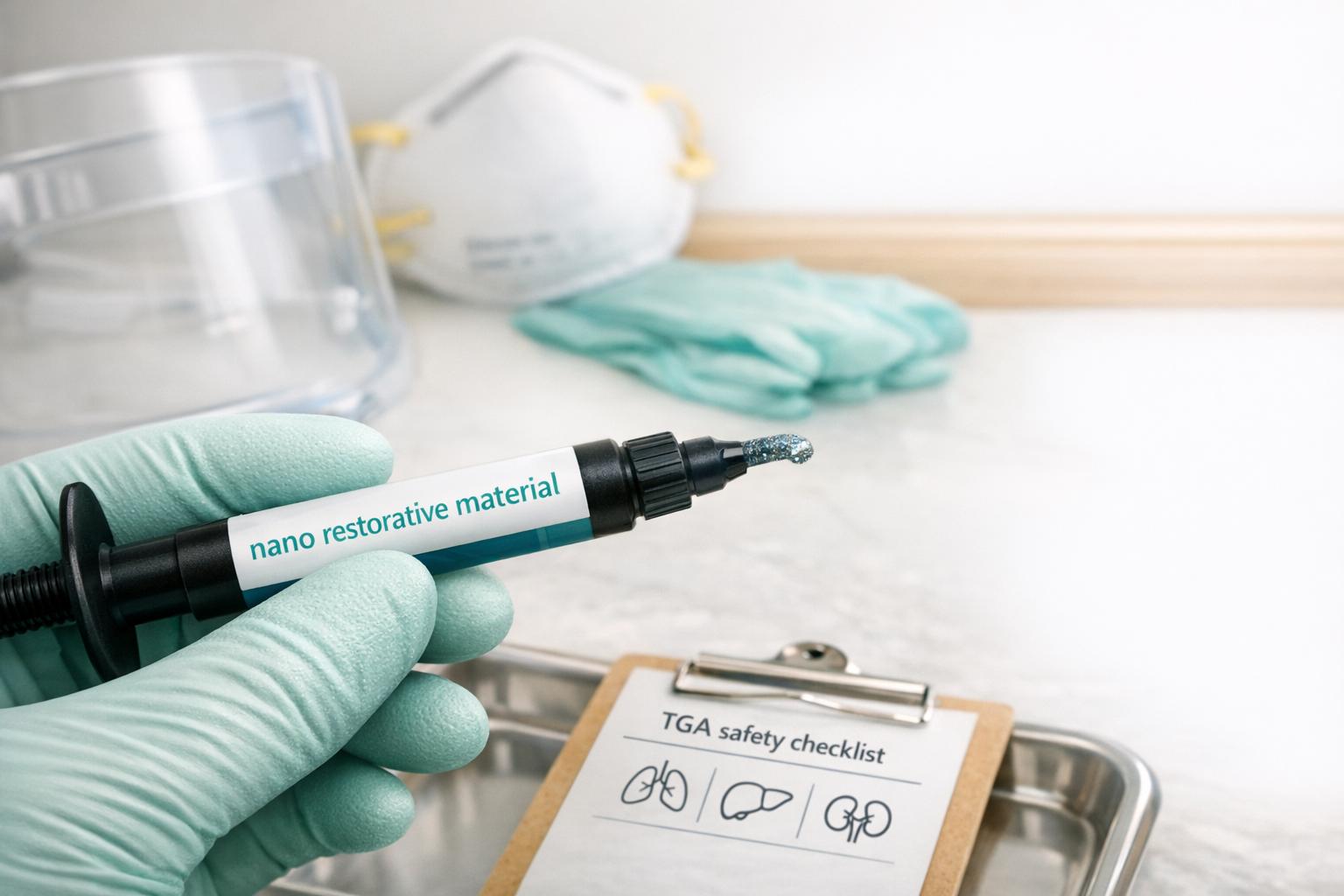
Nanotechnology is transforming dental care by improving materials like fillings, crowns, and implants. But while these advancements offer better strength, durability, and antibacterial nanomaterials, they also raise safety concerns for both patients and dental professionals. Key risks include:
- Toxicity: Nanoparticles can harm cells, cause DNA damage, and generate oxidative stress.
- Exposure: Dentists face inhalation risks during procedures, while patients may absorb nanoparticles over time.
- Organ Impact: Released particles can accumulate in the lungs, liver, brain, and kidneys.
- Regulatory Standards: In Australia, the Therapeutic Goods Administration (TGA) enforces strict rules to minimise these risks.
Protective measures like high-volume evacuation, certified PPE, and informed material selection are critical for safety. This article explains these risks and the strategies used to address them.
Safety Concerns of Nanomaterials in Dentistry
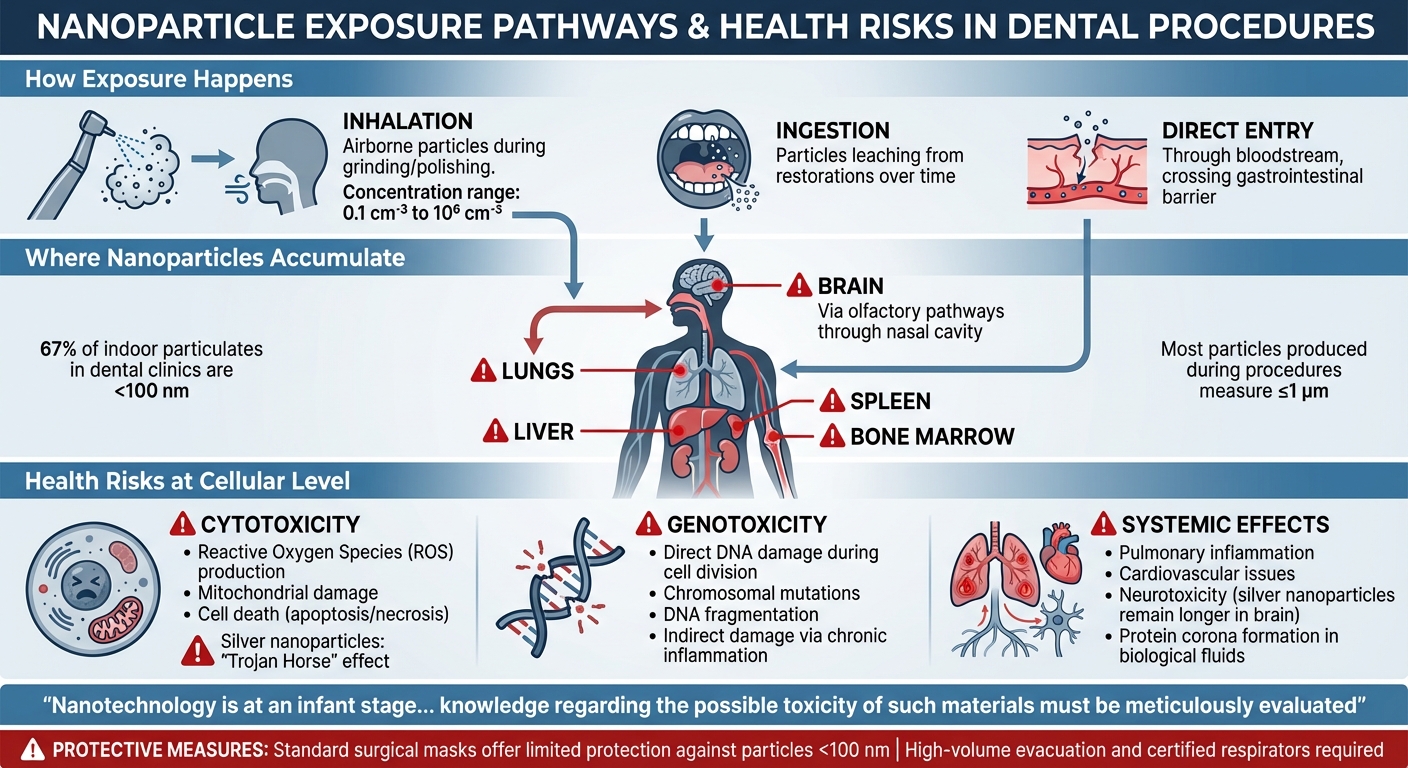
Nanoparticle Exposure Pathways and Health Risks in Dental Procedures
Nanomaterials bring plenty of promise to dental restorations, but their very nature also raises some crucial safety questions. Their tiny size and high reactivity, while making them effective, can also introduce risks for both patients and dental professionals.
To grasp the full picture, it’s important to understand how nanoparticles interact with the human body. For example, when nanoparticles enter biological fluids like saliva or blood, they form a "protein corona" by binding with proteins. This coating can change how the particles are distributed, processed, and eliminated by the body, which directly impacts their toxicity levels [3].
One of the biggest concerns is that these particles can bypass the body’s natural defences. Once they enter the bloodstream, they can travel to and build up in organs like the liver, spleen, kidneys, and even the brain [3].
How Exposure Happens
Exposure to nanoparticles can happen in a few ways. During dental procedures, such as shaping or polishing composite materials, nanoparticle dust can become airborne. In fact, the concentration of these particles in a dentist’s breathing zone can range from 0.1 cm⁻³ to as high as 10⁶ cm⁻³ [3]. Patients, on the other hand, may ingest nanoparticles that slowly leach from dental restorations over time. These particles can cross the gastrointestinal barrier, potentially causing effects throughout the body [3].
"Nanotechnology is at an infant stage… knowledge regarding the possible toxicity of such materials must be meticulously evaluated, and potential benefits must be weighed against the risks." – Farheen Tafti, Paediatric and Preventive Dentistry [3]
Cell Toxicity from Nanoparticles
One major concern is how nanoparticles might harm human cells. A key issue is the production of reactive oxygen species (ROS), which can overwhelm cells by damaging essential components like mitochondria. This oxidative stress may eventually lead to cell death, either through apoptosis or necrosis [3][4].
Silver nanoparticles, for instance, demonstrate what’s known as the "Trojan Horse" effect. These particles enter cells through endocytosis and release toxic silver ions inside, leading to oxidative damage and changes in gene expression [3]. Similarly, cadmium-based quantum dots, sometimes used in diagnostics, can disrupt calcium signalling in cells and interfere with DNA repair. Interestingly, smaller "green" variants of these dots may have stronger hormone-like effects compared to larger "orange" ones [3]. In addition, resin-based nanocomposites that aren’t fully polymerised can release harmful monomers into nearby tissues [4].
DNA Damage Risks
Another critical issue is the potential for DNA damage. Nanoparticles can harm DNA either directly or indirectly. Direct damage occurs when nanoparticles interact with DNA or related proteins, especially during cell division when the nuclear membrane is temporarily absent. This can lead to chromosomal mutations or DNA fragmentation. Indirect damage happens when chronic inflammation caused by nanoparticles generates free radicals, which then harm DNA over time. Considering that the majority of carcinogens act directly on DNA, any positive results in mutagenicity tests are vital for assessing cancer risks [4].
The small size of nanoparticles also allows them to cross barriers that usually protect sensitive areas. Silver nanoparticles, for example, can remain in the brain longer than in other organs, increasing the risk of neurotoxic effects. Once in the central nervous system, they can disrupt DNA and cause further cellular damage [5].
Nanoparticle Release into the Body
The risks don’t end once a dental restoration is placed. Over time, nanomaterials can release particles into the body, raising concerns about long-term effects. Composite fillings, which typically last around five years, can gradually break down due to exposure to saliva, temperature changes, and mechanical stress from chewing. This breakdown can influence how cells interact with any released particles [3].
Once released, nanoparticles can spread throughout the body. They may enter the bloodstream via inhalation, cross the gastrointestinal barrier after ingestion, or even reach the brain directly through the nasal cavity’s olfactory system [3]. This systemic movement can result in nanoparticle accumulation in unintended areas.
These particles also interact with bodily fluids in unexpected ways. For instance, titanium dioxide nanoparticles can bind to lysozyme in saliva, changing its structure and reducing its antibacterial effectiveness [3]. There’s also concern about exceeding safe exposure limits. For example, adults with more than four tooth surfaces restored using certain silver-containing materials may surpass the recommended exposure level for silver [4].
sbb-itb-2be92ed
Health Risks for Dental Professionals
Dental professionals face unique workplace hazards, particularly from repeated exposure to nanoparticles generated during dental procedures. While patients may encounter risks from nanomaterials in restorations, the dental team is exposed to these particles in a more persistent and concentrated manner. Procedures like grinding, shaping, and polishing restorations not only create advanced dental work but also release nanoparticle clouds that can pose serious health risks.
Breathing in Nanoparticle Dust
The most hazardous moments occur during abrasive dental procedures. For instance, when removing old restorations or shaping new composite materials with tools like diamond burs or polishing discs (e.g., Sof-Lex), nanoparticle concentrations in the breathing zone reach their peak levels [3]. A study revealed that around 67% of indoor particulates in some dental clinics were smaller than 100 nm, with most particles produced during procedures measuring ≤ 1 μm. Unfortunately, standard surgical masks offer limited protection against particles of this size [6].
"The clinical assessment revealed clearly distinguishable peak moments of high concentrations of nanoparticles in the breathing zone of the dentist and the patient in association with abrasive procedures of composite." – Farheen Tafti et al. [3]
The risks extend well beyond the respiratory system. Nanoparticles inhaled during these procedures can penetrate deep into the lungs, enter the bloodstream, and even reach the brain via the olfactory pathways in the nasal cavity. Once inside the body, these particles may accumulate in vital organs, leading to long-term health concerns. Carbon nanoparticle exposure, for example, has been linked to pulmonary inflammation, cardiovascular issues, and a higher risk of coronary heart disease [3][6].
Dental professionals also face risks from dermal and ocular absorption of metallic nanoparticles and vapours. This exposure can result in skin disorders, like allergic contact dermatitis, and other conditions. There’s even a recommendation for dental staff to remove jewellery during procedures since metallic particles can bond chemically with such items [6].
These immediate exposures highlight the need for vigilance and effective protective measures, particularly given the potential for longer-term health effects.
Long-Term Health Effects for Dental Staff
Prolonged exposure to nanoparticles raises concerns about more serious health outcomes, including genotoxicity, chronic inflammation, and cardiovascular problems [3]. Silver nanoparticles, in particular, are worrying due to their extended half-life in the brain compared to other organs. This could lead to neurotoxic effects, such as oxidative stress, over time [5].
Interestingly, the FDI World Dental Federation has noted that, despite decades of exposure to dental nanoparticles, there is no evidence of increased rates of lung disease among dental professionals [7]. This underscores the importance of effective mitigation strategies. Protective measures focus on two key areas: source control (minimising dust generation through proper techniques) and pathway control (using ventilation systems and personal protective equipment).
Enhanced safety practices, such as using certified respirators instead of standard surgical masks, high-volume suction systems, and local exhaust ventilation, can greatly reduce exposure risks [6]. These precautions are crucial for safeguarding dental professionals against both immediate and long-term health risks associated with nanoparticle exposure.
Specific Nanomaterial Safety Issues
Nanotechnology has brought advancements to dental restorations, but the use of titanium and silver nanoparticles comes with specific safety concerns that dental professionals need to address.
Titanium Nanoparticles in Dental Implants
Titanium is widely regarded as the go-to material for dental implants, boasting success rates above 95% [9]. However, it is not completely inert. Over time, factors like corrosion, wear, and mechanical stress can release titanium particles at the nano-scale into the bloodstream. These particles may accumulate in organs such as the lungs, liver, spleen, and bone marrow [8].
Once in the body, these nanoparticles can provoke inflammation by stimulating cytokines like IL-6, IL-1β, TNF-α, and PGE2 [8]. At higher concentrations, titanium nanoparticles have even been linked to cellular changes that may lead to mutagenic or carcinogenic effects [8]. Additionally, some patients might experience hypersensitivity to titanium or trace impurities like nickel or chromium, which can result in inflammation, pain, or even implant failure [10].
To minimise these risks, several strategies can be employed. These include using stable Morse taper joints to limit micromotion, avoiding excessive heat during drilling, selecting high-quality biocompatible titanium, and screening patients for metal allergies through LTT or patch tests [8][10]. These measures align with broader risk management practices in dental care.
Silver Nanoparticles and Antimicrobial Properties
Silver nanoparticles (AgNPs) bring a different set of benefits and challenges. Known for their strong antimicrobial properties, AgNPs are effective even at low concentrations (0.5–1.0%), helping to prevent biofilm formation – a major contributor to dental restoration failure [2][11]. In fact, AgNPs have been shown to outperform chlorhexidine gluconate (CHX) in both bacteriostatic and bactericidal activity at lower doses [11].
However, these antimicrobial benefits come with potential risks. AgNPs can exhibit dose-dependent cytotoxicity and genotoxicity, often through a "Trojan-horse" effect. This mechanism allows the nanoparticles to penetrate cells and release toxic ions internally [2][11]. Additionally, AgNPs can cross the blood-brain barrier and accumulate in the body due to their slow elimination, raising concerns about long-term neurotoxicity [9].
To balance safety and efficacy, research suggests keeping AgNP concentrations below 10 μg/ml. At this level, they remain biocompatible with osteoblasts while still providing effective antimicrobial protection [9]. For dental professionals, the challenge lies in leveraging the infection-control advantages of silver nanoparticles while carefully managing their potential for cellular and systemic toxicity.
Australian Regulation of Nano Dental Materials
How the TGA Regulates Nanomaterials
Australia has implemented stringent regulations to manage the risks tied to nanomaterials in dental restorations. These materials are governed under the Therapeutic Goods (Medical Devices) Regulations 2002, with the Therapeutic Goods Administration (TGA) defining a nanomaterial as having at least one external dimension between 1 and 100 nanometres [12][13].
A key regulation, Essential Principle 7.7, mandates that medical devices be designed to minimise risks from particles entering the patient’s body. The regulation specifically states:
"A medical device must be designed and produced in a way that ensures that any risks associated with the size and the properties of particles which are, or can be, released into a patient’s or user’s body are minimised." [12]
"In minimising risks, particular attention must be given to the use of nanomaterials." [12]
Most dental materials, such as composite resins, glass ionomers, and other fillings, ceramics, and bonding systems, fall under the category of "specified articles" and must be listed in the Australian Register of Therapeutic Goods (ARTG) [14][15]. For practitioners importing dental restoration materials, this makes them legal sponsors, responsible for ensuring ARTG registration and compliance with safety standards [14][15]. Even when a dental restoration is crafted in-house using ARTG-listed materials (e.g., a crown), practitioners are still obligated to provide usage instructions and report any adverse events to the TGA. Furthermore, all implantable dental devices, such as implants, abutments, and miniscrews, require ARTG inclusion [14].
These robust local regulations ensure Australia remains aligned with international safety practices.
Global Standards and Australian Compliance
Australia’s regulatory framework for nanomaterials in dental applications aligns with international standards, such as the European Union’s Regulation 2017/745. This alignment enhances global consistency and reduces the regulatory burden on manufacturers [12][13]. In 2021, the TGA clarified its requirements for nanomaterials in the Essential Principles, offering manufacturers clearer guidance and providing dental practitioners with greater legal certainty. These updates also address risks from nanoparticles created by wear or grinding, ensuring ongoing safety monitoring [13].
Dental clinics are encouraged to confirm that materials they purchase are already included in the ARTG by their Australian supplier. This step helps avoid unintentional sponsor responsibilities. Additionally, clinics must establish protocols to comply with these regulations and monitor the long-term safety of the materials they use [14][15].
How Dental Practices Reduce Nanomaterial Risks
Choosing and Testing Safe Materials
Dental clinics prioritise safety by using materials listed on the Australian Register of Therapeutic Goods (ARTG), ensuring they meet the Therapeutic Goods Administration’s (TGA) rigorous safety and testing standards. When selecting nanocomposites, ceramics, or bonding systems, practitioners carefully assess their mechanical performance and fracture resistance and biocompatibility. For example, nanoparticles like nano-hydroxyapatite, zirconia, and silver are chosen based on their specific properties and safety profiles. These informed choices lay the groundwork for robust in-clinic safety protocols.
Safety Protocols in Dental Clinics
The restoration and finishing process in dental procedures can expose staff to nanoparticles, which may be inhaled or ingested. To mitigate this, clinics implement several protective measures, including high-volume evacuation systems, certified personal protective equipment (PPE), and proper ventilation. These measures help minimise exposure and reduce potential risks to critical organs such as the lungs, skin, brain, liver, and kidneys [1].
Informing Patients About Treatment Materials
Beyond material selection and procedural safeguards, clear communication with patients is a key aspect of risk management. Dental professionals are expected to inform patients about the nanomaterials being used and potential exposure pathways. As highlighted in the Saudi Dental Journal:
"The paper also aims to create awareness among dental professionals, students, and patients regarding nanoparticle exposure and its adverse effects, and methods to prevent and overcome these effects" [1].
Practitioners take the time to explain the types of nanomaterials being used in each treatment, outlining their benefits and any relevant safety considerations. This transparent approach ensures patients can provide informed consent and fosters trust by emphasising the regulatory measures in place to protect their health.
Conclusion
Nanotechnology has transformed dental restorations, improving their durability, appearance, and bioactivity. However, there are valid concerns about the potential risks, including cytotoxicity, genotoxicity, and the systemic impact of nanoparticles. These risks are particularly pronounced during finishing and polishing procedures, where nanoparticle dust can be inhaled or ingested, potentially affecting vital organs like the lungs, brain, liver, and kidneys [1].
The dental field has taken these concerns seriously, implementing stringent safety measures. In Australia, clinics adhere to the use of TGA-approved materials listed on the ARTG, ensuring nanomaterials comply with strict biocompatibility and performance standards. As Murtada A. Ahmed highlights:
"Nanotechnology has catalysed a shift from biopassive to bioactive dentistry, solving the critical failures of polymerisation shrinkage, secondary caries, and mechanical wear" [16].
This shift to bioactive dentistry underscores how advancements in nanotechnology have addressed both clinical challenges and safety concerns. Modern dental practices now employ robust safety protocols, including thorough risk assessments, high-volume evacuation systems, and certified PPE, to safeguard both practitioners and patients during high-risk procedures. Additionally, transparent communication about treatment materials ensures patients are well-informed.
The anticipated growth of the nanodentistry market to US$1.8 billion by 2030 signals not only progress in technology and clinical applications but also trust in these comprehensive safety measures. This trust extends to other innovations, such as nanotechnology in dental anesthesia, By adhering to regulatory standards and maintaining rigorous safety practices, Australian dental professionals continue to harness the potential of nanotechnology while prioritising the well-being of patients and staff alike.
FAQs
Can nanoparticles from fillings or crowns enter my bloodstream?
Nanoparticles from dental fillings or crowns have the potential to enter the bloodstream, often through mucosal tissues or surrounding pathways. Once these particles are in circulation, they can travel to various organs, including the brain, where they might pose risks like neurotoxicity. However, modern dental materials undergo rigorous testing to ensure they meet strict safety standards, prioritising patient health and minimising such risks.
Are nano dental materials safe for children and pregnant people?
Current studies indicate that nanomaterials used in dental restorations could pose safety concerns. These include possible toxicity and their ability to cross physiological barriers. However, there’s limited safety data specifically addressing their effects on children and pregnant individuals. It’s always best to consult your dentist for tailored advice regarding dental materials and treatments.
How can I check if a nano dental product is TGA/ARTG approved?
To check if a nano dental product is approved by the TGA (Therapeutic Goods Administration) and listed on the ARTG (Australian Register of Therapeutic Goods), head to the TGA’s official website. Use the ARTG database to search for the product. This database includes all therapeutic goods approved for use in Australia, confirming the product has been assessed and complies with safety standards.
Related Blog Posts
- Nanocomposites in Dentistry: Safety Concerns
- Biocompatibility of Dental Nanomaterials: Overview
- Nanotechnology vs Traditional Dental Materials
- How Nanotechnology Improves Dental Restoration Durability
Important Notice: Any surgical or invasive procedure carries risks. Before proceeding, you should seek a second opinion from an appropriately qualified health practitioner.
Individual results may vary. The information provided in this article is for educational purposes only and does not constitute medical advice.
Checkout Related Blogs




Get in touch with us
For more information, call us now to start feeling better. Or fill the form below to make appointment
The Latest News from Complete Smiles
How to Clean Clear Plastic Retainers
Checklist for Choosing Wearable Dental Devices
Checklist for Choosing Cloud AI Platforms in Dentistry

Complete Smiles Bella VistaAccepts All Major Health Funds, Including





