





Biocompatibility of Dental Nanomaterials: Overview
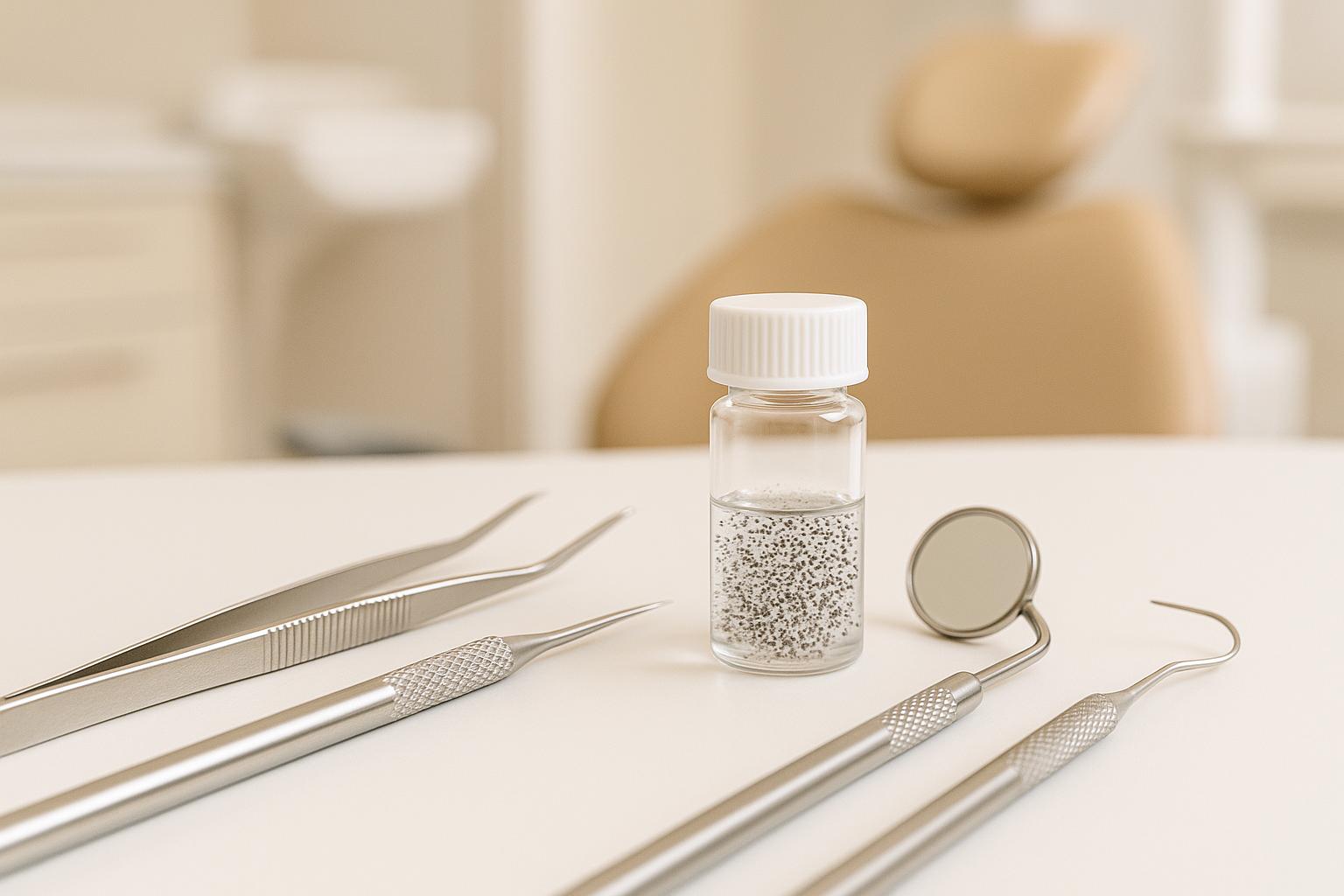
Nanotechnology is transforming dental care by creating materials that interact directly with oral tissues for safer, more effective treatments. Dental nanomaterials are designed to be safe for long-term use in the mouth, helping to prevent inflammation, allergies, and toxicity. They also improve the strength, appearance, and antimicrobial properties of dental restorations.
Key points about dental nanomaterials:
- Nanofillers: Enhance durability and aesthetics in fillings and veneers.
- Metal oxide nanoparticles: Provide antimicrobial protection and reduce bacterial growth.
- Bioactive materials: Support natural tooth repair and strengthen enamel.
In Australia, strict regulations by the Therapeutic Goods Administration (TGA) ensure these materials meet rigorous safety standards. While they offer improved outcomes, they also come with challenges like higher costs and limited long-term data. Dentists must weigh these factors to choose the best material for each patient.
Dental nanomaterials are advancing oral healthcare, but balancing innovation with safety is essential. Always consult a qualified dentist to explore the best options for your needs.
Nanotechnology in Dentistry | Dental Webinar | Experience Dentistry
Types of Dental Nanomaterials
In modern dentistry, nanomaterials are designed to tackle specific challenges in oral health and aesthetics, operating at the molecular level to outperform traditional dental materials. These advancements have led to three main categories of nanomaterials, each with unique applications that enhance both functionality and appearance.
Nanofillers in Dental Composites
Nanofillers are the cornerstone of cosmetic dentistry, widely used in dental composites to create restorations that are both durable and natural-looking.
Silica nanoparticles are the most common type of nanofiller. Their uniform size and spherical shape allow for tight packing, which creates a smooth surface resembling natural enamel. This structure not only improves aesthetics but also enhances resistance to wear and staining. These nanoparticles are embedded in a Bis-GMA-based resin matrix, ensuring strength and durability during chewing.
For high-stress areas, zirconia nanofillers are often used. These particles deliver exceptional strength and help control opacity, making them ideal for posterior restorations where durability is critical. Their nanoscale size also allows for precise colour matching without compromising light transmission, ensuring a seamless blend with natural teeth. Complete polymerisation ensures the nanofillers remain securely bonded within the resin, preventing particle release over time.
Metal Oxide Nanoparticles
Metal oxide nanoparticles bring antimicrobial properties to dental materials, reducing the risk of bacterial colonisation around restorations. They release metal ions that disrupt bacterial cell walls and interfere with their metabolic processes.
Titanium dioxide nanoparticles are particularly valuable for their ability to enhance opacity and brightness while providing antimicrobial protection through photocatalysis. Zinc oxide nanoparticles offer additional benefits, such as anti-inflammatory properties, making them a versatile choice for dental applications. Meanwhile, silver nanoparticles, known for their potent antimicrobial effects, are typically reserved for non-visible areas due to aesthetic concerns.
The safety of these nanoparticles depends on their integration into dental materials and the controlled release of metal ions, ensuring they provide benefits without adverse effects. Together with nanofillers, these particles contribute to multifunctional dental restorations that combine strength, aesthetics, and antimicrobial defence.
Bioactive and Calcium Phosphate Nanomaterials
Bioactive nanomaterials go beyond structural support by actively participating in tooth repair and remineralisation. These materials are particularly effective in promoting natural healing processes within the tooth.
Hydroxyapatite and bioactive glass nanoparticles aid in biomineralisation by releasing calcium and phosphate ions, which help repair enamel. Calcium phosphate nanomaterials, closely resembling natural tooth minerals, not only integrate seamlessly with the tooth structure but also stimulate odontoblast activity – encouraging the natural formation of dentin.
Fluorapatite nanoparticles further enhance protection by forming a more acid-resistant mineral phase. This is achieved by substituting fluoride ions into their crystal structure, offering significant benefits for patients prone to acid erosion.
Manufacturing these bioactive nanomaterials requires precise control over particle size, shape, and surface chemistry. Surface modifications, such as silane coupling agents, ensure these particles bond effectively with resin matrices while retaining their bioactive properties. These advancements align with minimally invasive approaches that are central to cosmetic dentistry practices across Australia.
Testing Dental Nanomaterial Safety
Dental nanomaterials are put through extensive safety evaluations to ensure they are safe for use in your mouth. These tests adhere to strict international guidelines, combining laboratory analyses and clinical trials. This thorough process is essential for integrating nanomaterials into modern dentistry.
Safety Requirements
Nanomaterials used in dentistry must meet rigorous safety standards. First and foremost, they must be non-toxic, meaning they should not release harmful substances that could damage oral cells or tissues. Additionally, they must be non-genotoxic, ensuring they do not cause genetic damage during long-term exposure to oral tissues.
Another critical factor is compatibility with oral tissues. These materials need to work harmoniously with tooth enamel, dentine, and gum tissues, avoiding any inflammatory reactions or allergic responses. Beyond that, they should support normal cellular functions and allow the body’s natural healing processes to continue without interference.
Testing Methods
The safety evaluation of dental nanomaterials is guided by the ISO 10993 series, a globally recognised framework for testing biological materials [2][3]. This step-by-step approach moves from initial lab studies to human clinical trials, ensuring comprehensive safety checks.
The process begins with characterisation studies, where experts analyse the chemical makeup, particle size, surface area, and how the material behaves in biological fluids [1]. These studies help predict how the material will interact within the oral environment.
Next is cytotoxicity testing, which uses both phagocytic and non-phagocytic cell lines to understand how nanomaterials interact with various cell types [1]. This is especially important because the small size of nanoparticles can lead to increased cellular uptake.
For dental-specific applications, ISO 7405 provides additional testing protocols, such as pulp capping and endodontic tests, to assess how nanomaterials affect sensitive pulp tissue [2].
Haemocompatibility tests are also conducted to ensure the materials interact safely with blood during dental procedures [1]. The unique properties of nanomaterials, like their high surface-to-volume ratio, make these tests particularly important.
Genotoxicity is evaluated using mammalian cell systems rather than traditional bacterial tests, as the latter are unsuitable for nanoparticles [1]. This ensures a more accurate understanding of any potential genetic risks.
Through these systematic tests, researchers gain a detailed understanding of how dental nanomaterials perform in the complex environment of the mouth.
How Materials Interact with Mouth Tissues
Understanding how dental nanomaterials interact with oral tissues is crucial for their safe and effective use. These materials must bond well with enamel, dentine, and pulp tissue to seal dentinal tubules, reduce sensitivity, and protect pulp integrity. At the same time, they must avoid causing systemic issues, such as migration through the lymphatic system or harmful effects on organs.
Pulp tissue compatibility is particularly important, as the pulp contains vital nerves and blood vessels. Testing ensures that nanomaterials do not trigger inflammation or interfere with dentine formation. Systemic toxicity tests also examine their effects on key organs like the liver, spleen, kidneys, brain, and bone marrow [1].
Soft tissue interaction is another focus, especially regarding gum health. Specialised tests, such as intracutaneous reactivity evaluations, are used instead of traditional skin barrier tests to assess how nanomaterials affect gum tissues [1]. This helps prevent issues like gum irritation, recession, or other periodontal complications.
Finally, the preparation of samples for these studies involves tailored protocols. For example, avoiding sample filtration and using surface-based extraction ratios are necessary to account for the unique properties of nanomaterials [1]. These customised approaches ensure accurate results when assessing how nanomaterials behave in the oral environment.
sbb-itb-2be92ed
Benefits and Drawbacks of Dental Nanomaterials
Dental nanomaterials have brought new possibilities to dental care, offering improved treatment outcomes. However, their use comes with both advantages and challenges.
Benefits of Nanomaterials
Nanomaterials build on established safety standards while delivering noticeable improvements in dental treatments.
- Improved durability: Nanofillers in composite resins provide excellent wear resistance and compressive strength. This allows dental restorations to better withstand daily chewing and grinding, potentially lasting longer than traditional materials.
- Antimicrobial properties: Many nanomaterials, especially those containing silver or zinc oxide nanoparticles, actively combat harmful bacteria in the mouth. This reduces the risk of secondary decay around fillings and supports better oral health.
- Enhanced aesthetics: Smaller nanoparticles improve surface smoothness and light reflection, resulting in restorations that closely resemble natural teeth. They are also easier to polish, helping maintain their shine over time.
- Biocompatibility: Nanomaterials are designed to integrate well with oral tissues, minimising inflammation and supporting healing.
- Precision in treatment: The tiny particle size allows for better adaptation to tooth structures. This means dentists can perform more conservative treatments, preserving more of the natural tooth.
Drawbacks and Risks
Despite their advantages, dental nanomaterials come with some limitations.
- Higher costs: Nanomaterials are more expensive than conventional materials, which can lead to higher treatment fees. This may make them less accessible for some patients.
- Limited long-term data: Since many nanomaterials are relatively new, long-term safety studies are still ongoing. This creates some uncertainty about potential effects that might emerge after extended use.
- Specialised handling: Nanomaterials often require specific storage, mixing, and application techniques. Dentists may need additional training and equipment, which could increase costs for dental practices.
- Allergic reactions: Although rare, some individuals may experience allergic responses to metal-based nanoparticles, necessitating alternative treatments.
- Production challenges: Manufacturing nanomaterials is complex, and maintaining consistency can be difficult. Variations in particle size or surface properties could impact their performance, requiring rigorous quality control.
Comparison Table: Benefits vs. Drawbacks
| Aspect | Benefits | Drawbacks |
|---|---|---|
| Mechanical Properties | Superior strength and wear resistance | Requires specialised handling techniques |
| Antibacterial Action | Reduces bacterial growth and decay | Limited long-term safety data |
| Aesthetics | Natural appearance and polish retention | Higher material and treatment costs |
| Biocompatibility | Supports tissue integration and healing | Potential for rare allergic reactions |
| Application Precision | Allows for conservative treatments | Technical complexity in application |
| Durability | Longer-lasting restorations | Challenges in manufacturing consistency |
| Treatment Outcomes | Better clinical success rates | Requires additional practitioner training |
When deciding between nanomaterials and traditional options, it’s essential to weigh these factors carefully. Dentists must consider each patient’s unique needs, oral health condition, and treatment objectives. Regardless of the material chosen, regular check-ups are crucial to ensure long-term success and maintain oral health.
Clinical Use and Safety Standards in Australia
When it comes to using nanomaterials in clinical settings, ensuring they are safe and compatible with the human body is a top priority. In Australia, dental nanomaterials are becoming a common feature in dental practices, particularly in cosmetic dentistry.
Uses in Cosmetic Dentistry
Nanomaterials have brought noticeable improvements to cosmetic dentistry, offering solutions that are both effective and minimally invasive. For instance:
- Porcelain veneers with nanofillers: These veneers achieve a smoother surface and better light reflection, mimicking the appearance of natural enamel. Plus, they allow for more conservative tooth preparation, preserving more of the patient’s natural tooth structure.
- Titanium dioxide nanoparticles in implants: These are used to modify the surface of dental implants, enhancing osseointegration. This process helps the implant bond effectively with the jawbone, potentially improving healing times and long-term stability.
- Teeth whitening with nano-hydroxyapatite: This technology supports remineralisation and reduces sensitivity during whitening treatments, making the process more comfortable for patients.
- Nanofilled composite resin fillings: These fillings stand out for their ability to retain polish and maintain colour stability better than some traditional materials, offering results that may last longer and look more natural.
Australian Regulatory Standards
Australia takes a rigorous approach to regulating dental materials, including those enhanced with nanotechnology. The Therapeutic Goods Administration (TGA) oversees these materials, classifying them as medical devices.
Dental practitioners are required to use only TGA-approved products. A traceability system is in place to quickly identify and address any safety issues. Additionally, post-market monitoring and ongoing professional education ensure that standards stay up to date. This regulatory framework helps dentists select materials that are both safe and suitable for each patient.
Customised Treatment Options
Tailoring treatment to the individual is a key aspect of using nanomaterials in dentistry. Before choosing a material, practitioners carefully review a patient’s medical history to check for allergies or conditions that might require alternative options.
Other factors, such as bruxism (teeth grinding) or active periodontal disease, also play a role in selecting materials. For example, some nanomaterials are designed to offer extra wear resistance or antimicrobial properties, making them better suited for patients with specific needs.
In Australia, the integration of dental nanomaterials is guided by strict regulations and thorough clinical evaluations, ensuring treatments are not only effective but also safe and personalised for each patient.
Conclusion
Dental nanomaterials represent a significant leap forward in improving both the effectiveness and safety of treatments. This progress is supported by rigorous testing protocols, which are essential for ensuring these materials interact safely with oral tissues. For dental practitioners and patients alike, understanding biocompatibility is key as these innovations continue to transform oral healthcare.
Comprehensive biocompatibility testing – ranging from initial cytotoxicity assessments to long-term evaluations – plays a vital role in identifying potential risks early. These detailed studies establish clear safety profiles, ensuring that materials used in practice are reliable and safe.
In Australia, regulatory oversight by the Therapeutic Goods Administration (TGA) ensures that only thoroughly vetted nanomaterials are approved for dental use. From medical device classifications to strict post-market monitoring, these frameworks provide an added layer of reassurance.
As discussed earlier, the advantages of dental nanomaterials shine in cosmetic dentistry. They offer enhanced aesthetics, greater durability, and reduced sensitivity, making them valuable tools for achieving high-quality results. However, their higher costs and the need for specialised handling underscore the importance of careful material selection tailored to each patient’s needs.
Looking to the future, nanomaterials are set to play an even bigger role in Australian dental care. They promise treatments that are not only more effective but also longer-lasting. Patients are encouraged to have open discussions with qualified dental professionals about biocompatibility to make well-informed choices.
The challenge ahead lies in striking the right balance between innovation and safety, ensuring that advancements continue to prioritise patient well-being and biocompatibility.
FAQs
What are the possible long-term risks of using dental nanomaterials, given the current lack of extensive research?
The long-term effects of dental nanomaterials are still not fully understood, mostly because research in this area is limited. Some potential risks include genotoxicity, which refers to DNA damage, oxidative stress, and cytotoxicity, meaning harm to cells and tissues over extended periods. There’s also the possibility of broader health effects, such as lung inflammation, damage to organs, or even cancer-related outcomes. However, these risks are not yet fully proven and need more in-depth study.
While these materials bring many advantages to dental care, ongoing research is crucial to ensure their safety. If you have concerns, it’s a good idea to talk to your dentist. They can offer advice specific to your situation, guided by the most up-to-date research.
How do metal oxide nanoparticles in dental materials help improve oral health?
Metal oxide nanoparticles, like titanium dioxide and cerium oxide, are making waves in oral health care thanks to their antimicrobial abilities. These tiny particles actively combat harmful bacteria in the mouth and help soothe gum inflammation.
Here’s how they work: these nanoparticles release metal ions and create reactive oxygen species. This combination disrupts bacterial activity and stops biofilms – those sticky layers of bacteria – from forming. As a result, they help shield your teeth and gums from common problems like cavities and gum disease, creating a healthier environment in your mouth.
By keeping the oral microbiome balanced and lowering the risk of infections, these materials contribute not just to oral health but also to better overall well-being.
What should I consider when choosing between traditional dental materials and nanomaterials?
When choosing between traditional dental materials and nanomaterials, it’s essential to have an open conversation with your dentist about their biocompatibility and safety. Nanomaterials may interact with the body in ways that differ from more conventional options, so understanding their potential effects and long-term safety is key.
Other factors to think about include durability, appearance, and how well the materials suit your specific health requirements. It’s also worth discussing any ethical concerns or environmental impacts tied to nanomaterials, especially if these issues are important to you. Your dentist can guide you through these considerations to help you make a well-informed choice that supports your oral health and personal values.
Related Blog Posts
- What Are Biocompatible Dental Materials?
- Nanomaterials in Dentistry: Wear Resistance Explained
- Nanocomposites for Pulp Regeneration: Key Features
- Antimicrobial Nanocomposites for Tooth Regeneration
Important Notice: Any surgical or invasive procedure carries risks. Before proceeding, you should seek a second opinion from an appropriately qualified health practitioner.
Individual results may vary. The information provided in this article is for educational purposes only and does not constitute medical advice.
Checkout Related Blogs




Get in touch with us
For more information, call us now to start feeling better. Or fill the form below to make appointment
The Latest News from Complete Smiles
How to Clean Clear Plastic Retainers
Checklist for Choosing Wearable Dental Devices
Checklist for Choosing Cloud AI Platforms in Dentistry

Complete Smiles Bella VistaAccepts All Major Health Funds, Including





