





Comparing Lifecycle Impacts of Dental Fillings
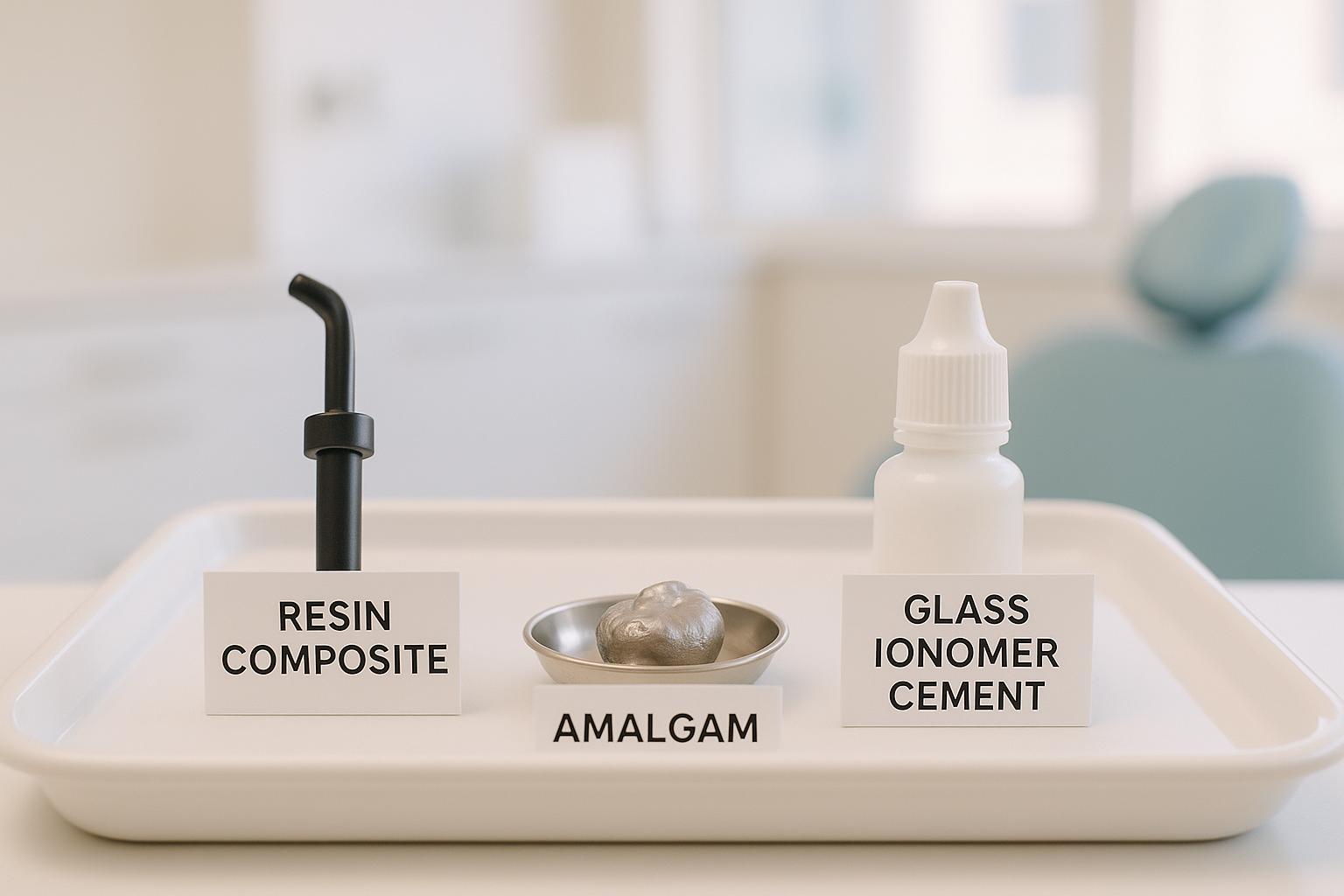
Choosing the right dental filling material isn’t just about durability or aesthetics – it also involves considering how materials impact the planet. Here’s a quick breakdown:
- Resin Composites: Tooth-coloured and widely used, but their production and disposal leave a larger carbon footprint. They typically last 7–10 years.
- Dental Amalgam: Known for durability (15–20+ years) and affordability but contains mercury, requiring strict waste management.
- Glass Ionomer Cements: Releases fluoride to prevent further decay and is easier to dispose of. However, it’s weaker and better suited for low-stress areas.
Quick Comparison
| Material | Durability | Aesthetics | Lifecycle Impact | Best Use Cases |
|---|---|---|---|---|
| Resin Composites | 7–10 years | Tooth-coloured | Higher footprint | Front and back teeth (visible areas) |
| Dental Amalgam | 15–20+ years | Metallic appearance | Lower footprint | Back teeth (high-stress areas) |
| Glass Ionomer | 5–10 years (lower) | Moderate appearance | Lower footprint | Low-stress areas, paediatric cases |
Each material has pros and cons – your dentist can help you choose based on your needs and priorities.
1. Resin Composites
Material Composition
Resin-based composites (RBCs) are tooth-coloured fillings made from a mix of organic monomers and inorganic fillers. Common monomers like BisGMA, UDMA, TEGDMA, and HEMA create a polymer matrix when cured [3][4]. Widely used in Australian dental practices, RBCs have become a preferred alternative to mercury-containing amalgam, aligning with the Minamata Convention. These composites combine synthetic resins with glass or ceramic particles to mimic the appearance of natural teeth. However, this composition brings certain environmental challenges, which are explored below.
Impact on Environment
A life cycle assessment compared the environmental impact of RBCs with other materials and found their Global Warming Potential (GWP) to be approximately 0.189 kg CO2-eq per restoration (including the adhesive system). This is higher than dental amalgam at 0.125 kg CO2-eq and glass ionomer cement at 0.059 kg CO2-eq [2][6]. Energy usage plays a major role in this impact, with material processing contributing about 29.6% and packaging accounting for 57.1% of the total GWP [2].
RBCs also present sustainability concerns as they are not biodegradable. Microparticles created during clinical processes like polishing, removal, or CAD/CAM milling can enter wastewater systems [3][5]. Additionally, these composites release monomers and degradation by-products, including Bisphenol A (BPA), which may accumulate in ecosystems over time [1][3][4]. The full extent of these long-term environmental effects is still being studied.
Clinical Performance
From a clinical standpoint, RBCs are valued for their aesthetic qualities and their ability to bond directly to teeth, allowing for more conservative cavity preparations. However, their application requires meticulous technique and strict moisture control to ensure success.
2. Dental Amalgam
Material Composition
Dental amalgam has been used as a metallic filling material for over 150 years. It consists of roughly 50% elemental mercury combined with a metal alloy powder made up of silver, tin, copper, and occasionally zinc. When these components are mixed, they undergo a chemical reaction known as amalgamation, which creates a stable material that hardens within minutes after being placed.
The inclusion of mercury has sparked ongoing discussions and regulatory scrutiny. In Australia, the use of dental amalgam has declined, particularly in visible areas, largely due to aesthetic preferences. These material characteristics also play a role in shaping its environmental impact.
Impact on Environment
Studies examining the life cycle of dental amalgam suggest that it may have a smaller carbon footprint compared to some alternative filling materials. However, managing mercury remains a key challenge. Australia has ratified the Minamata Convention on Mercury, which calls for reduced use of mercury-containing products like amalgam. To comply, Australian dental practices implement stringent mercury waste management protocols, including the use of amalgam separators to limit mercury release into wastewater systems.
Another environmental benefit of amalgam is its durability, which reduces the need for frequent replacements, thereby lowering its overall ecological footprint over time.
Clinical Performance
Dental amalgam is highly valued for its durability and long-lasting performance. Studies consistently show that amalgam fillings can remain functional for many years, particularly in back teeth where chewing forces are strongest. This resilience is due to amalgam’s ability to handle heavy occlusal loads and resist wear.
Unlike composite materials, placing amalgam is less technique-sensitive, making it a reliable option in situations where maintaining a dry field is difficult. This makes it especially useful in paediatric dentistry or when treating patients with limited ability to open their mouths.
Although thermal expansion can occasionally cause marginal gaps, amalgam compensates with its self-sealing properties. Corrosion products naturally fill microscopic gaps, reducing the risk of leakage.
Modern high-copper amalgams, introduced in the 1970s, have further improved clinical outcomes. These formulations show less creep, better resistance to corrosion, and enhanced marginal integrity, ensuring their continued success in appropriate cases.
3. Glass Ionomer Cements
Material Composition
Glass ionomer cements are a blend of fluoroaluminosilicate glass powder and polyacrylic acid liquid, creating a material that chemically bonds to tooth structure. This bond forms through an acid-base reaction, particularly interacting with calcium ions in dentine and enamel.
The glass component typically includes silicon dioxide, aluminium oxide, calcium fluoride, and either sodium or calcium phosphate. This unique combination allows glass ionomers to release fluoride ions over time, which helps prevent secondary decay around fillings. Unlike composite resins, these cements don’t rely on light activation or additional catalysts to cure, making them especially useful in challenging clinical situations.
Modern advancements have introduced resin-modified glass ionomers, which incorporate small amounts of light-curable resin. This addition enhances their physical properties while preserving their fluoride-releasing and bioactive characteristics.
Impact on Environment
From an environmental perspective, glass ionomer cements have several advantages. Their production requires less energy compared to composite resins, as they bypass the need for complex polymerisation processes and the creation of photoinitiators or coupling agents.
The raw materials, such as silica and alumina, are naturally occurring minerals with relatively low extraction impacts. Additionally, during their application, glass ionomers do not emit volatile organic compounds, reducing their environmental footprint further.
Once set, glass ionomer cements are chemically stable and free of hazardous substances like mercury or heavy metals, simplifying waste disposal. Unused material is typically disposed of through standard clinical waste streams without requiring specialised handling.
Another indirect environmental benefit comes from their fluoride-releasing properties. By reducing the likelihood of secondary decay, glass ionomers may help lower the need for additional fluoride treatments or repeated restorations, contributing to a more resource-efficient approach to dental care.
Clinical Performance
Glass ionomer cements offer a range of clinical benefits alongside their environmental advantages. They bond chemically to tooth structure, creating a seal that resists bacterial infiltration. Their biocompatibility and fluoride release make them particularly effective in preventing secondary caries. Fluoride release is most pronounced in the first 24–48 hours after placement but continues at lower levels for extended periods.
However, their mechanical properties differ from those of amalgam and composite materials. Glass ionomers have lower compressive and tensile strength, which limits their use in high-stress areas. Traditional glass ionomers are ideal for applications like Class V cervical lesions, root surface caries, and temporary restorations. They are also widely used in paediatric dentistry due to their fluoride release and ease of placement.
Resin-modified glass ionomers, with their enhanced strength, can handle moderate occlusal forces. This makes them suitable for Class I and Class II restorations in primary teeth and low-stress areas of permanent teeth. While glass ionomers are less technique-sensitive than composite resins, maintaining proper moisture control during the initial setting phase is still important, as they tolerate slight moisture contamination better than composites.
sbb-itb-2be92ed
Choosing the Best Dental Filling: Amalgam, Composite, Gold, or Porcelain | iSmile Dental Langley
Advantages and Disadvantages
Each dental filling material comes with its own set of strengths and challenges. Understanding these factors helps both patients and dentists make choices that align with individual needs and priorities.
Resin composites stand out for their natural appearance and adaptability. Their tooth-coloured finish and ability to bond directly to enamel and dentine create restorations that look and feel natural. They are suitable for use in both front and back teeth, making them a versatile option. However, they tend to have a shorter lifespan compared to amalgam, typically lasting 7–10 years before needing replacement. Additionally, the production process for resin composites, which involves petroleum-based monomers and energy-intensive curing systems, contributes to a higher environmental footprint over their lifecycle.
Dental amalgam is highly valued for its durability and affordability, often lasting 15–20 years or more under normal conditions. Its strong compressive strength makes it ideal for withstanding heavy biting forces, particularly in back teeth. The straightforward placement process also reduces time spent in the dentist’s chair. On the downside, amalgam’s metallic appearance makes it less desirable for visible areas, and concerns about its mercury content raise environmental and health-related issues. Proper disposal is essential, requiring specialised systems to prevent mercury contamination.
Glass ionomer cements offer a unique benefit with their continuous release of fluoride, which helps protect against further decay around the filling. They chemically bond to the tooth structure, creating a good seal against bacteria. Additionally, their placement doesn’t involve volatile organic compounds, reducing risks during the procedure. However, their lower mechanical strength limits their use to low-stress areas, and while their appearance is better than amalgam, it doesn’t quite match the aesthetic quality of resin composites.
Choosing the right material requires balancing immediate clinical needs with long-term considerations. While amalgam is incredibly durable, environmental concerns are steering regulations toward mercury-free options. Resin composites provide excellent aesthetics but may need replacing more frequently, potentially increasing their overall environmental impact. Glass ionomers, on the other hand, are well-suited for specific situations where their fluoride-releasing and bonding properties outweigh their mechanical limitations, particularly in preventive care and challenging cases.
Here’s a quick comparison of these materials:
| Material | Key Advantages | Primary Limitations |
|---|---|---|
| Resin Composites | Natural appearance, versatile for various teeth | Shorter lifespan (7–10 years), higher environmental impact |
| Dental Amalgam | Long-lasting (15–20+ years), cost-effective | Contains mercury, poor aesthetics, requires special disposal |
| Glass Ionomer Cements | Fluoride release, strong bacterial seal | Limited strength, moderate aesthetics, suited for low-stress areas |
Conclusion
Comparing dental filling materials highlights the balance between clinical effectiveness and environmental considerations. Each option comes with its own set of advantages and challenges, requiring careful evaluation by both dental professionals and patients.
Dental amalgam remains a popular choice due to its durability, but its environmental impact is a pressing concern. Comprising around 50% elemental mercury by weight[1], amalgam poses environmental risks throughout its lifecycle. The Minamata Convention on Mercury, signed in 2013, has set a goal for a global phase-down of amalgam use, aiming for a complete phase-out by 2030[4].
Moving away from amalgam, resin composites provide excellent aesthetics and versatility. However, they are not without environmental concerns. While advancements have mitigated issues like biofilm accumulation, questions linger about the environmental effects of monomer and micro/nanoparticle release.
Glass ionomer cements stand out for their fluoride release and biocompatibility, making them a valuable option in specific scenarios. However, their lower mechanical strength limits their use in situations requiring high durability. Clinical studies confirm their effectiveness when used appropriately.
The dental industry is increasingly turning to mercury-free alternatives, driven by regulatory changes and patient preferences. For Australian dental practices, staying informed about these advancements is crucial. Practices like Complete Smiles Bella Vista exemplify the importance of aligning material choices with both clinical needs and environmental responsibilities.
As dentistry evolves, the focus on sustainable materials continues to grow. By embracing innovation and prioritising environmental awareness, Australian dental practices can ensure they deliver care that meets both immediate patient needs and broader sustainability goals.
FAQs
What are the environmental impacts of using resin composites compared to other dental filling materials?
Resin composites come with their own set of environmental challenges when compared to other dental filling materials. While they sidestep the mercury-related issues associated with amalgam fillings, they have their drawbacks. Being non-biodegradable, resin composites can linger in the environment for long periods. Over time, as they degrade, they may release microplastics and chemicals like Bisphenol A (BPA), which can add to plastic pollution and potentially disrupt ecosystems.
Though resin composites have benefits in dental care, their production and disposal raise environmental concerns, particularly around chemical leaching and microplastic contamination. Considering dental materials with a smaller environmental impact plays a key role in promoting more sustainable healthcare practices.
How durable are glass ionomer cements compared to amalgam and resin composites, and when are each most suitable?
Glass ionomer cements (GICs) don’t match the durability of amalgam or resin composites. Amalgam fillings, known for their resilience, can last up to 20 years, making them an excellent choice for high-stress, load-bearing areas. Resin composites, with a lifespan of around 12–15 years, are popular for their strength and natural-looking appearance, especially in visible parts of the mouth.
Although GICs are less durable, they’re incredibly versatile for specific purposes like small restorations, cementing crowns, liners, or temporary fillings. Their lower wear resistance makes them better suited for non-load-bearing areas. To sum it up, amalgam stands out for heavy-duty restorations, resin composites offer a great mix of strength and aesthetics, and glass ionomers are ideal for smaller, less demanding dental applications.
Why is dental amalgam being used less frequently, and what are the alternatives for patients concerned about mercury exposure?
Dental amalgam is being used less frequently these days, largely because of concerns about mercury exposure and its environmental effects. Global initiatives like the Minamata Convention are pushing for reduced mercury use, and countries such as Australia are following suit. At the same time, more patients are opting for mercury-free alternatives that are also more visually appealing.
Some popular substitutes for amalgam fillings include resin composite fillings, glass ionomer fillings, and other advanced materials. These alternatives not only avoid mercury but also blend in seamlessly with the natural appearance of teeth. If you have concerns about the materials in your fillings, it’s a good idea to discuss your options with your dentist to find the best fit for your needs and preferences.
Related Blog Posts
- Wear Resistance of Polymer-Based Restoratives
- Energy-Efficient Dental Materials: Overview
- Eco-Friendly vs. Traditional Dental Materials
- Future of Cosmetic Dentistry: Green Materials
Important Notice: Any surgical or invasive procedure carries risks. Before proceeding, you should seek a second opinion from an appropriately qualified health practitioner.
Individual results may vary. The information provided in this article is for educational purposes only and does not constitute medical advice.
Checkout Related Blogs




Get in touch with us
For more information, call us now to start feeling better. Or fill the form below to make appointment
The Latest News from Complete Smiles
How to Clean Clear Plastic Retainers
Checklist for Choosing Wearable Dental Devices
Checklist for Choosing Cloud AI Platforms in Dentistry

Complete Smiles Bella VistaAccepts All Major Health Funds, Including





