





Energy-Efficient Dental Materials: Overview
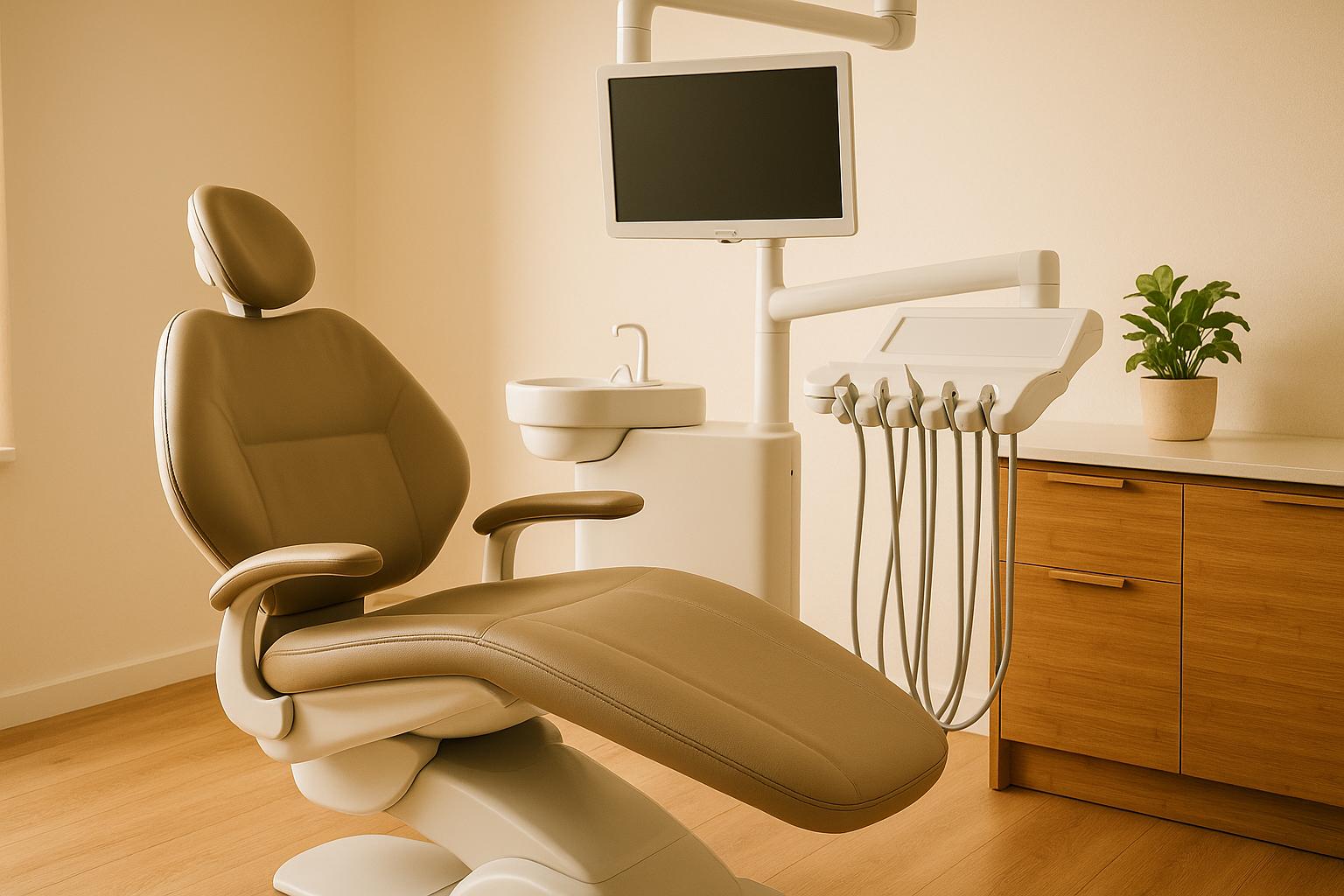
Want to make your dental practice greener and save costs? Start with energy-efficient materials.
Australia’s dentistry sector is moving towards reducing waste, cutting energy use, and lowering emissions. These materials and technologies are designed to minimise environmental impact without compromising patient care. Here’s what you need to know:
- Bioactive Glass Composites: Use less energy during production and help teeth remineralise, reducing retreatments.
- Low-VOC Polymers: Safer for dental staff and reduce harmful emissions, especially in 3D printing.
- Recycled Zirconia: Cuts waste from milling processes and requires less energy for sintering.
- Modern Technologies: 3D printing, solar-powered sintering, and AI-optimised milling make manufacturing faster, more precise, and energy-efficient.
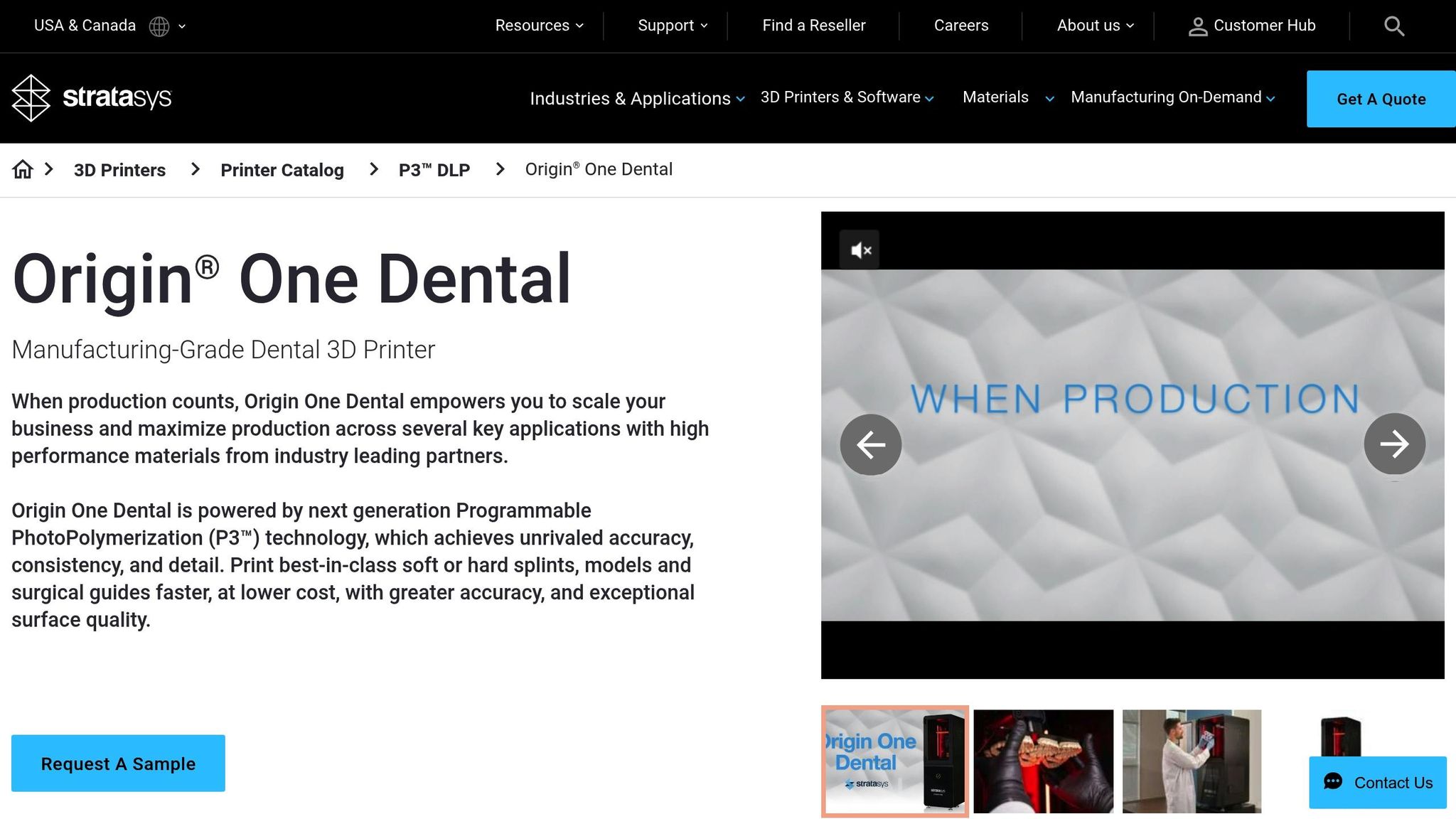
Stratasys Origin One Dental: When Production Counts, Versatility Matters – Webinar
Types of Energy-Efficient Dental Materials
The dental industry has made strides in adopting materials that not only reduce energy use but also uphold high clinical standards. These advancements reflect a shift towards more sustainable practices, offering Australian dental clinics practical ways to lower environmental impact while managing costs effectively.
Bioactive Glass Composites
Bioactive glass (BAG) composites are changing the game for dental restorations by combining energy-efficient production methods with excellent clinical benefits. For Australian practices, these materials strike a balance between performance and sustainability.
The sol-gel synthesis technique used to produce bioactive glass requires much lower temperatures than traditional melt-quenching methods. This process significantly reduces energy consumption during manufacturing, cutting costs and environmental impact without sacrificing the material’s therapeutic qualities [6].
"BAG-loaded resin composites can be regarded as bioactive materials, which present major benefits in dentistry, especially their capability in bacterial inhibition, cell biocompatibility, anti-demineralization, and remineralization of teeth." – Jiaojiao Yun et al. [8]
Bioactive glass composites also offer antimicrobial properties that can reduce the need for extensive sterilisation procedures [7]. Nano-BAG composites, for instance, increase pH levels to around 10.5 much faster than micro-BAG composites, which reach approximately 8.5. This high pH environment naturally inhibits bacterial growth, potentially lowering the frequency of retreatments [6]. Their ability to remineralise teeth further extends the life of restorations, indirectly reducing energy demands over time [6].
The US Food and Drug Administration has approved Bioglass® 45S5 and S53P4 for clinical applications requiring antimicrobial properties [7]. While sol-gel glasses generally offer higher porosity and surface area, melt-quenched alternatives provide better mechanical strength. Australian dentists must weigh these factors to choose the best option for their specific needs.
Low-VOC Polymers
Low-volatile organic compound (VOC) polymers are a major step forward in dental resin technology, offering safer and more sustainable solutions. These materials emit fewer harmful chemicals, making them ideal for workplaces with stringent health and safety standards, like those in Australia [9].
Studies show that "Eco" resin formulations release lower VOC levels than traditional resins, providing a safer environment for dental staff [9]. This is especially relevant for practices using 3D printing, where emissions can be a concern. By adopting low-VOC resins, clinics can reduce both emissions and exposure risks [9].
Curing efficiency has also improved with these polymers. For example, biological-based resins emit significantly fewer VOCs than synthetic alternatives. Research highlights that Tough resin releases ten times more emissions than BioMed or Surgical resins during post-processing [10][2].
Simple adjustments, like adding a lid to the resin vat, can make a big difference. A study found that idle printer emissions dropped by 70–97% (median 88%) when a vat lid was used [9]. This small, cost-effective measure can be easily implemented in Australian dental labs, improving both print quality and workplace safety.
Recycled Zirconia
Recycled zirconia is gaining popularity in Australian dental labs as a sustainable option that reduces waste and energy use. With CAD/CAM milling generating up to 30% powdered waste – or even 80% in some cases – recycling offers a smart way to minimise environmental and financial costs [11][12].
Multilayer zirconia crowns are a prime example of this approach. They require fewer ceramic layers and can be sintered in as little as 54 minutes for single-tooth restorations, drastically cutting energy consumption [13].
The recycling process involves breaking down zirconia waste into usable powders through disintegration, milling, heat treatment, and chemical processing. Optimal sintering temperatures range from 1,400°C to 1,600°C, with pre-sintering at around 1,000°C helping to reduce surface defects and improve particle packing [11][12].
For Australian labs, fine-tuning particle size during recycling is key to achieving high-quality results. Additional steps like purification, calcination, and cold isostatic pressing can further enhance the recycled zirconia’s density and uniformity [11][12]. While recycled zirconia may have slightly lower mechanical properties than commercial-grade options, optimised processes can produce materials with comparable flexural strength. This makes them suitable for specific uses, such as fillers in polymethyl methacrylate (PMMA) or powders for digital scanning [11][12].
Energy-Efficient Manufacturing Technologies
Modern dental manufacturing is increasingly leaning on advanced technologies to cut energy use while boosting precision and quality. These advancements are particularly relevant for Australian dental practices aiming to reduce costs and meet sustainability targets. They also complement the eco-friendly benefits of the advanced dental materials discussed earlier.
3D Printing in Dentistry
3D printing has revolutionised dental manufacturing by optimising material usage and reducing energy consumption. Unlike traditional milling methods, which carve out material from solid blocks, 3D printing builds objects layer by layer, using only the material required [14].
This additive manufacturing process is inherently more energy-efficient than subtractive techniques. For example, Subbaiah et al. (2023) found that horizontally printing 50 dental models using PolyJet technology took 33 hours and 47 minutes, saving roughly 0.84 kW/h compared to vertical printing. Printing a single model vertically required 39.4% more time, while printing 50 models vertically took 38.4% more time than horizontal printing [15].
Beyond energy efficiency, 3D printing simplifies workflows by producing complex designs in a single step, eliminating the need for multiple manufacturing stages. This also reduces labour demands, making it a practical choice for dental labs [23, 24].
Solar-Powered Sintering
Solar-powered sintering is another promising technology that takes advantage of Australia’s abundant solar energy to lower the carbon footprint of dental material production. This method uses concentrated solar energy to reach the high temperatures necessary for processing ceramics and metals.
Research by Kováčik et al. (2019) at the Plataforma Solar de Almería in Spain demonstrated the feasibility of solar sintering for dental materials. They successfully melted titanium green compacts on yttria-stabilised zirconia mats under a protective argon atmosphere, achieving melting times of just 20 minutes for 1.6 g and 9.2 g of titanium [16].
The environmental benefits are significant. Traditional titanium production has a Global Warming Potential (GWP) of 35.7 kg CO2e/kg and Gross Energy Requirements (GER) of 361 MJ/kg. By replacing fossil fuel-based energy with renewable solar power, solar sintering can dramatically lower these environmental impacts. As Jaroslav Kováčik et al. noted, "After optimisation of processing parameters, this will probably lead to a significant decrease of carbon footprint in the titanium ingots and castings production." [16]
For Australian dental labs, solar sintering offers exciting possibilities but comes with technical hurdles. While its shorter processing times compared to conventional vacuum furnaces are a clear advantage, fine-tuning heating rates, dwell temperatures, and processing times is crucial to address challenges like increased oxygen content from reactions with yttria-stabilised zirconia mats [16].
AI-Optimised CNC Milling
Artificial intelligence is reshaping CNC milling in dental manufacturing by eliminating the trial-and-error processes of the past. AI-driven CNC systems optimise cutting paths and tool use, reducing energy consumption by up to 40%. Studies also highlight improvements in machining costs and surface quality [18] [19].
The benefits are substantial. For instance, Bousnina et al. used a combination of particle swarm optimisation (PSO), artificial neural networks (ANN), and genetic algorithms (GA) to optimise machining parameters for a 2017A alloy. The results? A 78.27% reduction in energy use, a 44.57% cut in machining costs, and a 39.77% improvement in surface quality. Similarly, five-axis flank milling with a meta-reinforcement learning approach, using the Soft Actor-Critic (MSAC) framework, reduced energy consumption by 69.96% and processing time by 68.44% compared to traditional methods [19].
For Australian dental manufacturers, AI-optimised CNC milling offers more than just energy savings. It reduces errors, automates quality control, and handles complex machining processes with ease. This results in consistent outcomes, less waste, and improved cost efficiency [17] [19].
Clinical Applications of Energy-Efficient Materials
Energy-efficient dental materials are reshaping patient care across Australia by reducing environmental impact while improving treatment efficiency. These materials and technologies seamlessly integrate into modern dental practices, offering both ecological and clinical benefits.
Minimally Invasive Restorations
Australian dental professionals are increasingly turning to minimally invasive techniques that prioritise preserving healthy tooth structure. Materials like composites, zirconia, and lithium disilicate are popular choices due to their strength and energy-efficient preparation methods [21] [20]. These durable materials reduce the need for frequent replacements, cutting down on waste and energy use.
Modern adhesive systems, combined with energy-efficient curing lights, allow for single-visit restorations. This not only minimises material waste but also reduces the time patients spend in the chair.
"Sustainable dentistry is the future of the dental sector. It’s the right thing to do for the planet, and it’s also the smart thing to do for our businesses."
- Dr. Stephen Liew, ADA President [1]
Digital dentistry further supports these approaches by enabling highly precise treatment planning. Technologies like CAD/CAM, which are gaining popularity in Australia, make same-day restorations possible. This eliminates the need for temporary materials and multiple appointments, streamlining workflows and reducing waste [21].
Digital Impressions and Water Conservation
Digital technologies are also making strides in reducing water usage and packaging waste. Intraoral scanners, for example, replace traditional water-intensive impression techniques, removing the need for mixing materials, cleaning, and processing.
By eliminating single-use impression trays, alginate materials, and their packaging, digital impressions tackle the healthcare sector’s waste problem. In the United States, healthcare facilities generate around 14,000 tonnes of waste daily [4], highlighting the importance of such innovations.
Australian practices using digital impressions report improved workflow efficiency. These digital models eliminate the need for shipping physical impressions to labs, cutting transport emissions – which account for about 65% of dentistry’s carbon footprint [22]. Additionally, combining digital impressions with waterless vacuum systems and low-flow faucets further reduces water consumption [5].
Digital impressions also align with teledentistry initiatives, especially valuable in remote areas of Australia [21]. Digital models can be shared instantly with specialists for consultations, avoiding the need for physical transportation and reducing the environmental impact of care delivery.
"As providers of oral healthcare, it is our responsibility to take the initiative and integrate sustainable products and practices throughout our clinics. By doing so, we not only motivate our team but also influence the thousands of patients we encounter, ultimately encouraging other dental clinics to embark on their own sustainability endeavours."
Energy-efficient materials and technologies not only promote environmental responsibility but also bring tangible benefits to dental practices. Reduced waste, improved efficiency, and faster treatments create cost savings while enhancing patient comfort. Together, these advancements demonstrate how sustainability and clinical excellence can go hand in hand, supporting Australia’s broader environmental goals.
sbb-itb-2be92ed
Future Trends in Energy-Efficient Dentistry
As the dental industry continues to evolve, the push for sustainability is stronger than ever. Emerging technologies like artificial intelligence (AI) and renewable energy are driving innovation in how dental materials are created and manufactured. These advancements not only aim to reduce environmental impact but also improve the quality of care.
AI-Driven Material Development
AI is transforming material science, especially in the development of dental composites and alloys. By analysing material properties and predicting their performance before production, AI significantly cuts down on both time and costs. For instance, researchers in 2025 used the DeepLabv3+ method on panoramic radiographs for apical lesion segmentation, achieving an impressive accuracy rate of around 90% [24]. Additionally, AI has identified key components like triethylene glycol dimethacrylate (TEGDMA) as critical to properties such as flexural modulus and volumetric shrinkage [25].
With the global dental market projected to hit $63.93 billion by 2028 [26], AI’s ability to optimise material selection for tailored patient needs offers a practical way to minimise waste while enhancing clinical results [27]. These advancements align seamlessly with renewable energy technologies, paving the way for cleaner and greener manufacturing practices.
Hydrogen-Fired Kilns
On the renewable energy front, hydrogen-fired kilns are emerging as a sustainable alternative to traditional fossil fuel-powered sintering processes used in crafting dental ceramics. Unlike conventional methods, hydrogen combustion generates only water vapour, eliminating carbon emissions entirely. Early pilot projects have shown that these kilns can achieve precise temperature control while relying on renewable energy sources to power the process.
Conclusion
Energy-efficient dental materials are paving the way for more sustainable dental practices in Australia, bringing benefits to both the environment and patient care. As Dr Stephen Liew, President of the Australian Dental Association (ADA), aptly says: "Sustainable dentistry is the future of the dental sector" [1]. This shift not only enhances clinical practices but also lays the groundwork for future advancements in dental technology.
The need for these materials is clear. Australian dental practices generate a significant amount of waste, and transport-related activities account for roughly 65% of carbon emissions in the sector [22][29]. These figures highlight the pressing need for greener, more efficient solutions.
Key materials like bioactive glass composites, low-VOC polymers, and recycled zirconia are leading this transformation. Combined with cutting-edge manufacturing methods – such as 3D printing and solar-powered sintering – these innovations are helping to lower environmental impact. They also provide practical advantages, including reduced operational costs and safer environments due to the use of less toxic substances [28].
The Australian Dental Association actively promotes aligning daily practices with sustainability goals, reflecting the increasing adoption of eco-friendly measures across Australian dental clinics [3][22].
Looking ahead, emerging technologies are set to amplify these benefits. AI-powered material development, for example, promises to enhance both the precision and environmental sustainability of dental materials, all while maintaining the high standards of care that patients expect.
For dental professionals in Australia, adopting energy-efficient materials isn’t just an environmental choice – it’s a smart investment in the future of oral healthcare. These materials help reduce energy use, lower waste, and cut operational expenses, all while improving patient safety and care quality.
FAQs
What role do bioactive glass composites play in making dental practices more energy-efficient?
Bioactive glass composites play a key role in promoting energy efficiency within dental practices by aiding the natural repair processes of teeth. By encouraging remineralisation through the release of ions like calcium and phosphate, these materials help strengthen dental tissues, often reducing the need for invasive treatments or frequent interventions.
Another advantage is their antibacterial properties, which work to prevent tooth decay. This reduces the demand for resource-heavy treatments, cutting down on the use of dental materials and the energy required for repeated or complex procedures. Altogether, these benefits support a more sustainable and eco-friendly approach to modern dentistry.
What are the health and safety advantages of using low-VOC polymers in dental care?
Using low-VOC polymers in dental care offers clear health and safety advantages. These materials emit fewer volatile organic compounds (VOCs), which means better indoor air quality. For patients and dental staff, this translates to a lower risk of respiratory problems or allergic reactions.
What’s more, low-VOC polymers tend to be more biocompatible, reducing the chances of complications during dental treatments. By choosing these materials, dental clinics can ensure a safer and healthier space for both practitioners and patients.
How do solar-powered sintering and AI-driven CNC milling help reduce the environmental impact of dental manufacturing?
Solar-Powered Sintering and AI-Driven CNC Milling in Dental Manufacturing
The dental manufacturing industry is embracing cutting-edge technologies like solar-powered sintering and AI-driven CNC milling to reduce its environmental footprint.
Solar-powered sintering uses renewable energy sources, which means less reliance on fossil fuels and a noticeable drop in greenhouse gas emissions. This eco-conscious approach not only saves energy but also aligns with the growing push for more sustainable manufacturing practices.
On the other hand, AI-driven CNC milling is revolutionising efficiency and precision in production. By automating processes, AI ensures materials are used wisely, significantly cutting down on waste and energy consumption. The result? A streamlined process that’s kinder to the planet.
Together, these innovations are paving the way for a dental industry that’s not just advanced but also far more environmentally responsible.
Related Blog Posts
- What Are Biocompatible Dental Materials?
- Advances in Dental Adhesives: What to Know
- Guide to Sustainable Packaging for Dental Clinics
- Nanomaterials in Dentistry: Wear Resistance Explained
Important Notice: Any surgical or invasive procedure carries risks. Before proceeding, you should seek a second opinion from an appropriately qualified health practitioner.
Individual results may vary. The information provided in this article is for educational purposes only and does not constitute medical advice.
Checkout Related Blogs




Get in touch with us
For more information, call us now to start feeling better. Or fill the form below to make appointment
The Latest News from Complete Smiles
How to Clean Clear Plastic Retainers
Checklist for Choosing Wearable Dental Devices
Checklist for Choosing Cloud AI Platforms in Dentistry

Complete Smiles Bella VistaAccepts All Major Health Funds, Including





