





Future of Antibacterial Nanomaterials in Dentistry
Antibacterial nanomaterials are reshaping dental care by offering solutions to combat bacteria, enhance oral health, and improve dental treatments. These materials, including silver, zinc oxide, and chitosan nanoparticles, are being integrated into fillings, adhesives, implants, and periodontal treatments to address challenges like bacterial resistance and biofilm penetration. Here’s what you need to know:
- Why it matters: Traditional methods often fail against bacteria in biofilms, which are up to 1,000 times more resistant to antibiotics. Nanomaterials overcome this by directly targeting bacteria at a microscopic level.
- Key materials:
- Silver nanoparticles: Disrupt bacterial cells and penetrate biofilms effectively.
- Zinc oxide nanoparticles: Generate reactive oxygen species to kill bacteria and work well in dental restorations.
- Chitosan nanoparticles: Offer antimicrobial properties and promote healing in periodontal treatments.
- Applications: Nanoparticles are used in dental adhesives, fillings, targeted drug delivery for gum disease, and antibacterial coatings for implants and orthodontics.
- Benefits: Reduced bacterial resistance, improved oral health outcomes, and longer-lasting dental restorations.
- Challenges: Safety concerns, regulatory gaps, and production scalability need to be addressed for wider adoption.
Antibacterial nanomaterials hold promise for more effective and precise dental treatments, but ensuring their safe and practical use remains a priority.
Robot Dentist: Nanotechnology Dentistry | Future Technology & Science News 141
Types of Antibacterial Nanomaterials in Dental Research
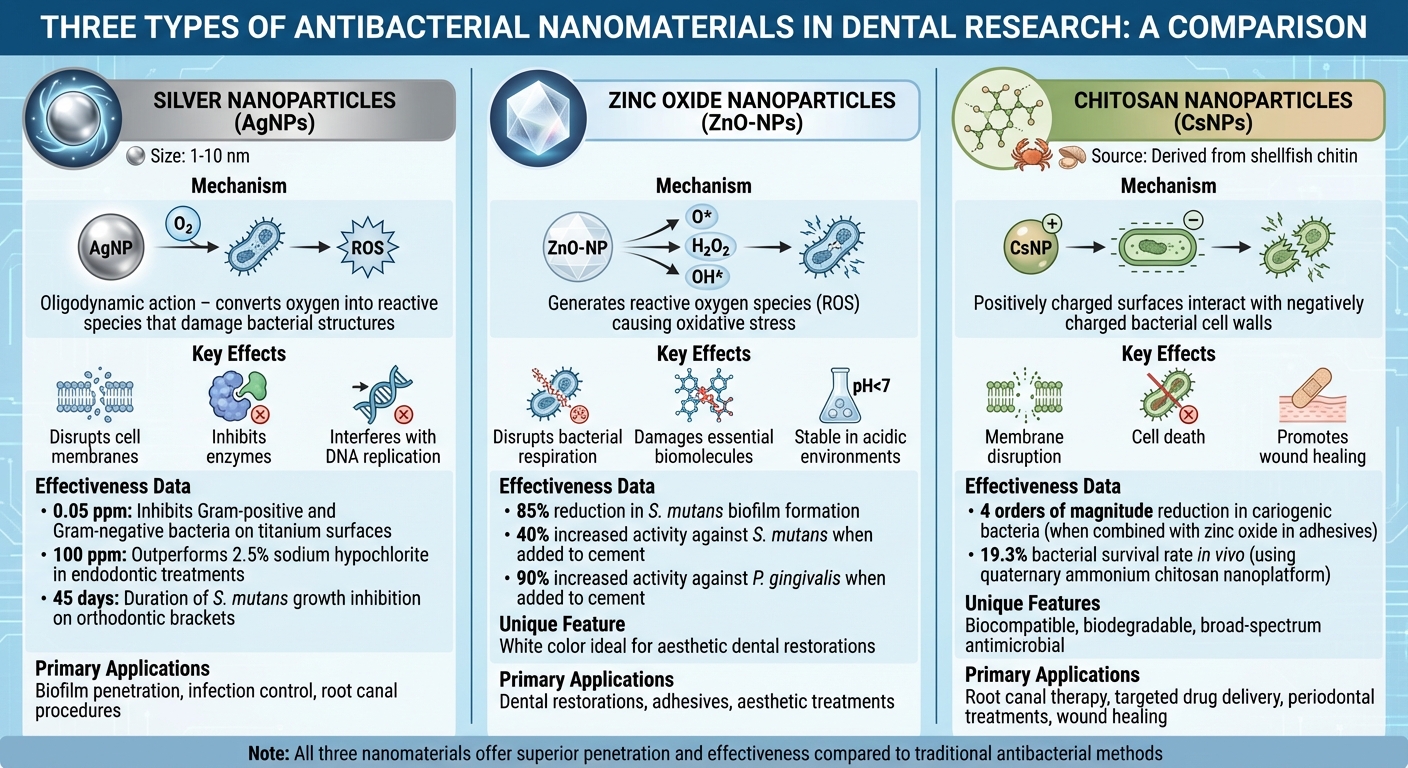
Three Key Antibacterial Nanomaterials in Dentistry: Silver, Zinc Oxide, and Chitosan Nanoparticles
In dental research, scientists are exploring the potential of silver, zinc oxide, and chitosan nanoparticles to tackle oral infections. These nanomaterials not only help in managing infections but also enhance the effectiveness of dental restorations.
Silver Nanoparticles for Biofilm and Infection Control
Silver nanoparticles (AgNPs) are known for their unique ability to combat bacteria through a process called oligodynamic action. They convert oxygen into reactive species, which damage bacterial structures by disrupting cell membranes, inhibiting enzymes, and interfering with DNA replication. Thanks to their tiny size (1–10 nm), AgNPs can penetrate biofilms effectively. For example, titanium surfaces treated with just 0.05 parts per million (ppm) of AgNPs can inhibit both Gram-positive and Gram-negative bacteria. In endodontic treatments, a 100 ppm AgNP solution has been shown to outperform 2.5% sodium hypochlorite. Additionally, combining AgNPs with chlorhexidine enhances their effectiveness in root canal procedures [3].
Following silver, zinc oxide nanoparticles bring their own set of antibacterial properties to the table.
Zinc Oxide Nanoparticles and Their Antibacterial Effects
Zinc oxide nanoparticles (ZnO-NPs) work by generating reactive oxygen species (ROS), which cause oxidative stress, disrupting bacterial respiration and damaging essential biomolecules. Research highlights that ZnO-NPs can reduce Streptococcus mutans biofilm formation by up to 85%. Their white colour makes them particularly suitable for aesthetic dental restorations. Furthermore, their stability in acidic environments ensures they remain effective in the oral cavity. A 2018 study found that incorporating ZnO nanospheres into polycarboxylate luting cement not only increased antibacterial activity – by 40% against S. mutans and 90% against Porphyromonas gingivalis – but also improved the cement’s compressive and tensile strength [6][9][10].
While silver and zinc oxide focus on infection control, chitosan nanoparticles offer additional healing benefits.
Chitosan Nanoparticles for Healing and Infection Prevention
Derived from shellfish chitin, chitosan nanoparticles (CsNPs) are both biocompatible and biodegradable, providing a broad spectrum of antimicrobial activity. Their positively charged surfaces interact with negatively charged bacterial cell walls, causing membrane disruption and cell death. In dental treatments, CsNPs are used in calcium hydroxide pastes during root canal therapy to improve penetration into dentinal tubules and act as carriers for targeted drug delivery. Moreover, dental adhesives modified with chitosan-encapsulated zinc oxide have been shown to reduce cariogenic bacteria by up to four orders of magnitude. In periodontal treatments, a nanoplatform using quaternary ammonium chitosan achieved bacterial survival rates as low as 19.3% in vivo [7][11]. Beyond infection prevention, chitosan also promotes wound healing, making it a valuable component in periodontal dressings. As Wenjing Song and Shaohua Ge from Shandong University’s Department of Periodontology explain:
Chitosan is biocompatible and biodegradable, and possesses a broad range of antimicrobial activity [3].
How Antibacterial Nanomaterials Are Used in Dental Treatments
The use of antibacterial nanomaterials in dental care is reshaping how infections are managed. These materials operate at a microscopic level within dental treatments, targeting bacteria more effectively than traditional methods.
Nanoparticles in Dental Adhesives and Fillings
Nanoparticles are making waves in dental composites and adhesives, particularly in addressing secondary decay – a major cause of restoration failure. Materials like silver and zinc oxide nanoparticles are added to dental resins, releasing antimicrobial ions at the tooth–filling interface. Some systems even form silver nanoparticles (AgNPs) on-site as the filling hardens, enhancing their antibacterial properties [3].
Innovative materials are also being introduced. For instance, dimethylaminohexadecyl methacrylate (DMAHDM) is embedded in resins to provide long-lasting antibacterial effects without the risks linked to rapid chemical release [12][1]. Similarly, pH-sensitive materials with tertiary amines remain inactive under normal conditions but activate when the environment turns acidic [1]. Adding small amounts of metal nanoparticles can further boost antibacterial performance, while incorporating 4% magnesium oxide nanoparticles has been shown to cut bacterial viability by up to 99.4% [6].
Amorphous calcium phosphate nanoparticles provide dual benefits: they release calcium and phosphate ions to neutralise acids while promoting tooth remineralisation [3][12]. Additionally, bonding agents containing 2-methacryloyloxyethyl phosphorylcholine (MPC) create hydrophilic surfaces that repel proteins and discourage bacterial attachment [3][12]. Nanocluster technology takes it a step further by enabling higher filler content, which improves the durability and polish retention of composites compared to traditional materials [2].
Beyond fillings and adhesives, nanomaterials are also advancing targeted treatments for gum disease.
Targeted Drug Delivery for Periodontal Treatment
Nanoparticles are particularly effective in delivering antimicrobial agents directly to periodontal pockets, ensuring high local concentrations while avoiding the side effects of systemic antibiotics. Their small size allows them to penetrate dense biofilms, making them ideal for this application. Carriers like PLGA, chitosan, and silica encapsulate antibiotics and release them gradually, with some formulations lasting up to 25 days [13].
For example, polymersome-encapsulated metronidazole has reduced intracellular Porphyromonas gingivalis from 2,110 CFU/ml to 810 CFU/ml [13]. Similarly, nanoparticles combining PLGA, lovastatin, chitosan, and tetracycline have shown promising results, with new bone formation reaching 41.32% compared to 34.01% in control groups [13]. As Amani Mohammed Basudan from King Saud University‘s Department of Periodontics notes:
Local drug delivery facilitates administration of a lower dose of the drug to the target site, but at higher concentration, thereby reducing systemic adverse effects and toxicity [13].
Some systems are designed to respond to specific conditions, such as the acidic or inflamed environments of diseased periodontal pockets. Core–shell nanofibres, for instance, minimise the initial burst release of drugs to just 19%, ensuring a more stable and prolonged therapeutic effect [13].
Nanomaterials are not limited to restorative and therapeutic uses – they also play a key role in protecting orthodontic and implant surfaces.
Antibacterial Coatings for Orthodontics and Implants
Nanocoatings are applied to orthodontic brackets, wires, and dental implants to prevent bacterial growth. These coatings work in various ways, such as producing reactive oxygen species, releasing antimicrobial ions (like silver or copper), or physically disrupting bacterial membranes with their nanotopography [6].
In orthodontics, silver nanoparticle coatings on brackets can inhibit Streptococcus mutans growth for up to 45 days [3]. Quaternary ammonium-modified gold nanoclusters have demonstrated impressive results, reducing biofilm mass by 85% and cutting bacterial viability by 95% [6]. Dental implants, which often face issues like peri-implantitis (affecting up to 43% of patients) and peri-implant mucositis (seen in up to 50% of cases), benefit significantly from these coatings. They create bioactive surfaces that resist harmful bacteria while encouraging bone integration. Some titanium dioxide coatings are even photoactivated, releasing their antibacterial effects only when exposed to light, which addresses concerns about long-term toxicity [6][1]. Meanwhile, catalytic nanoparticles containing iron oxide (Fe₃O₄) can reduce bacterial cell viability by over 5 logs within acidic biofilm environments [5].
sbb-itb-2be92ed
Benefits and Challenges of Antibacterial Nanomaterials
The use of nanomaterials in dental care offers exciting possibilities, but it also brings a set of challenges that can’t be ignored. By looking at both the advantages and the obstacles, we get a clearer picture of where this technology stands today and what needs to happen for it to become a regular part of dental practice.
Benefits: Improved Infection Control and Treatment Outcomes
Antibacterial nanomaterials have a unique ability to penetrate deeper and eliminate bacteria more effectively than traditional treatments. Thanks to their ultra-small size, they can reach areas like dentinal tubules and other hard-to-access spaces where conventional agents often fall short. This allows them to target infection sites more precisely and effectively.
These materials employ a multi-pronged approach to fight bacteria. They disrupt bacterial cells mechanically, produce reactive oxygen species, and even damage bacterial DNA, making it harder for bacteria to develop resistance. As Jingwei Cao from the State Key Laboratory of Oral Diseases explains:
Compared with traditional antibacterial materials, these [intelligent] materials are less prone to bacterial resistance and have good biological safety.
Another standout feature is their pH-responsive behaviour. These materials stay inactive under normal conditions but activate in acidic environments – precisely where tooth decay begins. This selective targeting helps protect beneficial oral bacteria while focusing on harmful pathogens. Beyond fighting infections, nanomaterials can support tooth remineralisation, boost bone growth around implants, and even strengthen dental composites.
Their effectiveness at low concentrations is another big advantage. For example, silver-based nanomaterials work well at just 0.5% to 1.0% concentrations [8]. Experimental antibacterial robots using iron oxide nanoparticles have demonstrated bacterial inactivation rates of over 98.5% [3]. Considering that untreated dental caries affect about 2.5 billion adults and 573 million children globally [1], these advancements could make a massive difference in oral health worldwide.
However, while the benefits are promising, turning this technology into a clinical reality comes with its challenges.
Challenges: Safety, Compatibility, and Regulatory Hurdles
The very features that make nanomaterials effective – like their ability to generate reactive oxygen species or release ions – can also pose risks. These properties can lead to oxidative stress and harm healthy human cells [6]. Additionally, because of their tiny size, some nanoparticles may enter the bloodstream and accumulate in organs, raising concerns about long-term toxicity that remain unresolved [3].
Biocompatibility is another concern. For instance, while zinc oxide nanoparticles are effective against bacteria, they can interfere with how eukaryotic cells attach to dental implants [6]. Once in the oral cavity, nanoparticles quickly interact with saliva proteins, forming a "protein corona" that can alter their behaviour and how they interact with oral tissues [6][14].
On top of these issues, regulatory frameworks haven’t kept up with the rapid development of this technology. James Butler from the University of Plymouth highlights this gap:
Current legal frameworks do not effectively regulate antimicrobial nanocoatings in matters of safety, with open questions remaining about risk analysis and occupational exposure limits.
Dental practitioners also face a lack of clear safety guidelines, particularly regarding potential inhalation risks during procedures like resin placement or removal [8][14]. Technical challenges add to the complexity. Nanoparticles tend to clump together to reduce surface energy, which can lead to a loss of their unique properties and make them harder to incorporate into dental composites [2].
| Challenge Category | Specific Issues | Potential Impact |
|---|---|---|
| Safety | Oxidative stress, organ accumulation | Damage to healthy cells, long-term toxicity |
| Biocompatibility | Protein corona, cell attachment issues | Reduced implant success, tissue irritation |
| Regulatory | Outdated frameworks, no standardised testing | Slower market approval, unforeseen risks |
| Technical | Clumping of nanoparticles, processing difficulties | Reduced effectiveness, inconsistent results |
Alexandros Besinis and colleagues stress the urgency of addressing these gaps:
The clinical safety regulations for dental materials have not been specifically updated for ENMs, and some guidance on occupational health for practitioners is also needed.
These challenges underline the need for updated testing protocols and regulatory frameworks to ensure the safe and effective use of antibacterial nanomaterials. Without these measures, the journey from lab research to everyday dental practice will remain a complex and uncertain one.
Future Developments in Antibacterial Nanomaterials for Dentistry
The future of antibacterial nanomaterials in dentistry is heading towards a blend of multifunctionality, personalised treatments, and eco-conscious production. The aim is to develop systems that simultaneously tackle infection control, enhance tissue regeneration, and improve material longevity, all while catering to individual patient needs and adopting greener manufacturing practices.
Multi-Function Nanomaterials for Dental Applications
Emerging nanomaterials are set to combine antibacterial, remineralising, and protein-repellent properties more effectively than current options. For instance, a promising combination involves DMAHDM (bactericidal), MPC (protein-repellent), and NACP (remineralising), which work together to prevent biofilm formation while repairing enamel damage [3].
Another exciting development comes in the form of enzyme-mimicking catalytic nanoparticles. For example, CAT-NP, which contains biocompatible Fe₃O₄, generates reactive species that can dramatically reduce biofilm levels. A brief one-minute daily application has been shown to lower caries-causing biofilms by over 5 logs and significantly curb dental caries in lab animals [5]. Similarly, copper-doped mesoporous bioactive glass nanospheres (Cu-BGn) not only fight bacteria but also promote blood vessel growth and stimulate tooth-forming cells, making them ideal for regenerating infected dental pulp [4].
Barium titanate (BaTiO₃) offers a different approach by generating electrical charges through mechanical stress, such as chewing or brushing. These charges inhibit bacterial growth without the need for chemical agents [1]. A study published on PubMed highlights the potential of such materials:
Multifunctional nanomaterials can break through the limitations of single therapy and have the functions of remineralisation and osteogenesis on the basis of antibacterial [4].
These advancements pave the way for dental materials that are both highly effective and tailored to individual needs.
Customised Dental Treatments Using Nanotechnology
Nanotechnology is unlocking the potential for dental treatments that adapt to each patient’s specific oral environment. For example, pH-responsive micelles are designed to penetrate biofilms in acidic areas – where tooth decay is most likely – and release antibacterial agents only when necessary [4]. This selective approach helps maintain the balance of beneficial bacteria while targeting harmful pathogens.
Polymeric nanoparticles, often made from materials like chitosan, enable precise drug delivery. These particles ensure a consistent concentration of medication at infection sites, reducing side effects and improving efficiency [5]. Considering the complexity of the oral microbiome, which hosts up to 1,000 bacterial species at densities of 10⁸–10⁹ CFU/ml, such precision is invaluable [5]. Furthermore, nanomaterials may soon assist in detecting bacterial imbalances, offering even more targeted therapeutic solutions [4][5].
Nanostructured surfaces are another breakthrough. Features like nanoprotrusions or "black silicon" physically damage bacterial cells using biomechanical forces, eliminating the need for traditional antibiotics. This approach is especially important as bacteria in mature biofilms can be 10–1,000 times more resistant to antibiotics than free-floating bacteria [6].
Affordable and Environmentally Friendly Production Methods
For these innovations to become widespread, challenges like cost, scalability, and safety must be addressed. Currently, high production costs and issues like nanoparticle agglomeration hinder broader adoption [2][15]. To tackle these obstacles, researchers are turning to green synthesis methods, using plant extracts or microorganisms to produce nanoparticles that are both eco-friendly and biocompatible [3]. Techniques like adsorbing polymer chains are being explored to prevent agglomeration, while "white" nanomaterials such as boron nitride and zirconium oxide are being developed to avoid tooth discolouration [2][3].
Conclusion: The Future of Dental Care with Antibacterial Nanomaterials
The advancements in antibacterial nanomaterials are set to bring a new era in dental care. These cutting-edge materials are being developed to tackle bacteria, strengthen enamel, and encourage bone regeneration – all at the same time. By addressing oral health issues directly at their source, they aim to work alongside the body’s natural healing processes [4].
Given that the oral cavity can host up to 1,000 bacterial species at concentrations of 10⁸–10⁹/ml, traditional treatments often fall short when dealing with biofilms, where bacteria exhibit resistance levels 10 to 1,000 times higher than usual [5][6]. Nanomaterials overcome this hurdle by employing multiple strategies: breaking down bacterial membranes, releasing antibacterial ions, and generating oxidative stress. These combined actions make it much harder for bacteria to develop resistance [6].
As Professor Klaus D Jandt from Friedrich Schiller University Jena puts it, "nanotechnology has left a major footprint in virtually all fields of science, engineering, technology, and medicine and dentistry are no exception to this" [2]. The growing influence of nanotechnology in dentistry is evident, with mentions of "nano" topics in dental journals skyrocketing from 55 in 2016 to 1,461 in 2019 [2]. Experts from the School of Engineering, Computing and Mathematics also highlight that "the clinical benefits generally outweigh the hazards of using ENMs in the oral cavity, and the latter should not prevent the responsible innovation of nanotechnology in dentistry" [14]. This balanced view reinforces the need for ongoing safety evaluations while embracing the potential of these materials.
Looking ahead, dental care is clearly shifting toward more tailored, precise treatments that adapt to each patient’s unique oral health needs. These solutions aim to provide long-lasting protection and encourage tissue repair. As production methods become more cost-effective and eco-friendly, these innovations could reshape everyday dental practices, making them more efficient and aligned with the body’s natural healing abilities. This progression in dental materials holds the promise of delivering personalised, enduring care for healthier smiles.
FAQs
What role do antibacterial nanomaterials play in modern dentistry?
Antibacterial nanomaterials are making waves in dental care by providing advanced defence against harmful bacteria. Thanks to their ultra-tiny size, these materials can release antimicrobial agents – like silver or zinc ions – that actively disrupt bacteria, curb plaque build-up, and ward off infections. This makes them a valuable addition to many dental treatments.
When used in restorative materials such as fillings and adhesives, these nanomaterials help to combat secondary decay and prolong the life of dental work. In root canal procedures, they boost disinfection and improve adhesion to teeth. Meanwhile, in implants and orthodontics, nanocoated surfaces prevent bacteria from sticking, lowering the risk of infections. These advancements are enhancing the safety, durability, and success rates of dental treatments – all without the need for systemic antibiotics.
Are there any safety concerns with using nanomaterials in dental treatments?
Nanomaterials are making waves in dentistry, offering benefits like stronger restorations and better protection against bacteria. But there’s a flip side – concerns about their safety, especially when it comes to oral and overall health. Studies show that nanoparticles, such as silver or titanium dioxide, might cause cytotoxicity, oxidative stress, or even inflammation in oral tissues. These tiny particles, often smaller than 100 nanometres, can sometimes detach from dental materials, potentially entering the bloodstream and impacting organs or the immune system.
The level of risk depends on factors like the type, size, and amount of nanoparticles used. For example, high concentrations of silver nanoparticles have been associated with cellular damage, while certain metal-oxide particles may produce reactive oxygen species that can harm DNA and proteins. Prolonged exposure could even upset the natural balance of oral bacteria, which might trigger additional health concerns.
To minimise these risks, dental professionals in Australia are advised to use materials that comply with strict biocompatibility standards and remain vigilant for any signs of irritation or inflammation in patients. Meanwhile, ongoing research aims to refine nanoparticle formulations, ensuring their antibacterial benefits are retained without compromising safety.
What are the differences between silver, zinc oxide, and chitosan nanoparticles in dental applications?
Silver, zinc oxide (ZnO), and chitosan nanoparticles each bring distinct benefits to dentistry, thanks to their unique antimicrobial properties.
Silver nanoparticles (AgNPs) are highly effective at combating bacteria. They release Ag⁺ ions, which disrupt bacterial membranes and DNA, making them a powerful tool against a wide range of bacteria. You’ll often find them in restorative composites, denture bases, and orthodontic adhesives, where they help prevent biofilm formation while also boosting the durability of these materials.
Zinc oxide nanoparticles work by generating reactive oxygen species and releasing Zn²⁺ ions, which disrupt bacterial metabolism. Known for being low in toxicity and offering photocatalytic properties, they are frequently added to resin-modified glass-ionomer cements and orthodontic bonding agents. This ensures long-lasting antibacterial protection without compromising the material’s strength.
Chitosan nanoparticles, derived from natural polymers, attach to bacterial cell walls, increasing permeability and allowing antimicrobial agents to work more effectively. Their excellent biocompatibility and ability to form films make them particularly useful in endodontic treatments, intracanal medicaments, and tissue regeneration efforts.
Each of these nanoparticles serves a unique role in dentistry: silver nanoparticles for their potent antimicrobial power, zinc oxide for their safe and sustained antibacterial effects, and chitosan for their compatibility with biological tissues and versatility in therapeutic uses.
Related Blog Posts
- Nanomaterials in Dentistry: Wear Resistance Explained
- Antimicrobial Nanocomposites for Tooth Regeneration
- Biocompatibility of Dental Nanomaterials: Overview
- How Nanotechnology Improves Dental Restoration Durability
Important Notice: Any surgical or invasive procedure carries risks. Before proceeding, you should seek a second opinion from an appropriately qualified health practitioner.
Individual results may vary. The information provided in this article is for educational purposes only and does not constitute medical advice.
Checkout Related Blogs




Get in touch with us
For more information, call us now to start feeling better. Or fill the form below to make appointment
The Latest News from Complete Smiles
How to Clean Clear Plastic Retainers
Checklist for Choosing Wearable Dental Devices
Checklist for Choosing Cloud AI Platforms in Dentistry
Complete Smiles Bella VistaAccepts All Major Health Funds, Including





