




Factors Affecting Dental Bond Strength
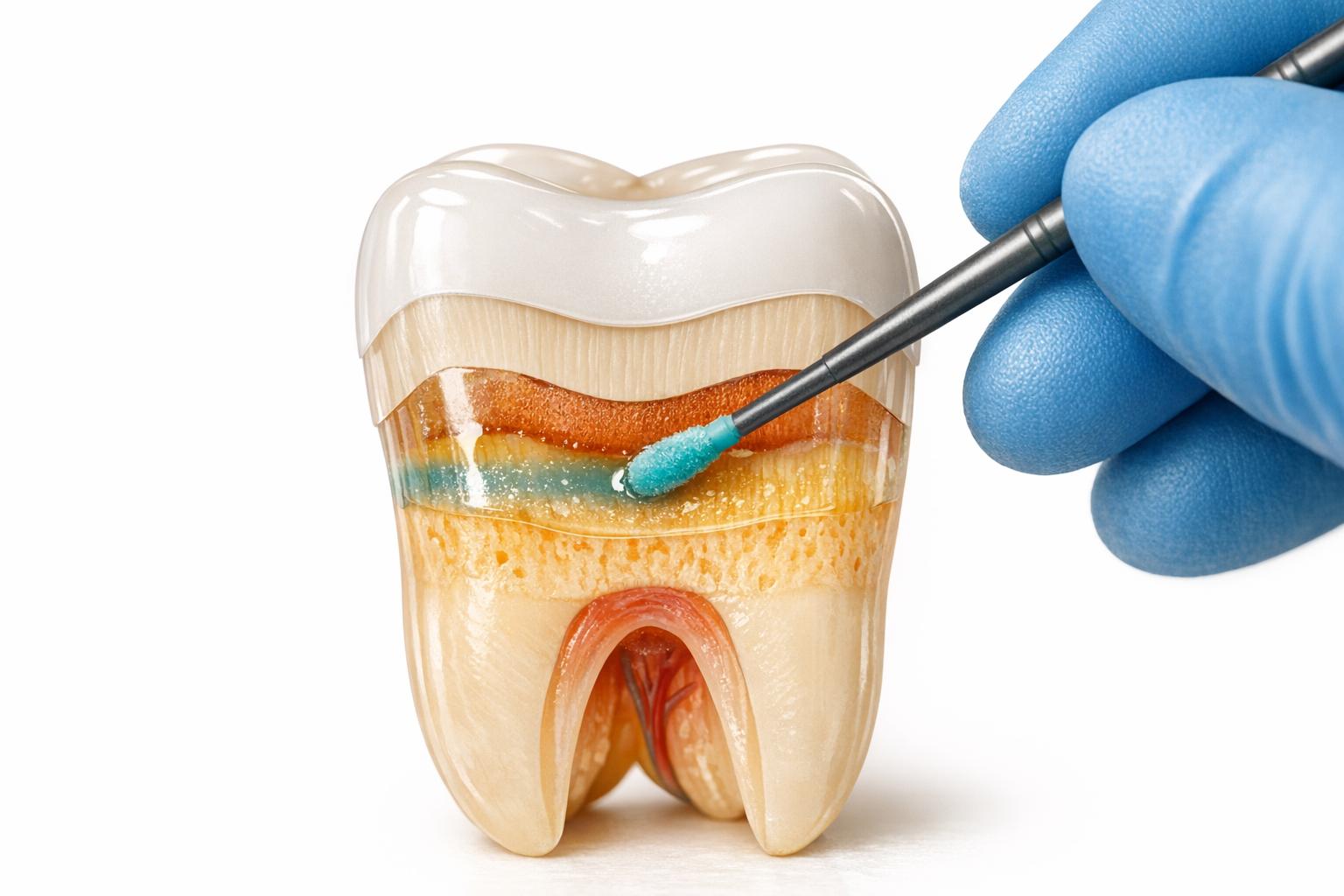
Dental bond strength is the measure of how well restorative materials, like resin composites, adhere to tooth structures. Strong bonds ensure restorations stay in place, prevent bacteria and fluids from causing decay, and maintain the restoration’s durability.
Key factors influencing bond strength include:
- Adhesive systems: Etch-and-rinse systems remove the smear layer for deeper resin penetration, while self-etch systems modify the smear layer and are less technique-sensitive.
- Surface preparation: Tools like carbide burs create a thinner smear layer, improving adhesive penetration, while diamond burs produce denser layers that may hinder bonding.
- Environmental conditions: High humidity, elevated temperatures, and thermal cycling can weaken bonds and increase microleakage.
- Contamination: Saliva and blood disrupt bonding if not managed properly. Rinsing and reapplying adhesives are required to restore bond integrity.
- Hybrid layer degradation: Enzymes in dentine break down the bond over time. Applying 2% chlorhexidine after etching can slow this process.
Improving bond strength involves choosing the right adhesive system, managing surface preparation, controlling contamination, and protecting the hybrid layer. For long-lasting results, techniques like ethanol wet-bonding and bioactive materials are being explored.
Which Generation Bonding Agent is the Best? 2024 Adhesive Systems – PDP192
sbb-itb-2be92ed
Material Properties and Adhesive Systems
Etch-and-Rinse vs Self-Etch Adhesive Systems Comparison
This section explains how adhesive chemistry connects wet dentine to hydrophobic restorative materials, creating strong and lasting bonds. It also compares the ways different adhesive systems utilise these chemical properties.
Etch-and-Rinse vs Self-Etch Systems
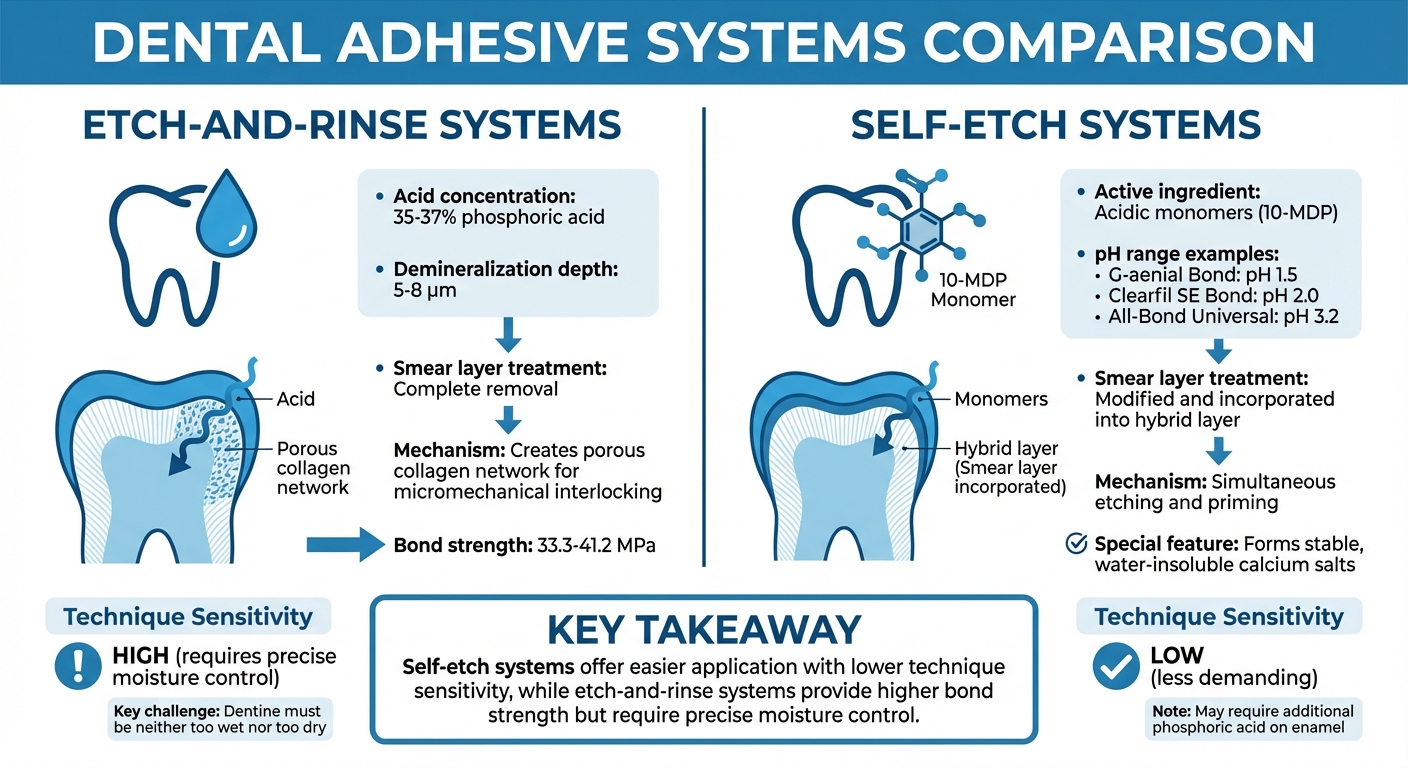
Etch-and-rinse (ER) systems typically use a 35–37% phosphoric acid solution to completely remove the smear layer – debris formed during drilling – and demineralise dentine to a depth of 5–8 µm[4][6]. This process creates a porous collagen network that facilitates micromechanical interlocking[3].
On the other hand, self-etch (SE) systems employ acidic monomers, such as 10-MDP, which simultaneously etch and prime the tooth surface[4]. Instead of completely removing the smear layer, these adhesives modify and incorporate it into the hybrid layer. The pH levels of self-etch adhesives can differ significantly: for example, G-aenial Bond has a pH of 1.5, Clearfil SE Bond measures at 2.0, and All-Bond Universal at 3.2[5]. This chemical interaction also leads to the formation of stable, water-insoluble calcium salts, enhancing bond durability[3][4]. Reported mean shear bond strengths for etch-and-rinse systems range from 33.3 to 41.2 MPa[3].
Etch-and-rinse techniques demand precise moisture control, requiring dentine to be neither too wet nor too dry, making them more technique-sensitive. In contrast, self-etch systems are generally less demanding, although additional phosphoric acid treatment on enamel may sometimes be necessary to maximise bonding potential[5][7].
Water-Loving and Water-Repelling Components
To better understand bond integrity, it’s important to consider the adhesive’s components. Dentine contains approximately 10% fluid by weight, while restorative materials are naturally hydrophobic[4].
Hydrophilic monomers, such as HEMA (2-hydroxyethyl methacrylate), play a key role in ensuring proper wetting and penetration into the demineralised collagen. These monomers help displace water from the interfibrillar spaces – gaps that measure about 30 ± 11 nanometres – allowing effective resin infiltration[4][5].
In contrast, hydrophobic monomers like Bis-GMA and UDMA provide mechanical strength and structural stability to the cured adhesive layer. However, these hydrophobic components struggle to bond effectively to wet dentine on their own, so solvents like acetone, ethanol, or water are included to aid penetration. Residual solvents, however, can create voids and lead to nanoleakage, which weakens the bond. Studies have shown that higher residual solvent levels in the polymer are linked to reduced resin–dentine bond strength[4].
One innovative technique, ethanol-wet bonding, replaces water in the collagen network with ethanol. This approach shrinks the collagen fibril diameter and increases interfibrillar space, improving monomer infiltration compared to traditional water-wet bonding[5]. Refining these chemical formulations directly strengthens the adhesive bond, which is vital for long-term restoration durability. This is where nanotechnology in dental materials plays a significant role in enhancing structural integrity.
Surface Preparation Techniques
The way a tooth is prepared significantly impacts how well adhesives bond to its structure. Techniques like drilling, etching, or chemical treatments create conditions that directly affect both the management of the smear layer and the surface texture, both of which are critical for effective resin infiltration.
Managing the Smear Layer
Tooth preparation generates a smear layer, a thin film of debris that forms on the surface. This layer, typically 0.9–2.8 µm thick, can block dentinal tubules and reduce dentine permeability by up to 86% [8].
The tools used during preparation play a key role in determining the smear layer’s characteristics. Carbide burs produce a thinner, loosely bound smear layer, which allows adhesives to penetrate more effectively. On the other hand, diamond burs create a denser smear layer that can obstruct bonding [8] [9]. As Sofia Oliveira and colleagues highlighted:
"The higher SBS [shear bond strength] and thin smear layer of the carbide bur group, suggests its use when self-etching materials are used in vivo" [9].
Different adhesive systems handle the smear layer in unique ways. Etch-and-rinse systems, using 30–40% phosphoric acid, completely remove the smear layer and open the tubules [8]. In contrast, self-etch systems modify and incorporate the smear layer into a "resin-smear complex" [8]. For a gentler approach, 17% EDTA applied for 1 minute can selectively dissolve the inorganic components while preserving the dentine structure, which helps resist bond degradation [8].
Rubbing the adhesive into the surface enhances smear layer dissolution and improves resin penetration [8]. Additionally, ultrasonic devices or specialised brushes can reduce the smear layer’s thickness. Shortening phosphoric acid etching from 15 to 3 seconds has been shown to improve bond durability by minimising the activation of collagen-degrading enzymes [8].
Once the smear layer is addressed, the surface texture becomes the next critical factor in bonding success.
How Surface Texture Affects Bonding
After managing the smear layer, the surface texture of the prepared tooth plays a key role in adhesive performance. Surface roughness influences how well adhesives penetrate and bond. Research shows that fine-roughness dentine (prepared with 600-grit paper) achieves a mean microtensile bond strength of 25.3 ± 7.1 MPa, compared to 19.8 ± 5.8 MPa for coarse-roughness dentine (250-grit paper) [10].
However, the relationship between surface texture and bonding is not straightforward. Coarser preparations often result in thicker, denser smear layers, which can impede the penetration of mild self-etching adhesives. As Pipop Saikaew and colleagues noted:
"The density of the smear layer is more critical than its thickness, especially for mild- and ultra-mild self-etching adhesives" [8].
A dense smear layer can block functional monomers from reaching the underlying dentine, even if the layer appears thin. This can compromise the protective seal and the restoration’s durability.
| Preparation Method | Smear Layer Density | Effect on Bond Strength |
|---|---|---|
| Coarse Diamond Bur | High (compact) | Lower bond strength due to limited adhesive penetration [8] [9] |
| Carbide Bur | Low (loosely bound) | Higher bond strength with better tubule interaction [8] [9] |
| 600-Grit Paper (Fine) | Moderate | Higher bond strength (approx. 25.3 MPa) [10] |
| 250-Grit Paper (Coarse) | High | Lower bond strength (approx. 19.8 MPa) [10] |
To maximise bonding efficiency, practitioners should tailor their surface preparation method to the adhesive system being used. For self-etch or universal adhesives in self-etch mode, choosing carbide burs or fine-grit diamond burs can create a more adhesive-friendly surface compared to coarser tools [8] [9].
Environmental and Clinical Factors
Once material and surface conditions are optimised, the intraoral environment becomes a key factor in determining the performance of restorations. The mouth presents a challenging setting, with temperatures ranging from 30°C to 35°C and relative humidity often surpassing 95% [13]. These conditions are a far cry from the controlled environments in which many adhesive systems are initially tested.
Temperature and Humidity Effects
High temperatures and humidity significantly impact bonding quality. For instance, when Class II restorations were tested under simulated intraoral conditions (35°C and 95% relative humidity), the results showed increased microleakage at the restoration margins compared to tests conducted in room conditions (20°C and 40% relative humidity) [13]. This microleakage creates pathways for bacteria and fluids, which can lead to post-operative sensitivity and even secondary caries.
Higher temperatures also reduce resin viscosity, improving the degree of conversion. However, this benefit comes at a cost: increased post-gel shrinkage and higher stress at the bonding interface [12]. As Professor Carlos José Soares from the Federal University of Uberlândia explains:
"Increasing temperature and humidity caused higher post‐gel shrinkage and cusp deformation with higher shrinkage stresses in the tooth structure and tooth/restoration interface" [12].
Additionally, elevated temperatures accelerate water sorption, which weakens bond integrity over time. This is especially problematic for simplified one-step adhesive systems, where the resin matrix can undergo plasticisation, leading to hydrolytic degradation of the resin–dentine bond [15]. Thermal cycling, simulating repeated temperature changes from eating and drinking (e.g., 5,000 cycles between 5°C and 55°C), adds further stress to the bond, particularly in restorations with high C-factors [14]. Research suggests that self-etch adhesive systems may be more resilient under these extreme conditions compared to traditional etch-and-rinse systems [13].
| Environmental Condition | Impact on Resin Properties | Clinical Outcome |
|---|---|---|
| High Humidity (>80% RH) | Increased permeability and water sorption | Reduced bond durability and increased microleakage [13][15] |
| High Temperature (35°C–37°C) | Decreased viscosity and increased shrinkage stress | Higher risk of cuspal deformation and marginal gaps [12] |
| Thermal Cycling (5°C–55°C) | Mechanical fatigue of the hybrid layer | Potential debonding in high-stress restorations [14] |
To counteract these environmental challenges, rubber dam isolation is an effective tool for managing humidity and preventing contamination from saliva or breath [18]. When rubber dam use isn’t practical, self-etching primers can provide more reliable sealing in high-humidity conditions [13]. Additionally, thorough air-drying to evaporate adhesive solvents can further enhance performance [13].
Contamination During Bonding
Beyond environmental factors, direct contamination during bonding can severely compromise adhesive performance. Common contaminants like saliva, blood, and gingival crevice fluid can weaken bond strength, increase microleakage, and shorten restoration lifespan [17].
The timing of contamination plays a critical role. Saliva contact before adhesive application has a more detrimental effect on shear bond strength than contamination occurring afterward [17]. Rahul R Chaudhari from the Department of Conservative Dentistry and Endodontics explains:
"Contamination that occurs before the application of adhesive systems has shown considerably reduced SBS when compared with contamination after application" [17].
Salivary proteins can block open dentinal tubules, reducing dentinal permeability by up to 65%, which hinders adhesive penetration and hybrid layer formation [17]. When contamination does occur, recovery strategies depend on the adhesive system in use. For etch-and-rinse systems, rinsing with water can restore bond strength if saliva contaminates etched dentine, though re-etching afterward may slightly reduce bond strength [16]. For self-etch systems, such as Panavia F 2.0, rinsing with water followed by reapplication of the primer is generally effective [16].
Blood contamination also disrupts hybrid layer formation, requiring thorough rinsing and surface re-preparation to restore conditions [16]. Proper isolation, ideally using a rubber dam, remains the best defence against contamination [17]. In areas with naturally high humidity, using a gentle stream of air to dry the surface before light-curing can help ensure moisture doesn’t interfere with polymerisation [11][17].
Long-Term Durability and Hybrid Layer Breakdown
Maintaining bond integrity over time is just as crucial as achieving a strong initial bond. This directly influences the lifespan of dental restorations. The hybrid layer – the zone where adhesive resin bonds with demineralised dentine – has often been called the weakest point in the adhesive-dentine interface[22]. Unfortunately, this layer is particularly prone to degradation due to internal processes within the tooth structure. These processes activate enzymes that gradually weaken the bond.
Enzymatic Breakdown of the Hybrid Layer
Enzymes naturally present in dentine are the main drivers of hybrid layer degradation. Acid-etching, typically done with phosphoric acid or acidic primers, activates dormant enzymes like matrix metalloproteinases (MMPs) and cysteine cathepsins embedded in the dentine matrix[19][20]. These enzymes break down the collagen scaffold, which is a key component of the hybrid layer.
Adhesives often fail to completely infiltrate and protect the collagen fibrils, leaving parts of the hybrid layer exposed to enzymatic activity[21]. This issue is particularly common with simplified etch-and-rinse adhesives, which create a deeper demineralised zone (around 5 μm) that is harder to fully infiltrate with resin. In contrast, milder self-etch systems tend to leave a shallower demineralised layer[21]. Additionally, residual water in the hybrid layer or moisture entering through dentinal tubules creates an ideal environment for these enzymes, accelerating the breakdown of both collagen and resin[20].
The consequences are severe. For simplified etch-and-rinse adhesives, bond strength can drop by about 50% within one to two years in untreated cases[21]. Compromised teeth are even more vulnerable; cysteine cathepsin activity is approximately 10 times higher in carious dentine compared to healthy dentine, further increasing the risk of bond failure[22]. As Dr Lamia Sami Mokeem from the University of Maryland School of Dentistry explains:
"The hybrid layer has been described as the weakest bond in the adhesive-dentin interface" [22].
Salivary and bacterial esterases, such as those produced by Streptococcus mutans, also degrade the adhesive resin. This exposes collagen fibrils to further enzymatic attack, setting off a chain reaction that ultimately compromises the restoration[19].
Strengthening the Hybrid Layer
To combat this degradation, targeted strategies are essential to protect and reinforce the hybrid layer. One of the most well-researched methods is using protease inhibitors like chlorhexidine (CHX). Applying a 2% CHX solution to the dentine surface for 60 seconds after acid etching and rinsing – but before adhesive application – can effectively suppress MMP-2, MMP-8, MMP-9, and cysteine cathepsin activity[19][20][24]. Research shows that teeth treated with CHX experience only a 20–25% loss in bond strength over one to two years, compared to a 50% loss in untreated cases[21].
A study in the Open Dentistry Journal highlights this approach:
"The application of 2% Chlorhexidine to the phosphoric acid etch surface after rinsing off the acid is the only procedure that has been clinically tested for a longer period of time and shown to prevent bond strength degradation so far" [24].
Other techniques include using collagen cross-linking agents like proanthocyanidins, riboflavin, or EDC, which enhance the stiffness of the collagen scaffold and make it more resistant to enzymatic breakdown[19][23]. Ethanol wet-bonding is another option, where water in the demineralised dentine is replaced with ethanol to improve resin infiltration and reduce hydrolytic degradation[20]. A newer method, biomimetic remineralisation, aims to replace water in the hybrid layer with mineral crystals, offering further protection for collagen fibrils[20].
Proper application techniques also play a critical role. For example, applying two adhesive coats and air-drying for 10 seconds after each coat ensures better resin infiltration and reduces the impact of residual solvents[24]. As Lorenzo Breschi and colleagues emphasise:
"Inhibition of the collagenolytic activity and the use of cross-linking agents are the two main strategies to increase the resistance of the hybrid layer to enzymatic degradation" [19].
Understanding these mechanisms of degradation is essential for developing practical methods to improve bond performance and ensure long-term restoration success.
Key Factors for Optimising Dental Bond Strength
Practical Tips for Dental Professionals
Achieving reliable dental bond strength requires meticulous attention to surface preparation, adhesive application, and contamination control. Each step plays a crucial role in ensuring long-lasting and effective results.
Surface preparation lays the groundwork for optimal bonding. Using superfine-grit burs is recommended, as they produce a thinner and more uniform smear layer compared to regular-grit or carbide burs. This seemingly small choice significantly affects how adhesives interact with the dentine surface, directly influencing bond strength [2].
The technique for adhesive application also matters. For instance, applying primer twice can enhance the bond strength of resin cement by improving surface penetration and coverage [2]. When treating primary teeth, reducing the etching time is critical to prevent excessive demineralisation [1].
Managing contamination is another vital aspect. Blood contamination can often be addressed with a simple rinse and dry. However, saliva contamination is more challenging. In such cases, rinsing alone is insufficient – adhesive protocols must be reapplied. This might involve using adhesives with hydrophilic solvents or mechanically reconditioning the surface followed by re-etching [2].
To protect the hybrid layer from enzymatic degradation, applying 2% chlorhexidine after etching and before adhesive application is an effective step. This inhibits collagen-degrading enzymes, preserving the integrity of the bond [2]. For glass ionomer cements, shielding them from water exposure during the first 2–6 minutes of setting is crucial to prevent metal ion loss and ensure a durable bond [1].
Emerging Developments in Dental Bonding
Advancements in dental bonding continue to refine techniques and introduce new materials, offering clinicians more effective and safer options.
One promising innovation is the introduction of bioactive materials that release ions to protect against caries. Self-adhesive composites are gaining popularity for their dual role in restoration and therapeutic benefits [1]. Similarly, nano-filled coatings for glass ionomer cements enhance surface sealing and flexural strength while retaining their fluoride-releasing properties [1].
Alternative bonding protocols for ceramics are also making strides. In August 2025, research from King Saud University highlighted the potential of Clearfil Ceramic Primer Plus. When combined with sandblasting and phosphoric acid, it achieved a shear bond strength of 17.36 MPa on lithium disilicate. While slightly lower than the 23.09 MPa achieved with 9.5% hydrofluoric acid etching, this method offers a safer alternative, avoiding the clinical risks associated with hydrofluoric acid [25].
Experimental techniques like ethanol wet-bonding and electric current-enhanced infiltration are also being explored. These methods aim to improve monomer penetration and bond durability, though they remain in the research phase. If successful, they could reduce technique sensitivity and further enhance the longevity of dental bonds [2]. These developments signal a promising future for more predictable and durable bonding outcomes.
Complete Smiles Bella Vista: Advanced Dental Care Solutions
Personalised Care and Advanced Techniques
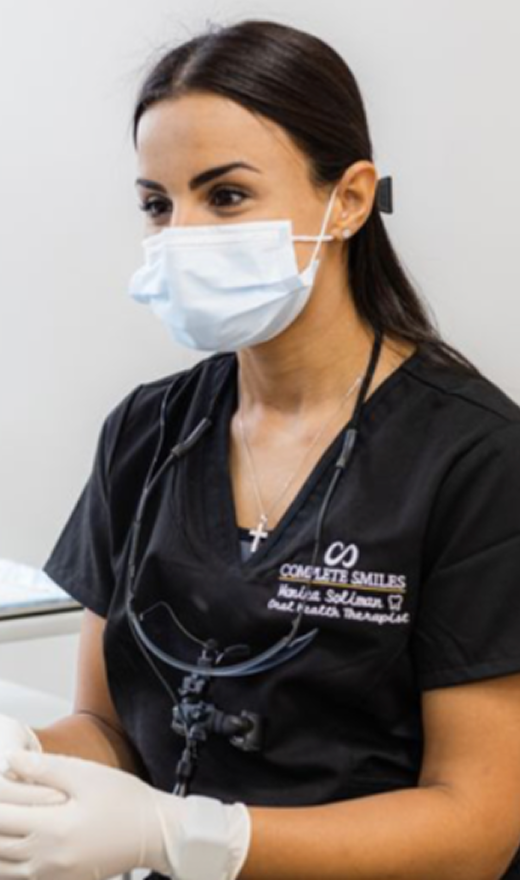
Complete Smiles Bella Vista, under the guidance of Dr James Hanna, takes a meticulous approach to dental care by incorporating advanced bonding techniques into its treatments. The practice focuses on customised treatment plans that consider factors like surface preparation and contamination control, ensuring durable and reliable restorations.
Dr Hanna prioritises in-depth consultations to evaluate each patient’s oral health and recommend the most effective bonding methods. By combining a personalised approach with proven bonding strategies, Complete Smiles Bella Vista sets a high standard for advanced dental care, offering a wide array of restorative solutions and material options tailored to individual needs.
Restorative Dentistry Services
The clinic provides a variety of treatments that depend on strong and precise dental bonding, such as porcelain veneers, dental implants, root canal therapy, and teeth whitening. These procedures require secure bonding to either dentine or enamel to deliver both visual appeal and lasting functionality.
For cosmetic bonding, the clinic uses composite veneers, which are applied in thin layers to the surface of the teeth. This method preserves the natural tooth structure while requiring minimal preparation. According to the clinic:
"Cosmetic composite resins do not require as much tooth preparation as their porcelain counterparts, and is a conservative choice" [26].
This approach addresses issues like tooth shape, colour, alignment, gaps, and minor chips, all while maintaining the integrity of the natural teeth. To further demonstrate confidence in their work, Dr Hanna offers a 10-year guarantee on porcelain veneers [26]. With advanced bonding protocols and complementary therapies, the clinic ensures that restorations are not only aesthetically pleasing but also built to last.
FAQs
Which adhesive system is best for my tooth?
The choice of the best adhesive system relies on factors such as the type of restorative material being used and the specific clinical scenario. Universal adhesives containing 10-MDP monomers are known for their effectiveness, particularly when combined with surface treatments like silanisation or sandblasting. Ensuring proper application and curing techniques is equally important for achieving optimal results. It’s always a good idea to consult with your dental professional to find the adhesive system best suited to your needs.
How do saliva or blood affect bonding?
Saliva contamination can compromise bond strength by interfering with the adhesive interface. This is particularly problematic if contamination happens after etching and isn’t managed correctly through rinsing or re-etching. Similarly, blood contamination can also weaken bonding, requiring thorough cleaning protocols to restore strength. Proper surface preparation is key to reducing these risks and ensuring the bond remains durable.
How can bond strength be maintained long-term?
Proper surface preparation is key to maintaining long-term bond strength. Pair this with selecting the right materials and strictly adhering to manufacturer guidelines for reliable adhesion. Also, keep an eye on environmental factors like temperature and humidity during application – these play a big role in preserving the bond’s durability over time.
Related Blog Posts
- Advances in Dental Adhesives: What to Know
- Chemical Adhesion in Dental Bonding: How It Works
- Bond Strength of CAD/CAM Materials with Adhesives
- Effect of Application Techniques on Bonding Success
Important Notice: Any surgical or invasive procedure carries risks. Before proceeding, you should seek a second opinion from an appropriately qualified health practitioner.
Individual results may vary. The information provided in this article is for educational purposes only and does not constitute medical advice.
Checkout Related Blogs



Get in touch with us
For more information, call us now to start feeling better. Or fill the form below to make appointment
The Latest News from Complete Smiles
How to Clean Clear Plastic Retainers
Checklist for Choosing Wearable Dental Devices
Checklist for Choosing Cloud AI Platforms in Dentistry
Complete Smiles Bella VistaAccepts All Major Health Funds, Including