





Material Options for Chairside CAD/CAM Restorations
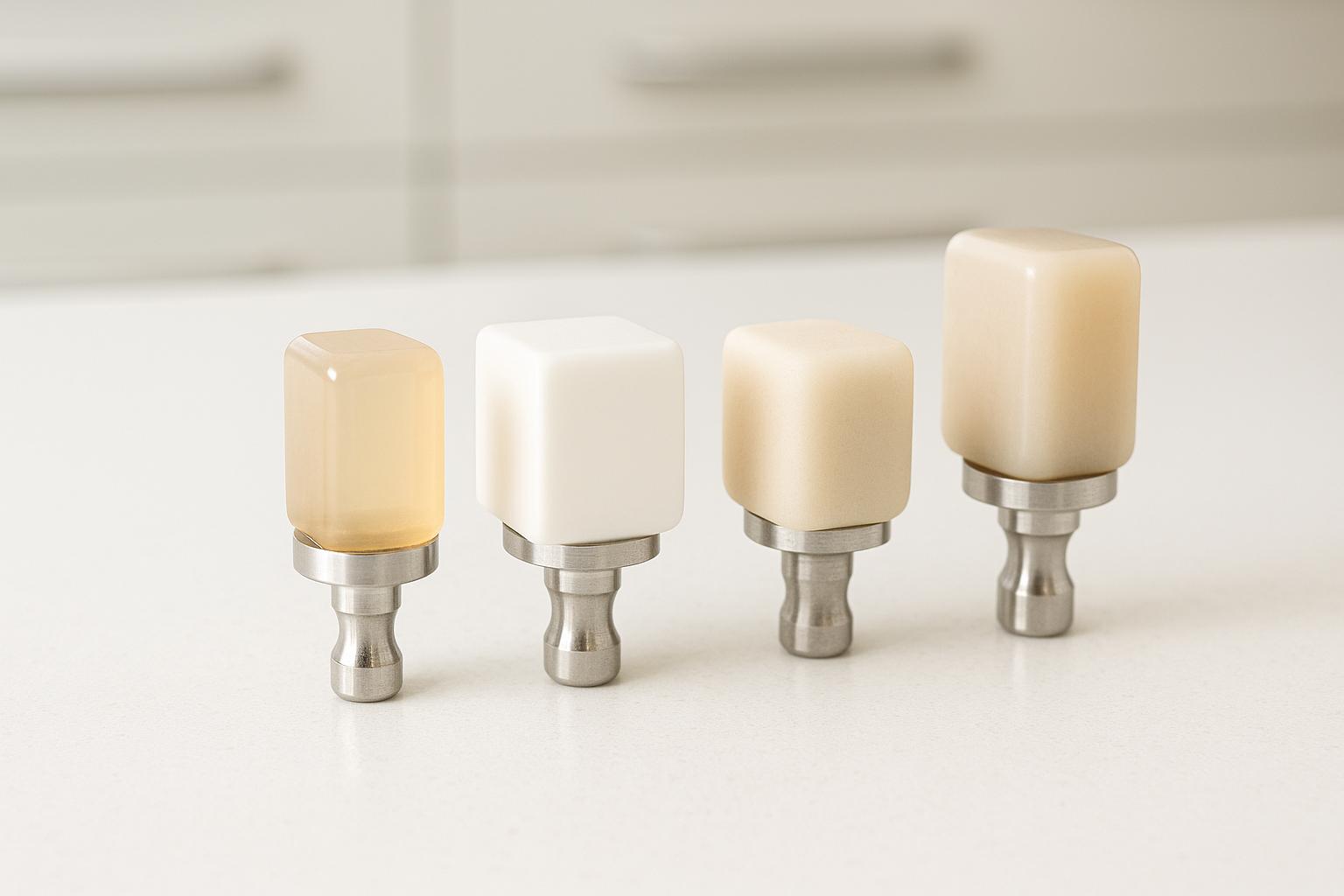
Chairside CAD/CAM systems allow dentists to create inlays, onlays, crowns, and veneers in a single visit. This eliminates the need for external labs and lengthy waiting times. The materials used in these systems – glass ceramics, high-strength ceramics, and resin-based options – are tailored to meet specific clinical needs, balancing strength, aesthetics, and efficiency. Each material has unique properties, making it essential to match the material to the tooth’s location, chewing forces, and patient habits.
Key Points:
- Glass Ceramics: Best for aesthetics, suitable for anterior veneers and crowns. Includes feldspathic ceramics, leucite-reinforced ceramics, and lithium disilicate.
- High-Strength Ceramics: Zirconia offers durability for posterior restorations and bruxism patients, with flexural strengths over 800 MPa.
- Resin-Based Materials: Includes composites and hybrid ceramics, ideal for stress-absorbing restorations and easier repairs.
Material choice impacts preparation, bonding, and long-term outcomes. Proper maintenance, such as avoiding hard foods and using night guards for bruxism, extends restoration lifespan.
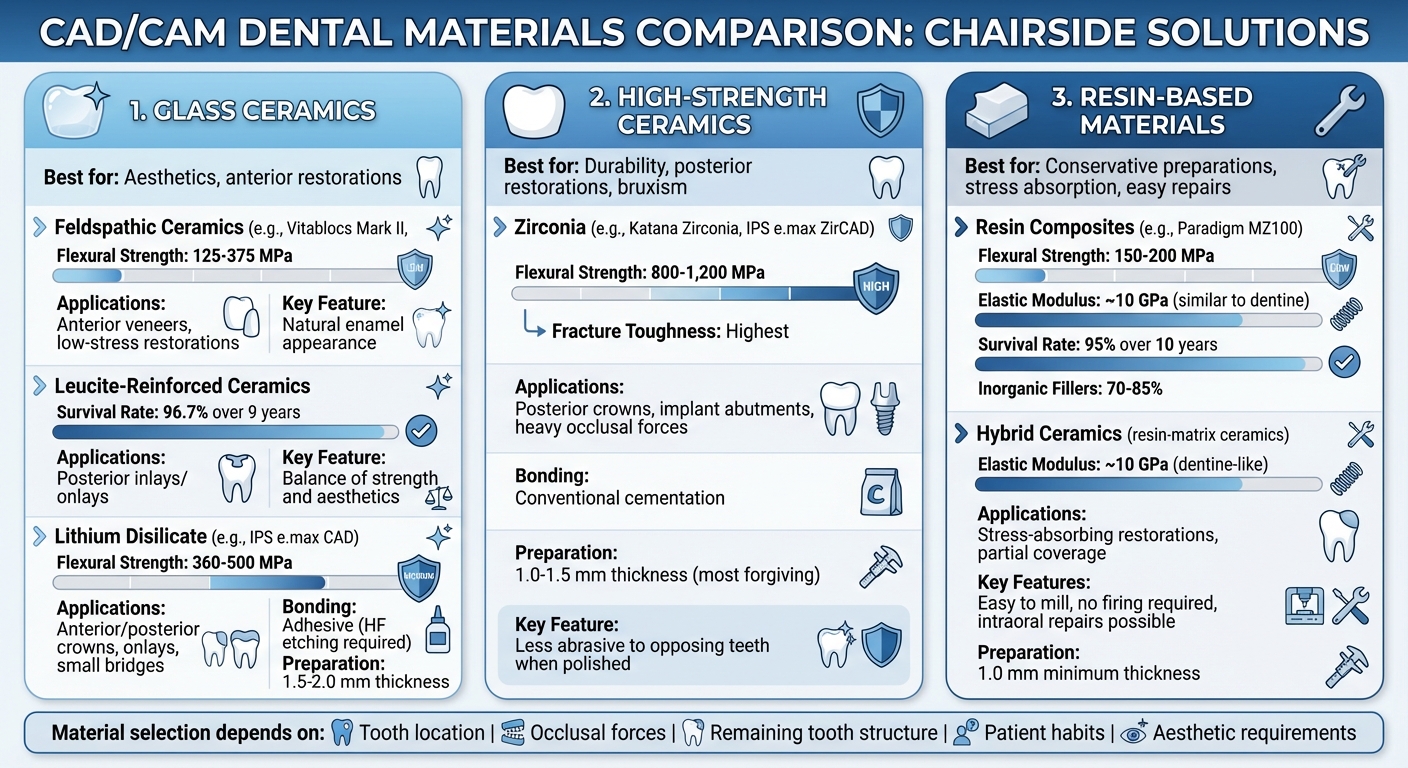
CAD/CAM Dental Materials Comparison: Properties and Clinical Applications
CAD/CAM Milling Materials: The Definitive Guide for First-Time Users
Material Types for Chairside CAD/CAM Restorations
Chairside CAD/CAM materials fall into three main groups: glass ceramics, high-strength ceramics, and resin-based materials, which include both composites and hybrid ceramics [1].
Glass Ceramics
Glass ceramics are known for their translucency, making them a popular choice for aesthetic restorations. This category includes feldspathic ceramics, leucite-reinforced ceramics, and lithium disilicate materials [1].
Feldspathic Ceramics
Feldspathic ceramics, such as Vitablocs Mark II and CEREC Blocs, are designed to resemble natural enamel. Over the years, their flexural strength has improved significantly – from around 125 MPa in earlier versions to approximately 375 MPa in more recent formulations. However, they remain somewhat brittle, making them best suited for anterior veneers and other low-stress, aesthetic restorations [1].
Leucite-Reinforced Ceramics
Leucite-reinforced ceramics strike a balance between strength and aesthetics. These materials have demonstrated a 96.7% survival rate over nine years, proving their reliability for posterior inlays and onlays when properly bonded. They are a solid option for aesthetic partial-coverage restorations in both the front and back teeth [1].
Lithium Disilicate Glass-Ceramics
Lithium disilicate glass-ceramics, like IPS e.max CAD, offer both strength (360–500 MPa) and translucency. Their versatility makes them suitable for a wide range of applications, including anterior and posterior crowns, onlays, endocrowns, and small anterior bridges. These materials require post-milling crystallisation in a furnace and rely on adhesive bonding techniques – etching, silane application, and resin cementation – for durability [1].
While glass ceramics deliver excellent aesthetics, cases requiring higher strength often lead clinicians to choose zirconia-based materials.
High-Strength Ceramics
High-strength ceramics, such as zirconia and zirconia-based materials, are valued for their exceptional durability, with flexural strengths ranging from 800 to 1,200 MPa. They also offer impressive fracture toughness, making them an excellent choice for posterior crowns, implant abutments, and restorations in patients with heavy occlusal forces or bruxism. Advances in high-translucency zirconias, like Katana Zirconia and IPS e.max ZirCAD, have improved their aesthetic appeal while preserving their strength. These materials are ideal for monolithic restorations in selected cases [1].
Unlike glass ceramics, zirconia is typically cemented conventionally rather than adhesively. The material is milled in its pre-sintered state and then sintered at high temperatures. While this process can extend the workflow, fast-sintering furnaces can help save time. Additionally, zirconia is less forgiving for intraoral adjustments and repairs compared to other materials. However, when well-polished, zirconia is less abrasive to opposing enamel than some glazed porcelains, adding to its clinical advantages [1].
Resin Composites and Hybrid Ceramics
Resin composite CAD/CAM blocks, such as Paradigm MZ100, are highly filled materials with 70–85% inorganic fillers. These materials have flexural strengths of 150–200 MPa and an elastic modulus of about 10 GPa, similar to dentine. This similarity helps distribute stress and reduces the likelihood of catastrophic fractures. Resin composites are easy to mill, do not require firing, and allow for quick chairside repairs. Clinical studies show a 95% survival rate over 10 years for indirect composite restorations, although longer-term data is still being gathered [1].
Hybrid ceramics, often referred to as resin-matrix ceramics, combine a ceramic network with a polymer or feature a finely dispersed ceramic phase within a resin matrix. Examples include polymer-infiltrated ceramic networks and nano-ceramics. These materials are known for their smooth margins after milling, good flexural properties, and improved edge stability. Their elastic properties closely mimic natural tooth structure, making them a great option for stress-absorbing restorations, partial coverage applications, and cases with moderate parafunctional habits [1].
Both resin composites and hybrid ceramics simplify chairside workflows, as they typically require only polishing or light characterisation, with no need for additional firing. This efficiency makes them ideal for same-day treatments. However, clinicians should remain mindful of potential long-term issues like water absorption, wear, and staining, as these materials have a shorter track record compared to other options. In many Australian dental practices offering same-day CAD/CAM restorations, standardising a few material families helps align scanner, mill, and furnace capabilities with material requirements, ensuring more tailored and efficient treatment planning [1].
The specific characteristics of these materials help guide clinicians in choosing the best option for each patient’s needs.
Material Selection for Different Clinical Situations
The precision offered by digital workflows is only part of the equation for clinical success – choosing the right material is equally crucial. Factors like tooth location, occlusal forces, and remaining tooth structure all play a role in determining the best option. Here’s a closer look at how materials are selected for specific clinical needs.
Anterior vs Posterior Restorations
For anterior teeth, where aesthetics are paramount, materials like feldspathic or leucite-reinforced ceramics are ideal. These materials offer excellent translucency and blend naturally with surrounding teeth, making them perfect for veneers, inlays, and single crowns in areas with moderate chewing forces [1][2]. For cases where additional strength is necessary – such as anterior crowns or small bridges – lithium disilicate is a great choice. It provides a flexural strength of 360–400 MPa without compromising on appearance, while also ensuring reliable adhesive bonding [1][2].
In the posterior region, where restorations must withstand greater chewing forces, materials like lithium disilicate and zirconia-based ceramics are commonly used. Zirconia, in particular, stands out with flexural strengths exceeding 900 MPa, making it a reliable option for crowns, onlays, and endocrowns [1][2]. For posterior inlays and onlays, resin-matrix ceramics and CAD/CAM composites are also viable. Their dentine-like elastic modulus helps distribute stress effectively, though their long-term durability and potential for colour changes should be considered [1][5].
Conservative preparation techniques can further enhance material performance in these regions.
Minimally Invasive and Adhesion-Based Restorations
For minimally invasive procedures – like thin veneers, overlays, or non-retentive onlays – materials that perform well at reduced thickness are essential. Adhesive glass ceramics, such as feldspathic, leucite-reinforced, and lithium disilicate options, are highly effective due to their predictable etching properties and performance in ultra-thin applications [1][2].
Hybrid ceramics and CAD/CAM composites also work well for conservative preparations. With an elastic modulus similar to dentine (around 10 GPa), these materials help absorb stress and lower the risk of fractures [1][5].
Managing Occlusal Loads and Bruxism
For patients with heavy biting forces or bruxism, materials like zirconia and lithium disilicate are better suited. Their superior flexural strength and fracture toughness make them ideal for posterior crowns and onlays [1][2]. While resin-matrix ceramics offer stress absorption due to their dentine-like modulus, they may wear down faster over time and could require additional maintenance [1][5].
Feldspathic veneers, though aesthetically pleasing, are more brittle and carry a higher risk of fracture in bruxism patients. In such cases, protective measures like occlusal guards can help extend their lifespan [1][2]. Additionally, optimising the occlusal design is key. This includes creating broad, flat contacts, avoiding steep cusps, ensuring adequate thickness in functional areas, and, when necessary, recommending night splints to minimise damage from heavy forces [1][2].
Preparation and Bonding Protocols
Getting the preparation and bonding right is essential for the success of any restoration. Each CAD/CAM material comes with its own set of guidelines for tooth reduction, margin design, and surface treatment. Understanding these specifics is key to achieving the best clinical results, building on the earlier discussion of material selection.
Preparation Requirements by Material
Glass ceramics like feldspathic and leucite-reinforced materials (e.g., IPS Empress CAD) demand precise preparation. For inlays and onlays, aim for a minimum thickness of 1.0–1.5 mm, while crowns require 1.5–2.0 mm. Use a chamfer or shoulder margin design (0.5–1.0 mm) to enhance adhesion and prevent chipping. Preserving enamel is crucial to maximise micromechanical retention [1][2].
Lithium disilicate (e.g., IPS e.max CAD) needs 1.5–2.0 mm occlusal thickness and 1.0–1.5 mm axial reduction. Margins should feature a rounded shoulder or chamfer design (0.8–1.2 mm). For veneers, reduce 0.3–0.5 mm cervically and 0.7–1.0 mm incisally, keeping preparations within the enamel whenever possible [1][2].
Zirconia, known for its flexural strength exceeding 1,000 MPa, is more forgiving in terms of preparation. It requires 1.0–1.5 mm thickness and can accommodate knife-edge or chamfer designs. To reduce stress concentration, round all internal line angles and avoid undercuts [1][2].
Resin composites and hybrid ceramics allow for the most conservative preparations. With just 1.0 mm minimum thickness, bevelled or featheredge designs with supragingival margins are sufficient. Their elastic modulus, similar to dentine (around 10.3 GPa), helps distribute stress evenly and supports minimally invasive approaches [1][2][3].
With the preparation complete, the next step is to follow the specific bonding protocols for securing these restorations.
Bonding and Cementation Techniques
Once the preparation is done, bonding protocols differ based on the material used:
- Glass ceramics require hydrofluoric acid (HF) etching at 5–9.5% for 20–60 seconds (20 seconds for feldspathic, 60 seconds for leucite-reinforced ceramics). Rinse thoroughly, dry, and apply a silane primer like Monobond Plus. Follow this with an adhesive resin such as Scotchbond Universal and cement with a dual-cure resin cement. This process ensures strong micromechanical retention [1][2].
- Lithium disilicate follows a similar approach. Etch with 5% HF for 20 seconds, apply silane, and cement using a dual-cure resin cement like Variolink Esthetic. Incorporating immediate dentine sealing during the CAD/CAM workflow can enhance bond strength and minimise postoperative sensitivity [1][2].
- Zirconia doesn’t have a glass phase, so HF etching isn’t effective. Instead, use air abrasion with 30–50 µm aluminium oxide at low pressure, then apply an MDP-containing primer like Monobond Plus. Depending on the clinical case, self-adhesive or resin cements can be used. For short or tapered preparations, resin bonding with MDP primers significantly improves retention [1][2].
- Resin composites and hybrid ceramics require sandblasting at low pressure, followed by silane and adhesive primers. Their resin matrix simplifies bonding and makes them easy to repair intraorally. To repair, roughen the surface, apply adhesive, and add composite material as needed [1][3].
No matter the material, maintaining a dry field using a rubber dam or strict isolation is crucial. Clean the restoration thoroughly after try-in to eliminate saliva contamination, and always check occlusion before final curing. Follow the manufacturer’s instructions for each material, as HF concentration, etching time, and compatibility with silanes and adhesives can vary. Sticking to these protocols ensures the longevity and performance of chairside CAD/CAM restorations [1][2].
sbb-itb-2be92ed
Longevity and Maintenance of CAD/CAM Restorations
The long-term success of CAD/CAM restorations hinges on choosing the right material and maintaining it properly. Different materials have varying durability, and understanding these differences helps set realistic expectations for both dentists and patients.
Survival Rates and Common Complications
CAD/CAM composite inlays and onlays boast a 10-year survival rate of about 95%. Materials like lithium disilicate and zirconia are known for their strength and resistance to fractures. On the other hand, feldspathic and leucite-reinforced glass ceramics are more prone to chipping, particularly under heavy biting forces [1].
However, no material is completely free from complications. Issues like fractures, chipping, marginal defects, debonding, and wear – both on the restoration and the opposing teeth – are common. For instance, glass ceramics may chip at the margins in high-stress areas, while unpolished zirconia can cause excessive wear on opposing teeth. Resin composites and hybrid ceramics offer an advantage here, as they can be repaired intraorally using light-cured composite [1]. Factors like restoration design, occlusion, and patient habits such as bruxism significantly influence the longevity of these restorations.
Adhering to proper bonding and preparation protocols, as discussed earlier, is essential for achieving the best results. While robust materials are important, consistent maintenance is equally critical.
Maintenance and Patient Education
Pairing durable materials with proactive care is key to maximising the lifespan of CAD/CAM restorations. Regular dental check-ups every six months allow for the early detection of issues like wear, staining, or debonding [1]. During these visits, dentists can assess the occlusion, polish surface irregularities, and address minor chips, especially in resin-based and hybrid restorations [1]. For patients who grind their teeth, a protective night splint is highly recommended to minimise stress on the restorations and prevent fractures, particularly in brittle materials like glass ceramics [1].
Patients should also be mindful of their daily oral care routine. Using a soft toothbrush with non-abrasive fluoridated toothpaste helps maintain the restoration’s surface and glaze. Certain habits, such as chewing ice, cracking hard foods, or using teeth as tools, should be avoided to prevent immediate damage – this is especially important for glass-ceramic restorations. Any signs of sensitivity, sharp edges, or unusual noises should be reported promptly. Early intervention could mean a simple polish or repair rather than a complete replacement.
Educating patients about the specific risks and care requirements of their restorations is a vital step in ensuring their long-term success. With proper guidance and maintenance, chairside CAD/CAM restorations can deliver reliable and lasting results.
CAD/CAM Materials in Australian Dental Practices
Chairside CAD/CAM technology has become a key part of restorative and cosmetic dentistry in Australia. Dental clinics across the country now commonly use materials like lithium disilicate glass-ceramics, high-strength zirconia, resin composites, and hybrid ceramics to deliver same-day restorations [1][2][4]. This shift meets modern patient demands for fewer appointments, greater convenience, and consistent quality – all essential in private dental care today. These advancements pave the way for a closer look at how treatment planning and material choices are integrated into Australian practices.
Treatment Planning with CAD/CAM Materials
Australian dentists are now designing treatment plans based on the latest evidence regarding material performance, survival rates, and specific requirements for adhesive or conventional cementation [2][1]. Key factors in the decision-making process include the tooth’s position, the amount of remaining tooth structure, occlusal forces, habits like bruxism, bonding conditions, and patient expectations for aesthetics, functionality, and cost [1][2].
In more complex cases, CAD/CAM materials play a role throughout various stages of treatment. For example, digitally milled PMMA or composite provisionals are often used during orthodontic or implant procedures. Diagnostic wax-ups and mock-ups are then converted into final restorations using lithium disilicate or zirconia once the tooth position and occlusion are confirmed [1][6]. This digital workflow allows seamless coordination among restorative, orthodontic, and surgical teams, ensuring precise tooth preparation, optimal implant placement for screw-retained crowns, and long-term material choices. For younger patients, repairable hybrid ceramics are often preferred, as they accommodate potential changes in occlusion over time [1][5]. A good example of this integration can be seen in practices like Complete Smiles Bella Vista.
Complete Smiles Bella Vista as an Example
At Complete Smiles Bella Vista, chairside CAD/CAM materials are used in a variety of services, including porcelain veneers, crowns, implant restorations, and smile makeovers. For cosmetic treatments, the practice offers single-visit restorations through in-house milling [2][1]. Implant restorations often use translucent zirconia or lithium disilicate for custom abutments and crowns, balancing strength with natural aesthetics. During the healing phase, provisional PMMA or composite restorations guide soft-tissue shaping [1][5].
Digital impressions replace traditional impression materials, offering a more comfortable experience for patients. In-house milling not only streamlines scheduling but also allows dentists to explain material options, their benefits, and limitations during consultations, helping patients make informed decisions [2][6].
Regulatory Considerations
Australian dental practices must adhere to AHPRA and Dental Board of Australia guidelines, ensuring that all information provided to patients is accurate, evidence-based, and not misleading [4]. For materials like lithium disilicate, zirconia, or hybrid ceramics, explanations should include both their advantages – such as durability, aesthetics, and fewer visits – and their limitations, like potential chipping, the need for sufficient tooth structure, and the possibility of future replacement. This information should be presented in clear, straightforward language [2][1].
To remain compliant, dentists should document the reasons for material selection in patient records, considering factors like tooth position, occlusal risks, and aesthetic goals, and referencing supporting evidence where relevant [1][4]. Informed consent discussions should cover alternative materials, risks, benefits, costs, and expected lifespan, all in a way that aligns with AHPRA and Dental Board standards [4]. Regular team training on CAD/CAM materials and internal reviews of marketing materials also help practices stay aligned with regulatory requirements, ensuring they maintain evidence-based practices and prioritise patient education [1][4].
Conclusion
Chairside CAD/CAM technology offers Australian dentists access to a variety of materials designed to meet specific clinical needs. For example, glass ceramics are ideal for aesthetically demanding restorations like anterior veneers and single crowns, while high-strength ceramics are better suited for posterior restorations and cases involving bruxism, where occlusal loads are higher. Meanwhile, hybrid ceramics and resin composites, with their dentine-like elasticity, are perfect for minimally invasive onlays and conservative preparations, as they allow for easier in-chair repairs and adaptability to less invasive approaches [1].
However, no single material fits every case. Success hinges on choosing materials based on their properties – like flexural strength, translucency, elastic modulus, and bonding characteristics – and aligning them with patient-specific factors such as tooth position, occlusal forces, remaining tooth structure, and aesthetic goals. The combination of proper material selection, thoughtful preparation design, precise digital workflows, and correct adhesive or cementation techniques significantly enhances clinical outcomes. Research supports the reliability of chairside CAD/CAM restorations when materials are used appropriately; for instance, CAD/CAM composites have shown survival rates of around 95% over 10 years. On the flip side, poor material selection or inadequate bonding can lead to chipping, debonding, or marginal staining. Regular maintenance, including educating patients on avoiding habits like chewing hard foods or ice and recommending occlusal splints for bruxism, can also extend the lifespan of these restorations [1].
Australian dental practices are increasingly adopting minimally invasive, adhesion-based techniques enabled by advanced CAD/CAM materials. These approaches, which align seamlessly with digital workflows, help preserve more tooth structure while improving aesthetic results. For instance, thin lithium disilicate veneers and hybrid ceramic onlays can provide both strength and visual appeal when enamel is preserved and occlusal forces are carefully managed. Clinicians are encouraged to stay updated on new material developments and prioritise products with robust clinical evidence and TGA approval [1].
FAQs
Why is zirconia a good choice for back teeth restorations?
Zirconia stands out as a strong and reliable choice for restoring back teeth, thanks to its impressive strength and durability. It’s designed to handle the heavy biting forces typical in this area, offering excellent resistance to fractures. Plus, its high biocompatibility ensures it’s safe and comfortable for extended use.
What’s more, zirconia delivers a natural, tooth-like look without relying on metal. It’s also gentle on opposing teeth, reducing wear. This combination of functionality and appearance makes it a dependable and visually appealing option for posterior restorations.
What are the differences between resin-based materials and glass ceramics when it comes to repairability?
When it comes to repairs, resin-based materials have the edge over glass ceramics. They can be fixed directly in the mouth with relatively simple procedures, often involving minimal removal of the existing restoration. This not only saves time but also helps retain more of the original material.
On the other hand, repairing glass ceramics can be more complicated. These materials often demand more involved procedures, and in some cases, the restoration might need to be completely replaced. Deciding between these two options should take into account the specific clinical requirements and the patient’s long-term care needs.
Why is choosing the right material important for different teeth?
Choosing the right material for dental restorations is crucial because each tooth serves a distinct purpose. Molars and premolars, located at the back of the mouth, handle intense chewing forces. For these teeth, strong materials like zirconia or metal-reinforced ceramics are often the best choice. On the other hand, front teeth – like incisors and canines – play a more prominent role in your smile. To replicate their natural translucency and appearance, materials such as porcelain or composite are commonly used.
By selecting materials suited to each tooth’s function and position, dental restorations can provide durability, proper functionality, and a natural-looking finish.
Related Blog Posts
- Wear-Resistant Materials in Dental Restorations
- Ceramic Materials in Crowns and Bridges
- CAD/CAM vs. Traditional Restorations: Key Differences
- Bond Strength of CAD/CAM Materials with Adhesives
Important Notice: Any surgical or invasive procedure carries risks. Before proceeding, you should seek a second opinion from an appropriately qualified health practitioner.
Individual results may vary. The information provided in this article is for educational purposes only and does not constitute medical advice.
Checkout Related Blogs




Get in touch with us
For more information, call us now to start feeling better. Or fill the form below to make appointment
The Latest News from Complete Smiles
How to Clean Clear Plastic Retainers
Checklist for Choosing Wearable Dental Devices
Checklist for Choosing Cloud AI Platforms in Dentistry

Complete Smiles Bella VistaAccepts All Major Health Funds, Including





