





CAD/CAM vs. Traditional Restorations: Key Differences

CAD/CAM dental technology is transforming how restorations are done in Australia, offering faster, more precise, and comfortable procedures compared to older methods. Here’s what you need to know:
- CAD/CAM: Uses digital scans, computer-aided design, and milling or 3D printing to create crowns, veneers, and bridges in just one visit. Patients avoid messy impressions, temporary restorations, and multiple appointments.
- Traditional methods: Rely on manual impressions and lab fabrication, often requiring weeks and multiple visits. Temporary crowns are used while waiting for the final restoration.
- Patient comfort: CAD/CAM eliminates discomfort from moulds and reduces gag reflex issues. Digital scans are quicker and more accurate.
- Time efficiency: CAD/CAM reduces treatment time by 60% on average, completing restorations in 1-2 hours compared to weeks with older methods.
- Material precision: Digital systems ensure consistent, high-quality materials like zirconia and lithium disilicate, which are durable and precise.
Quick Comparison
| Feature | CAD/CAM | Traditional Methods |
|---|---|---|
| Appointments | 1 visit | 2–5 visits |
| Treatment Time | 1–2 hours | Weeks |
| Impressions | Digital scans | Physical moulds |
| Patient Comfort | High | Lower |
| Materials | Zirconia, ceramics, resin | Amalgam, composites |
| Durability | High precision, long-lasting | Reliable but slower to produce |
CAD/CAM is ideal for those prioritising speed, convenience, and comfort, while older methods remain useful for certain complex cases or specific patient needs. The choice depends on your situation and preferences.
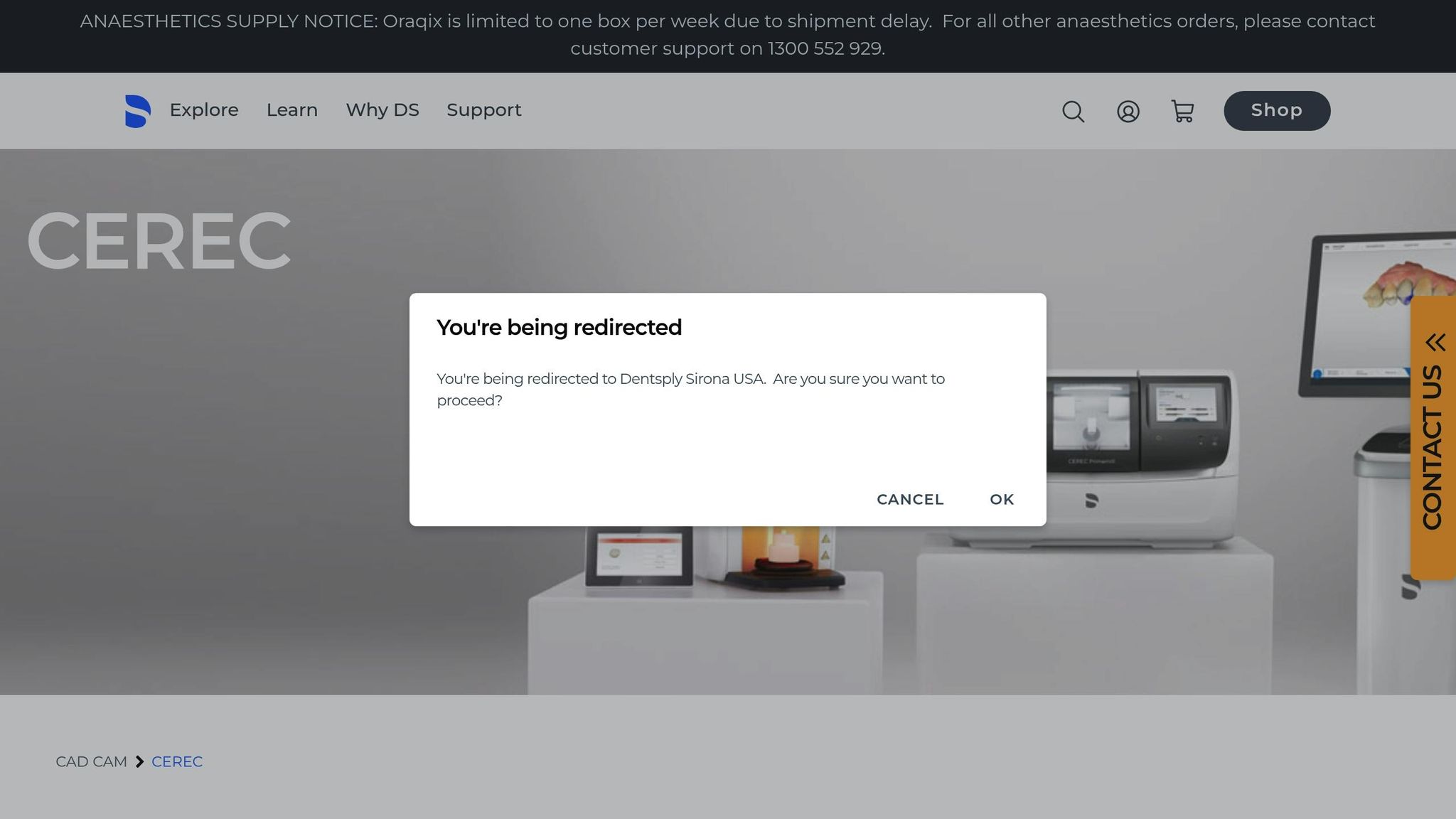
CEREC Dental Restorations
How Each Method Works
Let’s break down how CAD/CAM and traditional methods handle dental restorations, highlighting their distinct workflows and material choices.
CAD/CAM Process
The CAD/CAM workflow brings a digital revolution to dental restoration. By combining computer-aided design (CAD) with computer-aided manufacturing (CAM), this method streamlines the process, offering dentists a way to achieve precise results more efficiently.
It all starts with a digital impression. Instead of the messy traditional materials, an intraoral scanner captures a detailed 3D image of the tooth and surrounding structures. This scan creates a highly accurate virtual model.
Next, during the CAD phase, dental professionals use specialised software to design the restoration directly on this 3D model. Adjustments can be made in real time to ensure the restoration fits the patient’s natural anatomy perfectly.
Once the design is finalised, the CAM phase takes over. A milling machine carves the restoration from materials like ceramic, zirconia, or resin. The restoration is then polished and fine-tuned during the fitting appointment. In some cases, 3D printing is used as an alternative to milling, offering another layer of flexibility.
Traditional Method Process
Traditional methods follow a more hands-on, multi-step process that has remained largely unchanged over the years. It begins with manual impressions, using materials like alginate or polyvinyl siloxane to capture the tooth’s details. Final impressions are then taken with more precision and sent to a dental lab.
At the lab, technicians manually craft the restoration, starting with wax models before moving on to casting and finishing. This process is typically slower and less precise compared to digital methods. Patients often need multiple appointments, including sessions to establish the vertical dimension of occlusion (VDO) and a wax try-in to check the fit and aesthetics. The back-and-forth between the dentist and the lab increases the chances of errors and extends treatment timelines.
Materials Used
The choice of materials differs significantly between the two methods, impacting both the workflow and the restoration’s final properties.
- CAD/CAM Materials: These include metals, porcelain, lithium disilicate, zirconia, and resin. These materials are specifically designed for digital processes, ensuring consistent quality. For instance, zirconia is a standout option for its strength, making it ideal for long-span bridges where traditional ceramics might fail.
- Traditional Materials: These rely on amalgam, resin-based composites, glass ionomer, and resin-modified glass ionomer. These materials are tailored for manual techniques and lab fabrication, but they often lack the uniformity seen in CAD/CAM options.
One of the key advantages of CAD/CAM materials is their consistency. Blocks of material used in milling undergo strict quality control, ensuring uniform properties throughout the restoration. This consistency enhances the restoration’s durability and fit. For example, digital impressions taken via CAD/CAM boast an accuracy rate of 99.7%, compared to 94.2% for traditional impressions [3]. This precision reduces the risk of microleakage, which remains a concern with all restorative materials. Additionally, some modern CAD/CAM materials are engineered with bioactive properties, offering remineralisation benefits [4].
These differences in workflows and materials highlight why CAD/CAM is increasingly becoming the preferred choice for many dental professionals.
Patient Comfort Differences
The CAD/CAM approach doesn’t just bring technical precision – it also makes the dental experience much more comfortable for patients. By cutting down on invasive procedures and streamlining processes, digital technology helps ease common dental anxieties and enhances overall comfort compared to traditional methods.
Digital Scans vs Conventional Impressions
Traditional impressions can be a challenge for many patients. They involve biting down on trays filled with impression material, which often triggers gag reflexes and can feel unpleasant. On the other hand, digital scanning replaces this process with a small, handheld scanner that captures detailed 3D images of the teeth and surrounding areas. This method is quick – taking just a few minutes – and eliminates issues like distortion or air bubbles. For patients with sensitive gag reflexes, dental anxiety, or heightened sensitivities, this non-invasive alternative is a game-changer.
Number of Appointments Required
One of the standout benefits of CAD/CAM technology is how it streamlines dental procedures, cutting down the number of visits needed. Traditional methods often require separate appointments for diagnosis, impressions, and final placement. In contrast, CAD/CAM systems can complete procedures in as little as two hours. For example, CAD/CAM dentures may only require two visits – including manufacturing – while conventional dentures typically take five sessions[5][6]. Fewer appointments mean less disruption to daily life, whether it’s taking time off work or arranging childcare. This efficiency not only saves time but also makes the entire treatment process far more manageable for patients.
Treatment Time Differences
Beyond the comfort advantages already highlighted, the shorter treatment times with CAD/CAM technology significantly improve both the patient experience and the efficiency of dental practices. By drastically cutting down the time needed for procedures compared to traditional methods, CAD/CAM is reshaping how dental care is delivered.
Same-Day vs Multi-Visit Treatment
CAD/CAM technology transforms what used to be a drawn-out, multi-visit process into a single appointment. Traditionally, getting a crown would take two or more visits over 2–3 weeks. During this time, patients had to manage temporary crowns, which often came with dietary restrictions and the risk of damage.
With CAD/CAM, the entire process can be completed in one sitting. The milling of the restoration itself takes only about 20 minutes, and the full procedure is usually wrapped up within 90 to 120 minutes[7]. This isn’t just limited to crowns – other restorations see similar time savings:
| Restoration Type | Traditional Timeline | CAD/CAM Timeline | Patient Visits |
|---|---|---|---|
| Single Crown | 2–3 weeks | 90–120 minutes | 1 visit vs 2–3 visits |
| Veneer | 2–4 weeks | 2–3 hours | 1 visit vs 2–3 visits |
| Inlay/Onlay | 2–3 weeks | 60–90 minutes | 1 visit vs 2 visits |
| Bridge (3-unit) | 3–4 weeks | 3–4 hours | 1 visit vs 3–4 visits |
By skipping the need for temporary restorations, CAD/CAM not only saves time but also eliminates the hassle of managing temporary crowns. Patients leave their appointments with a permanent solution, making the experience more convenient and stress-free.
Practice Scheduling Impact
The efficiency of CAD/CAM technology also simplifies practice scheduling. For example, milling a single crown takes only about 10 minutes[9]. This allows practices to complete treatments in one visit, removing the need for the back-and-forth coordination with external labs that traditional methods require.
This streamlined workflow means dental practices can treat more patients with fewer appointments per case. Additionally, the precision of CAD/CAM restorations minimises the need for follow-up visits for adjustments or remakes[8]. This not only saves time but also reduces resource use, benefiting both patients and the practice’s overall operations.
sbb-itb-2be92ed
Clinical Results and Durability
Research highlights clear differences in both the immediate fit and long-term durability of CAD/CAM restorations compared to traditional methods. These findings play a critical role in shaping clinical decisions and managing patient expectations.
Fit and Strength
Achieving a precise fit is crucial for successful restorations. Studies indicate that CAD/CAM provisional crowns have marginal gaps ranging from 47 to 193 micrometres, which are consistently smaller than those produced using traditional impressions. Additionally, CAD/CAM post and cores demonstrate significantly greater fit accuracy (p = 0.022) [10][11]. Unlike traditional direct provisional restorations, CAD/CAM materials avoid the marginal discrepancies caused by polymerisation shrinkage [10]. This level of precision allows for restorations that are customised to match the patient’s unique anatomy [12], a level of detail that can be harder to achieve with conventional impression-based techniques. The result? Not only a better initial fit but also a restoration that’s built to last. This precision enhances the overall performance of restorations over time.
Long-Term Success Rates
When it comes to durability, CAD/CAM restorations often match or even surpass traditional methods. Implant-supported all-ceramic crowns created with CAD/CAM technology show a 97% success rate over periods of up to 12 years, with an annual failure rate of just 0.74% after an average follow-up of 2.5 years [13]. Similarly, a 10-year study on Cerec 1 restorations reported a survival rate of 85.7%, comparable to that of cast gold restorations [14].
Material performance further supports these findings. For example, lithium disilicate (IPS e.max) crowns have a failure rate of 6% over 11 years [15]. Zirconia crowns, which are now widely used, boast an average lifespan of approximately 17 years [15]. The manufacturing process also matters: laboratory-fabricated CAD/CAM crowns have a failure rate 26 times lower than chairside-milled crowns after five years [13]. This is largely due to lab-based milling machines providing higher precision and finer surface details, as well as access to stronger materials like zirconia, which require sintering processes not typically available in chairside setups [13].
Several factors influence the longevity of restorations. Technical considerations, such as the fabrication method and the use of silane etching, play a role, as do patient-specific factors like oral habits [13][16]. Other key elements include the choice of material, placement technique, the patient’s diet and oral hygiene, and the expertise of the practitioner [15]. Understanding these variables helps both dentists and patients achieve the best possible outcomes, regardless of the restoration method chosen.
Side-by-Side Comparison
When you put CAD/CAM and traditional restoration methods side by side, the differences become clear. This direct comparison highlights the key factors that matter most to patients and practitioners, making it easier to see how each approach stacks up.
Comparison Table
Here’s a closer look at how CAD/CAM and traditional restorations compare:
| Factor | CAD/CAM Restorations | Traditional Restorations |
|---|---|---|
| Treatment Time | 1–2 hours in a single visit [17] | Multiple appointments over several weeks [17] |
| Number of Appointments | Typically 1 appointment [17] | 2–5 appointments depending on the case [6] |
| Impression Method | Digital scans (preferred by 89% of patients) [2] | Physical moulds with impression materials [2] |
| Patient Comfort | Minimal discomfort, no gagging [2] | Higher discomfort, potential gagging with moulds [2] |
| Material Options | Ceramics, zirconia, lithium disilicate, hybrid materials [19] | Traditional ceramics, metals, composite resins |
| Laboratory Working Time | 74–92 minutes on average [18] | 148 minutes on average [18] |
| Treatment Time Reduction | 60.36% faster on average [2] | Standard processing time |
| Revision Requirements | Instant scan evaluation with fewer retakes [2] | Higher likelihood of needing retakes [2] |
Digital workflows cut active working time by 38.4% compared to traditional methods [2].
These differences highlight how CAD/CAM technology can streamline processes and improve both patient and practitioner experiences. For instance, complex procedures that once required multiple visits can now often be completed in just one.
Digital impressions have also been a game-changer. By eliminating the need for traditional moulds, they significantly reduce patient discomfort – no more gagging or messy materials [2]. This not only saves time but also makes the entire process less stressful for patients.
Material options are another important consideration. Both CAD/CAM and traditional methods offer durable choices, but the selection depends on the specific restoration, patient needs, and clinical factors [19]. Ultimately, this comparison shows how CAD/CAM builds on advancements in dental technology to deliver faster, more comfortable, and efficient care.
Summary
As outlined earlier, CAD/CAM and traditional dental methods differ in ways that significantly impact both patients and professionals. CAD/CAM technology simplifies intricate procedures, offering faster, more precise, and comfortable experiences. In contrast, traditional methods often require multiple visits spread over several weeks.
Digital scanning enhances patient comfort by removing the need for traditional physical impressions, which can sometimes cause discomfort or gagging. This makes the process less stressful and more convenient for patients[17].
From a clinical perspective, CAD/CAM restorations boast success rates exceeding 95%[1]. However, long-term durability varies. A meta-analysis found that CAD/CAM restorations might have a 1.84 times higher risk of failure compared to those made with conventional techniques[20]. That said, other studies suggest both methods yield similar clinical outcomes[21].
Both approaches offer a variety of material options. CAD/CAM systems can produce restorations using ceramics, zirconia, and lithium disilicate, while traditional methods often utilise conventional ceramics, metals, and composite resins. The best choice depends on the specific clinical needs and patient preferences, highlighting the importance of tailoring decisions to each case.
In terms of efficiency, CAD/CAM systems reduce laboratory working times significantly – from an average of 148 minutes with traditional methods to about 74–92 minutes[18]. This streamlined process can improve cost management and scheduling. However, the upfront investment in CAD/CAM technology requires careful financial consideration.
For Australian patients and dental professionals, factors like treatment urgency, patient comfort, clinical requirements, and durability should guide the decision between CAD/CAM and traditional methods. CAD/CAM offers the convenience of same-day treatments and immediate results, while traditional techniques continue to deliver reliable long-term outcomes in certain scenarios.
Ultimately, both methods have their place in modern dentistry. The choice should be based on individual circumstances, clinical expertise, and patient preferences rather than a universal approach.
FAQs
What are the advantages of CAD/CAM dental restorations compared to traditional methods?
CAD/CAM dental restorations bring a host of benefits compared to traditional methods. One major advantage is the improved precision and accuracy, which leads to restorations that fit more snugly and function more effectively. Plus, this technology allows for same-day treatments, meaning fewer appointments and less time spent at the dentist.
Another perk is the boost in patient comfort. Traditional impression materials, which many patients find uncomfortable, are no longer necessary. On top of that, restorations made with CAD/CAM tend to be more durable and blend seamlessly with natural teeth, offering long-lasting and visually appealing results. These features make CAD/CAM an efficient and patient-friendly option for modern dental care.
What are the differences in durability and quality between CAD/CAM restorations and traditional dental materials?
CAD/CAM restorations are made from advanced materials like zirconia, lithium disilicate, and glass-ceramics. These materials are designed to handle the daily wear and tear of chewing while offering a natural look that blends effortlessly with your existing teeth.
On the other hand, traditional options such as gold, amalgam, and porcelain-fused-to-metal crowns have been trusted for decades. Gold restorations, for instance, often last over 10 years. However, zirconia restorations produced with CAD/CAM technology can last 15–20 years or even longer when properly maintained. While both methods provide impressive durability, CAD/CAM materials are gaining popularity for their strength, precision, and lifelike appearance, making them a go-to choice in modern dental care.
When might traditional dental restorations be a better option than CAD/CAM technology?
Traditional dental restorations often shine in situations that call for complex and highly personalised work. When procedures demand meticulous craftsmanship – like precise adjustments or detailed aesthetic enhancements – traditional methods can provide the flexibility and artistry needed. This makes them particularly suitable for extensive restorations or cases requiring a more tailored approach.
They’re also a preferred choice when immediate, same-day restorations aren’t necessary. With a long history of durability and reliable clinical results, traditional techniques appeal to patients who value tried-and-tested methods over quick turnaround times. Each approach has its own strengths, and your dentist can help determine which option best suits your individual needs.
Related Blog Posts
- Wear-Resistant Materials in Dental Restorations
- Eco-Friendly vs. Traditional Dental Materials
- Durability of Metal-Ceramic Restorations
- Ceramic Materials in Crowns and Bridges
Important Notice: Any surgical or invasive procedure carries risks. Before proceeding, you should seek a second opinion from an appropriately qualified health practitioner.
Individual results may vary. The information provided in this article is for educational purposes only and does not constitute medical advice.
Checkout Related Blogs




Get in touch with us
For more information, call us now to start feeling better. Or fill the form below to make appointment
The Latest News from Complete Smiles
How to Clean Clear Plastic Retainers
Checklist for Choosing Wearable Dental Devices
Checklist for Choosing Cloud AI Platforms in Dentistry
Complete Smiles Bella VistaAccepts All Major Health Funds, Including





