





Durability of Metal-Ceramic Restorations
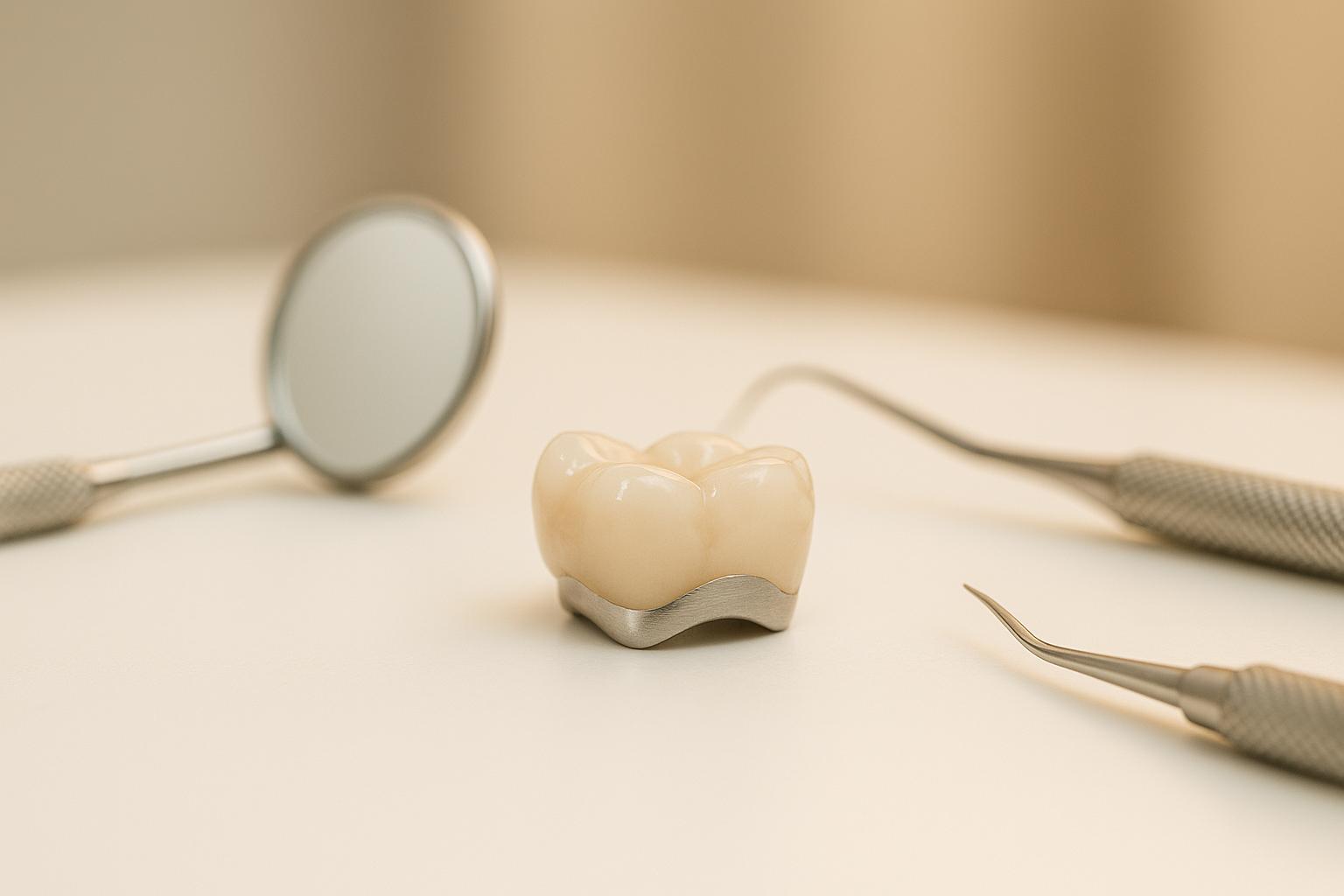
Looking for durable dental restorations? Metal-ceramic and all-ceramic options both have their strengths. Here’s a quick guide to help you decide:
- Metal-Ceramic Restorations: Known for their strength and longevity, these last about 10–15 years with survival rates of 95% at 10 years. They’re cost-effective and ideal for back teeth but may show a metal line if gums recede.
- All-Ceramic Restorations: Perfect for front teeth, these mimic natural enamel for a seamless look. They offer good durability (70–93% survival at 5 years) but are more prone to fractures under heavy stress.
Quick Comparison
| Aspect | Metal-Ceramic | All-Ceramic |
|---|---|---|
| Durability | 95% survival at 10 years | 70–93% survival at 5 years |
| Fracture Risk | Low (2.7–6% over 15 years) | Higher (6–10% over 3–5 years) |
| Aesthetics | Good, but limited by metal | Excellent, natural appearance |
| Cost | More affordable | Higher cost |
| Wear on Opposing Teeth | May increase wear | Similar to natural enamel |
| Gum Line Appearance | May show metal line | No visible metal margin |
Key takeaway: Metal-ceramic restorations are strong and cost-effective, ideal for back teeth. All-ceramic options excel in aesthetics, making them better for front teeth. Choose based on your priorities: durability, cost, or appearance.
Dental Ceramics for Absolute Beginners – PS013
1. Metal-Ceramic Restorations
Metal-ceramic restorations bring together the strength of a metal base with the aesthetic appeal of a ceramic outer layer. This combination ensures a durable and natural-looking solution that meets both functional and visual requirements. Their design not only supports long-term use but also provides reliable performance in terms of wear and appearance.
Durability
The durability of metal-ceramic restorations lies in their dual-material structure. The metal framework offers exceptional strength, both tensile and compressive, to support the ceramic veneer, which handles the forces of chewing with ease. Studies highlight their reliability, with porcelain-fused-to-metal (PFM) prostheses showing survival rates as high as 94.4% over five years, outperforming all-ceramic alternatives at 88.6% [2]. The effective bond between the metal and ceramic layers is key to their resilience, allowing them to withstand the daily pressures of chewing and grinding [1].
Wear Resistance
Wear resistance plays a major role in the longevity of metal-ceramic restorations. These restorations typically go through phases of wear – initial, steady, and advanced – with the steady phase marked by a moderate wear rate that helps maintain their stability over time [3]. However, wear patterns can evolve, as surface or subsurface flaws may eventually lead to cracks if wear becomes excessive. The ceramic layer’s wear resistance can be influenced by factors like material choice and surface treatments during fabrication. Notably, polished ceramic surfaces tend to hold up better than glazed ones, which are more prone to material loss [1].
Aesthetic Performance
While these restorations excel mechanically, their aesthetic performance is also important. They can be colour-matched to blend with natural teeth, offering a pleasing appearance. However, a potential drawback is the visibility of the metal margin at the gum line if gum recession occurs [5]. Because of this, metal-ceramic restorations are often preferred for back teeth, where strength is a priority and aesthetic concerns are less pressing.
Cost-Effectiveness
Metal-ceramic restorations strike a balance between durability and affordability. They are generally more budget-friendly than all-ceramic options, while still offering excellent performance [5]. Over time, they may prove to be a more economical choice. For instance, research shows that while all-ceramic crowns might be cost-effective in the first decade, PFM crowns tend to offer better value in the long term, with survival rates of 62% compared to 48% for all-ceramic crowns in certain cases [4]. This combination of strength, wear resistance, and affordability makes metal-ceramic restorations a practical choice for many patients.
2. All-Ceramic Restorations
All-ceramic restorations are designed to closely imitate the look of natural teeth, making them a popular choice for patients who prioritise aesthetics. Unlike metal-ceramic alternatives, these restorations are made entirely of ceramic materials, offering a seamless and natural appearance.
Durability
While all-ceramic restorations have made significant strides in durability, they still fall slightly behind metal-ceramic options. For instance, all-ceramic restorations boast a five-year survival rate of about 92%, compared to 99.5% for metal-ceramic restorations [7]. Some systems, like In-Ceram Zirconia, have shown excellent long-term results, achieving a 10-year survival rate of 93.6% [7].
That said, ceramics are more prone to fractures under high stress. Patients with bruxism, for example, experience failure rates 2.3 times higher than average [6][9]. A study examining 1,335 all-ceramic restorations found a 93.5% survival rate over 10 years, but this dropped to 78.5% over 20 years under normal conditions [9]. This tendency toward brittleness also impacts wear resistance, which we’ll explore next.
Wear Resistance
All-ceramic restorations perform well under normal chewing conditions but can struggle in high-stress environments. Zirconia-based ceramics, known for their superior mechanical strength, are a better option for patients with bruxism or significant tooth wear [9][11]. However, even zirconia crowns are not immune to higher failure rates in patients with parafunctional habits like teeth grinding [10].
The success of these restorations often hinges on selecting the right material and designing the occlusion carefully. Newer hybrid ceramics, which have a lower hardness and elasticity compared to traditional ceramics, may help minimise stress on opposing teeth [9].
Aesthetic Performance
When it comes to appearance, all-ceramic restorations are hard to beat. They mimic the translucency and colour of natural enamel, making them ideal for front teeth and other visible areas [8]. Since they lack a metal framework, there’s no risk of unsightly dark lines at the gum line, even if gum recession occurs over time. This makes them a preferred choice for patients seeking a natural and flawless smile.
Cost-Effectiveness
While all-ceramic restorations shine in aesthetics, their cost-effectiveness can be a concern for some patients. In Australia, the price for porcelain crowns is around $1,500, while zirconia crowns cost approximately $1,200, reflecting their premium status [13]. Over the short term – five to ten years – they may prove economical. However, their higher failure rates over longer periods make metal-ceramic restorations a more budget-friendly choice at the 15-year mark [12].
For patients with tighter budgets or limited insurance coverage, porcelain-fused-to-metal (PFM) restorations may offer a more affordable alternative [14]. On average, dental crowns last between five and 15 years, but proper care and maintenance can help extend their lifespan [8].
sbb-itb-2be92ed
Advantages and Disadvantages
Continuing from the earlier discussion on long-term performance, this section outlines the strengths and weaknesses of metal-ceramic and all-ceramic restorations. Understanding these differences can help in making informed treatment decisions.
Benefits of Metal-Ceramic Restorations
Metal-ceramic crowns are often considered a reliable choice for single-tooth restorations, thanks to their combination of strength and aesthetics [38, 36]. The metal substructure provides excellent durability, making these crowns particularly suitable for posterior teeth that handle heavy chewing forces. Additionally, the design allows for a balance between preserving the natural tooth structure and ensuring long-term stability [18].
These restorations have a proven track record, with survival rates of about 92% at 10 years and 75% at 15 years [17]. They are also a more economical option compared to all-ceramic crowns, making them a practical choice for many patients [16].
Benefits of All-Ceramic Restorations
All-ceramic restorations are prized for their natural, translucent appearance, which makes them ideal for front teeth and other highly visible areas [16]. They offer excellent biocompatibility, resist staining, and their wear properties closely resemble those of natural enamel [32, 14].
Limitations and Drawbacks
Metal-ceramic restorations, while durable, have aesthetic limitations. The metal substructure can reduce translucency, resulting in a less natural appearance compared to all-ceramic alternatives [16]. Over time, gum recession may reveal a dark line at the gum margin, which can be visually unappealing [18]. The hardness of the porcelain layer may also lead to increased wear on opposing teeth [5], and there is a risk of chipping or fracturing the porcelain over time [18].
On the other hand, all-ceramic crowns, though visually superior, are more prone to fractures under high-stress conditions. For example, zirconia-based crowns have reported chipping and delamination rates of 6–10% over 3–5 years, whereas metal-framework restorations show lower fracture rates of 2.7–6% over 15 years [19].
Side-by-Side Comparison
The table below highlights the main differences between these two restoration types:
| Aspect | Metal-Ceramic | All-Ceramic |
|---|---|---|
| Durability | ~92% survival at 10 years, 75% at 15 years [17] | Typically lasts 10–15 years with proper care [15] |
| Fracture Resistance | Lower fracture risk (2.7–6% over 15 years) [19] | Higher fracture risk (6–10% over 3–5 years) [19] |
| Aesthetic Quality | Good, but limited by metal substructure [16] | Superior, natural appearance [16] |
| Cost | More affordable [16] | Higher cost [16] |
| Wear on Opposing Teeth | May increase wear due to porcelain hardness [5] | Similar wear rate to natural enamel [14, 32] |
| Gum Line Appearance | May show a dark line with gum recession [18] | No visible metal margin, maintaining a natural look [16] |
Your choice will depend on your priorities. Metal-ceramic restorations are durable and cost-effective, making them ideal for back teeth. All-ceramic options, on the other hand, excel in aesthetics and are better suited for front teeth. Careful case selection, proper design, and regular maintenance are essential for achieving the best results in the long run.
Conclusion
The evidence highlights that metal-ceramic and all-ceramic restorations serve distinct purposes, tailored to specific clinical needs and individual patient considerations.
Metal-ceramic restorations are known for their durability and long-term success. Thanks to their metal substructure, they are exceptionally strong, making them a reliable choice for posterior teeth where chewing forces are at their highest. These restorations are also well-suited for implant-supported prostheses and cases involving discoloured teeth, as they combine strength with effective masking of discolouration, ensuring both functionality and an acceptable appearance.
On the other hand, all-ceramic restorations are designed with aesthetics in mind. Their ability to closely mimic the natural appearance of teeth makes them ideal for anterior regions where appearance matters most. However, they are less robust under heavy loads and are more susceptible to fractures [20]. This limits their application in areas subjected to significant biting forces.
Choosing the right material involves balancing factors such as the location of the restoration, the patient’s bite force, aesthetic goals, and budget. For posterior teeth, where strength and longevity are critical, metal-ceramic restorations are a dependable option. Meanwhile, for anterior teeth, where achieving a natural look is the priority, all-ceramic materials excel.
Ultimately, no single material is universally suitable for all clinical scenarios. By carefully selecting between metal-ceramic and all-ceramic restorations based on the specific demands of the case, both can deliver outstanding long-term outcomes. Regular check-ups and maintenance remain key to ensuring the longevity and performance of these restorations.
FAQs
What should I consider when deciding between metal-ceramic and all-ceramic dental restorations?
When choosing between metal-ceramic and all-ceramic dental restorations, it’s important to consider factors like the tooth’s location, your aesthetic preferences, and how much durability you need.
All-ceramic crowns, such as zirconia, are known for their natural look and translucency, making them a popular choice for front teeth or other highly visible areas. They’re also gentle on the gums, as they’re biocompatible, which helps minimise irritation. That said, they can sometimes be more prone to fractures compared to their metal-ceramic counterparts.
On the other hand, metal-ceramic crowns are typically stronger and longer-lasting, which makes them a better fit for back teeth that handle heavier bite forces. While they offer a good mix of strength and aesthetics, they may not replicate the lifelike appearance of all-ceramic options as closely.
To make the right decision, it’s best to consult with a dental professional. They can evaluate your tooth structure, functional needs, and personal goals to guide you toward the option that suits you best.
How does the position of a tooth determine whether to use metal-ceramic or all-ceramic restorations?
The placement of a tooth plays a big part in determining whether metal-ceramic or all-ceramic restorations are the better choice, as it affects both how the tooth looks and functions. For front teeth, where appearance matters most, all-ceramic crowns are often the go-to option. Their translucent, tooth-like quality makes them blend seamlessly with natural teeth. On the flip side, back teeth, which handle heavier chewing forces, are usually better suited to metal-ceramic crowns due to their added strength and durability.
That said, newer materials like zirconia-based ceramics have significantly boosted the durability of all-ceramic crowns. This means they can now work for some back teeth as well. Ultimately, your dentist will weigh factors such as the tooth’s position, your bite, and how much you value aesthetics before suggesting the best option for your needs.
What care is required to maintain metal-ceramic and all-ceramic dental restorations over time?
Maintaining the lifespan of metal-ceramic and all-ceramic dental restorations hinges on consistent oral care. Make it a habit to brush your teeth twice a day using fluoride toothpaste and floss daily to keep plaque and decay at bay. Regular dental check-ups are equally important to keep an eye on the condition of your restorations.
To prevent unnecessary damage, steer clear of biting on hard objects like ice or pens, and if you grind your teeth, consult your dentist for solutions. With the right care, metal-ceramic crowns generally last 10 to 15 years, while all-ceramic crowns can last 10 to 20 years, depending on how well they’re maintained and individual habits. Seeking regular professional guidance ensures your restorations stay in top shape for as long as possible.
Related Blog Posts
- Wear-Resistant Materials in Dental Restorations
- Wear Resistance of Polymer-Based Restoratives
- Nanomaterials in Dentistry: Wear Resistance Explained
- Eco-Friendly vs. Traditional Dental Materials
Important Notice: Any surgical or invasive procedure carries risks. Before proceeding, you should seek a second opinion from an appropriately qualified health practitioner.
Individual results may vary. The information provided in this article is for educational purposes only and does not constitute medical advice.
Checkout Related Blogs




Get in touch with us
For more information, call us now to start feeling better. Or fill the form below to make appointment
The Latest News from Complete Smiles
How to Clean Clear Plastic Retainers
Checklist for Choosing Wearable Dental Devices
Checklist for Choosing Cloud AI Platforms in Dentistry

Complete Smiles Bella VistaAccepts All Major Health Funds, Including





