





Zirconia vs Titanium: Long-Term Cost Efficiency
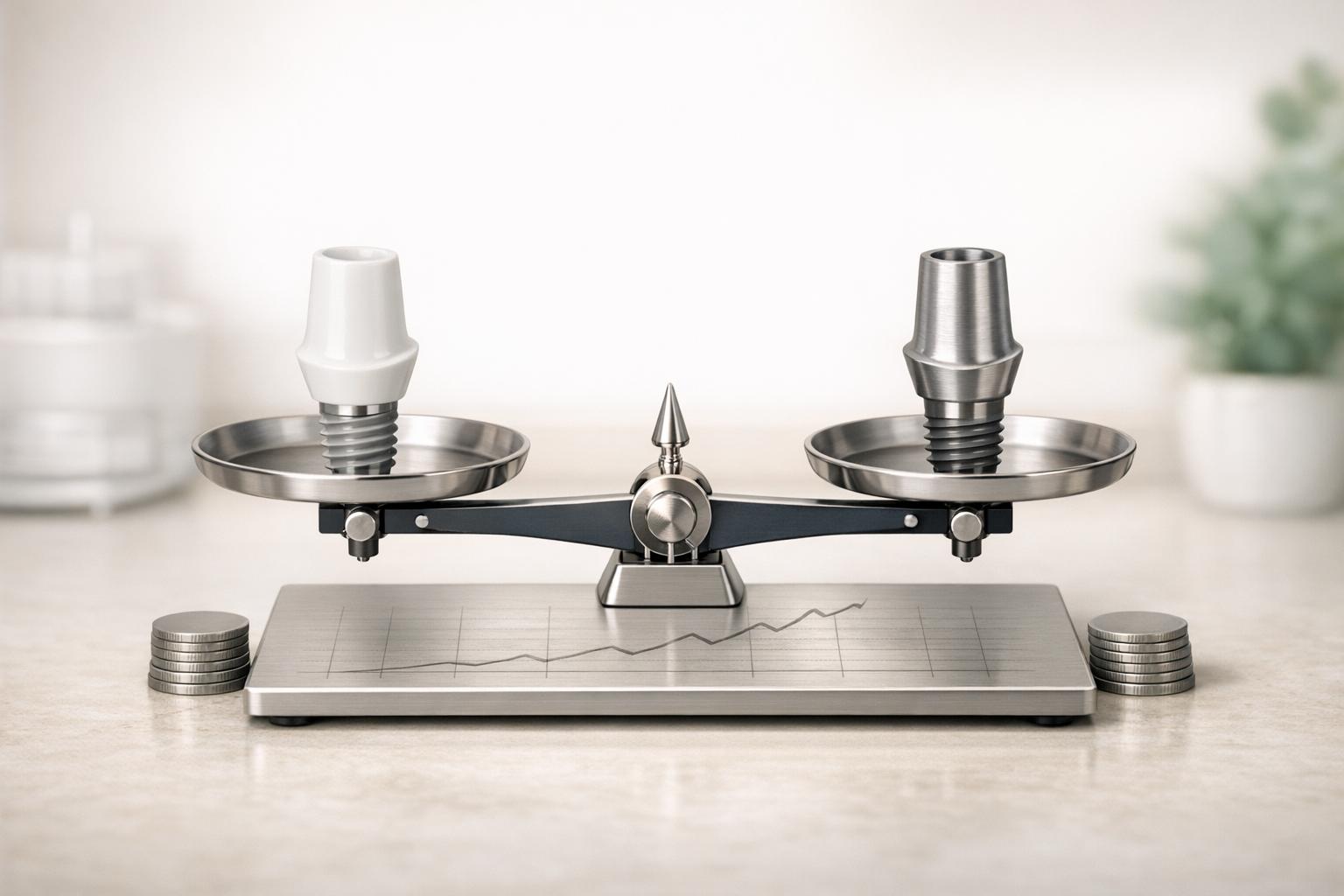
When choosing between zirconia and titanium dental implants, the decision comes down to cost, durability, and personal needs. Here’s a quick breakdown:
- Titanium implants: Priced between $3,000 and $6,000 AUD in Australia, they are more affordable and have over 50 years of proven success. They are flexible, durable, and easier to repair, making them ideal for high-bite-force areas like molars. However, their metallic colour can sometimes show through thin gums.
- Zirconia implants: Costing $4,500 to $7,000 AUD, they are a metal-free ceramic option with a natural white colour, perfect for front teeth. They resist plaque better but are more brittle and prone to fractures, especially in high-stress areas. Long-term data is limited compared to titanium.
Key factors to consider:
- Titanium is better for durability and heavy chewing.
- Zirconia suits aesthetic zones and patients with metal sensitivities.
- Maintenance costs for zirconia may be higher due to its rigidity and repair complexity.
Quick Comparison
| Feature | Titanium Implants | Zirconia Implants |
|---|---|---|
| Cost (AUD) | $3,000 – $6,000 | $4,500 – $7,000 |
| Material | Metal | Ceramic |
| Durability | High | Moderate |
| Appearance | Greyish tint possible | Natural white colour |
| Flexibility | Absorbs stress well | More brittle |
| Success Rate | 95%+ over 50 years | 95% over 7–10 years |
| Repairability | Easier (two-piece design) | Harder (one-piece design) |
For most Australians, titanium offers better long-term value unless aesthetics or metal sensitivities are a priority. Consult a dentist for a personalised recommendation.
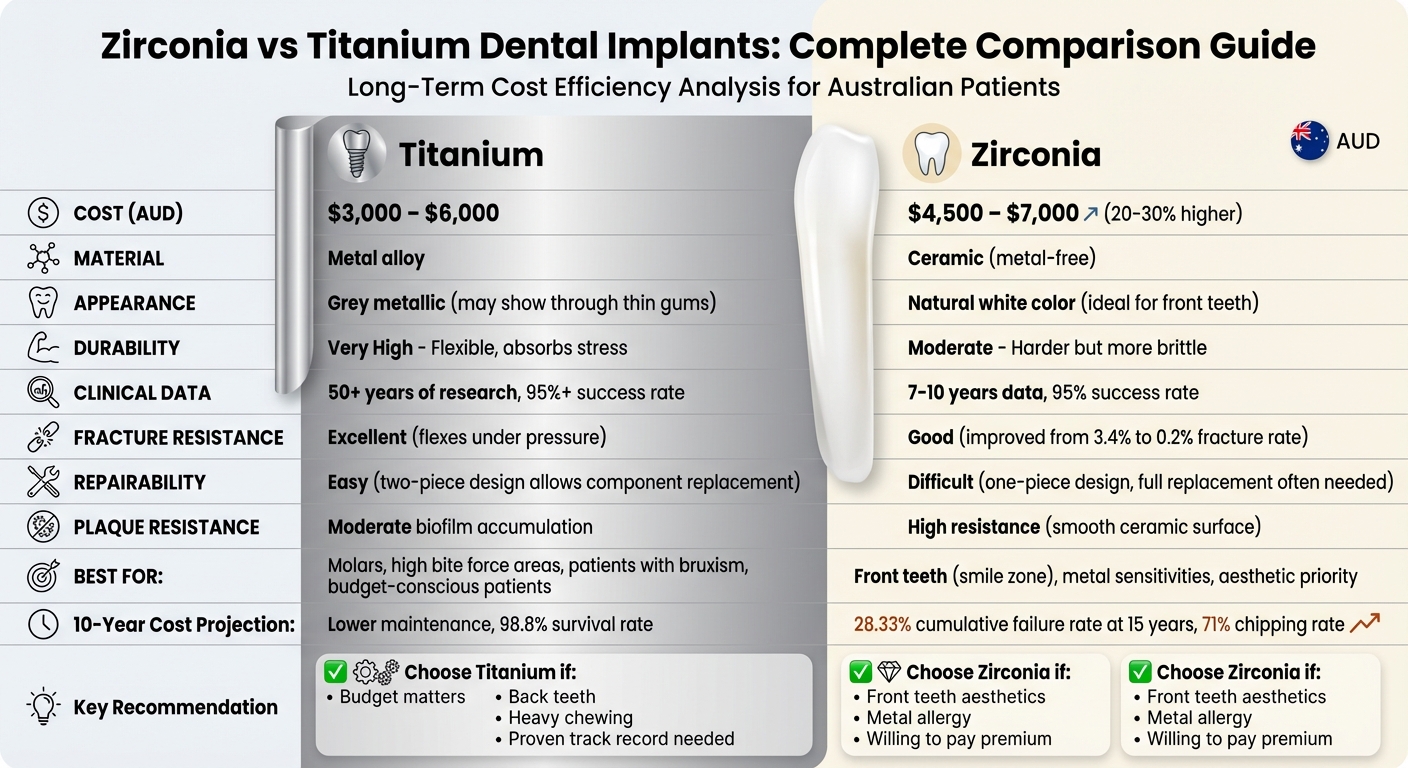
Zirconia vs Titanium Dental Implants Cost and Features Comparison
Comparing titanium and zirconia in dental implants
sbb-itb-2be92ed
Zirconia Implants: What You Need to Know
Zirconia implants are crafted from zirconium oxide, a ceramic material held together by ionic bonds. This composition makes them highly resistant to corrosion and chemically stable [8]. Unlike titanium, zirconia offers a completely metal-free alternative with a natural appearance, though it comes with challenges in flexibility and long-term clinical data. Let’s break down the key advantages and limitations of zirconia implants.
Main Features of Zirconia Implants
One of zirconia’s standout features is its white, tooth-like colour. This eliminates the greyish tint often seen with titanium implants, especially in patients with thinner gum tissue [8]. This makes zirconia implants a popular choice for replacing front teeth in the "smile zone."
The material also boasts a smooth surface that discourages bacterial biofilm buildup, lowering the risk of gum infections and peri-implantitis [9]. Zirconia’s bio-inert and hypoallergenic properties make it a safer option for the 0.6% of patients allergic to the trace metals found in titanium alloys [10]. Additionally, its low thermal conductivity helps prevent discomfort from hot or cold food and drinks [8].
Advancements in zirconia technology have significantly improved durability. Fracture rates have dropped from 3.4% in 2004 to just 0.2% by 2017. Survival rates are also impressive, with studies showing a 98.3% success rate at one year and 97.2% at two years [9]. Interestingly, one study found that patients were four times more likely to prefer ceramic implants over metal ones [9].
These features play a role in the overall cost efficiency of zirconia implants, which will be addressed in later discussions.
Drawbacks to Consider
While zirconia implants have clear benefits, they are not without limitations. As a ceramic material, zirconia is harder but also more brittle than titanium. Titanium’s flexibility allows it to absorb shock and adapt to micro-movements, but zirconia lacks this ability. This rigidity increases the risk of fractures, particularly in patients with bruxism (teeth grinding) [1]. For this reason, zirconia is often considered a riskier choice for back molars, where chewing forces are strongest [13].
"Zirconia implants may have a slightly higher risk of fracture compared to Ti implants, especially in areas of the mouth with high biting forces." – European Journal of Medical Research [13]
Another challenge is the limited long-term research available. Titanium implants have been studied for over 50 years, while zirconia’s clinical history spans roughly two decades. This means there is less data on cases lasting 25 years or more [9]. Additionally, zirconia implants are often designed as one-piece units. While this simplifies surgery, it restricts the ability to adjust the angle of the tooth during restoration, unlike titanium’s modular two-piece design [1]. Lastly, zirconia implants typically take longer to integrate with bone, requiring 8 to 12 weeks compared to titanium’s 6 to 8 weeks [7].
Titanium Implants: What You Need to Know
Titanium has been the gold standard for dental implants since the 1960s, supported by more than five decades of research. Its success lies in a process called osseointegration, where titanium bonds directly with the jawbone. This creates a stable foundation that can last 20 to 30 years – or even a lifetime – with the right care [7].
Titanium implants boast a short-term success rate of 95% to 98%, with ten-year survival rates between 90% and 95% [7][2]. These impressive figures stem from titanium’s mechanical properties and its well-documented clinical track record, making it a reliable option even for patients with significant bone loss.
Main Features of Titanium Implants
A standout feature of titanium is its ductility – its ability to bend slightly under intense pressure. This flexibility mirrors the behaviour of natural teeth, helping to reduce the risk of fractures in high-stress areas [1]. Additionally, titanium develops a stable oxide layer (TiO2), which not only promotes direct bone contact but may also encourage bone growth [15].
Most titanium implants use a modular two-piece design. This allows for adjustments to crowns or abutments without disrupting the osseointegration process [10].
In Australia, the cost for a single titanium implant – covering surgery, the abutment, and the crown – ranges from $3,000 to $6,500. Compared to zirconia implants, which can increase costs by 20% to 30%, titanium offers a more budget-friendly option, adding to its long-term appeal [7][16].
While titanium implants have many advantages, they come with certain limitations worth noting.
Drawbacks to Consider
Despite their strengths, titanium implants are not without flaws. One common concern is their dark grey metallic colour, which can sometimes show through thin or receding gum tissue. This may result in a visible dark line at the gum margin, particularly in the front teeth where gum tissue is thinner [18].
"The dark color of the titanium implant can sometimes become visible through the gum tissue, potentially compromising the natural look of the implant." – New Teeth Chicago Dental Implants [18]
Titanium hypersensitivity is rare, affecting about 0.6% of individuals [10]. However, some people may react to trace metals like nickel, aluminium, or vanadium present in titanium alloys [17]. For those with known metal sensitivities, undergoing allergy testing before surgery is advisable.
Another aspect to consider is titanium’s corrosion potential. While its oxide layer provides excellent resistance, microscopic titanium ions can still be released over time, particularly in acidic environments or with high fluoride exposure. These ions may travel through the bloodstream and accumulate in organs like the liver, lungs, or lymph nodes [17]. Additionally, the metallic surface can become a breeding ground for bacterial biofilms, which, if oral hygiene is neglected, may lead to inflammation or peri-implantitis [17].
Upfront Cost Comparison
When it comes to upfront costs, titanium implants tend to be the more budget-friendly option. In Australia, the price for a single titanium implant – including the post, abutment, and crown – usually falls between $3,000 and $6,000 AUD. On the other hand, zirconia implants are priced higher, ranging from $4,500 to $7,000 AUD. This means opting for zirconia typically adds an extra $500 to $1,000, translating to a 20% to 30% increase compared to titanium [7].
The reason for this price gap lies in the manufacturing process. Titanium implants have benefited from decades of mass production, with standardised components that help keep costs lower. Zirconia implants, however, require more intricate processes. They are crafted from ceramic blanks using diamond tools and often involve custom laboratory work, which drives up their price [1].
Geographical location also plays a role in pricing. For instance, in urban areas like Sydney, you might pay over $6,000 per implant, while rural regions generally offer lower prices, ranging between $4,000 and $5,000 AUD. Even state averages vary – New South Wales implants typically cost around $5,500, whereas Western Australia sees prices closer to $3,999.
It’s also important to consider hidden costs. Diagnostic imaging, such as X-rays, can add $150 to $400 AUD, and additional procedures like bone grafting may increase the total by $500 to $2,500 AUD.
Cost Breakdown Table
| Component | Titanium Implants (AUD) | Zirconia Implants (AUD) |
|---|---|---|
| Single Implant (Total) | $3,000 – $6,000 | $4,500 – $7,000 |
| Material Premium | Standard Pricing | 20% – 30% Higher |
| System Design | Two-piece (Flexible) | Usually One-piece (Rigid) |
| Full Arch (All-on-4) | $25,000 – $32,500 | $27,500 – $35,000+ |
These upfront costs provide a solid starting point for evaluating the overall value of titanium versus zirconia implants. The next step is to look at how durability and maintenance influence long-term cost efficiency.
Durability and Maintenance Over Time
What Affects Durability
Titanium implants have stood the test of time, with over 50 years of documented success and durability spanning decades [19][23]. This alloy is flexible enough to handle micro-movements and the lateral forces of chewing without cracking, making it highly resistant to fractures [1][23]. On the other hand, zirconia is a newer material with encouraging 5-year data, though long-term studies over 20–30 years are still lacking [19][11].
"Titanium is the gold standard, with decades of clinical research and success rates consistently above 95%." – Ardent Sidcup Dental Clinic [19]
While zirconia is harder than titanium, it is also more brittle. Technological advancements have significantly reduced zirconia fracture rates from 3.4% to 0.2% since 2004 [9], but it remains more prone to chipping under extreme stress [20][1]. However, zirconia’s smooth and chemically inert surface resists plaque and biofilm build-up better than titanium, potentially lowering the risk of peri-implantitis. In contrast, titanium may release microscopic ions over time in low-oxygen conditions [20][9][11][21]. These differences in material properties impact the specific maintenance needs of each implant type.
Maintenance Needs
Both titanium and zirconia implants require consistent at-home care, including brushing twice daily with a soft-bristled brush and using non-abrasive cleaning tools like water flossers or plastic-coated interdental brushes. Professional cleaning, however, demands specific tools: titanium requires titanium-safe instruments such as plastic, graphite, or specialised ultrasonic tips, while zirconia needs strictly plastic or carbon fibre tools to avoid damaging its ceramic surface [24].
Titanium implants may need occasional screw tightening or crown replacement every 10–15 years, though the implant post itself typically lasts a lifetime. Zirconia, while more expensive upfront, could offer fewer gum health-related maintenance concerns. However, in the event of a fracture, zirconia replacement is more complex and costly. For individuals with bruxism, a custom night guard is essential to protect both implant types, especially the more brittle zirconia [26].
Pros and Cons Table
| Feature | Titanium Implants | Zirconia Implants |
|---|---|---|
| Long-Term Data | 50+ years; 95%+ success rate [19][22] | Limited; promising 5-year data [19][11] |
| Fracture Resistance | Very high; flexes under stress [1][23] | Moderate; more brittle under force [20][1] |
| Plaque Accumulation | Moderate [9] | Low; smoother surface [20][9] |
| Corrosion Risk | Possible ion release over time [20][11] | None; chemically inert [20][9] |
| Professional Tools | Plastic, graphite, or titanium-safe tips | Strictly plastic or carbon fibre |
| Design Flexibility | High (two-piece systems) [23][9] | Lower (often one-piece) [19][23] |
Total Cost Over 10-20 Years
When considering the long-term costs of dental implants, and what to expect from the procedure, titanium stands out as a more economical choice compared to zirconia. Titanium implants, priced between $2,100 and $5,500, boast a 98.8% survival rate over 10 years. Zirconia, on the other hand, ranges from $3,000 to $7,000 and achieves a 95% survival rate over seven years [25]. These early differences become even more evident over a 15-year period.
By the 15-year mark, zirconia implants show a cumulative failure rate of 28.33% [27]. Common complications include loss of retention requiring re-cementation (14.85%), veneer fractures (5.01%), and crown loss due to extraction (1.73%) [27].
One major factor affecting long-term costs is repairability. Titanium implants, with their two-piece design, allow for easier maintenance. For instance, crowns can be replaced or screws tightened without removing the entire implant. Additionally, changes in bone levels over time can be addressed by swapping individual components. In contrast, zirconia’s one-piece design offers limited flexibility. If a zirconia implant fractures, it often requires complete replacement rather than a simple repair [2][5]. Notably, implant-supported zirconia has a 71% chipping rate, compared to 15% for tooth-supported zirconia [27].
"While zirconia implants are more expensive up front, their durability and longevity (they do not corrode) make them more cost-effective in the long term due to fewer future repairs or replacements, potentially saving money over time." – Dr Aisha A Shamsi, BDS [12]
Titanium implants also benefit from a proven track record, with over 20 years of data showing a 95%+ success rate [3]. This predictability is particularly valuable, given that zirconia lacks comparable long-term data. However, patient-specific factors such as smoking, uncontrolled diabetes, and osteoporosis can influence healing and implant stability [2][8]. Regular professional cleanings in Australia are crucial for detecting potential issues early, helping to avoid expensive complications down the line. Titanium’s easier maintenance further reinforces its cost-effectiveness.
For most Australians, titanium implants offer better long-term value due to their lower overall costs, durability, and simpler upkeep. Zirconia implants might be a good option in specific cases – such as in the aesthetic zone for patients without bruxism – where their corrosion resistance and natural white appearance can justify the higher upfront cost [12][5].
Choosing Between Materials in Australia
What Australian Patients Should Consider
When selecting an implant material, it’s essential to factor in both your health and aesthetic goals. Gum health and appearance play a key role. For those with thinner gum tissue, zirconia’s natural white shade can prevent the grey tint that sometimes occurs with titanium implants. This is especially important for front teeth, where appearance matters most [1][28].
Bite force and grinding habits also influence the choice. Titanium’s flexibility makes it better suited to handle heavy chewing and bruxism (teeth grinding) compared to zirconia, which is harder but more brittle and can chip under extreme lateral forces. If you grind your teeth, using a protective night guard is strongly recommended [1][2].
For the small number of Australians – less than 1% – with metal sensitivities, this may also affect your decision [7]. While titanium can occasionally cause reactions due to trace metals like nickel or chromium, zirconia provides a metal-free ceramic option for those with known sensitivities [1][4]. If you suspect a metal allergy, ask your dentist about a MELISA test before considering titanium [25][7].
Systemic health conditions such as diabetes and osteoporosis can impact bone healing and implant success [2]. Keeping these conditions under control is crucial for better outcomes. Smoking, too, can significantly hinder healing and increase complications, so quitting is strongly encouraged before undergoing the procedure [2]. Additionally, titanium implants are often better suited for patients with thinner jawbones, while zirconia requires precise placement for success [28].
These factors highlight the importance of a personalised evaluation by an expert.
Why Professional Consultation Matters
Seeking professional advice is vital before deciding between zirconia and titanium. Australian patients should consult a dentist registered with the Dental Board of Australia, who can assess critical factors like bone density, gum health, and bite patterns to determine the most suitable material [29][30].
"Sydney dental implants can achieve remarkable longevity when placed correctly, with both titanium and zirconia offering distinct advantages."
When comparing quotes, look at the complete surgical and laboratory process rather than just the price of individual components. Zirconia often requires custom-made laboratory parts, which can increase the overall cost [1]. Ensure your dentist is a member of the Australian Dental Association (ADA) and adheres to AHPRA guidelines, guaranteeing the use of high-quality, approved materials [2].
Avoid the temptation of dental tourism for cheaper implants. Staying in Australia means you benefit from AHPRA-regulated safety standards, consistent post-operative care, and legal protections [31].
A professional evaluation ensures your choice aligns with your specific needs while also promoting long-term cost effectiveness.
Conclusion: Making the Right Choice for Long-Term Value
Key Takeaways
Titanium and zirconia implants both offer impressive longevity, often lasting 20 years or more [3]. In Australia, titanium implants are priced between $3,000 and $6,000, making them a more budget-friendly option compared to zirconia implants, which range from $4,500 to $7,000 – about 20–40% higher due to the complexity of their production [8][6].
Titanium has over 50 years of clinical data backing its reliability, with success rates exceeding 95%, especially in areas subjected to high bite forces [3][8]. Zirconia, while harder and aesthetically superior (it avoids the greyish tint that titanium may cause in cases of thin or receding gums) [14], is slightly more prone to fractures under heavy stress. This makes it less ideal for patients who grind their teeth [7].
When it comes to maintenance, zirconia’s surface may discourage plaque buildup, potentially lowering the risk of gum infections over time [3]. On the other hand, titanium’s two-piece design simplifies repairs, as adjustments can often be made without disturbing the implant’s bone-integrated post [7].
Final Recommendation
Ultimately, your choice should align with your dental implant procedure needs, aesthetic preferences, and financial considerations. Titanium is typically the go-to option for molars and other high-pressure areas, while zirconia shines in the "smile zone" for its natural look, especially for individuals with metal sensitivities or thinner gum tissue [14].
FAQs
Which implant is cheaper over 10–20 years?
Titanium implants tend to be a more cost-effective choice over a span of 10–20 years. Their durability and proven track record, often exceeding 20 years with proper maintenance, make them a reliable long-term investment. While zirconia implants are also durable, they usually come with a higher initial cost and have less extensive long-term data to support their longevity.
Am I a better fit for zirconia or titanium?
When deciding between zirconia and titanium implants, it comes down to your personal needs and priorities. Titanium implants are known for their durability, affordability, and long track record of success. On the other hand, zirconia implants, while pricier, provide a metal-free alternative that’s great for anyone sensitive to metals or focused on achieving a more natural look.
To make the right choice, it’s essential to consult your dentist. They’ll consider important factors like your oral health, any allergies, and your budget to guide you toward the implant that suits you best.
What extra costs can add to implant pricing?
When it comes to dental implants, there are often extra costs tied to specific procedures or materials. For instance, bone grafting or sinus lifts might be required if the jawbone lacks sufficient density or height to support the implant. Additionally, the use of specialised materials or advanced technology can add to the overall expense. These requirements depend on the complexity of the case and the individual patient’s needs, which can greatly affect the final cost.
Related Blog Posts
- Checklist: Evaluating Cost-Effectiveness of Dental Implants
- Hybrid Implant Materials: Durability Explained
- Titanium vs Zirconia: Wear Resistance Comparison
- How Implant Materials Impact Longevity
Important Notice: Any surgical or invasive procedure carries risks. Before proceeding, you should seek a second opinion from an appropriately qualified health practitioner.
Individual results may vary. The information provided in this article is for educational purposes only and does not constitute medical advice.
Checkout Related Blogs




Get in touch with us
For more information, call us now to start feeling better. Or fill the form below to make appointment
The Latest News from Complete Smiles
How to Clean Clear Plastic Retainers
Checklist for Choosing Wearable Dental Devices
Checklist for Choosing Cloud AI Platforms in Dentistry

Complete Smiles Bella VistaAccepts All Major Health Funds, Including





