





How Implant Materials Impact Longevity

The material of your dental implant directly affects how long it lasts and how well it performs. Titanium is the most trusted option, with a success rate of 97–99% over 10 years, thanks to its strength, resistance to corrosion, and ability to bond with bone. Zirconia, a ceramic alternative, offers a tooth-like appearance and works well for patients with metal sensitivities, but it’s more brittle and has a shorter clinical history.
Key points:
- Titanium: Durable, strong, integrates with bone, proven performance over decades.
- Zirconia: Aesthetic, metal-free, resists plaque, but less robust under heavy chewing.
- Crown materials: Options like gold, zirconia, and porcelain vary in durability and appearance.
- Patient factors: Bone quality, oral hygiene, and habits like smoking or teeth grinding impact longevity.
Your choice should balance durability, aesthetics, and your specific needs, guided by professional advice. Regular dental check-ups and good hygiene are essential for long-term success.
Discover Implant Lifespan, Systems, Longevity | Patient Education #2: How long dental implants last?
Titanium Implants: The Established Standard
For decades, titanium has stood out as the most dependable material for implants, backed by extensive clinical research [3]. Its popularity comes from its outstanding compatibility with the human body, impressive strength, and reliable long-term performance. A major factor behind this success is its ability to integrate seamlessly with bone, a process explored in detail below.
Bone Integration and Body Compatibility
Titanium’s unique relationship with bone is what sets it apart. When inserted into the jaw, titanium immediately forms a stable oxide layer (TiO₂) just 4 to 6 nanometres thick [3]. This protective layer develops in just 30 milliseconds upon contact with air or moisture, and if damaged, it self-repairs almost instantly [5]. Instead of causing rejection, this oxide film creates an ideal surface for bone cells to directly attach, eliminating any fibrous tissue barriers.
"Titanium is the material of choice for intraosseous applications because of its high passivity, controlled thickness, rapid formation, ability to repair itself instantaneously if damaged, and resistance to chemical attack." – Monika Saini et al. [2]
This intimate bone-to-metal bond, known as osseointegration, occurs within an interfacial zone just 20 to 50 nanometres wide [3]. The process begins when blood proteins adhere to the oxide surface, creating a scaffold for bone-forming cells to generate new tissue. This tight integration ensures the implant remains stable under chewing forces for decades. Alongside its compatibility with the body, titanium’s strength plays a critical role in its enduring success.
Strength and Lifespan
Commercially pure titanium (cpTi) is available in four grades, with Grade 4 being the go-to choice due to its ideal combination of strength and biocompatibility [3]. Containing 0.4% oxygen, Grade 4 titanium delivers a yield strength of 483 MPa, making it capable of withstanding the repetitive forces of chewing while resisting corrosion from saliva, food acids, and inflammation [3]. Long-term studies show survival rates of around 89.5% after 20 years [3], with many implants remaining functional for over 25 years when properly cared for. Mechanical failures are rare, with fracture rates reported between 0% and 6% in clinical studies [6].
Titanium Alloys: Enhanced Strength for Demanding Cases
In scenarios that demand extra strength – such as narrow implants or areas under heavy chewing pressure – titanium alloys provide a robust alternative. The most commonly used alloy, Ti-6Al-4V (Grade 5), combines 6% aluminium and 4% vanadium. This alloy boasts an ultimate tensile strength of 900 to 930 MPa and a yield strength of 795 to 860 MPa, nearly double the strength of pure titanium [3][6].
For even greater strength, advanced materials like Roxolid, a titanium-zirconium alloy, outperform pure titanium by 50% [2]. With a tensile strength of 953 MPa [6], this alloy allows for thinner implants in areas with limited bone volume, all while maintaining the durability required for long-term use. These advancements make titanium alloys particularly valuable in challenging clinical situations where standard titanium might not suffice.
Zirconia Implants: A Ceramic Option
While titanium has long been the go-to material for dental implants, zirconia is now making waves as a metal-free alternative. Crafted from Yttria-stabilised Tetragonal Zirconia Polycrystal (Y-TZP), this ceramic option appeals to patients looking for aesthetic solutions or those with sensitivities to metal.
Body Compatibility and Appearance
One of zirconia’s standout features is its natural white colour, which closely resembles tooth structure. This eliminates the greyish tint that can sometimes appear with titanium implants, especially in patients with thin gum tissue – a concern affecting around 9.7% of implants within five years [7].
Zirconia is also metal-free and biologically inert, making it a safer choice for individuals with metal sensitivities [8][9]. Unlike titanium, it doesn’t cause galvanic reactions, and its surface discourages bacterial plaque build-up. This may lower the risk of peri-implantitis and promote better integration with soft tissues [7][9][10]. Beyond its aesthetic advantages, zirconia also boasts notable mechanical properties.
Resistance to Breaking
Zirconia offers impressive flexural strength, ranging from 900 to 1,200 MPa [8]. When stressed, it undergoes a phase transformation that expands the material by about 4.5%, effectively sealing micro-cracks and boosting its resistance to fractures [7][1]. Lab tests reveal that zirconia implants can withstand 10 million loading cycles at 95 N of force [9], and clinical results show a low fracture rate of 0.65%, comparable to titanium implants [11].
However, zirconia is more brittle than titanium and has a lower bending moment to fracture [9]. Narrow-diameter implants (3.25 mm) and one-piece designs are particularly prone to fractures, especially when their coronal portions are adjusted with diamond drills, which can create surface flaws [11]. These factors highlight zirconia’s strengths but also underline its limitations.
Clinical History and Current Limitations
Zirconia implants have a 10-year cumulative survival rate of 95.1% [11], which is close to titanium’s performance. That said, titanium has the advantage of four decades of clinical research, whereas zirconia’s shorter history – spanning about 30 years – offers less long-term data beyond the 10-year mark [7][11].
"Zirconia presents improved toughness and fracture resistance… However, overall, their early failure rates seem generally higher compared with titanium implants." – Clinical Oral Investigations [7]
A key challenge for zirconia is low-temperature degradation (LTD). Prolonged exposure to moisture can cause surface micro-cracks over time [8][1]. It’s worth noting that 96% of recorded zirconia fractures (25 out of 26) occurred in older implant models that are no longer in production, suggesting that newer designs have addressed many of these early issues [11]. Still, zirconia implants require careful handling and specialised expertise, particularly in high-load areas like the back of the mouth, to minimise the risk of mechanical failure [12].
Crown and Connector Materials: The Complete Implant Structure
When it comes to dental implants, the materials used for the crown and connector are just as crucial as those for the implant post. While the post (the screw) is engineered for permanence, the crown and connector must handle the daily stresses of chewing and biting. This makes selecting the right materials essential for ensuring the longevity of the entire implant system. A typical dental implant consists of three key components: the post, the abutment (connector), and the crown (restorative). Together, these elements work to provide a durable and functional solution, but the crown and connector require tailored material choices to withstand everyday use effectively [13].
Crown Material Choices
The choice of crown material can significantly impact the durability, aesthetics, and overall performance of the implant. Here’s a closer look at the most common options:
- Gold Alloys: Known for their exceptional durability, gold alloy crowns boast a 100% survival rate over 50 years [15]. However, their metallic appearance often limits their use to back teeth, where aesthetics are less of a concern.
- PFM (Porcelain-Fused-to-Metal) Crowns: These crowns strike a balance between strength and aesthetics, with an average survival rate of 47.53 years [15]. However, the metal base can sometimes become visible at the gum line, which may affect appearance.
- Zirconia Crowns: Offering a tooth-coloured, natural look, zirconia crowns are highly resistant to fractures and tend to accumulate less plaque than metal alternatives [1][15]. These qualities make them a popular choice for both strength and aesthetics.
- All-Ceramic Crowns: Favoured for their natural translucency, all-ceramic crowns are often chosen for front teeth. However, they are more prone to chipping under heavy biting forces, which limits their suitability for molars [13].
For abutments, titanium remains the standard choice due to its strength and biocompatibility. However, in cases where aesthetics are a priority – such as with thin gum tissue – zirconia abutments are often used to avoid the greyish hue associated with metal [13]. Highlighting the importance of material compatibility, Martin Janda from Malmö University‘s Department of Prosthodontics states:
"The use of original components is recommended for optimal long-term success in dental implant treatments. While non-original components may offer cost reductions, their use raises concerns about compatibility issues, improper fit, and compromised stability" [14].
This reinforces the need for precise material matching to ensure the implant system functions seamlessly over time.
Care and Replacement Timing
Crowns are not permanent and typically require replacement in 50% to 80% of cases after 10–15 years, largely due to wear [13]. Molars, which endure greater chewing forces, often wear out faster than crowns on front teeth [13]. Additionally, patients who grind or clench their teeth are at a higher risk of crown fractures or screw loosening [13].
To prolong the life of an implant, maintaining a proper oral hygiene routine is essential. Brushing and flossing twice daily can help prevent peri-implantitis, a condition that can compromise the entire implant system [13]. Simple precautions, like avoiding chewing ice or other hard objects, can also protect ceramic and porcelain crowns from premature chipping [15]. These care measures play a vital role in sustaining the performance and longevity of dental implants.
sbb-itb-2be92ed
Patient Factors Affecting Implant Lifespan
Even the highest-quality dental implants can fail if patient-specific factors are overlooked. While titanium and zirconia implants are known for their durability, individual health conditions and daily habits significantly influence whether an implant lasts over a decade. Studies show that dental implants have a 95–98% success rate after 10 years when placed by skilled professionals [17]. However, this rate can decline when certain risk factors come into play.
Bone Density and Daily Hygiene
The quality of the jawbone plays a critical role in the success of osseointegration – the process where the implant bonds with the bone. Patients with conditions like osteoporosis or osteopenia face reduced survival rates for implants, with outcomes of 84% compared to 94% in healthy individuals. Antiresorptive therapy can improve these figures, raising survival rates to 94% for oral treatments and 90% for injectable options [21].
Daily oral hygiene is just as important for keeping implants functional. Peri-implantitis, a gum disease-like condition, is one of the leading causes of implant failure, yet it can often be prevented with proper cleaning routines. As the Pearl Dental Care Team explains:
"A lapse in oral hygiene could lead to peri-implantitis, which could cause implant failure" [13].
While implants are not susceptible to cavities like natural teeth, they are more prone to gum-related infections. To minimise bacterial build-up around the crown-abutment junction, use a soft-bristled toothbrush, non-abrasive toothpaste, and cleaning tools specifically designed for implants. These small steps can significantly reduce risks linked to lifestyle factors.
Habits and Health Conditions
Certain habits and health conditions can undermine implant longevity. Smoking, for example, is particularly harmful as it reduces blood flow to the surgical site, delaying healing and disrupting early osseointegration [18]. Teeth grinding (bruxism) is another risk factor, as it can loosen implant screws or even cause fractures. Long-term studies reveal that screw fractures occur in 9.3% of cases after 5 years, increasing to 18.5% after 10 years [16].
Systemic health conditions also affect implant success. Diabetes, for instance, slows healing and raises the likelihood of infection [20], while cardiovascular diseases can trigger inflammation similar to peri-implantitis [19]. Patients managing these conditions should take extra precautions. For example, diabetics are encouraged to maintain stable blood sugar levels, and individuals with bruxism may benefit from custom-fitted night guards to protect against excessive biting forces [18].
Regular Dental Check-Ups
In addition to addressing bone health and lifestyle factors, regular dental check-ups are essential. Six-monthly visits allow dentists to identify early signs of wear, micro-instability, or peri-implantitis [13]. These check-ups are particularly important because mechanical issues often appear later than biological complications – on average, at 7.6 years compared to 5 years for biological failures [16]. As the Pearl Dental Care Team puts it:
"The secret to an implant lasting a long time is maintaining good oral hygiene combined with six-monthly dental check-ups" [13].
Routine monitoring ensures that both the implant and the surrounding tissues remain healthy, maximising the chances of long-term success.
Material Performance Comparison
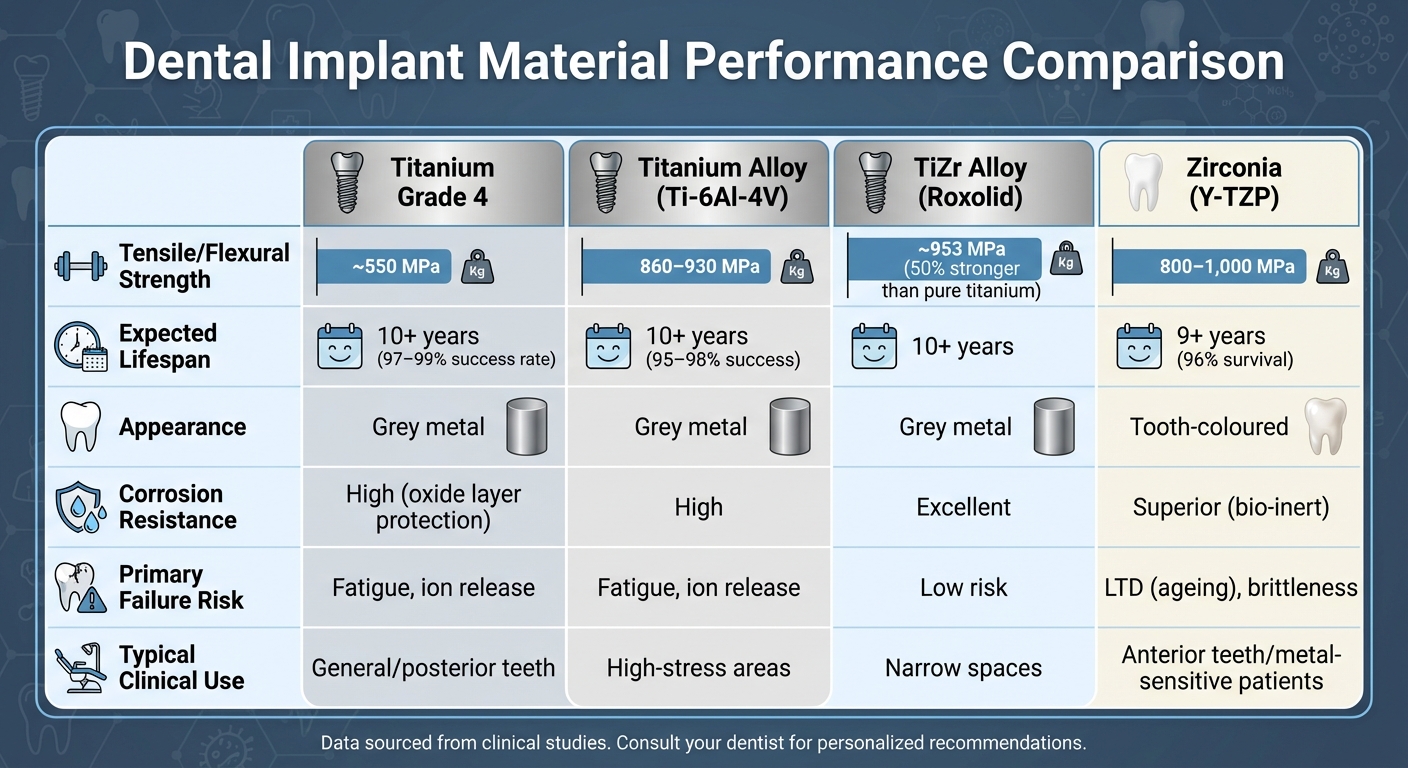
Dental Implant Materials Comparison: Titanium vs Zirconia Performance Metrics
The table below provides a concise summary of how key materials used in implants perform across various metrics. These materials – Grade 4 titanium, titanium alloys, TiZr alloy (Roxolid), and zirconia – each have unique strengths, durability, and clinical traits. For instance, Grade 4 titanium has an ultimate tensile strength of about 550 MPa, while titanium alloys like Ti-6Al-4V range between 860 and 930 MPa. TiZr alloy, which is 85% titanium and 15% zirconium, reaches approximately 953 MPa, making it about 50% stronger than pure titanium [1]. Zirconia (Y-TZP), as a ceramic, offers flexural strength between 800 and 1,000 MPa [1], though it behaves differently under stress compared to metals.
Each material also exhibits distinct failure patterns. Titanium is prone to fatigue failure and bio-corrosion, especially in acidic or fluoride-rich environments [1][24]. On the other hand, zirconia can experience low-temperature degradation (LTD), where moisture leads to surface microcracks over time [1][4]. Despite these challenges:
"Titanium remains the gold standard for the fabrication of oral implants, even though sensitivity does occur, though its clinical relevance is not yet clear" [1].
Aesthetic and biocompatibility considerations further differentiate these materials. Zirconia, with its tooth-like colour, is often preferred by patients – nearly 80% would choose it over titanium, particularly in cases where thin gum tissue might reveal the greyish tint of titanium [2][24]. Moreover, a nine-year study found a 0% incidence of peri-implantitis in zirconia implants, compared to a 9.25% prevalence rate for traditional materials [24].
Implant Material Comparison Table
| Feature | Titanium (Grade 4) | Titanium Alloy (Ti-6Al-4V) | TiZr Alloy (Roxolid) | Zirconia (Y-TZP) |
|---|---|---|---|---|
| Tensile/Flexural Strength | ~550 MPa [1] | 860–930 MPa [1] | ~953 MPa [1] | 800–1,000 MPa [1] |
| Expected Lifespan | 10+ years (97–99% success) [3] | 10+ years (95–98% success) [26] | 10+ years [1] | 9+ years (96% survival) [25] |
| Appearance | Grey metal [1] | Grey metal [1] | Grey metal | Tooth-coloured [24] |
| Corrosion Resistance | High (oxide layer) [1] | High [1] | Excellent [4] | Superior (bio-inert) [24] |
| Primary Failure Risk | Fatigue, ion release [1] | Fatigue, ion release [1] | Low | LTD (ageing), brittleness [1][4] |
| Typical Clinical Use | General/posterior teeth [27] | High-stress areas [3] | Narrow spaces [1] | Anterior teeth/metal-sensitive patients [2][24] |
These variations in performance and characteristics are critical for clinicians when deciding on the most suitable material for individual patients and their specific needs.
Conclusion: Selecting Materials for Long-Term Results
Selecting the right implant material involves weighing factors like durability, appearance, compatibility with the body, and the patient’s overall health. Titanium and its alloys are widely regarded as the gold standard, boasting clinical success rates as high as 99% over a 10-year period [3]. Meanwhile, zirconia emerges as a solid alternative for those prioritising aesthetics or dealing with sensitivities to metal. Each material has its strengths: titanium alloys are known for their exceptional mechanical reliability [1], while zirconia’s natural tooth-like colour and reduced plaque build-up make it an appealing choice, particularly for front teeth.
However, the material alone doesn’t ensure success. As Marina Kohal from the Department of Prosthodontics at Albert-Ludwigs University aptly states:
"By combining advanced materials with precise surgical techniques and patient care, dental professionals can significantly improve the success rates and longevity of dental implants" [22].
Beyond material choice, factors like bone density, gum health, systemic conditions (such as diabetes or osteoporosis), and lifestyle habits – like smoking – play a crucial role in how well an implant integrates and functions [23]. A thorough evaluation by a dental professional, including X-rays to assess bone volume and a review of your medical history, is essential to tailor the treatment to your needs. These elements highlight why the choice of material must align with the patient’s unique clinical profile.
Achieving long-lasting results requires informed decisions. Talk with your dentist about the trade-offs between different materials, surface treatments, and how your health history might affect outcomes [23]. Ultimately, the best implant material is the one that meets your specific needs, supported by clinical evidence and professional advice. And don’t forget – regular dental check-ups are just as important as the initial placement, ensuring your implant stays healthy and serves you well for years to come.
FAQs
What are the key differences between titanium and zirconia dental implants?
Titanium and zirconia dental implants each have distinct characteristics that set them apart.
Titanium implants have stood the test of time in dentistry, known for their durability and compatibility with the human body. Their two-piece design provides added flexibility during placement, making them a reliable option for various dental needs. That said, because they are metal-based, they might not be the best choice for individuals with metal sensitivities.
Zirconia implants, by contrast, are completely metal-free, offering a more natural appearance that closely resembles real teeth. This makes them particularly appealing for patients prioritising aesthetics. Additionally, their hypoallergenic nature makes them a suitable alternative for those with metal allergies. However, zirconia is less adaptable than titanium, which can limit its use in certain situations.
Choosing the right implant material depends on individual factors like your oral health and personal preferences, so it’s important to discuss your options with your dentist.
How do habits like smoking or teeth grinding affect the lifespan of dental implants?
Certain behaviours, like smoking and teeth grinding (also known as bruxism), can have a major impact on how long dental implants last.
Smoking is particularly harmful because it reduces blood flow and slows down the healing process. This makes complications like infections and peri-implantitis more likely. Research shows that smokers are at a higher risk of implant failure compared to non-smokers.
On the other hand, teeth grinding puts excessive strain on implants, which can result in bone loss, loosening of the implant, and a shorter lifespan overall. If you smoke or grind your teeth, it’s important to talk to your dentist about ways to address these issues and protect your dental implants.
Why are regular dental check-ups important for maintaining dental implants?
Regular dental check-ups play a crucial role in maintaining the health and longevity of your dental implants. These appointments give your dentist the chance to assess the condition of your implant, the surrounding gum tissue, and the jawbone, catching any potential problems before they escalate.
These visits are also key to preventing complications like peri-implantitis – a type of gum disease that affects the area around implants – or even early implant failure. Factors such as oral hygiene, diet, and overall health can contribute to these issues. By prioritising regular professional care, you can safeguard your implants and enjoy the confidence of a lasting, healthy smile.
Related Blog Posts
- Hybrid Implant Materials: Durability Explained
- Studies on Implant Longevity: Key Findings
- Solving Implant Challenges with Hybrid Materials
- Titanium vs Zirconia: Wear Resistance Comparison
Important Notice: Any surgical or invasive procedure carries risks. Before proceeding, you should seek a second opinion from an appropriately qualified health practitioner.
Individual results may vary. The information provided in this article is for educational purposes only and does not constitute medical advice.
Checkout Related Blogs




Get in touch with us
For more information, call us now to start feeling better. Or fill the form below to make appointment
The Latest News from Complete Smiles
How to Clean Clear Plastic Retainers
Checklist for Choosing Wearable Dental Devices
Checklist for Choosing Cloud AI Platforms in Dentistry

Complete Smiles Bella VistaAccepts All Major Health Funds, Including





