





Laser Gum Contouring: What to Expect
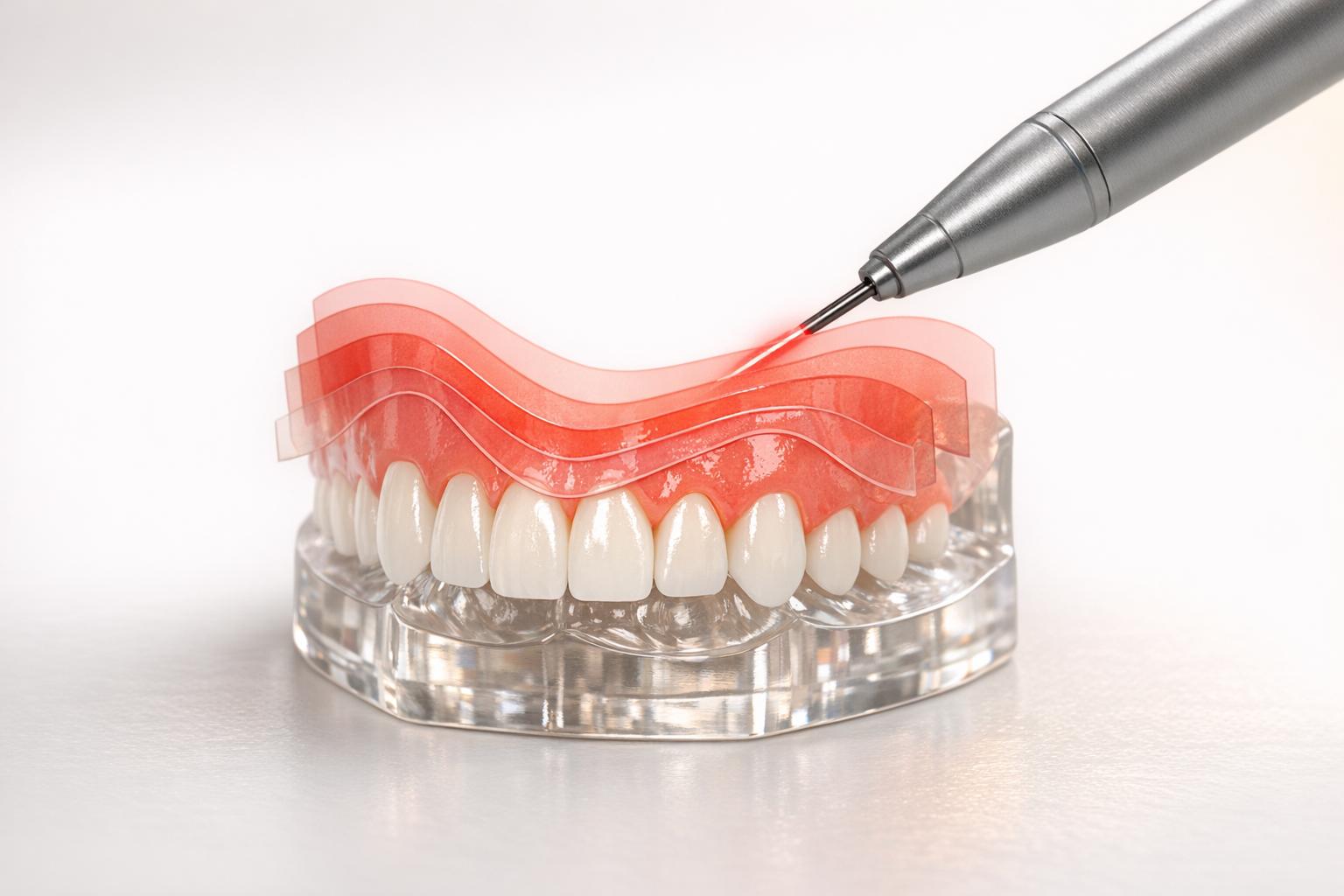
Laser gum contouring is a quick, precise dental procedure that reshapes your gum line using a laser. It’s ideal for reducing a “gummy smile,” creating an even gum line, or preparing for dental treatments like veneers or crowns. The laser method offers minimal bleeding, faster healing (1–3 days), and no need for stitches compared to older scalpel techniques.
Here’s what you need to know:
- Time: Takes 30–60 minutes.
- Benefits: Permanent results, easier oral hygiene, lower risk of infection.
- Recovery: Mild tenderness, soft foods for a few days, and simple aftercare.
- Suitability: Best for healthy gums without recession or active gum disease.
The procedure uses a laser to remove excess gum tissue while sealing blood vessels, making it an efficient and comfortable option for improving your smile. Always consult your dentist to confirm if this treatment is right for you. For more advice on maintaining your smile, visit our dental tips and news blog.
Who is a Good Candidate?
Eligibility Factors
The best candidates for this procedure are those with healthy gums that have excess tissue rather than gum recession. If you have active gum disease, it must be addressed before considering cosmetic reshaping [1].
This treatment is ideal for people dealing with a gummy smile, an uneven gum line, or teeth that appear shorter due to being partially covered by extra gum tissue. It’s also a common preparation step for cosmetic treatments like porcelain veneers or crowns, where achieving the right gum margins is critical for the final outcome.
However, certain factors might influence your eligibility. For instance, smoking or vaping can slow down the healing process because nicotine reduces blood flow [8]. Poor oral hygiene is another concern, as it can lead to tissue regrowth, potentially affecting how long the results last [10]. Your dentist will also carefully review your medical history, including any medications you take or allergies to local anaesthetics, to ensure the procedure is safe for you [4].
Once these factors are reviewed, your dentist will confirm your eligibility and move forward with a detailed consultation to assess your suitability for the procedure.
Initial Consultation
After confirming your oral health and eligibility, the initial consultation will involve a thorough exam, including X-rays and smile mapping. These tools help evaluate your bone structure, gum thickness, and the overall harmony of your smile [4][8].
"A comprehensive consultation is required before any procedure to ensure your gums are healthy and that you’re a suitable candidate for this form of soft tissue laser dentistry." This modern approach often incorporates laser dentistry for pain relief and faster recovery. – Care For Smiles [1]
During this visit, you’ll have the opportunity to discuss your aesthetic goals, whether it’s correcting asymmetry, reducing a gummy smile, or achieving a more balanced look. Your dentist will outline whether a laser or traditional method is more appropriate for your case and help you understand if the procedure can be completed in one session or if multiple adjustments might be necessary.
sbb-itb-2be92ed
Gummy Smile Treatment | Gum Contouring- #gumsurgery #smilemakeover #laser #cosmeticsurgery #shorts
The Laser Gum Contouring Procedure
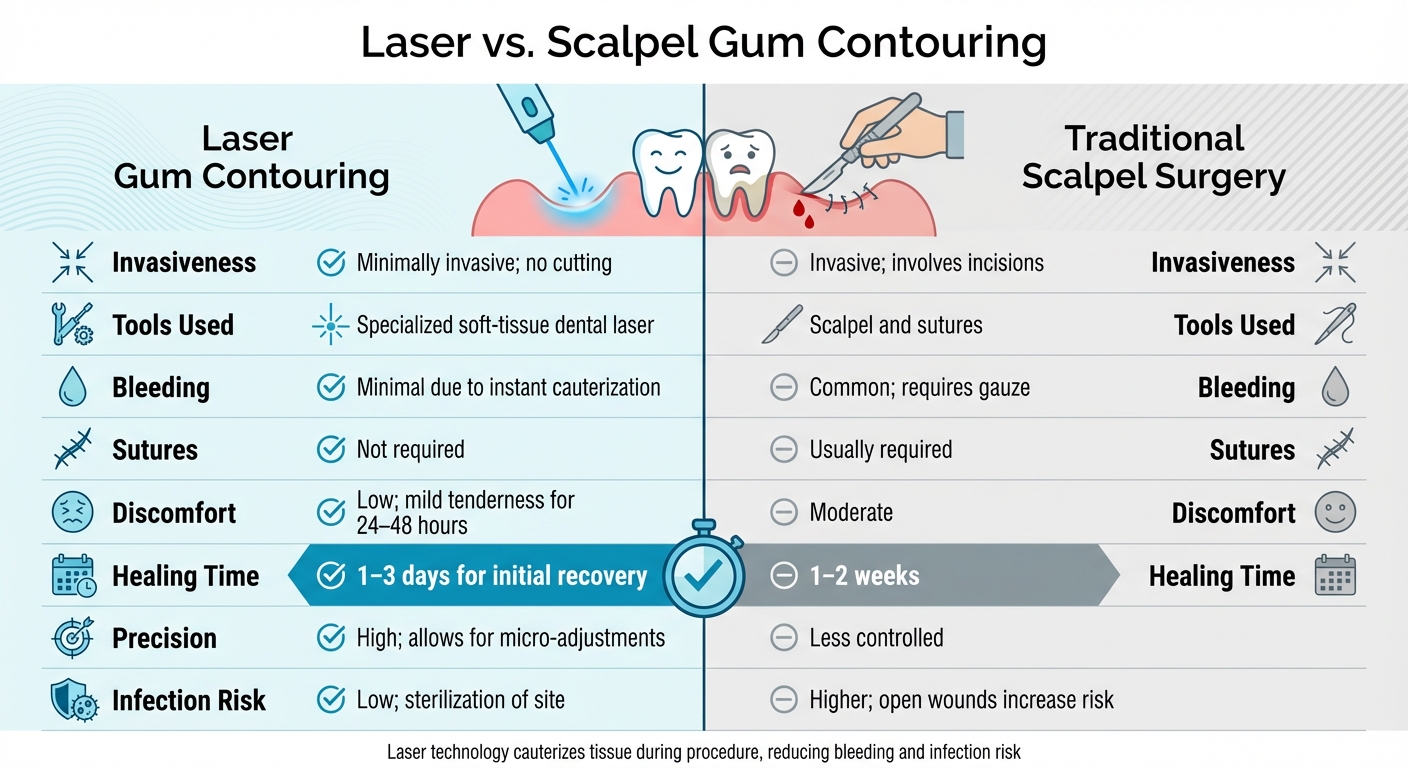
Laser vs Scalpel Gum Contouring: Recovery Time, Bleeding, and Precision Comparison
Preparation Steps
After a thorough consultation and smile mapping, the procedure kicks off with numbing the area to be treated. Your dentist applies local anaesthesia, which takes a few minutes to work. Most patients describe the sensation during the procedure as gentle pressure or mild warmth rather than pain [8].
Before any reshaping begins, your dentist takes photographs to ensure the treatment plan aligns with the agreed smile design. This step ensures clarity about the desired outcome. Once confirmed, the laser is used to carefully reshape the gum line.
How the Procedure Works
A specialised soft-tissue laser is the key tool in this process. It removes excess gum tissue through a method called ablation, which involves vaporising the tissue with a focused beam of light [2].
"Using a high-powered focused beam of light, a dentist progressively removes layers of tissue around the teeth, reshaping the gum line through ablation rather than excision." – The Dental Boutique [2]
As the laser reshapes the gums, it simultaneously cauterises the area, reducing bleeding and eliminating the need for stitches. This dual action allows for an immediate improvement in the appearance of the gum line [8].
Laser vs. Scalpel Methods
Unlike traditional gum contouring, which relies on scalpels and stitches, laser technology offers a less invasive approach. Scalpel-based methods typically involve more trauma to the surrounding tissue and a longer recovery period [1]. Laser contouring, on the other hand, is more precise, comfortable, and quicker to heal.
Here’s a comparison of the two methods:
| Feature | Laser Gum Contouring | Traditional Scalpel Surgery |
|---|---|---|
| Invasiveness | Minimally invasive; no cutting | Invasive; involves incisions |
| Tools Used | Specialised soft-tissue dental laser | Scalpel and sutures |
| Bleeding | Minimal due to instant cauterisation | Common; requires gauze |
| Sutures | Not required | Usually required |
| Discomfort | Low; mild tenderness for 24–48 hours | Moderate |
| Healing Time | 1–3 days for initial recovery | 1–2 weeks |
| Precision | High; allows for micro-adjustments | Less controlled |
An added benefit of laser technology is its ability to reduce bacteria at the treatment site, lowering the risk of infection [8]. While traditional methods may still be necessary for more complex cases, laser gum contouring has become the go-to option for most cosmetic gum reshaping needs [4].
Recovery and Aftercare
Recovery Timeline
Laser gum contouring offers a relatively quick recovery process. Most people report mild tenderness and slight swelling within the first 24 to 48 hours following the procedure[1]. While initial healing takes about 1–3 days, noticeable improvements are typically seen within 1–2 weeks. Complete tissue healing can take 3–4 weeks, and in some cases, up to 6 weeks[1][8][12]. The use of lasers significantly speeds up recovery compared to traditional methods, as they cauterise the tissue during the procedure.
"The laser simultaneously seals the tissue as it shapes, which means less bleeding, reduced swelling, and quicker healing." – Care For Smiles[1]
Aftercare Tips
Proper aftercare plays a big role in ensuring a smooth recovery. For the first 48 hours to one week, stick to soft and cool foods like yoghurt, smoothies, soups, and mashed vegetables[8]. Avoid spicy, crunchy, acidic, or very hot foods, as these can irritate the healing gums. To maintain cleanliness, rinse your mouth gently with a saltwater solution – mix one teaspoon of salt in half a cup of water – every few hours during the first 24 hours. Swirl gently rather than swishing too vigorously. When brushing, use a soft-bristled toothbrush and angle it towards your teeth rather than directly onto the gums. Hold off on flossing the treated areas until your dentist gives the green light[12].
To reduce swelling and bleeding, elevate your head with extra pillows on the first night[12]. It’s also wise to avoid strenuous activities like heavy lifting or intense exercise for at least 24 hours to 5 days, as these can raise blood pressure and lead to post-operative bleeding[11]. Steer clear of smoking, vaping, or using straws for at least a week, as the suction and nicotine can interfere with healing and dislodge blood clots[12]. Following these tips will help ensure a smoother recovery process.
Managing Side Effects
Mild side effects are fairly common but generally easy to handle. It’s normal to notice small amounts of blood in your saliva during the first 24 hours[12]. Over-the-counter pain relievers like paracetamol or ibuprofen can help with discomfort, but avoid aspirin, as it can increase bleeding risk[8]. To manage swelling, apply a cold compress for 15–20 minutes during the first day, then switch to a warm compress to boost circulation[13].
Your dentist will likely schedule a follow-up appointment to monitor your recovery and check for any issues like infection or gum recession[12]. However, if you notice a fever over 39.4°C, pus near the treatment site, severe or worsening pain, or persistent bleeding that doesn’t stop with gentle pressure, contact your dentist immediately[11].
Benefits of Laser Gum Contouring
Laser gum contouring offers a refined approach to reshaping the gum line, delivering precision and reducing complications compared to traditional scalpel techniques. The laser specifically targets gum tissue while sparing surrounding healthy areas, leading to a more controlled and accurate result[1][6]. Its ability to seal blood vessels and soft tissue during the procedure minimises bleeding – often to the point where gauze or additional pressure isn’t necessary[1][5][9]. Additionally, the laser seals nerve endings, which helps to significantly reduce discomfort after the procedure[6][8].
Since the laser cauterises as it works, stitches are usually not required, unlike with scalpel-based methods[1][5]. The high-energy beam also sterilises the treatment area, lowering the risk of bacterial infection[5][8]. For most patients, postoperative pain is minimal and can be managed with mild, over-the-counter anti-inflammatory medication[5].
Comparison Table: Laser vs. Scalpel Methods
| Aspect | Laser Method | Scalpel Method |
|---|---|---|
| Precision | High; targets specific tissue with a light beam[1][6] | Lower; manual excision is less controlled[1] |
| Bleeding | Minimal; vessels sealed instantly[1][5][9] | More common; requires gauze and pressure[1][2] |
| Recovery Time | Faster; 1–3 days for initial healing[1][8] | Longer; typically 1–2 weeks[1][8] |
| Discomfort | Low; nerve sealing and no sutures needed[6][8] | Moderate to high postoperative pain[1] |
| Infection Risk | Low; sterilisation of the site[1][8] | Higher; open wounds and sutures increase risk[1] |
Laser gum contouring not only enhances the immediate experience but also provides lasting benefits for both appearance and oral health.
Long-Term Results
The results of laser gum contouring are permanent – once excess gum tissue is removed, it generally doesn’t grow back[1][7][8]. Beyond improving the appearance of the gum line, the procedure also supports better oral hygiene by removing areas where plaque and bacteria tend to accumulate, making brushing and flossing more effective as part of your general dental routine[1][7]. This reduction in bacterial buildup can help lower the risk of gum disease and other periodontal issues over time[7]. Additionally, the reshaped gum line creates a more balanced and symmetrical appearance, making teeth look longer and more proportional while promoting healthier gums in the long run[1][3][7].
Conclusion
Laser gum contouring stands out as a precise and minimally invasive option for reshaping your gum line. The procedure itself typically takes just 30 to 60 minutes, with most people resuming their regular activities within one to three days. Unlike traditional scalpel methods, it involves minimal bleeding, no sutures, and a reduced risk of infection, making recovery quicker and easier[1].
One of the most appealing aspects of laser gum contouring is its permanence – once the excess gum tissue is removed, it rarely grows back[1]. Beyond enhancing your smile, the treatment can also improve oral hygiene by making it easier to clean your teeth effectively, which may lower the chances of gum disease over time[1]. The precision of lasers ensures a well-balanced, natural look that complements your facial features[3].
Before undergoing the procedure, it’s important to ensure your gums are healthy and free from any active issues[1]. A consultation with your dentist will help you determine if this treatment suits your needs and allow for a tailored plan. Following the procedure, simple aftercare steps – like sticking to soft foods for the first two days and brushing gently – will help ensure a smooth recovery and long-lasting results[1].
Thanks to advancements in dental technology, laser gum contouring offers a safe, efficient, and reliable way to achieve a more confident smile.
FAQs
Will I need antibiotics or pain relief afterwards?
After laser gum contouring, managing any discomfort or swelling can often be handled with over-the-counter pain relief like ibuprofen and the use of cold compresses. In most cases, antibiotics aren’t necessary unless your dentist advises otherwise.
How do I know if I need gum contouring or crown lengthening?
Gum contouring works well for reshaping a "gummy" smile, correcting uneven gum lines, or removing excess gum tissue. This procedure uses minimally invasive lasers to ensure precision and comfort. On the other hand, crown lengthening is designed to expose more of the tooth structure. It’s commonly used when teeth look short or for restorative purposes, such as preparing for dental crowns. To decide which option suits you best, a dental evaluation is crucial. This helps align the procedure with your gum and tooth structure, as well as your aesthetic preferences.
Can laser gum contouring affect tooth sensitivity or gum recession?
When done with precision, laser gum contouring aims to reshape the gums without triggering gum recession or heightened tooth sensitivity. However, if the technique is not executed correctly, it could result in gum recession. Opting for a skilled and experienced professional is crucial to ensure the procedure is carried out safely and accurately.
Related Blog Posts
- Research on Crown Lengthening Benefits
- How Dentists Assess Crown Lengthening Candidates
- What Is Crown Lengthening?
- Indications for Laser-Assisted Gum Surgery
Important Notice: Any surgical or invasive procedure carries risks. Before proceeding, you should seek a second opinion from an appropriately qualified health practitioner.
Individual results may vary. The information provided in this article is for educational purposes only and does not constitute medical advice.
Checkout Related Blogs




Get in touch with us
For more information, call us now to start feeling better. Or fill the form below to make appointment
The Latest News from Complete Smiles
How to Clean Clear Plastic Retainers
Checklist for Choosing Wearable Dental Devices
Checklist for Choosing Cloud AI Platforms in Dentistry
Complete Smiles Bella VistaAccepts All Major Health Funds, Including





