





Indications for Laser-Assisted Gum Surgery

Laser-assisted gum surgery offers a modern approach to treating gum disease, targeting infected tissue with precision and minimal discomfort. Unlike older methods, it avoids cutting and stitching, reducing recovery time to 24–48 hours. This procedure is particularly effective for conditions like bleeding gums, deep pockets, loose teeth, bad breath, and gum recession.
Key benefits include:
- Faster recovery: Patients can return to daily activities quickly.
- Precision: Targets only diseased tissue, leaving healthy areas intact.
- Improved safety: Reduces bacteria by up to 99% and minimises infection risks.
- Suitability for medical conditions: Ideal for patients with diabetes or those on blood-thinning medications.
Laser treatments like LANAP also promote gum and bone regeneration, making them a preferred choice for Australians, especially those aged 55+ who are more prone to severe gum disease. Regular dental check-ups and good oral hygiene remain essential for long-term results.
Laser Gum Surgery: Explained by the Founder of NASP
Many patients find that the benefits of this advanced technology make laser gum surgery worth the cost compared to traditional methods.
sbb-itb-2be92ed
Main Conditions That Require Laser-Assisted Gum Surgery
Laser-assisted gum surgery becomes necessary when periodontal disease progresses beyond what regular cleanings can address. In Australia, 3 in every 10 adults experience moderate to severe gum disease, with older individuals being particularly affected [8]. Below are the main signs that laser-assisted treatment may be required.
Ongoing Gum Bleeding
If your gums bleed consistently during brushing or eating, it could indicate moderate to severe periodontitis. While occasional bleeding might result from brushing too hard, persistent bleeding is often a sign of chronic inflammation caused by bacteria deep within the gums. Laser therapy can target this issue by destroying harmful bacteria and sealing blood vessels to reduce bleeding [2][7].
Deep Gum Pockets and Swelling
Pocket depths greater than 4 millimetres, measured by dental professionals, are a hallmark of periodontitis. This condition impacts about 20% of Australian adults [1]. Symptoms include red, swollen, or tender gums. Statistics show that over 19% of Australians aged 35 to 54 and more than 38% of those 55 and older have periodontal pockets of this depth [6]. Laser treatment removes diseased tissue from these pockets, eliminates bacteria, and allows the gums to naturally reattach to the teeth.
Loose Teeth
Teeth that feel loose or shift in position point to bone loss and damage to the periodontal ligament. Severe periodontitis with pocket depths of 6 millimetres or more affects 7% of Australian adults [1]. Laser procedures, such as LANAP, help stabilise loose teeth by stimulating stem cell release and promoting bone regeneration. This approach can save natural teeth that might otherwise need extraction.
Persistent Bad Breath
Ongoing bad breath often originates from bacteria living in periodontal pockets. These bacteria release odour-causing compounds as they multiply in the infected gum tissue. Laser treatments effectively target and destroy these bacteria by disrupting their cell membranes, addressing the root cause of halitosis [7]. Because the laser reaches deep pockets, it offers a more thorough solution than surface-level treatments.
Gum Recession and Bone Loss
When gums recede, they expose the tooth roots, leading to sensitivity and a higher risk of decay. Severe gum recession often occurs alongside bone loss, weakening the tooth’s support. Laser surgery tackles these issues by encouraging gum tissue to reattach to the teeth and stimulating bone growth. The laser reshapes the bone and creates a stable blood clot, which acts as a natural framework for new tissue to grow [4][3]. This method preserves the natural gum line without requiring extensive grafts or invasive procedures.
| Condition | Key Symptoms | Recommended Laser Protocol |
|---|---|---|
| Periodontitis | Deep pockets (>4mm), loose teeth, bone loss | LANAP (Laser-Assisted New Attachment Procedure) |
| Peri-implantitis | Implant mobility, pus, swelling around implant | LAPIP (Laser-Assisted Peri-Implantitis Protocol) |
| Gum Recession | Exposed roots, tooth sensitivity | Laser-assisted tissue reattachment |
Benefits of Laser-Assisted Gum Surgery Compared to Conventional Methods
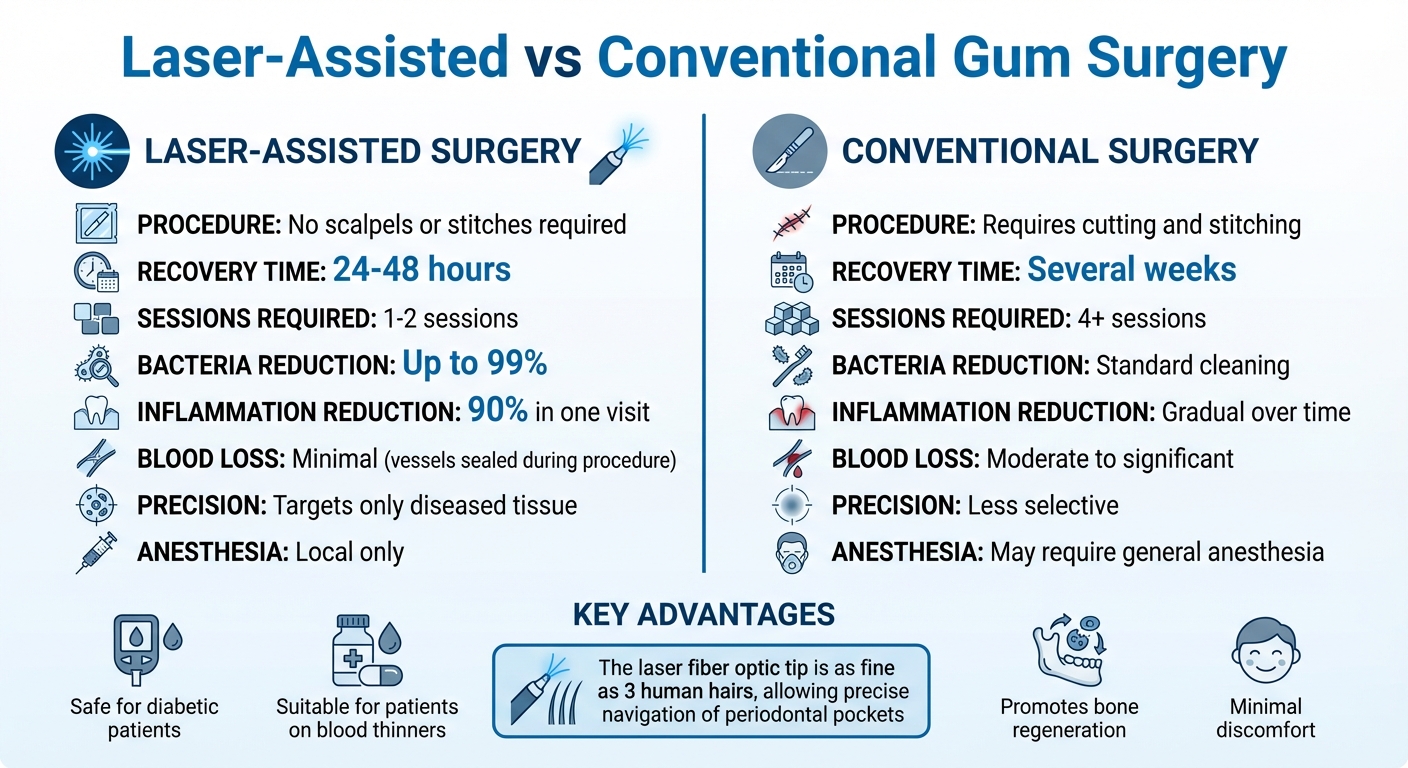
Laser vs Traditional Gum Surgery: Benefits and Recovery Comparison
Laser-assisted gum surgery stands out as a modern alternative to traditional scalpel-based techniques, especially for those dealing with moderate to severe periodontal disease. Its approach offers several advantages that make it an appealing choice for both patients and dental professionals.
Less Invasive Procedure
One of the biggest perks of laser surgery is that it skips the need for scalpels and stitches. Instead of making incisions, the laser removes diseased tissue with minimal trauma to the gums. This process also seals blood vessels as it works, creating a "bloodless" surgical field through a natural fibrin clot that protects the treated area [5][3].
Recovery is quicker too. Most patients are back to their regular routines within 24 hours, a stark contrast to the weeks of downtime often required after traditional surgery [2]. Plus, laser treatments usually need only one or two sessions, whereas conventional methods might require four or more [3]. This less invasive approach not only speeds up recovery but also makes the whole experience much more comfortable.
"Because the laser is so precise and often doesn’t involve cutting or stitches, there’s usually much less pain during and after the procedure compared to traditional gum surgery." – Dr. Daniel Tan, Dentist, Launceston Dentistry [5]
Improved Accuracy and Safety
The precision of laser technology is a game-changer. The fibre optic tip, as fine as three human hairs, can navigate tight periodontal pockets with ease [2]. Lasers are designed to target only diseased tissue and bacteria, leaving healthy gum tissue unharmed [5][9].
This high-energy beam doesn’t just remove bacteria – it eliminates up to 99% of them while sterilising the area, lowering the risk of infection after the procedure [3][2]. The PerioLase® MVP-7™ laser, for example, can reduce oral inflammation by 90% in just one visit [3]. Such precision ensures better results and fewer complications for patients.
Suitable for Patients with Medical Conditions
Laser surgery is particularly helpful for individuals with medical conditions like diabetes or bleeding disorders. Its ability to coagulate blood vessels during the procedure minimises blood loss, making it an excellent option for those on blood-thinning medications [2][9]. For diabetic patients, the laser’s biostimulation properties promote faster healing, addressing common challenges with wound recovery [9].
Additionally, laser procedures typically require only local anaesthesia, reducing the risks associated with general anaesthesia, especially for patients sensitive to systemic stress [2]. There’s even evidence suggesting that laser treatments may help lower glycated haemoglobin (HbA1c) levels, offering potential benefits for diabetes management [3]. These features make laser-assisted surgery a safer and more accessible choice for patients with complex health needs.
When to See a Dental Professional
Identifying Early Warning Signs
Gum disease often starts with subtle symptoms that are easy to overlook. Early signs of gingivitis include gums that are red, swollen, or puffy, along with occasional bleeding during brushing or flossing [8][12]. The good news? Gingivitis can be reversed with professional cleaning and proper oral hygiene.
If it progresses to periodontitis, the symptoms become harder to ignore. These may include chronic bleeding, receding gums that make teeth look longer, heightened sensitivity to hot or cold, teeth that feel loose or shift, and persistent bad breath [10][11][13].
"Gum disease can start as a silent disease. Gum disease symptoms can be very subtle at first, and discomfort is mild and transitory." – Sydney Laser Gum Centre [12]
If you notice ongoing gum swelling, bleeding, or loose teeth, it’s time to consult a dental professional. Regular check-ups play a critical role in spotting these issues early and stopping them from worsening.
Value of Regular Periodontal Check-Ups
Routine dental visits are key to catching gum disease early and avoiding invasive treatments like laser-assisted surgery. Ideally, these check-ups should happen every six months. They often include pocket measurements and X-rays to check for bone loss. After procedures like scaling and root planing, a follow-up visit 6–8 weeks later helps determine if further treatment, such as laser surgery, is necessary [13][14].
During these visits, your dentist will use a periodontal probe to measure the depth of the pockets between your gums and teeth. Pockets measuring 6 mm or deeper are typically a sign that periodontal surgery might be required [13][14].
Conclusion
Laser-assisted gum surgery represents a modern and less invasive option for treating periodontal disease, which is often characterised by deep gum pockets, ongoing inflammation, and bone loss around teeth or implants [6][14]. By using precision light energy, these procedures target diseased tissue with minimal disruption, typically leading to reduced bleeding, less discomfort after surgery, and quicker recovery times compared to traditional scalpel-based methods [5]. The precision of lasers, combined with advanced protocols, supports better healing outcomes.
Protocols like LANAP and LAPIP go beyond infection removal – they stimulate the body’s natural healing mechanisms. For example, they help form stable fibrin clots that act as a natural barrier, potentially aiding in bone regeneration [4]. This is especially valuable in Australia, where over 38% of individuals aged 55 and older are affected by periodontitis [6]. These treatments are particularly suited for patients managing other health conditions, such as diabetes.
However, laser surgery is just one component of comprehensive periodontal care. A specialist evaluation is essential, factoring in gum pocket depth, medical history, and lifestyle factors like smoking, which can impact recovery [14]. Proper training in laser use is also critical, as incorrect settings could damage tissue [2].
Long-term success hinges on maintaining excellent oral hygiene and scheduling regular dental check-ups. While laser surgery can treat existing gum disease, it doesn’t offer permanent protection. Daily brushing, flossing, and professional cleanings every six months are vital to prevent a recurrence [2][5].
If you notice symptoms like bleeding gums, bad breath that won’t go away, or loose teeth, seek professional advice without delay. Early intervention often leads to simpler treatments and better outcomes. While laser-assisted gum surgery provides an effective solution for advanced periodontal challenges, its long-term success depends on a combination of professional care and consistent personal oral hygiene.
FAQs
Is laser gum surgery right for me or can cleaning still help?
For mild to moderate gum disease, treatments like professional cleaning, including scaling and root planing, can often do the trick. But when it comes to more advanced cases – or if you’re looking for a less invasive approach – laser gum surgery might be the way to go. Your dentist or periodontist will assess your situation and recommend the best treatment option tailored to your needs.
How is LANAP different from LAPIP?
LANAP (Laser-Assisted New Attachment Protocol) and LAPIP (Laser-Assisted Peri-Implantitis Protocol) are advanced laser treatments designed to address oral health issues, but they focus on different problems.
- LANAP is used to treat gum disease (periodontitis) in natural teeth. It removes infected tissue while encouraging the gums to heal and reattach to the teeth.
- LAPIP is tailored for peri-implantitis, which involves infections around dental implants. It aims to clean the affected area and maintain the health of the implant.
Both procedures are less invasive alternatives to traditional methods, reducing the need for scalpels and stitches. However, they are carefully adapted to meet the unique needs of the conditions they target.
What should I expect to eat and do during recovery?
After laser gum surgery, focus on eating soft, cold foods such as yoghurt, applesauce, or smoothies to keep irritation to a minimum. Stay away from anything hot or spicy, as these can aggravate the treated area. For the first 24–48 hours, it’s best to avoid hot drinks entirely.
Maintain good oral hygiene by gently brushing the areas that weren’t treated, and always follow your dentist’s instructions carefully. Make sure the anaesthesia has completely worn off before eating or drinking to avoid accidental injuries.
Related Blog Posts
- How Dentists Evaluate Patients For Laser Gum Surgery
- Minimally Invasive vs. Traditional Gum Surgery: Key Differences
- Laser Gum Surgery Recovery: What to Expect
- 5 Tips for Reducing Swelling After Laser Gum Therapy
Important Notice: Any surgical or invasive procedure carries risks. Before proceeding, you should seek a second opinion from an appropriately qualified health practitioner.
Individual results may vary. The information provided in this article is for educational purposes only and does not constitute medical advice.
Checkout Related Blogs




Get in touch with us
For more information, call us now to start feeling better. Or fill the form below to make appointment
The Latest News from Complete Smiles
How to Clean Clear Plastic Retainers
Checklist for Choosing Wearable Dental Devices
Checklist for Choosing Cloud AI Platforms in Dentistry

Complete Smiles Bella VistaAccepts All Major Health Funds, Including





