





How Dentists Evaluate Patients For Laser Gum Surgery
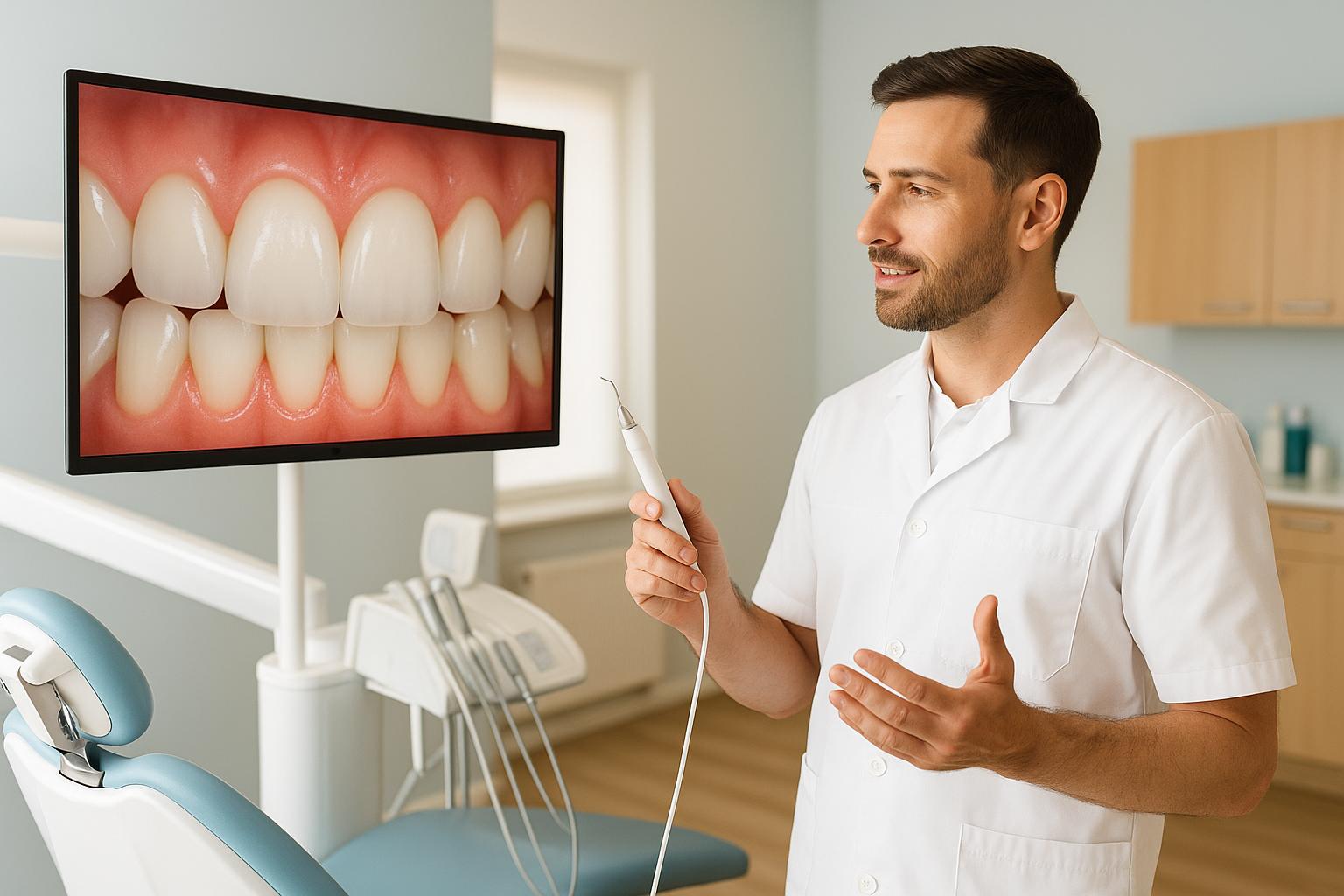
When considering laser gum surgery, dentists focus on three key areas: your overall health, the severity of your gum disease, and whether this treatment suits your needs. This process involves a detailed review of your medical and dental history, a thorough examination of your gums and teeth, and diagnostic imaging like X-rays or CT scans. Here’s what you need to know:
- Medical History Check: Conditions like diabetes, heart disease, or immune issues can affect healing and influence treatment plans. Your dentist will also review medications and allergies to ensure safety.
- Gum and Tooth Examination: Dentists measure gum pocket depths, assess tooth stability, and check for bone loss or infections. These findings shape the treatment approach.
- Imaging Tests: X-rays and CT scans provide a deeper look at your oral health, revealing hidden issues and guiding precise laser surgery.
Laser gum surgery is often recommended for moderate to severe gum disease. It’s less invasive than traditional methods, offering faster recovery and minimal discomfort for most patients. However, it’s not suitable for everyone – factors like smoking, advanced bone loss, or other health conditions may limit eligibility. Your dentist will create a personalised plan to address your specific needs, ensuring the best possible outcome.
Comprehensive Periodontal Evaluation (CPE) from the American Academy of Periodontology
First Appointment and Medical History Review
The initial consultation for laser gum surgery is all about ensuring the treatment is safe and suitable for you. Your dentist will take a deep dive into your medical history to understand your overall health and identify any factors that could influence the procedure or your recovery.
Medical and Dental History Review
During this first visit, your dentist will carefully examine your medical and dental history to spot any conditions that might make laser treatment unsuitable [4]. This includes looking at your current health, past medical treatments, and any ongoing concerns that could impact the surgery or healing process.
Particular attention is given to systemic conditions like diabetes, heart disease, and immune system disorders, as these can have a significant impact on gum health and treatment success. Research shows a strong link between periodontal health and broader systemic conditions [6].
Your medication list is equally important. Be prepared to share a complete list of everything you’re taking – prescription drugs, over-the-counter medicines, and supplements [5]. Some medications can interfere with blood clotting, immune responses, or healing, which can influence the surgical approach and recovery plan.
Allergies are another critical aspect of this review [4]. Your dentist will ask about any allergies, especially to medications that might be used during or after the procedure. They’ll also evaluate your dental history, including previous treatments, complications, and your current oral hygiene habits. This helps them predict how well you might respond to laser gum surgery and identify any additional care you may need during recovery.
Health Conditions That May Affect Treatment
Certain health conditions can play a big role in determining whether laser gum surgery is the right option for you. These factors are carefully considered during the evaluation:
- Diabetes: This condition can slow healing and increase the risk of infection, both of which are important when planning gum surgery.
- Heart Disease: Chronic inflammation from gum disease can worsen existing cardiovascular issues, so a thorough assessment is essential [6].
- Immune System Disorders: These can compromise your body’s ability to fight infections and heal effectively, increasing the risk of complications [6].
- Smoking: Smoking reduces blood flow to the gums, delays healing, and raises the likelihood of complications, all of which are crucial considerations for successful treatment.
- Pregnancy: Hormonal changes during pregnancy can affect gum health, so timing and treatment methods are carefully adjusted to prioritise both maternal and foetal safety.
Setting Patient Expectations
A key part of this first appointment is setting clear and realistic expectations. Open communication with your dentist ensures you understand the treatment process and what outcomes are achievable [7].
Your dentist will explain the root cause of your gum disease, outline the available treatment options, and walk you through the steps of the recommended procedure [8]. They’ll also help you set realistic goals based on factors like your current oral health, hygiene habits, age, and genetics [7].
Costs, insurance coverage, and scheduling are all discussed during this visit [9]. You’ll also learn about the recovery process, including follow-up appointments and long-term care to maintain your results.
This consultation is your chance to share concerns, explore treatment possibilities, and collaborate with your dentist to create a plan tailored to your needs. After this initial review, a more detailed examination of your gums and teeth will help refine the treatment plan, setting the stage for effective care and recovery.
Detailed Gum and Tooth Examination
After reviewing your medical history, your dentist will perform a thorough evaluation of your gums and teeth. This step is essential for determining whether laser gum surgery is suitable for your condition and helps shape a personalised treatment plan.
Measuring Gum Pocket Depths
One of the key aspects of this examination involves measuring the depth of the gum pockets around each tooth. Using a dental probe, the dentist gently inserts the tool alongside each tooth, beneath the gum line, to measure the pocket depths in millimetres [12].
In a healthy mouth, these pockets usually range from 1 to 3 mm. Pockets deeper than 4 mm can indicate periodontitis, while depths beyond 5 mm are particularly concerning because they are difficult to clean effectively with regular brushing and flossing [12].
The dentist will chart these measurements to map the health of your gums. For laser gum surgery, these readings are especially important since the procedure is designed to reduce periodontal pocket depth – a key indicator of successful treatment [11]. These measurements also complement the evaluation of tooth stability and bone support.
Checking Tooth Stability and Bone Health
After measuring gum pockets, your dentist will assess the stability of your teeth and the condition of the supporting bone structure. Tools like X-rays and CBCT scans provide detailed insights into bone density and tooth stability, both of which are crucial for predicting the success of treatment [14].
If you have osteoporosis – a condition that affects millions globally and contributes to millions of fractures annually – it’s important to inform your dentist about any medications you’re taking, as these may influence treatment planning and outcomes [13][15].
Advanced diagnostic tools, such as resonance frequency analysis (RFA) and damping capacity assessment (DCA), may also be used to measure the stability of teeth and implants, offering additional insights into the likelihood of successful treatment [16].
Assessing Plaque and Bacterial Infection
The presence of plaque and bacterial infection plays a major role in shaping your treatment plan. Your dentist will evaluate this by checking for visible plaque buildup and asking about any symptoms you may have [17].
Plaque contains harmful bacteria that drive the progression of periodontitis, which affects a significant portion of the adult population worldwide [17][19]. During the examination, your dentist will look for signs like bleeding, gum inflammation, and changes in gum colour. These observations, combined with pocket depth measurements, help determine the severity of the infection [18].
In some cases, microbiological testing may be conducted to identify specific bacteria, allowing for a more targeted approach to treatment. Additionally, systemic risk factors, such as diabetes or smoking, are considered to predict treatment outcomes and tailor the laser surgery approach [17].
"Early diagnosis and personalised periodontal treatment are the only way to stop that process in its tracks." – Harris Dental Cape Cod blog [18]
X-rays and Diagnostic Testing
After your dentist conducts a clinical examination, imaging studies provide a deeper look at your oral health. These tools go beyond what can be seen during a routine check-up, offering critical insights that aid in planning laser gum surgery. Imaging fills in the gaps between your initial exam and the customised surgical plan.
When X-rays or CT Scans Are Needed
X-rays and CT scans are key when your dentist needs to examine the structures beneath your gums and teeth. X-rays are commonly used to detect cavities, impacted teeth, and bone loss around the roots[23]. For more intricate cases, a cone-beam CT (CBCT) scan might be recommended. This type of scan delivers highly detailed, three-dimensional images of your mouth, showcasing teeth, jawbones, gums, nerves, and soft tissues. It’s especially useful for pinpointing infection sites[22].
CT scans provide a more comprehensive view of your bone structure and surrounding tissues, uncovering potential issues that could influence your treatment plan[23].
The amount of radiation you’re exposed to during these procedures is minimal. For instance, a bitewing X-ray involves about 0.005 millisieverts (mSv) of radiation, whereas a dental CT scan typically ranges from 0.1 to 0.3 mSv[21]. For context, the average person is naturally exposed to around 3 mSv of radiation each year[21].
How Imaging Results Shape Your Treatment
The detailed information from X-rays and CT scans allows your dentist to fine-tune your treatment plan. These images help map out bone loss and identify hidden infections, significantly influencing the approach to laser gum surgery. Imaging results reveal the extent of damage and guide the surgical strategy to ensure the best possible outcome[20].
When analysing these scans, your dentist focuses on several critical factors. Bone density measurements indicate whether your teeth have the necessary support for healing after laser treatment. Additionally, infections visible on CT scans enable targeted and precise intervention.
Compared to traditional X-rays, CT scans provide a much clearer and more detailed picture of your oral structures[21]. While X-rays are excellent for detecting bone-related issues, CT scans go further by capturing images of organs, soft tissue, and even blood vessels[23]. This level of detail is crucial for effective laser gum surgery.
The three-dimensional imaging from CT scans allows your dentist to plan the exact angles and depths needed for the laser treatment. This precision ensures that infected tissue is removed thoroughly while preserving as much healthy tissue as possible.
These imaging results also help determine whether laser gum surgery is the right choice for your condition or if another treatment might be more effective. This ensures you receive care tailored to your specific needs.
sbb-itb-2be92ed
Who Qualifies for Laser Gum Surgery
Your dentist will decide if laser gum surgery is right for you based on your gum health and overall medical condition. This decision is made after thorough clinical and imaging evaluations, ensuring the treatment plan is tailored to your needs.
Best Candidates for Laser Gum Surgery
Laser gum surgery is often recommended for those with moderate to severe gum disease, especially when traditional treatments haven’t been effective. Common signs of advanced gum issues include bleeding gums, deep pockets around teeth, and gum recession. Since laser treatment is less invasive, it often results in less discomfort and quicker recovery times.
Factors That May Limit Eligibility
Laser gum surgery isn’t suitable for everyone. If you have advanced gum disease with significant bone loss or delicate gum tissue, traditional surgery might be a better option. Smoking can also hinder healing and reduce the chances of success. Additionally, certain health conditions and poor oral hygiene may impact the effectiveness of the procedure. However, some individuals who aren’t ideal candidates for traditional surgery – such as pregnant women or those with diabetes – might still benefit from laser treatments like LANAP, particularly if they have gum pockets measuring 5 mm or more [24].
Other Treatment Options Available
If laser gum surgery isn’t a fit for you, there are other treatments to consider. Traditional gum flap surgery is often used for severe periodontal disease, while scaling and root planing may work for less severe cases. Other options include pocket reduction surgery, bone grafting, or gum grafting, which can help restore lost tissue and bone.
It’s crucial to work closely with your dentist or periodontist to find the best treatment for your specific needs. Together, you can create a personalised plan aimed at protecting your natural teeth and improving your gum health.
Safety Measures and Pre-Surgery Preparation
Careful preparation and strict safety protocols are key to successful laser gum surgery. From the initial consultation to post-operative care, your dental team follows precise guidelines to ensure your safety and comfort.
Safety Protocols During Laser Procedures
Australian dental clinics adhere to rigorous safety standards when using laser equipment. The Australian Dental Association highlights the importance of these measures:
"Safe use of lasers in a dental practice must be achieved by following a program of laser safety activities and procedures which are monitored, reviewed and audited to achieve best practice." [25]
Several precautions are in place during laser procedures. For instance, everyone in the treatment room – patients, dentists, and staff – must wear protective eyewear. This eyewear is specifically designed to shield against accidental laser exposure, though not for direct beam contact [26].
Treatment rooms are equipped with warning signs, non-reflective surfaces, and controlled access points, such as doors and windows, to minimise the risk of laser beam reflection [26]. Suction systems are also used to reduce the risk of inhaling laser plume. In cases where significant plume is generated, high-filtration masks and additional protective gear are utilised [25]. To further protect surrounding areas during soft tissue treatments, tools like a wax spatula or the small end of a periosteal elevator may be used [26].
Before starting the procedure, your dentist will test and calibrate the laser to ensure accuracy. Every detail, including laser wavelengths and doses, is documented and adjusted to suit your specific needs [25]. These measures create a safe environment and set the stage for pre-surgical preparations.
Patient Instructions Before Surgery
Pre-surgery routines play a vital role in achieving the best outcomes. To prepare, you’ll need to make some lifestyle adjustments. For example, stop smoking several weeks before surgery, limit alcohol and caffeine intake at least one week prior, and maintain excellent oral hygiene with regular brushing, flossing, and mouthwash [28]. Share your full medical history with your dental team and avoid taking any medications unless approved by your dentist or surgeon [27][28].
Planning meals is also important, especially if sedation is involved. Eating a balanced meal a few hours before your appointment can help your body recover. Stock up on soft foods like soups and prepare enough for at least two days of easy meals post-surgery [27][28].
On the day of the procedure, wear loose, comfortable clothing, remove any jewellery, and choose a hairstyle that won’t interfere with the treatment. It’s also a good idea to leave electronic devices with a companion or turn them off completely during the procedure [27].
Creating Individual Treatment Plans
Your treatment plan is customised to fit your unique needs, taking into account your gum health, the severity of your condition, and your overall medical history [2][3]. This personalised approach ensures that every aspect of your care is tailored to you.
The extent of your gum disease determines the type of treatment required. While some patients may only need localised care for specific problem areas, others might require more extensive procedures across multiple quadrants [3]. Costs are typically discussed upfront, with treatments ranging from A$650 to A$700 per quadrant [29].
Your plan may include both non-surgical and surgical laser options. In some cases, a staged approach is used, starting with less invasive treatments and progressing to more advanced procedures based on your healing and response [1]. This flexibility allows adjustments to be made as needed.
Throughout this process, your dental team ensures you fully understand the proposed treatments. Regular reviews and updates to your plan help achieve the best possible results for your gum health.
Conclusion: Why Thorough Assessment Matters
Thorough evaluations are the bedrock of successful laser gum surgery. They go beyond a simple consultation, laying the groundwork for safe, tailored, and effective treatment. By carefully assessing your oral health, these evaluations help customise the procedure to your specific needs while minimising risks like hidden infections or abscesses[30][32].
Advanced laser technologies, such as LANAP, rely on this detailed assessment to precisely target diseased tissue, boasting an impressive 99.9% elimination rate of harmful oral bacteria[10]. Research shows that personalised treatment plans in minimally invasive periodontal procedures lead to improved gum health, better patient compliance, and enhanced overall results. Patients frequently report less pain, reduced sensitivity, and lower anxiety levels, with many expressing high satisfaction with their care[33].
Key Points to Remember
- A detailed evaluation identifies the severity of gum disease, measures periodontal pocket depths, and assesses overall oral health[30].
- It flags medical issues like uncontrolled diabetes and detects infections or abscesses that could hinder healing[30][32].
- Laser gum surgery uses precise technology to remove diseased tissue while protecting healthy areas, offering a less invasive solution[31].
- Regular periodontal check-ups, typically twice a year, allow for early detection and significantly better outcomes[34].
- For those undergoing laser surgery, recovery is often swift, with most patients resuming normal activities within 24 to 48 hours[31].
This patient-focused approach highlights the importance of customised care in achieving and maintaining optimal gum health.
FAQs
What makes laser gum surgery a better option than traditional methods?
Laser gum surgery comes with a range of benefits compared to traditional methods. Being a less invasive option, it often means patients experience reduced pain, bleeding, and swelling. The precision of lasers allows dentists to target problem areas while safeguarding healthy gum tissue, which can minimise the likelihood of gum recession.
Another advantage is the quicker healing and recovery time, making the process more convenient for patients. On top of that, lasers help eliminate bacteria in the gums, playing a key role in managing gum disease. For many, this approach offers a more comfortable and efficient way to improve overall gum health.
Can conditions like diabetes or heart disease impact your suitability for laser gum surgery?
Certain health conditions, such as diabetes and heart disease, can impact your suitability for laser gum surgery. For instance, diabetes might delay healing and heighten the risk of inflammation, while heart conditions could pose challenges during the procedure or recovery.
Make sure to share your complete medical history with both your dentist and healthcare provider. This step is essential to determine whether laser gum surgery is a safe and appropriate option for you.
How can I prepare for laser gum surgery and recover effectively?
To get ready for laser gum surgery, it’s crucial to follow the pre-operative instructions your dentist provides. Generally, you’ll need to steer clear of blood-thinning medications, like aspirin, for about 7–10 days before the procedure – unless your doctor advises otherwise. On surgery day, opt for comfortable clothing, skip any facial accessories, and plan to arrive early so you have time to relax beforehand.
Post-surgery, focus on helping your gums recover. Stick to soft foods, keep up with gentle oral hygiene, and avoid irritants like tobacco and alcohol. Take it easy – strenuous activities can interfere with healing. If you feel any discomfort or have questions, reach out to your dentist for advice.
Related Blog Posts
- Laser Dentistry for Pain Relief
- Advances in Gum Grafting Materials and Techniques
- Minimally Invasive Tooth Extraction Techniques
- What Is Piezoelectric Surgery?
Important Notice: Any surgical or invasive procedure carries risks. Before proceeding, you should seek a second opinion from an appropriately qualified health practitioner.
Individual results may vary. The information provided in this article is for educational purposes only and does not constitute medical advice.
Checkout Related Blogs




Get in touch with us
For more information, call us now to start feeling better. Or fill the form below to make appointment
The Latest News from Complete Smiles
How to Clean Clear Plastic Retainers
Checklist for Choosing Wearable Dental Devices
Checklist for Choosing Cloud AI Platforms in Dentistry

Complete Smiles Bella VistaAccepts All Major Health Funds, Including





