




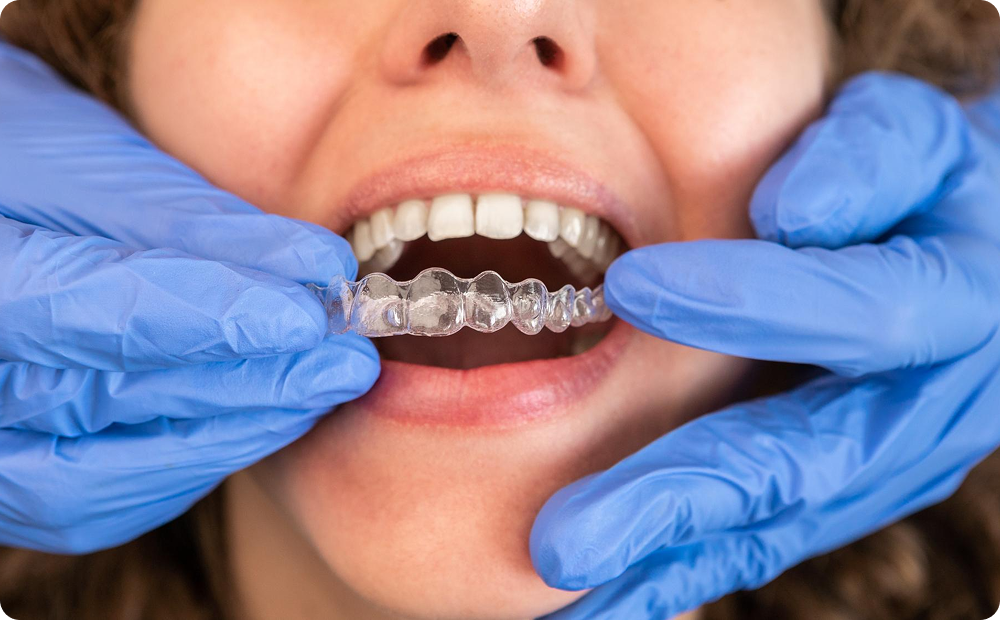
5 Tips for Reducing Swelling After Laser Gum Therapy
Laser gum therapy can lead to mild swelling as your gums heal, especially in the first 48 hours. Managing this swelling is key to a smooth recovery. Here are five simple tips to help you feel better faster:
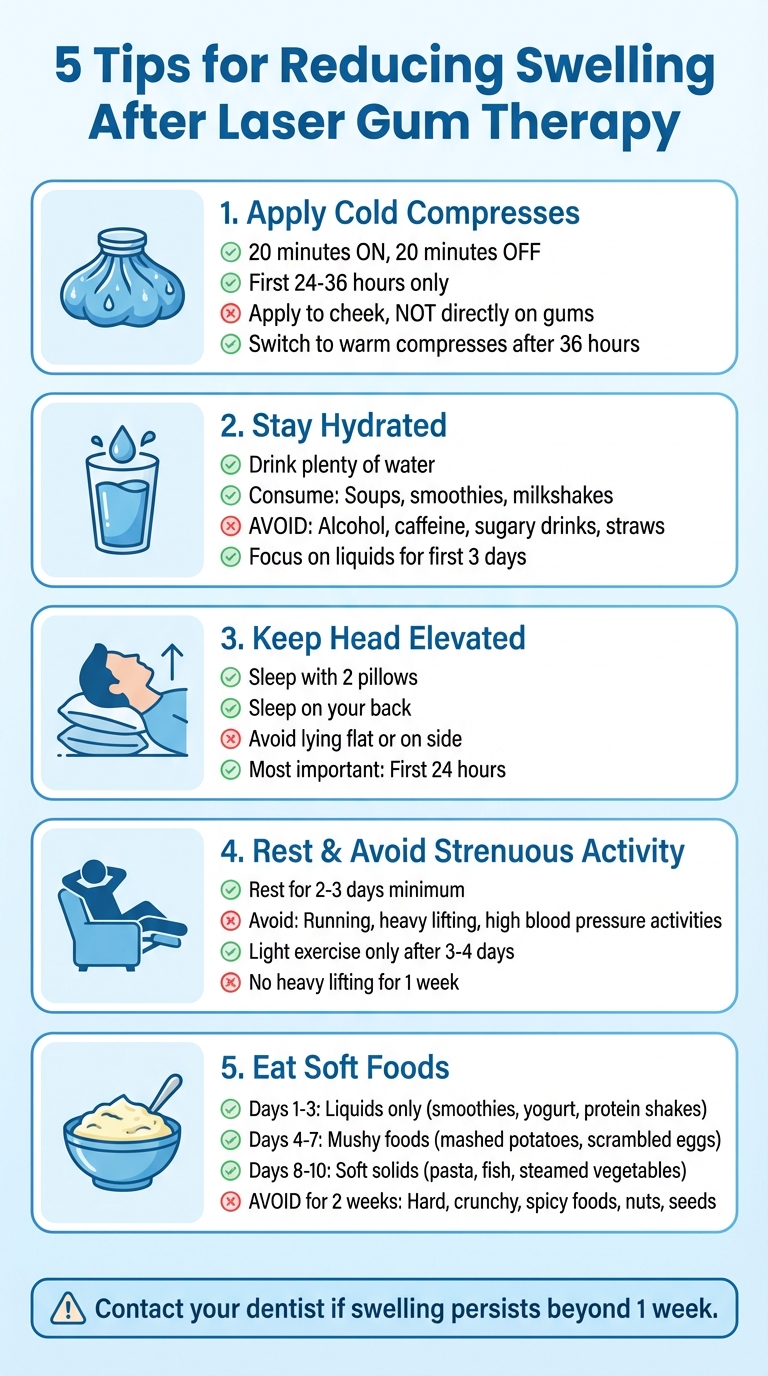
- Use Cold Compresses: Apply a cold pack to your cheek (20 minutes on, 20 minutes off) during the first 24-36 hours. Switch to warm compresses after that to improve circulation.
- Stay Hydrated: Drink plenty of water and stick to nutrient-rich liquids like soups and smoothies. Avoid alcohol, caffeine, sugary drinks, and straws.
- Keep Your Head Elevated: Sleep with two pillows to reduce swelling and protect blood clots. Avoid lying flat or on your side.
- Rest and Avoid Strenuous Activity: Take it easy for a few days. Skip heavy lifting, running, or anything that increases blood pressure.
- Eat Soft Foods: Stick to liquids for the first three days, followed by mushy foods, then soft solids. Avoid hard, crunchy, or spicy foods for at least two weeks.
If swelling persists beyond a week or you notice unusual symptoms, contact your dentist for advice.
5 Tips to Reduce Swelling After Laser Gum Therapy
Post-operative Care After Laser Periodontal Therapy | Ask Dr. Ting
1. Apply Cold Compresses
Using cold compresses can help by narrowing blood vessels, which decreases blood flow, swelling, and discomfort [5].
To do this, place the cold compress on the outside of your cheek near the surgical area – never directly on the gums. Wrap ice or a cold pack in a clean cloth to protect your skin from irritation or frostbite. Timing is key: stick to a 20 minutes on, 20 minutes off routine during the first 24 to 36 hours after surgery, as this is when cold therapy works best [3].
As the swelling starts to subside, it’s time to adjust your method. After the initial 24–36 hours, switch to warm, moist heat. This helps improve circulation and prevents over-cooling [3].
2. Stay Hydrated
Staying hydrated plays a key role in managing post-treatment swelling. Proper hydration improves circulation and helps deliver nutrients, which supports the healing process and reduces inflammation [3].
For the first three days, focus on consuming smooth, nutrient-packed liquids like soups, smoothies, and milkshakes. These options are gentle on healing gums and provide essential nutrients without causing unnecessary strain [3]. Hydration, combined with other aftercare steps, can significantly aid recovery.
It’s important to steer clear of alcohol, caffeinated, carbonated, and sugary drinks during this time. These can lead to dehydration and may interfere with the healing process. Also, avoid using straws, as the suction can dislodge blood clots essential for recovery. Smoking should also be avoided, as it can slow down healing [1][3].
Make water your go-to drink, and supplement it with cold, nutrient-rich liquids during the first 72 hours. This not only keeps you hydrated but also helps soothe the affected area for added comfort [3].
3. Keep Your Head Elevated
Raising your head is one of the easiest and most effective ways to manage swelling and bleeding after laser gum therapy [2].
The first 24 hours are especially important for recovery. Swelling usually starts within the first 48 hours and can last up to a week [3]. Keeping your head properly elevated during this time helps protect the blood clots that form, which are crucial for healing. It also reduces pressure in the oral area, working alongside other recovery practices to minimise inflammation.
“One of the best ways to minimize bleeding is to keep your head slightly elevated when you’re lying down. Be sure to sleep with two pillows the night of the surgery.” – Dee For Dentist [3]
To achieve this, use two pillows to prop up your head and neck, and try to sleep on your back. Lying on your side or stomach can increase blood flow to your face, which might disrupt the healing process [2]. Staying in this elevated position, especially during the first 24 hours, can help control bleeding and support faster recovery.
Even when resting during the day, keeping your head raised is a simple way to aid healing and reduce any oozing [3].
sbb-itb-2be92ed
4. Rest and Avoid Strenuous Activity
Taking time to rest after your procedure is crucial for conserving energy and allowing your body to focus on tissue repair. Engaging in strenuous activities too soon can redirect that energy, increase blood pressure, and raise the risk of post-operative bleeding, which can slow down the healing process [3].
Resting immediately after the procedure is especially important to let the initial healing phase proceed without disruption [2]. Activities like running, basketball, heavy lifting, or even playing wind instruments should be avoided for at least 2 to 3 days [4].
“Any strenuous physical activity increases the risk of post‐operative bleeding that may interfere with proper healing.” – Dee For Dentist [3]
This precaution helps protect the blood clots that act as a natural barrier during healing [2]. If you’d like to ease back into physical activity, stick to light exercise after 3–4 days, but avoid heavy lifting for at least a week [2].
Swelling is common within the first 48 hours and can last up to a week. Allowing your body sufficient rest during this time can help keep inflammation in check and make the recovery process more comfortable [3].
5. Eat Soft Foods
What you eat plays a big role in how well your gums heal after laser gum therapy. Hard, crunchy, or spicy foods can irritate sensitive gum tissue, disrupt the tiny blood clots acting as a natural “band-aid”, and even worsen swelling.
Stick to a phased diet for the first 10 days: liquid (days 1–3), mushy foods (days 4–7), and soft solids (days 8–10). For the first three days, focus on liquids like blended smoothies, milkshakes, yoghurt, puddings, and protein shakes. During days four to seven, transition to mushy foods that are easy to eat, such as mashed potatoes, scrambled eggs, avocado, or cottage cheese. By day eight, you can start introducing soft solids like pasta, flaky fish, and steamed vegetables. This gradual approach helps protect healing gums and keeps inflammation in check.
“The first three days following laser therapy, follow ONLY a liquid-like diet to allow healing. Anything that could be put into a blender to drink is ideal.” – LANAP Australia
Steer clear of hard, crunchy, or spicy foods, as well as seeds, nuts, and popcorn, for at least two weeks. These can irritate the gums and dislodge the healing clots. Cold options like ice cream or chilled yoghurt can be especially soothing during the early recovery phase.
When reintroducing solid foods, stick with soft, gentle options to avoid discomfort. If chewing feels painful, that’s your body’s way of telling you to stick to softer choices until your gums feel better. Even after day 10, you might want to continue with soft foods for up to a month if your gums are still tender.
Conclusion
The five aftercare tips outlined earlier aim to reduce swelling and promote healing effectively. By adhering to these suggestions, you help manage inflammation, which plays a critical role in the healing process and supports the natural clot formation that protects the affected area.
Most individuals can return to their regular routines within 24 hours, although full gum reattachment typically takes four to six weeks.
If swelling lasts longer than a week or you notice symptoms like severe pain, persistent bleeding, or signs of infection, it’s important to seek professional care promptly.
For tailored advice and quality dental care in Australia, you might consider reaching out to a trusted clinic like Complete Smiles Bella Vista. Under the guidance of Dr James Hanna, their skilled team offers advanced treatments and personalised aftercare support. Keep a close eye on your recovery and consult a professional if anything seems unusual or concerning.
FAQs
How long does swelling usually last after laser gum therapy?
Swelling after laser gum therapy typically decreases within a few days to a week. Many patients experience noticeable relief from swelling and discomfort within the first 24 to 48 hours. However, the healing process can differ based on the procedure’s scope and individual recovery rates.
To reduce swelling effectively, stick to your dentist’s aftercare instructions. These often include using a cold compress, staying well-hydrated, and ensuring you get enough rest. If the swelling doesn’t improve or gets worse after a week, it’s important to reach out to your dentist for guidance.
Why should I avoid using straws after laser gum therapy?
Avoiding straws after laser gum therapy is important because the suction they create can interfere with the healing process. This suction might dislodge the blood clot that forms at the treatment site – a critical part of recovery. If the clot is disturbed, it could result in pain, infection, or a slower healing process.
To aid recovery, stick to drinking directly from a glass and closely follow the aftercare guidelines provided by your dentist.
When should I contact my dentist about swelling after laser gum therapy?
You should reach out to your dentist if you experience severe or worsening swelling, ongoing pain that doesn’t ease, excessive bleeding, or if you feel feverish or generally unwell. These could be signs of complications that need professional care.
While mild swelling is common after laser gum therapy, anything that feels out of the ordinary or concerning should be checked by your dentist as soon as possible to make sure your recovery stays on track.
Related Blog Posts
Important Notice: Any surgical or invasive procedure carries risks. Before proceeding, you should seek a second opinion from an appropriately qualified health practitioner.
Individual results may vary. The information provided in this article is for educational purposes only and does not constitute medical advice.
Checkout Related Blogs




Get in touch with us
For more information, call us now to start feeling better. Or fill the form below to make appointment
The Latest News from Complete Smiles
How to Clean Clear Plastic Retainers
Checklist for Choosing Wearable Dental Devices
Checklist for Choosing Cloud AI Platforms in Dentistry

Complete Smiles Bella VistaAccepts All Major Health Funds, Including





