





AI-Powered Dental Diagnostics Explained
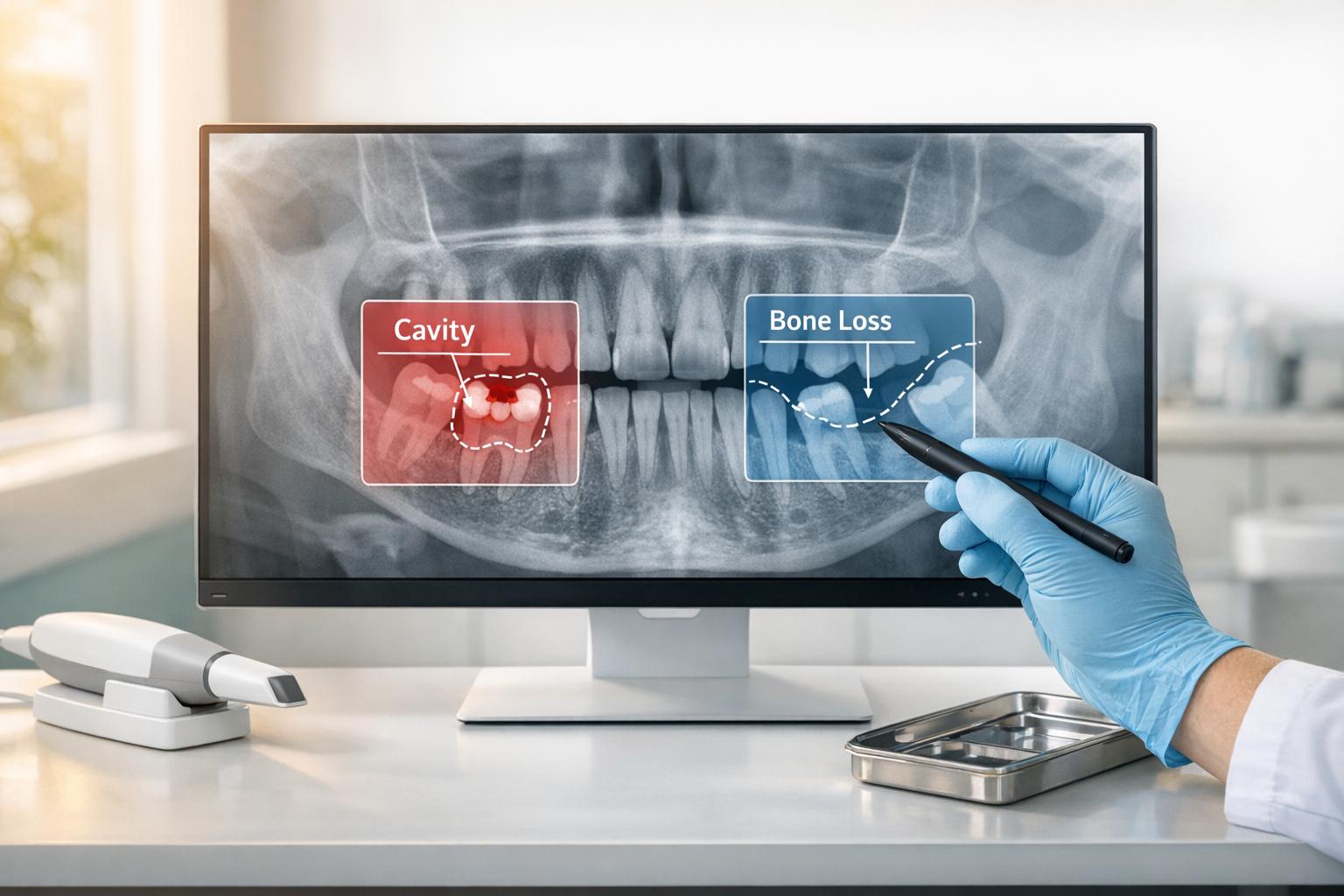
AI is reshaping dental care by improving the way oral health issues are identified and managed. By analysing dental images like X-rays, artificial intelligence can detect problems earlier than traditional methods, offering faster and more precise insights for dentists and patients alike.
Here’s what you need to know:
- How it works: AI uses advanced algorithms (like CNNs) to analyse dental images, spotting problems such as decay or bone loss that might be missed by the human eye.
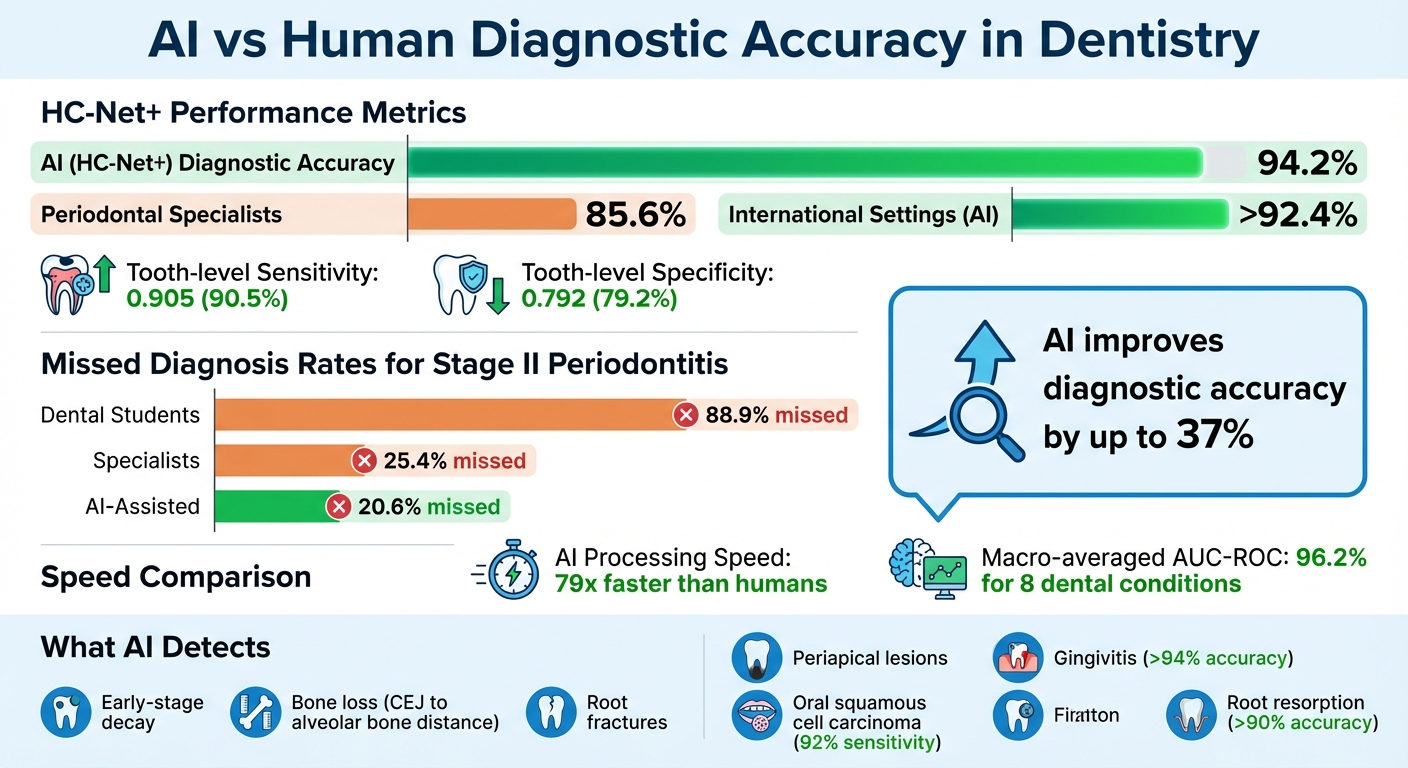
- Key benefits: It improves diagnostic accuracy by up to 37%, reduces diagnostic inconsistencies, and helps dentists identify issues earlier.
- Real-world tools: Platforms like Pearl’s Second Opinion® and HC-Net+ are already being used to analyse images, detect conditions, and assist in treatment planning.
- Patient engagement: AI simplifies complex X-rays with colour-coded visuals, making it easier for patients to understand their diagnosis and treatment options.
- Future potential: AI is being used to create personalised oral health insights, predict outcomes, and even assist with remote dental care.
While this technology is transforming dentistry, challenges like data privacy, automation errors, and the need for diverse datasets remain. However, with ongoing advancements, AI is set to play a major role in improving patient outcomes and making dental care more precise and efficient.
The Future of AI for Dental Diagnostics
As the technology evolves, AI-powered radiology is set to become the standard for diagnostic precision in modern clinics.
sbb-itb-2be92ed
How AI Improves Diagnostic Accuracy
AI vs Human Dentists: Diagnostic Accuracy Comparison in Dental Care
AI systems are transforming dental diagnostics by analysing vast datasets of dental images. This allows them to detect subtle variations – like changes in greyscale intensity or spatial relationships in anatomy – that might indicate early signs of disease. By doing so, they help minimise diagnostic variability and improve accuracy.
AI Analysis of Dental Images
One standout example is HC-Net+, an AI model designed to focus on critical oral health indicators. It measures the distance between the cementoenamel junction and the marginal alveolar bone, a key marker for bone loss. This reduces the subjectivity often seen in manual assessments (Cohen’s kappa: 0.454–0.482).
In a multicentre trial, HC-Net+ was tested on 10,881 orthopantomograms and 382 labelled images from institutions such as the University of Hong Kong, Shanghai Ninth People’s Hospital, and Sapienza University of Rome. The results were impressive: HC-Net+ achieved a diagnostic accuracy of 94.2%, outperforming periodontal specialists, who achieved 85.6%. Even across diverse international settings, the AI maintained accuracy rates above 92.4% [2].
This technology is particularly valuable in detecting early-stage diseases like Stage II periodontitis, where timely intervention is essential. For example, dental students missed diagnosing this condition 88.9% of the time, and specialists 25.4% of the time. However, AI reduced the missed diagnosis rate to just 20.6%. Studies also show that AI assistance allows junior dentists to detect conditions at a level comparable to experienced specialists [2]. Such advancements pave the way for more precise and tailored dental treatments.
Examples of AI Diagnostic Tools
HC-Net+ is a prime example of how AI tools are redefining dental diagnostics. It uses deep learning to analyse panoramic radiographs for periodontal disease detection. The system boasts a tooth-level sensitivity of 0.905 and a specificity of 0.792, effectively distinguishing between healthy and diseased teeth.
When dentists, regardless of their experience, used AI-generated heatmaps and predictive values, their diagnostic accuracy, sensitivity, and specificity improved significantly. These tools not only reduce reliance on physical probing but also provide insights into subtle periodontal changes that traditional imaging might miss [2]. Beyond diagnosis, they enable more tailored patient care, offering a glimpse into the future of predictive and personalised dentistry.
Creating Personalised Treatment Plans with AI
After improving diagnostic accuracy, AI is also reshaping how personalised treatment strategies are crafted.
Data-Driven Treatment Personalisation
AI platforms pull together a variety of data sources – digital X-rays, 3D CBCT scans, intraoral images, electronic health records, and periodontal charts – to create a comprehensive patient profile. Beyond clinical data, these systems can also evaluate non-clinical factors like genetic markers, lifestyle habits, and variations in oral microbiota. This layered insight helps dental professionals develop preventive strategies tailored to each patient’s specific risk factors.
One of AI’s standout features is its ability to update treatment recommendations in real-time as new patient data becomes available. A perfect example of this was demonstrated in October 2025 by Trismus Healthcare Technologies with their scanO AI system. By analysing just three photos taken via a mobile app, the system produced a detailed 30-page report with over 90% accuracy. This report included personalised treatment plans and even automated follow-up reminders [3].
"AI is transforming dental practice workflow, from diagnostics to treatment planning, and creating the era of hyper-personalised care." – scanO Editorial Team [3]
This ability to compile and analyse data so thoroughly lays the groundwork for predicting treatment outcomes with greater precision.
Predicting Treatment Success
AI’s predictive modelling takes personalisation a step further by forecasting treatment outcomes before the therapy even begins. In orthodontic treatment options, implant planning, and restorative dentistry, AI simulations improve accuracy by predicting tooth movement, mapping bone density and nerve locations, and customising restorative designs.
The results speak for themselves. AI models have been shown to predict mandibular growth trends in paediatric patients with 85% accuracy, far surpassing the 54.2% accuracy achieved by junior orthodontists [5]. Similarly, machine learning algorithms can predict aligner displacement with 82% accuracy [5]. ProDental Studio, in September 2025, reported that AI-assisted implant planning achieved discrepancies of less than 1 mm and 2°, cutting planning time by 66% [4].
Even more advanced models can detect subtle changes in tooth root resorption with over 90% accuracy and diagnose gingivitis from intraoral images with more than 94% accuracy [5]. As these systems continuously update with new data, dental professionals are better equipped to refine treatment plans, potentially reducing complications and improving patient outcomes.
Benefits and Limitations of AI in Dentistry
Now that we’ve explored how AI enhances personalised dental care, it’s time to weigh its advantages against the challenges dental practitioners face.
Comparing Benefits and Challenges
AI-powered diagnostics bring a new level of precision to dentistry. For example, they can detect conditions like root fractures and periapical lesions with impressive accuracy – 92% sensitivity in identifying oral squamous cell carcinoma, to be exact [7]. This enables clinicians to create more targeted treatment plans, intervene earlier, and customise therapies for individual patients. Beyond diagnostics, AI can handle administrative tasks, easing the burden on clinicians so they can focus more on patient care [6]. AI-powered remote dental care platforms also make monitoring possible, broadening access to care beyond the confines of a dental surgery [6].
However, these advancements come with challenges. AI systems rely on high-quality, diverse datasets, and when these datasets fail to represent certain demographics, diagnostic accuracy may falter for underrepresented groups [6][7]. There’s also the issue of automation bias – clinicians might either overlook AI errors (omission bias) or trust incorrect AI outputs even when evidence suggests otherwise (commission bias) [6]. The Dental Board of Australia underscores this point:
"Regardless of what technology is used to advance healthcare, the practitioner remains responsible for delivering safe and quality care… Practitioners must apply human judgement to any output of AI." [6]
Another hurdle is the lack of transparency in how deep learning models operate, making it harder for clinicians to explain AI-derived diagnoses to patients. This can complicate informed consent and shared decision-making [6][7]. Privacy concerns also loom large, especially regarding compliance with Australia’s 13 Privacy Principles for data protection [6].
Here’s a quick look at the key benefits and limitations of AI in dentistry:
| Benefit | Limitation |
|---|---|
| Precision: High accuracy in detecting fractures and conditions | Data Dependency: Requires diverse, high-quality datasets for reliability |
| Efficiency: Reduces workload by automating administrative tasks | Automation Bias: Risk of blindly trusting or overlooking AI errors |
| Personalisation: Customises treatment plans through predictive modelling | Responsibility Gap: Legal uncertainty between practitioners and AI providers |
| Access: Expands care through telemedicine and remote monitoring | Privacy Risks: Potential for data breaches or misuse of health information |
Balancing these benefits and challenges is key to integrating AI responsibly into dental practices. While AI offers impressive tools, human oversight remains essential to ensure safe, quality care. This sets the groundwork for examining how emerging AI technologies could further transform dental diagnostics.
The Future of AI in Dental Diagnostics
Let’s take a closer look at how advancements in AI are shaping the future of dental care in Australia. With its potential to redefine diagnostics and treatment, AI is poised to bring exciting changes to the field.
Emerging AI Technologies in Dentistry
AI is making strides in creating more precise and tailored dental care. For instance, in periodontology, diagnostics now incorporate individual risk factors and biological responses, offering a more personalised approach to treatment[4]. Orthodontics is also evolving, with AI enabling dynamic treatment management. This means practitioners can track tooth movement in real-time and adjust treatment plans as needed, rather than waiting for scheduled check-ups[4].
In implantology, AI has transitioned from being a research tool to becoming a standard part of clinical practice. AI-driven planning for implant placements achieves remarkable accuracy, with deviations of less than 1 mm and 2°, while also reducing planning time by 66%[4]. This level of precision, combined with automation, allows clinicians to focus on more intricate surgical and aesthetic tasks.
These advancements highlight the growing role of AI in improving diagnostic accuracy and personalisation. However, for widespread adoption in Australian dental practices, integrating these tools into current workflows will be critical. Challenges such as ensuring compliance with the Privacy Act and achieving compatibility with existing practice management software must be addressed[6]. Overcoming these hurdles will pave the way for even greater improvements in patient care.
Improving Patient Outcomes
AI’s ability to enhance diagnostic accuracy and streamline planning is already transforming patient outcomes, and future developments promise even more. For example, AI processes dental images 79 times faster than humans, achieving an impressive macro-averaged AUC-ROC of 96.2% for eight dental conditions[4]. This speed significantly reduces the time between diagnosis and treatment, improving efficiency.
Orthodontics is benefiting from advanced prediction tools that assess risk factors and anticipate potential complications before treatment even begins. These tools go a step further by enabling real-time adjustments throughout the course of care. Moreover, AI-supported teledentistry platforms are extending care beyond traditional clinic visits. With the help of wearables and mobile devices, patients – especially those in regional or remote parts of Australia – can receive continuous monitoring and assessment, addressing the challenge of limited access to specialist dental services[6].
Another exciting development is the integration of AI into treatment visualisation tools. For example, AI-enhanced "Smile Design" technologies allow patients to see predicted treatment outcomes. This not only improves communication between patients and practitioners but also fosters a more collaborative decision-making process, ensuring patients fully understand and agree with their treatment plans[6].
Conclusion
AI is making a profound impact on both the diagnostic and treatment planning stages of dental care in Australia. Its ability to detect conditions like early-stage decay and periapical radiolucency – issues often missed by the human eye – has improved diagnostic accuracy by up to 37%[1]. On top of that, AI processes images at a speed roughly 79 times faster than human practitioners[4]. This combination of speed and accuracy leads to earlier detection and allows for less invasive, preventative treatments, ultimately improving patient outcomes.
The shift towards personalised, data-driven care is becoming increasingly apparent in areas like periodontology and orthodontics. AI tailors treatment plans based on individual risk factors and biological responses, offering a level of customisation that was previously out of reach. For instance, AI-assisted implant planning boasts deviations of less than 1 mm and 2°, while also cutting planning time by 66%[4]. This not only enhances clinical decision-making but also streamlines workflows for dental practitioners.
AI is also revolutionising patient-practitioner communication. With colour-coded visual aids simplifying the interpretation of complex radiographs, patients can better understand their conditions and treatment options, fostering greater engagement and trust.
"It’s hard to imagine that in five to 10 years from now you’ll walk into a practice that doesn’t utilise AI. I think it will become a natural part of the dental workflow." – Makenzie Harris, Director, Gamma Tech[1]
Looking ahead, advancements in 3D imaging and predictive diagnostics will further cement AI’s role in dental care. This evolution is steering the field away from reactive treatments and towards a focus on early detection and prevention, setting a new standard for modern dentistry.
FAQs
Is AI replacing dentists in diagnosis?
AI isn’t taking over the role of dentists, but it’s becoming an incredibly helpful tool in their practice. It can analyse dental images, such as X-rays, to spot issues like cavities or gum disease, which helps improve the accuracy of diagnoses. However, dentists are still irreplaceable when it comes to interpreting AI-generated insights, deciding on treatments, and delivering personalised care. Rather than replacing their expertise, AI works alongside it, aiding in early detection and contributing to better patient outcomes while leaving the final decisions to the professionals.
How does AI make dental treatment plans more personalised?
AI is transforming how dental treatment plans are personalised by boosting diagnostic precision and offering detailed insights into each patient’s oral health. Using advanced algorithms, it can process dental images, radiographs, and patient data to pinpoint specific problems and even predict future outcomes. This means dental professionals can design treatment plans tailored to individual needs, considering factors like bite alignment, bone density, and soft tissue health. The result? Care that’s more accurate, efficient, and centred around the patient.
How is my dental data kept private when AI is used?
When AI is integrated into dental diagnostics, safeguarding patient data privacy is a top priority. In Australia, laws like the Privacy Act 1988 and the Health Records Act 2001 are in place to ensure that sensitive details – such as medical records and diagnostic images – are managed securely. Dental clinics adhere to rigorous measures, including encryption, secure servers, and access controls, to block unauthorised access. Following these regulations and being transparent about data practices are key to maintaining patient trust and upholding confidentiality.
Related Blog Posts
- AI Research in Oral Disease Detection: Key Findings
- AI-Powered Dental Imaging: Future Trends
- How AI Improves Diagnostic Consistency in Dentistry
- AI in Dentistry: Benefits of Personalised Oral Health Insights
Important Notice: Any surgical or invasive procedure carries risks. Before proceeding, you should seek a second opinion from an appropriately qualified health practitioner.
Individual results may vary. The information provided in this article is for educational purposes only and does not constitute medical advice.
Checkout Related Blogs




Get in touch with us
For more information, call us now to start feeling better. Or fill the form below to make appointment
The Latest News from Complete Smiles
How to Clean Clear Plastic Retainers
Checklist for Choosing Wearable Dental Devices
Checklist for Choosing Cloud AI Platforms in Dentistry

Complete Smiles Bella VistaAccepts All Major Health Funds, Including





