




Teledentistry in Australia: Legal and Ethical Issues
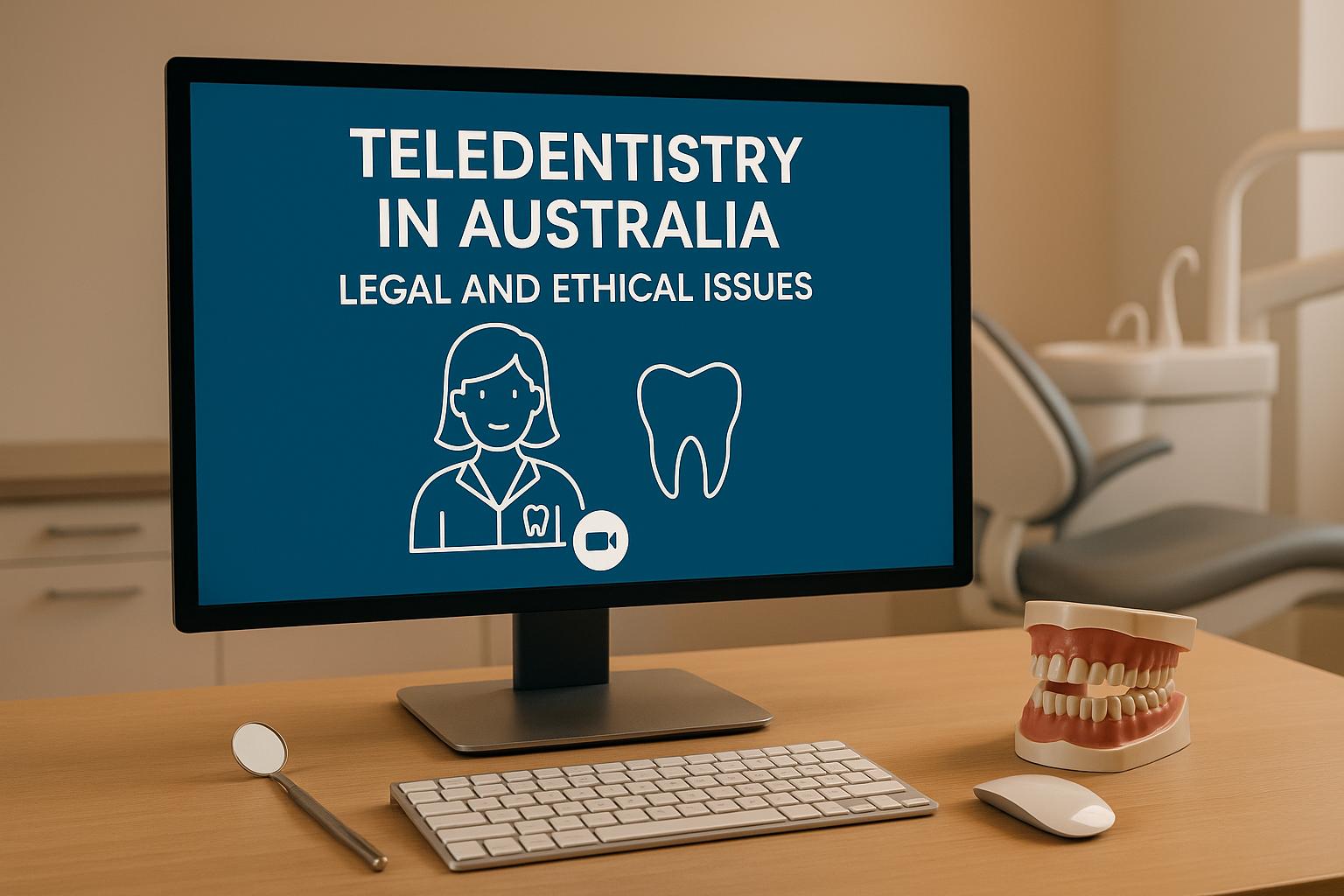
Teledentistry is transforming how Australians access dental care, offering remote consultations and follow-ups via live video or "store-and-forward" methods. While it has improved access, especially for rural areas, it raises critical legal and ethical concerns. Dentists must comply with strict privacy laws, obtain patient consent, and ensure care quality matches in-person standards. Challenges include cross-border licensing, secure technology use, and limitations in remote diagnosis. Compliance with regulations like the ADA Policy Statement 6.28 and robust cybersecurity practices are essential for safe and effective teledentistry services.
Key points:
- Privacy: Patient data must be protected with encrypted systems.
- Consent: Clear, documented consent is required for all remote services.
- Licensing: Practitioners must be registered in the patient’s jurisdiction.
- Limits: Remote consultations cannot replace physical exams for accurate diagnoses.
Legal Requirements and Compliance for Australian Teledentistry
Teledentistry Regulations
In Australia, teledentistry operates under a detailed regulatory framework shaped by AHPRA, the Dental Board of Australia, and the ADA’s Policy Statement 6.28. This policy explicitly prohibits any procedural treatment without an in-person examination, ensuring patient safety and maintaining professional standards.
Only registered dental practitioners are permitted to provide teledentistry services, guaranteeing that patients receive care from qualified professionals. Privacy laws also play a major role. For instance, in New South Wales, the Health Records and Information Privacy Act 2002 governs how practitioners handle patient information during virtual consultations [3]. Similar privacy regulations exist across other states and territories, creating a complex web of compliance requirements that dental practitioners must navigate.
When renewing their registration, dental practitioners must declare adherence to advertising and registration rules under the National Law [5]. This declaration includes teledentistry services, ensuring that virtual consultations meet the same rigorous standards as traditional face-to-face care. These regulations set the groundwork for addressing the challenges of licensing and cross-border practices.
Licensing and Cross-Border Issues
State-specific registration requirements make it challenging for dental practitioners to provide virtual consultations across state or international borders. For example, a dentist registered in Victoria cannot legally consult with a patient in Queensland unless they are also registered there. When it comes to international consultations, the regulations become even stricter.
Under current Australian law, practitioners must hold valid registration in the jurisdiction where they are physically located during the consultation. This means Australian-registered dentists offering advice to overseas patients may face regulatory hurdles, and foreign practitioners cannot legally provide teledentistry services to Australian patients without proper local registration.
The Trans-Tasman Mutual Recognition Act 1997 offers some flexibility for practitioners relocating between Australia and New Zealand. However, this agreement does not extend to teledentistry, meaning practitioners must still comply with local registration requirements. These complexities highlight the importance of meticulous record-keeping and adherence to legal standards in teledentistry.
Patient Record Requirements
Managing patient records in teledentistry must align with national standards. The Health Records and Information Privacy Act 2002 outlines the record-keeping obligations that apply to virtual consultations [3].
Teledentistry records should be as detailed as those for traditional dental care. They must include patient identification, consultation date and time, presenting symptoms, clinical observations, diagnoses, treatment recommendations, and follow-up plans. Additionally, practitioners should document the technology platform used, any technical issues encountered, and any limitations of the virtual consultation.
Consent is another critical aspect of record-keeping. Records must clearly show that patients understood the limitations of teledentistry and provided informed consent for this mode of care. Documentation should also include any recommendations for in-person follow-ups when necessary.
Digital records require robust security measures. Practitioners should use encrypted systems for storing patient information and ensure any cloud-based storage complies with Australian privacy laws. Regular data backups and secure disposal of digital records are also essential components of compliance.
Dental records for teledentistry are typically retained for the same duration as traditional records: seven years for adult patients and until the patient turns 25 for paediatric cases. Comprehensive and secure record-keeping supports both the safe use of technology and informed patient care.
| Regulatory Body | Key Requirement | Source |
|---|---|---|
| ADA | Policy 6.28: Only registered practitioners; no procedural care without in-person examination | [2] |
| NSW Health | Record-keeping, privacy, secure technology, item codes for billing | [3] |
| Dental Board of Australia | Declaration of compliance with advertising and registration requirements under National Law | [5] |
Ethical Responsibilities in Teledentistry Practice
Dental practitioners carry a responsibility to prioritise patient welfare, maintain professional standards, and ensure fair access to care, particularly across Australia’s varied communities.
Patient Consent in Teledentistry
Informed consent is a cornerstone of ethical practice in teledentistry. Practitioners must clearly outline the risks, benefits, and limitations of remote care before obtaining consent. It’s important to stress that teledentistry is not a substitute for in-person care. The ADA’s Policy Statement 6.28 explicitly prohibits procedural treatments without an in-person examination [2]. Discussions should cover the technology being used, potential technical challenges, privacy considerations, and when in-person follow-ups might be necessary. For example, a 2023 cluster randomised trial revealed that teledentistry significantly improved access to care for underserved populations, leading to better attendance and follow-up rates [1]. Proper documentation of these conversations is critical for both ethical and legal accountability, laying the groundwork for robust privacy and access practices.
Patient Privacy and Data Protection
Protecting patient privacy isn’t just about meeting legal requirements – it’s an ethical imperative. Practitioners must rely on encrypted, access-controlled systems, conduct consultations in private spaces, and regularly update cybersecurity measures [3]. According to NSW Health’s 2023 teledentistry framework, practitioners should provide clear instructions, test audio-visual quality ahead of sessions, and ensure private consultation environments [3]. Both the ADA and AHPRA recommend routine reviews of cybersecurity protocols to address new threats to patient data security [2]. These steps help build trust and safeguard sensitive information.
Fair Access to Teledentistry Services
Teledentistry has the potential to bridge gaps in dental care, particularly for rural and underserved communities. However, practitioners must ensure that virtual consultations complement, rather than replace, necessary in-person treatments. Challenges like unreliable internet access or limited digital literacy can exclude some patients. Ethical practice requires recognising these barriers and offering alternative care options. The ADA advises practitioners to engage in CPD programs focused on teledentistry, stay updated on regulatory changes, and keep pace with advancements in technology and care protocols [2][4]. By addressing these challenges, practitioners can navigate the evolving landscape of teledentistry while maintaining high ethical standards.
| Ethical Responsibility | Requirement/Best Practice | Source |
|---|---|---|
| Patient Consent | Clearly explain risks, benefits, and limitations; obtain and document informed consent | [2][3] |
| Privacy Protection | Use secure technology, ensure private consultation spaces, conduct regular security updates | [3] |
| Equitable Access | Recognise technology barriers and provide alternative care pathways where needed | [1] |
| Professional Development | Participate in CPD and stay updated on best practices and regulatory changes | [2][4] |
When faced with ethical dilemmas – such as being unable to adequately assess a patient’s condition remotely – practitioners should prioritise patient safety by recommending in-person evaluations. Openly discussing any limitations or risks reinforces the trust that underpins the patient-practitioner relationship.
Problems and Limits of Teledentistry
Teledentistry, while offering new opportunities for dental care, encounters several obstacles that hinder its effectiveness. These challenges span technology, treatment capabilities, and legal uncertainties, all of which require attention to ensure the safe and efficient delivery of care.
Technology Problems
One of the biggest hurdles for teledentistry in Australia is internet connectivity, especially in rural areas. A 2025 study revealed that more than 30% of patients in these regions faced connectivity issues, which reduced the effectiveness of virtual consultations [1]. Another issue is digital literacy. Many older Australians struggle with navigating the platforms needed for teledentistry, making it essential for practitioners to assess both connectivity and patients’ ability to use the required technology before appointments [3].
Access to suitable devices adds another layer of complexity. Patients need reliable smartphones, tablets, or computers equipped with functioning cameras and microphones. The quality of audio-visual transmission plays a critical role in diagnosis, and technical glitches can undermine accuracy. Even with proper preparation, these technological challenges can persist, creating barriers to effective care. However, technology is only part of the problem – limitations in treatment options also pose significant challenges.
Treatment Limits
Teledentistry has clear boundaries when it comes to what it can achieve. According to the ADA’s Policy Statement 6.28, teledentistry is not a replacement for hands-on dental procedures [2]. Physical examinations remain vital for accurate diagnoses, as dentists rely on tactile assessments, specialised instruments, and detailed intraoral evaluations – none of which can be conducted remotely. Emergency cases, in particular, demand immediate in-person attention to avoid worsening outcomes.
The "store-and-forward" method, where patients send images or information for later review, is another limitation. While it can be useful, this approach often extends treatment timelines, requiring follow-up appointments to address issues that can’t be resolved remotely [3]. These delays can increase the risk of complications.
Unclear Legal Areas
Legal uncertainties further complicate the adoption of teledentistry. Cross-border consultations are particularly challenging. As outlined in ADA Policy Statement 6.28, teledentistry services must comply with the regulations of the country where the patient is located [2]. This dual-compliance requirement creates confusion about which laws apply and where liability lies. Questions around malpractice liability in remote consultations remain unresolved, leaving practitioners uncertain about how traditional malpractice principles apply in a digital context.
In Australia, the digital practitioner–patient relationship is not well defined. While practitioners must obtain informed financial consent [2], the specifics of informed consent for teledentistry remain vague. This lack of clarity can leave patients unaware of the limitations of remote care. Additionally, issues related to insurance, professional indemnity, and jurisdictional conflicts add to the complexity of cross-border practices.
| Challenge Area | Specific Issues | Impact on Practice |
|---|---|---|
| Technology | Connectivity issues, lack of device access, digital literacy gaps | Over 30% of rural patients face limitations [1] |
| Treatment | Inability to perform physical exams, delays in emergency care, reliance on asynchronous methods | Higher risk of misdiagnosis and prolonged treatment |
| Legal | Cross-border compliance, malpractice liability, unclear consent procedures | Increased uncertainty and legal risks for practitioners |
These challenges underscore the need for improvements in teledentistry regulations, technology infrastructure, and practitioner training. Addressing these issues is crucial to ensuring patient safety and enhancing the effectiveness of remote dental care.
sbb-itb-2be92ed
How to Follow Legal and Ethical Rules
To ensure teledentistry is both legally compliant and ethically sound, practitioners need to adopt secure technologies, establish clear consent procedures, and commit to ongoing professional education. By implementing these practices, dental professionals can provide safe, effective care remotely while adhering to their obligations.
Safe Technology Practices
A secure, encrypted platform is the backbone of compliant teledentistry. These platforms must meet the standards set by the Privacy Act 1988 (Cth) and the Australian Dental Association (ADA). Protecting patient data during both transmission and storage is non-negotiable.
Regular cybersecurity audits are essential. These audits help identify any weak points in the digital infrastructure, allowing practices to address vulnerabilities before they become problems. Equally important is staff training on cybersecurity protocols, ensuring that everyone involved understands their role in safeguarding patient data.
Patient identity verification is another critical step. Methods like asking specific personal questions, requesting photo identification, or using multi-factor authentication ensure practitioners are consulting with the correct individual. Additionally, audio-visual quality must be tested in a private setting to maintain clear and secure communication. Patients should also be guided on how to prepare a quiet, private space for their consultations and test their technology beforehand.
For example, practices like Complete Smiles Bella Vista incorporate these strategies by leveraging their expertise in dental technology to offer secure and compliant teledentistry services. They emphasise patient preparation by providing clear instructions on privacy and technology use.
Once secure technology is in place, the next step is to establish robust patient consent procedures.
Setting Up Patient Consent Procedures
Informed, explicit, and well-documented consent is a cornerstone of teledentistry. Before any remote service begins, patients must be made fully aware of what teledentistry entails, its limitations, and any potential risks. This includes discussing possible technology failures or situations that might require an in-person follow-up.
Consent documentation for teledentistry should meet or exceed the standards required for in-person care. Written forms or recorded verbal agreements are both acceptable, provided they are securely stored in the patient’s records. Digital consent forms, with features like electronic signatures and timestamps, offer a convenient and secure way to document consent.
This is particularly relevant for Code 993 store-and-forward teledentistry used in NSW Health systems. Patients must understand that their images or information will be reviewed later, which could extend the treatment timeline [3].
With consent protocols in place, continuous education ensures practitioners stay ahead of regulatory and technological changes.
Continuing Education and Training
Professional development is critical for keeping up with the evolving landscape of teledentistry. The ADA’s Policy Statement 6.28, reviewed in June 2025, provides essential guidance for Australian practitioners [2]. Regularly reviewing this policy and participating in continuing professional development (CPD) programs ensures compliance with legal, ethical, and technical standards.
Training should encompass the latest cybersecurity threats and protective measures. Practitioners also need to stay informed about updates to privacy regulations, consent requirements, and best practices for remote care.
Cross-border teledentistry presents unique challenges, as practitioners must comply with both Australian regulations and the laws of the patient’s location. This requires familiarity with international dental standards and privacy laws that could impact consultations.
Technical training is equally important. Practitioners must be proficient in using teledentistry platforms, troubleshooting issues, and managing technical failures during consultations. They should also be prepared to assist patients with technology-related challenges.
Finally, professional development should address the clinical limitations of remote care. Knowing when teledentistry is appropriate and when to recommend an in-person visit helps practitioners make informed decisions that prioritise patient safety.
| Compliance Area | Key Actions | Documentation Requirements |
|---|---|---|
| Technology Security | Use encrypted platforms, conduct cybersecurity audits, verify patient identity | Security protocols, audit reports, identity verification logs |
| Patient Consent | Explain limitations, obtain explicit consent, use clear language | Written or recorded consent, patient education materials |
| Professional Development | Complete teledentistry CPD, stay updated on regulations, maintain technical skills | CPD certificates, training records, competency assessments |
Conclusion
Teledentistry is reshaping dental care in Australia, anchored by a strong commitment to legal and ethical standards. The framework set by the Australian Dental Association’s Policy Statement 6.28 and enforced by AHPRA provides clear guidelines for practitioners to follow [2].
The financial stakes for non-compliance are steep – penalties can reach $60,000 for individuals and $120,000 for companies, alongside disciplinary measures that can harm professional reputations [6]. These risks highlight the importance of staying informed about regulatory changes and maintaining compliance as the landscape evolves.
Recent updates, such as the revised AHPRA and National Law advertising guidelines (effective 2 September 2025), further emphasise the need for transparency and clear communication about risks and procedures [3][4]. Meanwhile, NSW Health’s introduction of item code 993 for store-and-forward teledentistry reflects the growing acceptance of virtual care as a valuable addition to traditional dental services. This step signals increasing integration of teledentistry into the broader healthcare system [3].
Navigating the complexities of teledentistry requires a proactive approach. Practitioners must prioritise secure technology, implement thorough consent processes, and stay committed to continuous professional development. By doing so, they can ensure their services remain both compliant and patient-centred in a rapidly changing digital environment.
The future of teledentistry in Australia depends on the dental community’s dedication to these principles. By embracing digital tools responsibly and upholding the highest standards of care, practitioners can build trust, ensure safety, and deliver effective virtual dental services that meet both regulatory demands and patient expectations.
FAQs
What legal and ethical considerations should dental practitioners be aware of when offering teledentistry services in Australia?
Dental practitioners in Australia offering teledentistry services must carefully address a range of legal and ethical responsibilities to stay compliant with both national and state regulations. Key considerations include securing informed consent, safeguarding patient privacy and confidentiality, and following the Dental Board of Australia’s telehealth guidelines.
All teledentistry activities must align with the Privacy Act 1988 (Cth), which sets out rules for handling personal information in Australia. Practitioners are also required to ensure their telehealth services uphold the same standards of care as face-to-face consultations. Additionally, patients need to be clearly informed about the potential limitations of receiving care remotely. By understanding and adhering to these obligations, dentists can deliver safe, ethical care while improving access to oral health services for their patients.
How does teledentistry protect patient privacy and comply with Australian regulations?
Teledentistry in Australia operates under strict legal and ethical guidelines designed to prioritise patient privacy and data security. Dental practitioners must adhere to the Privacy Act 1988 (Cth) and the Australian Privacy Principles (APPs), which set out clear rules for handling personal and health information, covering its collection, storage, and sharing.
Patients are required to give informed consent before any consultation, ensuring they fully understand how their data will be managed and their confidentiality rights. To protect sensitive information during virtual consultations, secure communication platforms and encryption technologies are widely used. These measures enable teledentistry providers to uphold professional care standards while safeguarding patient trust.
How can I prepare for a teledentistry consultation to make it effective and secure?
To get the most out of your teledentistry consultation, it’s important to be both prepared and mindful of security. Start by making sure your dentist is using a secure, privacy-compliant platform to protect your personal information.
Choose a quiet, well-lit space for the session. This will make it easier for your dentist to examine your oral health through the video feed. Before your appointment, gather any relevant dental or medical records and jot down a list of questions or concerns you’d like to address.
Check that your device is fully charged, your internet connection is stable, and your camera and microphone are functioning properly. If your dentist asks for photos of your teeth, follow their instructions closely to ensure the images are clear and useful. By taking these steps, you can ensure a smooth and productive consultation while keeping your privacy and oral health top of mind.
Related Blog Posts
- Teledentistry Guidelines in Australia
- Video Conferencing Tools for Teledentistry
- AI in Orthodontics: Risk Assessment Explained
- Patient-Reported Outcomes in Digital Dentistry
Important Notice: Any surgical or invasive procedure carries risks. Before proceeding, you should seek a second opinion from an appropriately qualified health practitioner.
Individual results may vary. The information provided in this article is for educational purposes only and does not constitute medical advice.
Checkout Related Blogs



Get in touch with us
For more information, call us now to start feeling better. Or fill the form below to make appointment
The Latest News from Complete Smiles
How to Clean Clear Plastic Retainers
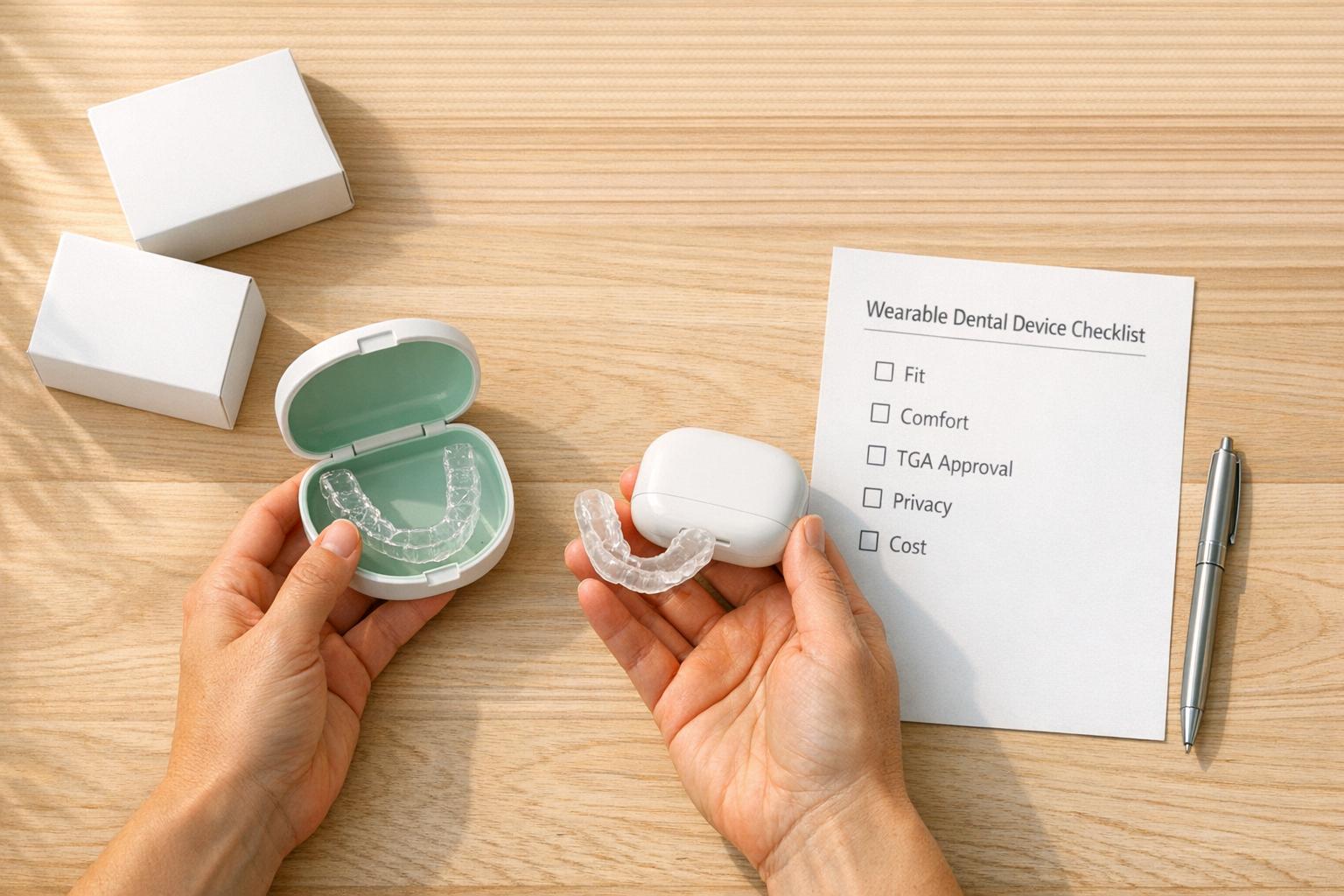
Checklist for Choosing Wearable Dental Devices
Checklist for Choosing Cloud AI Platforms in Dentistry
Complete Smiles Bella VistaAccepts All Major Health Funds, Including