





Top Uses of Lasers in Soft Tissue Dentistry
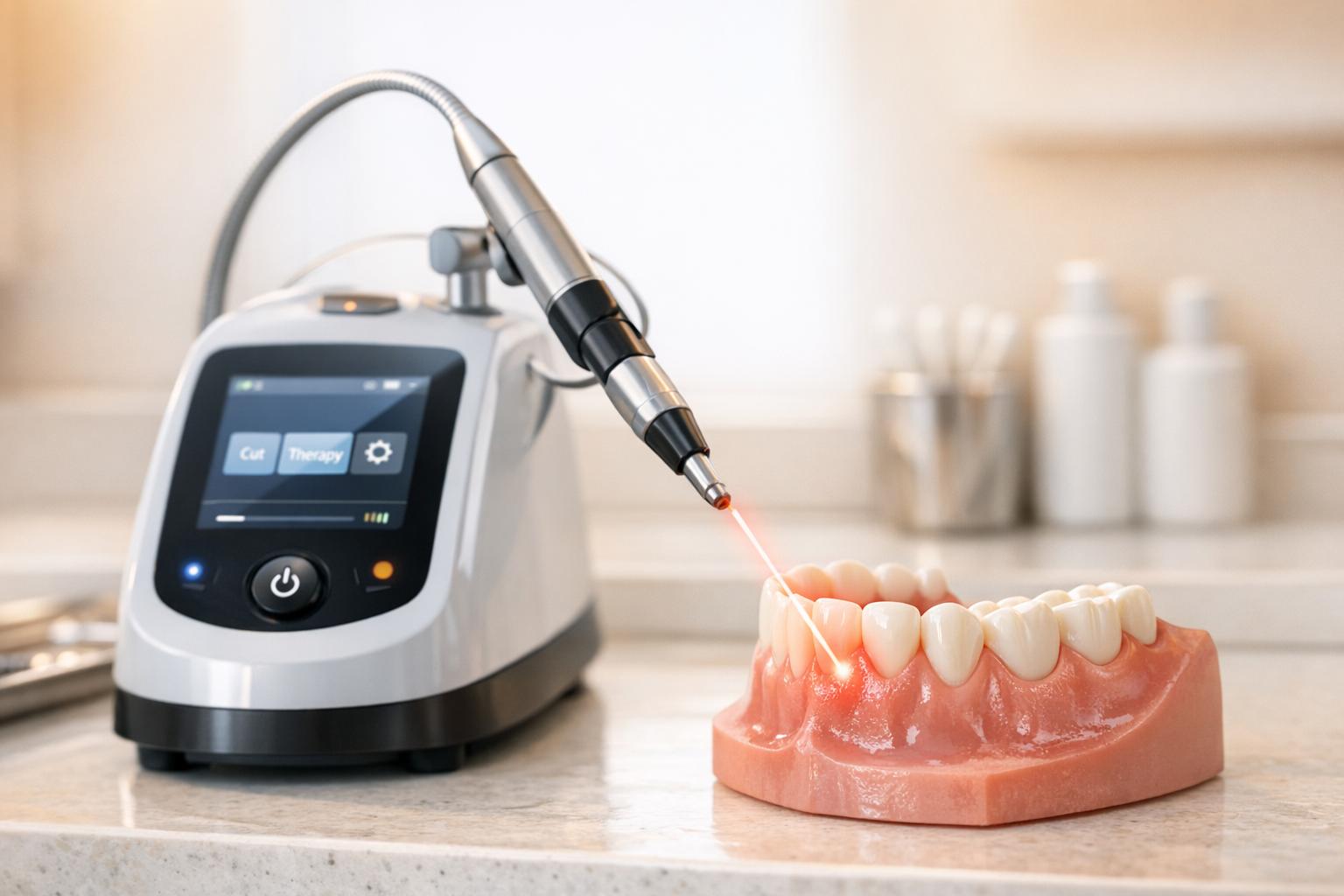
Lasers have transformed dental care, offering precise, efficient, and gentler alternatives for soft tissue treatments. From reshaping gums to treating gum disease, lasers reduce discomfort, minimise bleeding, and speed up recovery compared to older methods. Here’s a quick rundown of their main applications:
- Gum Reshaping: Corrects "gummy smiles" with precision, reducing recovery time.
- Tissue Release (Frenectomy): Improves speech and feeding with minimal discomfort.
- Crown Lengthening: Exposes more tooth surface for restorative work.
- Gum Disease Treatment: Targets bacteria in periodontal pockets effectively.
- Biopsies and Lesion Removal: Removes tissue with accuracy and less scarring.
- Impacted Wisdom Teeth Treatment: Removes gum flaps with less swelling.
- Oral Ulcers and Cold Sores: Eases pain and accelerates healing.
- Pulpotomy in Root Canal Therapy: Preserves tooth vitality with less pain.
- Teeth Whitening: Achieves fast, noticeable results.
- Cosmetic Gum Contouring: Refines gum lines for a better smile.
Lasers not only improve outcomes but also reduce the need for anaesthesia and sutures, making dental visits less daunting. Though costs can be higher due to advanced equipment, the convenience and results often outweigh the expense.
Laser Use in Dentistry Today – DenMat Dental Webinar
sbb-itb-2be92ed
1. Gum Reshaping (Gingivectomy)
Gum reshaping, also known as gingivectomy, is a procedure designed to address excess gum tissue that creates a "gummy smile." Instead of relying on traditional scalpels, this technique uses lasers to gradually vaporise the tissue, allowing for precise contouring of the gum line [7].
Precision and Accuracy
Lasers operate at specific wavelengths, targeting and vaporising unwanted gum tissue with remarkable precision. At the same time, they cauterise blood vessels, which minimises bleeding and ensures a symmetrical gum line [1] [2] [6] [8].
Minimally Invasive Approach
By replacing the scalpel with laser technology, this method eliminates the need for stitches and often requires little to no sedation or local anaesthesia. The high-energy laser beam also sterilises the treatment area, effectively reducing bacteria [1] [2] [6].
Recovery and Healing
A pilot study conducted in April 2023 revealed that 75.6% of patients experienced complete healing within the first week, a stark contrast to the four-week recovery period typical of scalpel-based methods [9] [10]. While patients are usually advised to stick to a soft diet for a few days, most can return to their normal routines almost immediately [6].
Costs and Insurance Considerations
The advanced equipment required for laser gum reshaping tends to make it more expensive than traditional procedures. Additionally, since this treatment is often considered cosmetic, it may not be covered by standard health insurance policies [2] [6]. Despite these costs, the benefits of laser technology in soft tissue procedures are evident and will be further discussed in other applications.
2. Tissue Release (Frenectomy)
Beyond gum reshaping, lasers play a vital role in performing frenectomies. This procedure involves removing excess frenum tissue, which can sometimes hinder movement, affect speech, complicate feeding, or even contribute to gaps between teeth.
Precision and Accuracy
Lasers excel at targeting specific tissue components like water, haemoglobin, or melanin. They also seal blood and lymphatic vessels during the procedure, ensuring a clean surgical field and minimising unintended damage to surrounding areas [11]. For instance, CO₂ lasers, with a wavelength of 10,600 nm, are about 1,000 times more effective at tissue absorption than diode lasers. Meanwhile, erbium lasers, known for their high water absorption, are 10,000 times more efficient at cutting soft tissue [11]. This level of precision is hard to replicate with traditional scalpels and significantly reduces patient discomfort while speeding up recovery.
Minimally Invasive
One of the standout features of laser frenectomy is its minimally invasive nature. Since the laser cauterises as it cuts, sutures are often unnecessary. Research shows that only 40% of patients treated with lasers need local anaesthesia, compared to 100% of those undergoing scalpel-based procedures [15]. Additionally, the high-energy light beam sterilises the area, reducing the risk of postoperative infections. This is particularly beneficial for infants and children, as the quick and less painful process can immediately improve feeding and speech [13]. The procedure’s minimally invasive approach promotes faster healing and less discomfort.
Postoperative Healing Time
A study involving 445 patients highlighted the benefits of refined CO₂ laser techniques, showing reduced postoperative pain, less bleeding, and fewer surgical revisions [11]. Healing is typically complete within 7 to 14 days [12]. During recovery, patients might notice a yellow-brown hue caused by fibrin deposition – a normal part of the healing process [12]. To ensure smooth recovery, patients are advised to avoid brushing the treated area and steer clear of acidic, salty, or spicy foods during the initial healing phase [12].
3. Crown Lengthening
Crown lengthening is a dental procedure that reshapes gum tissue and bone to expose more of the tooth’s surface. It’s often performed before placing crowns or veneers or to address what’s commonly referred to as a “gummy smile.” With advancements in laser technology, this procedure has become far less invasive. Dentists can now perform flapless crown lengthening, using lasers to recontour the gum line and bone crest without making incisions [8].
Lasers used in crown lengthening offer the same precision and reduced trauma seen in other soft tissue procedures, making them a game-changer for restorative dentistry.
Precision and Accuracy
One of the standout benefits of lasers is their precision. They provide superior haemostasis, which means a clear, blood-free field for dentists to work in [8][5][16]. By removing tissue layer by layer, lasers allow for precise adjustments without the need for a scalpel [7]. This precision reduces the risk of accidental damage to surrounding healthy tissue, a challenge often faced with traditional instruments [2]. For example, erbium lasers can be used to raise the bone crest approximately 3 mm beyond the new gingival margin, ensuring the proper biologic width is maintained [8].
"Using lasers we can alter the mucosa and gingival tissues without causing bleeding, which provides better visualization, and recontour the osseous crest in a ‘flapless’ procedure." – Robert A. Strauss DDS, MD [8]
Diode lasers offer additional versatility, as they are safe to use around dental implants and metal restorations [1]. This level of precision also supports the minimally invasive nature of laser crown lengthening.
Minimally Invasive
Laser crown lengthening eliminates the need for traditional tools like scalpels and drills [17][19]. Instead, a focused light beam removes excess gum tissue while cauterising blood vessels at the same time, which significantly reduces bleeding and swelling [17][20]. The laser also sterilises the treatment area, cutting down on the risk of postoperative infections [18][1]. Another bonus? Laser energy reduces sensory nerve activation, meaning patients often require less anaesthesia [17][1]. The entire procedure usually takes between 30 and 60 minutes [18].
Postoperative Healing Time
Recovery after laser treatment is typically quicker than with traditional methods. Lasers cause less tissue disruption and stimulate cellular activity, which promotes faster healing [17][1]. Most patients experience minimal discomfort, and the initial healing phase usually lasts just one to two weeks. Since the surrounding healthy tissue is left largely undisturbed, patients can return to their normal routines sooner than they would after conventional surgery.
Cost of Procedure
In Australia, the cost of laser gum treatment generally ranges from $500 to $550 per quadrant, while a full-mouth laser restoration can cost between $2,000 and $2,200 [17]. These procedures tend to be more expensive than traditional methods, largely due to the high cost of laser equipment, which can range from $6,000 to $100,000 [2]. However, the reduced discomfort, faster recovery, and improved results make the extra expense worthwhile for many patients, highlighting the transformative potential of laser technology in dental care.
4. Gum Disease and Periodontal Pocket Treatment
Severe gum disease impacts 10–15% of people worldwide, often leading to tooth loss if not addressed [21]. Building on earlier discussions about laser applications, treating periodontal pockets shows how lasers can tackle more complex soft tissue issues. Depending on the treatment’s requirements, lasers like Diode, Nd:YAG, and Er:YAG are used for tasks such as removing infected tissue and cleaning subgingival calculus [21][23].
Precision and Accuracy
Lasers operate using specific wavelengths to target diseased tissue with precision, reaching deep into periodontal pockets to clear areas packed with bacteria like Porphyromonas gingivalis [1][23]. Their fibre-optic tips can access spots that traditional tools – like curettes or ultrasonic scalers – often can’t [21][23].
Research highlights the benefits of combining diode lasers with ultrasonic scaling, showing a drop in bacteraemia rates to 36%, compared to 68% when ultrasonic scaling is used alone [23]. Additionally, lasers seal blood vessels and nerve endings during treatment, creating a bloodless field that improves visibility and control for the clinician [1][22][23]. This level of precision allows for a less invasive approach to treating periodontal pockets.
"Lasers have the potential advantages of bactericidal effect, detoxification effect, and removal of the epithelium lining and granulation tissue, which are desirable properties for the treatment of periodontal pockets." – Sugumari Elavarasu, Department of Periodontics, JKK Nattaraja Dental College [22]
Minimally Invasive
Unlike traditional surgical methods, laser treatments eliminate the need for scalpels and sutures by sealing blood vessels and lymph channels as they cut [1][3][22]. Patients often report less discomfort and require less local anaesthesia compared to mechanical procedures [1][22]. Lasers also sterilise the treatment area, lowering the risk of infection [1][22]. On top of that, laser energy enhances cellular activity by boosting ATP production, which supports quicker tissue repair and regeneration [3][22].
Postoperative Healing Time
Thanks to their gentle approach, lasers cause minimal tissue damage, which speeds up healing. This includes faster bone formation and recovery of the periodontal ligament, helping patients return to their routines sooner [21].
"The minimally invasive nature of laser therapy can result in reduced patient discomfort and faster healing times." – Dhafer Al Asmari, Department of Periodontology and Implant Dentistry, Qassim University [21]
Cost of Procedure
While laser therapy can increase the cost of periodontal treatments due to the high price of equipment, many dental professionals see it as a valuable addition to traditional scaling and root planing [3][4][21][24].
5. Biopsies and Lesion Removal
Lasers provide a precise and effective alternative to traditional scalpel methods for examining suspicious oral lesions or removing benign growths like fibromas, papillomas, or mucoceles [25]. These laser-assisted procedures bring a combination of accuracy and quicker recovery, making them an appealing option for soft tissue treatments.
Precision and Accuracy
CO₂ lasers, operating at a wavelength of 10,600 nm, are designed for extremely precise, layer-by-layer removal of tissue [3]. This focused energy targets only the affected area, leaving surrounding healthy tissue untouched [1]. For safety, a vacuum aspiration system should always be used during laser biopsies to minimise the spread of air-water spray or smoke plumes [25].
Minimally Invasive
Using lasers eliminates the physical pressure and uneven tissue edges often associated with scalpel techniques. They also sterilise the area and seal wounds as they work, reducing the need for sutures or local anaesthesia [1][3][5].
"If your dentist is well skilled, soft laser treatment offers precise tissue removal without causing any accidental or ragged removal." – Springvale Dental Clinic [1]
Postoperative Healing Time
Laser-assisted biopsies and lesion removals promote faster recovery compared to traditional scalpel surgery. By sealing blood vessels and lymphatic channels during the procedure, lasers significantly minimise postoperative swelling [27]. Healing is typically completed within days, with minimal scarring, unlike the longer recovery period associated with scalpel incisions [29].
"The laser seals the tissue, reducing the swelling and discomfort associated with traditional scalpel surgery." – Patra Watana, DMD [28]
Cost of Procedure
For dental practices, laser equipment can range from $10,000 to $80,000 [27]. While this investment often leads to higher treatment costs for patients compared to conventional scalpel biopsies, the benefits – such as reduced bleeding, faster healing, and less discomfort – make laser-assisted procedures an appealing choice for those seeking minimally invasive care.
6. Impacted Wisdom Teeth Treatment (Operculectomy)
When wisdom teeth are partially impacted, a flap of gum tissue – called an operculum – can form over part of the tooth, creating a space where food and bacteria can get trapped. To address this, an operculectomy is performed to remove the tissue and fully expose the tooth. The introduction of laser technology has made this procedure more precise and efficient.
Precision and Accuracy
Diode lasers are particularly effective for soft tissue procedures because they are absorbed by pigments like melanin and haemoglobin while sparing the tooth’s hard tissues [3][26]. This unique property allows dentists to remove excess gum tissue with pinpoint accuracy, leaving the underlying tooth unharmed. Unlike traditional scalpels, lasers create clean cuts without ragged edges, minimising tissue trauma [1]. This method enables flapless exposures, where only the necessary tissue is removed, avoiding the need to lift large sections of gum [8]. Such precision reflects broader advancements in laser-based dental treatments.
Minimally Invasive
One of the standout features of laser technology is its ability to cut and cauterise at the same time. This dual action seals blood vessels and nerve endings, reducing bleeding and often eliminating the need for sutures. For patients, this translates to less discomfort and, in many cases, little to no local anaesthesia – particularly beneficial for those who experience dental anxiety [1][2][30]. Additionally, the high-energy laser light sterilises the surgical site, killing bacteria and lowering the risk of infections like pericoronitis [1].
"Precise excision of gingival tissue… with associated haemostatic control, can often allow treatment to proceed more smoothly and quickly." – S. Parker, General Dental Practitioner [16]
Postoperative Healing Time
Thanks to its precision, laser technology minimises tissue trauma, which speeds up recovery. By sealing lymphatic vessels during the procedure, lasers help reduce postoperative swelling in the jaw area [3][14][32]. Furthermore, the process triggers photobiomodulation, a mechanism that promotes tissue regeneration and curbs inflammation [14][21].
"Lasers can precisely cut through gum tissue and bone while simultaneously sealing blood vessels, resulting in minimal bleeding and faster recovery." – Macquarie Dental [31]
Although the biological healing process for laser incisions is similar to that of clean scalpel cuts, patients often report less pain and swelling. This can make the overall recovery feel smoother and quicker [5]. The reduced bacterial presence at the surgical site also supports faster healing.
Cost of Procedure
Investing in dental laser systems can be expensive, with prices ranging from $6,000 to $100,000, compared to the relatively modest $1,000 or less for a traditional dental drill [2]. While this may lead to higher upfront treatment costs, the efficiency of the procedure – fewer appointments and shorter chair time – can help offset the expense [32]. Importantly, most dental insurance providers base reimbursements on the procedure, not the tools used, so out-of-pocket costs are often comparable to traditional methods [30].
7. Oral Ulcers and Cold Sores
Oral ulcers and cold sores are not only painful but can also be stubborn to heal. Diode laser therapy presents a modern solution that eases discomfort and speeds up recovery. This method is particularly effective for herpetic lesions (cold sores caused by HSV‑1) and aphthous ulcers (canker sores), conditions that affect a significant portion of the population. For example, recurrent herpes labialis impacts an estimated 20% to 40% of young adults [34]. Let’s explore how this targeted treatment works.
Precision and Accuracy
Diode lasers are designed to target only the affected tissue, leaving surrounding healthy areas untouched [33]. This precision is especially useful when treating cold sores during the prodromal stage – that early tingling or itching sensation before a blister fully develops. Early intervention with the laser can sometimes stop the blister from forming altogether [33]. Beyond that, the laser’s antibacterial and sterilising effects may lower the chances of the lesion recurring [33].
Minimally Invasive
One of the standout features of diode laser therapy is how quick and gentle it is. The procedure usually takes just 10 to 15 minutes and doesn’t typically require local anaesthesia or sedation. Patients often describe feeling only mild warmth during the treatment.
"The laser provides an immediate anaesthetic effect, which helps alleviate the pain associated with these lesions." – Blue Haven Dental [33]
Faster Healing
Clinical studies have shown that diode lasers significantly reduce recovery time. For example, one study found that patients treated with diode lasers healed in an average of 2.2 days, compared to 3.4 days for those using acyclovir cream. Pain duration was also shorter – 1.35 days versus 2.3 days [34]. This quicker recovery is likely due to the laser stimulating the body’s natural healing processes, such as boosting ATP production [33].
"Treatment with diode laser reduced the length of recovery time and pain severity faster than treatment with acyclovir cream." – Marieh Honarmand, Associate Professor, Zahedan University of Medical Sciences [34]
Cost Considerations
The cost of diode laser therapy can vary, and insurance coverage may not always apply, so it’s wise to confirm with your provider. However, compared to traditional treatments like acyclovir cream – which requires multiple daily applications over several days – a single laser session often provides faster relief and results. For many patients, the reduced healing time and convenience may outweigh any additional cost [33][34].
8. Pulpotomy in Root Canal Therapy
Pulpotomy, a key procedure in root canal therapy, has seen notable improvements thanks to advances in laser technology. This procedure involves removing infected pulp while preserving the healthy portion, and lasers have made it more precise and less invasive. Erbium lasers, such as Er:YAG and Er,Cr:YSGG, are particularly effective due to their ability to target water and hydroxyapatite, ensuring precise removal of diseased pulp with minimal impact on surrounding healthy tissue [35].
Precision and Accuracy
Lasers bring a level of precision to pulpotomy that traditional methods struggle to match. They create a bloodless field through superior haemostasis and limit thermal damage to a thin layer (10–50 micrometres), reducing the risk of collateral damage. Unlike drills, lasers eliminate vibrations, which not only lowers the risk of micro-fractures but also makes the experience less stressful for patients. The photothermal effect of lasers is another advantage, as it sterilises the site by vaporising bacteria, with studies showing a bacterial reduction of over 99.7% [5][36][37].
"Laser is more accurate than conventional root canal treatment that allow minimal removal of healthy dentinal tissue." – Bulletin of the National Research Centre [37]
Minimally Invasive Approach
Laser-assisted pulpotomy focuses on conserving as much of the tooth’s natural structure as possible. By removing only the infected coronal pulp and preserving the radicular pulp, this technique helps maintain the tooth’s vitality [35]. Patients often require less anaesthesia since lasers eliminate the noise and vibration associated with drills, reducing anxiety [37]. For primary teeth, CO₂ laser pulpotomy has shown clinical success rates between 91% and 98%, with a 12-month study reporting a 90% success rate compared to 68% for traditional calcium hydroxide treatments [37].
Postoperative Healing Time
The impact of lasers on healing times is somewhat mixed. On one hand, lasers can reduce postoperative pain and inflammation by sealing blood vessels and lymphatic channels [37]. However, the creation of a denatured layer may slightly delay the initial healing phase compared to traditional methods [38][4]. In a study of permanent teeth, patients treated with lasers reported significantly less postoperative pain and discomfort one week after the procedure [38].
"In comparison to scalpel incisions, laser cutting heals no faster, but may be more predictable through the control of bleeding and bacterial contamination." – S. Parker, General Dental Practitioner [5]
Cost of Procedure
One of the main drawbacks of laser-assisted pulpotomy is the high upfront cost of laser equipment compared to traditional tools [36]. While the procedure can increase overall endodontic costs for patients [4], many argue that the clinical benefits – such as precision, reduced discomfort, and lower infection risks – justify the investment.
9. Laser-Assisted Teeth Whitening
Laser-assisted teeth whitening uses a focused light to activate a peroxide-based gel, helping it penetrate deeper into the enamel for more effective stain removal [39][40]. This method stands out because it can deliver noticeable results in just a single 15-minute session, unlike traditional whitening treatments that often take weeks to show results [39].
Precision and Accuracy
One of the key benefits of lasers in teeth whitening is the level of precision they provide. Dentists can carefully control the laser’s power and exposure time, ensuring consistent outcomes. To protect the gums from irritation caused by the bleaching gel, protective coverings are used during the procedure [39]. Lasers are especially useful for tackling stubborn stains or cases that haven’t responded well to standard whitening techniques [26].
"Lasers can give your dentist greater control during dental procedures. They can help reduce discomfort, shorten treatment times and minimise complications." – Bupa Dental [40]
This precise control also makes the treatment gentler compared to some traditional methods.
Minimally Invasive
Laser-assisted whitening is a non-invasive procedure, as it doesn’t rely on abrasive tools or drills. Instead, it works by temporarily opening the pores in the enamel, allowing the whitening gel to act effectively. These pores naturally close within a day or two, and any sensitivity experienced after the procedure usually fades within this timeframe [39]. To maintain results, patients are often advised to stick to an "all-white diet" for a few days post-treatment to avoid re-staining.
Cost of Procedure
The higher price of laser whitening is largely due to the equipment involved. High-powered dental lasers can cost anywhere from $6,000 to $100,000, compared to less than $1,000 for standard tools [2]. Additionally, dentists need specialised training to operate lasers safely and effectively, including knowledge of wavelengths and protective measures [40].
However, laser whitening can be more economical in the long run since fewer sessions are needed to achieve the desired results. It’s worth noting that dental insurance typically bases reimbursement on the type of treatment rather than the method used [30].
In Australia, clinics like Complete Smiles Bella Vista offer laser-assisted teeth whitening as part of their advanced cosmetic dental services, providing patients with cutting-edge care options.
10. Cosmetic Gum Contouring
Unlike procedures aimed at improving oral function, cosmetic gum contouring is all about refining the appearance of your smile. Using advanced laser technology, this treatment reshapes uneven or excessive gum lines with remarkable precision. Instead of traditional scalpels, lasers are employed to vaporise soft tissue, giving dentists the ability to sculpt the gum line with unparalleled control. It’s a popular choice for those looking to address "gummy smiles" or asymmetrical gums, further highlighting how versatile laser dentistry has become [7].
Precision and Accuracy
One of the standout benefits of laser gum contouring is its precision. Lasers seal blood vessels and nerve endings during the procedure, creating a bloodless field and improving visibility for the dentist. This clear view allows for highly accurate tissue removal, avoiding the uneven edges that scalpels can sometimes leave behind. Before starting, dentists use a periodontal probe to map out the desired gum line, ensuring the final result is symmetrical and well-balanced. The laser works in fine layers, removing only the targeted tissue without harming nearby healthy gums or tooth enamel.
Minimally Invasive
The minimally invasive nature of laser gum contouring is another key advantage. Since the laser vaporises tissue while simultaneously sealing the area, there’s no need for sutures [6]. In many cases, the procedure can even be performed without local anaesthesia [1][2]. Additionally, the laser sterilises the area during treatment, reducing the risk of post-procedure infections [6][1].
Postoperative Healing Time
Recovery after laser gum contouring is typically quick and straightforward. Most patients report mild discomfort and an initial recovery period of about 24 hours [44]. Full healing of the gum tissue usually takes one to two weeks, but many people can resume work or school within just a day or two [43][44]. During recovery, it’s recommended to stick to soft foods for the first few days and avoid brushing or flossing directly on the treated area [42][43]. Using an antibacterial mouthwash or saltwater rinse, along with lukewarm foods, can further protect the sensitive area while it heals [42].
Cost of Procedure
In Australia, laser gum contouring generally costs between $200 and $300 per tooth [41]. The final price can vary depending on the complexity of the case and whether the procedure is combined with other treatments [41][6]. Since gum contouring is often considered a cosmetic procedure, dental insurance may not cover it unless it’s deemed medically necessary due to health-related reasons [6].
Laser vs Traditional Methods
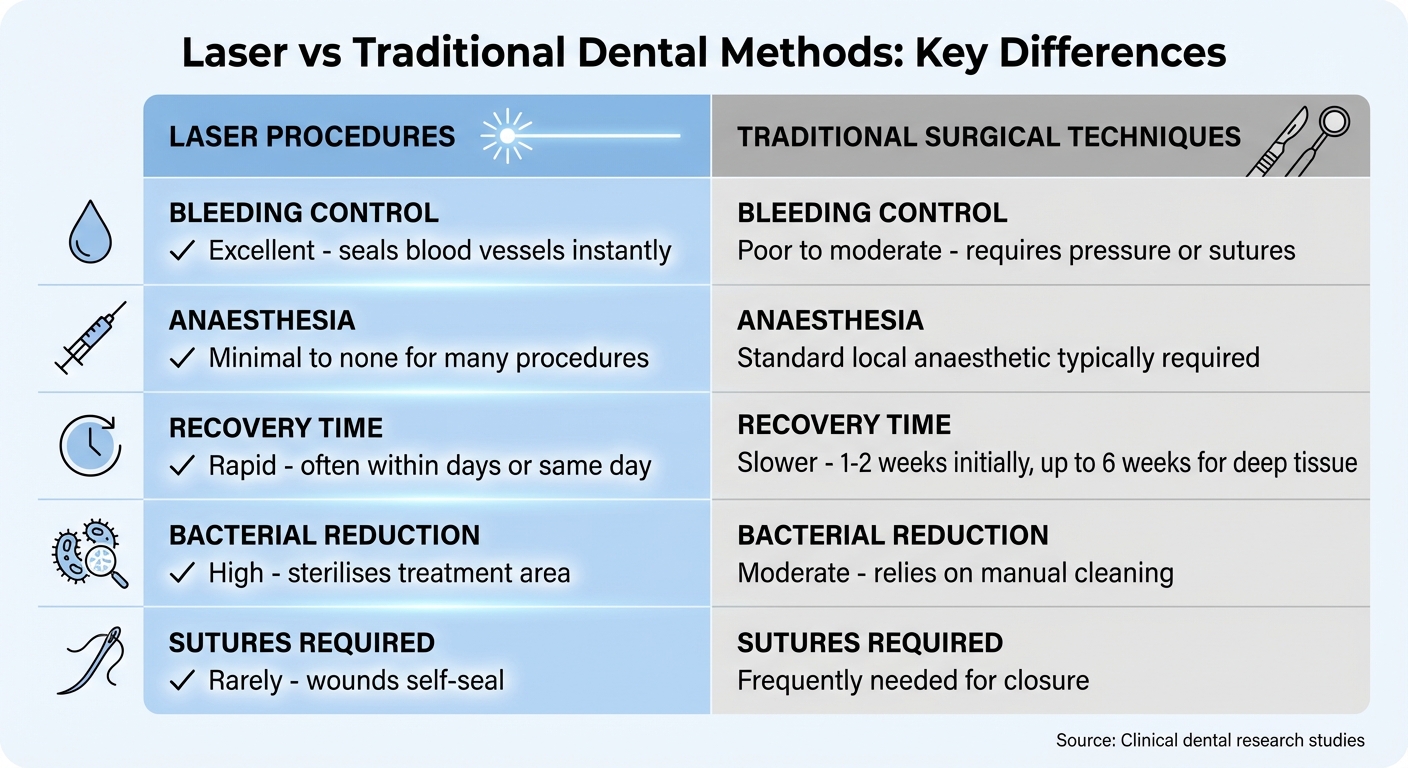
Laser vs Traditional Dental Methods Comparison
Laser-assisted procedures bring a level of precision and efficiency that often outperforms conventional scalpel techniques. One standout benefit is bleeding control. Lasers seal blood vessels and lymphatic channels instantly as they cut, significantly reducing bleeding compared to traditional methods, which often require pressure or sutures to manage blood flow [1][3]. This creates a dry surgical field, improving visibility for dentists during the procedure [8]. This precision also impacts other treatment factors, such as the need for anaesthesia.
Laser treatments generally require less anaesthesia. Many procedures performed with lasers are less painful and avoid the discomfort caused by the vibration and pressure of traditional dental tools. As a result, minimal or no local anaesthetic is often needed [1][13]. By contrast, conventional techniques typically demand standard local anaesthesia to manage the discomfort caused by drills or scraping instruments [1][45].
Recovery time is another area where lasers excel. Patients often experience reduced swelling and avoid the need for sutures, which speeds up recovery. While traditional scaling may require 4–6 weeks for full healing, laser procedures allow patients to resume normal activities the same day, with complete healing often occurring within a few weeks [13][45]. Although the biological healing rates might be similar for both methods, the recovery process with lasers is generally smoother, offering greater comfort and better infection control.
One major advantage of laser procedures is bacterial reduction. Lasers sterilise the treatment area while sealing wounds [1][13]. Traditional methods rely on manual cleaning and chemical disinfectants, which lack the sterilising power of lasers [45].
"Lasers have a sterilisation effect on the gums, reducing the chances of infection. The laser beams are strong enough to kill any bacteria lurking in the gums or gum tissue." – Springvale Dental Clinic [1]
| Feature | Laser Procedures | Traditional Surgical Techniques |
|---|---|---|
| Bleeding Control | Excellent; seals blood vessels instantly [1][3] | Poor to moderate; requires pressure or sutures [1] |
| Anaesthesia | Minimal to none for many procedures [1][13] | Standard local anaesthetic typically required [1][45] |
| Recovery Time | Rapid; often within days or same day [13][45] | Slower; 1–2 weeks initially, up to 6 weeks for deep tissue [45] |
| Bacterial Reduction | High; sterilises treatment area [1][13] | Moderate; relies on manual cleaning [45] |
| Sutures Required | Rarely; wounds self-seal [1][3] | Frequently needed for closure [1] |
Conclusion
Laser technology has reshaped soft tissue dentistry by delivering precise treatments with minimal discomfort and improved efficiency. Its unique ability to cut while sealing blood vessels, sterilise the treatment site, and protect surrounding healthy tissue results in less bleeding, a lower risk of infection, and quicker recovery times. Many procedures now require little to no anaesthesia, reducing dependency on traditional numbing methods.
Since receiving FDA approval in 1990 [3], laser therapy has been supported by systematic reviews [25], which highlight significantly less post-operative discomfort compared to scalpel-based techniques. As researcher Abdul Qadir notes:
"Laser technology in clinical dentistry practice is currently at an advanced stage of development and has a bright future." – Abdul Qadir, Researcher [25]
With this strong foundation of evidence, dental providers like Complete Smiles Bella Vista are leveraging modern laser technology to deliver superior treatment outcomes. This progress underscores the broader shift in Australian dental care towards advanced, patient-centred approaches, marking an important leap forward in oral hygiene practices.
FAQs
How do lasers help speed up recovery after dental procedures?
Lasers offer a level of precision in dental procedures that traditional tools like scalpels simply can’t match. This accuracy means less damage to surrounding tissues, resulting in reduced post-operative pain, a lower chance of infection, and a quicker healing process.
Another major advantage is their ability to achieve immediate haemostasis – essentially stopping bleeding on the spot. This not only makes the procedure itself more comfortable but also contributes to a smoother and faster recovery. By cutting down on discomfort and recovery time, lasers are reshaping how soft tissue dental treatments are handled.
Does private health insurance cover laser dental treatments?
When it comes to laser dental treatments in Australia, private health insurance might cover the costs – but it all depends on your specific policy and the type of procedure. Each insurer has different rules, and coverage often comes with limitations or waiting periods.
To know exactly what’s included, it’s worth digging into your health fund policy or reaching out to your insurer directly. Make sure to ask about the specific treatment you’re considering, as it could be classified under general dental, major dental, or even another category. This way, you’ll have a clearer idea of any potential out-of-pocket expenses.
Why is laser gum contouring considered a minimally invasive option?
Laser gum contouring is a modern technique that reshapes gum tissue using a focused light beam instead of traditional scalpels or sutures. This approach offers several benefits: it reduces bleeding, minimises discomfort, and often eliminates the need for anaesthesia.
Thanks to the precision of laser technology, tissue damage is kept to a minimum, which means quicker healing and a lower chance of complications after the procedure. It’s a great option for those seeking a more efficient and gentle way to enhance their gumline.
Related Blog Posts
- Laser Dentistry for Pain Relief
- Advances in Gum Grafting Materials and Techniques
- How Dentists Evaluate Patients For Laser Gum Surgery
- Laser Gum Surgery Recovery: What to Expect
Important Notice: Any surgical or invasive procedure carries risks. Before proceeding, you should seek a second opinion from an appropriately qualified health practitioner.
Individual results may vary. The information provided in this article is for educational purposes only and does not constitute medical advice.
Checkout Related Blogs




Get in touch with us
For more information, call us now to start feeling better. Or fill the form below to make appointment
The Latest News from Complete Smiles
How to Clean Clear Plastic Retainers
Checklist for Choosing Wearable Dental Devices
Checklist for Choosing Cloud AI Platforms in Dentistry

Complete Smiles Bella VistaAccepts All Major Health Funds, Including





