





Ultimate Guide to Local Anaesthesia in Endodontics
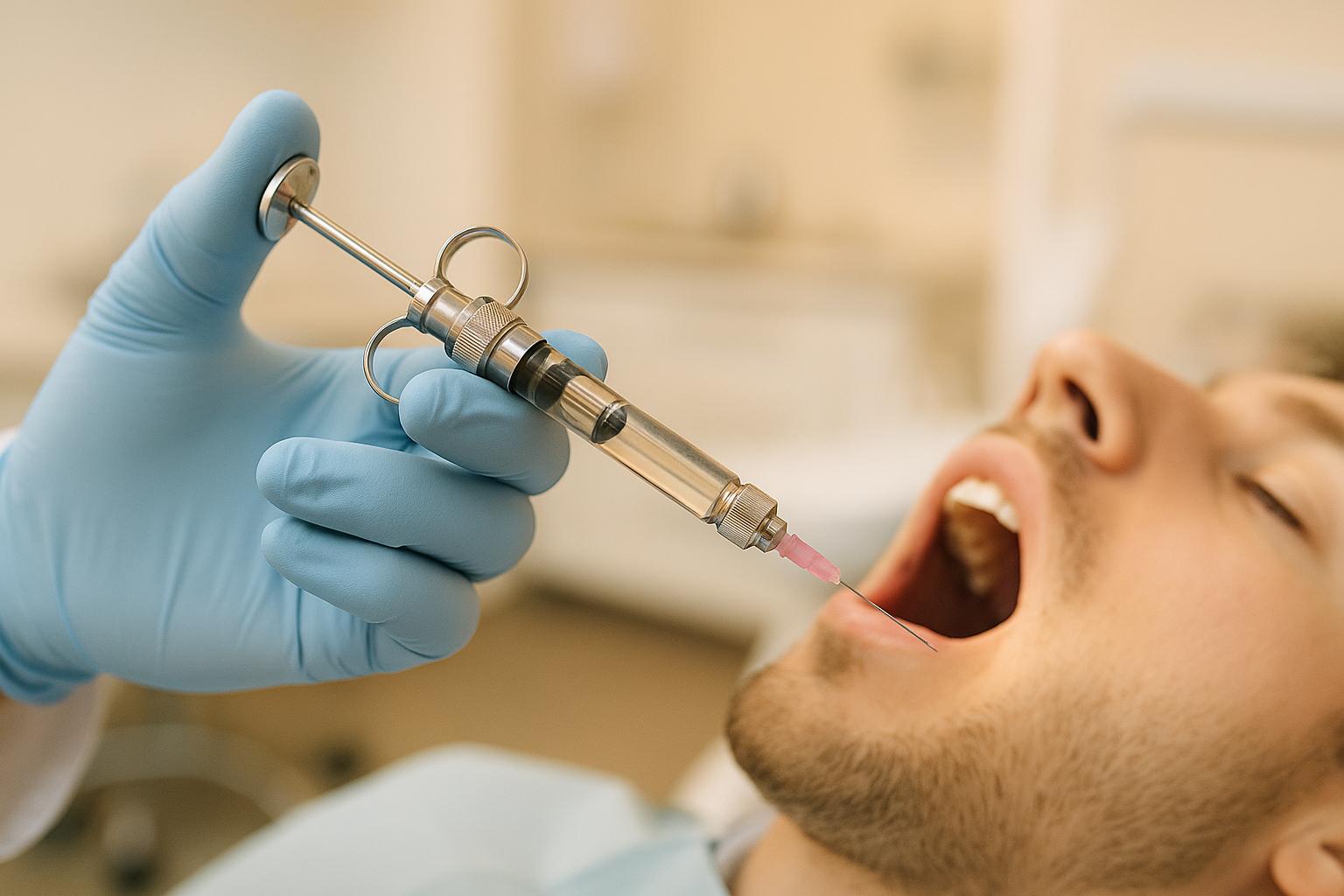
Local anaesthesia is the backbone of pain-free dental procedures, especially in endodontics like root canals. It works by blocking pain signals from nerves to the brain, ensuring comfort during treatment. However, achieving effective anaesthesia can be challenging due to factors like inflamed tissues, anatomical variations, or patient-specific conditions. Here’s what you need to know:
- Common Challenges: Dense bone, accessory nerves, and inflamed pulp (as in irreversible pulpitis) can reduce anaesthetic effectiveness. For instance, standard nerve blocks succeed only 25–48% of the time in such cases.
- Anaesthetic Choices: Lidocaine is reliable and widely used, while articaine offers better tissue penetration and is ideal for dense bone areas. Mepivacaine suits patients with cardiovascular concerns as it lacks vasoconstrictors.
- Techniques: Primary methods include infiltration (better for upper teeth) and nerve blocks (for lower teeth). Supplemental options like intraosseous or intraligamentary injections help in difficult cases.
- Patient Considerations: Factors like anxiety, allergies, or medical conditions (e.g., pregnancy, liver issues) influence anaesthetic choice and technique.
- Pain Management: Buffered anaesthetics, premedication with NSAIDs, or nitrous oxide sedation can improve outcomes in complex cases.
- Safety: Thorough patient evaluation, slow injection techniques, and emergency preparedness are vital to avoid complications like allergic reactions or nerve injuries.
Types of Local Anaesthetic Agents Used in Endodontics
Common Agents: Lidocaine, Articaine, and Others
Local anaesthetics like lidocaine, articaine, and mepivacaine are widely used in endodontics, each offering specific advantages depending on the clinical situation[2].
Lidocaine is a go-to choice for many dental procedures, thanks to its quick onset and dependable duration. Its long-standing safety record makes it a staple in Australian dental practices[2].
Articaine stands out for its superior ability to penetrate tissues, which is especially useful in areas like the mandibular molars where dense cortical bone can be a challenge. However, caution is necessary when using articaine for mandibular nerve blocks due to a slightly higher risk of paraesthesia[2].
Mepivacaine is often chosen for patients who need anaesthetic without vasoconstrictors, such as those with cardiovascular issues. Its shorter duration is also helpful for quick procedures or when patients prefer faster recovery from numbness[2].
| Anaesthetic Agent | Onset Time | Duration | Key Characteristics | Best Clinical Use |
|---|---|---|---|---|
| Lidocaine | 2–5 minutes | 1–2 hours | Reliable safety, rapid onset | Routine endodontic procedures |
| Articaine | 2–5 minutes | 1–3 hours | Excellent tissue penetration | Cases requiring enhanced diffusion |
| Mepivacaine | 2–5 minutes | 45–90 minutes | No vasoconstrictors available | Cardiovascular-sensitive patients |
Buffered anaesthetic formulations are also gaining popularity. By aligning with the body’s natural pH, these formulations reduce injection discomfort and speed up the onset of anaesthesia, improving the patient experience[2][3].
When selecting an anaesthetic, it’s crucial to consider patient-specific factors like allergies and medical history.
Choosing Anaesthetics for Allergies and Medical Conditions
While the properties of each anaesthetic agent are important, the patient’s health and medical background ultimately guide the safest choice. Reviewing a detailed medical history is essential to avoid complications. Allergic reactions to local anaesthetics are rare and usually linked to either the amide or ester class. If a patient has a confirmed allergy to amide anaesthetics, an ester-based alternative may be used. For cases where both classes are unsuitable, referral to a specialist or alternative pain management strategies is necessary[1].
Certain medical conditions and life stages also influence anaesthetic selection:
- Pregnancy and breastfeeding: Lidocaine, classified as Category A, is the safest option, with extensive research supporting its use. Articaine and mepivacaine are less studied in these cases and are reserved for when no other options are available[1].
- Cardiovascular concerns: To minimise cardiac risks, choose agents with low vasoconstrictor concentrations or those without adrenaline, such as plain mepivacaine[1].
- Liver dysfunction: Since most amide anaesthetics are metabolised in the liver, extra caution is required. Articaine, partially excreted through the kidneys, might be a better choice, but dose adjustments and medical advice are essential[1].
- Age considerations: For children, dosages should be carefully calculated based on body weight, with a preference for agents that act quickly and wear off sooner. In elderly patients, reduced doses are often necessary due to slower liver and kidney function[1].
The guiding principle is to use the smallest effective dose while closely monitoring the patient. Clinics like Complete Smiles Bella Vista exemplify this approach, combining detailed patient assessments with tailored anaesthetic choices to ensure safety and comfort.
Local Anesthetics | Injections and Techniques | INBDE, ADAT
Main Anaesthetic Techniques in Endodontics
When performing endodontic procedures, selecting the right anaesthetic agent is just the beginning. The techniques used to administer the anaesthetic play a crucial role in achieving effective and reliable numbness.
Primary Techniques: Infiltration and Nerve Blocks
Endodontic anaesthesia typically relies on two main approaches: infiltration anaesthesia and nerve block techniques.
Infiltration anaesthesia involves injecting the anaesthetic solution near the tooth’s apex. From there, it diffuses through the bone to reach the nerve endings. This technique works particularly well for upper teeth, as the maxilla’s porous bone allows for easier diffusion. The process involves applying a topical anaesthetic, injecting near the tooth apex, aspirating to avoid intravascular injection, and then slowly depositing the solution.
Nerve block techniques, such as the inferior alveolar nerve block (IANB), are commonly used for lower teeth. Since the mandible has denser cortical bone, infiltration may not be as effective here. Instead, the anaesthetic is deposited near the mandibular foramen to numb a larger region. This process requires careful identification of anatomical landmarks like the coronoid notch and the pterygomandibular raphe, followed by aspiration and slow injection.
While the IANB has a success rate of 80–85% in healthy teeth, its effectiveness drops significantly – down to 25–48% – in cases of symptomatic irreversible pulpitis [4]. Both techniques have their challenges: infiltration can struggle with dense bone or inflamed tissues, while nerve blocks may fail due to anatomical variations, accessory innervation, or changes in tissue pH caused by infection. In patients with bleeding disorders, infiltration is often preferred as it reduces the risk of haematoma and potential airway complications.
When these primary methods aren’t enough, additional techniques come into play to ensure complete anaesthesia.
Additional Techniques for Complex Cases
For more challenging situations, supplemental techniques can help overcome the limitations of standard methods, especially when dealing with inflamed or resistant tissues.
- Intraligamentary injections deliver anaesthetic directly into the periodontal ligament space. This method provides rapid onset and is ideal for single-tooth anaesthesia or as a backup when other techniques fall short. However, it may cause some post-injection discomfort and offers only a short duration of numbness.
- Intraosseous injections involve injecting the anaesthetic directly into the cancellous bone using specialised equipment. This technique provides immediate anaesthesia and is highly effective in difficult cases. However, it carries a risk of transient tachycardia due to the rapid absorption of vasoconstrictors, so close patient monitoring is essential.
- Intrapulpal injections are used as a last resort when other methods fail. The anaesthetic is injected directly into the pulp chamber, providing almost instant relief by directly inhibiting the nerve. While effective, this approach can cause brief but sharp pain during administration.
For cases where standard nerve blocks don’t work, alternative block techniques can be considered. The Gow-Gates technique offers a higher success rate and a lower risk of positive aspiration, though it has a slower onset time of 5–25 minutes. The Vazirani-Akinosi technique, on the other hand, is a closed-mouth approach that’s particularly useful for patients with trismus or when anatomical landmarks are unclear.
| Technique | Best Used For | Onset Time | Key Advantage | Main Limitation |
|---|---|---|---|---|
| Intraligamentary | Single-tooth anaesthesia | Immediate | Rapid onset | Short duration |
| Intraosseous | Cases where other methods fail | Immediate | Highly effective | Requires special equipment |
| Intrapulpal | Exposed pulp cases | Immediate | Instant relief | Can be painful initially |
| Gow-Gates Block | Cases where IANB fails | 5–25 minutes | Higher success rate | Slower onset |
Reducing Patient Discomfort
Ensuring patient comfort during anaesthetic administration is just as important as achieving effective numbness. Several strategies can help minimise discomfort:
- Topical anaesthetics: Apply for 1–2 minutes to numb the mucosal surface before injection.
- Slow injection techniques: Using a fine-gauge needle and injecting at a gradual rate (around 1 mL per minute) reduces tissue pressure and discomfort.
- Computer-aided delivery systems: Devices like The Wand control injection rates precisely, reducing tissue distension and pain.
- Vibration devices: Based on the gate control theory of pain, these devices distract nerve pathways, making the injection process feel less intense.
Warming the anaesthetic to body temperature and using buffered formulations adjusted to physiological pH can also help reduce pain and speed up the anaesthetic’s onset. For anxious patients, options like nitrous oxide sedation or oral anxiolytics can make the experience more comfortable and manageable.
sbb-itb-2be92ed
Managing Difficult Cases: Getting Deep Anaesthesia
Achieving deep anaesthesia in patients with symptomatic irreversible pulpitis can be tricky, even with standard techniques. While a conventional inferior alveolar nerve block (IANB) works 80–85% of the time in normal cases, its success rate drops dramatically to just 25–48% in inflamed teeth[4][3]. The reason? Inflammation increases nerve sensitivity and lowers tissue pH, making it harder for anaesthetics to work effectively. To overcome these hurdles, adjustments in both the anaesthetic formulation and delivery are essential.
Buffered Anaesthetics and Higher Volumes
Buffered anaesthetics, which are adjusted to align with the body’s natural pH levels, can make a big difference. These solutions not only reduce the sting of the injection but also speed up the onset of anaesthesia[2]. This is especially helpful in inflamed tissues where the acidic environment can weaken the effectiveness of standard anaesthetic formulations.
Another strategy is to increase the anaesthetic dose. For example, using two cartridges for mandibular posterior teeth can help cover more nerve branches, including accessory ones. While this alone may not guarantee complete success, it creates a stronger foundation for additional techniques. Of course, it’s crucial to stay within safe dosage limits to avoid systemic toxicity[3]. If these adjustments don’t completely solve the problem, supplemental pain management methods come into play.
Additional Pain Management Techniques
When buffered solutions and higher volumes aren’t enough, supplemental strategies can step in to fill the gap. Preoperative medications, like non-steroidal anti-inflammatory drugs (NSAIDs), can reduce inflammation and have been shown to improve IANB success rates in patients with symptomatic irreversible pulpitis[3]. For patients dealing with anxiety, anxiolytic medications can be helpful, as lowering anxiety often reduces pain perception during procedures. Nitrous oxide is another option, offering conscious sedation that eases both anxiety and discomfort without interfering with the effectiveness of local anaesthetics[3].
To ensure that profound anaesthesia has been achieved, electric pulp testing (EPT) can be used. This tool objectively measures the tooth’s response before and after anaesthetic administration, giving clinicians a clear indication of success[6].
If the initial IANB fails, a step-by-step approach can guide further management. A second injection with a higher volume may be tried first. If pain persists, a buccal infiltration using articaine can provide additional coverage. When these methods still don’t work, more targeted techniques – such as intraosseous or intraligamentary injections – can be employed. As a last resort, an intrapulpal injection may be used once the pulp chamber is accessed[4][8].
Safety Guidelines and Best Practices
Administering local anaesthesia safely requires careful planning, thorough patient evaluation, and strict adherence to clinical protocols. While complications are uncommon, being well-prepared and managing risks effectively can help prevent adverse events and ensure positive patient outcomes.
Patient Assessment and Medical History Review
A detailed medical history is the foundation of safe anaesthesia use. It’s important to check for allergies, past dental experiences, and current medications. Patients should also be asked about any unusual reactions to previous injections or dental treatments.
Medications can influence the choice of anaesthetic. For instance, anticoagulant therapies like warfarin, dabigatran, or aspirin increase bleeding risks during some procedures. Mandibular blocks are generally safe for patients on anticoagulants[1]. However, for those with inherited bleeding disorders, such as haemophilia, local infiltration techniques are safer than block anaesthesia, as the latter can lead to intramuscular haematomas and potential airway issues[1].
For patients with cardiovascular conditions, anaesthetics containing vasoconstrictors require extra care. Those with uncontrolled hypertension, a recent heart attack, or significant arrhythmias may need modified approaches or a specialist’s input. Recording baseline vital signs is also helpful for monitoring during the procedure.
Systemic conditions affecting the liver or kidneys can impact how drugs are processed. For example, liver diseases may slow the metabolism of amide anaesthetics like lidocaine, while kidney issues can delay drug elimination. These situations may call for adjusted doses or alternative techniques.
Anxiety levels should also be assessed. Patients with severe dental anxiety or needle phobia might benefit from premedication or nitrous oxide sedation to make the experience more comfortable.
Once the assessment is complete, practitioners should be prepared to address any complications that may arise.
Handling Potential Complications
Quickly recognising and managing complications is critical for patient safety. Whether it’s a minor issue or a more serious event, a prompt and appropriate response ensures better outcomes.
Allergic reactions, though rare with amide anaesthetics, can range from mild symptoms to severe anaphylaxis. Often, what appears to be an allergy is actually a vasovagal response or a reaction to preservatives. If an allergic reaction occurs, stop the procedure immediately, provide oxygen, and administer antihistamines or adrenaline as needed. Emergency protocols should be in place, and all staff must be trained in basic life support.
Haematomas can result from accidental puncture of blood vessels during injection. Small haematomas can be managed with direct pressure and cold compresses. However, large or rapidly growing haematomas, especially those affecting the floor of the mouth or throat, require urgent medical attention due to the risk of airway obstruction. Preventing this involves careful injection techniques, such as aspirating before injecting and using the correct needle size.
Nerve injuries, while rare, can lead to temporary or permanent paraesthesia. Most cases resolve within weeks or months, but thorough documentation is essential. Patients should be reassured about the likelihood of recovery. If symptoms persist beyond three months, a referral to a specialist, such as an oral and maxillofacial surgeon or neurologist, may be necessary.
Intravascular injection can cause systemic toxicity or cardiovascular effects. To minimise this risk, always aspirate before injecting and deliver the anaesthetic slowly. If systemic symptoms occur, provide supportive care and monitor the patient until the effects subside.
Clinics should maintain emergency equipment and medications, including oxygen, antihistamines, adrenaline, and resuscitation supplies. Regular staff training ensures everyone is prepared to handle emergencies effectively.
Documentation and Informed Consent
Accurate documentation and informed consent are essential for safe practice and legal protection. Australian dental regulations require detailed record-keeping to demonstrate compliance with professional standards.
Records should include all relevant patient information, such as medical conditions, medications, allergies, and any previous adverse reactions. Updates should be made at every visit. Any consultations with specialists or changes to the treatment plan should also be clearly documented.
Informed consent involves explaining the purpose of local anaesthesia, its risks, benefits, and any alternatives in plain language. Patients should be informed about common risks like temporary numbness or bruising, as well as rare complications like nerve injury or allergic reactions. They should have the opportunity to ask questions and consider their options. For more complex cases or higher-risk procedures, written consent is recommended, and the process should be documented in the patient’s records.
Details such as the type of anaesthetic used, the volume administered, the injection site, and the technique employed should all be recorded. Any complications and confirmation of anaesthetic effectiveness must also be noted[6].
Clinics like Complete Smiles Bella Vista follow strict protocols for patient assessment, informed consent, and emergency preparedness. Their focus on advanced techniques and personalised care, delivered by experienced professionals, helps minimise risks and maintain high standards of safety and patient satisfaction[1]. Regular staff training and compliance with Australian dental regulations further support these best practices.
Thorough documentation not only ensures continuity of care and clear communication among the team but also provides legal protection. In the event of complications or disputes, detailed records confirm that professional standards were upheld and informed consent was obtained, reinforcing accountability in dental procedures.
Summary and Clinical Tips
Delivering effective local anaesthesia in endodontics requires a systematic approach tailored to the unique challenges of each case. From managing irreversible pulpitis to navigating anatomical complexities, these strategies can help improve outcomes.
Key Tips for Effective Local Anaesthesia
To enhance patient comfort and ensure effectiveness, always begin with topical anaesthetics and use slow injection techniques [2]. Confirm profound pulpal anaesthesia by performing electric pulp testing both before and after administering the anaesthetic [6].
Prepare for difficult cases with a structured plan. Standard inferior alveolar nerve blocks often have limited success rates (25–48%) in mandibular teeth with symptomatic irreversible pulpitis [4]. For these challenging scenarios, adopt a tiered approach: increase the anaesthetic volume first, and if needed, move to supplemental techniques. Buccal infiltration with articaine is particularly effective, achieving a 65% success rate even when nerve blocks fail [8].
Utilise advanced delivery systems. Computer-controlled anaesthesia systems regulate flow rates, ensuring consistent and less painful injections [2]. Buffered anaesthetics can further reduce discomfort and speed up the onset of anaesthesia [2].
Supplemental techniques are essential in tough cases. Techniques such as intraosseous, intraligamentary, or intrapulpal anaesthesia can be invaluable for managing pain in complex cases [4]. Reserve intrapulpal anaesthesia as a last resort for immediate relief [4].
Strategic premedication can make a difference. Administering 30–50% nitrous oxide can significantly improve success rates in cases of irreversible pulpitis [5]. Non-steroidal anti-inflammatory drugs and anxiolytic agents, when given preoperatively, can also enhance the effectiveness of injections [3].
Beyond technical precision, effective communication with patients is critical.
The Importance of Patient Communication
Clear and empathetic communication plays a vital role in reducing patient anxiety and improving their overall experience. Explaining how anaesthesia works – by blocking sodium channels to prevent pain signals – can help patients feel more at ease. It’s also useful to inform them about the temporary nature of anaesthesia, which typically lasts 1–2 hours for lidocaine and up to 3 hours for articaine [2].
Set realistic expectations. For complex procedures, let patients know that supplemental techniques might be necessary. This upfront honesty helps reduce anxiety if additional injections are required.
Proactively address anxiety. Devices that deliver gentle vibrations during injections can help distract nerves and minimise pain perception [2]. For particularly anxious patients, discussing sedation options like nitrous oxide or oral sedatives can further improve their comfort and pain control outcomes [7].
Be transparent about challenges. When treating cases like symptomatic irreversible pulpitis, explain the potential difficulties in achieving profound anaesthesia. Patients tend to appreciate honesty and are more cooperative when they understand the clinical reasoning behind additional procedures.
Complete Care in Endodontics
Comprehensive care in endodontics combines technical precision, advanced tools, and patient-centred communication.
Tailor assessments to the patient. Conduct thorough pre-treatment consultations to evaluate factors like anxiety levels, past dental experiences, and medical history. This step helps in selecting the most appropriate anaesthetic and planning the technique [2][7].
Incorporate technology thoughtfully. While computer-controlled delivery systems can improve consistency and comfort [2], they should complement – not replace – strong clinical skills and personal interaction with patients.
Commit to continuous improvement. Start with standard techniques and escalate to supplemental methods as needed to manage pain effectively, even in the most complex cases [4]. Regularly reviewing success rates and gathering patient feedback can help refine protocols and highlight areas for growth.
Practices that prioritise advanced pain management techniques, such as Complete Smiles Bella Vista for root canal therapy, demonstrate a dedication to patient comfort and clinical excellence. By combining evidence-based methods, cutting-edge technology, and open communication, pain-free endodontic treatment becomes achievable.
FAQs
What are the best strategies for ensuring effective anaesthesia in patients with symptomatic irreversible pulpitis?
Achieving effective anaesthesia for patients with symptomatic irreversible pulpitis can be tricky due to increased nerve sensitivity and inflammation. To manage this, a combination of methods is often the best approach to ensure the patient’s comfort.
Starting with a primary anaesthetic block, like an inferior alveolar nerve block, is a standard first step. To boost success rates, dentists might use supplementary techniques such as intraligamentary injections, intraosseous injections, or buccal infiltrations with anaesthetic solutions that include adrenaline. If discomfort persists, a second injection or opting for buffered anaesthetics can provide better results.
Every patient is different, so it’s crucial to adapt the technique based on factors like their pain tolerance and medical history. Clear communication throughout the procedure is key – not just to reassure the patient but also to address any concerns they might have.
How do buffered anaesthetic solutions enhance comfort during root canal procedures?
Buffered anaesthetic solutions work by adjusting the pH of the anaesthetic to align more closely with the body’s natural levels. This adjustment not only helps to reduce the discomfort often felt during injections but also allows the anaesthetic to take effect more quickly and efficiently. This means patients can experience less waiting time and more immediate relief during root canal treatments.
By reducing injection pain and enhancing the anaesthetic’s effectiveness, buffered solutions create a smoother, more comfortable experience for both patients and dentists, making the entire procedure less stressful for everyone involved.
What safety precautions should be taken when using local anaesthesia in patients with heart conditions?
When providing local anaesthesia to patients with heart conditions, extra care is necessary. Many anaesthetic formulations include adrenaline, which can influence both heart rate and blood pressure. For individuals with cardiovascular concerns, opting for anaesthetics with little or no adrenaline may help reduce potential risks.
Gathering a detailed medical history is vital to uncover any heart-related issues or medications that might interact with the anaesthetic. Additionally, careful monitoring throughout the procedure is essential to maintain safety. If you’re unsure or have specific concerns, it’s always best to discuss them with your dentist or a specialist who can offer advice tailored to your health situation.
Related Blog Posts
- What Are Electronic Dental Anesthesia Systems?
- Studies on Pain Management in Dental Extractions
- Long-Acting Local Anesthetics in Dentistry
- How Local Anaesthesia Reduces Pain During Extractions
Important Notice: Any surgical or invasive procedure carries risks. Before proceeding, you should seek a second opinion from an appropriately qualified health practitioner.
Individual results may vary. The information provided in this article is for educational purposes only and does not constitute medical advice.
Checkout Related Blogs




Get in touch with us
For more information, call us now to start feeling better. Or fill the form below to make appointment
The Latest News from Complete Smiles
How to Clean Clear Plastic Retainers
Checklist for Choosing Wearable Dental Devices
Checklist for Choosing Cloud AI Platforms in Dentistry

Complete Smiles Bella VistaAccepts All Major Health Funds, Including





