





Interactive Tools for Dental Patient Education

Interactive tools are changing how dentists explain oral health, making complex concepts easier to grasp. From 3D animations to AI-powered imaging, these tools help patients better understand their conditions and treatments, leading to improved care outcomes. Here’s what you need to know:
- Digital imaging tools like intraoral cameras and dental viewers provide clear visuals of oral health issues, boosting patient understanding and trust.
- Interactive learning platforms use 3D animations and treatment simulations to simplify procedures and reduce anxiety.
- AI-powered systems such as Overjet AI annotate X-rays with colour-coded overlays, clarifying diagnoses and increasing treatment acceptance.
- Quizzes and surveys engage patients and reinforce advice, enhancing long-term oral health habits.
These tools aren’t just about education – they improve communication, meet informed consent requirements, and support better patient outcomes. With over 70% of Australians owning smartphones, digital education is more accessible than ever. By integrating these tools, dental practices can create a more informed and confident patient experience.
Transform patient communication with the DentalHealth patient app
sbb-itb-2be92ed
Digital Imaging Tools
Digital imaging has transformed how dentists explain oral health issues, making it easier for patients to understand their conditions. Instead of relying on verbal descriptions or hard-to-decipher X-rays – which 65% of patients find challenging to interpret [7] – these tools provide a clear visual representation of what’s happening inside the mouth. Let’s explore two standout tools that improve patient understanding.
Intraoral Cameras
Intraoral cameras are compact, handheld devices that connect to chairside monitors, displaying live video or high-resolution images of teeth and gums. These cameras magnify details up to three times or more, exposing stress lines, micro-fractures, and early signs of decay [4][6]. Visual aids like these make a difference – 83% of people process and retain information better when visuals are involved [4].
One of the biggest benefits is "co-diagnosis", where dentists and patients review findings together on-screen. This shared experience improves transparency, builds trust, and encourages patients to take an active role in their oral health [4][6]. Practices using intraoral cameras often see case acceptance rates soar to 90% [4].
"Intraoral images are a powerful educational tool that clinicians can use to discuss treatment options with a patient." – Amber Auger, MPH, RDH [4]
The images captured by intraoral cameras serve multiple purposes. They create a baseline for tracking changes over time, make insurance claims easier to process, and ensure compliance documentation is thorough [4][5]. In Australia, these devices are becoming essential, with 92% of dental practices using them regularly and 37% employing them for every patient [9].
Dental Viewers
Dental viewers take a simpler, more direct approach. These portable, wireless devices provide real-time images but don’t connect to software or store photos. Their primary aim? Chairside education [6]. Patients can even hold the viewer themselves, which makes the experience more interactive and engaging.
Their simplicity is their strength. With minimal training, team members can use these viewers to highlight surface issues like calculus deposits, staining, cracks, or failing fillings – problems that X-rays might miss [6][8]. The magnification feature allows clinicians to zoom in and pause on specific areas, making issues easier to explain.
| Feature | Intraoral Camera | Dental Viewer |
|---|---|---|
| Primary Purpose | Documentation, insurance, long-term tracking | Immediate real-time patient education |
| Image Storage | Saves to practice management software | No storage; live viewing only |
| Connectivity | Connects to computer via USB or docking station | Standalone wireless handheld unit |
| Training Required | Software knowledge and integration | Minimal training required |
These tools complement each other perfectly. Dental viewers are great for quick, real-time explanations during exams, while intraoral cameras provide a lasting record for monitoring conditions and supporting treatment plans [6]. Together, they offer both immediate clarity and long-term documentation, creating a more informed and engaged patient experience.
Interactive Learning Platforms
Interactive learning platforms are changing how patients understand dental care by offering dynamic, engaging ways to learn. Unlike static images, these platforms use tools like 3D animations and treatment simulations to make complex dental procedures easy to grasp. By visually breaking down treatments into simple steps, they eliminate the need for technical language, showing patients exactly what’s happening in their mouth and what to expect during treatment.
This approach tackles a common challenge: patients tend to forget up to 90% of verbal information within an hour of leaving the dental office [12]. Visual tools provide a lasting reference, ensuring patients can revisit the information whenever they need.
3D Animated Tutorials
3D animated tutorials make the invisible visible. They offer a detailed view of tooth anatomy, showing where issues like decay or plaque occur [2]. These animations simplify complex procedures, making them easier to understand [2][10].
Beyond education, these tutorials help reduce anxiety. By clearly illustrating what will happen during a procedure, they make the process less intimidating and improve communication between patients and dentists [3]. For example, over 90% of patients watching educational content on Patient TV report feeling better prepared to discuss treatment and payment options [3].
Many platforms now allow dentists to personalise these animations. Features like screenshot capture and annotation let dentists highlight specific areas of concern and share these customised visuals with patients via email. Additionally, localised content – complete with Australian accents and tailored captions – ensures the information is accessible to a broader audience [10].
While 3D animations explain procedures, simulation tools take it a step further by showing potential results.
Treatment Simulations
Treatment simulations give patients a sneak peek at the outcomes of procedures before they begin. Whether it’s crown coverage, tooth replacement, gingival reduction, comparing teeth whitening methods, or diastema correction, these tools help patients visualise the end results. Seeing these outcomes builds confidence and encourages patients to move forward with their treatment [11].
When combined with digital imaging, simulation tools enhance co-diagnosis. Pairing intraoral images with simulations engages patients in discussions about their treatment options [3].
"When patients can clearly visualize conditions, they’re more likely to trust the diagnosis, ask meaningful questions, and move forward confidently with necessary treatments." – Mario Paganini, Senior VP of Marketing, Overjet [11]
For maximum impact, educational videos should be kept short – ideally under three minutes – to maintain attention [12]. Dentists can follow up by sending animated summaries via email or text, reinforcing in-chair conversations and encouraging adherence to treatment plans [10][3]. Together, these tools empower patients by clearly explaining procedures and showcasing expected results.
AI-Powered Education Systems
With dental practices increasingly adopting interactive tools, AI-powered systems represent a major leap forward in integrating technology with patient education. Artificial intelligence is changing how dentists explain dental X-ray findings to patients. Instead of simply pointing out vague areas on radiographs, AI systems use colour-coded overlays to highlight specific dental issues. These tools build on traditional digital imaging by adding measurable, objective data. A standout example of this innovation is Overjet AI, which is setting new benchmarks in educational imaging.
Overjet AI for Annotated X-Rays
Overjet AI transforms standard dental X-rays into easy-to-understand visual aids. By using bright colours to highlight cavities (caries), bone loss, and calculus, it simplifies complex radiographs for patients to follow [11][13]. The system also provides precise measurements, such as bone loss in millimetres, offering clear, objective evidence [11][15].
This technology acts as an impartial "second opinion", pinpointing details like crown margins and overhangs that might be missed during traditional assessments [11][14][16]. Overjet holds the distinction of being the first dental AI platform approved by the FDA for both caries detection and bone level measurement [13][14].
Dental practices using Overjet have seen a 10% to 20% increase in case acceptance, demonstrating how these tools can boost patient understanding and confidence. This precision not only improves communication but also aligns with AHPRA guidelines for dentists. For Australian practices, it’s important to note that AI systems like Overjet are intended as secondary tools. The Dental Board of Australia (AHPRA) mandates that all AI-generated findings must be reviewed and interpreted by a registered dental practitioner, ensuring that AI complements clinical expertise rather than replacing it [17]. These advancements add another layer to the growing suite of tools designed to enhance patient education and engagement.
Quiz and Survey Tools
Interactive assessments like quizzes and surveys are a great way to engage patients in understanding their oral health. These tools encourage patients to reflect on their habits and knowledge, helping them spot potential risk factors and understand how they can maintain healthier teeth and gums. Considering that patients tend to forget 40% to 80% of the advice given during dental appointments [21], these tools act as a handy follow-up, reinforcing what was discussed in the clinic.
Colgate Gum Health Physical Tool
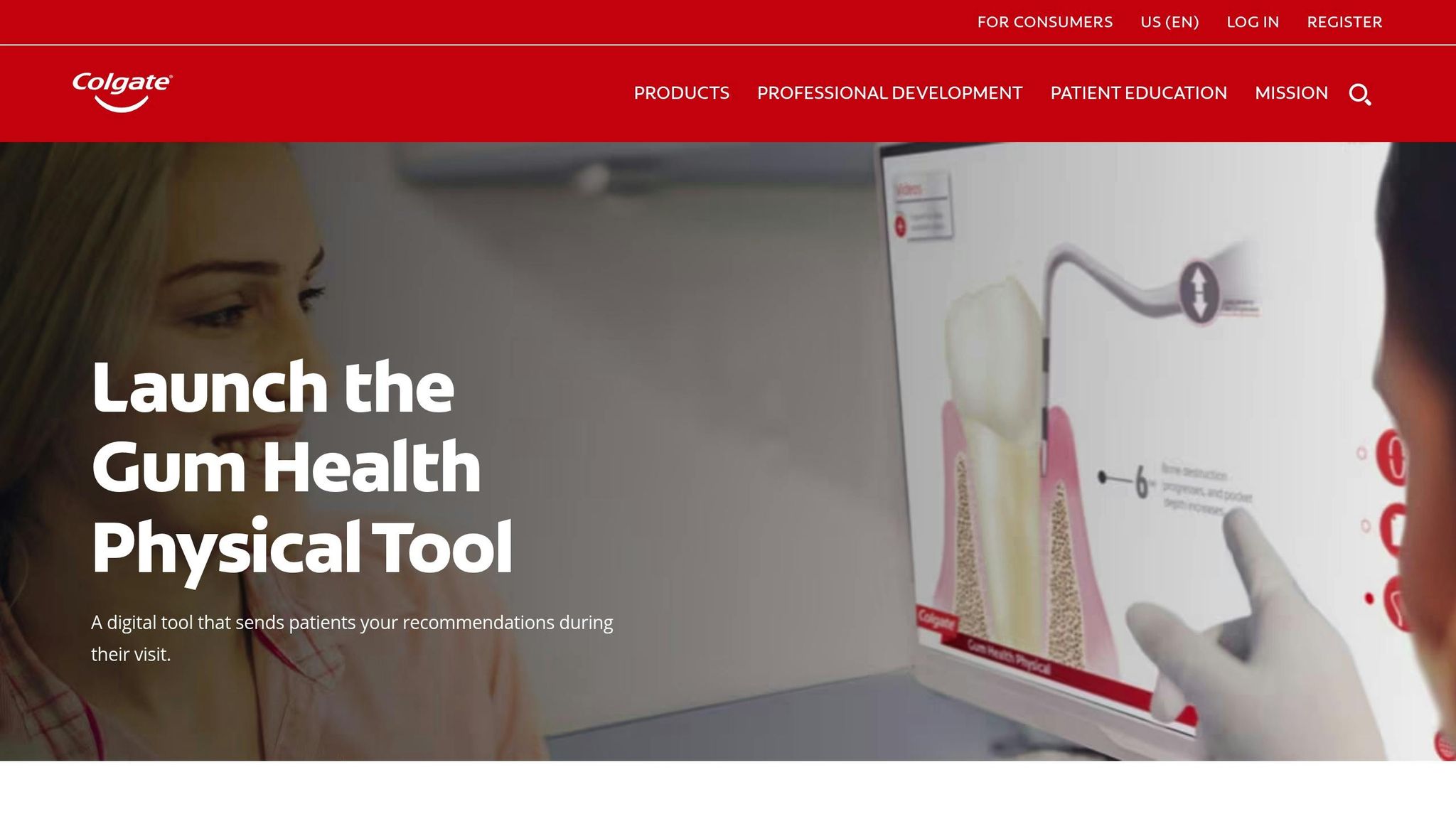
The Colgate Gum Health Physical (GHP) is a free, digital platform designed to be used during dental visits. It allows practitioners to assess gum health right there in the clinic and instantly create a personalised report – either digital or printed [1][18]. This report pinpoints areas of concern, making it easier for patients to focus on specific parts of their oral care routine at home.
"The Gum Health Physical is a new interactive digital tool you can use to evaluate your patients’ gum health in-office, and help them remember recommendations at home." – Colgate Professional [18]
This tool fills an important gap in patient education. For patients who might not be comfortable with technology, dental hygienists suggest printing two copies of the report: one to take along when shopping for oral care products and another to stick on the bathroom mirror as a daily reminder [21]. The tool works on PCs, Macs, and tablets, and is marked "for professional use only", ensuring that assessments remain under clinical supervision [1][18]. Alongside these chairside evaluations, patient feedback surveys play a role in tailoring education to individual needs.
Patient Feedback Surveys
Pre-appointment questionnaires and post-visit surveys are invaluable for identifying knowledge gaps and customising education. When patients fill out these surveys in the waiting room, it helps them pinpoint their oral health concerns ahead of their appointment, enabling more focused discussions [19]. These surveys often explore habits like brushing frequency, flossing, and tobacco use – key factors since dental caries remains the most common chronic disease among children and teens [20].
Tools like the AAP Oral Health Risk Assessment Tool, available in English and Spanish, help practitioners evaluate risks for conditions like gum disease based on patient history [20]. Post-visit surveys, on the other hand, gauge how well patients understood the advice given during their appointment. This feedback helps practices refine their education strategies. Since it can take up to 60 days to form new habits [19], follow-up reminders via SMS or email are an effective way to keep patients on track with their oral health goals.
Comparison of Key Interactive Tools
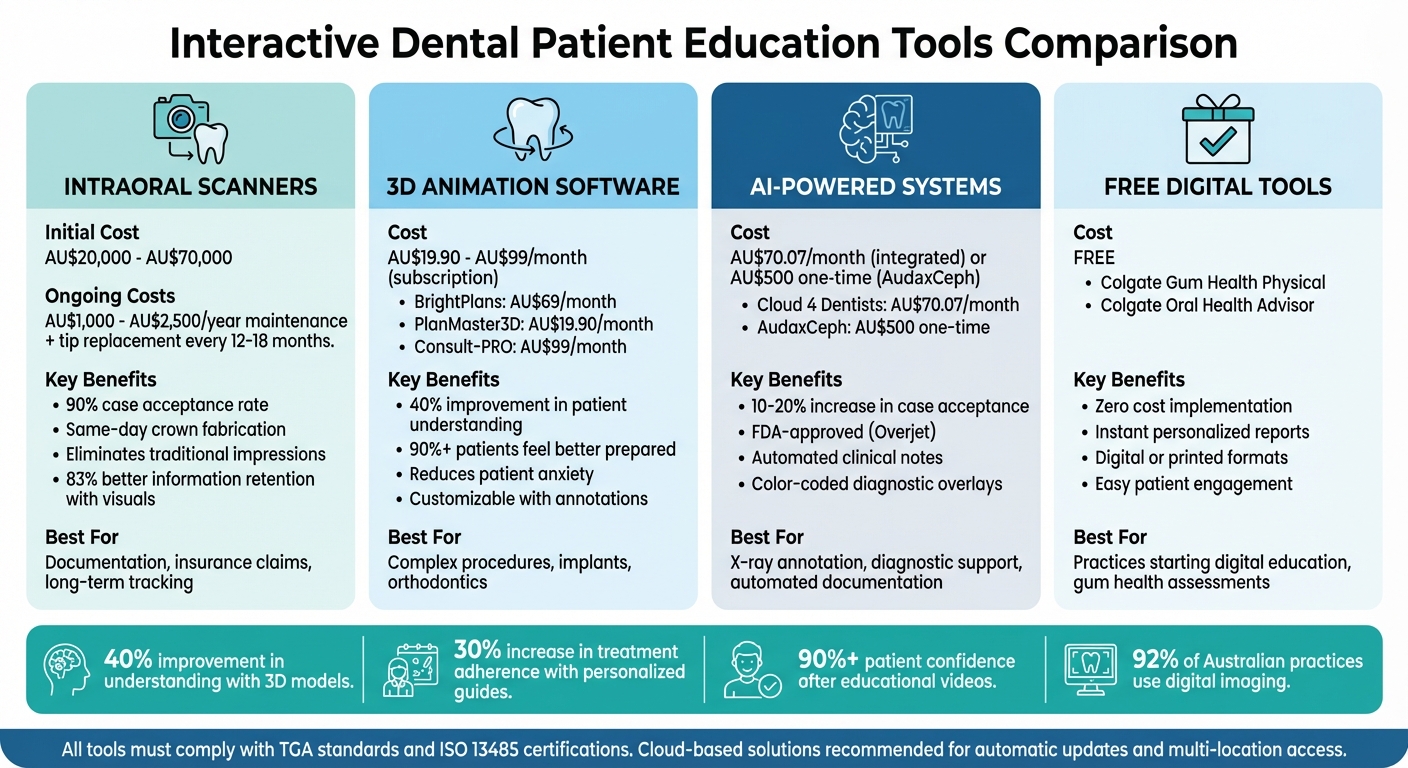
Comparison of Interactive Dental Patient Education Tools: Features, Costs, and Benefits
After reviewing digital imaging and interactive learning platforms, let’s dive into a comparison of key interactive tools based on their costs and integration features.
Choosing the right tool depends on several factors, including budget, patient demographics, and specific educational goals. For example, intraoral scanners come with a hefty upfront cost, starting at around AU$20,000 for basic models and climbing to AU$70,000 for premium wireless systems [27]. While the initial expense is high, these scanners compare favorably to traditional impressions and allow for same-day crown fabrication, cutting lab turnaround times from weeks to just hours [25]. Keep in mind, there are also ongoing costs like annual maintenance (AU$1,000–AU$2,500) and replacing tips every 12–18 months [27].
On the other hand, 3D animation and treatment planning software offers a more budget-friendly option via monthly subscriptions. For instance, BrightPlans starts at AU$69 per month [24], and PlanMaster3D is available for AU$19.90 per month [26]. These tools are especially beneficial for complex treatments, such as implants or orthodontics, where studies indicate that 3D tooth models can improve patient understanding by 40% [2]. Mid-tier options like Consult-PRO, priced at around AU$99 per month, combine patient education with imaging capabilities [26].
AI-powered systems, meanwhile, are increasingly integrated into practice management software rather than being standalone products. For example, Cloud 4 Dentists includes AI features like automated clinical notes and diagnostic annotations for AU$70.07 per month [26]. These systems not only save time but also improve case acceptance by offering better visualisation of treatment plans [2]. For orthodontics, tools like AudaxCeph provide AI-automated cephalometric landmarking for a one-time fee of AU$500 [24].
If you’re looking for a no-cost option, the Colgate Gum Health Physical tool is worth considering. Available through platforms like Colgate Oral Health Advisor, this tool is free and ideal for practices wanting to introduce digital patient education without spending a cent [1][28]. For seamless integration, ensure compatibility with practice management systems like Praktika (AU$260/month) [23][24] or Core Practice (AU$240/month) [24]. This avoids duplicate data entry and helps streamline operations.
For Australian practices, it’s crucial to ensure all hardware complies with Therapeutic Goods Administration (TGA) standards and holds ISO 13485 certifications before purchase [27]. Cloud-based tools are particularly popular in Australia, thanks to automatic updates, remote access, and reduced IT maintenance needs [22][23]. These features make them a great fit for multi-location practices or clinics with limited technical support.
This comparison highlights the key factors to consider when integrating interactive tools into your practice management system. Each option offers unique benefits, so the choice ultimately depends on your practice’s specific needs and resources.
Implementation Best Practices in Australian Dental Practices
Dentists in Australia need to balance innovation with compliance, particularly with AHPRA standards, while tailoring tools to address diverse patient needs.
Adapting Tools for Patient Needs
Integrating interactive tools effectively starts with personalisation. Research highlights that tailored guides can boost patient adherence to treatment plans by 30% [2]. This makes it essential to adjust tools to each individual’s requirements.
A good first step is assessing a patient’s understanding of dental concepts – don’t make assumptions about their knowledge level [2]. For example, the Question Builder tool, created by the Australian Commission on Safety and Quality in Health Care alongside Healthdirect Australia, helps patients prepare for appointments by generating a prioritised list of questions [29]. This approach not only improves communication but also ensures patients grasp their treatment options more thoroughly.
For Australia’s multicultural population, the Australian Dental Association offers factsheets in languages like Arabic, Chinese (both Traditional and Simplified), Greek, Punjabi, and Vietnamese [32]. Providing Easy English materials can also help patients with varying education levels or cognitive challenges [33]. Tailored resources, such as versions of the Australian Charter of Healthcare Rights, are especially valuable for First Nations communities [33]. With the widespread use of smartphones, mobile-friendly tools are an effective way to engage patients.
Simplifying complex dental concepts is crucial. Breaking them into manageable chunks through quizzes or surveys can improve understanding [2]. A practical example is the Colgate Gum Health Physical, which allows practitioners to perform in-chair assessments and instantly send personalised digital reports to patients [1]. This extends education beyond the dental chair. However, while these tools can be customised, all educational content must meet strict regulatory standards.
Compliance with AHPRA Guidelines

Customising tools is only part of the equation – ensuring compliance with AHPRA guidelines is equally important. Interactive tools must be backed by "acceptable evidence", as defined by AHPRA, to maintain clinical accuracy and safeguard patient safety [30]. The AHPRA Self-assessment tool is a valuable resource for evaluating whether digital educational and advertising materials align with these standards [31]. Additionally, any custom content, such as quizzes or surveys, must be rigorously reviewed to avoid promotional bias.
When recommending digital tools, practitioners should consult the Assessment Framework for mHealth Apps, developed by the Australian Digital Health Agency [36]. With a staggering 54,000 to over 350,000 mobile health apps available globally [36], this framework helps healthcare professionals identify credible and secure options.
"makes it hard for consumers to choose credible mHealth apps and for healthcare professionals to make informed choices when recommending mHealth apps to their patients" – Australian Digital Health Agency [36]
Data privacy is another critical consideration. Dental practices must comply with the Australian Dental Association’s regulations on Data Privacy and Information Management Security [34]. For tools involving remote interactions, following ADA’s teledentistry guidelines is essential [35]. For further assistance with the national assessment framework, practitioners can reach out to help@digitalhealth.gov.au [36].
Conclusion
Interactive tools are reshaping how Australian dental practices connect with and educate their patients. The numbers speak for themselves: 3D tooth models improve treatment understanding by 40%, while personalised interactive guides lead to a 30% increase in adherence to treatment plans [2]. These advancements are changing the way patients grasp and commit to their oral health care.
But it doesn’t stop at understanding. Over 90% of patients feel more confident discussing their treatment options after viewing educational videos [3]. This boost in confidence helps reduce anxiety and increases acceptance rates for recommended procedures. For example, a study in Westmead revealed that in-waiting room video education led to a 40% rise in the use of dental cleaning tools and a 25% reduction in sweet consumption within just four weeks [37].
"Video format oral health education used in dental waiting rooms was found to be effective in educating patients and instigating both immediate and sustained self-reported behaviour change." – Michelle McNab and Tony Skapetis, Researchers [37]
Interactive tools are proving their worth far beyond the dental chair. With mobile technology now widely accessible [2], the potential for mobile-based dental education is immense. Tools like AI-driven diagnostic annotations and digital cost calculators are addressing practical concerns that often delay patient care. By turning waiting room time into an opportunity for learning and offering personalised digital reports, these tools ensure education continues beyond the clinic.
From digital quizzes and surveys to advanced imaging and animations, interactive tools are transforming patient engagement and empowering patients to make informed decisions. For Australian dental practices, adopting these tools is no longer a luxury – it’s a necessity for providing modern, patient-focused care. When used thoughtfully and in line with AHPRA advertising guidelines, these tools foster a collaborative environment where patients actively participate in their oral health journey, rather than simply receiving treatment.
FAQs
Are these digital tools safe and private?
These tools are built with a strong focus on safety and privacy. Features like encryption are used to safeguard personal information, and they adhere to privacy regulations to ensure compliance. Additionally, strict policies are implemented to maintain data security and confidentiality at all times.
Will AI change my dentist’s diagnosis?
AI has the potential to improve diagnostic precision and support treatment planning in dentistry. That said, it’s important to remember that AI is not a substitute for your dentist’s professional expertise and judgement. Dentists remain essential in interpreting AI-generated insights and customising care to suit the specific needs of each patient.
Can I access the education videos and reports at home?
Patients can access a variety of educational resources, like videos and reports, from the comfort of their homes. These materials are often shared through email, practice websites, or even mobile devices, making it convenient to stay informed about dental care.
Related Blog Posts
- AR in Dental Care: Patient Education Tools
- AI-Powered Radiology: What Dentists Need to Know
- AI Dental Radiology: Benefits for Patient Care
- How 3D Dental Models Improve Patient Understanding
Important Notice: Any surgical or invasive procedure carries risks. Before proceeding, you should seek a second opinion from an appropriately qualified health practitioner.
Individual results may vary. The information provided in this article is for educational purposes only and does not constitute medical advice.
Checkout Related Blogs




Get in touch with us
For more information, call us now to start feeling better. Or fill the form below to make appointment
The Latest News from Complete Smiles
How to Clean Clear Plastic Retainers
Checklist for Choosing Wearable Dental Devices
Checklist for Choosing Cloud AI Platforms in Dentistry

Complete Smiles Bella VistaAccepts All Major Health Funds, Including





