





How Orthodontic Simulators Improve Treatment Plans
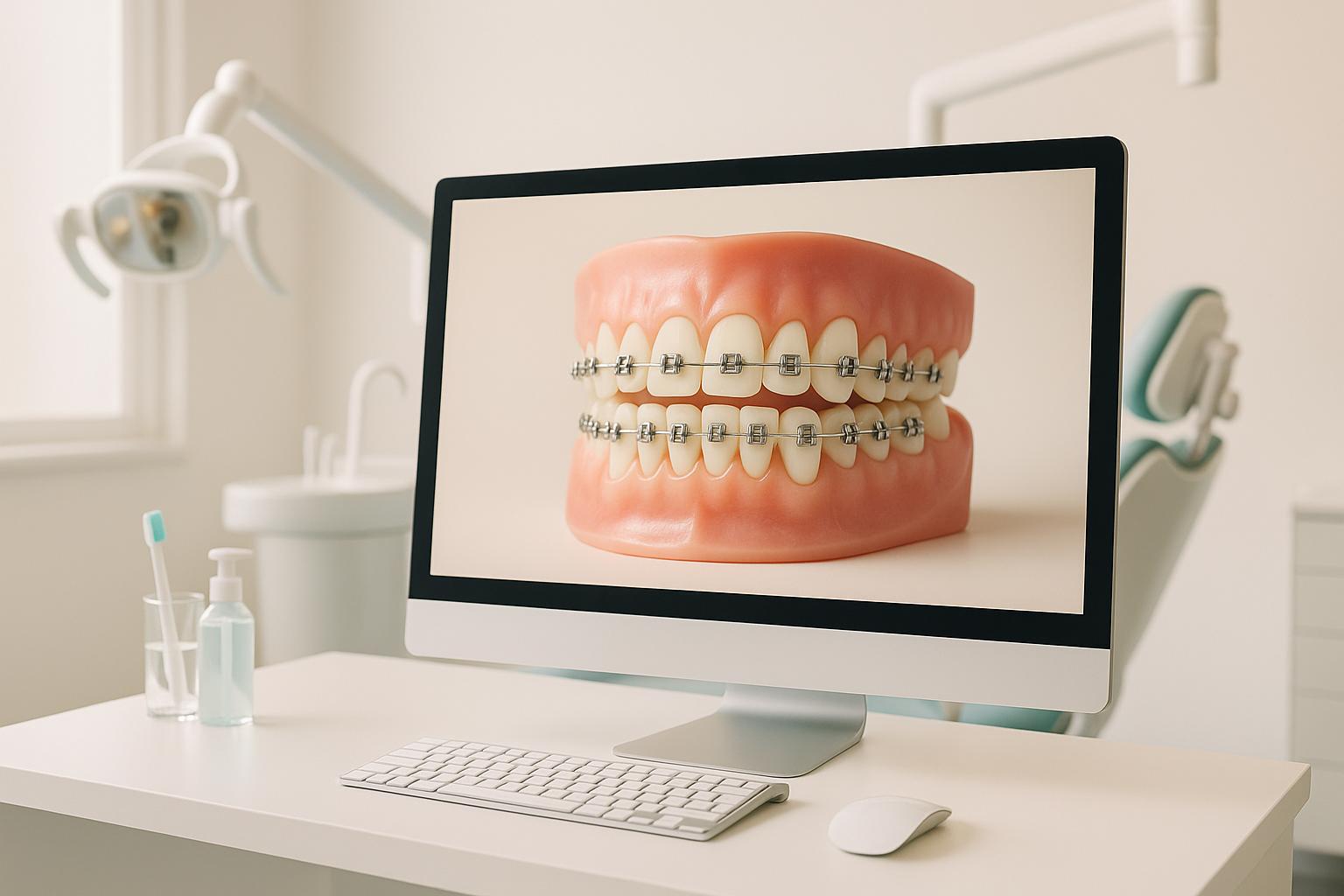
Orthodontic simulators are transforming how dental treatments are planned, offering precise virtual models of teeth and jaws to predict outcomes before starting procedures. These tools allow orthodontists to test different treatment paths, improve patient communication, and refine plans for better results. Here’s what you need to know:
- What they do: Simulators create 3D digital models using intraoral scans, helping practitioners visualise tooth movement and treatment options like braces or aligners.
- Key benefits: They save time, improve accuracy, and make consultations more interactive by showing patients clear visual previews of their expected results.
- How they work: The process includes scanning teeth, running simulations to predict outcomes, and adjusting plans to meet individual needs.
- Challenges: High setup costs (AUD $20,000–$100,000+), staff training, and reliance on high-quality scans can be hurdles for clinics.
Australian practices are increasingly adopting these tools, balancing the upfront investment with long-term efficiency and patient satisfaction.
Computerized Orthodontic Treatment Planning
How Orthodontic Simulators Work: A Step-by-Step Guide
Orthodontic simulators transform digital scans into detailed treatment strategies through a simple three-step process.
Step 1: Taking Digital Impressions
The process starts with intraoral scanners creating detailed 3D digital models of a patient’s teeth and jaw [1][2]. These scanners replace the need for traditional dental moulds, offering a more accurate and comfortable alternative. They capture key details like tooth surfaces, gum lines, and bite relationships, providing a reliable base for treatment planning. Once the scans are complete, the digital files are securely stored in line with Australian privacy laws, ensuring patient data is protected. These files are then uploaded into simulation software, ready for analysis and planning.
Step 2: Running Treatment Simulations
With the digital impressions in hand, simulation software gets to work, creating a virtual model of the patient’s teeth [1][2][3]. This model allows orthodontists to predict tooth movements and explore various treatment options before any physical work begins. Whether it’s traditional braces, clear aligners, or even extraction plans, the software can compare different scenarios. Beyond tooth alignment, the simulations can show changes in facial structure, gum contours, and the positioning of orthodontic tools like brackets and arch-wires [6]. This level of detail helps patients understand the treatment process and what to expect. The insights gained here form the backbone of precise treatment adjustments.
Step 3: Adjusting Treatment Plans
The final step involves orthodontists reviewing the simulation results and refining the treatment plan based on the feedback [1][2][3]. This step-by-step refinement ensures the plan meets both functional and aesthetic goals while considering the patient’s unique needs. Some systems even allow for manual adjustments to the 3D models, making it possible to address specific factors like gum health, existing restorations, or the need for extractions [6]. Orthodontists can fine-tune elements such as treatment duration, patient compliance, and overall aesthetics to ensure the best possible outcome.
In Australian practices, like Complete Smiles Bella Vista (https://completesmilesbv.com.au), orthodontic simulators have become an integral part of creating tailored treatment plans. They not only help communicate expected results clearly but also enable ongoing refinements and collaboration among specialists for complex cases. This modern approach ensures patients receive care that is both precise and personalised.
Benefits and Challenges of Orthodontic Simulators
Orthodontic simulators, as discussed earlier, bring a mix of opportunities and hurdles. These tools have the potential to elevate orthodontic care but also come with considerations that must be weighed carefully. Understanding both their strengths and limitations is key before adopting them.
Advantages of Orthodontic Simulators
Greater precision and personalised care. Digital simulators allow orthodontists to predict treatment outcomes with impressive accuracy. They also enable the creation of tailored treatment plans that align with each patient’s specific dental structure and goals [1].
Clearer communication with patients. Using visual representations of expected results helps patients better understand their treatment options. This not only aids decision-making but also sets realistic expectations about outcomes [1].
More efficient workflows. By integrating digital tools, practices can reduce manual processes and improve data management. Research indicates that digital planning can cut treatment time by up to 30% and increase patient satisfaction by 20–30% [1].
While these benefits are compelling, orthodontic simulators also come with a set of challenges that require attention.
Limitations of Orthodontic Simulators
Significant upfront costs. Investing in orthodontic simulation systems can be expensive. Equipment like 3D scanners and planning software often costs between AUD $20,000 and $100,000 or more. This doesn’t include ongoing expenses such as software updates and maintenance [1].
Training requirements. To use these systems effectively, staff need comprehensive training in areas like digital imaging and intraoral scanning. This process can temporarily disrupt productivity as team members adapt [1].
Reliance on high-quality data. The accuracy of simulations is heavily dependent on the quality of digital impressions. Poor scans or imaging can result in inaccurate predictions, undermining the tool’s effectiveness [1].
Technical upkeep. These systems require regular maintenance, software updates, and seamless integration with existing practice management tools. Managing these technical demands can be a continuous challenge [1].
Comparison Table: Advantages vs. Limitations
| Advantages | Limitations |
|---|---|
| Precise, accurate treatment planning | High initial costs (AUD $20,000–$100,000+) |
| Customised treatment plans for individual patients | Requires extensive staff training |
| Better patient understanding and engagement | Quality of data inputs directly impacts accuracy |
| Faster workflows, reducing planning time by up to 30% | Productivity may dip during the learning phase |
| Enhanced collaboration among dental professionals | Regular maintenance and software updates needed |
| Increased patient satisfaction (20–30% improvement) | Potential compatibility issues with existing systems |
The decision to implement orthodontic simulators depends on a practice’s priorities. Balancing the financial and operational investment with the potential for improved treatment outcomes and patient experiences is crucial.
sbb-itb-2be92ed
Personalised Treatment Planning with Orthodontic Simulators
Orthodontic simulators, built on advanced digital imaging techniques, give clinicians the tools to craft treatment plans that are specifically tailored to each patient. Instead of relying on a standardised approach, these digital systems create detailed 3D models of a patient’s teeth and jaw using cutting-edge imaging technology. This comprehensive data not only highlights anatomical differences but also allows orthodontists to explore various treatment possibilities. For instance, they can evaluate options like tooth extractions, interproximal reduction, or jaw expansion to determine the most effective path forward.
Designing Custom Treatment Plans
In more complicated cases, such as severe crowding, simulators can assess multiple treatment strategies and estimate the degree of tooth movement required for each. By factoring in treatment duration, aesthetics, and patient comfort, orthodontists can develop a plan that meets clinical needs while aligning with the patient’s personal goals. These tools also enable interactive consultations, where patients can provide input during the planning phase, ensuring the final plan fits seamlessly into their lifestyle and expectations.
A 2023 systematic review published in BDJ Open highlighted the value of virtual setups in orthodontics, especially when traditional plaster models fail to provide a complete analysis [3].
This approach not only enhances the accuracy of treatment planning but also helps patients better understand their journey when outcomes are clearly visualised.
Visualising Outcomes for Better Communication
One standout feature of orthodontic simulators is their ability to create realistic digital previews of post-treatment results. These visualisations simplify complex treatment concepts, giving patients a clear picture of how their smile will transform. Seeing these digital previews often encourages patients to take an active role in decision-making, boosting their confidence and commitment to following treatment guidelines.
For practices like Complete Smiles Bella Vista, this method of visual communication has revolutionised patient consultations. By offering clear visual references, orthodontists can ease patient concerns and foster trust. This collaborative approach ensures that treatment plans prioritise both clinical success and the unique needs of each patient, creating a more positive and engaging experience overall.
Using Orthodontic Simulators in Australian Practices
Orthodontic simulators are becoming a popular addition to Australian dental clinics, offering a modern approach to digital treatment planning. But making the shift to these advanced tools requires thoughtful preparation and strict adherence to local healthcare regulations. Transitioning from traditional methods to digital simulation involves both technical upgrades and compliance with regulatory standards. Here’s how clinics can successfully integrate these tools into their daily operations.
Key Steps for Implementation
To start, clinics need to invest in digital scanners and simulation software that work seamlessly with their existing practice management systems and electronic health records. This ensures a smooth workflow and avoids compatibility issues.
Staff training is crucial. Team members must become proficient in using intraoral scanners, 3D imaging devices, and simulation software. They should also be equipped to manage digital records and communicate treatment outcomes effectively. Proper training guarantees accurate digital impressions, smooth operation of simulation tools, and clear explanations to patients about potential outcomes.
Establishing standardised protocols for digital impressions and 3D scans is another important step. Documenting these workflows helps maintain consistency, supports staff training, and ensures quality standards across the practice.
Regular system evaluations are essential. Clinics should monitor imaging quality, keep up with software updates, and collect staff feedback. Scheduling routine maintenance helps prevent unexpected disruptions and keeps the system running smoothly.
It’s also important to plan for ongoing costs. Beyond the initial investment in software and hardware, clinics should budget for software licensing, system updates, and continuous staff education to keep the technology and skills up to date.
Following Australian Regulations
Once systems are in place, clinics must ensure they comply with Australian regulations. This includes adhering to guidelines from the Australian Health Practitioner Regulation Agency (AHPRA) and the Dental Board of Australia. All digital devices used must have approval from the Therapeutic Goods Administration (TGA) and meet the standards for medical devices in Australia.
Patient data privacy and security are non-negotiable. Under the Australian Privacy Principles outlined in the Privacy Act 1988, clinics must ensure secure storage, transmission, and access controls for all digital patient records and images.
When advertising orthodontic simulation services, clinics need to follow strict communication standards. Claims about simulation outcomes should be backed by evidence and must not be misleading, in line with Australian health advertising regulations. Instead of guaranteeing specific results, clinics should focus on the educational value of visual treatment planning.
Digital simulations also play a key role in the informed consent process. By providing patients with clear visual representations of proposed treatments, these tools support shared decision-making. It’s essential to highlight that actual results may vary based on individual factors and treatment adherence. Additionally, all digital treatment plans and simulation data must be properly archived for future professional reference.
Conclusion
Orthodontic simulators are transforming the way treatments are planned, offering a level of precision and personalisation that benefits both clinicians and patients alike [1][2][3]. By integrating these advanced digital tools, practitioners can achieve more accurate and streamlined treatment plans.
These simulators generate detailed digital models, allowing clinicians to explore multiple treatment scenarios tailored to each patient [2][3]. The visual clarity they provide not only enhances treatment planning but also improves communication with patients. By offering clear, easy-to-understand representations of the treatment process, patients can make more informed decisions about their care [1][2].
In Australia, the adoption of orthodontic simulators has led to better diagnostic accuracy and more efficient workflows [1][4][7]. Research consistently shows that virtual setups can reliably predict treatment outcomes, with many practices now favouring digital simulations over traditional plaster models [3]. This shift reflects the growing reliance on digital tools in orthodontic planning across the country [1][5].
Although these technologies require a considerable upfront investment and training, they offer significant long-term benefits. Patients report higher satisfaction and confidence in their treatment plans, thanks to the improved predictability and visual insights these tools provide [1][3]. This deeper understanding of their options often leads to better engagement and compliance throughout the treatment process [1][2].
FAQs
How can orthodontic simulators enhance treatment planning for patients and dental practices?
Orthodontic simulators are transforming modern dental care by enabling detailed and customised treatment planning. Using advanced imaging technology, these tools predict how a patient’s teeth will shift over time, helping dentists design treatments that are specifically tailored to individual needs.
For patients, this means gaining a clearer picture of their treatment process, including what results to expect and how long it might take. For dental professionals, these simulators streamline workflows by reducing uncertainty and cutting down on mid-treatment adjustments. They also enhance communication, build trust, and contribute to a more satisfying experience for both patients and practitioners.
How do orthodontic simulators protect patient data and comply with Australian regulations?
Orthodontic simulators come equipped with strong security features to protect patient data, ensuring compliance with Australian privacy regulations like the Privacy Act 1988 and the Australian Privacy Principles (APPs). They employ advanced encryption techniques to keep sensitive information secure, whether it’s being stored or transmitted.
Beyond data protection, these simulators meet rigorous regulatory standards set by Australian health authorities. Dental professionals using these tools are trained to manage patient information with care, maintaining confidentiality while delivering tailored treatment plans.
How can dental practices address challenges like setup costs and training when implementing orthodontic simulators?
Implementing orthodontic simulators comes with its own set of hurdles, including steep upfront costs and the need for thorough staff training. To ease the financial burden, practices might consider leasing the equipment instead of purchasing it outright. Another option is to look into government grants or subsidies aimed at supporting technology upgrades in healthcare.
When it comes to training, prioritising comprehensive staff education is key. Partnering with the simulator providers for ongoing training and support can make the transition smoother. With thoughtful planning and a focus on preparing the team, practices can embrace orthodontic simulation tools effectively while keeping costs under control.
Related Blog Posts
- Advances in Orthodontic Pain Management Techniques
- How AI Predicts Orthodontic Treatment Outcomes
- How 3D Imaging Improves Orthodontic Treatment Outcomes
- Digital Smile Design for Patient Communication
Important Notice: Any surgical or invasive procedure carries risks. Before proceeding, you should seek a second opinion from an appropriately qualified health practitioner.
Individual results may vary. The information provided in this article is for educational purposes only and does not constitute medical advice.
Checkout Related Blogs




Get in touch with us
For more information, call us now to start feeling better. Or fill the form below to make appointment
The Latest News from Complete Smiles
How to Clean Clear Plastic Retainers
Checklist for Choosing Wearable Dental Devices
Checklist for Choosing Cloud AI Platforms in Dentistry

Complete Smiles Bella VistaAccepts All Major Health Funds, Including





