





Professional vs At-Home Teeth Whitening Methods
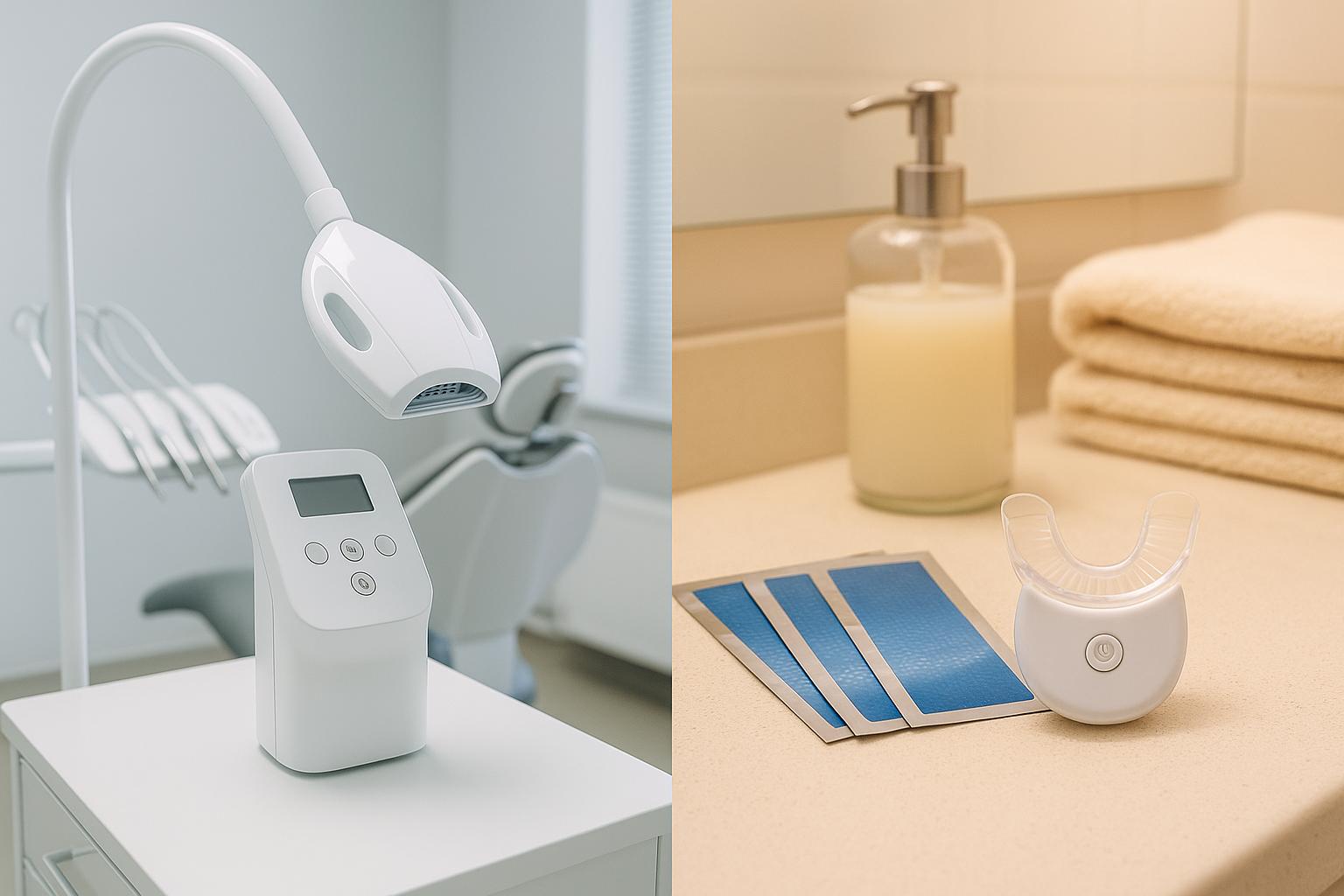
A brighter smile can boost your confidence, but which teeth whitening method is right for you? Here’s a quick comparison:
- Professional Whitening: Done by dentists, uses stronger agents (over 6% hydrogen peroxide), delivers up to 8 shades lighter in just 1–2 hours, costs $300–$1,000+, and results can last 1–3 years with proper care.
- At-Home Whitening: Includes kits, strips, and gels, uses lower peroxide levels (up to 6%), takes weeks for 3–6 shades improvement, costs $20–$150, and results last around 12 months.
Key Factors to Consider:
- Speed: Professional treatments are much faster.
- Effectiveness: Professional methods deliver more significant results.
- Cost: At-home options are more budget-friendly.
- Safety: Professional treatments are monitored by experts, reducing risks like sensitivity or gum irritation.
Quick Comparison Table
| Feature | Professional Whitening | At-Home Whitening |
|---|---|---|
| Time to Results | 1–2 hours | Weeks |
| Shade Improvement | Up to 8 shades | 3–6 shades |
| Cost (AUD) | $300–$1,000+ | $20–$150 |
| Supervision | Dentist-monitored | Self-administered |
| Lasting Results | 1–3 years | Around 12 months |
| Best For | Severe stains, fast results | Mild stains, lower budget |
For the safest and most effective results, consult your dentist to determine the best option for your needs.
How Each Whitening Method Works
Professional Treatment Steps
Professional teeth whitening is carried out by qualified dental professionals in a controlled environment. A typical session lasts about 60-90 minutes and begins with a detailed examination of your teeth, including an assessment of staining and documentation of the current tooth shade. The dentist then polishes the teeth to remove surface debris [4][5].
During the procedure, specific protective measures are put in place to safeguard your mouth:
- Gauze and retractors are used to protect the tongue, lips, and cheeks.
- A protective barrier shields the gum line from the whitening solution [4].
Many clinics utilise advanced systems like Philips Zoom, which combines hydrogen peroxide gel with blue LED light to break down stains while maintaining enamel integrity [4]. The gel is left on the teeth for 30-60 minutes, with reapplications if needed. The session wraps up with a thorough rinse, and sometimes a fluoride treatment is applied to help reduce sensitivity [5].
On the other hand, at-home methods offer a simpler, though less intensive, alternative.
At-Home Methods
Unlike professional treatments, at-home whitening products use lower concentrations of peroxide and offer various application methods. In Australia, regulations cap DIY kits at 6% hydrogen peroxide or 18% carbamide peroxide [6].
| Method | Description | Concentration | Key Considerations |
|---|---|---|---|
| Custom-fitted Trays | Dentist-made trays | 10–22% carbamide peroxide | Ensures precise gel contact [7] |
| Over-the-counter Trays | One-size trays | 10–20% carbamide peroxide | May cause gum irritation [7] |
| Whitening Strips | Pre-coated strips | Lower peroxide levels | May not cover all tooth surfaces |
| Brush-on Gels | Direct application | Varies | Limited effectiveness |
"Brush-on gels are the least controlled and are typically poorly performing because of concerns around irritation of gum (gingival) tissues…They are more likely to be inactivated by normal saliva, which has enzyme systems that break down peroxides to harmless water and oxygen." – Professor Laurie Walsh, Australian Dental Association [6]
While at-home methods are more affordable and convenient, they typically require a longer treatment period to achieve modest results [2]. Among these options, custom-fitted trays provided by dentists strike the best balance between safety and effectiveness. These trays ensure maximum contact between the whitening gel and teeth while protecting the gums from irritation [7].
Results and Success Rates
Types of Stains Treated
The effectiveness of whitening methods – whether professional or at-home – depends largely on the type and severity of tooth discolouration. While both options can yield visible improvements, their success varies based on the stain type.
| Stain Type | Professional Treatment | At-Home Methods |
|---|---|---|
| Extrinsic | Immediate results with strong outcomes | Gradual improvement over 2–4 weeks |
| Intrinsic | Significant improvement possible | Limited effectiveness |
| Brown/Yellow | Excellent response | Good response with extended use |
| Blue/Grey | Moderate improvement | Limited effectiveness |
| Metallic | Difficult to treat | Minimal improvement |
Studies reveal that brown and yellow stains generally respond better to bleaching compared to blue-grey discolouration [11]. To achieve the best outcomes, understanding the underlying causes – like dietary habits, lifestyle choices, and oral health practices – is essential [11].
How Long Results Last
Professional in-office whitening treatments tend to deliver results that last longer when compared to at-home alternatives. Here’s a breakdown of typical durations:
- In-office treatment: Results can last 1–3 years with proper care [10].
- Take-home professional kits: Effects usually last around 12 months [10].
- Over-the-counter products: Durability of results varies significantly.
Research comparing in-office whitening (ΔE* = 6.6) and at-home methods (ΔE* = 5.2) found that professional treatments slightly outperformed at-home options under controlled conditions [8]. Interestingly, patient surveys revealed that 74% of users preferred at-home whitening, with 100% recommending it to others, while 63% recommended in-office treatments [8]. The type of stain also plays a role in how long results last, highlighting the importance of tailored approaches.
To maintain results for as long as possible, consider these tips:
- Schedule regular dental hygiene appointments.
- Use take-home trays for ongoing maintenance and avoid stain-inducing foods and drinks [10].
- Brush or rinse immediately after consuming foods or beverages that cause staining [9].
Clinical evidence suggests that combining an initial in-office whitening session with take-home maintenance kits provides the most enduring results [10].
Safety and Side Effects
Dental Office Safety Steps
Professional teeth whitening in a dental office follows strict safety protocols to protect patients and minimise risks. These include the use of barriers, retractors, and protective eyewear to safeguard soft tissues during the procedure.
| Protection Method | Purpose | Implementation |
|---|---|---|
| Gingival Barriers | Shields gums from whitening agents | Applied as a blue resin and hardened with UV light [13][14] |
| Lip Retractors | Prevents whitening gel from contacting soft tissues | Keeps lips and cheeks away from the treated area [12] |
| Rubber Dams | Isolates the treatment area | Blocks saliva and protects gum tissue [12] |
| Protective Eyewear | Protects eyes from laser light | Specialised glasses or goggles are provided [12] |
Even with these precautions, professional whitening can sometimes cause minor side effects. Gingival irritation occurs in approximately 35.7% of cases, though the whitening gel itself is safe for enamel. Most irritation is temporary and linked to the soft tissues rather than the teeth [15].
Home Kit Safety Issues
At-home whitening kits, while convenient, place the responsibility for safety entirely on the user. Without professional guidance, there’s a higher chance of misuse, which can lead to issues like tooth sensitivity or enamel damage. In fact, sensitivity is reported in about 50.3% of at-home whitening cases [15].
Some common risks include:
- Misuse or overuse, which can result in uneven whitening, increased sensitivity, or even damage to enamel [17]
- Choosing products with inappropriate peroxide levels
- Failing to match product selection to individual sensitivity needs
To reduce these risks, consider the following tips:
- Start with lower peroxide concentrations, especially if you have sensitive teeth [16]
- Use fluoride rinses or sensitivity toothpaste to manage discomfort [16]
- Stick to the recommended treatment times provided with the kit [16]
- Consult a dental professional before beginning any whitening regimen [17]
Interestingly, at-home treatments tend to cause less gingival irritation (14.0%) than professional procedures. However, professional whitening offers the advantage of controlled application and expert monitoring, ensuring a safer and more effective outcome [15].
PRO VS STORE BOUGHT TEETH WHITENING – The Ultimate Showdown! [2025]
sbb-itb-2be92ed
Price Comparison
Compare costs to find a teeth-whitening option that works for your budget.
Upfront Costs
| Treatment Type | Average Cost (AUD) | What’s Included |
|---|---|---|
| In-chair Professional | $300 – $1,000+ | Clinical assessment, protective barriers, and professional-grade whitening agents |
| Take-home (Dentist-provided) | $610 | Custom-fitted trays, professional whitening gel, and an instruction session |
| Over-the-counter Kits | $29.99 – $99 | Generic trays/strips with lower-concentration whitening agents |
Professional treatments in Australia can use hydrogen peroxide concentrations as high as 38%, while over-the-counter options are limited to just 6% [6]. These initial costs play a significant role in determining the long-term commitment and effectiveness of each option.
Ongoing Expenses
Professional whitening treatments often require fewer touch-ups, although occasional maintenance or adjustments (like dental work) might be necessary. On the other hand, over-the-counter and at-home kits typically need reapplication every few months to maintain results [18].
Research suggests professional whitening not only delivers consistent results but may also strengthen enamel, making it a more cost-effective choice in the long run [19]. In-chair treatments, in particular, have been shown to improve enamel strength, whereas some at-home methods might gradually reduce the mineral content of enamel over time [19].
Choosing Your Best Option
Selecting the right teeth-whitening method depends on your specific needs and lifestyle. While earlier comparisons covered process, results, and costs, it’s essential to weigh these factors against your personal circumstances.
When to Choose Professional Treatment
Professional whitening is ideal when you need fast, noticeable results with expert care:
- Moderate to severe staining that requires stronger whitening agents
- Significant colour improvement (up to 8 shades lighter in a single session) [1]
- Sensitive teeth or gums that need careful monitoring
- Customised treatments targeting specific areas
- Colour matching for existing dental work
- Immediate results for special occasions
This option is particularly effective for stubborn stains caused by coffee, tea, or tobacco. Dental practices use stronger bleaching agents, which deliver more dramatic results than at-home kits [6].
When Home Kits Work Well
At-home whitening solutions are a better fit if:
- Your stains are mild and limited to surface discolouration
- You’re working within a smaller budget
- You’re okay with gradual results over time
- You have healthy teeth and gums without existing dental concerns
- You’re maintaining results after a professional treatment
- You prefer the flexibility of applying treatments at your convenience
Australians typically spend between $200 and $300 annually on over-the-counter whitening products [20]. While slower, these kits are a cost-effective option for minor discolouration.
The table below highlights key differences between the two approaches:
| Consideration | Professional Treatment | At-Home Kits |
|---|---|---|
| Time to Results | 1–2 hours per session | 1–2 hours daily for weeks |
| Shade Improvement | Up to 8 shades lighter | 3–6 shades lighter |
| Supervision | Expert monitoring | Self-administered |
| Initial Cost | $300–$1,000+ | $29.99–$99 |
| Best For | Significant staining, special events | Mild staining, maintenance |
Things to Keep in Mind
- Consider any existing dental work, as it may affect results.
- Think about lifestyle factors that could influence how long the whitening lasts.
- Factor in the ongoing costs of maintenance.
- Pregnant or breastfeeding women should avoid whitening treatments [3].
Ultimately, the effectiveness of any whitening method depends on factors like the type of stains, your oral health, and your commitment to aftercare. For the best results, follow professional advice and maintain good oral hygiene, regardless of which option you choose.
Summary
Teeth whitening options vary significantly in terms of how they work, their effectiveness, and their safety. Professional treatments, performed by registered dental practitioners, use stronger whitening agents (over 6% hydrogen peroxide) and provide immediate results that can last up to a year. These treatments typically cost between $300 and $1,000, reflecting the expertise and personalised care involved[21][22].
On the other hand, at-home whitening solutions are more budget-friendly, ranging from $20 to $150. However, they use lower peroxide concentrations due to regulatory limits, making them less potent than professional options[22].
The Australian Dental Association advises:
"The safest, most effective treatment will be given by your dental practitioner."[3]
When deciding on a whitening method, consider the following:
- Treatment Duration: Professional treatments achieve results in just 1–2 hours, while at-home methods may take several weeks.
- Effectiveness: In-chair treatments are significantly more effective in achieving brighter teeth.
- Safety: Dental professionals can assess your suitability and manage any potential side effects.
- Cost vs. Longevity: Although professional treatments are more expensive upfront, they tend to deliver longer-lasting results.
FAQs
What should I consider to ensure teeth whitening is safe for me?
When choosing between professional teeth whitening and at-home treatments, safety should always be your top priority. Overusing whitening products – especially those with high concentrations of bleaching agents – can lead to unwanted side effects. These may include tooth sensitivity, gum irritation, or even damage to your enamel. If the whitening gel accidentally touches your gums or other soft tissues, it could cause burns or discomfort.
It’s worth noting that teeth whitening isn’t suitable for everyone. For example, it’s typically not recommended for people who are pregnant, breastfeeding, or dealing with sensitive teeth, gum disease, or unresolved dental issues. To ensure you’re making the safest choice for your oral health, it’s a good idea to consult a qualified dentist. They can help determine whether whitening is a good option for you and guide you towards the best approach for achieving your desired results.
How do professional teeth whitening results compare to at-home methods in terms of effectiveness and how long they last?
Professional teeth whitening done by a dentist usually offers brighter and longer-lasting results compared to at-home kits. With in-chair treatments, you can expect the effects to last anywhere from 1 to 3 years, depending on your oral hygiene habits and diet choices.
On the other hand, at-home whitening options, like over-the-counter kits or trays provided by your dentist, tend to deliver more subtle results. These typically last just a few months and may not achieve the same level of brightness or durability as professional treatments. While convenient, they might not be the best choice if you’re after dramatic, lasting results.
To get the most out of your teeth whitening experience, have a chat with your dentist. They can guide you towards the safest and most effective option tailored to your goals and lifestyle.
How do I choose between professional teeth whitening and at-home options?
When deciding between professional teeth whitening and at-home methods, it’s important to weigh a few key considerations.
Professional whitening is carried out by a qualified dentist and uses stronger whitening agents (typically over 6% hydrogen peroxide). This means you can achieve brighter results in less time. It’s a great choice if you’re after a customised approach or have specific dental issues that need addressing. However, this option usually comes with a higher price tag.
At-home whitening, on the other hand, is often more budget-friendly and convenient. Many options, like dentist-supervised custom trays, can deliver impressive results with consistent use. While it may take a bit longer to see the full effect, this method is still highly effective for many people.
Whichever you choose, it’s always a good idea to consult your dentist first to make sure the method aligns with your oral health and lifestyle.
Related Blog Posts
- Invisalign vs Traditional Braces: A Complete Comparison
- Cultural Sensitivity in Dentistry: Key Challenges and Solutions
- Pre-Orthodontic Treatment Checklist: What to Know
- 5 Common Root Canal Myths Debunked
Important Notice: Any surgical or invasive procedure carries risks. Before proceeding, you should seek a second opinion from an appropriately qualified health practitioner.
Individual results may vary. The information provided in this article is for educational purposes only and does not constitute medical advice.
Checkout Related Blogs




Get in touch with us
For more information, call us now to start feeling better. Or fill the form below to make appointment
The Latest News from Complete Smiles
How to Clean Clear Plastic Retainers
Checklist for Choosing Wearable Dental Devices
Checklist for Choosing Cloud AI Platforms in Dentistry

Complete Smiles Bella VistaAccepts All Major Health Funds, Including





