





Invisalign vs Traditional Braces: A Complete Comparison

Invisalign and braces are the two main options for straightening teeth in Australia. Here’s a quick breakdown to help you decide:
- Invisalign: Clear, removable aligners best for mild to moderate cases. They’re nearly invisible, more comfortable, and allow easy cleaning. Costs range from $3,500–$9,000, with treatment lasting 6–18 months.
- Braces: Fixed metal brackets and wires suitable for all dental issues, including complex cases. They’re visible, require more cleaning effort, and often come with dietary restrictions. Costs range from $4,500–$8,500, with treatment lasting 20–24 months.
Quick Comparison Table
| Feature | Invisalign | Metal Braces |
|---|---|---|
| Appearance | Nearly invisible | Visible metal wires |
| Removability | Removable | Fixed |
| Treatment Range | Mild to moderate cases | All cases |
| Duration | 6–18 months | 20–24 months |
| Cost | $3,500–$9,000 | $4,500–$8,500 |
| Comfort | High | Moderate |
| Maintenance | Easy | Complex |
| Diet Restrictions | None | Some |
Both options have pros and cons, so your choice depends on your dental needs, lifestyle, and budget. Consult your orthodontist for the best recommendation.
How Each Treatment Works
Invisalign Process
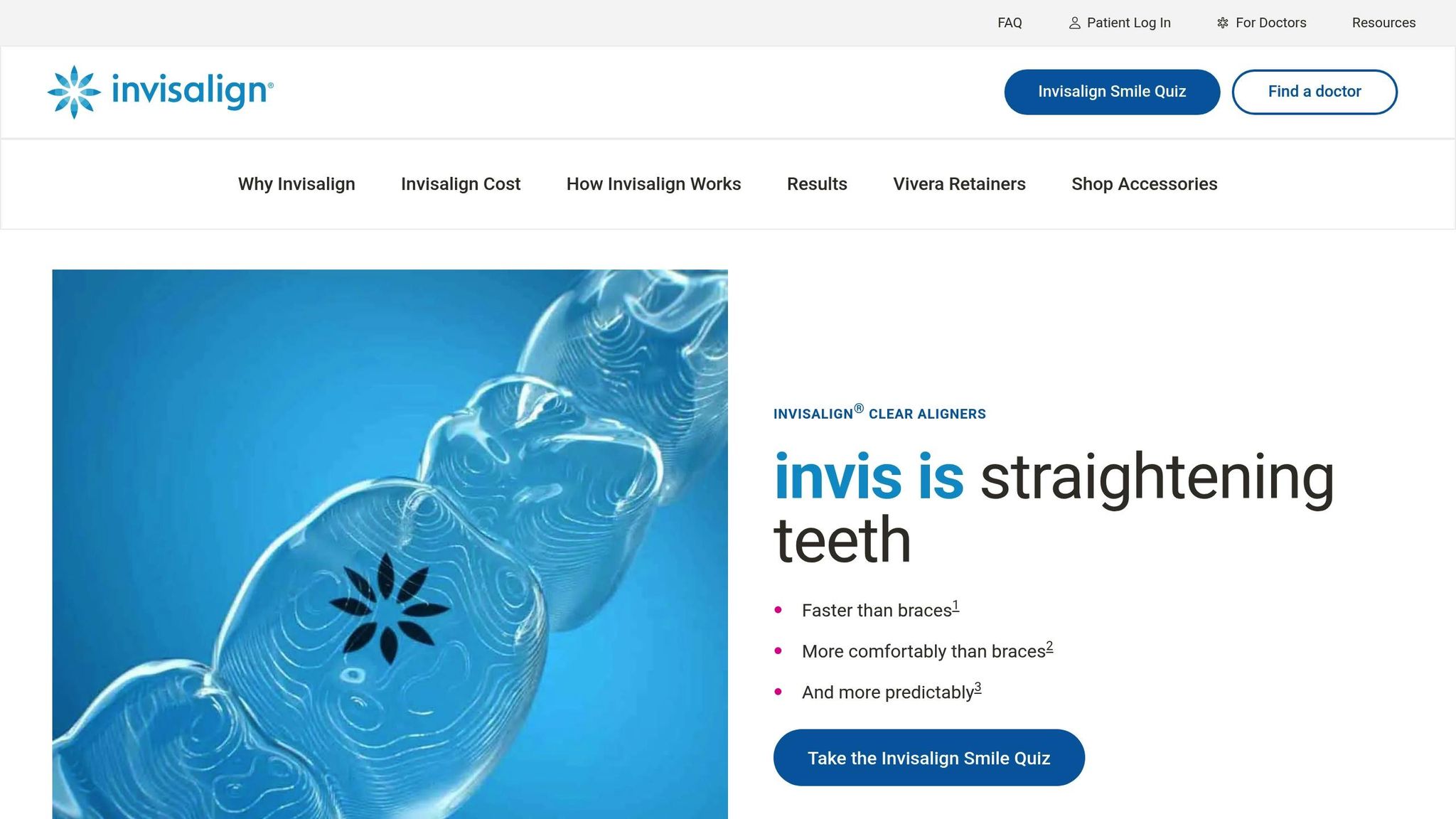
Invisalign uses custom-made clear aligners to gradually move teeth into their proper position. The process starts with a 3D digital scan of your teeth. This scan is processed through Invisalign’s ClinCheck software, which creates a tailored treatment plan.
"The 3D interface helps us to customise your Invisalign treatment. The program calculates the right amount of force needed for every tooth movement and, along with input from our dentist, helps ensure every tooth moves at the right time and in the right order." [2]
Aligners are typically worn for 1–2 weeks before moving to the next set. To improve their effectiveness, small, tooth-coloured SmartForce attachments may be added to specific teeth. These attachments help apply precise pressure where needed, ensuring accurate and controlled tooth movement.
Metal Braces Process
Metal braces use a system of brackets and wires to straighten teeth. Here’s how the process works:
- Initial Bonding: Brackets are cemented onto each tooth.
- Wire Installation: An archwire connects the brackets, guiding the teeth into position.
- Regular Adjustments: Every 6–8 weeks, the orthodontist tightens the wires and monitors progress.
Elastic ligatures hold the wires in place, and some patients may need metal bands around their back molars for additional support [3].
Treatment Applications
Both Invisalign and metal braces are effective for a range of dental issues, but their capabilities differ depending on the complexity of the case. Here’s a comparison:
| Condition | Invisalign | Metal Braces |
|---|---|---|
| Crowding | Works well for mild cases | Effective for all cases |
| Gaps | Suitable for minor spacing | Handles all spacing issues |
| Bite Issues | Best for mild to moderate cases | Effective for all severities |
| Complex Rotations | Limited in effectiveness | Highly effective |
| Vertical Movements | Less effective | Very effective |
Both options require regular dental visits and commitment for the best results. Invisalign relies on wearing the aligners for 22 hours a day, while metal braces are fixed, ensuring continuous tooth movement without relying on patient compliance.
Invisalign vs Braces: Tips from a Board Certified Orthodontist
Direct Comparison
When weighing Invisalign against traditional braces, several factors come into play that can influence your decision and treatment results. Invisalign treatment generally lasts between 6 and 18 months, whereas traditional braces often require 20 to 24 months, depending on the complexity of the case [5].
Comfort and upkeep are noticeably different between the two. Invisalign aligners, crafted with SmartTrack™ material, are designed to fit smoothly and follow the gum line, reducing irritation [4]. On the other hand, traditional braces, with their fixed metal components, can cause initial discomfort and require a more demanding cleaning regimen.
Daily care is another area where these options diverge. Invisalign aligners can be removed for meals, drinking, and oral hygiene like brushing and flossing, making maintenance simpler. Traditional braces, however, are fixed and need extra attention to avoid food buildup, along with certain dietary restrictions [1].
For a clearer understanding of these differences – including costs specific to the Australian market – check out the table below.
Feature Comparison Table
| Aspect | Invisalign | Traditional Braces |
|---|---|---|
| Treatment Duration | 6–18 months | 20–24 months |
| Average Cost Range | $3,500–$9,000 | $4,500–$8,500 |
| Appearance | Nearly invisible | Visible metal components |
| Comfort Level | High – smooth plastic | Moderate – initial adjustment needed |
| Maintenance | Easy – removable for cleaning | More complex – fixed appliance |
| Eating Restrictions | None – aligners are removable | Yes – certain foods should be avoided |
| Cleaning Requirements | Simple – normal brushing and flossing | More involved – may need special tools |
| Visit Frequency | Every 6–8 weeks | Every 6–8 weeks |
| Case Suitability | Best for mild to moderate misalignments | Works for a broad range of issues |
| Compliance Required | High – aligners need to be worn 22 hours daily | Fixed appliance ensures continuous treatment |
sbb-itb-2be92ed
Pros and Cons
Invisalign Benefits
Invisalign offers a discreet and comfortable alternative to traditional braces, thanks to its custom-fitted, clear aligners. These aligners are especially appealing to adults and teenagers who want a less noticeable treatment option [1]. Made from SmartTrack™ material, they are designed to fit the unique shape of each patient’s gum line, reducing irritation compared to metal braces [1].
Another big plus? Invisalign aligners are removable. This means you can eat what you like and stick to your regular oral hygiene routine without the restrictions that come with traditional braces [1].
Invisalign Drawbacks
Invisalign isn’t without its challenges. Its success largely depends on how consistently patients wear the aligners. Skipping wear time can slow progress and impact results [6]. Plus, Invisalign may not be suitable for more severe orthodontic issues, like complex malocclusions [6].
Daily care involves a bit of effort, including:
- Cleaning aligners thoroughly twice a day with the right solutions
- Avoiding hot water to keep them from warping [10]
- Storing them safely in protective cases [7]
- Brushing your teeth before putting them back in to avoid bacteria buildup [8]
Metal Braces Benefits
Metal braces shine when it comes to tackling more complex orthodontic problems. Since they’re fixed, they ensure consistent treatment, making them a good choice for younger patients and cases needing significant tooth movement. They’re also durable, making them ideal for active lifestyles, with only routine adjustments required during check-ups.
Metal Braces Drawbacks
The most obvious downside? Their visibility, which can affect confidence during treatment. Daily care can also be more demanding. It often involves specialised cleaning tools, advanced flossing methods (or water flossers), and antimicrobial mouthwash [9].
Food restrictions are another factor – certain foods can damage the brackets and wires. Eating and speaking may feel awkward at first, and cleaning around brackets takes extra time to ensure no food particles are left behind [8][9].
Making Your Choice
Key Decision Points
When deciding between Invisalign and traditional braces, the complexity of your dental treatment plays a big role. Invisalign is better suited for mild to moderate cases, while traditional braces are often recommended for more complex dental issues [15]. Both options differ in terms of treatment duration, cost, and how they fit into your daily life.
- Treatment Duration: Invisalign usually takes 12–18 months, while traditional braces may require 18–30 months [14].
- Costs in Australia: Traditional braces typically cost between $5,500 and $8,000, while Invisalign ranges from $5,000 to $9,000 [11]. Many orthodontists offer payment plans to make these costs more manageable [12].
Your lifestyle and routine also matter. Here’s a quick comparison to help you decide:
| Lifestyle Factor | Invisalign | Traditional Braces |
|---|---|---|
| Diet | No restrictions | Some dietary restrictions apply |
| Hygiene | Easier to maintain | More effort required for cleaning |
| Aesthetics | Nearly invisible | More visible |
| Appointments | Fewer visits needed | Regular adjustments every 8–10 weeks |
| Daily commitment | Must be worn 20–22 hours/day | Fixed appliance, no removal needed |
Once you’ve considered these factors, the next step is a professional dental assessment.
Dental Assessment
A thorough evaluation by an orthodontist is crucial to identify the best treatment option for you. They will examine various factors, including:
- Severity of misalignment
- Bite and jaw alignment
- Overall oral health
- Age
This assessment ensures that the recommended treatment aligns with your specific needs.
Treatment Access
Practical aspects also influence your choice. Here’s what to keep in mind:
- Health Insurance: Check your private health insurance for orthodontic benefits and any waiting periods [11].
- Payment Plans: Many providers offer flexible options to spread out the cost.
- Appointment Frequency: Invisalign often requires about 30% fewer visits compared to traditional braces.
- Travel Considerations: Think about the travel time and ease of access to your orthodontist for regular check-ups.
Another factor to consider is the likelihood of emergency visits. Invisalign patients experience nearly 80% fewer emergency appointments compared to those with traditional braces, which can be a big advantage if you live far from your provider.
Conclusion
Deciding between Invisalign and traditional braces involves weighing several factors. Research shows that Invisalign patients experience 30% fewer doctor visits and 80% fewer emergency appointments compared to traditional braces [12].
Treatment times can vary. Invisalign generally addresses mild to moderate cases within 12–18 months, while more complex issues often require traditional braces for 18–24 months [16]. In Australia, the cost difference is minimal, with Invisalign ranging from $3,000 to $8,000 and braces costing between $3,000 and $7,000 [16].
"Apart from their appearance, there are certain tooth movements that are more predictable with Invisalign while others with traditional braces. So depending on both personal ‘aesthetic’ preferences as well as which will provide the best treatment solution, it’s always best to see an experienced dentist to discuss these alternatives." – The Dental Room [1]
The key to success lies in selecting the treatment that aligns with your specific needs and staying committed to the plan. While Invisalign provides a discreet option [13], a skilled orthodontist can recommend the most effective approach. Investing in orthodontic care is a step toward better oral health – choose the right path and stick to it for the best outcome. Seek professional advice to secure your smile.
FAQs
Which is better for complex dental issues: Invisalign or traditional braces?
Choosing between Invisalign and traditional braces for complex dental issues depends on the severity of your condition and the type of correction needed. Traditional braces are often more effective for severe misalignments, significant bite problems, or cases requiring intricate tooth movement. They provide greater control and can address a wider range of orthodontic concerns.
Invisalign, on the other hand, is generally better suited for mild to moderate cases. It may not be ideal if you have severe crowding, missing teeth, or complex bite issues. To determine the best option, consult your orthodontist, who will assess your unique needs and recommend the most suitable treatment plan for you.
What lifestyle factors should I consider when deciding between Invisalign and traditional braces?
When deciding between Invisalign and traditional braces, it’s important to consider how each option fits into your daily routine. Invisalign aligners are removable, allowing you to eat and drink whatever you like as long as you take them out beforehand. However, for the treatment to be effective, you’ll need to wear them for at least 22 hours a day. This also means you’ll need to brush your teeth after every meal before putting the aligners back in.
On the other hand, traditional braces are fixed, so there’s no need to worry about removing or reinserting them. However, they come with dietary restrictions to avoid damaging the brackets and wires, and cleaning around the braces can be more time-consuming. Both options may initially affect your speech, but this typically improves as you adjust. Consider your lifestyle, commitment to maintenance, and personal preferences when making your decision.
What maintenance is required for Invisalign aligners compared to traditional braces?
Yes, Invisalign aligners require specific maintenance, which differs from that of traditional braces. Since aligners are removable, they need proper care to ensure effectiveness and hygiene.
- Cleaning: Rinse your aligners whenever you remove them and clean them daily with a soft-bristled toothbrush and mild soap. Avoid toothpaste or harsh chemicals, as these can damage the aligners. Soaking them in a cleaning solution or denture cleaner once a day is also recommended.
- Oral hygiene: Before putting your aligners back in, brush and floss your teeth to prevent food particles from being trapped, which can lead to cavities.
- Storage: Always store your aligners in their protective case when not in use to avoid loss or damage.
- Eating and drinking: Remove your aligners when eating or drinking anything other than water to prevent staining or damage.
By following these steps, you can keep your Invisalign aligners in great condition and maintain your oral health throughout the treatment process.
Related Blog Posts
- Cultural Sensitivity in Dentistry: Key Challenges and Solutions
- Dental Implants: Your Top 8 Questions Answered
- 6 Ways to Overcome Dental Anxiety
- 5 Common Root Canal Myths Debunked
Important Notice: Any surgical or invasive procedure carries risks. Before proceeding, you should seek a second opinion from an appropriately qualified health practitioner.
Individual results may vary. The information provided in this article is for educational purposes only and does not constitute medical advice.
Checkout Related Blogs




Get in touch with us
For more information, call us now to start feeling better. Or fill the form below to make appointment
The Latest News from Complete Smiles
How to Clean Clear Plastic Retainers
Checklist for Choosing Wearable Dental Devices
Checklist for Choosing Cloud AI Platforms in Dentistry

Complete Smiles Bella VistaAccepts All Major Health Funds, Including





