





Future Trends in Nanodentistry for Tooth Decay
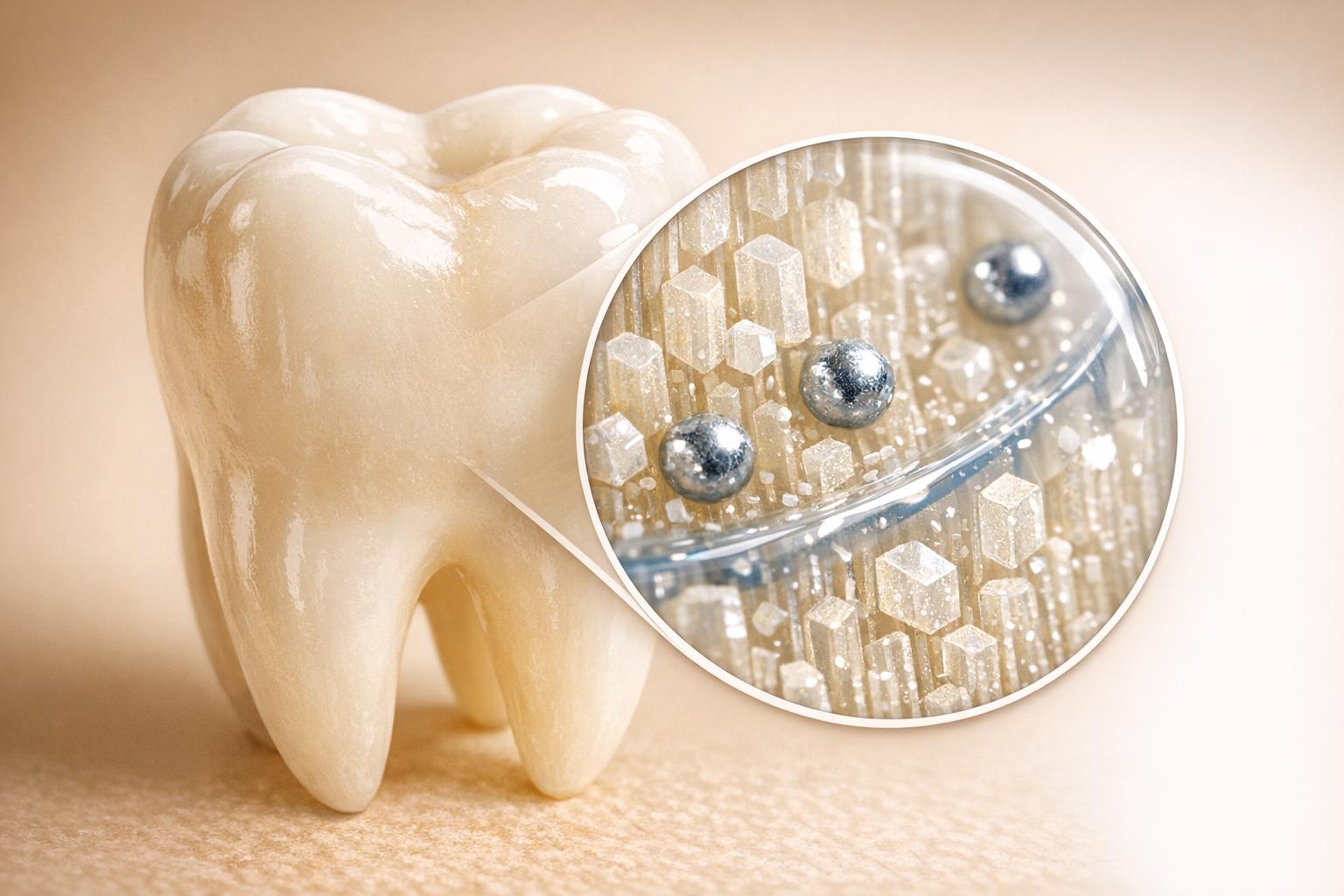
Nanodentistry is transforming how we treat and prevent tooth decay by working at the molecular level. It uses tiny materials and technologies – like nano-hydroxyapatite, nanocomposites, and silver nanoparticles – to repair enamel, fight bacteria, and improve dental restorations. These methods are more precise and less damaging to healthy teeth compared to older approaches.
Key highlights:
- Nano-hydroxyapatite (nHA): Repairs enamel by mimicking natural minerals, reducing sensitivity.
- Nanocomposites: Stronger, longer-lasting fillings with better aesthetics and reduced shrinkage issues.
- Silver nanoparticles: Antibacterial protection for materials like adhesives and brackets.
- Emerging materials: Bioactive glass and ACP nanoparticles for enamel regeneration.
- Future potential: Smart nanomaterials for targeted drug delivery and nanorobots for precise decay removal.
While these technologies show promise, challenges like restoration durability, high costs, and safety concerns slow adoption. In Australia, research institutions are working on making these advancements more accessible. Ask your dentist about nanotechnology options for more effective care tailored to your needs.
What is nano-hydroxyapatite? Can it reverse tooth decay?
sbb-itb-2be92ed
Current Nanotechnology Applications in Tooth Decay Treatment
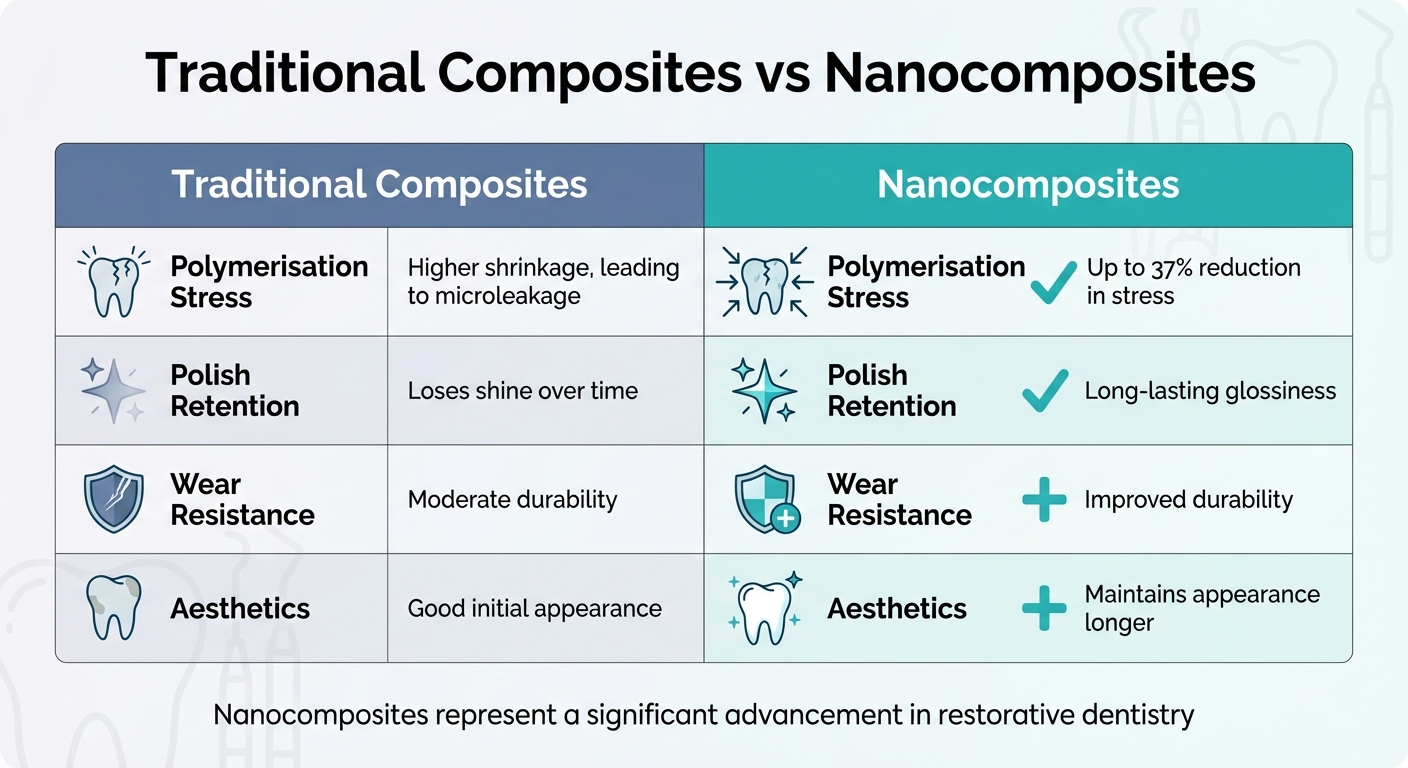
Traditional vs Nanocomposite Dental Fillings Comparison
Nanodentistry is already making waves in modern dental care by leveraging nanotechnology to address tooth decay at its molecular core. These advancements focus on precise, minimally invasive treatments that go beyond traditional materials. Instead of just filling cavities with inert substances, these new materials actively interact with oral tissues, representing a major shift in dental treatment approaches [6].
"Nanotechnology has moved from the state of a ‘vision’, or ‘science fiction’, to being a ‘real thing’, i.e., it has become reality", says Klaus D. Jandt, Chair of Materials Science at Friedrich Schiller University Jena [2].
Let’s dive into some of the cutting-edge technologies currently reshaping how tooth decay is treated.
Nano-Hydroxyapatite for Remineralisation
Nano-hydroxyapatite (nHA) particles, which are just 20–100 nanometres in size, play a key role in repairing demineralised enamel. Unlike fluoride, which strengthens existing enamel structures, nHA directly replaces lost minerals by filling in microscopic pores with apatite crystals. This not only restores enamel but also helps reduce tooth sensitivity by sealing dentinal tubules [8].
Several products on the market are already using this technology. BioRepair, created by Dr. Kurt Wolff, contains 7% nHA and has been shown to reduce mineral loss in enamel during clinical trials [8]. Other examples include Desensibilize Nano P by FGM Produtos Odontológicos and ReminPro by VOCO, which combines nHA with fluoride (1,450 ppm) to boost enamel calcium and phosphorus levels over a 30-day treatment period [8]. These products come in various forms, from toothpastes to professional varnishes, offering versatile options for remineralisation.
Nanocomposites in Restorative Dentistry
Nanocomposite fillings are a game-changer in restorative dentistry, incorporating nanofillers like silica, zirconia, or nanoclusters into a resin matrix. Their tiny size improves polishability and aesthetics while also addressing common issues with traditional composites. For instance, nanoclay fillers can reduce polymerisation stress by up to 37%, lowering the risk of microleakage and secondary decay [6].
Take Filtek Supreme from 3M, which uses nanocluster filler technology to deliver high strength and long-lasting polish retention [6] [4]. Research also highlights the potential of halloysite nanotubes coated with silver nanoparticles, which can boost the flexural strength of dental resin composites by 54%, from 86.5 MPa to 133.4 MPa [7]. This increase in durability is crucial, given that traditional fillings often fail within five years due to secondary caries [11].
| Feature | Traditional Composites | Nanocomposites |
|---|---|---|
| Polymerisation Stress | Higher shrinkage, leading to microleakage | Up to 37% reduction in stress [6] |
| Polish Retention | Loses shine over time | Long-lasting glossiness [6] |
| Wear Resistance | Moderate durability | Improved durability [7] |
| Aesthetics | Good initial appearance | Maintains appearance longer [6] [10] |
Beyond mechanical and aesthetic improvements, nanocomposites also integrate antimicrobial technologies.
Silver Nanoparticles for Antimicrobial Protection
Silver nanoparticles (AgNPs) are making dental materials smarter by offering broad-spectrum antibacterial protection. These nanoparticles release silver ions (Ag⁺) that disrupt bacterial cell walls, inhibit DNA replication, and deactivate enzymes [7]. Even at low concentrations (0.5% to 1.0%), AgNPs effectively prevent biofilm formation while maintaining over 90% cell viability for up to 72 hours, ensuring biocompatibility [7] [12].
"Silver-based nanomaterials are effective against biofilms because they can attack multiple sites within the cell at a very low concentration (0.5–1.0%) to prevent bacterial growth", explains Klaus D. Jandt [12].
AgNPs are now being incorporated into various dental materials, including composites, adhesives, and orthodontic brackets. Studies show that they can prevent Streptococcus mutans growth on orthodontic brackets for up to 30 days [11]. However, precise dosing is critical – concentrations above 0.175% may weaken the material’s mechanical properties [11]. To address concerns like tooth staining, PEG-coated AgNPs are being developed to maintain antimicrobial effectiveness while minimising aesthetic drawbacks [11].
New Developments in Nanodentistry for Tooth Decay
Nanotechnology is already reshaping dental care, but researchers are pushing the boundaries further with materials that could help regenerate the mineral content lost to decay. This marks a shift from simply repairing damage to encouraging the body’s natural healing abilities.
"The integration of bioactive materials into restorative dentistry marks a significant evolution from conventional approaches focused solely on mechanical repair", says Dr. Ashish Pandey from the Department of Prosthodontics at Daswani Dental College [13].
Although still in experimental stages or early clinical trials, these new technologies show promise for improving remineralisation and managing tooth decay.
Bioactive Nanomaterials for Remineralisation
Emerging bioactive materials aim to do more than repair – they work with the oral environment to regenerate tooth structure. For instance, amorphous calcium phosphate (ACP) nanoparticles release calcium and phosphate ions, essential for rebuilding enamel. These ions are released gradually, especially during acid attacks, helping to neutralise the environment and encourage structured remineralisation [6][8][14].
PAMAM dendrimers are another exciting development. Acting as biomimetic scaffolds, they replicate amelogenin, a protein involved in enamel formation. By guiding the organised deposition of minerals deep into damaged areas, these materials could one day enable true enamel regeneration [14].
| Bioactive Nanomaterial | Mechanism of Action | Clinical Application |
|---|---|---|
| Nano-Hydroxyapatite (nHAP) | Promotes crystal nucleation and growth | Found in toothpastes, gels, and restorative fillers [8][9] |
| Bioactive Glass (BAG) | Releases calcium and phosphate ions to form a protective layer | Used in desensitising agents and bioactive composites [6][13] |
| Amorphous Calcium Phosphate (ACP) | Supplies calcium and phosphate ions gradually | Applied in remineralising pastes and orthodontic adhesives [8] |
| PAMAM Dendrimers | Mimics natural proteins to guide mineral assembly | Experimental use in enamel and dentine repair [14] |
Chitosan nanoparticles are also being studied for their ability to bind to tooth surfaces. Their natural electrostatic attraction to enamel makes them ideal carriers for delivering remineralising ions directly where they’re needed most.
Smart Nanomaterials and Targeted Drug Delivery
Smart nanomaterials are taking dental therapies to the next level by offering precision treatment. Unlike traditional methods that affect the entire mouth, these materials deliver agents only to problem areas [15][16]. For example, nanocapsules can store antimicrobial agents and release them when they detect acid from decay-causing bacteria. This targeted approach reduces the need for high doses, potentially lowering the risk of antibiotic resistance.
Nanobiosensors add another layer of innovation by detecting specific biomarkers in saliva or gum fluid. These sensors can trigger the release of preventive agents at the earliest signs of decay. Meanwhile, self-healing dental materials with embedded nanocapsules release repair agents when micro-cracks form, extending the life of restorations.
| Feature | Traditional Drug Delivery (Systemic) | Smart Nano-Drug Delivery (Local) |
|---|---|---|
| Targeting | Affects the whole body | Focuses only on affected areas [16] |
| Dosage | High doses needed | Lower doses due to precision targeting [16] |
| Side Effects | Risk of antibiotic resistance and other issues | Reduced systemic side effects [16] |
| Bioavailability | Limited by metabolism | Enhanced absorption and stability [16] |
| Frequency | Frequent dosing required | Less frequent dosing [16] |
These advancements could pave the way for even more sophisticated tools, such as nanorobotics, for minimally invasive treatments.
Nanorobotics in Dentistry
Nanorobots, operating at scales of 0.1–100 nanometres, could revolutionise how we diagnose and treat tooth decay. Though still in early research stages, these tiny devices might one day be remotely guided to clean teeth, remove plaque, and repair decay with unparalleled precision. Unlike traditional methods that risk removing healthy tissue, nanorobots could selectively target harmful bacteria while leaving the beneficial oral microbiome intact.
One potential application is smart orthodontic brackets with built-in nanomechanical sensors. These sensors could provide real-time feedback, adjusting forces to ensure optimal tooth movement. Looking further ahead, combining nanorobotics with artificial intelligence could enable teeth to regenerate naturally by stimulating dentine growth – shifting the focus from repair to biological restoration.
"The integration of smart stimuli-responsive systems, Artificial Intelligence (AI), and three-dimensional (3D) bioprinting is transitioning the field from prosthetic replacement to full biological tooth regeneration", says Murtada A. Ahmed from the Department of Dentistry at Tamam Al-Ilaj Medical Complex [6].
However, challenges such as cost, long-term safety, and ethical considerations need to be addressed before nanorobotics become a clinical reality.
Future Trends in Nanodentistry Adoption
Bringing nanodentistry from research labs into everyday dental practices involves tackling technical, safety, and regulatory challenges. As this field progresses, several trends are emerging that could define how these technologies are adopted in Australia and beyond. These trends align with the earlier developments in nanomaterial applications.
Personalised and Preventive Dental Care
Nanodentistry is steering dental care toward a more proactive and tailored approach. Instead of focusing only on treating decay after it occurs, this technology prioritises prevention through methods like biofilm control, remineralisation, and antibacterial strategies [1].
One of the standout features of nanodentistry is its ability to personalise treatments. Dental professionals can customise therapies to meet the unique needs of each patient [4]. For example, nano‐hydroxyapatite – a familiar agent – continues to demonstrate its ability to target specific issues by working in harmony with natural processes.
Another breakthrough in this area is the concept of smart restorations. Future nanocomposites could include "intelligent" fillers that release calcium and phosphate ions in response to low pH levels – an acidic environment often linked to decay-causing bacteria [5][4]. This innovation could significantly enhance preventive care.
Market Growth and Accessibility
Interest in nanodentistry has skyrocketed. For instance, the term "Nanocomposites" reached a peak of 2,300 mentions on PubMed in 2021, surpassing other related topics [1].
However, cost remains a major barrier. Producing nanomaterials is expensive, as is the specialised equipment and training needed to use them. This limits access, especially in regions with tighter financial constraints [5][3]. On a brighter note, there’s a growing shift toward eco-friendly practices in nanodentistry. Researchers are exploring natural polymers and plant-based methods for synthesising antibacterial nanomaterials, like silver nanoparticles, to align with green chemistry principles [1].
Challenges to Clinical Integration
Despite the exciting potential, integrating nanodentistry into routine practice comes with its own set of challenges. Safety and biocompatibility are top concerns. The small size and high reactivity of nanoparticles can sometimes cause unintended effects, such as inflammation or allergic reactions [5].
"Sometimes, the term nano is used to market products in dentistry without sufficient clinical evidence that the nanoversion of a material is significantly better than the conventional non‐nanoversion of the product", says Klaus D Jandt, Chair of Materials Science at Friedrich Schiller University Jena [2].
Manufacturing challenges also pose a hurdle. Nanoparticles can clump together, losing the unique properties that make them effective. Techniques like electrostatic or steric stabilisation are used to prevent this, but these add complexity and cost to the production process [2].
Regulatory gaps further complicate matters. Clear and standardised guidelines for producing, testing, and applying nanotechnology-based dental products are still lacking [5]. Additionally, dental practitioners need specialised training and equipment to work with these materials effectively [5]. Long-term studies are also essential to understand the potential accumulation of nanoparticles in the body and their health impacts. Until such data is available, Australian dental practices are likely to proceed cautiously [5].
These trends highlight the need to address cost, safety, and training challenges to make nanodentistry a practical reality. As the technology evolves, so too will clinical protocols and practitioner education, paving the way for its broader adoption.
Conclusion
Nanodentistry is reshaping how we tackle tooth decay, introducing biomimetic remineralisation and smart pH-sensitive materials that address the shortcomings of traditional treatments. With untreated permanent tooth decay affecting around 2.3 billion people globally [14], the potential for improvement is immense.
This transition from reactive treatments to more precise, preventive solutions highlights the promise of nanodentistry. In Australia, institutions like the CSIRO, the University of Sydney, and the University of Melbourne are at the forefront of this research [17]. These organisations are driving efforts to bring these advancements from research labs into dental clinics across the country.
"Nanotechnology is revolutionising dentistry in Australia… promising a future with better oral health outcomes", says Dr. James Malouf [17].
Digital tools are also playing a role in enhancing personalised care [17]. While the progress is promising, challenges remain. High production costs, the need for specialised training, stringent TGA regulations, and the lack of long-term safety data slow down widespread adoption [17][5]. As a result, Australian dental practices are integrating these technologies at a measured pace.
As these innovations move closer to everyday use, they have the potential to redefine dental care. Staying informed is key. Next time you visit your dentist, consider asking about treatments like nanocomposites or nano-hydroxyapatite for better durability and remineralisation [17]. You might also want to explore whether bioactive materials that release calcium, phosphate, or fluoride ions are a good fit for your oral health needs [6].
The direction of dental care is clear: a shift toward proactive and personalised prevention. By discussing these advancements with your dentist, you can make well-informed decisions about your oral health and embrace the future of dentistry.
FAQs
Is nano-hydroxyapatite better than fluoride for tooth decay?
Research shows that nano-hydroxyapatite can help remineralise early enamel lesions in a way that’s comparable to fluoride. While some studies hint at possible long-term protective benefits, there’s no solid evidence yet that it outperforms fluoride in preventing tooth decay. More research is required to confirm its overall effectiveness.
Are silver nanoparticles in dental materials safe long term?
The long-term safety of using silver nanoparticles in dental materials is still uncertain. Research indicates that these particles could carry risks, such as neurotoxicity and tissue damage. This is because they have the ability to cross biological barriers and build up in organs like the brain, liver, and kidneys. More research is necessary to gain a clearer understanding of their potential impact.
When will smart nanomaterials or nanorobots be available in Australia?
Smart nanomaterials and nanorobots are anticipated to arrive in Australia by 2035, marking a major step forward in dental technology. With these advancements, the nanodentistry market is set to expand rapidly, offering Australians cutting-edge solutions for dental care in the near future.
Related Blog Posts
- Nanomaterials in Dentistry: Wear Resistance Explained
- Antimicrobial Nanocomposites for Tooth Regeneration
- How Nanotechnology Improves Dental Restoration Durability
- Top 5 Nanomaterials in Cosmetic Dentistry
Important Notice: Any surgical or invasive procedure carries risks. Before proceeding, you should seek a second opinion from an appropriately qualified health practitioner.
Individual results may vary. The information provided in this article is for educational purposes only and does not constitute medical advice.
Checkout Related Blogs




Get in touch with us
For more information, call us now to start feeling better. Or fill the form below to make appointment
The Latest News from Complete Smiles
How to Clean Clear Plastic Retainers
Checklist for Choosing Wearable Dental Devices
Checklist for Choosing Cloud AI Platforms in Dentistry
Complete Smiles Bella VistaAccepts All Major Health Funds, Including





