





Future of AI in Teledentistry
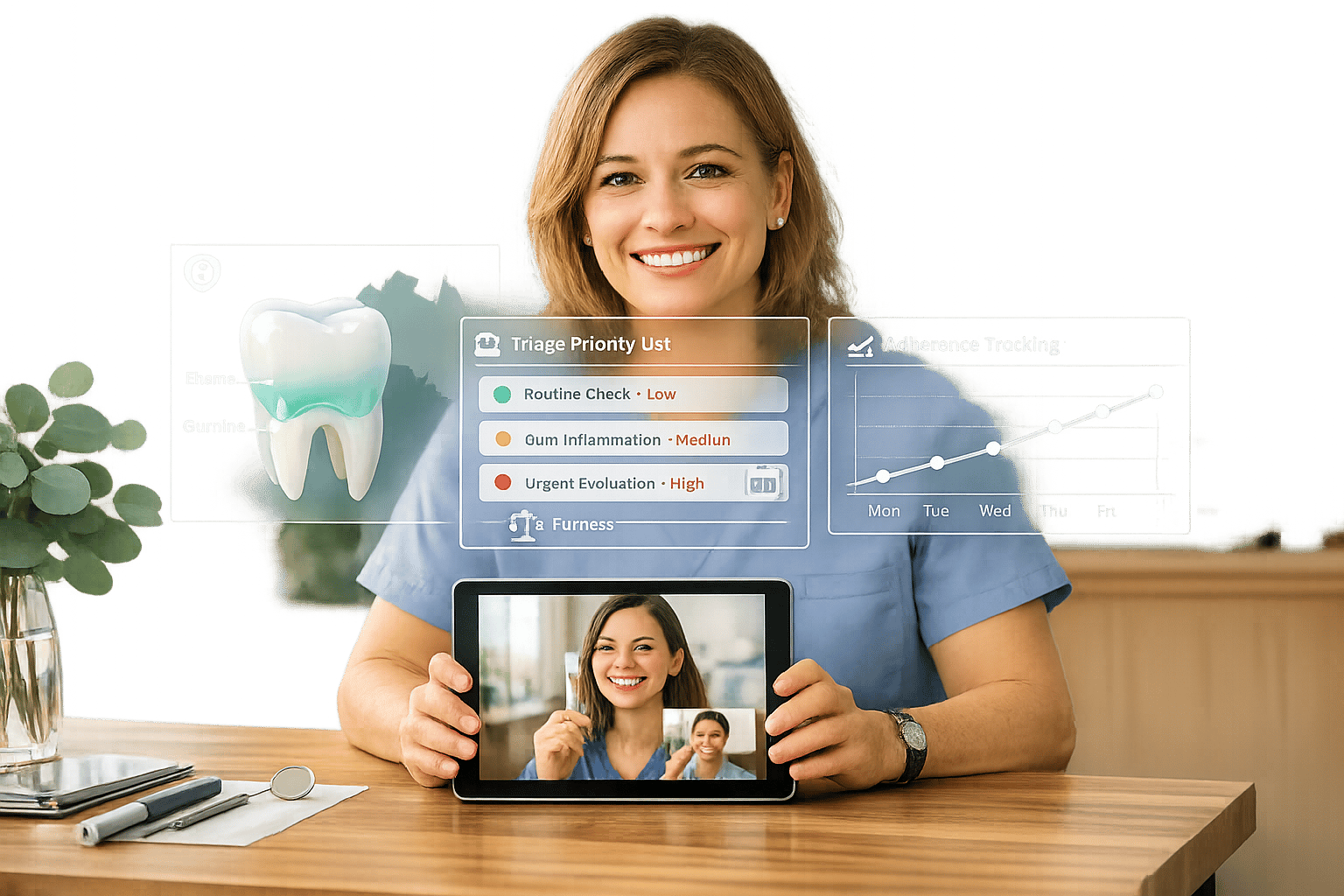
AI is transforming teledentistry in Australia, especially for regional and remote areas with limited access to general dental care. By using advanced tools like machine learning, computer vision, and natural language processing, AI improves diagnostic accuracy, streamlines triage, and enhances remote monitoring. Key benefits include:
- Improved diagnostics: AI systems analyse dental images with high accuracy (e.g., 95% for bone loss, 85% for caries), ensuring early detection of dental issues.
- Efficient triage: Automated systems prioritise urgent cases, reducing unnecessary travel and wait times.
- Remote care: AI-powered platforms enable patients to share images and receive expert analysis, minimising in-person visits.
- Predictive tools: AI forecasts dental risks, allowing proactive care and personalised treatment plans.
- Post-treatment monitoring: Tools like DentalMonitoring track progress remotely, ensuring effective outcomes.
While AI is advancing dental care, challenges like data privacy, algorithm bias, and the need for clinician oversight remain. Future developments, including digital twins and smart devices, promise further improvements in accessibility and care quality.
The AI Revolution in Dentistry
sbb-itb-2be92ed
AI for Better Diagnostic Accuracy
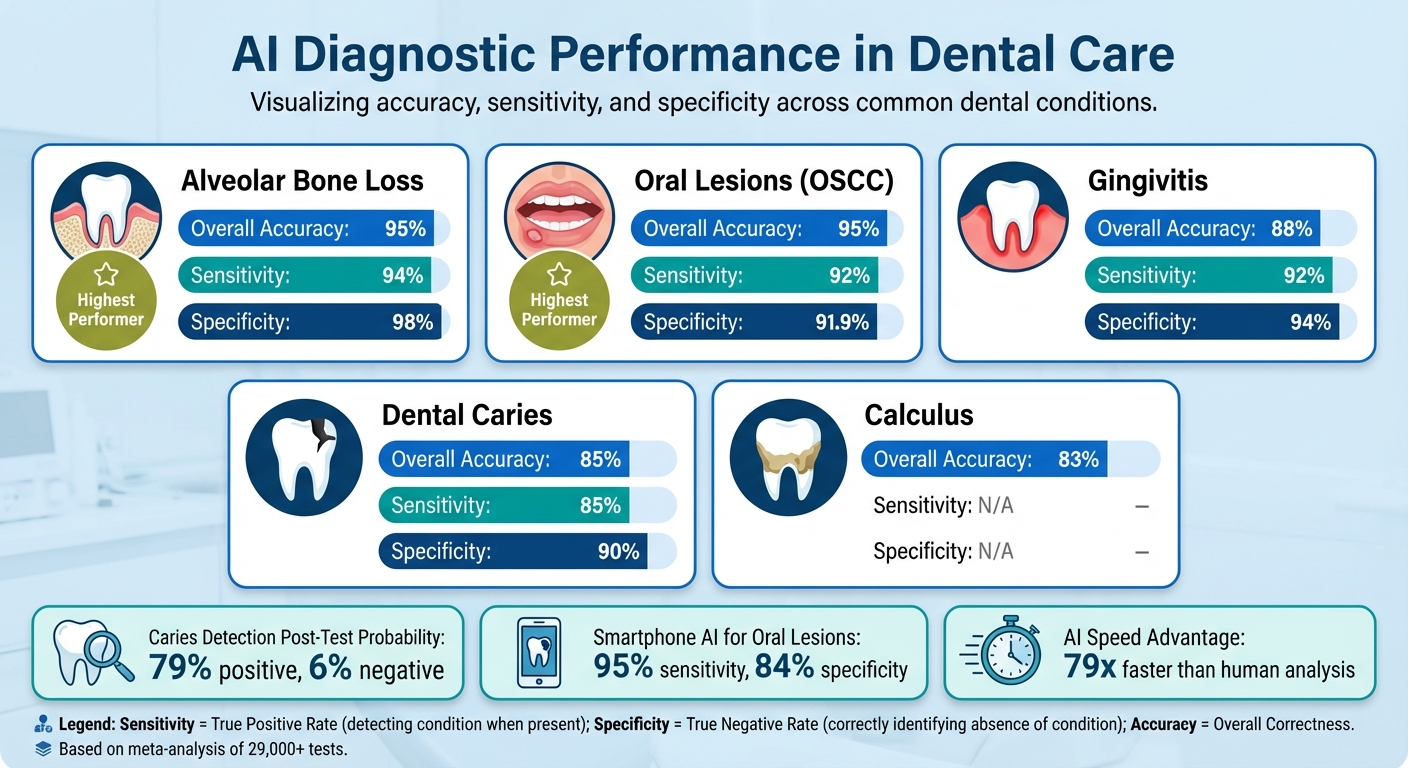
AI Diagnostic Accuracy in Dental Conditions: Performance Metrics Comparison
AI-powered image analysis has brought a new level of precision to diagnostic processes in remote dental care. By examining radiographs and photographs with consistent accuracy, these systems minimise the variability often seen among practitioners. For Australian dental clinics in regional areas, this means patients can receive reliable screening results without needing to travel long distances for specialist opinions.
AI Analysis of Remote Dental Images
AI systems can analyse various types of dental images – such as bitewing radiographs, intraoral photographs, and 3D CBCT scans – to identify conditions that might otherwise go unnoticed. In teledentistry, where physical examinations aren’t possible, these tools deliver high-sensitivity analysis of images captured via smartphones or remotely submitted radiographs [1][12].
Several FDA-cleared platforms are already making an impact in clinical settings:
- Overjet: Specialises in detecting bone loss and dental caries with impressive accuracy.
- VideaHealth (Videa Dental Assist): Evaluates bitewing, periapical, and panoramic radiographs for patients aged three and older [1][11][7].
- Diagnocat: Processes both 2D and 3D images, including CBCT scans for diagnostic planning, to create detailed diagnostic reports for remote consultations [1].
These platforms act as a consistent second opinion in remote care scenarios [10][11]. They also automate tasks like dental charting and monitor conditions such as bone loss over time. For regional Australian practices, these tools enable access to specialist-level diagnostic capabilities without requiring in-person consultations.
| Condition | AI Accuracy | AI Sensitivity | AI Specificity |
|---|---|---|---|
| Alveolar Bone Loss | 95% | 0.94 | 0.98 |
| Oral Lesions (OSCC) | 95% | 0.92 | 0.919 |
| Gingivitis | 88% | 0.92 | 0.94 |
| Dental Caries | 85% | 0.85 | 0.90 |
| Calculus | 83% | N/A | N/A |
These levels of diagnostic consistency allow for earlier identification of dental issues, improving outcomes for patients.
Early Detection of Dental Problems
AI’s precision also extends to early detection. A meta-analysis of over 29,000 tests revealed that AI caries detection achieved 85% sensitivity and 90% specificity, outperforming traditional methods [11]. The positive post-test probability for AI in detecting caries is 79%, while the negative post-test probability is just 6% [11].
Smartphone imaging has proven effective for remote screenings. Research led by Nguyen and colleagues showed that using smartphone cameras with AI software achieved 95% sensitivity and 84% specificity for detecting oral lesions. This performance is on par with face-to-face examinations [1]. For underserved populations, AI-assisted detection of oral potentially malignant disorders and oral squamous cell carcinoma demonstrated pooled sensitivity of 92% and specificity of 91.9% [7].
"AI-powered diagnostic systems demonstrated notable sensitivity and specificity in identifying various oral situations… comparable to in-office examinations", states research published in Frontiers in Oral Health [1].
AI’s ability to detect white spot lesions – the earliest sign of dental caries – enables non-invasive remineralisation treatments before cavities form [13]. This early intervention can help avoid more complex and costly treatments in the future.
AI-Assisted Triage and Remote Screening
AI’s diagnostic precision is transforming patient management in teledentistry, especially through automated triage and chatbot assessments. These tools streamline patient flow by identifying urgent cases and ensuring timely care. By evaluating symptoms and images, AI-powered systems prioritise who needs immediate attention and who can wait for routine check-ups [1]. For dental clinics across Australia, particularly in regional and remote areas, this technology is a game-changer. It enables faster professional reviews for patients experiencing severe pain or dental trauma, while also enhancing overall efficiency.
Automated Patient Triage Systems
Automated triage systems rely on patient-submitted information, such as symptoms and images from smartphones or radiographs, to determine the urgency of cases. Portable imaging devices play a key role here, capturing data in community settings. Dentists can then review this information remotely, reducing unnecessary emergency visits and focusing on preventative care.
A few platforms are already merging AI with clinical workflows. For instance, Dentulu employs an AI-based triage and symptom checker to analyse patient-uploaded X-rays and images for issues like malocclusion, periodontal disease, and cavities. Patients can then proceed to video consultations with licensed dentists [4]. Similarly, Apple Tree Dental in Minnesota adopted Overjet AI technology in February 2025, which annotates radiographs to identify bone loss and carious lesions. This not only improves diagnostics but also supports patient education [6].
"AI can assist dentists by triaging cases, prioritizing urgent consultations, and even guiding treatment protocols based on patient data trends, enhancing operational efficiency." – Frontiers in Oral Health [1]
AI chatbots complement these triage systems by providing an additional layer of initial screening.
AI Chatbots for Initial Patient Assessment
AI chatbots engage with patients by collecting symptom details and addressing common questions [4]. But they go beyond just symptom checks. These virtual assistants can offer tailored education, share post-operative care instructions, and even handle administrative tasks like scheduling follow-ups.
The success of AI-assisted screening hinges on the quality of the images provided. High-resolution captures are essential, and licensed dentists must review the results to minimise the risk of misdiagnosis [4].
Predictive Analytics and Treatment Planning
AI is reshaping teledentistry by moving it from a reactive model to a forward-thinking, proactive approach. With the ability to forecast dental health risks before any visible symptoms appear, AI is transforming patient care. By analysing a mix of data – such as radiographs, intraoral scans, clinical notes, genetic information, and lifestyle habits like diet and oral hygiene – machine learning models can uncover patterns that traditional visual exams might miss. These predictive tools can estimate the likelihood of conditions like caries and periodontitis, allowing dentists to step in early with personalised preventive measures [14][16].
One fascinating development is the creation of digital twins – virtual models of patients that combine diverse data sources to predict how individuals might respond to various treatments over time [7]. Dentists can use these simulations to test different approaches remotely and choose the most effective one. In prosthodontics, for example, AI can predict future tooth wear or the degradation of prosthetics, enabling dentists to schedule timely maintenance [7].
This shift towards proactive care is also making waves in dental specialisations.
AI for Predicting Dental Health Risks
AI’s ability to predict dental health issues is proving invaluable across various specialties. For instance, in caries detection, AI systems have achieved 100% sensitivity in identifying very small cavities – less than 0.6 mm – that might otherwise go unnoticed during standard visual inspections [14]. Additionally, AI can analyse dental images 79 times faster than a human clinician, cutting down on delays in diagnosis [14].
"AI technology is addressing these limitations by offering more precise and reliable methods for detecting cavities… identifying even the smallest signs of decay that might be missed by the human eye." – Sama Oral Health [15]
In periodontics, AI is breaking new ground by analysing bone loss patterns and incorporating salivary biomarkers to detect early signs of disease [7][1]. Community-based initiatives that use handheld imaging devices with AI assistance have shown promising results, reducing emergency visits while improving access to preventive care [1].
Smartphone-based imaging paired with AI is another game-changer, boasting 95% sensitivity and 84% specificity for detecting oral lesions [1]. However, the clarity of patient-submitted images is critical – high-resolution photos are essential for accurate predictions. And while AI can assist significantly, licensed dentists must still review all AI-generated assessments to minimise the risk of misdiagnosis.
Beyond diagnostics, AI is making strides in treatment monitoring, particularly in orthodontics.
Virtual Orthodontic Monitoring with AI
Orthodontics has embraced AI for remote treatment monitoring, allowing patients to manage their progress from home. Platforms like DentalMonitoring enable patients to use their smartphones to capture intraoral images, which AI then assesses to track tooth movement and identify potential issues with appliances – all without the need for frequent office visits [1]. This not only reduces the number of appointments but also ensures precise treatment outcomes.
AI also supports growth prediction in paediatric orthodontics. By using historical growth data and 3D morphometric analysis, AI can predict mandibular development with 85% accuracy, helping orthodontists refine treatment plans for aligners [7]. By forecasting how teeth will likely shift, AI enables dynamic adjustments to treatment plans tailored to individual patient needs rather than sticking to a fixed protocol [16].
Another benefit is treatment simulation. Patients can visualise their expected results before committing to lengthy orthodontic procedures, making the consent process smoother and helping set realistic expectations.
Despite these advancements, human oversight remains critical. While AI excels at processing data and recognising patterns, trust in fully AI-generated diagnoses is still low – only about 10% of patients and professionals are comfortable relying on them without human verification [14]. To integrate AI effectively, dental teams should undergo specialised training, ensuring they manage alert fatigue and uphold data privacy standards.
Remote Monitoring and Post-Treatment Care
AI isn’t just transforming diagnostics – it’s reshaping how post-treatment care is delivered. Instead of waiting weeks for follow-ups to identify issues, AI-powered systems can now flag problems early, giving dentists the chance to act before minor concerns turn into emergencies.
AI Tools for Tracking Treatment Outcomes
Platforms like DentalMonitoring are leading the way in treatment tracking. Patients can upload intraoral images, which AI analyses to monitor tooth movement and appliance issues. This ensures treatment stays on track and reduces unnecessary trips to the clinic [1].
AI’s capabilities go beyond orthodontics. For instance, deep learning systems have shown 95% accuracy in identifying alveolar bone loss and 88% sensitivity in detecting gingivitis from patient-submitted photos. Tools like GumAI have proven to be effective as well, with 85% accuracy and 93% sensitivity for monitoring gum health using smartphone images. This allows patients to stay on top of their periodontal health without stepping into a clinic [7]. Similarly, platforms such as Overjet and VideaHealth analyse radiographs over time, helping dentists spot subtle changes in bone levels or caries progression that might otherwise go unnoticed during isolated check-ups.
These tools also support the growing trend of "store-and-forward" teledentistry. Patients can upload images at their convenience, which AI pre-analyses before dentists review the data. For the best results, patients should use standard tools like cheek retractors or intraoral mirrors and follow specific guidelines to capture clear, high-quality images. When integrated with Electronic Health Records (EHR), AI platforms can track periodontal disease progression automatically, creating a comprehensive and seamless treatment history.
Reducing In-Person Follow-Up Appointments
AI’s role in early detection and remote monitoring is also helping to cut down on in-person follow-ups. A great example of this is the Virtual Dental Home (VDH) model, developed at the University of the Pacific. By using hygienists to collect diagnostic data for remote dentist reviews, the program achieved a 25% reduction in emergency dental visits. What’s more, 97% of participants were satisfied with virtual clinics, and 94% reported positive experiences with telephone consultations [1][8].
"The goal of telemonitoring is to substitute in-person visits with virtual ones for ongoing monitoring of treatment results and disease progression." – Springer Nature [8]
This hybrid model lets dentists focus on complex interventions while routine check-ups and screenings are handled virtually. AI can even spot early warning signs, like white spot lesions after orthodontic treatment or appliance issues, so dentists can intervene before emergencies arise [8][4].
That said, the success of AI in remote care relies on patients providing clear, high-quality images and having stable internet connections. While AI can monitor and flag concerns, it can’t replace hands-on treatments like restorations or extractions. To bridge this gap, dentists should use AI systems with built-in alerts for high-risk situations, such as rapid bone loss or appliance failures, ensuring timely in-person care when needed.
Challenges, Ethics, and Future Developments
AI is reshaping teledentistry, but it raises critical concerns about privacy, accountability, and equity that need addressing before the technology can achieve its full potential.
Data Security and Patient Privacy
When patients upload images, sensitive information is transmitted, creating a risk – even with de-identified data – of re-identification [7][4]. In Australia, dental practices must adhere to the Privacy Act 1988 and follow guidelines from the Office of the Australian Information Commissioner (OAIC) to ensure proper permissions, secure data storage, and ethical usage [3].
The Australian Dental Association emphasises that "Any application of an AI system in dental clinical care must be supervised and managed by a Dental Practitioner" [3]. While AI can assist, professional judgement remains irreplaceable. To safeguard patient data, clinics should use end-to-end encryption and explore technologies like federated learning. This approach trains AI models across multiple clinics without sharing raw patient data [17][7].
Algorithmic bias is another pressing issue. AI trained on narrow datasets risks misrepresenting underrepresented groups, potentially exacerbating oral health disparities [7]. To address this, regular bias audits and diverse training datasets are essential. Additionally, the "black box" nature of deep learning models – where decision-making processes are not easily understood – can undermine clinician trust. Tools like Explainable AI (XAI) and SHAP (SHapley Additive Explanations) are being developed to make AI outputs more transparent, enabling dentists to verify recommendations before acting on them [7][17].
Legal accountability adds another layer of complexity. If an AI-assisted diagnosis results in harm, questions arise about who is liable – the clinician, the software developer, or the institution [1][7]. Addressing these challenges is crucial to building trust and paving the way for future advancements in AI-driven dental care.
What’s Next for AI in Teledentistry
Despite current hurdles, emerging AI technologies hold the potential to further revolutionise teledentistry. While advancements in diagnostic accuracy and remote monitoring continue, clinician oversight will remain central to these innovations.
Future developments include generative AI and diffusion models capable of designing dental restorations based on natural-language inputs and simulating anatomical changes for surgical planning [18][7]. Digital twins – virtual models of patients that combine radiographs, scans, and genetic data – could soon predict how individuals will respond to specific treatments, enabling more tailored care [7].
The Internet of Dental Things (IoDT) is also making strides. Smart toothbrushes and wearable sensors already track oral hygiene in real time and send data directly to dentists [4]. In one study, an AI-enabled toothbrush paired with personalised mobile reminders led to an 8% reduction in bleeding pockets among participants [7]. Robotic surgical systems with haptic feedback are also in development, allowing remote-guided implant placements with a precision of 0.7 ± 0.3 mm – outperforming freehand techniques [7][18]. Dr Diane Boval highlights this balance, stating, "AI and digital dentistry in 2025 support diagnosis, treatment planning, fabrication, and workflow – but do not replace clinical judgement" [18].
To prepare for these advancements, clinics should establish standard operating procedures (SOPs) for remote image capture, train staff to operate AI systems, and ensure that all AI-flagged cases are reviewed by a clinician [18][4]. The overarching aim is not to replace human expertise but to enhance the safety, accuracy, and accessibility of remote dental care.
Conclusion: AI’s Impact on Teledentistry
AI-powered teledentistry is transforming how Australians, especially those in rural and remote areas, access dental care. AI-driven diagnostic tools have shown impressive accuracy rates, ranging from 82% to 95% across various dental fields [9]. This level of precision is essential for addressing the challenges of delivering dental services across vast distances [2]. Additionally, the technology allows non-dental professionals in remote areas to capture images that AI can analyse for risk assessment, enabling specialists to prioritise patients before they undertake lengthy travel for treatment [5].
The benefits go beyond just diagnostics. For instance, Virtual Dental Home models using teledentistry have led to a 25% drop in emergency dental visits, with more than 85% of patients reporting satisfaction with their care [1]. AI also facilitates real-time collaboration between rural dentists and metropolitan specialists and automates routine administrative tasks, allowing limited staff to focus more on patient care [5].
However, these advancements must be managed carefully. The Australian Dental Association stresses the importance of patient safety, quality care, and data privacy, ensuring that AI remains a tool under the guidance of registered dental practitioners [3]. With proper oversight, AI has the potential to reduce inequalities in care, alleviate workforce pressures, and modernise the way oral health services are delivered in Australia [2].
FAQs
How reliable is AI if my photos or X-rays aren’t perfect quality?
AI systems have come a long way and can manage minor flaws in photos or X-rays, but their dependability still hinges heavily on the quality of the images they process. If the input images are blurry, poorly lit, or otherwise subpar, the chances of diagnostic mistakes or overlooked issues increase. While advancements in image reconstruction technology are helping improve AI accuracy, clear, high-quality images continue to be critical – especially in clinical environments where precision can make all the difference.
Who is responsible if an AI tool misses a dental problem in a teledentistry consult?
If an AI tool misses a dental issue during a teledentistry consultation, the responsibility falls on the supervising dental professional. They remain fully accountable for diagnosing and managing patient care, regardless of the AI’s role as a support tool. This approach prioritises patient safety and upholds professional standards.
What steps protect my privacy when I upload dental images for AI review in Australia?
Your privacy is protected through strict data management practices. These include encryption, compliance with Australian data privacy laws, and following professional standards set by organisations like the Australian Dental Association. These steps are designed to keep your dental images secure and confidential at all times.
Related Blog Posts
- AI-Powered Dental Imaging: Future Trends
- How AI Improves Remote Dental Care
- AI in Oral Cancer Detection: How It Works
- AI in Orthodontics: Risk Assessment Explained
Important Notice: Any surgical or invasive procedure carries risks. Before proceeding, you should seek a second opinion from an appropriately qualified health practitioner.
Individual results may vary. The information provided in this article is for educational purposes only and does not constitute medical advice.
Checkout Related Blogs




Get in touch with us
For more information, call us now to start feeling better. Or fill the form below to make appointment
The Latest News from Complete Smiles
How to Clean Clear Plastic Retainers
Checklist for Choosing Wearable Dental Devices
Checklist for Choosing Cloud AI Platforms in Dentistry

Complete Smiles Bella VistaAccepts All Major Health Funds, Including





