





AI and Cone-Beam CT: A Diagnostic Revolution
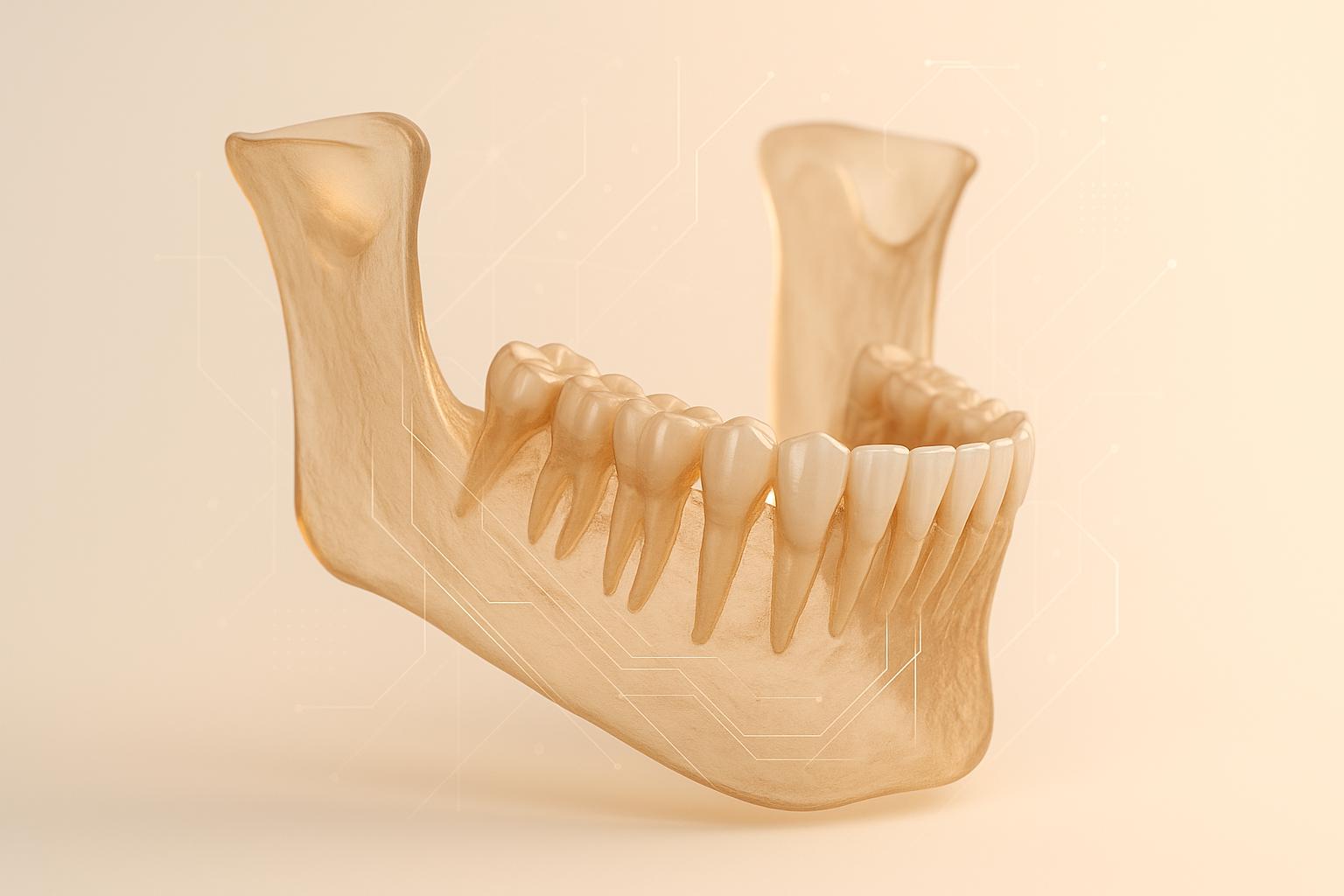
AI is transforming dental imaging, especially with Cone-Beam CT (CBCT), by addressing its limitations and significantly improving diagnostic efficiency. CBCT already provides detailed 3D images with up to 98% less radiation compared to traditional CT scans. However, challenges like metal artefacts, manual analysis, and missed subtle pathologies remain. AI tackles these issues with:
- Speed: Processes CBCT images up to 500 times faster than manual methods.
- Accuracy: Achieves Dice scores over 91% for teeth and bone segmentation, even with complex cases.
- Noise Reduction: Minimises artefacts caused by dental fillings or implants.
- Integration: Combines CBCT with other imaging data for a complete diagnostic view.
This technology is reshaping orthodontics, implant planning, and periodontal care by offering precise treatment insights and improving patient communication. While challenges like metal artefacts and integration costs exist, AI-enhanced CBCT is proving to be a reliable tool for modern dental practices in Australia.
???? CBCT Dental Segmentation with AI | DCMCloud Viewer | Web-Based Imaging Workflow
What is Cone-Beam CT Technology?
Cone-Beam CT (CBCT) creates 3D images of dental and maxillofacial structures. It works by rotating a cone-shaped X-ray beam around the patient’s head, capturing multiple angles in a single scan – usually in under a minute.
One of CBCT’s standout features is its compact and efficient design, making it ideal for dental clinics. These machines allow clinicians to view images as either 2D cross-sections or 3D volumes, enabling detailed analysis from virtually any angle [2].
CBCT also uses a focused field of view, which means it can target specific areas like a single tooth, a section of the jaw, or the full maxillofacial region. This not only reduces scan time but also limits unnecessary radiation exposure.
CBCT in Modern Dental Diagnostics
CBCT has become an essential tool in various dental applications. For implant planning, it helps clinicians assess bone volume, quality, and angulation, while also identifying the location of critical structures like the inferior alveolar nerve and maxillary sinus. This reduces the risk of complications during surgery [2].
In orthodontics, CBCT supplies valuable 3D insights into the relationship between teeth and surrounding alveolar bone. This is crucial for planning safe tooth movements, ensuring that the roots don’t invade adjacent bone during treatment [1]. It’s also useful for evaluating airways, diagnosing temporomandibular joint issues, and identifying impacted teeth – all of which inform treatment decisions [5].
Beyond these applications, CBCT excels at detecting subtle bone changes that standard X-rays might miss. It can reveal trabecular bone alterations, bone erosion, and periosteal reactions, making it a powerful tool for diagnosing conditions like osteonecrosis, temporomandibular joint disorders, and alveolar bone defects [2].
For orthognathic surgery, CBCT offers detailed insights into skeletal discrepancies, helping surgeons plan complex jaw movements with precision [2]. Additionally, it supports endodontic procedures, tooth auto-transplantation, and thorough evaluations of bone quality before surgical treatments [2].
Limitations of CBCT Imaging Alone
While CBCT is highly effective, it does have limitations that technology like AI aims to address. One major issue is metal artefacts caused by dental fillings, implants, crowns, and orthodontic appliances. These artefacts can distort images, creating blurry areas and obscuring important structures like adjacent teeth and surrounding bone [1]. This is particularly problematic for patients with extensive dental work, as it can lead to diagnostic inaccuracies.
Another challenge is resolution. While CBCT is excellent for imaging hard tissues like bone and teeth, it struggles with fine occlusal details that are sometimes better captured by traditional 2D radiographs [3]. Its ability to image soft tissues is also limited, reducing its usefulness for comprehensive soft tissue assessments [2].
Manual analysis of CBCT scans is another hurdle. Radiologists must carefully identify anatomical structures, measure bone thickness, and evaluate bone volume. These tasks are time-consuming and prone to human error, especially in complex cases involving missing or misaligned teeth [1]. This can slow down workflows and delay diagnoses, particularly in busy clinical settings [1].
These challenges highlight the need for AI integration to improve the speed, consistency, and accuracy of CBCT image interpretation.
How AI Improves CBCT Imaging
AI is transforming cone-beam computed tomography (CBCT) by tackling its traditional challenges, speeding up analysis, and improving image clarity. By automating processes and combining data from various imaging sources, AI enhances both the efficiency and accuracy of diagnostics, making it an essential tool for modern dental practices.
AI processes CBCT images up to 500 times faster than manual methods, matching the accuracy of a radiologist [1]. This incredible speed allows dental clinics to manage more cases without sacrificing quality, giving clinicians more time to focus on creating effective treatment plans.
AI-Driven Segmentation and Analysis
One of AI’s standout contributions is in segmentation. With deep learning algorithms, anatomical structures can be automatically segmented with remarkable precision. A large validation study, which included 4,215 patients and 4,938 CBCT scans from 15 dental centres, demonstrated the system’s capabilities. It achieved Dice scores averaging 94.1% for individual teeth segmentation and 94.5% for alveolar bone segmentation, with minimal errors – just 0.17 mm for teeth and 0.33 mm for bones [1].
Even in challenging cases, such as those with metal artefacts or misaligned teeth, the system maintained high performance, with only slight reductions in accuracy. This level of precision meets the stringent requirements for treatment planning in orthodontics and dental implants, as confirmed by clinical partners [1]. Beyond segmentation, AI can integrate data from multiple imaging sources, creating a more comprehensive diagnostic view.
Combining Multiple Imaging Sources with AI
AI doesn’t just analyse individual CBCT scans – it combines data from different imaging modalities to create a unified diagnostic model. CBCT provides detailed 3D images of hard tissues like teeth and bones, while intraoral scans capture surface details of soft tissues and tooth crowns. By merging these datasets, AI generates a complete 3D model that maps the relationships between crowns, roots, and surrounding bone.
This integration is especially valuable for treatment planning. In orthodontics, for example, detailed 3D models help clinicians understand the precise spatial relationships between teeth and alveolar bones, ensuring safe tooth movement without damaging the surrounding bone [1]. For dental implants, combining imaging data allows for an accurate evaluation of bone volume and quality, as well as the proximity of vital structures, reducing the risk of complications.
AI also supports procedures like 3D-guided implant surgery and tooth auto-transplantation, as well as the diagnosis and monitoring of lesions [2]. Its ability to detect subtle changes in bone density and architecture enhances diagnostic accuracy, helping clinicians make better-informed decisions across various dental specialties. By bridging the gaps left by traditional CBCT imaging, AI provides a more confident and precise approach to treatment planning.
Clinical Uses of AI-Enhanced CBCT
Thanks to rapid AI analysis and precise segmentation, as discussed earlier, AI-enhanced CBCT is revolutionising patient care across various dental specialities. By combining advanced 3D imaging with intelligent analysis, clinicians can now plan treatments with a level of precision that helps minimise complications and improve patient outcomes.
Orthodontics and Tooth Movement Simulation
Orthodontic treatment planning has seen a major shift with AI’s ability to create detailed 3D models that accurately depict how teeth interact with surrounding bone structures. This advanced visualisation ensures that tooth roots stay securely within the alveolar bone boundaries, providing a safer framework for orthodontic interventions [1].
AI segmentation achieves highly accurate results, with Dice scores of 91.5% for teeth and 93.0% for alveolar bones, offering orthodontists reliable tools for precise planning [1]. This accuracy allows clinicians to simulate tooth movements before treatment begins, predicting outcomes with confidence and delivering detailed geometric guidance for individual tooth segmentation [1].
The benefits are clear: orthodontists can plan tooth movements more accurately while ensuring tooth root apices remain within safe anatomical limits. This reduces risks like root resorption, bone dehiscence, and other complications that might arise when teeth are moved beyond their natural boundaries. Clinical feedback confirms that this level of performance is well-suited for both treatment planning and effective doctor-patient communication [1].
For complex cases, such as impacted teeth or severe malocclusion, AI-enhanced CBCT provides detailed visualisations that help clinicians evaluate different treatment strategies. Even in cases of misaligned teeth, the technology maintains its accuracy, enabling thorough assessments that would otherwise require labor-intensive manual analysis [1].
Dental Implant Planning and Periodontal Assessments
Beyond orthodontic applications, AI-enhanced CBCT is transforming the way dental implants and periodontal treatments are planned. Implant success hinges on precise evaluation of bone quality, bone volume, and the proximity of critical structures like nerves and sinuses. AI-enhanced CBCT delivers this information with remarkable precision, enabling optimal implant placement while reducing surgical risks.
The technology also offers detailed 3D imaging with up to 98% less radiation compared to conventional CT scans, making it safer for routine use [2]. High-resolution imaging can detect subtle changes in trabecular bone and signs of erosion, both of which are critical for implant stability [2].
AI algorithms further enhance implant planning by measuring buccal bone thickness and performing automatic tooth segmentation. This combination supports 3D-guided implant surgery, ensuring accurate implant placement and identifying areas where bone grafting may be required. The ability to process both 2D and 3D images into volumetric reconstructions provides essential insights for implant planning and execution [2].
For periodontal assessments, AI takes CBCT capabilities to the next level by identifying minor changes in bone density and architecture that signal disease progression. It can detect trabecular bone alterations, erosion, and periosteal reactions associated with periodontal conditions and alveolar bone defects [2]. With an average Dice score of 94.5% and surface distance errors as low as 0.33 millimetres during internal testing, AI segmentation offers clinicians exceptional accuracy for diagnosing and staging periodontal disease [1].
This precise analysis allows for effective monitoring of disease progression and detailed planning of periodontal treatments. For instance, clinicians can measure buccal bone thickness to better assess periodontal health and tailor treatment plans accordingly [3].
Additionally, AI-enhanced CBCT supports other dental specialities. In endodontics, it aids in radiological diagnosis and treatment planning [6]. For temporomandibular joint disorders, the technology evaluates joint abnormalities and skeletal discrepancies [5]. In orthognathic surgery, it provides precise assessments of bone quality, volume, and proximity to vital structures, enabling more accurate surgical planning [2].
Even in challenging scenarios – such as cases involving metal artefacts, missing teeth, or impacted teeth – AI-enhanced CBCT maintains its high level of accuracy. This ensures consistent and reliable analysis across a wide range of patient cases [1].
sbb-itb-2be92ed
Benefits and Limitations of AI in CBCT
Building on the diagnostic advancements discussed earlier, it’s essential to weigh the benefits and challenges of AI-enhanced CBCT. Understanding its strengths and limitations can help dental practices make informed decisions about adopting this technology.
Advantages of AI-Enhanced CBCT
The combination of AI and CBCT imaging brings noticeable improvements to dental care. For starters, AI processes CBCT images 500 times faster than manual segmentation by radiologists, significantly cutting down the time needed for diagnosis and treatment planning[1]. This efficiency allows practices to see more patients without losing precision.
Another standout benefit is diagnostic accuracy. Studies have shown that AI achieves segmentation accuracy comparable to that of experienced radiologists, consistently delivering reliable results across diverse patient groups and clinical settings. For example, a large-scale validation study involving 4,215 patients and 4,938 CBCT scans from 15 centres demonstrated that AI systems performed dependably, even with external datasets from previously unseen centres[1]. This level of consistency gives practitioners confidence in the technology’s reliability.
AI also improves image quality by reducing noise and minimising metal artefacts, which are common issues in CBCT imaging caused by dental fillings, crowns, or implants[2]. Even when image boundaries are unclear, AI can accurately segment teeth and bones, a feature particularly valuable in Australia, where many patients require assessments involving existing dental work.
Radiation safety is another major plus. CBCT already reduces ionising radiation exposure by up to 98% compared to conventional CT scans[2]. When combined with AI’s precision, the need for repeat scans due to segmentation errors or diagnostic uncertainty is further minimised, ensuring patients receive less radiation while still benefiting from comprehensive diagnostic insights.
AI-enhanced CBCT also improves communication with patients. The precise 3D visuals generated by the technology make it easier for practitioners to explain treatment plans, enhancing patient understanding and informed consent. Clinical partners have confirmed that AI-generated segmentations are suitable for various applications, including orthodontic and dental implant planning[1].
The versatility of AI-enhanced CBCT adds even more value. It has been successfully applied to tasks like tooth segmentation, alveolar bone detection, lesion identification, malocclusion classification, and buccal bone thickness measurement[3]. This adaptability means the technology can be used across multiple dental specialties, from orthodontics to implantology and endodontics[2].
Current Challenges and Areas for Improvement
Despite its many advantages, AI-enhanced CBCT has its limitations. For example, accuracy can vary depending on the tooth type. Wisdom teeth, or third molars, tend to show lower accuracy due to their significant shape variations and the fact that many patients don’t have them[1]. While the system still provides helpful insights, extra caution is needed when planning treatments involving these teeth.
Metal artefacts remain a hurdle. Although AI performs well in segmenting teeth and bones affected by metal interference, its accuracy is slightly lower for patients with extensive dental work like implants or crowns[1]. These artefacts can blur image boundaries, affecting segmentation quality.
Another issue is occasional over- or under-segmentation of tooth roots, which can impact diagnosis or treatment planning. While clinical partners find AI’s performance acceptable for most cases, practitioners should double-check segmentations in complex scenarios requiring precise root positioning[1].
AI development also relies heavily on large training datasets. For instance, the validation study discussed earlier required nearly 5,000 CBCT scans from 15 centres[1]. Collecting, annotating, and validating such extensive data is both time-consuming and resource-intensive, which can slow down the development of new AI capabilities and limit access for smaller practices.
Extreme dental abnormalities present additional challenges. While AI systems perform well in difficult cases, achieving high segmentation scores for impacted teeth and variable abnormalities, some extreme cases may still require manual review for optimal outcomes[1].
Integration issues can arise due to software compatibility with existing CBCT equipment and practice management systems in Australia[2]. Staff training is crucial to ensure practitioners can interpret AI-generated results and incorporate them into workflows effectively. Practices also need to account for costs related to software licensing, hardware upgrades, and ongoing maintenance. However, the efficiency gains and improved diagnostic accuracy can offset these expenses through increased patient throughput and better treatment outcomes.
Finally, practices must establish clear protocols for quality assurance. This includes validating AI results and determining when manual review is necessary, especially for complex cases. Compliance with Australian regulations around radiation protection, data privacy, and professional indemnity insurance is also essential when adopting AI-enhanced CBCT systems.
While these challenges exist, ongoing research is addressing many of them. Techniques like transfer learning and federated learning are being explored to reduce the reliance on large training datasets while maintaining diagnostic precision. As these advancements continue, AI-enhanced CBCT will likely become even more accessible and effective for dental practices across Australia.
Implementing AI-Enhanced CBCT in Dental Practices
Bringing AI-enhanced CBCT into your dental practice involves more than just installing software. It requires careful system integration, staff training, and rethinking workflows to take full advantage of its diagnostic capabilities.
Software Integration and Training
Start by checking if your current imaging hardware is compatible with the AI software. Ensure it supports the necessary data formats and has sufficient storage, whether through reliable servers or secure cloud options.
A phased approach works best – begin with pilot testing to identify any compatibility issues and verify the AI’s segmentation accuracy on a variety of cases [1]. Don’t overlook data security. Make sure you’re complying with the Privacy Act 1988 (Cth) and the Australian Privacy Principles. This means encrypting patient data, running regular security checks, and setting up robust backup systems to prevent data loss. If your practice operates in a regional area, account for potential internet bandwidth limitations that could affect cloud-based AI services.
Training your team is just as important as setting up the technology. Dentists and radiologists need to know how to interpret AI-generated segmentation results, assess accuracy metrics, and determine when manual adjustments are necessary [1]. Even though AI achieves high accuracy, professional oversight remains critical, especially in complex cases [1]. Administrative staff should learn how to manage workflows and handle data integration, and everyone on the team should understand the limitations of AI in cases involving extensive metal work [1]. Update your documentation systems so AI-generated reports and data integrate seamlessly with your existing patient management software.
When choosing a vendor, look for one that offers ongoing technical support and regular software updates. Systems tested on large, diverse datasets – like those validated on 4,215 patients and 4,938 CBCT scans across 15 centres – are generally more reliable [1].
Optimising Clinical Workflows
After integration and training, the focus shifts to refining your workflows for efficiency. AI’s speed and precision can significantly reduce patient wait times for diagnostic reports and accelerate treatment planning.
Different dental procedures benefit in unique ways. For orthodontics, AI automates tooth segmentation and predicts tooth movement, allowing for quicker case assessments and virtual treatment planning [4]. It also ensures tooth root apices stay clear of surrounding bone during treatment planning [1].
For dental implants, AI-enhanced CBCT provides high-resolution images that help in precise implant placement. It evaluates bone volume, quality, and proximity to vital structures, reducing the risk of surgical complications [2]. In endodontics, it aids in detecting lesions and anatomical variations, while in periodontal assessments, it identifies alveolar bone erosion patterns and segments bone structures automatically [1][2].
Standardised protocols are essential for consistent results. Define when AI analysis alone is sufficient and when additional manual review is needed. Clinical partners have found AI segmentation reliable for many uses, including patient consultations and planning treatments like orthodontics and implants [1].
Quality assurance is key. Regular audits comparing AI-generated results with clinical outcomes can help flag systematic errors or performance dips. Keep detailed records of these checks to ensure compliance with clinical standards and to support continuous improvement. While minor over- or under-segmentation of tooth roots may occur, these can be adjusted for critical diagnostic or treatment needs [1].
AI-enhanced CBCT also improves communication with patients. Its 3D visuals make it easier to explain treatment plans, helping patients understand their options and give informed consent. Be transparent about the role of AI, emphasising that while it improves diagnostic accuracy and treatment planning, it complements – not replaces – professional judgement [1]. Also, reassure patients that their imaging data is securely stored in line with Australian privacy laws.
To gauge the return on investment, track both financial and clinical metrics. Financially, you might see reduced diagnostic times and fewer repeat imaging sessions. Clinically, monitor metrics like diagnostic accuracy, patient satisfaction, treatment success rates, and fewer post-treatment complications. Set baseline metrics before implementing AI and review them regularly – either quarterly or semi-annually.
Long-term success depends on ongoing education and support. Budget for annual software licensing, maintenance, and staff training. Joining professional networks or user groups focused on AI in dentistry can be a great way to share insights, learn best practices, and stay updated on new applications [1][2]. As AI technology advances – offering features like growth prediction, periodontal pathology detection, and virtual orthodontic planning – keeping your team informed will help you make the most of these innovations [2].
Conclusion
AI-powered CBCT imaging is reshaping the landscape of dental diagnosis and treatment planning. With segmentation accuracy matching that of seasoned radiologists and data processing speeds up to 500 times faster[1], this technology is revolutionising clinical workflows. Its reliability has been validated through an extensive dataset, encompassing 4,215 patients and 4,938 CBCT scans across 15 centres[1], ensuring consistent outcomes for a wide range of clinical scenarios.
The advantages go beyond just speed and precision. AI effectively addresses many of the challenges associated with traditional CBCT imaging, making it especially helpful for cases involving dental restorations, impacted teeth, or complex anatomical structures. Clinical partners have affirmed its segmentation capabilities as suitable for numerous applications, including treatment planning and doctor-patient discussions[1].
The potential applications span across various dental specialties. Whether it’s orthodontics, where it aids in treatment planning and tooth movement predictions, or implantology and endodontics, where precision is paramount, AI-enhanced CBCT improves both diagnostic accuracy and planning efficiency[2][4].
As the technology matures, the integration of multimodal imaging could unlock even greater possibilities. Future advancements might include better fusion of CBCT data with other imaging techniques, enhanced treatment outcome predictions, and tailored models designed for specific patient needs or conditions.
FAQs
How does AI improve the accuracy of cone-beam CT (CBCT) imaging in dental care?
AI is transforming cone-beam CT (CBCT) imaging by processing complex data with exceptional accuracy. This allows dentists to pinpoint dental issues with far more precision than traditional methods. By combining insights from other diagnostic tools, AI offers a broader and deeper understanding of oral health. This means dentists can identify conditions like cavities, bone loss, or impacted teeth earlier and with greater assurance.
What’s more, this cutting-edge technology helps dentists craft treatment plans that are customised to each patient’s specific needs, leading to better results and healthier smiles. With AI-powered CBCT, dental care is becoming more accurate, efficient, and centred around the patient.
How does AI improve cone-beam CT (CBCT) imaging, especially when dealing with metal artefacts and manual interpretation?
AI is reshaping the way cone-beam CT (CBCT) imaging is used in dental diagnostics by tackling common challenges head-on. One of the biggest hurdles is dealing with metal artefacts – distortions in images caused by metal components like fillings or implants. These artefacts can obscure critical details, but AI-powered algorithms work to minimise these distortions, delivering clearer and more reliable images for diagnosis and treatment planning.
Another game-changer is how AI reduces the need for time-intensive manual interpretation of CBCT scans. By processing large amounts of data quickly and with precision, AI helps dentists pinpoint issues faster and with greater accuracy. This not only speeds up the diagnostic process but also enhances the quality of care. With AI in the mix, dental professionals can navigate complex diagnostic tasks more efficiently, leading to improved patient outcomes.
How can dental clinics in Australia adopt AI-enhanced cone-beam CT (CBCT) technology while staying compliant with local regulations?
Integrating AI-powered CBCT into your dental practice requires thoughtful preparation to align with Australian standards. Begin by choosing AI solutions that comply with the Therapeutic Goods Administration (TGA) regulations and adhere to the guidelines set by the Dental Board of Australia. Ensuring the software is certified for use in Australia is a critical first step.
Next, invest in proper training for your team to familiarise them with the technology and its role in diagnostics. This not only helps improve accuracy but also ensures efficient patient care. It’s equally important to maintain detailed records of how the AI integrates into your clinical workflows. Clear documentation supports both transparency and accountability.
By taking these steps, dental practices can confidently implement AI-driven CBCT, improving patient care while staying compliant with local regulations.
Related Blog Posts
- AI vs. Traditional Methods: Impacted Teeth Detection
- How AI Improves Diagnostic Consistency in Dentistry
- AI-Powered Radiology: What Dentists Need to Know
- AI vs Radiographs: Caries Detection Accuracy
Important Notice: Any surgical or invasive procedure carries risks. Before proceeding, you should seek a second opinion from an appropriately qualified health practitioner.
Individual results may vary. The information provided in this article is for educational purposes only and does not constitute medical advice.
Checkout Related Blogs




Get in touch with us
For more information, call us now to start feeling better. Or fill the form below to make appointment
The Latest News from Complete Smiles
How to Clean Clear Plastic Retainers
Checklist for Choosing Wearable Dental Devices
Checklist for Choosing Cloud AI Platforms in Dentistry

Complete Smiles Bella VistaAccepts All Major Health Funds, Including





