




CT Scans in Bone Graft Planning

Why are CT and CBCT scans important for bone grafts? They provide detailed 3D images of your jaw, which help dentists plan precise surgeries, measure bone density, and avoid risks like nerve damage or sinus issues. Unlike standard X-rays, these scans show the full picture, making complex procedures safer and more predictable.
Key Takeaways:
- CT vs CBCT: CT offers detailed cross-sectional images but has higher radiation. CBCT is designed for dental use, with lower radiation and faster scans.
- Bone Assessment: Scans measure bone density (in Hounsfield units), map vital structures, and simulate surgeries for better results.
- Australian Standards: CBCT is widely used in Australian clinics, following strict safety guidelines by ARPANSA and TGA.
- Cost & Access: Scans cost $200–$500 in Australia. While common in cities, rural patients may need to travel for access.
Benefits:
- Accurate bone measurements for graft material selection.
- Clear mapping of nerves, blood vessels, and sinuses.
- Reduced surgical risks and improved outcomes.
Drawbacks:
- High cost and limited availability in regional areas.
- Radiation exposure (though lower with CBCT).
- Requires specialised training to interpret scans.
CT and CBCT scans are transforming dental care in Australia, offering safer, more precise planning for bone grafts and implants.
Bone Density & Cone Beam CT Scan (CBCT) in Dental Implants Placement
How CT and CBCT Work for Bone Assessment
CT and CBCT scans offer highly detailed 3D views, making them essential tools for planning bone graft procedures. These advanced imaging techniques lay the groundwork for precise pre-surgical preparation.
The CT and CBCT Imaging Process
CBCT scans involve the machine rotating around the patient’s head – usually while the patient is seated or standing – capturing a complete set of X-ray images in a single rotation. Unlike traditional CT scanners, which take multiple slice-by-slice images, the cone-beam design collects the entire area of interest in one sweep.
In Australian practices, radiation exposure is an important factor. CBCT scans typically expose patients to lower radiation doses compared to conventional CT scans. In fact, the dose is often comparable to natural background radiation levels. Once the scan is complete, specialised software processes the data to generate 3D models. These models allow practitioners to view cross-sectional images from different angles, providing a comprehensive view of the bone structure.
Measuring Bone Density and Volume
Bone density is assessed using Hounsfield units (HU), a measurement that plays a critical role in planning bone grafts. Variations in bone density can influence both the surgical approach and the choice of graft material. For instance, denser cortical bone and more porous cancellous bone are easily distinguishable through these measurements. CBCT scans also provide precise measurements of bone dimensions, helping practitioners determine the exact amount and type of graft material required for the procedure.
Mapping Anatomy to Reduce Surgical Risks
One of the key benefits of 3D imaging is its ability to map vital anatomical structures that could impact a bone graft procedure. For example, CBCT scans clearly show the location of the inferior alveolar nerve in the lower jaw, allowing practitioners to plan graft placement while avoiding this critical structure. Similarly, in the upper jaw, CBCT imaging outlines the contours of the maxillary sinuses, offering crucial details for procedures like sinus lifts. This includes insights into the sinus shape, thickness, and any unique anatomical features.
Additionally, 3D imaging helps identify major blood vessels and evaluate soft tissue thickness, both of which are essential for surgical planning and predicting recovery outcomes. Advanced software can even create virtual surgical guides based on CBCT data, which can be 3D printed and used during surgery to improve precision in dental implant placement. By providing a detailed map of anatomical structures, CBCT significantly minimises surgical risks and enhances procedural accuracy.
CT-Guided Bone Graft Planning Process
The use of CT and CBCT imaging has revolutionised bone graft planning, offering a structured and precise approach to surgical preparation.
Getting Diagnostic Scans
The first step involves capturing high-quality diagnostic images to lay the groundwork for accurate surgical planning. Proper patient positioning is essential, and reference markers are often used when implant placement is anticipated. Patients are typically instructed to remove any metal items – like jewellery, glasses, or dental appliances – that could interfere with image quality. For upper jaw procedures, additional steps may be necessary to ensure clear visualisation of the sinuses. Modern CBCT machines, widely used in Australian clinics, complete scans in a single rotation and provide high-resolution images. These devices also offer various field-of-view options, allowing clinicians to focus on small, specific areas or assess broader anatomical regions as needed.
Creating Digital Treatment Plans
After the scans are obtained, specialised software converts the imaging data into detailed, interactive 3D models. These models allow clinicians to evaluate bone quality, measure dimensions, and assess bone volume in preparation for grafting. This 3D mapping is an essential tool for planning every stage of the process, from virtual implant placement to the actual surgery. During this phase, different grafting scenarios can be simulated, helping clinicians select the most suitable graft material – whether autogenous, allogeneic, or xenogenic. A prosthetic-driven approach ensures that the restorative outcome guides implant positioning and any necessary grafting procedures.
Making Surgical Guides and Follow-Up Care
The digital treatment plan plays a dual role, informing implant placement and enabling the creation of custom surgical guides. These guides, produced using 3D printing technology, are tailored to the patient’s anatomy – whether supported by existing teeth, the alveolar ridge, or, in cases of edentulous patients, bone or soft tissue. They ensure precise instrument placement during surgery, significantly improving accuracy.
Post-operative imaging is a crucial part of the process. Follow-up scans are scheduled to evaluate how well the bone graft has integrated, comparing pre-operative and post-operative images. Advanced imaging software can overlay scans to create visual maps that highlight areas of bone gain, loss, or stability. This helps clinicians monitor progress and detect any complications, such as graft resorption or infection, early on. Regular imaging is key to ensuring successful outcomes and addressing any issues promptly.
Who Needs CT and CBCT for Bone Graft Planning
Not every case requires CT or CBCT imaging for bone graft planning, but in specific situations, these tools are essential for ensuring accurate and safe treatment. Below, we break down how advanced imaging plays a critical role in cases of severe bone loss, aesthetic concerns, and multi-phase procedures.
Severe Bone Loss Cases
For patients experiencing severe bone loss – commonly caused by prolonged tooth loss, periodontal disease, or trauma – CT or CBCT imaging is a necessity. Unlike traditional 2D X-rays, these scans provide the detailed 3D views needed for precise surgical planning.
When bone width is less than 4 millimetres or when height is insufficient for standard implant placement, 3D imaging becomes indispensable. It allows clinicians to assess the extent of bone loss and calculate the exact volume of graft material required. This level of precision is especially important for determining how to safely and effectively rebuild the bone.
Patients who have worn poorly fitting dentures for years often experience extreme ridge resorption, particularly in the lower jaw. In such cases, CBCT imaging is invaluable for mapping the remaining bone and its relationship to critical structures like the inferior alveolar nerve canal. This ensures that grafting procedures are planned with minimal risk of nerve damage.
Additionally, anatomical differences can complicate treatment. Some patients may have unique sinus structures, unusual nerve pathways, or prior surgical modifications that standard X-rays cannot fully capture. CBCT scans provide the detailed anatomical information needed to address these challenges safely and effectively.
Front Teeth and Visible Areas
When dealing with the aesthetic zone – the upper front teeth from canine to canine – precision is non-negotiable. Even the smallest irregularity in bone contour can lead to visible issues that are difficult to fix later.
CBCT imaging allows for a detailed evaluation of labial bone thickness, measured down to the millimetre. This is especially critical in the anterior region, where the thin facial bone is prone to resorption after tooth extraction. Without enough bone support, the gum tissue can collapse, leading to significant aesthetic problems.
In such cases, imaging also helps determine whether immediate implant placement is an option or if a staged approach with bone grafting is required. CBCT scans reveal whether there’s enough bone on the facial side of the extraction site to securely place an implant without compromising the final appearance.
Another key factor in the aesthetic zone is papilla preservation – maintaining the small gum tissue peaks between teeth. CBCT imaging helps assess interproximal bone levels, allowing for grafting plans that restore or maintain natural gum contours. Beyond planning, these scans also guide the long-term success of aesthetic restorations.
Before and After Graft Evaluations
CT and CBCT imaging aren’t just for planning – they’re crucial for monitoring graft success. Pre-operative scans establish baseline measurements that serve as a reference for evaluating progress.
Healing assessments are typically done 4-6 months after graft placement to check bone maturation and integration. These follow-up scans allow clinicians to measure actual bone gain and compare it to the initial treatment plan. This comparison ensures the graft is progressing as expected.
Advanced imaging also enables clinicians to overlay pre- and post-operative scans, providing a clear picture of how well the graft has performed. This insight is vital for determining when the site is ready for implant placement.
Another critical use of follow-up imaging is early complication detection. Issues like graft failure, infection, or resorption can be identified before they become severe, allowing for timely intervention to salvage the graft or prevent further complications.
Patients undergoing multi-phase treatments benefit significantly from systematic imaging. For example, in sinus grafting cases, CBCT scans help monitor the consolidation of the graft before moving on to implant placement. These scans provide the objective data needed to make informed decisions about timing and next steps.
Finally, modern imaging software offers quantitative analysis, tracking changes in bone density over time. This information helps predict implant success rates and guides decisions about implant type and placement strategies.
sbb-itb-2be92ed
Benefits and Drawbacks of CT and CBCT
CT and CBCT imaging have transformed dental diagnostics, offering both advantages and limitations. For dental practitioners, weighing these factors is crucial to determine when advanced imaging is genuinely necessary, particularly for bone graft planning.
Benefits Over Standard X-rays
Three-dimensional imaging offers a significant leap forward compared to traditional 2D X-rays. While standard panoramic X-rays provide a broad overview, they often miss the finer details essential for bone grafting procedures.
One of the standout benefits is dimensional accuracy. Unlike conventional X-rays, which only show general bone levels, CBCT imaging reveals the true width and depth of the bone. This can prevent unexpected discoveries – like insufficient facial bone thickness – during surgery, which could otherwise derail treatment plans.
Another major advantage is the ability to visualise anatomical structures in 3D. CBCT scans provide a clear view of critical features such as the inferior alveolar nerve canal, sinus membrane thickness, and the proximity of tooth roots. This precision turns surgical planning into a science, allowing for millimetre-level accuracy.
CBCT technology also supports digital surgical planning. By simulating procedures in advance, surgeons can often reduce operation times, improve patient comfort, and achieve more predictable results.
| Aspect | Standard X-rays | CT/CBCT Imaging |
|---|---|---|
| Dimensional Information | 2D only, limited depth | Full 3D visualisation with precise measurements |
| Bone Quality Assessment | General density indication | Detailed mapping of bone density and trabecular patterns |
| Anatomical Detail | Basic structure outline | Complete views of nerves, sinuses, and soft tissue relationships |
| Surgical Planning | Estimated measurements | Virtual planning with precise surgical guides |
| Risk Assessment | Limited complication insight | Comprehensive evaluation of risks and mitigation strategies |
While these features elevate diagnostic precision, they come with practical challenges that cannot be ignored.
Drawbacks and Practical Considerations
Despite their clear benefits, CT and CBCT imaging have limitations that dental teams and patients must consider.
Cost is a significant factor. In Australia, CBCT scans typically range from $200 to $500, depending on the complexity and location. While some private health insurance policies may cover part of the cost, patients often face substantial out-of-pocket expenses.
Radiation exposure is another concern, although CBCT units emit much lower doses compared to traditional CT scanners. A typical CBCT scan delivers about 50–100 microsieverts of radiation, which is roughly equivalent to 10–20 days of natural background exposure.
Accessibility can be an issue, particularly in regional areas. Many smaller practices in rural Australia lack CBCT equipment, meaning patients often need to travel to specialist centres or metropolitan clinics. This adds time, cost, and inconvenience to the treatment process.
The learning curve for interpreting CBCT scans is another hurdle. Unlike standard X-rays, which are straightforward to read, CBCT images require specialised training. Misinterpretation can lead to errors in treatment planning or missed diagnoses.
Overdiagnosis is also a potential drawback. The detailed nature of CBCT imaging sometimes uncovers incidental findings, like minor cysts or anatomical variations, that may not require treatment but could cause unnecessary patient anxiety or lead to avoidable procedures.
File size and storage are practical challenges for dental practices. CBCT scans generate large digital files, requiring significant server capacity and robust backup systems. This adds to the ongoing costs of maintaining the technology, which can be a strain for smaller practices.
For simpler cases, such as routine grafting procedures, conventional X-rays combined with clinical examinations are often sufficient. Advanced imaging should be reserved for situations where the additional detail justifies the cost and radiation exposure.
Additionally, equipment maintenance is an ongoing expense. CBCT machines require regular calibration, software updates, and occasional repairs, all of which add to the financial and operational demands on a practice.
Finally, patients with claustrophobia or mobility challenges may struggle with CBCT scans. While these machines are more open than traditional CT scanners, the 10–20 second scan time can still provoke anxiety in some individuals.
Using Advanced Imaging in Complete Dental Care
In today’s dental practices, advanced imaging technologies are revolutionising patient care by fostering collaboration among specialists. Tools like CT and CBCT imaging have become essential, providing a shared platform for oral surgeons, periodontists, prosthodontists, and general dentists to work together with greater accuracy and coordination. This integration bridges the gap between pre-surgical planning and comprehensive treatment, ensuring more precise and predictable outcomes.
Working with Dental Teams
The use of advanced imaging has redefined how dental professionals collaborate. With 3D visualisations, specialists can approach treatment planning with a shared understanding, reducing uncertainty and improving efficiency.
Take, for example, a bone grafting case. An oral surgeon can rely on CBCT data to plan graft placement down to the millimetre, while a prosthodontist simultaneously designs the final restoration using the same imaging dataset. Meanwhile, dental radiologists play a crucial role in Australian practices by interpreting scans to highlight anatomical variations, measure bone density, and flag potential complications before surgery even begins. This ensures that no critical detail is missed.
A practical example of this collaboration can be seen in how a periodontist in Melbourne might review CBCT scans to provide treatment recommendations for a patient in regional Queensland. By sharing a common 3D dataset, dental teams can communicate more effectively, referencing specific anatomical features and precise measurements. This clarity not only reduces errors but also aligns treatment goals across the board.
Custom Treatment Plans for Each Patient
Advanced imaging enables clinicians to create highly personalised treatment plans tailored to the unique needs of each patient. CBCT scans provide detailed insights into bone quality, anatomy, and other clinical factors, allowing for customised surgical techniques.
For instance, bone density mapping can identify the best graft sites and areas requiring extended healing. Patients with osteoporotic bone patterns might need modified surgical methods or longer recovery times, while those with denser bone could benefit from specific drilling sequences during implant placement. Similarly, the 3D view of a patient’s anatomy helps determine the most suitable approach for grafting, sinus lifts, or nerve protection.
Imagine two patients with thin facial bone walls requiring bone grafts. Even if the tooth position is identical, their treatments might differ based on variations in their sinus proximity or buccal bone thickness. Additionally, CBCT imaging can identify retained root fragments, previous dental work, or other pathologies, ensuring these issues are addressed during planning.
Advanced Imaging in Australian Dental Clinics
Across Australia, CBCT imaging is becoming a cornerstone of modern dental care. As equipment becomes more affordable and training more widespread, this technology is now accessible to a growing number of practices. In metropolitan areas, many clinics have in-house CBCT units, enabling immediate imaging and same-day treatment planning. This not only streamlines the patient journey but also reduces the number of visits required. In regional and rural areas, practices often collaborate with imaging centres or use mobile CBCT services to provide diagnostics without the need for significant upfront investment.
The Australian healthcare system also supports the adoption of imaging technology. Medicare rebates are available for certain procedures when clinical criteria are met, and private health insurance is increasingly covering CBCT scans for complex cases. Australian universities and professional associations, such as the Australian Dental Association, provide ongoing training to ensure dentists remain skilled in interpreting CBCT images and planning treatments. Quality assurance measures, including regular equipment calibration and radiation safety checks, further maintain the high standards expected in Australian clinics.
This technology is transforming complex dental procedures into well-coordinated, predictable treatments. For example, Complete Smiles Bella Vista (https://completesmilesbv.com.au) integrates CBCT imaging into their workflow, showcasing how modern, evidence-based approaches are shaping dental care in Australia.
Conclusion
CT and CBCT imaging have reshaped how bone graft planning is approached in Australian dental practices, turning it into a highly precise, evidence-driven process. These imaging tools allow clinicians to assess bone density, map out critical anatomical structures, and plan procedures with exceptional accuracy.
CBCT, with its impressive sensitivity of 96.5% for detecting bone deficiencies [1][2], helps practitioners identify grafting requirements early, significantly reducing the likelihood of intraoperative issues like nerve damage or sinus perforation. This level of precision ensures safer procedures and better outcomes for patients.
The routine use of CT and CBCT has also made complex bone grafting procedures more predictable. Digital treatment planning supports precise implant positioning and angulation, leading to greater long-term stability and higher patient satisfaction. Additionally, computer-guided bone harvesting, informed by CBCT data, optimises the use of autogenous bone grafts while minimising risks to surrounding anatomical features [3].
As these technologies become more accessible throughout both metropolitan and regional areas of Australia, more patients are able to benefit from their advanced diagnostic and planning capabilities. By adopting CT and CBCT technology, dental practices demonstrate a strong commitment to patient safety, treatment precision, and the continual advancement of implant dentistry. These tools are set to remain a cornerstone of successful bone graft planning as technology continues to evolve.
FAQs
How do CT and CBCT scans help make bone graft procedures safer?
CT and CBCT scans are indispensable tools in enhancing the safety of bone graft procedures. These imaging techniques provide detailed 3D visuals of the bone’s structure and density, giving dental professionals a clear understanding of the graft site. Importantly, they also help identify critical nearby structures, like nerves and blood vessels, which could be affected during the procedure.
With this level of precision, dental specialists can plan and position the graft with greater accuracy. This reduces the likelihood of complications during surgery and contributes to better overall results. For patients, this means a procedure that is not only safer but also more predictable.
What challenges do patients in rural Australia face when accessing CT or CBCT imaging for dental treatments?
Patients living in rural Australia often encounter difficulties when it comes to accessing CT or CBCT imaging for dental treatments. The main issue? Advanced imaging equipment is scarce in remote areas, forcing many to travel long distances – sometimes over an hour – to reach a facility that offers these services.
While mobile CT scanners are emerging as a potential solution to bridge this gap, they are not yet widely available. Factors such as geographic isolation, transportation challenges, and limited local infrastructure continue to create delays in accessing these crucial diagnostic tools.
When would a dentist choose a CT or CBCT scan instead of traditional X-rays for bone graft planning?
When a dentist needs a detailed, three-dimensional view of your bone structure, they might recommend a CT or CBCT scan instead of traditional X-rays. This is particularly important for procedures like bone grafting or dental implant placement, where understanding bone density, volume, and anatomy is essential for precision.
Unlike standard 2D X-rays, CBCT scans deliver high-resolution, 3D images that can reveal critical details. These scans make it easier to spot important structures such as nerves and sinuses, helping to minimise risks during complex dental treatments. They’re also invaluable for diagnosing problems like impacted teeth or hidden infections that might not show up clearly on regular X-rays.
Related Blog Posts
- How X-Rays Help in Dental Treatment Planning
- Flapless Implant Surgery: Benefits and Process
- What Is Digital Guided Implant Surgery?
- What Are Patient-Specific Implant Surgical Guides?
Important Notice: Any surgical or invasive procedure carries risks. Before proceeding, you should seek a second opinion from an appropriately qualified health practitioner.
Individual results may vary. The information provided in this article is for educational purposes only and does not constitute medical advice.
Checkout Related Blogs



Get in touch with us
For more information, call us now to start feeling better. Or fill the form below to make appointment
The Latest News from Complete Smiles
How to Clean Clear Plastic Retainers
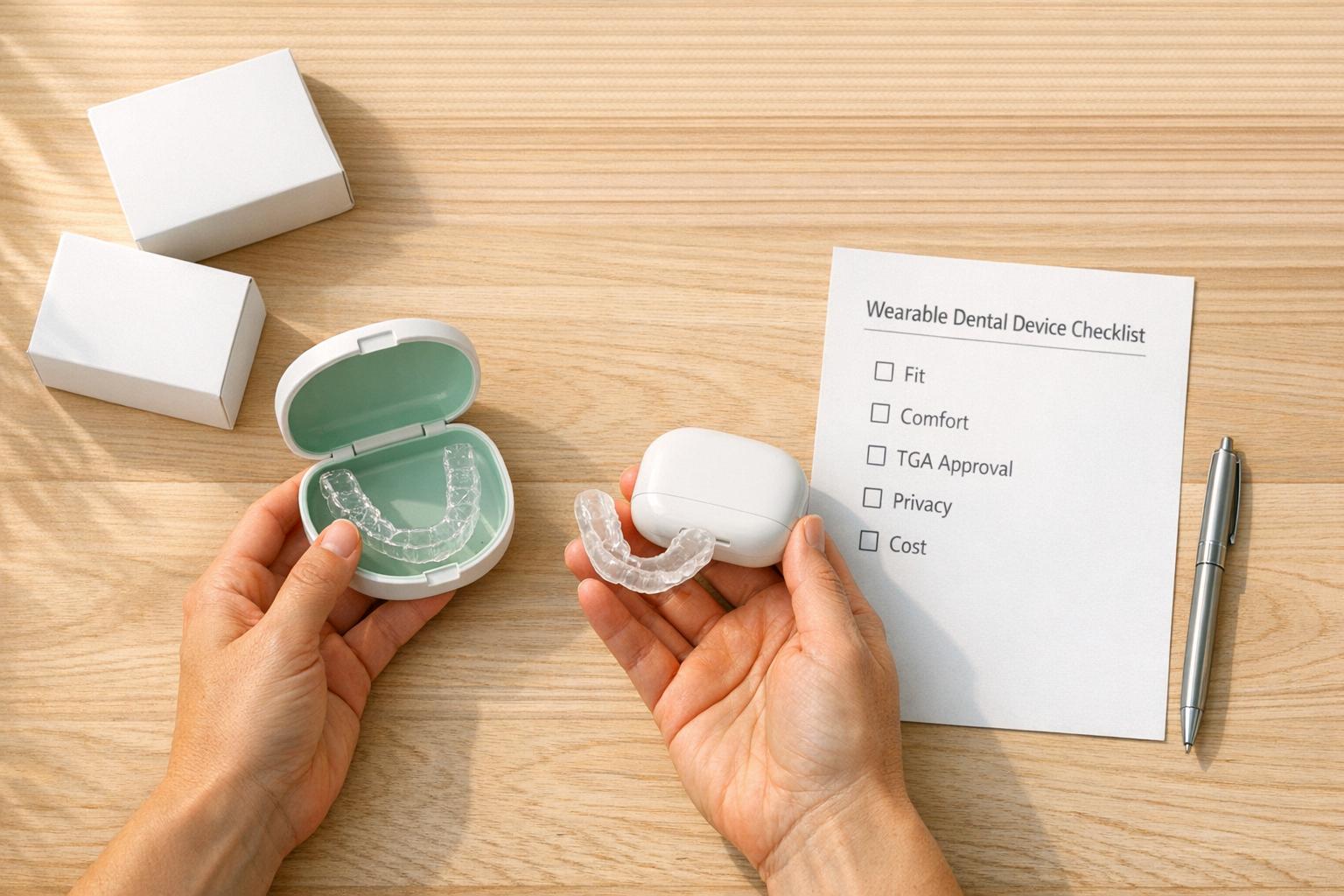
Checklist for Choosing Wearable Dental Devices
Checklist for Choosing Cloud AI Platforms in Dentistry
Complete Smiles Bella VistaAccepts All Major Health Funds, Including