





Dental Sealants Cost in Australia: What to Expect
Dental sealants in Australia typically cost $45 to $90 per tooth, with an average price of $61 per tooth. Treating four molars would range from $180 to $360, excluding additional fees like exams or cleanings. While costs vary based on location, clinic type, and materials, sealants are a cost-effective way to prevent cavities, saving you from expensive treatments like fillings or root canals.
If you’re eligible, programs like the Child Dental Benefits Schedule (CDBS) can cover sealants for children, offering up to $1,132 in dental care over two years. Private health insurance may also reduce out-of-pocket costs, especially when using preferred providers.
For a painless, preventive solution that can last up to 7 years, sealants are a smart choice for protecting molars and avoiding future dental expenses.
Dental Sealants Cost Breakdown Australia 2024
Dental Sealant Costs in Australia
Cost Per Tooth
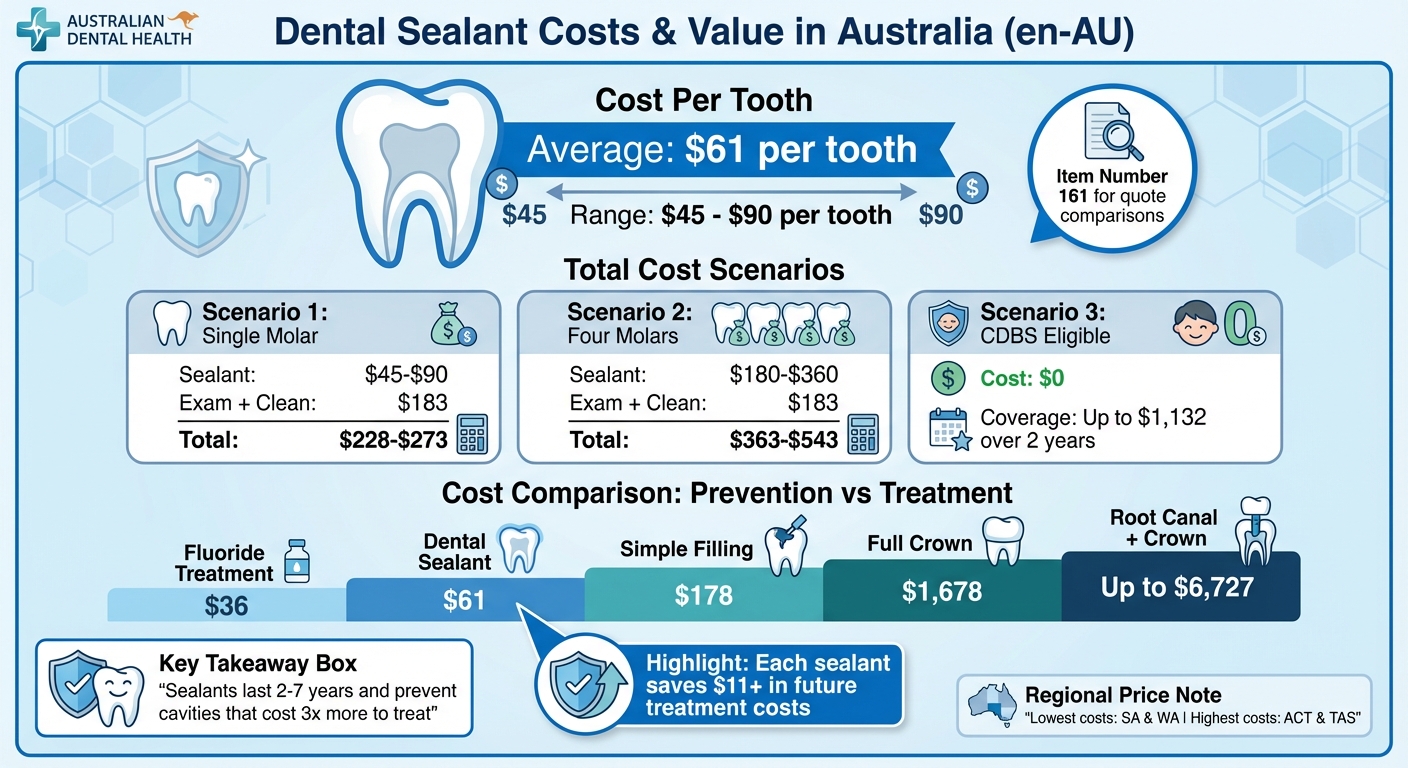
The cost of a single fissure sealant in Australia averages $61 per tooth, with prices typically ranging between $45 and $90 per tooth, according to a survey by the Australian Dental Association [6]. Since dental fees in Australia aren’t regulated, prices can vary based on factors like location, clinic overheads, and the complexity of the procedure. As CHOICE explains:
Dentists’ prices depend on a range of factors – such as location, overheads and experience, as well as factors that affect the degree of difficulty and time involved [6].
Now, let’s see how these costs can add up when treating multiple teeth.
Total Cost Based on Number of Teeth Treated
Most people, both children and adults, have four permanent molars that are good candidates for sealants. If all four molars are treated at the average cost of $61 per tooth, the total would be about $244. At the lower end of the price range ($45 per tooth), sealing four molars would cost around $180, while at the higher end ($90 per tooth), the total could go up to $360 [6]. Below are some examples to give a clearer picture of the costs involved.
Examples
Here’s a breakdown of typical pricing scenarios:
| Scenario | Sealant Cost | Additional Services | Total Estimate |
|---|---|---|---|
| Single molar sealed | $45–$90 | Exam + Clean ($183) | $228–$273 |
| Four molars sealed | $180–$360 | Exam + Clean ($183) | $363–$543 |
| Four molars (CDBS eligible) | $0 | Covered by CDBS | $0 |
On average, a routine dental check-up costs around $219, with a range from $162 to $309 [6]. For families with children aged 2–17, the Child Dental Benefits Schedule (CDBS) can cover up to $1,052 in basic dental services over two calendar years, including fissure sealants [6][8]. This means many families may not have to pay out of pocket for their children’s sealants. To ensure accurate comparisons when requesting quotes, ask for dental item number 161 (fissure sealing) [6].
What Affects Dental Sealant Pricing
Clinic Location and Type
Dental fees in Australia can vary widely depending on where the clinic is located and its operational model. According to CHOICE:
Dentists are free to set their own fees. Unlike medical services covered by Medicare… there are no standard fees for services provided by dentists or other dental professionals in Australia [6].
In rural areas, dental fees are often higher due to increased operational costs. These clinics face challenges like higher rent, staff wages, and equipment maintenance, all while dealing with less competition [3]. On the other hand, urban areas with a denser concentration of dentists tend to have more competitive pricing [3].
The type of clinic also plays a major role. Public dental clinics offer free or low-cost services to eligible concession card holders, but these services come with limitations, such as long wait times and restricted access to specific groups like children or adults holding a Health Care Card or Pensioner Concession Card [2][6]. Private clinics, however, charge market rates but provide faster access to care.
Beyond the location and clinic type, the materials and methods used for sealants also influence pricing.
Materials and Application Methods
The choice of materials significantly impacts the cost of dental sealants. Resin-based sealants are widely used due to their durability, while glass ionomer sealants are preferred for their fluoride-releasing properties [11][12].
The techniques used during the application process can also affect pricing. Factors such as the number of teeth being treated and the specific methods employed by the dentist can lead to variations in costs [3][9]. Some clinics now incorporate advanced technologies like 3D imaging and laser application to ensure greater precision, which may further influence pricing [12].
Regional Price Differences
Pricing for dental procedures also varies across Australian states and territories. South Australia and Western Australia often report the lowest average dental fees, while the Australian Capital Territory and Tasmania are known for having the highest [6]. For example, the cost of a filling averages $148 in Queensland but rises to $183 in Tasmania [6].
Between July 2020 and July 2022, general dental fees increased by 3.7%, which was below the Consumer Price Index for that period [6]. For those living in high-cost areas, joining dental membership programmes can provide significant savings, offering reduced or capped fees at participating clinics [3].
Long-Term Value of Dental Sealants
How Well Sealants Prevent Cavities
Dental sealants act as a shield, covering the grooves and pits of molars that are notoriously difficult to clean. This protection is especially important for children. Studies show that children aged 6 to 11 without sealants are almost three times more likely to develop cavities in their first molars compared to those with sealants [5][13].
Sealants typically last between 2 and 7 years, though their lifespan can be extended with proper care and regular dental visits. Applying them as soon as permanent molars emerge – usually at ages 6 and 12 – can significantly enhance their cavity-preventing benefits [1][5].
The benefits of sealants go beyond oral health – they also provide substantial savings in dental costs over time.
Cost Savings Over Time
When you consider how effective sealants are at preventing cavities, the financial advantages become clear, especially when compared to the cost of restorative dental treatments. In Australia, the average cost of a fissure sealant is $61 per tooth, whereas a simple filling costs around $178 – nearly three times as much [6]. For more complex procedures like full crowns, the cost can skyrocket to about $1,678 [6].
Each sealed tooth is estimated to save over $11 in future dental treatment costs [5]. Without treatment, a small cavity can worsen, potentially reaching the tooth root and requiring root canal therapy and a crown – procedures that can cost up to $6,727 [3]. Expanding the use of sealants has also shown broader financial benefits. Research in the United States indicates that increasing sealant use among 7 million low-income children could prevent over 3 million cavities and save up to $300 million in treatment costs [5].
Smile.com.au highlights the importance of preventive care, stating:
"When it comes to your health, prevention is always better than treatment. Properly applied and maintained sealants are extremely helpful in preventing pit-and-fissure decay and they are cost effective" [7].
Comparing Preventive Treatment Costs
While sealants are a powerful preventive tool, other treatments also play a role in oral health. For example, fluoride treatments, which cost about $36 per application, are less expensive upfront. However, while fluoride helps strengthen tooth enamel, it doesn’t provide the same physical barrier as sealants for protecting the deep grooves of molars.
Here’s a quick comparison of the costs and purposes of common preventive and restorative treatments:
| Treatment Type | Average Cost (AUD) | Primary Function |
|---|---|---|
| Fluoride Treatment | $36 | Strengthens the enamel surface |
| Dental Sealant | $61 | Provides a protective barrier |
| Simple Filling | $178 | Repairs existing decay |
| Full Crown | $1,678 | Restores severely damaged tooth |
Other options include Silver Diamine Fluoride (SDF), which is a low-cost way to stop existing decay and promote remineralisation [14]. Glass ionomer materials are another alternative, often used as temporary fillings or sealants. These materials release fluoride but are generally less durable than resin-based sealants [8][14].
sbb-itb-2be92ed
Making Dental Sealants Affordable
Private Health Insurance Coverage
In Australia, most private health insurance policies include dental sealants under "Extras" or "Ancillary" cover, specifically within the General Dental category [17][18]. Typically, you’ll need to wait two months before making a claim [17][18]. While coverage for children is common, policies vary significantly when it comes to covering sealants for adults [16].
To find out if your policy includes sealants, review your "General Dental" cover and check the annual limits. You can also contact your insurer to confirm if Item 161, which covers fissure sealants, is included [17][18]. Many insurers offer better rebates when you use "preferred providers" or "Members’ Choice" networks. Some even provide "gap-free" preventive treatments, meaning no out-of-pocket costs for services like sealants [17][19].
Sarah Orr from Compare the Market explains: "Cost can be a huge barrier when it comes to visiting the dentist and unless you have an extras health insurance policy that helps cover the costs, it can be expensive" [17].
Financial concerns are a real issue – about 30% of Australians avoided seeing a dentist in the past year due to cost pressures [17]. For those without private insurance, public dental programs can offer other ways to manage expenses.
Public Dental Programs
The Child Dental Benefits Schedule (CDBS) provides up to $1,132 over two years for eligible children aged 2–17, with most services bulk-billed [20][21][15]. Families receiving Family Tax Benefit Part A or other qualifying government payments can check their eligibility through their myGov Medicare account or by calling 132 011 [20][15].
State and territory public dental clinics also offer services to eligible cardholders, though non-emergency wait times can stretch beyond a year [2][15]. Additionally, Aboriginal Community Controlled Health Organisations (ACCHOs) provide dental care to their communities, with eligibility determined by each organisation’s guidelines [2].
Planning for Dental Sealant Costs
To ease the financial strain, many dental clinics offer flexible payment plans [3]. If you have private health insurance, check if your dentist is a "preferred provider" to access higher rebates or even no-gap treatments [22]. Timing your appointments can also help – if you’ve hit your annual benefit limit, consider scheduling non-urgent sealant applications at the start of your next policy year [22]. Another option is dental discount plans like Smile.com.au, which charge about $79 annually and offer reduced, capped fees without waiting periods or exclusions [10][3].
Complete Smiles Bella Vista: Preventive Dental Care Services
Complete Smiles Bella Vista offers a wide range of preventive dental services aimed at protecting oral health while helping patients avoid expensive treatments down the line [23]. Under the guidance of Dr. James Hanna, a Principal Dentist with more than 15 years of experience, the clinic focuses on providing only the treatments that are truly necessary [24].
Their preventive care services include dental sealants, routine check-ups, and professional cleanings, all of which are essential components of their general dentistry offerings [23]. The clinic uses advanced diagnostic tools like digital X-rays with reduced radiation and handheld digital scanners, ensuring precise sealant application and monitoring. These technologies also eliminate the discomfort of traditional impressions, enhancing the patient experience [24]. This focus on modern techniques and patient comfort underscores their dedication to accessible and effective preventive care.
In addition to treatments, the practice emphasises the importance of regular dental visits, proper oral hygiene, and a balanced diet in avoiding more invasive procedures like root canals or extractions. To make preventive care more accessible, they offer flexible payment plans and accept private health insurance for gap-free check-ups [23].
"At Complete Smiles BV, we understand that managing dental costs can be challenging, which is why we offer flexible payment options to help you get the treatment you need without financial stress." – Dr. James Hanna [23]
This approach highlights the clinic’s commitment to providing professional care that is both affordable and tailored to different budgets. By focusing on prevention, they help patients maintain their oral health while minimising the need for costly interventions.
Summary
In Australia, the cost of dental sealants typically ranges from $45 to $90 per tooth, with an average price of $61 [6]. These prices can vary depending on factors like location, the type of dental clinic, and the service model. Clinics in rural areas often charge more due to limited competition and higher overheads, while states such as South Australia and Western Australia tend to offer more competitive pricing [6][3]. Despite these variations, sealants represent a smart investment in long-term dental health.
The initial cost of sealants is minimal compared to the potential savings from avoiding expensive restorative treatments. Each sealant can save over $11 in future dental costs [5]. For comparison, a simple filling can cost up to $275, and a root canal may exceed $3,000 [9][3]. Alongside these clinical advantages, several funding options are available to help make sealants more affordable.
Public programs and private insurance are key to improving access to sealants. For example, the Child Dental Benefits Schedule (CDBS) covers sealants for eligible children aged 2–17, offering benefits of up to $1,052 over two calendar years [6][4]. Additionally, many private health insurance extras policies provide rebates ranging from 60% to 100% for preventive services, and using preferred provider networks can reduce out-of-pocket expenses even further. When comparing quotes, ask for item number 161 to ensure accurate pricing [2][6].
Being informed about the costs and available coverage options can help you make better decisions about preventive dental care. As Healthdirect explains:
There are no standard fees for dentists like there are for doctors. Each clinic determines their own fees [2].
FAQs
How long do dental sealants last, and when might they need replacing?
Dental sealants can last for about 10 years, but their lifespan can vary based on factors such as daily wear, oral hygiene routines, and how often you visit the dentist. Over time, they might need repairs or even replacement if they become worn out, damaged, or less effective.
To keep them working as intended, make sure to have them checked during your regular dental appointments. Your dentist will evaluate their condition and advise on any upkeep needed to maintain their protective benefits for your teeth.
Does private health insurance in Australia cover dental sealants?
While Medicare doesn’t cover dental sealants, many private health insurance plans with extras cover might offer benefits for preventive dental treatments, including sealants. The exact coverage and reimbursement will vary depending on your provider and specific policy.
If you’re uncertain about your coverage, it’s worth reaching out to your health fund to clarify whether dental sealants are included and to get an idea of any potential out-of-pocket costs.
What affects the cost of dental sealants across Australia?
The price of dental sealants in Australia can differ depending on several factors. These include the specific pricing policies of dental clinics, regional differences in operating costs, and whether you have private health insurance or access to government subsidies. Competition among dental clinics and the availability of services in your area can also play a role in determining the final cost.
Since dental fees aren’t standardised nationwide, prices can vary significantly between states and territories. For a clearer understanding of potential costs, it’s best to contact your local dental clinic or check with your private health insurance provider to get an estimate of any out-of-pocket expenses.
Related Blog Posts
- Factors Affecting Porcelain Veneers Pricing
- Transparent Dental Pricing Explained
- Cracked Tooth Repair Costs: What to Expect
- How Long Do Dental Sealants Last?
Important Notice: Any surgical or invasive procedure carries risks. Before proceeding, you should seek a second opinion from an appropriately qualified health practitioner.
Individual results may vary. The information provided in this article is for educational purposes only and does not constitute medical advice.
Checkout Related Blogs




Get in touch with us
For more information, call us now to start feeling better. Or fill the form below to make appointment
The Latest News from Complete Smiles
How to Clean Clear Plastic Retainers
Checklist for Choosing Wearable Dental Devices
Checklist for Choosing Cloud AI Platforms in Dentistry

Complete Smiles Bella VistaAccepts All Major Health Funds, Including





