





How Dental Apps Help Improve Oral Hygiene

Keeping your teeth healthy can be a challenge, but dental apps are here to help. These apps send reminders to brush and floss, track your habits, and teach proper techniques – all from your smartphone. With over 1,000 oral hygiene apps available, they’re making oral care more accessible and effective.
Key takeaways:
- Reminders: Push notifications for brushing, flossing, and dental appointments.
- Tracking: Features like 3D teeth mapping and pressure alerts ensure thorough cleaning.
- Education: Tutorials and AI-powered coaching improve brushing techniques.
- Popular Apps: Oral-B, Colgate Connect, and Brush DJ offer tools for better oral health.
Studies show that app users see improved brushing habits and reduced plaque. However, these apps work best alongside regular dental check-ups, not as a replacement. Share app data with your dentist for tailored advice and better results.
Main Features of Dental Apps
Reminders for Brushing, Flossing, and Appointments
Most dental apps rely on push notifications and text messages to send personalised reminders for brushing twice a day and flossing regularly [1][2]. These features tackle a common issue – forgetting to stick to a consistent oral care routine. Beyond daily habits, many apps also include appointment scheduling tools, allowing users to book visits with local dentists directly through the app, making professional care more accessible [1][2].
"By using reminders and tracking features, individuals are more likely to adhere to their dental care routines. This accountability can lead to improved hygiene practices and fewer dental issues over time." – Sumeet, Dental Professional, The Smile Clinic Boronia [1]
These timely notifications ensure users stay on top of their oral care, even with hectic schedules. They also complement advanced tracking tools that offer deeper insights into brushing habits.
Tracking Tools for Daily Oral Care Habits
Modern dental apps come equipped with advanced tracking features like 3D teeth mapping and AI recognition, which divide the mouth into up to 16 zones to ensure thorough cleaning [5]. Some apps even include instant pressure alerts to help users avoid gum damage and enamel wear. This is particularly useful considering that 80% of people neglect at least one zone while brushing, and 60% either miss their back molars entirely or spend insufficient time on them. Apps like Oral-B have made a noticeable impact – over 90% of brushing sessions using their app exceed the recommended 2-minute duration [8].
The "Gum Guard" feature is another highlight, tracking occurrences of gum bleeding and offering weekly or monthly summaries to help users identify recurring issues. With a 4.6/5 star rating on Google Play from 159,000 reviews (as of February 2026), it’s clear that users appreciate the depth of these insights [5]. Beyond tracking, many apps also incorporate engaging educational tools to elevate the user experience.
Educational Content and Tutorials
Dental apps often act as virtual coaches, offering multimedia tutorials to teach proper brushing and flossing techniques. Many even use the smartphone camera for a real-time "mirror effect", making it easier to follow along [2][7].
"Common features of these apps are timers with some playing music, videos and graphics on how to brush. Or use the phone camera as a virtual mirror, at the same time a video teaches you how to brush, and rewards to keep you engaged and motivated." – Dr. Greg Thomas, Bupa Dental [7]
Some apps also integrate AI-powered coaching, delivering personalised tips based on data collected from connected smart toothbrushes [5][7]. For children, apps often feature beloved characters like Disney or The Wiggles, combining music-timed brushing sessions with interactive elements to make oral care fun. However, the quality of educational content can vary. While functionality typically scores 4 out of 5, information accuracy is often rated lower, averaging just 2.9 out of 5 [3]. Alarmingly, only 10% of reviewed apps provided accurate information across all eight evidence-based prevention categories [3]. It’s a good idea to consult your dentist for recommendations on reliable apps.
sbb-itb-2be92ed
Dental Hygienist’s Secret: The App I Recommend to ALL My Patients! ????
While apps help at home, don’t forget your professional check-up; new patients can take advantage of our gap-free new patient pack for a comprehensive clean.
Common Dental Apps and What They Offer
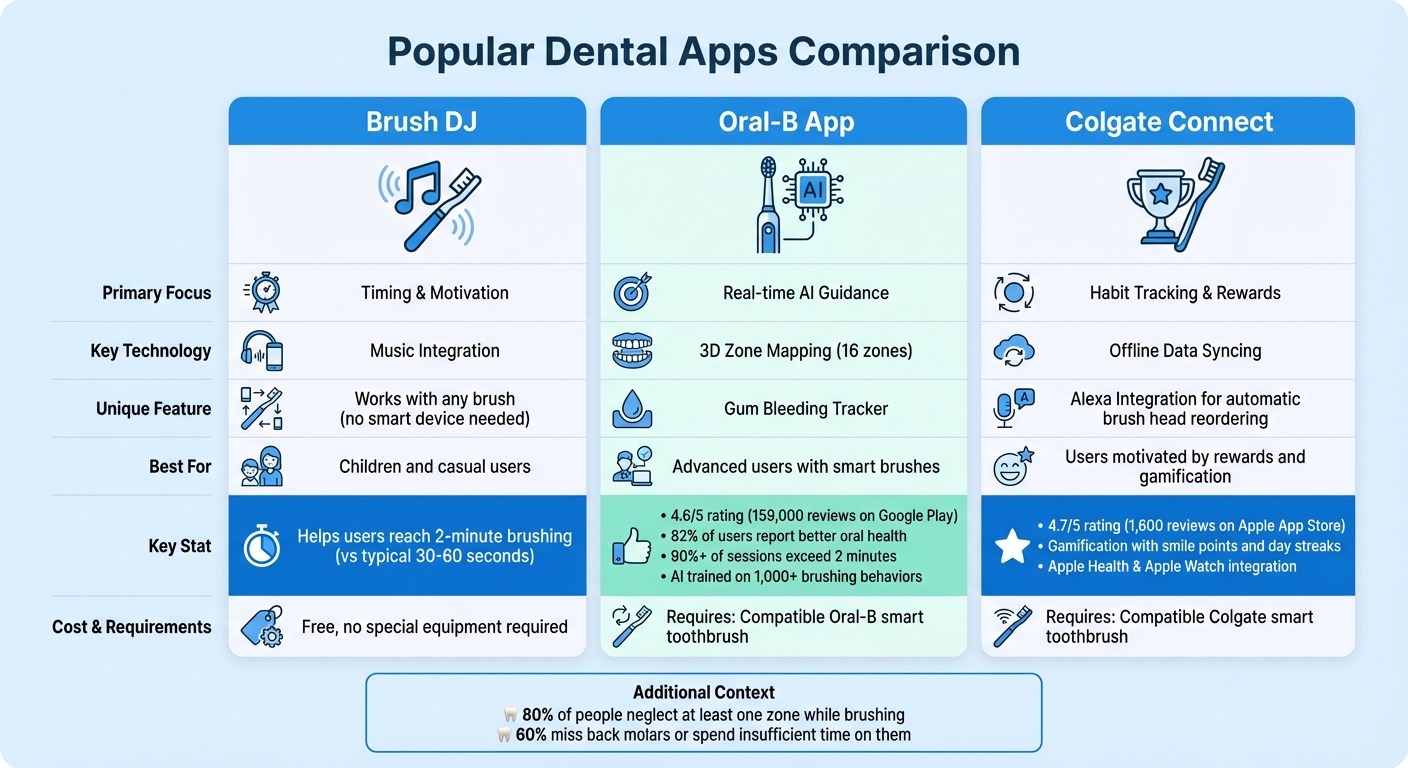
Comparison of Popular Dental Apps: Oral-B, Colgate Connect, and Brush DJ Features
These apps demonstrate how technology can make oral health management more engaging and effective.
Brush DJ: Music-Timed Brushing
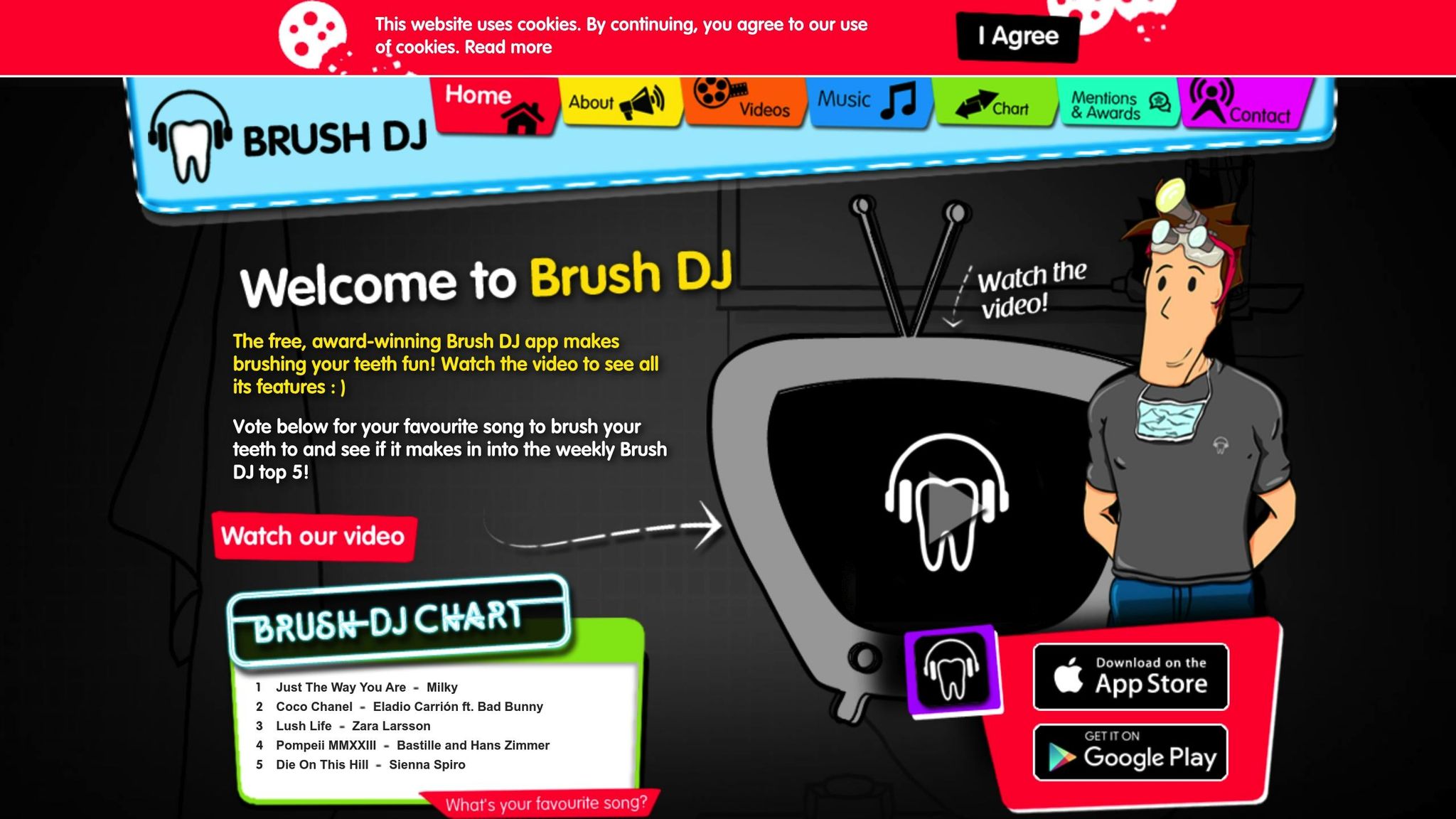
Brush DJ tackles the common problem of brushing for too short a time. Most people brush for just 30–60 seconds, far less than the recommended 2 minutes [8][5]. This app plays music from your library or streaming services for the full two minutes, helping users meet the ideal brushing duration. What sets Brush DJ apart is its simplicity – it works with any manual or electric toothbrush, so there’s no need for expensive smart devices. It’s a straightforward way to improve brushing habits without added costs.
Oral-B App: Real-Time Brushing Feedback
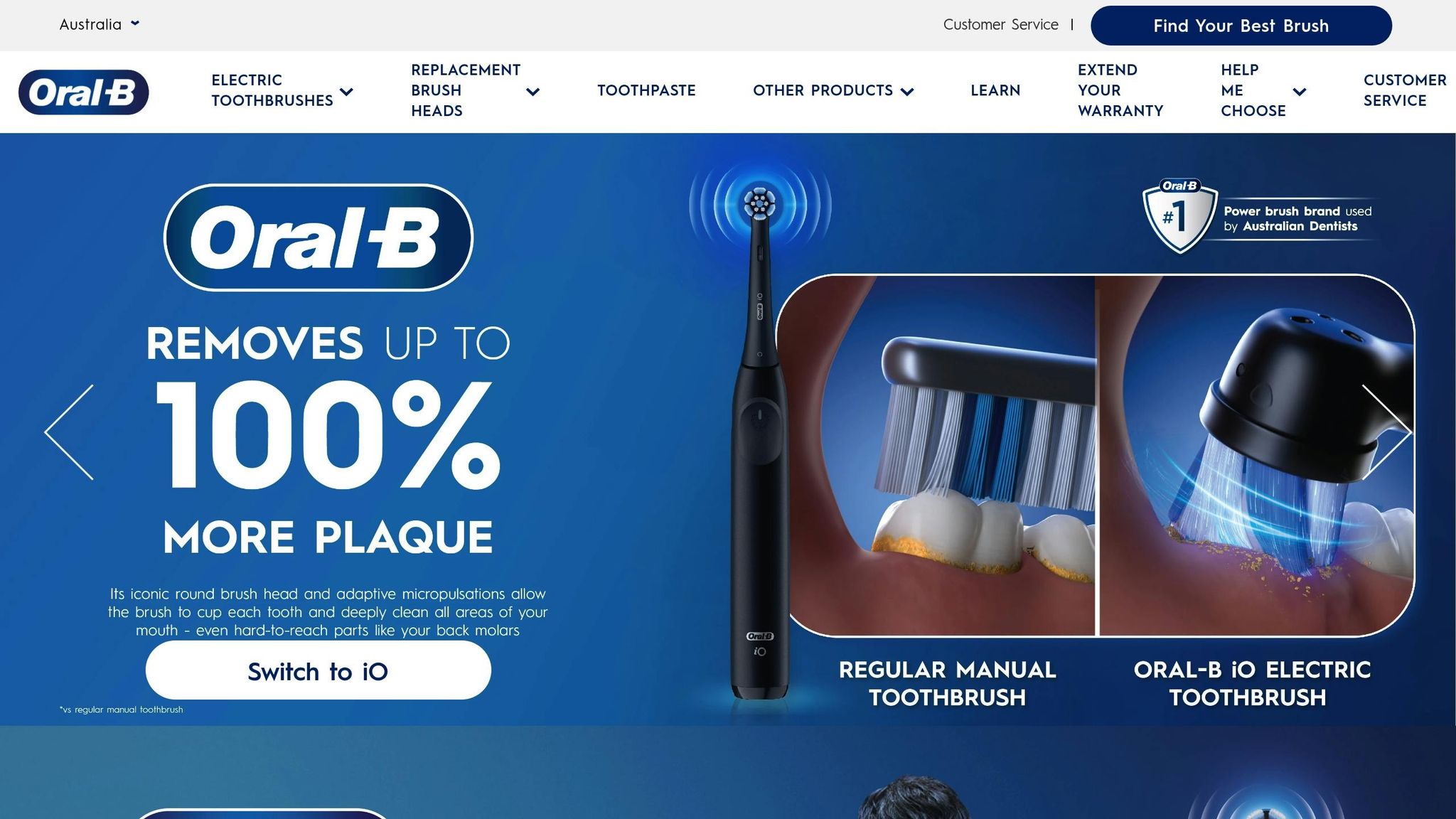
The Oral-B app pairs with smart toothbrushes like the iO, Genius, or Smart Series via Bluetooth, offering real-time guidance during brushing. Using AI Brushing Recognition technology, which has been trained on over 1,000 brushing behaviours [6][5], the app maps up to 16 zones in your mouth with 3D tracking. It alerts you if you’re pressing too hard, protecting your gums and enamel from damage [6]. A gum bleeding tracker also helps monitor oral health, providing weekly or monthly summaries to identify patterns. With a 4.6/5 star rating on Google Play from 159,000 reviews [5], users appreciate features like detailed tracking and pressure alerts. Impressively, 82% of users with an Oral-B SmartSeries toothbrush and the app reported better oral health [6][5].
Colgate Connect: Personalised Coaching
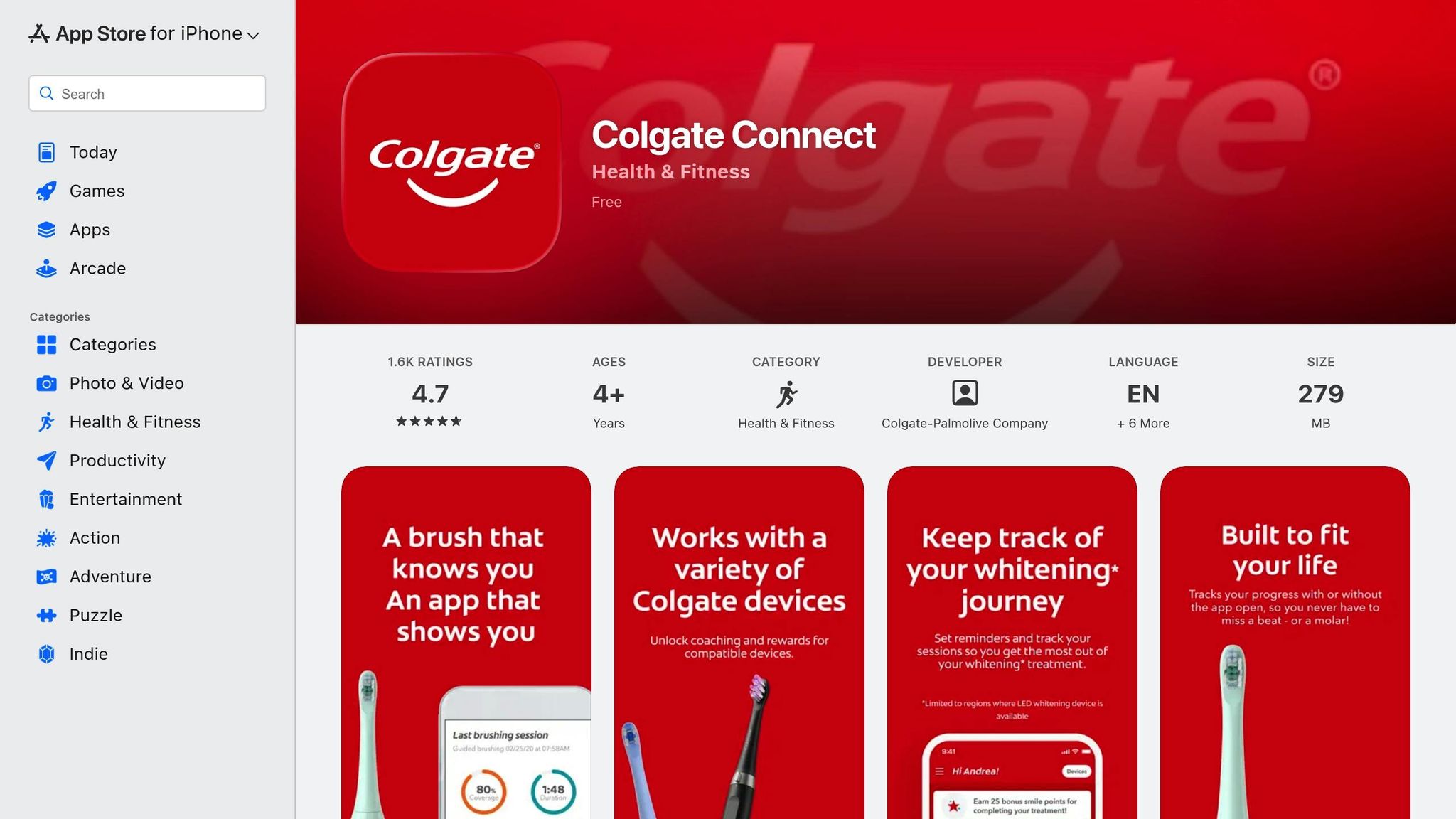
Colgate Connect focuses on building healthy habits through tracking and rewards. It monitors brushing frequency, duration, and coverage using sensors in Colgate smart toothbrushes. Even without your phone nearby, the toothbrush syncs data offline [9]. The app uses gamification to keep users engaged – earning "smile points" for rewards and maintaining "day streaks" for consistent brushing [9]. It integrates with Apple Health, Apple Watch, and even Amazon Alexa for features like automatic brush head reordering. With a 4.7/5 rating on the Apple App Store from 1,600 reviews [9], users love the streaks and detailed feedback. While the app is free, a compatible Colgate smart toothbrush is required for full functionality [9]. These personalised insights help reinforce good habits in addition to regular dental visits.
| Feature | Oral-B App | Colgate Connect | Brush DJ |
|---|---|---|---|
| Primary Focus | Real-time AI Guidance | Habit Tracking & Rewards | Timing & Motivation |
| Key Technology | 3D Zone Mapping | Offline Data Syncing | Music Integration |
| Unique Extra | Gum Bleeding Tracker | Alexa Head Reordering | Works with any brush |
| Best For | Advanced users with smart brushes | Users motivated by rewards | Children and casual users |
Combining Dental Apps with Professional Care
Dental apps are most effective when they complement regular dental visits rather than replace them. While these apps can help track daily oral hygiene habits, sharing this information with your dentist can significantly enhance both prevention and treatment strategies. However, it’s important to remember that apps cannot diagnose issues like cavities, gum disease, or other oral health conditions. The best approach combines the convenience of app-based tracking with the expertise of professional dental care.
Using Apps to Support Dental Appointments
Dental apps can provide a detailed record of your brushing, flossing, and other oral hygiene habits. Sharing this data during check-ups allows your dentist to offer more tailored advice. For instance, you could show your dentist the app’s statistics on how often and how effectively you brush and floss your teeth, giving them a clearer picture of your routine[10].
A trial conducted by researchers at Necmettin Erbakan University Faculty of Dentistry between August and November 2023 highlights the potential benefits of dental apps. In this study, 60 orthodontic patients used the "Dentabuddy" mobile app for three months. By September 2025, results showed that 70% of app users demonstrated proper brushing techniques, compared to just 40% in a group trained through traditional methods. Additionally, app users saw significant reductions in their gingival and plaque index scores over the 90-day period[10].
Some apps even include telehealth features, enabling users to message their dentist or schedule virtual consultations between in-person visits[1][4]. This can be especially helpful for addressing symptoms like bleeding gums or tooth sensitivity promptly[1][4]. Apps designed for specific issues, such as teeth grinding, also collect data that may otherwise go unnoticed during standard appointments[4].
By combining app data with professional advice, users can create a more personalised and effective oral care plan.
Getting Professional Advice for Individual Needs
It’s essential to verify the content and recommendations provided by dental apps with your dentist to ensure they align with evidence-based guidelines[3].
Before using any app, consult your dentist for tailored recommendations based on your oral health needs[1]. This approach ensures that the app’s educational content complements your treatment plan and addresses your specific concerns, such as improving flossing habits, managing dental anxiety, or tracking orthodontic progress. Your dentist can also guide you in selecting the most relevant app features and help you interpret the data you collect.
Conclusion
Dental apps have become powerful tools for improving oral health by encouraging consistent habits, refining techniques, and providing accessible education. Features like automated reminders, gamification, and built-in timers make it easier to stick to daily brushing and flossing routines that are often neglected. In fact, a 2025 clinical trial revealed that users of these apps showed better brushing techniques compared to those who relied on traditional methods[10].
However, while these apps are great for daily maintenance, they’re not a substitute for regular dental check-ups. Although they help track habits and motivate better hygiene, they can’t diagnose or treat dental issues. Research indicates that only 10% of oral hygiene apps aimed at patients include accurate, evidence-based prevention information for all key areas[3]. This highlights the need to verify app recommendations with a qualified dentist. Sharing the data collected by these apps with your dentist can also enhance personalised care, offering insights into your daily habits without replacing professional expertise. By combining app insights with regular visits, dentists can provide tailored advice that supports both immediate and long-term oral health.
Use dental apps to time your brushing, monitor your habits, and learn proper techniques, but always pair them with guidance from a dental professional. Together, these tools and expert advice can help Australians achieve and maintain excellent oral health.
FAQs
Do I need a smart toothbrush to use a dental app?
No, you don’t need a smart toothbrush to use a dental app. Many of these apps work perfectly fine with just your smartphone, offering features like brushing reminders and basic feedback. That said, if you do use a smart toothbrush, it can add to the experience by providing more detailed tracking and sharing personalised data about your brushing habits.
Are dental apps accurate and evidence-based?
While dental apps can be helpful, their reliability and evidence-based content often differ. Few apps thoroughly address all critical aspects of prevention, and many are not professionally validated or regulated. It’s essential to view these apps as complementary tools rather than primary sources of oral health advice. For tailored recommendations, always consult your dentist.
Can a dental app replace regular dental check-ups?
No, a dental app isn’t a substitute for regular dental check-ups. What it can do is serve as a helpful tool to support your oral health routine. Features like reminders for brushing and flossing, tools to track your habits, and educational resources can make it easier to stay on top of daily care. However, these apps should only complement your routine and never replace professional dental visits, which are essential for thorough assessments and treatments.
Related Blog Posts
- How Smart Toothbrushes Improve Oral Hygiene
- AI in Dentistry: Benefits of Personalised Oral Health Insights
- How Remote Devices Detect Plaque and Tartar
- How Dental Apps Improve Patient Communication
Important Notice: Any surgical or invasive procedure carries risks. Before proceeding, you should seek a second opinion from an appropriately qualified health practitioner.
Individual results may vary. The information provided in this article is for educational purposes only and does not constitute medical advice.
Checkout Related Blogs




Get in touch with us
For more information, call us now to start feeling better. Or fill the form below to make appointment
The Latest News from Complete Smiles
How to Clean Clear Plastic Retainers
Checklist for Choosing Wearable Dental Devices
Checklist for Choosing Cloud AI Platforms in Dentistry

Complete Smiles Bella VistaAccepts All Major Health Funds, Including





