





Differentiating Gum Cancer From Periodontal Disease
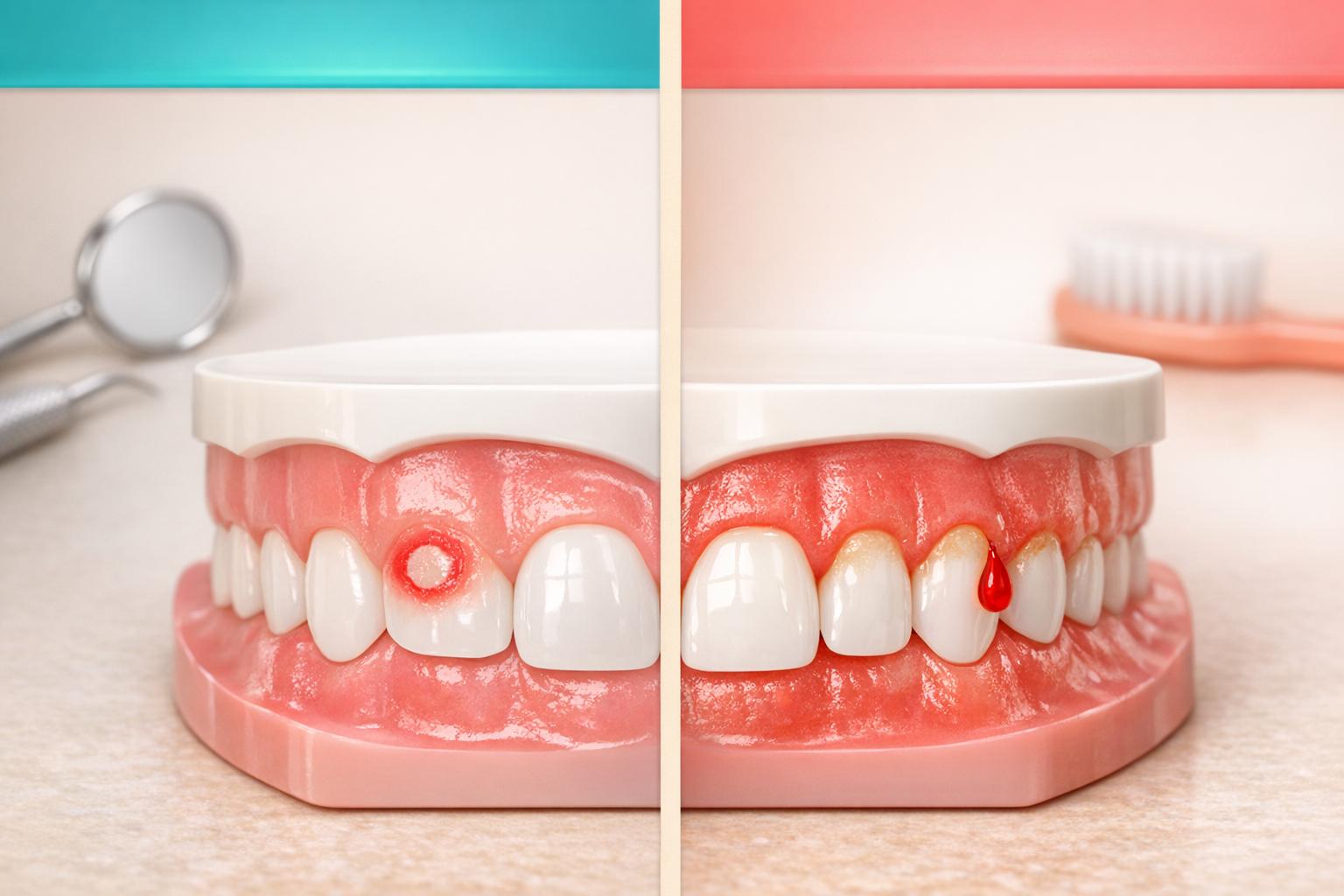
Swollen, bleeding gums could be a sign of either gum cancer or periodontal disease, two conditions that share symptoms but require different treatments. While periodontal disease is primarily caused by bacterial infections and can often be managed with professional cleaning and improved oral care, gum cancer is a more serious condition that may involve surgery, radiation, or chemotherapy. Early detection is crucial for both, as delayed diagnosis can lead to irreversible damage or even life-threatening complications.
Key Differences:
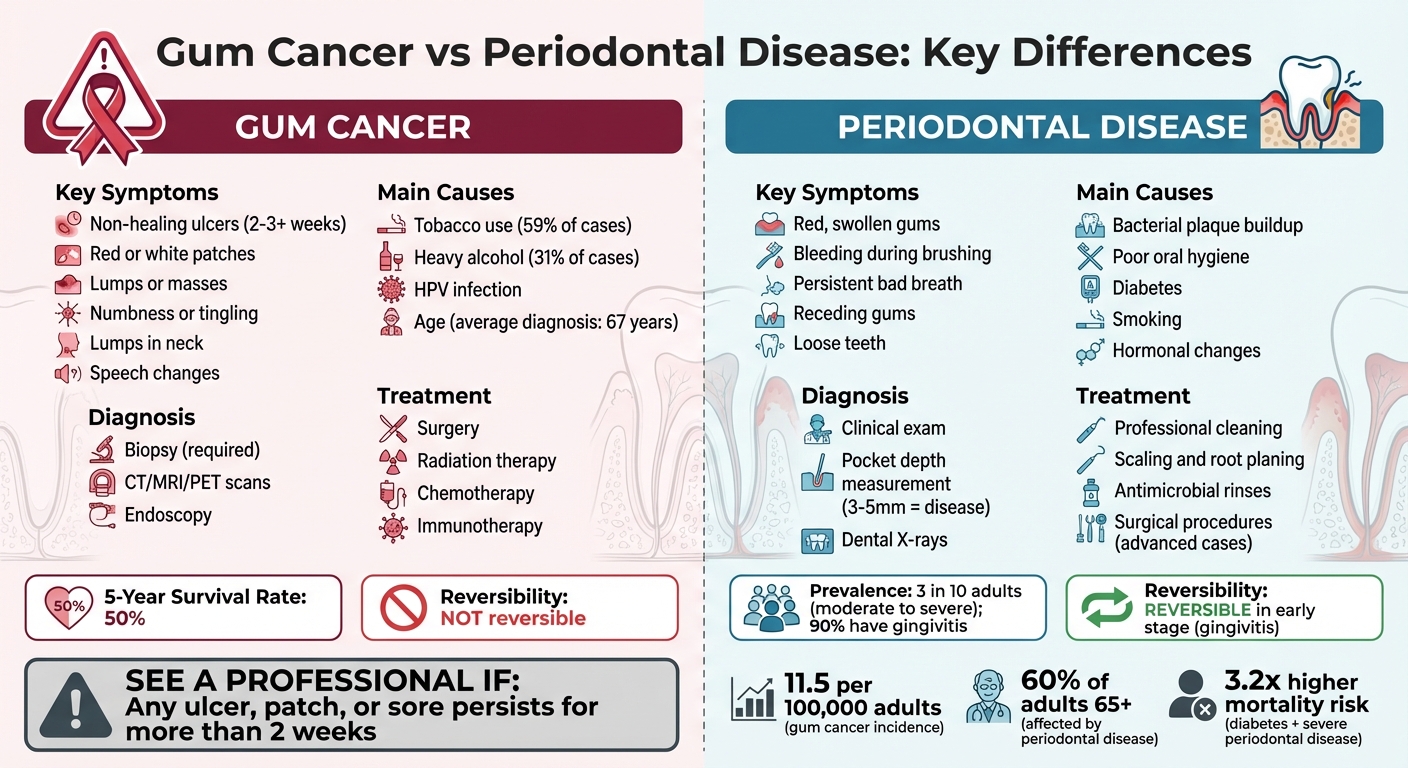
- Gum Cancer Symptoms: Non-healing ulcers, red/white patches, lumps, numbness, or tingling. May also involve lumps in the neck or speech changes.
- Periodontal Disease Symptoms: Red, swollen gums, bleeding during brushing, bad breath, receding gums, and loose teeth.
- Causes: Gum cancer is linked to tobacco use, alcohol, HPV, and age, while periodontal disease stems from bacterial plaque and poor oral hygiene.
- Treatment: Gum cancer often requires surgery and advanced medical care. Periodontal disease is typically managed with professional cleaning and, in severe cases, surgical procedures.
Quick Comparison:
| Feature | Gum Cancer | Periodontal Disease |
|---|---|---|
| Key Symptoms | Non-healing sores, lumps, patches | Swollen gums, bad breath, loose teeth |
| Causes | Tobacco, alcohol, HPV, age | Bacterial plaque, poor hygiene |
| Diagnosis | Biopsy, imaging tests | Clinical exam, X-rays |
| Treatment | Surgery, radiation, chemotherapy | Cleaning, scaling, possible surgery |
| Outcome of Early Detection | Higher survival, less aggressive treatment | Reversible (gingivitis) or manageable (periodontitis) |
If you notice persistent sores, patches, or gum issues, see a dentist or medical professional promptly. Early diagnosis can make all the difference.
Gum Cancer vs Periodontal Disease: Key Differences and Symptoms
1. Gum Cancer
Symptoms
Gum cancer comes with some clear warning signs. While it can sometimes resemble periodontal disease, there are key differences. Gum cancer often appears as masses that grow outward, accompanied by red or white patches and ulcers that don’t heal. Dr Ryan Goepfert from MD Anderson Cancer Centre explains:
"The mouth wants to heal itself. So, if there’s an ulcer in your mouth that’s not getting better after 2 or 3 weeks and is not readily explained by having eaten something hot or cut yourself, see your dentist, primary care doctor, or an ENT" [4].
Other symptoms include deep pain, unusual tingling, or numbness. In more advanced stages, patients might notice a lump in the neck, difficulty opening their mouth, changes in speech, or extraction sites that fail to heal [5][6]. Recognising these symptoms early can make a big difference in addressing the disease.
Causes and Risk Factors
Lifestyle choices play a major role in gum cancer risk. Tobacco use is linked to around 59% of mouth cancer cases in Australia, while heavy alcohol use contributes to about 31%. When combined, tobacco and alcohol create an even greater risk [7][8][9]. Other contributing factors include Human Papillomavirus (HPV) infection, betel nut chewing, and conditions like proliferative verrucous leukoplakia (PVL) [5][8].
The average age of diagnosis is about 67 years, and gum cancer makes up less than 10% of all oral cavity cancers in the United States. It affects roughly 11.5 out of every 100,000 adults annually [5][7].
Diagnostic Approaches
Diagnosing gum cancer starts with a thorough oral exam to spot any unusual lumps, patches, or ulcers [5][7]. A biopsy is essential to confirm the presence of cancer [5][9]. Once cancer is confirmed, imaging tests like CT, MRI, or PET scans are used to check if it has spread to nearby areas such as the jawbone, lymph nodes, or sinuses. In some cases, occlusal X-rays may also be used to assess the floor of the mouth or jaw. In some cases, an endoscopy is performed to see if the cancer has reached the throat or nasal passages [5][7][9]. This multi-step process is much more extensive than diagnosing periodontal disease, which typically relies on physical measurements and full-mouth X-rays [3][5].
Treatment Options
Treatment for gum cancer often starts with surgery to remove the tumour, and sometimes parts of the jawbone if it’s affected. Reconstructive surgery is often done afterward to help restore appearance and function. Depending on how far the cancer has progressed, additional treatments like radiation therapy, chemotherapy, or even immunotherapy might be used alongside surgery [5][7][8].
For oral cancers, the five-year survival rate is about 50% [8]. Unlike periodontal disease, which can often be reversed in its early stages with professional care, gum cancer requires aggressive medical treatment and cannot be reversed [1][2][8].
sbb-itb-2be92ed
2. Periodontal Disease
Symptoms
Periodontal disease comes with several warning signs that shouldn’t be ignored. These include red, swollen, or tender gums that may bleed during brushing or flossing, persistent bad breath or an unpleasant taste, and receding gums, which can make teeth appear longer. As the condition progresses, teeth might become loose, shift, or change how they align when biting. In Australia, about 3 in 10 adults experience moderate to severe periodontitis [2], and nearly 60% of adults aged 65 or older are impacted [1].
Unlike gum cancer, which often shows up as lumps or non-healing sores, periodontal disease is mainly identified by inflammation and a gradual breakdown of gum tissue. It progresses through two key stages: gingivitis, an early stage marked by surface-level inflammation without bone loss, and periodontitis, an advanced stage (see our guide to periodontal staging and grading) where the supporting bone and ligaments are damaged. Next, let’s explore what drives this condition.
Causes and Risk Factors
The root cause of periodontal disease is bacterial plaque – a sticky film that builds up on teeth and gums. If not removed through regular brushing and flossing, plaque hardens into tartar, which requires professional cleaning to remove [2]. Several factors raise the risk of developing this disease, such as poorly managed diabetes, medications causing dry mouth, hormonal changes (like those during pregnancy or menopause), and systemic conditions like cardiovascular disease or obesity. Notably, individuals with type 2 diabetes and severe periodontal disease face a 3.2 times higher risk of mortality compared to those with diabetes but no gum issues [3]. These risks highlight the importance of timely and accurate diagnosis.
Diagnostic Approaches
Diagnosing periodontal disease usually starts with a clinical exam, where a dentist measures the depth of periodontal pockets using a specialised probe. Healthy pockets are typically 1 to 3 millimetres deep, but depths beyond 3 to 5 millimetres often indicate disease requiring targeted treatment [3]. Additionally, dental X-rays help assess bone loss, which is a critical factor in distinguishing periodontitis from gingivitis. A thorough review of the patient’s medical history, including smoking habits and conditions like diabetes, is also essential for a proper diagnosis.
Treatment Options
Treatment strategies depend on the disease’s progression. Gingivitis can often be reversed with professional cleaning and improved oral hygiene at home. For periodontitis, the first step is usually scaling and root planing – a deep-cleaning procedure aimed at removing plaque and tartar from below the gumline. In some cases, antimicrobial rinses or local antibiotics may be used to control infection [3].
For advanced cases, surgical treatments like pocket reduction or tissue grafting might be necessary to restore damaged areas. According to the CDC, while "Periodontitis cannot be reversed, it can be slowed down and managed with professional treatment" [1]. Quitting smoking is especially crucial, as it significantly improves treatment outcomes. Compared to gum cancer, which often requires more aggressive medical interventions, managing periodontal disease typically involves less invasive but consistent care.
Benefits and Drawbacks of Early Detection
Early detection plays a critical role in managing both gum cancer and periodontal disease, though the focus and outcomes differ significantly. In the case of gum cancer, early diagnosis is primarily about survival and preventing the disease from spreading to other organs. For periodontal disease, the emphasis shifts towards reversing damage and preserving the structural integrity of the teeth and surrounding tissues.
When it comes to gum cancer, spotting the disease early can mean the difference between life and death. Early detection often allows for less invasive treatments and a higher chance of survival. On the other hand, periodontal disease, in its earliest stage (gingivitis), is entirely reversible with professional cleaning and better oral hygiene. However, if left untreated and allowed to progress to periodontitis, the damage becomes permanent, although further deterioration can still be managed. Alarmingly, gingivitis affects up to 90% of the population [3].
The stakes rise significantly with delayed diagnosis in both conditions. Early-stage gum cancer might only require localised surgery, whereas advanced cases often demand a combination of surgery, radiation, and chemotherapy [8][9]. Similarly, while gingivitis can be addressed with simple, non-invasive cleaning, advanced periodontitis may require surgical interventions like pocket reduction or bone grafts [3][1].
| Feature | Gum Cancer (Early Detection) | Gum Cancer (Delayed Detection) | Periodontal Disease (Early Detection) | Periodontal Disease (Delayed Detection) |
|---|---|---|---|---|
| Primary Outcome | High chance of cure; preserved function [9] | 50% 5-year survival rate; potential fatality [8] | Full reversal of symptoms (Gingivitis) [2] | Irreversible bone and tooth loss (Periodontitis) [3] |
| Treatment Type | Minimal surgical intervention [9] | Extensive surgery, radiation, chemotherapy, or palliative care [8][9] | Non-invasive cleaning and hygiene [3] | Deep cleaning or surgical procedures [1] |
| Spread Risk | Low risk of metastasis [9] | High risk of spread to lymph nodes/other organs [9] | Limited to superficial gingiva [3] | Deep infection of bone and supporting structures [3] |
| Systemic Impact | Localised to oral cavity | High systemic burden; complications in breathing/swallowing [9] | Prevents systemic inflammation [3] | Linked to heart disease, stroke, and diabetes complications [2][3] |
This table highlights how early detection can drastically change outcomes, from treatment intensity to overall health impact. It also underscores the importance of professional evaluation, especially since gum cancer can mimic more common oral conditions, leading to potential misdiagnosis [8][3].
The Australian Dental Association stresses that oral cancer is often not identified until it reaches an advanced stage [8]. Any oral ulcer, red or white patch, or sore that persists for more than two weeks should be assessed by a professional. This simple precaution can save lives. Unfortunately, misdiagnosis can delay treatment by 2 to 3 months, which significantly reduces survival rates [10][11].
Conclusion
Distinguishing between gum cancer and periodontal disease is crucial for maintaining both oral health and overall well-being. Though they may share similar symptoms, the treatments for these conditions differ significantly. Periodontal disease is typically managed through professional cleanings and improved oral care routines, while gum cancer often demands more intensive measures like biopsies, surgeries, and possibly radiation or chemotherapy. Misinterpreting gum cancer as a minor gum infection can lead to delayed treatment, increasing the risk of metastasis and turning a manageable issue into a severe health crisis.
Routine dental visits play a key role in identifying both conditions early. Dentists use tools like periodontal probes and X-rays during these check-ups to detect issues that might not be immediately apparent. This proactive approach ensures timely and appropriate treatment, reducing the risk of complications. As Healthdirect Australia highlights, "Your dentist is likely to be the first person to notice signs of mouth cancer" [9]. Similarly, the CDC emphasises the importance of regular dental care:
"Gum disease can often become serious before a person notices that they have symptoms. A yearly dental checkup can help to detect and prevent this condition." – CDC [1]
If you experience a persistent mouth ulcer, red or white patch, or sore lasting longer than two weeks, it’s essential to seek professional evaluation promptly [8]. Clinics like Complete Smiles Bella Vista (https://completesmilesbv.com.au) in areas such as Bella Vista provide comprehensive screenings that aid in early detection and effective treatment. It’s worth noting that gingivitis, which affects around one in five Australians, is completely reversible with proper care [12]. Additionally, early diagnosis of gum cancer can greatly enhance survival rates.
Make it a priority to schedule annual dental check-ups, maintain consistent oral hygiene practices, and address any potential risk factors. Early detection can make all the difference, turning what could be a life-threatening condition into a manageable one.
FAQs
How can I tell if my gum symptoms might be cancer or just gum disease?
Distinguishing between gum cancer and gum disease can be tricky since some symptoms overlap. Gum cancer often shows up as a lump or growth on the gums that doesn’t go away. This growth might be red, white, or even ulcerated, and it could bleed or fail to heal over time. On the other hand, gum disease (also known as periodontal disease) typically involves swollen, red gums that bleed easily, gum recession, loose teeth, or gaps forming between the teeth and gums.
If you experience symptoms like sores that don’t heal, persistent growths, or unexplained bleeding, it’s crucial to see a dental professional as soon as possible. They’ll perform a detailed examination and may suggest further tests, like a biopsy, to pinpoint the cause. Acting early can make all the difference in managing these issues effectively.
What steps can I take to lower my risk of gum cancer?
Reducing your risk of gum cancer starts with a mix of solid oral hygiene habits and smart lifestyle choices. Make it a priority to brush and floss daily to keep plaque and gum inflammation under control – both of which can lead to bigger oral health problems. And here’s a big one: steer clear of tobacco products. Smoking or chewing tobacco is one of the biggest contributors to gum cancer. Cutting back on alcohol and eating a diet packed with vitamins and minerals can also give your oral health a boost.
Don’t skip those regular dental check-ups either. Your dentist can spot early warning signs like red or white patches, unusual lumps, or gums that bleed persistently. These symptoms might not always mean gum cancer – sometimes it’s gingivitis or periodontitis – but a professional can help figure out what’s going on. By sticking to good oral care, making healthier lifestyle choices, and staying on top of dental visits, you can go a long way in lowering your risk of gum cancer.
Why is it important to detect gum cancer and periodontal disease early?
Detecting gum cancer and periodontal disease early is crucial for ensuring effective treatment and avoiding severe complications. Left unchecked, these conditions can lead to irreversible gum and bone damage, or even tooth loss. Acting quickly not only improves treatment success but also supports better oral and overall health.
While both conditions may share symptoms like swollen or bleeding gums, they demand distinct treatment approaches. This makes regular dental check-ups and staying alert to any unusual changes in your gums essential for catching these problems early.
Related Blog Posts
- 5 Early Signs of Gum Disease
- Early Signs of Smoking-Related Oral Cancer
- Differential Diagnosis for Periodontal Infections
- How to Spot Gum Disease Early
Important Notice: Any surgical or invasive procedure carries risks. Before proceeding, you should seek a second opinion from an appropriately qualified health practitioner.
Individual results may vary. The information provided in this article is for educational purposes only and does not constitute medical advice.
Checkout Related Blogs




Get in touch with us
For more information, call us now to start feeling better. Or fill the form below to make appointment
The Latest News from Complete Smiles
How to Clean Clear Plastic Retainers
Checklist for Choosing Wearable Dental Devices
Checklist for Choosing Cloud AI Platforms in Dentistry

Complete Smiles Bella VistaAccepts All Major Health Funds, Including





