





How to Spot Gum Disease Early
Gum disease often starts silently, but catching it early can save you from long-term oral health issues. Here’s what you need to know:
- Early signs: Bleeding gums, redness, swelling, bad breath, or gum sensitivity.
- Causes: Poor oral hygiene, plaque buildup, smoking, diabetes, poor nutrition, and even genetics.
- Risks: If untreated, it can progress from gingivitis to periodontitis, leading to permanent damage.
- Prevention: Brush twice daily, floss, and schedule regular dental check-ups every 6–12 months.
- When to act: Persistent symptoms like bleeding, gum recession, or loose teeth need immediate attention from your dentist.
The earlier you address these signs, the better your chances of reversing or managing gum disease effectively.
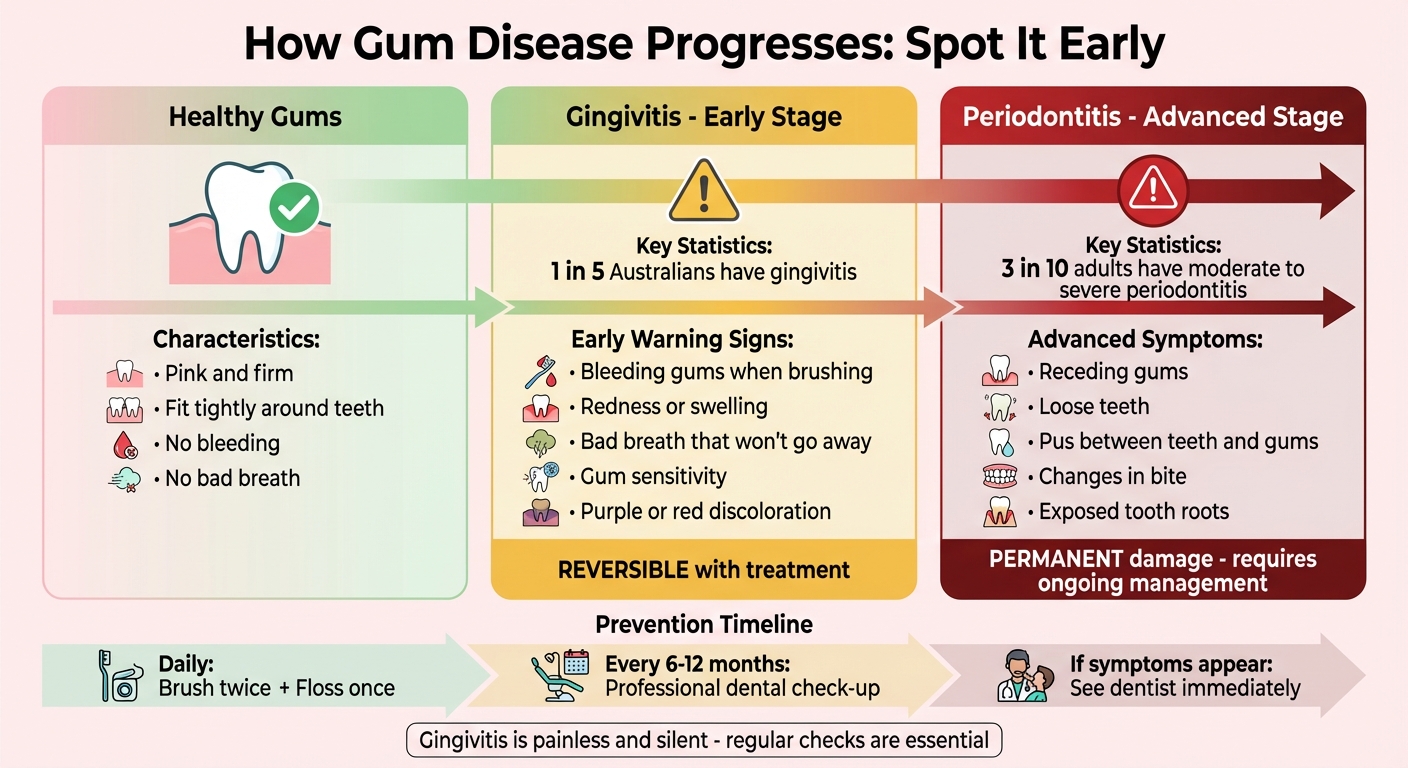
Stages of Gum Disease Progression and Early Warning Signs
How to Spot the Early Signs of Gum Disease – Colgate®

sbb-itb-2be92ed
What Causes Gum Disease?
Gum disease starts with plaque – a thin, sticky film of bacteria that naturally forms on your teeth. If you skip regular brushing and flossing, plaque builds up along your gumline, releasing toxins that irritate your gums. Over time, this soft plaque hardens into tartar (also called calculus), a rough deposit that only a dentist or hygienist can remove. Tartar creates an ideal surface for more plaque to accumulate, leading to ongoing inflammation and setting the stage for further complications [1][3].
But poor brushing habits aren’t the only factor. Lifestyle choices can also play a big role. Smoking, for example, weakens your immune system, making it harder to fight infections and respond to gum disease treatments [4][9]. Other habits like excessive alcohol consumption, high stress, and diets loaded with sugar encourage plaque bacteria to thrive. If your overall nutrition is lacking, your immune system may struggle even more to keep gum infections in check [1][7].
Certain health conditions add to the risk. Diabetes is a major one because it affects your body’s ability to fight infections [3][8]. Similarly, conditions like HIV/AIDS, leukaemia, and other immune disorders can make you more vulnerable [4][9]. Hormonal changes – during pregnancy, puberty, or menopause – can also make gums more sensitive and prone to inflammation [1].
Physical issues can contribute too. Crooked or overcrowded teeth are harder to clean effectively, giving plaque more places to hide [4][9]. Poorly fitting dental work or medications that reduce saliva production can also trap bacteria, increasing your risk [9].
Lastly, genetics might play a part. If gum disease runs in your family, you could be more prone to it, even with good oral hygiene. Understanding these risk factors is an important step in protecting your gum health.
Early Warning Signs of Gum Disease
Noticing the physical changes caused by plaque can help you act before gum disease worsens. Spotting the signs early can be a game-changer. A consistent brushing and flossing routine not only keeps your mouth clean but can also highlight potential issues. Here’s what to look out for.
Bleeding Gums
Do your gums bleed when you brush or floss? Healthy gums typically don’t. Persistent bleeding often points to inflammation caused by plaque. The bacteria in plaque release toxins that irritate the gum tissue, leading to this response.
"The first sign of unhealthy gums is bleeding during or after brushing your teeth." – The Conversation [10]
That said, bleeding isn’t always tied to gum disease. It could also result from recent dental work, mouth ulcers, or hormonal changes during pregnancy. If the bleeding doesn’t stop, even after switching to a soft-bristled toothbrush and being gentle, it’s time to see your dentist.
Next, take note of how your gums look.
Changes in Gum Appearance
Healthy gums are firm, pink, and fit tightly around your teeth. When gum disease begins, these characteristics change – your gums may become red or purple, appear swollen, or feel tender. These changes are your body’s response to bacterial infection. If you spot these signs, don’t ignore them.
Bad Breath That Won’t Go Away
Bad breath that lingers despite brushing or using mouthwash might be more than just a minor annoyance. Chronic bad breath, often accompanied by a bad taste, can signal bacterial infection in the gum pockets. While good oral care can temporarily mask the smell, it won’t fix the root cause. If this persists, it’s a good idea to have your gums checked by a dentist.
Receding Gums or Loose Teeth
Receding gums expose more of the tooth root, and you might notice your teeth feeling loose or gaps forming when you bite. These changes suggest gum disease is advancing beyond the early stage. At this point, the infection may be damaging the bone and ligaments supporting your teeth, a condition known as periodontitis, which requires professional care.
Gum Sensitivity or Pain
Increased sensitivity to hot, cold, or sugary foods and drinks is another red flag. As gums recede, more of the tooth root becomes exposed, leading to heightened sensitivity. This sensitivity often accompanies other symptoms like bleeding or discolouration.
"The alarming thing about gum disease is that, while it’s extremely common, it’s also a ‘silent’ disease. This means it’s often painless with subtle or no symptoms." – Dr. Isabel Holmes, Principal Dentist, Illumident [4]
Gingivitis, the earliest stage of gum disease, is usually painless, making it easy to overlook. But if tenderness, pain while chewing, or other symptoms persist, it’s essential to consult your dentist without delay.
If these signs continue, professional evaluation is key.
How to Check Your Gums at Home
Keeping tabs on your gum health is easier than you might think, and it can help you spot potential issues early. With just a mirror, good lighting, and a few minutes of your time, you can perform a simple self-check to monitor your gums. Here’s how to do it.
Examine Your Gums in the Mirror
Start by finding a well-lit area and using a mirror to inspect your gums. Healthy gums should appear pink, firm, and snug against your teeth. Take note of any redness, swelling, or a purplish hue, as these could be signs of inflammation. If your teeth seem longer than usual, it may indicate gum recession, where the gums pull away from the tooth root [7][11].
"Check your gums in the mirror often. Look for changes in colour or texture." – Oral-B [3]
Pay special attention to areas that are harder to see. Keep an eye out for yellow, cream, or brown hardened deposits along the gum line – this is tartar, which can’t be removed at home and needs professional cleaning [12]. Also, check for new gaps between your teeth or noticeable changes in how your teeth align when you bite [7][2].
Finally, observe whether brushing causes any bleeding or discomfort, as these can be early warning signs.
Look for Bleeding or Discomfort
After brushing, inspect your toothbrush or sink for signs of blood. Healthy gums shouldn’t bleed during regular brushing. You can also try the ‘apple test’: bite into a firm apple and check for blood on its surface [6]. If you notice bleeding, don’t avoid brushing. Instead, switch to a soft-bristled toothbrush, hold it at a 45-degree angle toward your gum line, and brush gently [3][11].
Pay Attention to Other Symptoms
Watch for persistent bad breath, increased sensitivity, or any teeth that feel loose [7][2]. While these self-checks are a great way to stay proactive, they’re not a substitute for regular dental visits. Make sure to schedule general dental evaluations to ensure your gums and teeth stay healthy.
When to See a Dentist
If you notice any warning signs during your self-checks at home, don’t wait – book an appointment with your dentist straight away. Persistent symptoms need immediate attention from a professional. The Australian Dental Association advises: "If you notice that your gums bleed when you bite into food or brush/floss your teeth, it’s time to see your dental professional for a periodontal check-up as soon as possible" [6]. Now, let’s look at what to expect during your dental visit.
Common symptoms like bleeding gums, bad breath, loose teeth, or receding gums could suggest that gum disease is progressing from the early stage of gingivitis to the more serious periodontitis. If you notice pus between your teeth and gums or changes in your bite, these are red flags that require urgent attention. Gingivitis, the earliest stage, can be reversed with professional care. However, once it develops into periodontitis, the damage to bone and connective tissue becomes permanent. Early treatment is key to controlling the infection and preventing further bone loss. Did you know that around 1 in 5 Australians currently have gingivitis, and 3 in 10 adults are dealing with moderate to severe periodontitis? [1]
What Happens During a Dental Visit
A dental visit typically begins with a thorough clinical evaluation. Your dentist will review your symptoms and carefully examine your teeth and gums. Using a specialised tool, they’ll measure the depth of your gum pockets – shallow pockets are a sign of healthy gums, while deeper ones may indicate gum disease. Digital X-rays might also be taken to assess any bone loss.
Treatment often starts with professional scaling, where plaque and hardened tartar are removed from above and below the gum line. Since tartar cannot be removed by brushing or flossing at home, professional tools are essential. In more advanced cases, your dentist might perform root planing, a deep cleaning procedure that smooths the tooth roots to help gums reattach and eliminate bacteria. For severe cases, you may be referred to a periodontist for surgical treatments, such as pocket reduction or pinhole surgery or traditional gum grafting. This professional care works hand in hand with your efforts to monitor and maintain your oral health at home.
How Regular Dental Visits Help
Routine dental check-ups every six to twelve months are essential for catching problems early – especially since gum disease often doesn’t cause pain in its early stages. Professional cleanings during these visits help prevent plaque from hardening into tartar, a major cause of gum inflammation. Regular dental care is a key part of maintaining any improvements achieved through treatment.
If you’re pregnant, have diabetes, or take medications that cause dry mouth, let your dentist know, as these factors can increase your risk of gum disease. Once diagnosed with periodontitis, it’s crucial to stick to regular periodontal maintenance appointments to keep the condition under control and prevent further damage.
Conclusion
Gingivitis can be reversed if it’s identified early, before it progresses to damage the bone and connective tissue [13][6]. However, once it advances to periodontitis, the damage becomes permanent, requiring ongoing management [4][5]. Since gum disease often develops silently without pain in its early stages, recognising key signs – like bleeding gums, persistent bad breath, or noticeable changes in gum colour – is crucial.
This underscores the importance of staying vigilant and prioritising regular dental check-ups. Keep up with good oral hygiene practices: brush your teeth twice a day with fluoride toothpaste, floss daily, and pay close attention to your gums for any changes. Pair these habits with professional dental visits every six to twelve months to catch issues early. A consistent routine and proactive care can go a long way in maintaining healthy gums.
FAQs
What are the early signs of gum disease, and how can I tell them apart from normal gum sensitivity?
Normal gum sensitivity is generally mild and short-lived. It might happen if you brush a bit too hard or consume something very hot or cold. Usually, it resolves on its own without causing any bleeding, ongoing redness, or swelling.
On the other hand, early signs of gum disease are more noticeable and shouldn’t be ignored. Watch for symptoms like bleeding gums, redness or swelling, tenderness, receding gums, or persistent bad breath. If you experience any of these, it’s crucial to see a dental professional promptly to avoid more serious issues. Maintaining good oral hygiene and scheduling regular dental check-ups can help detect and address these problems early.
What changes can you make to reduce your risk of gum disease?
Making a few straightforward lifestyle tweaks can go a long way in reducing your risk of gum disease. One of the most impactful changes? Quit smoking or steer clear of tobacco products. Smoking restricts blood flow to your gums, heightens inflammation, and leaves your mouth more prone to problems. Managing stress is another key factor – chronic stress can weaken your immune system, making it harder for your gums to fight off infections.
What you eat also matters. A balanced diet helps keep your gums in shape. Cutting back on sugary snacks and drinks deprives harmful bacteria of their food source. Meanwhile, loading up on fresh fruits and veggies ensures you’re getting essential nutrients like vitamin C and B-complex vitamins, which are great for gum health.
Of course, daily oral care is non-negotiable. Brush twice a day using fluoride toothpaste, floss every day, and, if your dentist suggests it, add an antimicrobial mouth rinse to your routine. Don’t forget to book regular dental check-ups – they’re vital for spotting issues early and for professional cleanings to tackle plaque and tartar that your toothbrush can’t handle. For expert guidance, you might want to visit a trusted practice like Complete Smiles Bella Vista, known for offering care tailored to Australian standards.
What are the early signs of gum disease, and when should I see a dentist?
Noticing potential signs of gum disease? It’s crucial to see your dentist promptly. Early symptoms to watch for include swollen, tender, or bleeding gums, receding gums, persistent bad breath, or discomfort during brushing or flossing. Tackling these warning signs early can help you avoid serious complications like tooth loss or infections.
If you’re uncertain about your symptoms or they don’t improve, a dental professional can evaluate your oral health and suggest the right treatment plan. Staying on top of regular dental check-ups and practising good oral hygiene are your best defences against gum disease.
Related Blog Posts
- 5 Early Signs of Gum Disease
- How to Prevent Gum Disease Naturally
- Gingivitis and Diabetes: How They Connect
- Differential Diagnosis for Periodontal Infections
Important Notice: Any surgical or invasive procedure carries risks. Before proceeding, you should seek a second opinion from an appropriately qualified health practitioner.
Individual results may vary. The information provided in this article is for educational purposes only and does not constitute medical advice.
Checkout Related Blogs




Get in touch with us
For more information, call us now to start feeling better. Or fill the form below to make appointment
The Latest News from Complete Smiles
How to Clean Clear Plastic Retainers
Checklist for Choosing Wearable Dental Devices
Checklist for Choosing Cloud AI Platforms in Dentistry

Complete Smiles Bella VistaAccepts All Major Health Funds, Including





