




Gravity vs. Vacuum Cycles: Key Differences

When sterilising dental instruments, gravity displacement and vacuum cycles differ mainly in how they remove air – critical for effective sterilisation. Gravity cycles rely on steam pushing air out naturally, while vacuum cycles actively extract air using pumps. This difference impacts sterilisation time, load suitability, and maintenance needs.
- Gravity Cycles: Simple, cost-effective, and ideal for solid, unwrapped items like metal tools or glassware. However, they struggle with wrapped or complex instruments due to trapped air.
- Vacuum Cycles: Faster and more reliable for intricate tools, wrapped packs, or porous materials. They ensure thorough sterilisation but require higher investment and maintenance.
Quick Comparison
| Feature | Gravity Displacement (Class N) | Pre-Vacuum (Class B) |
|---|---|---|
| Air Removal Method | Passive (steam pushes air out) | Active (vacuum pump) |
| Best Load Types | Unwrapped solids, glassware | Wrapped kits, porous items, lumened tools |
| Exposure Time (132°C) | 10–15 minutes | 3–4 minutes |
| Drying Performance | May leave loads damp | Superior drying |
| Maintenance | Lower cost, less frequent | Higher cost, daily tests |
Choose gravity cycles for basic needs. Opt for vacuum cycles if sterilising complex or wrapped instruments is essential.
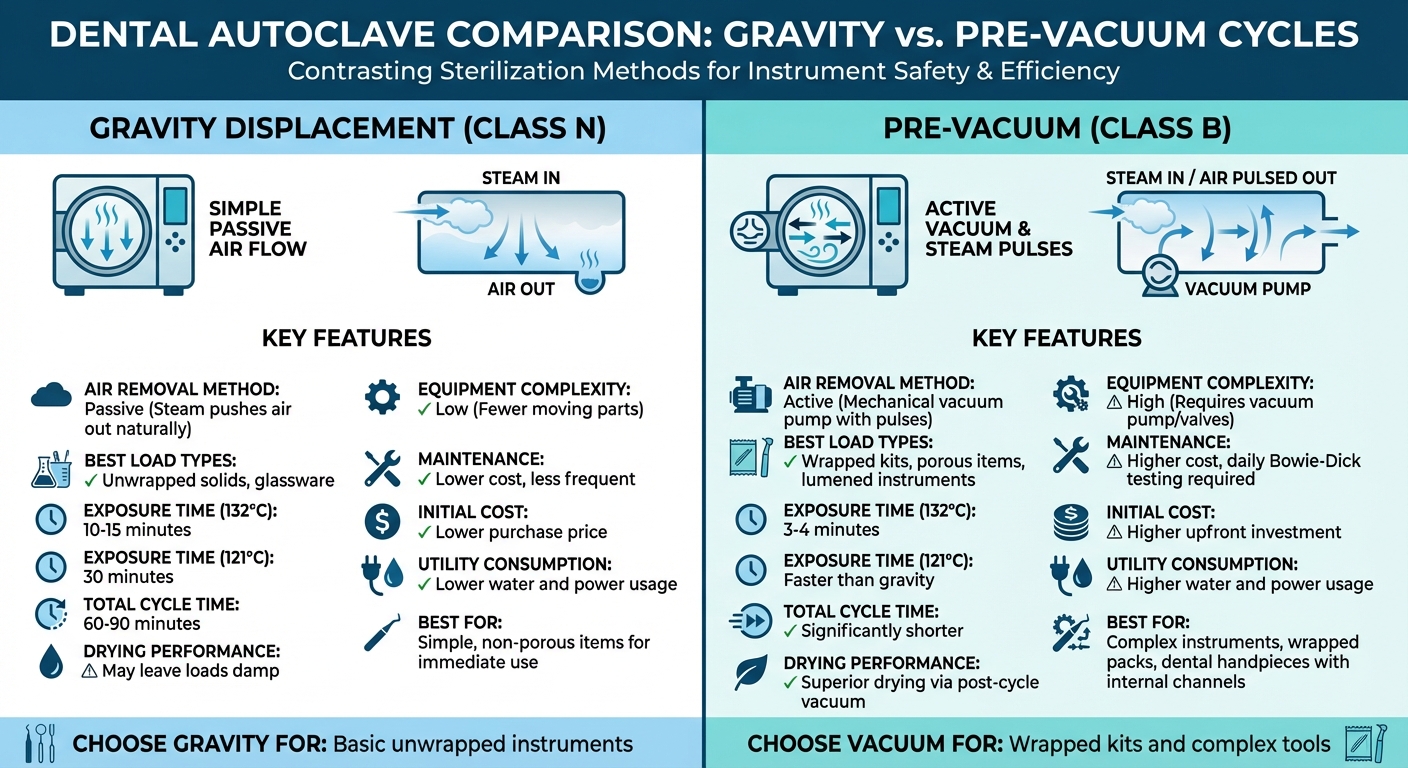
Gravity vs Vacuum Autoclave Cycles Comparison Chart
How Gravity Displacement Cycles Work
The Process Explained
Gravity displacement relies on a straightforward concept: steam is lighter than air. When steam enters the autoclave chamber, typically from the top or sides, it rises naturally and forces the denser air downward and out through a drain vent. As described by the CDC:
“Because the steam is lighter than air, [it] forces air out the bottom of the chamber through the drain vent.” – CDC [7]
This process continues until all the air is replaced with saturated steam. Once the chamber is filled with steam, it directly contacts the instruments inside, effectively killing microorganisms. During this phase, the autoclave maintains consistent temperature and pressure – usually set at 121°C or 132°C [3] – to ensure thorough sterilisation.
Since this method relies on natural physical laws rather than mechanical systems, a typical gravity cycle takes about 60 to 90 minutes, with the sterilisation phase itself lasting approximately 30 minutes [5].
Best Uses for Gravity Cycles
Gravity displacement is ideal for sterilising unwrapped solid metal instruments and glassware. These smooth, non-porous surfaces allow steam to make immediate and complete contact, ensuring effective sterilisation. It’s also commonly used for biohazardous waste contained in red bags or vented containers.
However, this method is less effective for items with lumens or channels, like hollow tubes or intricate surgical tools, as trapped air pockets can prevent full steam penetration. Similarly, wrapped surgical packs and textiles may not receive consistent steam exposure, making gravity displacement unsuitable for these types of loads.
How Vacuum Cycles Work
The Process Explained
Vacuum cycles rely on mechanical pumps to actively remove air from the sterilisation chamber before introducing steam. Unlike standard methods that depend solely on steam, these cycles begin with a conditioning phase. During this phase, a pump creates a series of alternating vacuum and steam pulses – usually three – to extract air from the chamber and the instruments inside [6]. As John J. Perkins explains in Principles and Methods of Sterilisation in Health Sciences:
“The absence of air within the chamber allows ‘steam to penetrate the load almost instantaneously,’ resulting in more reliable sterilisation and shorter sterilisation cycle times.” [6]
Once the air has been evacuated, saturated steam fills the chamber, effortlessly reaching areas that are typically hard to access, such as the narrow channels in dental handpieces or the fibres of surgical textiles. The autoclave then maintains a sterilisation temperature of approximately 132°C, with the process lasting as little as four minutes for wrapped instruments [1]. To finish, a final vacuum pulse ensures the instruments are dried and ready for storage.
This active removal of air prevents the formation of insulating barriers that could block steam from penetrating. By eliminating non-condensable gases, vacuum cycles effectively remove “cold air pockets” that would otherwise compromise the sterilisation process.
These rapid air evacuation techniques make vacuum cycles particularly effective for dental sterilisation procedures, where precision and reliability are crucial.
Best Uses for Vacuum Cycles
Vacuum sterilisation is especially suited for dental instruments with complex designs, such as handpieces, surgical drills, or endodontic files. These tools often contain internal lumens or channels where trapped air could obstruct steam penetration. It’s also ideal for wrapped surgical packs and pouches, as the vacuum pulses force steam through the packaging to thoroughly sterilise the contents. Additionally, porous materials like surgical gowns, drapes, and cloths benefit significantly from vacuum cycles, as their fibrous structures tend to trap air that gravity cycles can’t remove.
In many areas, Class B autoclaves, which use pre-vacuum technology, are considered the top choice for dental practices. These autoclaves are capable of sterilising hollow instruments with a length-to-diameter ratio greater than 1:5 [8]. For dental practices handling wrapped instruments or intricate tools, vacuum cycles are essential to meet current sterilisation standards.
This method of active air removal provides a strong foundation for comparing vacuum cycles to gravity displacement cycles, particularly in terms of their mechanisms and performance.
Main Differences Between Gravity and Vacuum Cycles
How the Mechanisms Differ
Gravity cycles work by passively displacing air as steam rises, relying on the natural movement of air and steam. Essentially, cooler air is pushed downward and exits through a bottom drain – there’s no mechanical assistance involved [1].
On the other hand, vacuum cycles take a more active approach. They use a pump that alternates between vacuum pulses and steam injections to remove air before sterilisation begins [1][4]. According to the STERIS Knowledge Centre:
“Dynamic air removal cycles are preferred because they are more efficient than gravity cycles at removing air from the load” [2].
This active process is particularly effective at eliminating air pockets, which can obstruct steam from reaching critical areas, especially in wrapped instruments or those with internal channels. This fundamental difference in approach explains the variation in cycle times and equipment requirements.
Cycle Times and Performance
The difference in efficiency between these systems is clear when you compare their cycle times. For example, at 132°C, wrapped instruments need 15 minutes of exposure time in a gravity cycle, while a pre-vacuum cycle can complete the same task in just 4 minutes [1][6]. At 121°C, gravity cycles require about 30 minutes of exposure time [1][6]. Vacuum systems achieve faster cycles due to their ability to remove air quickly, allowing steam to penetrate the load almost instantly.
However, this speed comes at a cost. Vacuum systems consume more power and water because of their mechanical pumps, and they require daily Bowie-Dick testing to ensure proper operation. They also need regular maintenance to check for leaks in chamber seals and to keep the vacuum system running smoothly [2]. By contrast, gravity systems are simpler, with fewer moving parts, leading to lower upfront costs and less frequent maintenance [1][4].
Applications in Dental Practices
Choosing between these methods often depends on what’s being sterilised. Gravity cycles are ideal for unwrapped solid items, while vacuum cycles are better suited for wrapped kits, porous materials, and instruments with internal lumens [1][4]. Class N autoclaves, which operate on gravity displacement, are designed for solid items that will be used immediately after sterilisation. In contrast, Class B autoclaves, which use pre-vacuum technology, can handle a broader range of items, including hollow instruments, making them a popular choice for dental practices.
Here’s a quick comparison of the two methods:
| Feature | Gravity Displacement (Class N) | Pre-Vacuum (Class B) |
|---|---|---|
| Air Removal Method | Passive (steam pushes air out) | Active (mechanical vacuum pump) |
| Best Load Types | Unwrapped solids, glassware | Wrapped kits, porous items, instruments with lumens |
| Exposure Time (132°C) | 10–15 minutes | 3–4 minutes |
| Equipment Complexity | Low (fewer moving parts) | High (requires vacuum pump/valves) |
| Drying Performance | May leave loads moist | Superior drying via post-cycle vacuum |
| Maintenance Requirements | Lower cost and frequency | Higher cost; daily Bowie-Dick testing needed |
For many modern dental clinics, Class B autoclaves are the preferred option due to their ability to handle a wide variety of load types efficiently and effectively.
sbb-itb-2be92ed
Advantages and Disadvantages of Each Method
Side-by-Side Comparison
Gravity autoclaves are straightforward and budget-friendly, making them ideal for sterilising solid instruments. Their mechanical simplicity results in a lower purchase price and reduced maintenance costs. Without the need for complex components like vacuum pumps, these systems are reliable and user-friendly, particularly for sterilising solid, non-porous instruments and glassware.
On the other hand, vacuum systems are designed for more demanding tasks, excelling at sterilising wrapped surgical packs, porous materials, and instruments with internal lumens. While they require a higher initial investment and consume more utilities, their performance justifies the cost for practices handling complex loads. These systems also offer superior drying capabilities, thanks to a post-cycle vacuum phase, which is especially useful for moisture-sensitive items.
| Aspect | Gravity Displacement (Class N) | Pre-Vacuum (Class B) |
|---|---|---|
| Initial Cost | Lower purchase price | Higher upfront investment |
| Maintenance | Simpler and less frequent | More complex |
| Ease of Use | Reliable with fewer components | More complex operation |
| Load Suitability | Best for unwrapped solids and glassware | Ideal for wrapped kits, porous items, and lumened instruments |
| Drying Performance | May leave loads damp | Excellent drying capability |
| Utility Consumption | Lower water and power usage | Higher consumption, especially with water ejector systems |
This comparison highlights the strengths and limitations of each method, helping dental practices make informed choices.
Selecting the Right Method
Choosing the right steriliser depends on the types of instruments you sterilise and your operational needs. If your practice primarily processes solid, unwrapped instruments for immediate use, a gravity displacement autoclave provides reliability and cost savings. However, if you regularly handle dental handpieces with internal channels, wrapped surgical kits, or porous materials, a vacuum system is the better option due to its ability to ensure thorough steam penetration.
Other factors like budget, available space, and load complexity also play a role in the decision. For moisture-sensitive instruments or situations where items need to be stored immediately after sterilisation, the superior drying offered by Class B units can make the extra investment worthwhile, particularly in busy dental clinics.
Types of Autoclaves (Gravity vs. Vacuum Autoclaves) and Their Advantages
Summary
Gravity displacement and vacuum cycles approach sterilisation in very different ways. Gravity cycles depend on passive air removal, where steam naturally pushes heavier air out through a drain port. In contrast, vacuum cycles use mechanical pumps to actively remove air through pressure pulses, allowing steam to quickly and effectively reach even the most complex loads [6].
These methods result in notable differences in both cycle times and sterilisation effectiveness. For example, at 132°C, vacuum cycles can sterilise wrapped instruments in just 4 minutes, whereas gravity cycles take 15 minutes to achieve the same result [6]. This efficiency gap is directly tied to how each method handles air removal, which is crucial for successful sterilisation.
In dental practices, choosing the right sterilisation method depends on the types of instruments you use. Gravity cycles are suitable for simple, non-porous items that are used immediately after sterilisation. However, if your workflow includes dental handpieces with internal channels, wrapped surgical kits, or porous materials, vacuum systems are essential to ensure steam fully penetrates these items. Ultimately, the choice of cycle method should align with your instruments and clinical needs.
FAQs
What are the benefits of vacuum sterilisation cycles compared to gravity cycles?
Vacuum sterilisation cycles stand out compared to gravity cycles by delivering a more thorough and consistent sterilisation process. They work by actively removing air from the chamber before introducing steam, which allows steam to penetrate more effectively and make better contact with the items being sterilised.
This approach is especially useful for sterilising items with intricate designs, porous materials, or narrow spaces – think surgical instruments or dental tools. By eliminating air pockets, vacuum cycles ensure even those hard-to-reach areas are properly sterilised, making the process both efficient and reliable.
Why would a dental practice opt for a gravity displacement autoclave even though its cycles take longer?
A gravity displacement autoclave can be a practical choice for dental practices due to its dependable and straightforward operation. By using gravity to push out air and replace it with steam, it effectively sterilises non-porous instruments and materials.
This method is ideal for practices where quick sterilisation cycles aren’t critical, but consistent performance and ease of use are priorities. Additionally, its affordability and lower maintenance demands make it a sensible option for handling routine sterilisation tasks.
Why do vacuum cycles provide better drying performance compared to gravity cycles?
Vacuum cycles provide outstanding drying results by actively removing air from the sterilisation chamber. This allows steam to evenly reach every surface of the load, eliminating cold air pockets that could compromise the sterilisation process.
When compared to gravity cycles, vacuum cycles deliver more reliable outcomes. They’re especially effective for sterilising complex or tightly packed loads, where even drying and thorough sterilisation are essential.
Related Blog Posts
- Orthodontic Sterilization Tools: Guide
- Sterilisation Monitoring: Australian Standards Explained
- 5 Methods for Sterilizing Endodontic Files
- Cycle Failures in Autoclaves: Problems and Fixes
Important Notice: Any surgical or invasive procedure carries risks. Before proceeding, you should seek a second opinion from an appropriately qualified health practitioner.
Individual results may vary. The information provided in this article is for educational purposes only and does not constitute medical advice.
Checkout Related Blogs



Get in touch with us
For more information, call us now to start feeling better. Or fill the form below to make appointment
The Latest News from Complete Smiles
How to Clean Clear Plastic Retainers
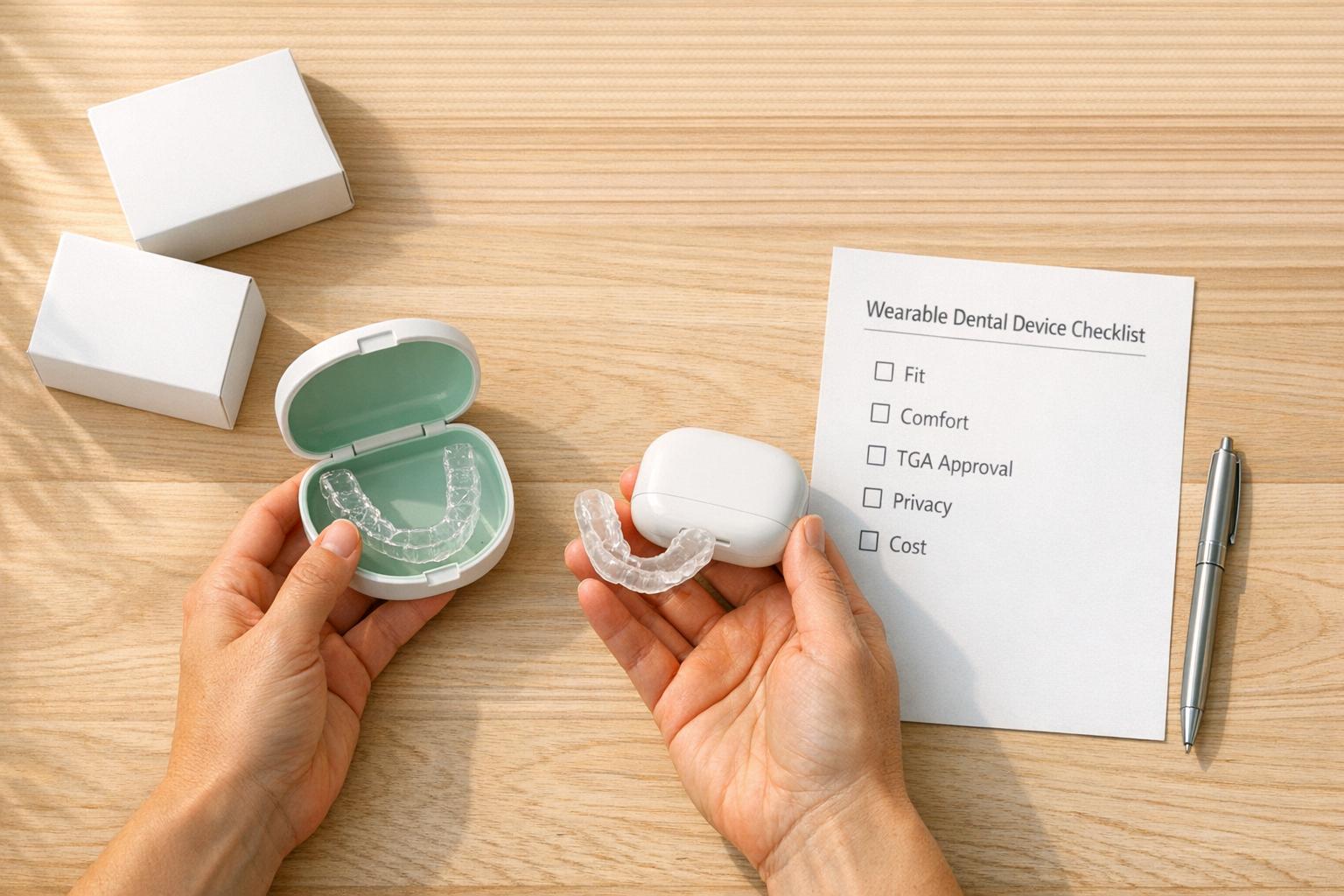
Checklist for Choosing Wearable Dental Devices
Checklist for Choosing Cloud AI Platforms in Dentistry

Complete Smiles Bella VistaAccepts All Major Health Funds, Including