





AI Dental Radiology: Benefits for Patient Care
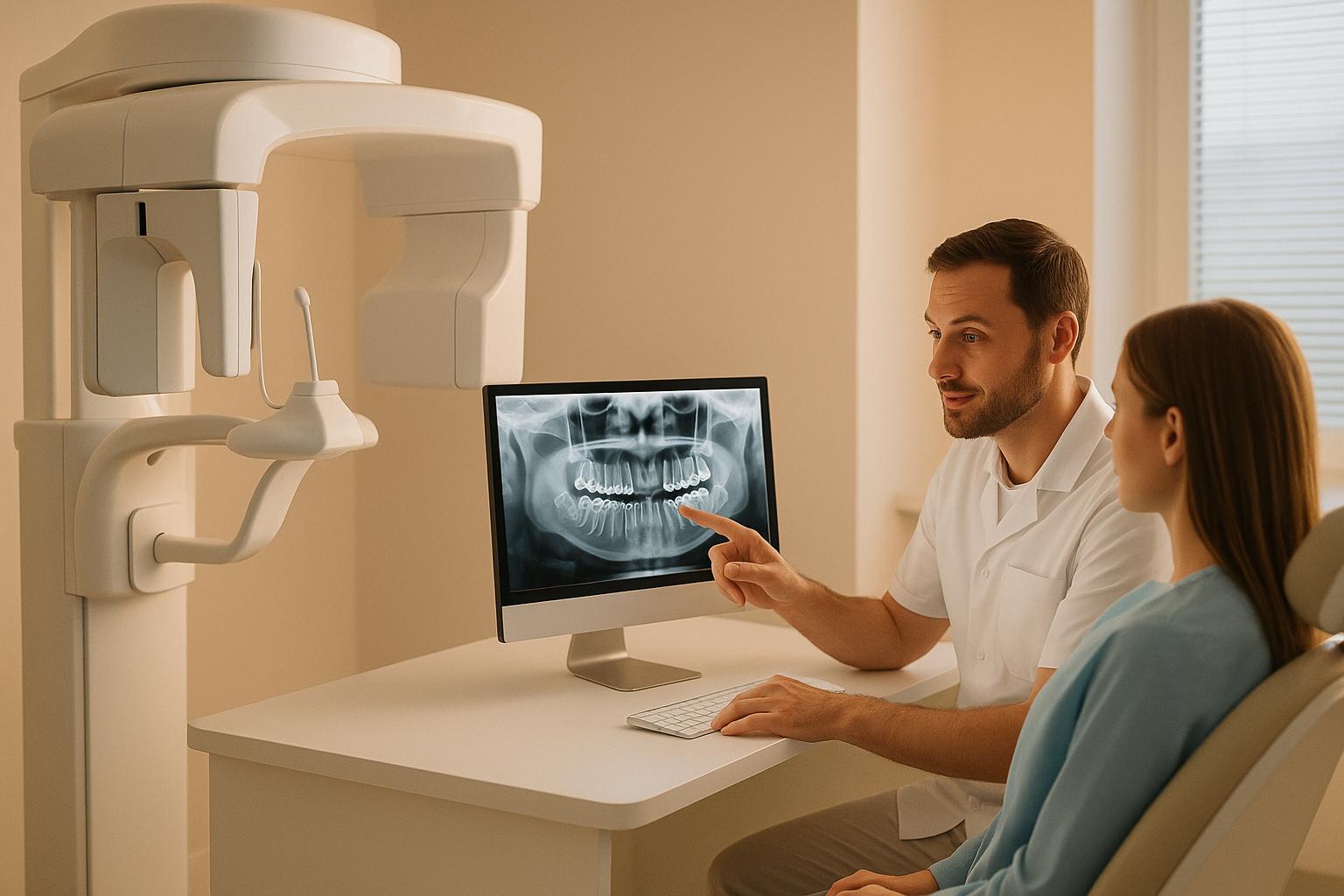
AI is transforming dental radiology, helping dentists analyse X-rays and scans faster and with greater accuracy. These systems use advanced algorithms to detect dental issues like cavities, gum disease, bone loss, and even early signs of oral cancer. Here’s why AI is making a difference:
- Accuracy: Over 90% accuracy in detecting dental problems, reducing diagnostic errors by up to 30%.
- Speed: Analyses thousands of images in seconds, enabling same-day diagnoses and treatment planning.
- Consistency: Provides standardised, objective assessments, minimising variability between practitioners.
- Patient Engagement: Annotated images make it easier for patients to understand their condition, increasing treatment acceptance rates by up to 30%.
AI doesn’t replace dentists but supports them by speeding up workflows and improving diagnostic precision. While challenges like cost and integration exist, Australian clinics using AI report faster appointments, better care, and improved patient trust.
IDS 2025 – VELMENI’s AI Revolutionizing Dental X-Ray Analysis & Patient Care
Better Diagnostic Accuracy and Early Detection
AI systems now boast an impressive accuracy rate of over 90% when identifying dental caries and bone loss [1][3]. This precision allows for the early detection of dental issues, often catching problems before they escalate.
One of AI’s standout abilities is its knack for spotting subtle changes that human eyes might miss. By deploying deep learning algorithms, these systems can simultaneously analyse thousands of radiographic features, pinpointing early-stage dental diseases [1][2][3]. This is particularly beneficial for catching incipient caries – decay in its earliest stages – and mild bone loss, which might otherwise go unnoticed during traditional examinations.
FDA-cleared AI platforms further highlight this enhanced detection capability, frequently identifying conditions before symptoms appear [1][3][4]. They are especially effective at diagnosing early-stage oral cancers and root resorption – conditions that are notoriously challenging to detect in their initial phases using conventional methods [2][6].
AI-assisted analysis also significantly reduces diagnostic errors. For example, in caries detection, these systems can lower false negatives and false positives by up to 30% compared to manual interpretation [1]. This means fewer missed diagnoses and less unnecessary treatment, directly improving patient outcomes and building trust in care.
Another major benefit of AI is its speed. These tools can process and evaluate thousands of dental images within seconds [2][3]. This rapid analysis supports same-day diagnoses and treatment planning, streamlining the patient experience.
| Diagnostic Feature | Traditional Methods | AI-Assisted Methods |
|---|---|---|
| Accuracy Rate | Variable, clinician-dependent | >90% in clinical studies [1][3] |
| Early Detection | Limited by human perception | Identifies subtle, pre-symptomatic changes |
| Error Reduction | Higher risk of oversight | Up to 30% fewer false results [1] |
| Processing Speed | Minutes per image | Seconds per multiple images [2][3] |
Early identification of dental issues allows for less invasive and more affordable treatment options. For instance, detecting caries at an early stage might make remineralisation treatments possible, avoiding the need for fillings. Similarly, spotting bone loss early can prompt timely periodontal care, preventing more severe complications down the line.
AI systems also excel across various imaging types. Whether analysing bitewing X-rays for interproximal caries or panoramic radiographs for bone abnormalities, these platforms deliver consistent, high-quality results. This reliability ensures accurate diagnostics, regardless of the imaging technique or the time of day the analysis occurs.
Dental practices embracing AI-powered imaging have reported up to 25% faster diagnosis times and a reduction in diagnostic errors by as much as 20% [3][4]. For Australian clinics aiming to provide comprehensive care, integrating AI into diagnostic workflows offers a way to enhance precision without sacrificing the personalised attention that patients value. These advancements not only improve clinical efficiency but also elevate the overall standard of patient care.
Faster Clinical Workflows
AI is reshaping the way dental practices approach radiographic analysis. Tasks that used to take minutes can now be completed in mere seconds. This shift doesn’t just save time – it streamlines workflows, benefiting both clinicians and patients by cutting down waiting times and enabling quicker treatment decisions. With this speed, practices can move seamlessly from diagnosis to treatment planning.
Real-Time Image Analysis
AI platforms bring instant results to dental X-ray analysis, delivering diagnostic insights almost immediately. Using convolutional neural networks, these systems can segment and annotate images in seconds, pinpointing issues like cavities or bone loss [1][5].
What makes this even more efficient is the integration of AI with existing imaging systems. These solutions provide annotated radiographs instantly, eliminating the need for manual measurements or switching between software [1][3][4]. This real-time feedback not only reduces delays but also smooths out appointment schedules, making same-day diagnoses and treatment planning a practical reality.
AI goes beyond detection by automating tasks like tooth numbering and charting, which significantly cuts down on administrative work [1]. This frees up clinicians to focus on discussing results with patients and planning treatments. Plus, AI’s ability to analyse thousands of images in seconds helps spot subtle irregularities that might otherwise go unnoticed during manual reviews [1][2]. This capability supports faster clinical decisions and enables treatment planning to happen during the same visit.
Comparison: Conventional vs AI-Assisted Workflows
The contrast between traditional and AI-driven workflows is stark, especially in terms of time and resource management. Conventional methods rely on manual interpretation of radiographs, which can vary between clinicians and consume precious appointment time.
| Workflow Aspect | Conventional Workflow | AI-Assisted Workflow |
|---|---|---|
| Image Analysis Time | Manual, several minutes per image | Real-time, often instant [1][3] |
| Administrative Burden | High (manual charting, data entry) | Reduced (automated segmentation and charting) [1] |
| Same-Day Treatment Planning | Less common, may require follow-up | Readily achievable with instant analysis [3] |
| Patient Communication | Verbal explanations, less visual | AI-annotated images, improved understanding [3] |
Research shows that AI can cut diagnostic times for radiographic analysis by 50% or more, depending on the complexity of the case and the AI platform in use [2][3][7]. Deep learning models process thousands of images in seconds, compared to the several minutes it takes for manual review [2][3][7].
This increased efficiency allows practices to see more patients without sacrificing quality of care. By handling routine diagnostic tasks, AI ensures consistent and objective analysis, freeing up staff to focus on patient care [1][3][8]. Same-day diagnoses and treatment plans are now achievable [3][5], providing patients with faster solutions and minimising disruptions to their daily lives.
AI also changes how clinicians spend their time. Instead of focusing on repetitive tasks like image interpretation, they can prioritise patient education, communication, and more complex decision-making [1][3]. While AI delivers fast, objective results, the responsibility of interpreting these findings and discussing treatment options remains firmly with the practitioner. Australian dental practices using AI-powered workflows report fewer bottlenecks and improved productivity [3]. The technology integrates smoothly with existing systems, enhancing diagnostic capabilities without disrupting established care processes.
Better Patient Communication and Engagement
AI is changing the way dentists interact with their patients by turning complex radiographic data into easy-to-understand visuals. Instead of relying solely on verbal explanations, AI-powered platforms create annotated images that clearly highlight problem areas on X-rays. This makes dental consultations more transparent and easier for patients to follow, helping them feel more involved in their care. These visuals not only clarify clinical findings but also set the stage for more meaningful discussions during follow-up appointments.
By incorporating AI-supported visuals, the dynamic between patients and practitioners is evolving. Patients can now see exactly where an issue lies, which helps ease their anxiety and fosters trust by making them active participants in their treatment decisions.
Visual Aids for Patient Understanding
AI imaging tools like Overjet and Curve Dental provide instant, annotated images that simplify complex dental conditions. These systems use overlays and highlights to pinpoint and label issues such as decay, bone loss, or gum disease directly on radiographs [1][3]. They also include automated tooth numbering and segmentation, which makes it easier to identify and explain specific problems. For instance, while a dentist might describe a cavity, the AI system simultaneously shows the affected tooth, clearly marked and numbered.
Such visual aids are particularly helpful in Australia’s multicultural society. They break through language barriers and varying levels of health literacy by offering clear, easy-to-follow explanations [1][3]. Additionally, these tools enhance subtle findings on traditional X-rays, helping patients understand the urgency of early-stage problems and why preventive treatments might be necessary.
Impact on Treatment Acceptance Rates
These AI-generated visuals not only improve understanding but also encourage patients to accept recommended treatments. Clinical reports and studies show that when patients are presented with annotated images, they are more likely to proceed with the suggested care because the visual evidence is clear and objective [3]. For example, a dental practice using Overjet’s AI platform reported a 30% increase in treatment acceptance rates after incorporating annotated radiographs into consultations [3]. This demonstrates how AI tools can simplify workflows while reducing the need for lengthy explanations.
| Communication Method | Patient Response | Treatment Acceptance |
|---|---|---|
| Traditional verbal explanations | Higher uncertainty; more questions | Lower acceptance rates |
| AI-annotated imaging | Increased confidence; clearer understanding | 30% higher acceptance rates [3] |
| Combined AI visuals with professional guidance | Maximum trust and engagement | Optimal treatment compliance |
Australian dental practices have observed similar results. The objective nature of AI-generated annotations helps reduce scepticism and builds trust, leading to more informed decision-making and higher patient satisfaction scores [3]. Additionally, by simplifying the explanation process, dentists can spend more time educating and engaging with their patients, strengthening relationships while staying efficient [3].
Practices like Complete Smiles Bella Vista are already using AI-powered communication tools to provide patient-focused care. These technologies make it easier to explain complex procedures, ensuring patients feel informed and confident in their treatment plans.
sbb-itb-2be92ed
Reducing Diagnostic Errors and Ensuring Consistency
Interpreting dental radiographs can vary significantly between practitioners, which sometimes leads to inconsistent diagnoses and delays in treatment. This is where AI technology steps in, offering an objective and standardised analysis that helps minimise human error and variability in diagnostics. By building on its speed and precision, AI continues to prove its value in dental diagnostics.
Cutting Down Errors with Machine Learning
Advancements in machine learning, particularly through convolutional neural networks (CNNs) and deep learning models, have significantly improved diagnostic accuracy in dental radiology. These models, trained on thousands of annotated images, can detect early indicators of dental diseases, fractures, or other pathologies with a level of precision that surpasses traditional methods [1].
AI-powered tools like Dentrix Detect AI and Overjet are designed to automatically flag areas of concern, such as caries or bone loss. This approach has been shown to reduce false negatives and false positives by up to 39%, particularly in detecting dental caries and bone loss [1]. Additionally, AI systems can process vast amounts of dental records in seconds, identifying subtle issues that might otherwise go unnoticed [1].
Ensuring Consistency Across Providers
Beyond reducing errors, AI also ensures uniformity in diagnostics across different providers. A major advantage of AI is its ability to apply the same algorithms and criteria to every radiograph, regardless of who the clinician is [3]. This standardisation minimises variations caused by differences in clinician training or experience, ensuring consistent diagnostic outcomes – whether a patient visits a solo practitioner or a larger dental organisation [3].
In group practices or dental service organisations, platforms like Overjet provide real-time, annotated radiographs that guide clinicians towards consistent diagnoses [3]. For example, an X-ray taken at Complete Smiles Bella Vista is analysed using the same AI criteria as in other Australian clinics, ensuring uniformity in diagnostic results.
| Diagnostic Approach | Error Rate | Consistency Level | Detection Speed |
|---|---|---|---|
| Conventional radiology | Higher, prone to human error | Variable between providers | Slower interpretation |
| AI-assisted radiology | 39% reduction [1] | High standardisation | Instant analysis |
| Combined AI with human oversight | Optimal accuracy | Maximum consistency | Enhanced efficiency |
While AI greatly enhances diagnostic accuracy, it doesn’t replace the need for human expertise. Dentists still play a crucial role in reviewing AI-generated findings, confirming diagnoses, and factoring in the patient’s history and preferences before finalising treatment plans [1]. This collaborative approach ensures a balance between technological precision and clinical judgement, resulting in safer and more comprehensive care.
Clinical data shows that dental practices using AI-powered radiology platforms have seen a 25% reduction in diagnostic discrepancies between practitioners over six months. Additionally, the transparent, annotated radiographs provided by AI tools have boosted patient trust. These improvements lead to quicker interventions and higher acceptance of treatment plans, highlighting the practical benefits of AI in reducing errors and standardising diagnostic processes [1].
AI Integration in Australian Dental Practices
Across Australia, dental clinics are incorporating AI-driven radiology tools, reshaping how they deliver patient care. This technological evolution is revolutionising diagnostics, making processes faster and more precise.
Clinics of various sizes are finding success with these tools. Take Complete Smiles Bella Vista, for instance. Under the leadership of Dr. James Hanna, this clinic has effectively woven advanced AI tools into its diagnostic routines, all while maintaining a focus on personalised care. This example highlights how AI not only enhances diagnostic accuracy but also complements the human touch in healthcare.
AI adoption typically involves incorporating imaging systems that utilise deep learning to analyse X-rays and 3D scans. These systems identify irregularities and generate annotated visuals that help practitioners make informed decisions [1][3][5]. Additionally, automated tooth numbering and charting have become more widespread, simplifying both clinical and administrative tasks [1].
The benefits are hard to ignore. Many Australian dental practices report shorter chair times for patients and the ability to offer same-day diagnoses and treatment plans. This not only improves efficiency but also elevates the overall patient experience [3]. Furthermore, AI ensures consistent, evidence-based care by standardising diagnostic criteria across multiple locations, reducing variability among practitioners [3].
However, implementing AI isn’t without its hurdles. The upfront cost of software, the challenge of integrating it with existing systems, concerns over data privacy, and the need for staff training are all significant barriers [2][3]. To tackle these issues, clinics are opting for solutions that seamlessly fit into their current workflows, prioritising staff education, and adhering to local data protection laws.
Beyond operational efficiency, AI has also strengthened patient engagement. Annotated radiographs generated by AI provide transparency, building trust with patients. When patients can visually understand their diagnoses, they are more likely to accept treatment plans, leading to quicker interventions [1].
The growing body of evidence supports AI adoption. Tools designed for X-ray analysis have shown a marked reduction in false positives and missed diagnoses. Additionally, clinical data indicates fewer diagnostic inconsistencies between practitioners, fostering a more reliable healthcare environment [1].
With improved diagnostic precision, streamlined workflows, and better communication with patients, AI integration is becoming indispensable in modern dental care. These advancements not only improve patient outcomes but also pave the way for ongoing innovations in the field.
Conclusion: The Future of AI in Dental Radiology
AI is transforming dental radiology by offering more precise diagnostics, simplifying workflows, and helping patients better understand their treatment options with clear visual aids.
In practice, these advancements are already making a difference. Clinics report fewer diagnostic errors, faster appointments, and greater acceptance of treatment plans. However, while AI is a powerful tool, it works best as a complement to the expertise of skilled clinicians. The human touch – especially the ability to make nuanced decisions – remains irreplaceable. By combining AI’s analytical strengths with the experience of dental professionals, the dentist-patient relationship can be strengthened rather than overshadowed [1].
The future holds even more promise. Predictive analytics, 3D imaging, and teledentistry are set to push AI’s role even further, especially across Australia’s diverse healthcare settings [5][9].
Of course, challenges like data privacy, staff training, and workflow integration require thoughtful planning. But for practices willing to invest time and resources, the rewards – both for practitioners and patients – make the effort worthwhile [3].
FAQs
How does AI enhance the precision of dental radiology compared to traditional techniques?
Artificial intelligence (AI) is transforming dental radiology, offering a level of precision and consistency that surpasses traditional methods. AI-powered systems can analyse dental images to identify even the smallest abnormalities – things like early-stage cavities or hidden dental problems – that might escape the human eye.
Beyond its accuracy, AI also accelerates the diagnostic process. This means dentists can develop treatment plans more quickly, ensuring patients receive timely and effective care. When advanced AI tools are paired with a dentist’s clinical expertise, the result is more tailored and precise care, ultimately enhancing oral health outcomes for patients.
What challenges might arise when using AI in dental radiology, and how can they be managed?
Integrating AI into dental radiology comes with its fair share of hurdles. For starters, there’s the cost – investing in advanced technology and training staff can be expensive. Then, there are valid concerns about data privacy, especially when handling sensitive patient information. On top of that, AI systems must align with strict regulatory standards. And let’s not forget, some dental professionals may initially hesitate to adopt these tools simply because they’re unfamiliar.
So, how can these challenges be tackled? Education and training are key. By offering staff ongoing opportunities to learn about AI, practices can ease the transition. Prioritising strong data security systems is another must, ensuring patient information stays protected. Compliance with Australian healthcare regulations is non-negotiable, of course. Partnering with reputable AI providers can also help, as can taking a gradual approach to implementation. This step-by-step method can build trust and make the shift to AI feel less daunting.
How does AI in dental radiology improve patient understanding and engagement during consultations?
AI is transforming dental radiology by offering patients a clearer understanding of their oral health through detailed and easy-to-grasp visualisations of diagnostic results. With advanced imaging tools powered by AI, dentists can pinpoint areas of concern and explain conditions and treatment options in a way that’s straightforward and accessible.
This technology also makes consultations more engaging and interactive. Using AI-generated insights, dentists can illustrate possible treatment outcomes, helping patients feel more informed and assured about their choices. By simplifying the diagnostic process, AI ensures that consultations are not only efficient but also tailored to the patient’s needs.
Related Blog Posts
- AI-Powered Dental Imaging: Future Trends
- How AI Improves Diagnostic Consistency in Dentistry
- AI-Powered Radiology: What Dentists Need to Know
- AI vs Radiographs: Caries Detection Accuracy
Important Notice: Any surgical or invasive procedure carries risks. Before proceeding, you should seek a second opinion from an appropriately qualified health practitioner.
Individual results may vary. The information provided in this article is for educational purposes only and does not constitute medical advice.
Checkout Related Blogs




Get in touch with us
For more information, call us now to start feeling better. Or fill the form below to make appointment
The Latest News from Complete Smiles
How to Clean Clear Plastic Retainers
Checklist for Choosing Wearable Dental Devices
Checklist for Choosing Cloud AI Platforms in Dentistry

Complete Smiles Bella VistaAccepts All Major Health Funds, Including





