





Real-Time AI for Caries Detection: Pros and Cons
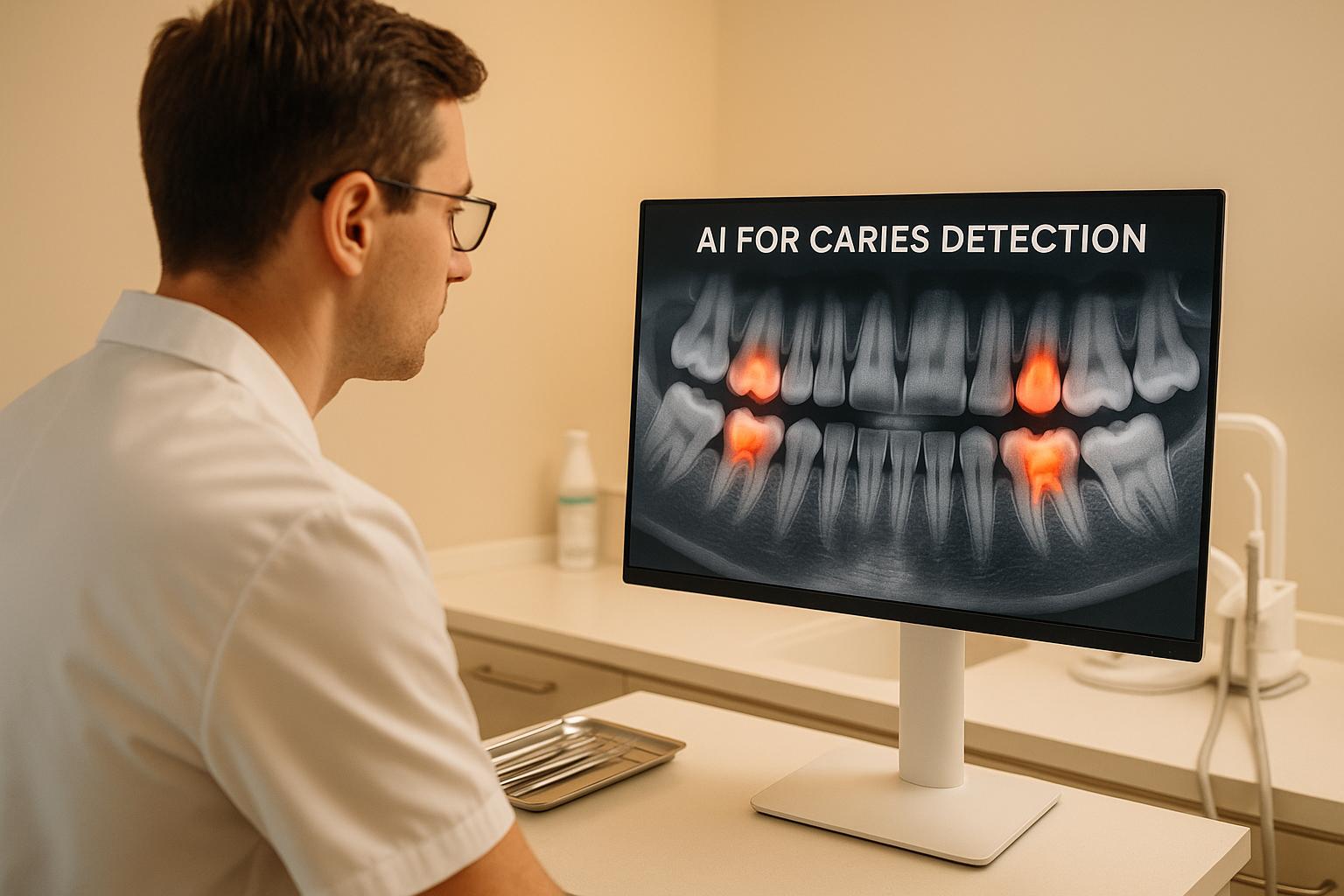
Tooth decay is one of the most common health issues in Australia. Dentists traditionally rely on visual inspections, radiographs, and tactile methods to detect decay, but these often identify issues only after significant progression. Enter real-time AI systems: tools designed to detect early signs of decay by analysing dental images during patient visits. While promising more precise and earlier detection, these systems come with challenges like cost, false positives, and integration into existing workflows.
Key Takeaways:
- Traditional Methods: Depend on dentist expertise; effective but limited for early detection.
- AI Systems: Offer consistent results, early detection, and visual aids for patient communication.
- Challenges: High upfront costs, occasional false positives, and reliance on image quality.
- Best Approach: Combining AI with professional judgement ensures better outcomes.
Quick Comparison:
| Aspect | Traditional Methods | AI Systems |
|---|---|---|
| Detection Accuracy | Good for advanced decay | Better for early detection |
| Speed | Manual and time-intensive | Instant feedback |
| Cost | Low ongoing costs | High initial investment |
| Patient Communication | Verbal explanations | Visual aids improve clarity |
| False Positives | Lower with experienced dentists | Higher sensitivity may increase |
Real-time AI systems are a step forward but work best when paired with experienced clinicians to balance precision and judgement.
06 How Accurate is Artificial Intelligence in Detecting Dental Caries?
1. Current Caries Detection Methods
In Australia, dental practices rely on a range of well-established techniques to identify tooth decay, each playing a crucial role in clinical decision-making. These traditional methods form the foundation for evaluating how AI-driven alternatives might improve upon current practices.
Visual examination is one of the most commonly used methods in Australian dental surgeries. Dentists inspect tooth surfaces under specialised lighting, looking for colour changes, surface irregularities, or early signs of demineralisation. This method heavily depends on the practitioner’s skill and experience to distinguish between harmless staining and the early stages of decay.
Bitewing radiographs are another key tool, particularly for detecting decay between teeth (interproximal caries), where visual inspection falls short. These x-rays are typically scheduled based on a patient’s risk profile. Digital radiography is now widely used, offering instant image review and lower radiation exposure compared to older methods.
Tactile examination, which involves using dental explorers to feel for softened enamel, has become less common due to concerns about potentially spreading bacteria or causing damage to weakened enamel. Despite these concerns, it remains a method some practitioners still utilise.
Accuracy
The effectiveness of these traditional methods varies depending on the stage of decay and the clinician’s expertise. Visual examinations are reliable for detecting decay once it has progressed to cavitation, but they are less effective for identifying very early lesions. Bitewing radiographs are generally more sensitive for spotting interproximal decay, though they can sometimes miss early enamel changes or produce false positives. Combining these methods tends to improve diagnostic accuracy, but detecting the earliest stages of demineralisation remains a challenge.
Cost Efficiency
Visual and tactile methods are budget-friendly, requiring minimal equipment. On the other hand, digital radiography systems involve a significant upfront investment. However, the benefits – such as instant image availability and lower ongoing costs for consumables – can offset the initial expense over time. It’s also worth considering the time required for thorough assessments, as this impacts both workflow efficiency and overall practice productivity.
Clinical Workflow Integration
Traditional caries detection methods are deeply embedded in Australian dental workflows. Dentists typically follow a structured process: starting with a visual inspection and then moving to radiographs if needed. Appointments are scheduled to allow enough time for a comprehensive assessment, including explaining findings to the patient and planning treatments. Digital charting has further streamlined documentation and patient management, making these methods an integral part of everyday practice.
Patient Experience
For patients, traditional methods are familiar and generally comfortable. Visual inspections are non-invasive, while bitewing radiographs, though requiring brief imaging, are well tolerated by most. However, the subjective nature of these methods can sometimes lead to variations in diagnoses and treatment plans between practitioners. Additionally, while modern digital radiography minimises radiation exposure, some patients may still feel mild anxiety about the procedure. These considerations underline the baseline from which AI-driven systems must demonstrate improvements in both accuracy and patient comfort.
2. Real-Time AI for Caries Detection
Real-time AI systems are transforming dental diagnostics, especially in identifying caries (tooth decay). These advanced tools leverage machine learning algorithms trained on vast collections of dental images to spot early signs of decay instantly during patient exams. Unlike traditional methods that depend heavily on a dentist’s expertise, these AI systems analyse digital images or intraoral camera feeds, flagging potential problem areas in real time.
Using convolutional neural networks, the technology processes visual data to detect patterns linked to various stages of caries development. These systems seamlessly integrate with existing digital imaging setups, offering immediate feedback to dental professionals and highlighting areas that might need closer inspection or treatment.
Several companies have introduced AI-powered tools specifically tailored for caries detection, making them compatible with modern dental equipment. These systems not only fit into practices already equipped with digital imaging technology but also improve over time as they process more patient data. Key considerations include their accuracy, cost impact, ease of workflow integration, and influence on patient experience.
Accuracy
Compared to traditional diagnostic approaches, real-time AI systems bring both benefits and limitations. One significant advantage is their ability to detect early-stage caries with heightened sensitivity, picking up subtle changes that might be missed during a visual exam. However, this heightened sensitivity can sometimes lead to false positives, mistaking stains, restorations, or anatomical quirks for decay. Unlike human practitioners, AI maintains consistent diagnostic criteria throughout the day, unaffected by fatigue or varying levels of experience.
That said, the accuracy of these systems hinges on the quality of the images being analysed. Poor image resolution or clarity can compromise diagnostic reliability. For this reason, AI works best as a supportive tool rather than a replacement for professional judgement, with dentists making the final call.
Cost Efficiency
While AI systems offer diagnostic precision, their financial implications are equally important. The upfront costs – encompassing software licences and, in some cases, hardware upgrades – can be considerable. However, their ability to detect early-stage caries efficiently can lead to higher patient throughput, potentially offsetting the initial investment.
These systems also streamline diagnostic workflows by quickly pinpointing areas of concern, saving valuable time during examinations. The overall return on investment depends on factors like patient volume, fee structures, and the system’s ability to catch early-stage caries that might otherwise progress into more complicated and costly dental issues.
Clinical Workflow Integration
Modern AI platforms are designed to integrate seamlessly with existing digital imaging systems. They display analysis results using colour-coded overlays on monitors, helping practitioners make swift and informed decisions. This compatibility minimises disruptions during patient examinations.
Most platforms are user-friendly and require minimal training. The focus of training is usually on understanding AI-generated results and knowing when to rely on clinical expertise to supplement AI findings. Additionally, many systems save diagnostic results directly into patient records, creating a detailed history that aids in monitoring changes over time and planning treatments. The immediate availability of diagnostic insights also supports same-visit treatment planning and enhances patient education.
Patient Experience
Real-time AI systems improve patient understanding by presenting clear visual analyses, often displayed on chairside monitors. These visuals make it easier for patients to grasp their oral health status, fostering better communication between them and their dentist.
Because these AI-powered assessments are non-invasive, patients experience the same comfort level as standard digital imaging procedures, with no extra time or discomfort involved. However, it’s important for dentists to explain that AI is a supplementary tool and not the final authority. This clarity helps prevent unnecessary worry in the rare case of a false positive. When combined with educational visuals, this transparency encourages patients to adopt preventive care measures and adhere to treatment recommendations, ultimately enhancing their overall dental experience.
sbb-itb-2be92ed
Advantages and Disadvantages
Weighing the pros and cons of traditional caries detection methods against real-time AI systems is essential for dental professionals deciding whether to integrate new technologies into their practice. Here’s a closer look at how these approaches differ in terms of accuracy, speed, cost, and patient communication.
Traditional methods, like visual examinations and radiographic imaging, rely heavily on a clinician’s experience. While visual exams are cost-efficient and require no extra equipment, they often miss subtle changes, especially in posterior teeth or interproximal areas. Radiographic imaging is highly effective for detecting caries between teeth but falls short when it comes to identifying very early demineralisation. Laser fluorescence devices can pinpoint occlusal caries but are prone to false positives, especially when stains or restorative materials are present.
Real-time AI systems, on the other hand, bring consistency to diagnostics by minimising variability caused by practitioner fatigue or differing experience levels. These systems excel at detecting early-stage lesions by identifying subtle patterns and provide instant analysis during check-ups. They also improve patient communication by using visual aids, which are often more effective than verbal explanations.
However, AI is not without its challenges. False positives can lead to unnecessary concern or overtreatment if not balanced by clinical judgement. The accuracy of AI systems can also be compromised by factors like poor lighting, moisture, or improper imaging angles. Additionally, the upfront costs for software, hardware, and staff training can be significant, making the transition to AI a considerable investment.
The table below provides a side-by-side comparison of key features:
| Aspect | Traditional Methods | Real-Time AI Systems |
|---|---|---|
| Accuracy | Depends on clinician’s skill; good for established lesions | Consistent criteria; sensitive to early lesions |
| Speed | Immediate visual exams; radiographs need processing | Instant feedback during exams |
| Cost | Minimal ongoing costs; uses standard tools | High initial investment, with potential savings over time |
| Learning Curve | Requires years of training and experience | Minimal training required |
| Patient Communication | Relies on verbal explanations | Visual aids improve understanding |
| False Positives | Lower with experienced clinicians | Higher sensitivity may increase false positives |
| Equipment Dependency | Basic tools sufficient for visual exams | Requires advanced digital imaging systems |
| Workflow Integration | Fits seamlessly into current practices | May need slight procedural adjustments |
By combining the strengths of both approaches, practitioners can achieve better diagnostic outcomes. AI’s consistency and advanced pattern recognition work well alongside the critical thinking and contextual expertise of experienced clinicians. This hybrid approach ensures more accurate diagnoses while maintaining the human touch essential in patient care.
For practices considering AI adoption, factors like patient demographics, case complexity, and existing digital infrastructure should be carefully assessed. Larger practices with robust digital setups often see quicker returns on their investment compared to smaller practices that rely on traditional tools.
As AI technology advances, newer systems are becoming more reliable, with higher accuracy rates and fewer false positives. With algorithms constantly improving through larger datasets and feedback from dental professionals, AI is steadily becoming an indispensable tool in modern dentistry.
Conclusion
Real-time AI for caries detection is changing the landscape of dental diagnostics in Australia, giving practitioners a tool to boost diagnostic precision while maintaining high standards of patient care. Its ability to spot early-stage lesions that might otherwise be missed addresses some key shortcomings of traditional detection methods. Clinical studies back this up, showing that AI can enhance diagnostic consistency across the board.
One of the standout benefits of AI systems is their ability to reduce human variability. By lessening the reliance on a practitioner’s experience or their fatigue levels, these tools help create a more consistent approach to detecting caries across various practice environments. Additionally, the instant visual feedback they provide makes it easier for dentists to communicate findings and discuss treatment plans with patients.
That said, the technology isn’t without its challenges. While its heightened sensitivity makes it excellent for early detection, it can also result in more false positives. This means practitioners still need to rely on sound clinical judgement when interpreting results. On top of that, the upfront costs for software, hardware, and training can be a hurdle, particularly for smaller practices working with limited budgets.
For these reasons, decisions about adopting AI should consider the specific needs and resources of each practice. Larger practices with established digital systems and a diverse patient base may find it easier to see a return on investment, while smaller practices might face a steeper climb.
A balanced approach, where AI is used alongside traditional clinical judgement, could offer the best outcomes. This hybrid model allows practitioners to take advantage of AI’s strengths while still applying their expertise to ensure patient care remains personalised and effective.
As AI systems continue to evolve – powered by larger datasets and feedback from real-world use – their accuracy will only get better, reducing false positives over time. For practices ready to embrace this technology, real-time AI offers a promising way to elevate diagnostic capabilities and improve patient outcomes in Australian dentistry. By integrating this technology thoughtfully into existing diagnostic workflows, the industry can move forward without losing sight of the human touch that defines quality care.
FAQs
How does real-time AI enhance early cavity detection compared to traditional methods?
Real-time AI is transforming early cavity detection by quickly analysing dental radiographs and identifying potential cavities with impressive accuracy. Unlike traditional approaches that depend on visual inspections or tactile assessments, AI minimises the chances of human error and enhances the precision of diagnoses, especially when it comes to spotting subtle or early-stage lesions.
These AI tools excel in their ability to detect cavities with a high level of sensitivity and specificity, enabling dentists to catch issues earlier and with greater confidence. However, they still face challenges, such as recognising cavities in teeth with intricate structures or extremely subtle signs. This underscores the importance of using AI as a supportive tool to enhance, not replace, the expertise of dental professionals.
What challenges can arise when using AI for detecting cavities in dental care?
While AI technology has brought notable progress to cavity detection, it does come with its own set of challenges. One issue is the possibility of false positives or negatives, which might lead to unnecessary treatments or, worse, missed diagnoses. There are also ethical concerns to navigate, including data bias, privacy breaches, and security vulnerabilities. These factors could put patient confidentiality at risk or compromise the accuracy of results.
Some AI tools also demand significant manual input, like image segmentation, which can make the process more time-consuming and labour-intensive. These hurdles underscore the need for meticulous implementation, rigorous testing, and constant oversight to ensure AI systems perform reliably and meet the high standards required in clinical environments.
How can dental practices in Australia adopt AI technology without disrupting patient care?
To bring AI into dental workflows effectively, it’s essential to select systems that work seamlessly with your current software and equipment. This compatibility ensures a smooth transition without disrupting patient care or daily operations.
Equally important is staff training. Providing your team with the knowledge and skills to use AI tools not only boosts their confidence but also helps maintain the high-quality service your patients expect.
A step-by-step approach to implementation can make all the difference. Rolling out AI gradually gives your practice the time to adjust, ensuring patient care remains uninterrupted. By prioritising safety, efficiency, and ethical considerations, dental practices across Australia can use AI to enhance diagnostics and streamline processes – all while preserving patient trust and delivering excellent outcomes.
Related Blog Posts
- AI vs. Traditional Methods: Impacted Teeth Detection
- AI-Powered Dental Imaging: Future Trends
- AI vs. Traditional Caries Detection Methods
- AI in Oral Cancer Detection: How It Works
Important Notice: Any surgical or invasive procedure carries risks. Before proceeding, you should seek a second opinion from an appropriately qualified health practitioner.
Individual results may vary. The information provided in this article is for educational purposes only and does not constitute medical advice.
Checkout Related Blogs




Get in touch with us
For more information, call us now to start feeling better. Or fill the form below to make appointment
The Latest News from Complete Smiles
How to Clean Clear Plastic Retainers
Checklist for Choosing Wearable Dental Devices
Checklist for Choosing Cloud AI Platforms in Dentistry

Complete Smiles Bella VistaAccepts All Major Health Funds, Including





