





AI vs Radiographs: Caries Detection Accuracy
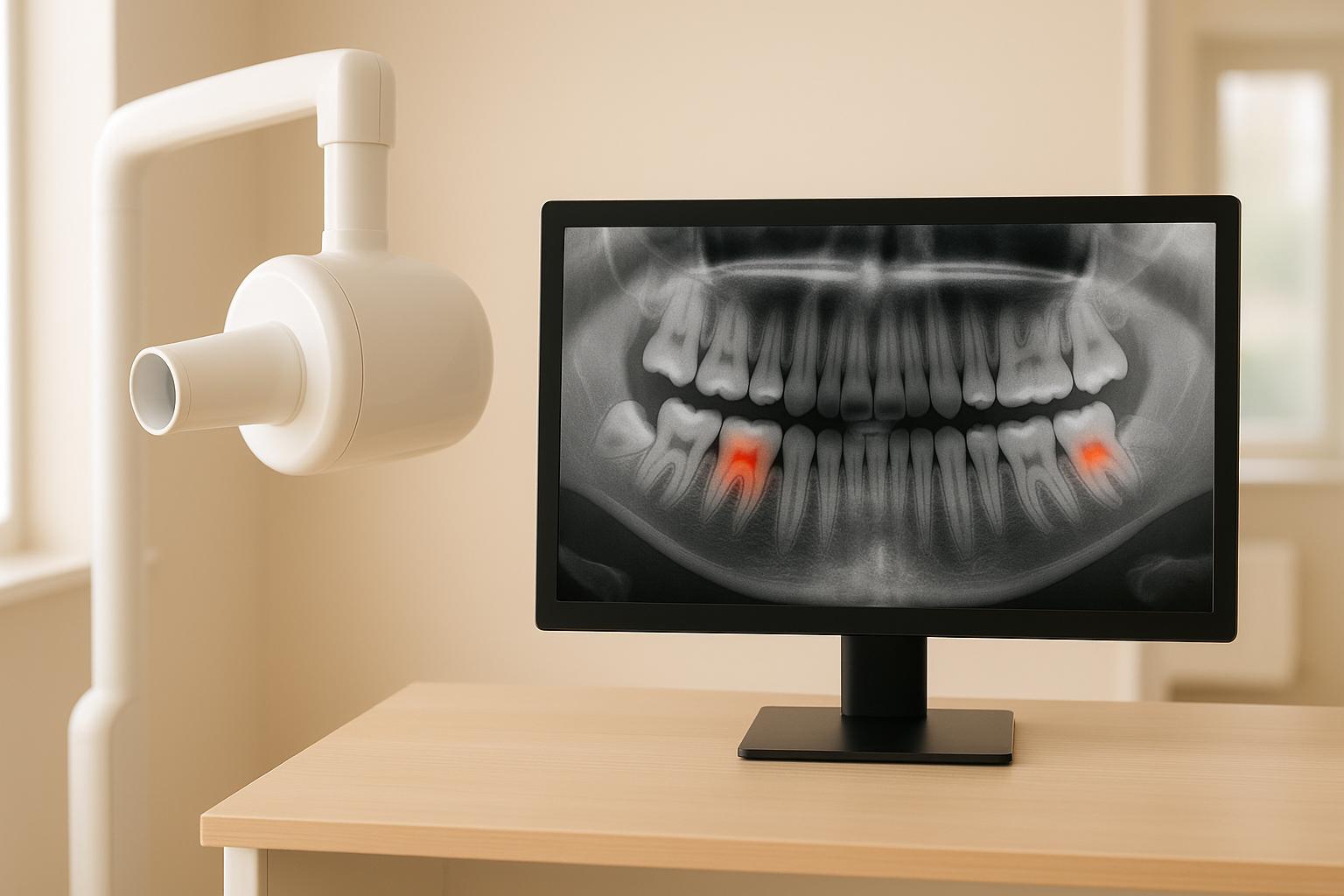
Detecting tooth decay is evolving, and two key methods are leading the charge: AI-powered systems and radiographs. AI offers precision by analysing dental images for early signs of decay, while radiographs have long been the go-to for spotting cavities, especially in hard-to-see areas. Both have unique strengths and limitations, but combining them could improve dental care in Australia.
Key Takeaways:
- AI systems: Use deep learning to detect subtle decay patterns, offering consistent results and reducing human error. They excel at spotting early decay but struggle with complex cases like root caries.
- Radiographs: Reliable for identifying established decay and interproximal cavities. However, they can miss early-stage issues and are limited by image quality and interpretation variability.
- Challenges: AI depends on high-quality training data and images, while radiographs can underestimate decay depth and involve radiation exposure.
This combined approach is already being adopted in Australian clinics, with AI complementing radiographs to improve accuracy and early intervention. As technology advances, expect AI to play a bigger role in dental diagnostics.
06 How Accurate is Artificial Intelligence in Detecting Dental Caries?
AI in Caries Detection
Artificial intelligence (AI) is making waves in dental diagnostics, offering a data-driven approach to detecting caries. By analysing dental images, AI systems can flag potential decay that might otherwise go unnoticed during routine exams. These systems are trained on extensive datasets of dental images, allowing them to identify subtle patterns linked to tooth decay. This capability not only complements traditional methods but also aims to make detection more consistent and support clinical decision-making.
How AI Detects Caries
AI systems designed for caries detection rely heavily on deep learning techniques to evaluate radiographs and pinpoint potential signs of decay. When a dental radiograph is uploaded, the algorithm scrutinises the image for indicators like changes in tooth density, irregular edges, or variations in contrast that could signal demineralisation. Convolutional neural networks (CNNs) are often used because they excel at recognising both large structural patterns and fine details, such as early enamel damage. By comparing new images to patterns learned during training, the system can highlight areas of concern and even assign a confidence score to its findings. This thorough analysis enables AI to deliver consistent results and quick feedback.
Benefits of AI Detection
The use of AI in detecting caries offers several advantages, particularly in terms of speed, consistency, and early diagnosis. One of the standout benefits is its ability to reduce variability in diagnosis. Human assessments can differ due to factors like fatigue or varying levels of experience, but AI applies the same analytical standards to every image. This uniformity is especially valuable, as even seasoned professionals can sometimes disagree when reviewing the same radiographs. Additionally, AI’s rapid processing capabilities allow for timely feedback, which can help clinicians make informed treatment decisions during the same appointment. Another key benefit is its potential to catch early signs of decay that might be too subtle for the human eye, making it a helpful tool for improving diagnostic accuracy. However, these benefits come with certain limitations, as outlined below.
AI System Limitations
While AI systems have clear advantages, they also face specific challenges. The quality of the training data is a significant factor – AI performance depends on the diversity and accuracy of the images it learns from. Anatomical variations, such as differences in tooth shape and size, can also complicate detection, especially in children whose teeth are still developing. Certain types of decay, like root caries or decay around restorations, can be particularly tricky for AI to identify. The quality of the input radiograph is another critical factor; poor exposure, motion blur, or suboptimal positioning can all affect accuracy. Unlike human clinicians, AI analyses images in isolation and doesn’t account for broader clinical context, which can influence diagnosis. Finally, practical hurdles like regulatory approval and integrating AI systems into existing dental workflows can impact their adoption in everyday practice.
Traditional Radiographic Methods
Even with the rise of AI in early detection, traditional radiographs remain a cornerstone of dental diagnostics in Australia. These methods continue to be widely used across clinics for their reliability and familiarity.
Common Radiographic Techniques
Australian dental practices frequently rely on three key types of radiographic imaging:
- Bitewing radiographs: These are ideal for spotting interproximal decay, capturing the crowns of both upper and lower teeth in a single image.
- Periapical radiographs: These images show the entire tooth, from crown to root, making them crucial for evaluating the extent of decay and identifying complications.
- Panoramic radiographs: Offering a full view of the mouth, these images include all teeth and jawbones, providing a broad perspective for diagnostic purposes.
Each of these techniques has its strengths and limitations, forming the foundation of traditional caries detection.
Radiographic Method Strengths
Traditional radiographs have several well-established benefits. For starters, they are universally accepted and form a standard part of every dentist’s training, ensuring consistent care across practices.
They are particularly effective at detecting interproximal caries – decay between teeth that might otherwise go unnoticed during a visual exam. Research has shown that radiographs outperform clinical examinations alone in diagnosing occlusal caries and determining how far lesions have progressed into the dentin [6].
Years of standardised protocols also help ensure consistent interpretations. Skilled practitioners can pick up on subtle changes in tooth density, often providing early indicators of decay.
Radiographic Method Drawbacks
Despite their advantages, traditional radiographic methods have notable limitations that can affect diagnostic accuracy. Studies indicate that the sensitivity for detecting enamel caries with film, CCD, and PSP systems ranges from just 15% to 38% [4].
Another challenge is interpretation variability. Different clinicians may evaluate the same radiograph differently, with factors like experience and training influencing their conclusions [3].
"The current generation of digital periapical and bitewing radiographs is considered by most practitioners to be inadequate for the accurate detection of initial dental caries. Radiographs also often obscure the presence of deep carious lesions."
- Dr. Gordon Christensen, Practicing Prosthodontist and Founder of Practical Clinical Courses [5]
Radiographs often underestimate the depth of lesions, which can complicate treatment planning [2][4][5]. They also cannot differentiate between active and inactive caries. For example, remineralisation leaves a "scar" on the tooth that looks similar to active decay [3]. Additionally, radiographs fail to distinguish between non-cavitated and cavitated lesions [3][6].
Bitewing radiographs may miss smooth-surface lesions, while panoramic images, due to their lower resolution, can obscure small defects [1][2]. Furthermore, the use of ionising radiation limits how often these images can be taken, which is particularly concerning for young children [1].
Understanding these challenges helps highlight the potential of emerging AI technologies in improving caries detection.
sbb-itb-2be92ed
Accuracy Comparison: AI vs Radiographs
Recent studies highlight that AI-based methods are improving sensitivity and accuracy in dental diagnostics by reducing missed cases. However, both AI and traditional radiographs come with their own strengths and limitations.
Research Study Results
Systematic reviews suggest that AI techniques are better at detecting early dental caries compared to conventional radiographs. That said, differences in study designs, imaging protocols, and patient demographics can influence these results.
These variations underline the need to examine the factors that impact diagnostic accuracy in both approaches.
Factors Affecting Accuracy
Several factors play a role in how well AI and radiographic methods perform in diagnosing dental issues:
- Image quality: Both AI and human interpretation depend on clear, high-quality images. Poor contrast, low resolution, or motion blur can compromise the effectiveness of either method.
- Tooth location: The complexity of anatomy varies. For instance, posterior teeth are harder to evaluate due to overlapping structures, while anterior teeth are generally simpler to assess.
- Patient age: Paediatric patients, with their developing dentition, pose unique challenges, especially for traditional radiographs.
- Interpreter experience: Radiographic accuracy often depends on the expertise of the person analysing the image. In contrast, AI delivers consistent performance regardless of operator skill.
- Caries stage: Early enamel lesions are harder to detect than more advanced decay, affecting the performance of both methods.
- Algorithm design: The effectiveness of an AI system depends on its algorithm and training. Customised models designed for specific patient groups or imaging equipment tend to perform better.
- Environmental conditions: External factors like ambient lighting, monitor settings, and viewing angles can influence radiographic interpretation. AI systems, however, are less affected by such conditions.
These factors are critical when integrating AI and radiographic tools into dental diagnostics. Continuous research is refining both technologies, helping clinicians make informed decisions. This ongoing analysis sheds light on how AI and radiographs complement each other in improving dental care across Australia.
Clinical Impact and Future Developments
The evolution of caries detection technology is making waves in how dental care is delivered across Australia. With improved diagnostic capabilities, dental professionals are now better equipped to enhance patient outcomes, from early detection to long-term oral health management.
Effects on Patient Treatment
When it comes to patient care, better diagnostic tools mean earlier and more precise interventions. For instance, when AI systems catch early signs of enamel demineralisation, dentists can recommend preventive measures like fluoride treatments or dietary changes, potentially avoiding the need for more invasive procedures. Additionally, AI-powered diagnostics offer a clearer picture of decay, addressing a known limitation of traditional radiographs in spotting early-stage caries. This allows for more conservative treatments that preserve natural tooth structure and help patients make well-informed decisions about their care.
Upcoming Technology Advances
The integration of AI with advanced imaging technologies, such as cone beam computed tomography (CBCT), is pushing the boundaries of what’s possible in caries detection. These systems provide detailed insights into decay progression, even in complex anatomical areas. Machine learning models are also being fine-tuned to work seamlessly with different imaging devices and across diverse patient populations, ensuring consistent results in various clinical environments. Another exciting development is real-time diagnostic feedback during patient exams, which allows dentists to discuss findings immediately. Portable diagnostic tools are also on the horizon, offering sophisticated caries detection capabilities to remote communities with limited resources.
Adoption in Australian Dental Practices
Australian dental practices are steadily embracing these advancements, blending AI tools with traditional diagnostic methods to improve patient care. This hybrid approach allows practitioners to cross-check AI findings with conventional techniques, building trust in the technology over time.
Challenges such as ensuring reliable internet connectivity and managing upfront equipment costs are part of the transition. However, training initiatives from Australian dental associations are helping practitioners integrate AI as a complementary tool, reinforcing its role in supporting – not replacing – clinical expertise.
An example of successful adoption can be seen at Complete Smiles Bella Vista, where AI-enhanced caries detection has been seamlessly incorporated into comprehensive dental care. By combining these advanced tools with traditional examination methods, the practice delivers thorough diagnoses while maintaining the personal touch that defines quality dental care.
On the regulatory front, the Therapeutic Goods Administration (TGA) is working to establish safety and efficacy standards for AI diagnostic tools, ensuring they meet the necessary benchmarks before widespread adoption. Additionally, there’s potential for insurance providers to adjust their coverage policies to support preventive care, which could help reduce long-term treatment costs for patients and the healthcare system alike.
Conclusion
Based on the research and clinical insights discussed earlier, it’s clear that combining AI-powered tools with traditional radiographic methods creates a more thorough approach to caries detection. Both methods have their strengths, and together, they complement each other effectively.
Main Findings
AI systems excel in spotting early-stage caries, particularly in cases where overlapping structures might hide decay. By detecting subtle changes in tooth mineralisation, AI brings a new level of precision to early diagnosis. However, it does face challenges with more complex anatomical variations and requires substantial computing resources.
On the other hand, traditional radiographs remain critical for identifying established lesions and providing detailed views of tooth structures. When paired with AI’s sensitivity for early detection, the result is increased accuracy and fewer false positives. This combination not only enhances diagnostic precision but also aligns well with the evolving needs of dental practices in Australia.
For Australian dentists, integrating AI tools into everyday practice represents a gradual progression rather than a sudden shift. These tools act as valuable aids to clinical expertise, allowing practitioners to make better-informed decisions while preserving the personal connections that are central to quality patient care. With regulatory guidelines advancing and costs becoming more manageable, this blended approach is likely to become the norm across the country.
FAQs
How does combining AI technology with traditional radiographs improve caries detection in dentistry?
Integrating AI technology with traditional radiographs has the potential to greatly enhance the accuracy of detecting dental caries. AI systems are programmed to analyse radiographs with impressive precision, often spotting early signs of decay that can be easily overlooked by the human eye.
When combined with a dentist’s expertise, this partnership not only reduces the chances of missed diagnoses but also boosts confidence in the results. Identifying caries at an earlier stage means patients can receive timely treatment, which may help them avoid more invasive and expensive procedures later. This demonstrates how advanced technology is playing an increasingly important role in improving oral health care.
What challenges do AI and traditional radiographs face in detecting tooth decay?
AI systems designed to detect tooth decay often face challenges like inconsistent image quality, difficulty spotting early or subtle decay, and dependence on top-notch training data. These factors can sometimes affect their accuracy in diagnosing dental issues.
Traditional radiographs, on the other hand, come with their own hurdles. Issues like overlapping anatomical structures, image noise, and differences in how clinicians interpret the images can complicate diagnosis. While AI can help standardise detection and reduce variability, both approaches have their limits. This underscores the need for a thorough clinical examination by a dental professional to ensure accurate diagnosis.
How are Australian dental clinics using AI to improve caries detection and patient care?
Australian dental clinics are adopting AI technology to improve how they detect caries. Research shows that AI systems can reach detection accuracy rates of up to 95%, often surpassing the sensitivity of traditional radiographic techniques. This means earlier diagnoses, fewer mistakes, and more precise treatment plans, all contributing to better outcomes for patients.
AI is also transforming dental workflows by making processes more efficient and supporting clinical decision-making. This helps uphold Australia’s strong commitment to safety and quality in healthcare. With these advancements, dental professionals can deliver care that is not only more effective but also tailored to each patient’s needs.
Related Blog Posts
- AI vs. Traditional Methods: Impacted Teeth Detection
- AI vs. Traditional Caries Detection Methods
- How AI Improves Diagnostic Consistency in Dentistry
- Real-Time AI for Caries Detection: Pros and Cons
Important Notice: Any surgical or invasive procedure carries risks. Before proceeding, you should seek a second opinion from an appropriately qualified health practitioner.
Individual results may vary. The information provided in this article is for educational purposes only and does not constitute medical advice.
Checkout Related Blogs




Get in touch with us
For more information, call us now to start feeling better. Or fill the form below to make appointment
The Latest News from Complete Smiles
How to Clean Clear Plastic Retainers
Checklist for Choosing Wearable Dental Devices
Checklist for Choosing Cloud AI Platforms in Dentistry

Complete Smiles Bella VistaAccepts All Major Health Funds, Including





