





Bond Strength of CAD/CAM Materials with Adhesives

The bond strength between CAD/CAM materials and adhesives directly affects the durability of dental restorations. For Australian dentists, selecting the right material-adhesive combination and applying proper surface treatments is crucial to achieving long-lasting results. Here’s a quick summary of key insights:
- Material Types: CAD/CAM materials include ceramics, hybrid resin-ceramics, composite resins, and zirconia. Each has unique bonding requirements.
- Surface Preparation: Techniques like hydrofluoric acid etching, sandblasting, silanisation, and tribochemical silica coating improve adhesion.
- Adhesive Systems: Universal adhesives, especially those with 10-MDP monomers, work well across materials but often require separate silane application for stronger bonds.
- Challenges: Zirconia bonding remains difficult due to its inert surface, requiring specialised primers or coatings.
- Best Practices: Moisture control, proper adhesive layering, and following manufacturer guidelines are key to reliable outcomes.
Emerging research focuses on new adhesives (e.g., biomimetic and smart adhesives) and long-term performance studies to refine techniques further. By understanding material properties and bonding protocols, clinicians can improve restoration longevity and patient satisfaction.
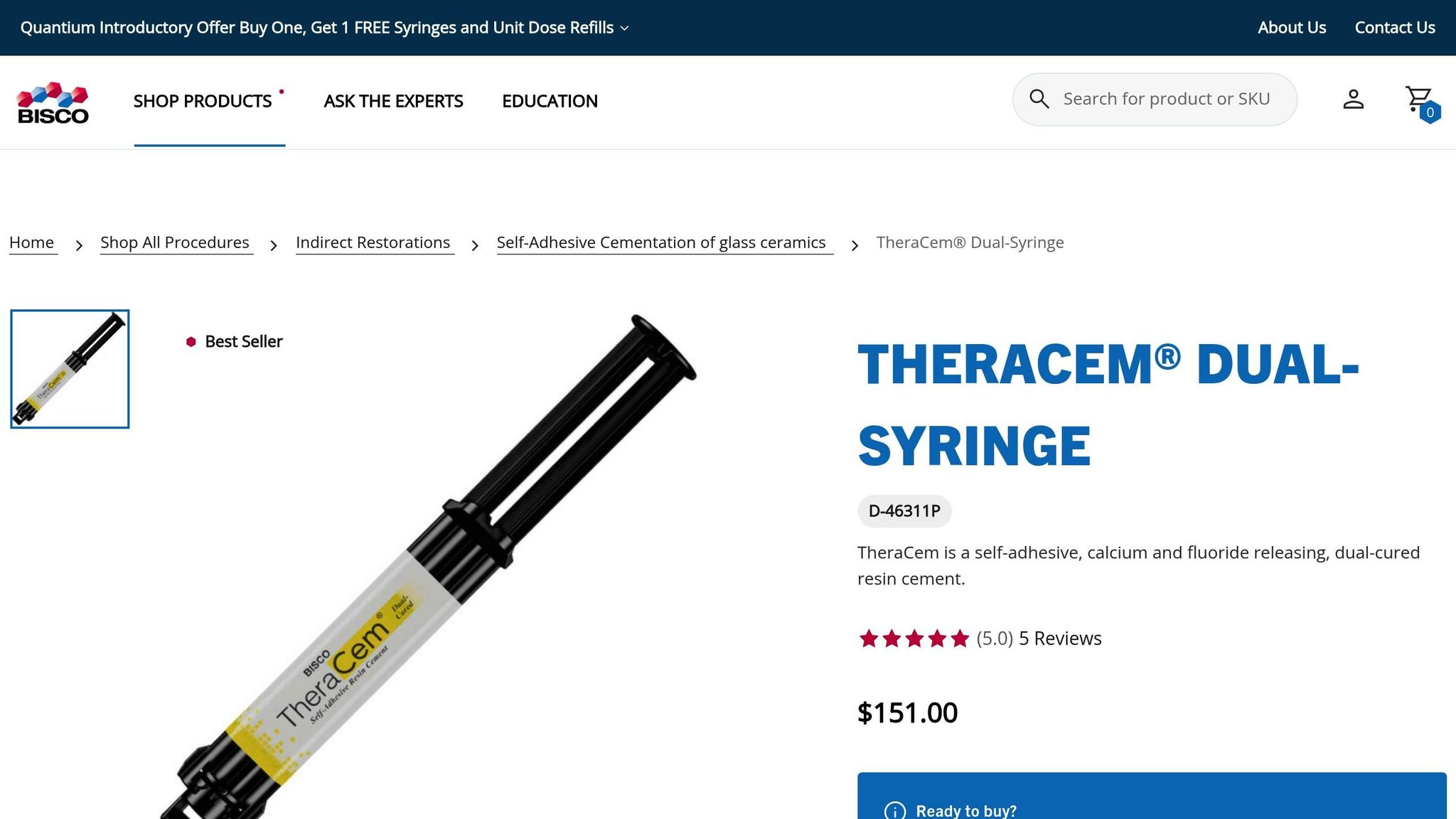
CAD/CAM Restoration using TheraCem
CAD/CAM Restorative Materials Explained
CAD/CAM technology is used to produce crowns, inlays, onlays, and veneers from specialised blocks designed for digital workflows. Each material’s unique properties play a key role in determining its adhesive bond and overall performance.
Thanks to controlled industrial manufacturing, these materials boast consistent density and fewer internal defects. However, achieving the best adhesion often requires specific surface preparation tailored to the material.
Understanding how material properties like surface energy, porosity, and chemical composition influence bonding is essential. This knowledge helps clinicians choose the right adhesive systems and surface treatments for different clinical scenarios.
With this foundation, let’s explore the main types of CAD/CAM materials and their bonding protocols.
Main Types of CAD/CAM Materials
Ceramic-based materials: Lithium disilicate (e.g., IPS e.max CAD) is popular for its strength and aesthetics. To ensure effective bonding, hydrofluoric acid etching is used to expose its crystalline structure, enabling silane coupling. Feldspathic ceramics, known for their unmatched aesthetics, require meticulous bonding protocols due to their susceptibility to cracking.
Hybrid resin-ceramic materials: Materials like Vita Enamic combine the strength of ceramics with the flexibility of composites. They bond effectively through hydrofluoric acid etching or sandblasting, offering versatility with both ceramic and composite adhesive systems.
Composite resin blocks: Examples include GC Cerasmart and 3M Lava Ultimate. These materials don’t need acid etching but benefit from mechanical preparation, such as sandblasting. Their organic matrix allows strong chemical bonds with methacrylate-based adhesives, often providing more predictable results than pure ceramics.
Zirconia-based materials: Zirconia poses unique bonding challenges due to its chemically inert surface. Traditional etching doesn’t work, so specialised primers containing phosphate monomers or tribochemical coatings are required to achieve reliable adhesion.
Each material’s distinct properties guide the adhesive strategies discussed in the next sections.
Benefits of CAD/CAM Materials
Beyond their composition, CAD/CAM materials bring several clinical advantages.
Precision manufacturing ensures consistent density and excellent marginal adaptation. Their enhanced aesthetics allow for more conservative tooth preparations, preserving bonding surface area. Additionally, same-day workflows eliminate the need for temporary restorations, reducing the risk of surface contamination. The precise fit also results in thinner cement lines, minimising polymerisation stress and improving long-term durability.
Adhesive Systems and Bonding Function
Adhesive systems play a key role in securing CAD/CAM restorations to tooth structures. They work through a combination of mechanical interlocking and chemical adhesion, ensuring restorations stay in place while reducing the risk of microleakage. To achieve dependable clinical outcomes, it’s important to understand how these adhesives interact with various CAD/CAM materials. Let’s explore the adhesive systems and surface pretreatment methods that enhance bond strength.
Types of Adhesive Systems
Universal adhesives are a more recent innovation, capable of functioning in both self-etch and total-etch modes. Many of these adhesives include silane coupling agents, which improve bonding with a wide range of CAD/CAM materials. However, research indicates that applying silane separately leads to stronger bonds compared to using adhesives with integrated silane [1][3]. Additionally, functional monomers like 10-MDP in universal adhesives chemically interact with filler particles in materials such as zirconia, improving bond durability [3].
These adhesive systems are most effective when paired with specific surface pretreatment techniques.
Surface Pretreatment Methods
Proper surface pretreatment is essential for achieving both mechanical retention and chemical bonding.
Hydrofluoric Acid Etching
This method enhances surface porosity and wettability, making it particularly effective for silica-based ceramics and materials with a high ceramic content [1][3].
Mechanical Roughening Techniques
Methods such as bur roughening and air-borne particle abrasion using aluminium oxide create grooves and undercuts on the restoration surface. These irregularities improve the adhesive’s ability to interlock with the material [1][3].
Silanisation
Silanisation serves as a chemical bridge, linking the inorganic components of CAD/CAM materials to the organic methacrylate groups in resin-based adhesives. This process also enhances the ceramic surface’s wettability, leading to stronger and more durable bonds [1][2][3]. It’s especially effective for Polymer-Infiltrated-Ceramic-Network composites compared to Dispersed-Filler composites, with its success increasing as the surface’s polar energy and inorganic content rise [2].
Tribochemical Silica Coating
This method combines mechanical roughening with chemical modification. Silica-coated aluminium oxide particles roughen the surface while promoting silicatisation through a tribochemical reaction. This process boosts surface energy and ensures better wetting for silane application, enabling the formation of strong covalent bonds between silica particles and resin materials [3].
Silane Heat Treatment
Heating silane enhances its performance by removing byproducts, aligning silanol molecules, and promoting the formation of durable covalent bonds [1]. However, its effectiveness can vary depending on the CAD/CAM material and the heat source used.
For the best results, combining surface pretreatment techniques with a separate application of a silane coupling agent is generally recommended [2][3]. The choice of surface treatment should always align with the chemical makeup of the substrate. When using universal adhesives, applying silane separately – rather than relying on the silane already included in the adhesive – can significantly improve bond strength [1][3]. Laboratory tests simulating around one year of clinical use (10,000 thermal cycles between 5–55°C) highlight the critical role of proper surface preparation in ensuring long-term durability [1].
Current Research on Bond Strength
Recent research sheds light on how CAD/CAM materials interact with different adhesives, offering valuable insights for dental practitioners. This knowledge plays a key role in guiding material selection and bonding protocols to achieve the best clinical outcomes. These studies pave the way for a deeper look at specific bond strength tests and the factors that influence adhesion.
Shear Bond Strength Studies
Shear bond strength tests have revealed notable differences in how adhesive systems perform with various materials. Laboratory findings show that bond strength is highly dependent on the specific material-adhesive pairing. For instance, polymer‐infiltrated ceramic networks exhibit stronger bonds compared to dispersed‐filler composites, provided the right surface treatments are applied.
Thermal cycling tests, designed to mimic long-term use, demonstrate that bond durability is heavily influenced by surface pretreatment methods. Among these, hydrofluoric acid etching followed by silanisation consistently outperforms mechanical roughening techniques.
Zirconia‐based CAD/CAM materials pose unique challenges due to their non-silica composition. Universal adhesives with 10-MDP functional monomers can chemically bond with zirconia surfaces, though their bond strengths generally fall short of those seen with silica-based ceramics. To address this, tribochemical silica coating has proven effective, creating a silica-rich surface that enhances bonding through conventional silanisation.
Comparative studies highlight lithium disilicate blocks as top performers in bond strength tests. Their high silica content allows for more effective silane coupling and resin infiltration, leading to consistently strong bonds.
Factors Affecting Bond Performance
Beyond the materials themselves, several operational factors play a critical role in bond performance. One of the most significant is moisture contamination. Even slight moisture exposure during bonding can drastically weaken the bond, underscoring the need to maintain a dry working environment during cementation.
Fluctuations in oral temperature also impact bond durability. Expansion and contraction cycles caused by these temperature changes weaken adhesive interfaces over time. Materials with thermal expansion properties closely matching those of natural tooth structure tend to experience less degradation under these conditions.
The thickness of the adhesive layer is another crucial factor. Adhesive layers that are either too thick or too thin disrupt stress distribution, potentially compromising the bond. Achieving the right adhesive thickness is therefore essential for effective stress management at the interface.
Surface roughness also plays a significant role in mechanical retention. Moderate surface roughness strikes the best balance, enhancing retention without introducing stress concentration points that could weaken the bond. On the other hand, overly aggressive surface treatments can lead to stress concentrations that compromise adhesion.
Material-specific properties, such as the size and distribution of filler particles in CAD/CAM blocks, further influence bonding outcomes. Materials with smaller, uniformly distributed filler particles tend to deliver more consistent bond strengths across various surface treatments. Additionally, storage conditions are critical. CAD/CAM blocks stored in humid environments may develop surface contamination, which can interfere with adhesive penetration. Keeping these materials in dry conditions preserves the surface characteristics needed for optimal bonding.
These findings offer practical guidance for selecting and fine-tuning bonding techniques, helping dental professionals achieve reliable, long-lasting results in their daily practice.
sbb-itb-2be92ed
Clinical Applications for Dental Practice
The findings on bond strength provide valuable insights for Australian dental practitioners, offering practical guidance to enhance restoration longevity and improve patient care. This knowledge helps in making informed choices about materials and adhesives, ultimately leading to better clinical outcomes.
Material and Adhesive Selection
For anterior restorations, lithium disilicate blocks stand out due to their high silica content, which ensures consistent bond strength. When working with zirconia, universal adhesives containing 10-MDP are the go-to choice for achieving a strong chemical bond. However, the location of the restoration and the load it will endure should be considered to ensure durability.
Polymer-infiltrated ceramic networks strike a balance between bond strength and aesthetics, offering compatibility with various adhesive systems. These materials are particularly useful for cases where both functionality and appearance are priorities.
The choice between self-etch and total-etch adhesive systems depends on the type of CAD/CAM material in use. Total-etch systems often perform better with silica-based ceramics, while universal adhesives provide flexibility across multiple material types, making them ideal for practices using a range of CAD/CAM restorations.
It’s also crucial to factor in the patient’s oral environment. For those with a high risk of caries or difficulties maintaining oral hygiene, materials with enhanced bond durability are more suitable. On the other hand, patients with parafunctional habits, such as bruxism, may need materials and adhesives that can withstand higher stress levels.
Beyond selecting the right materials, refining bonding protocols plays an essential role in ensuring the longevity of restorations.
Improving Bonding Techniques
Building on research, fine-tuning surface treatments and cementation protocols can significantly enhance clinical outcomes.
Moisture control is critical during the bonding process. Even slight contamination can weaken the bond. Using rubber dam isolation, thoroughly drying surfaces, and employing air-drying techniques without over-drying ensures optimal conditions for bonding.
When applying adhesives, ensure they are applied in thin, even layers. Removing any excess material before light curing helps avoid stress points that could lead to bond failure. Light pressure during seating ensures the adhesive is distributed evenly and fully covers the surface.
Storage conditions for CAD/CAM blocks also matter. Store blocks in dry environments, avoiding excessive humidity. If blocks have been exposed to moisture, clean the surface thoroughly before bonding to maintain their integrity.
Temperature plays a role in bonding success. Warming adhesives improves their flow, allowing better penetration into surface irregularities. Slightly cooling restorations can make them easier to handle during placement. However, avoid extreme temperature changes, as they can stress the materials.
Tailor the cementation protocol to the specific material combination in use. Allow adequate working time for proper seating and initiate light curing before the adhesive fully sets. Always follow the manufacturer’s recommendations for light intensity and curing times, adjusting for the restoration’s thickness as needed.
Lastly, maintaining quality control measures is key to consistent success. Develop standardised protocols for each material type, train clinical staff in proper techniques, and regularly review restoration performance. These steps help ensure high success rates and reliable outcomes across the practice.
Future Developments in Bonding Research
In Australia, advances in adhesive dentistry are focused on strengthening the bond between CAD/CAM materials and tooth structures. By addressing current limitations identified in clinical studies, researchers aim to achieve more durable and effective restorative results. These developments are building on existing research to improve outcomes and refine clinical workflows.
New Adhesive Systems
Researchers are working on next-generation adhesives to improve the performance of CAD/CAM bonding. One exciting area of development is biomimetic adhesives, which mimic natural bonding mechanisms. These adhesives could lead to stronger, longer-lasting connections between restorative materials and teeth.
Another promising innovation is the use of nanotechnology. Adhesives enhanced with nanoparticles offer improved mechanical properties and better surface interaction, ensuring deeper penetration and consistent bond strength.
Scientists are also exploring smart adhesives that can adapt to the oral environment. These adhesives might self-repair or adjust to changes in pH and mechanical stress, potentially extending the life of restorations.
The development of universal adhesives is another major focus. These adhesives aim to eliminate the need for specialised surface treatments, simplifying procedures without compromising bond strength. This could reduce the technique sensitivity often associated with current bonding systems.
Additionally, researchers are investigating bioactive adhesive components that encourage remineralisation at the tooth-restoration interface. Such adhesives could help prevent secondary caries while maintaining strong bonds, addressing a key cause of restoration failure.
Long-Term Performance Studies
While much of the current research has focused on short-term bond strength, there is a growing emphasis on understanding how bonded CAD/CAM restorations perform over years. Long-term studies are now being designed to track restorations over 10 to 20 years, providing valuable insights into their durability in real-world conditions.
Accelerated ageing tests are helping researchers simulate oral conditions more accurately. These tests now include factors like fluctuating pH levels, enzymatic activity, and mechanical stresses that mimic chewing patterns and habits.
The use of predictive modelling systems powered by artificial intelligence is another exciting development. These models could forecast long-term bond performance based on initial test data, helping clinicians select the best materials and anticipate maintenance needs for individual patients.
Multi-centre clinical trials are being conducted across various regions, including Australia, to account for differences in diet, water fluoride levels, and genetic factors that may impact bonding success. Australian research institutions are playing an active role in these international collaborations.
Researchers are also examining how patient-specific factors – such as saliva composition, oral microbiome, and parafunctional habits – affect the durability of bonds over time. This personalised approach could lead to bonding protocols tailored to each patient’s unique risk factors.
The integration of digital monitoring technologies is another step forward. Sensors embedded in restorations allow researchers to gather real-time data on stress distribution and bond integrity, providing continuous insights rather than relying solely on periodic clinical exams.
These advancements suggest that the future of CAD/CAM bonding will bring more tailored, durable, and efficient solutions, addressing current challenges while making procedures simpler for dental professionals.
Conclusion
The strength of the bond between CAD/CAM materials and adhesive systems plays a critical role in ensuring long-lasting restorations. With ongoing advancements in research, Australian dental professionals now have access to more refined materials and techniques that, when applied correctly, can greatly improve patient outcomes. These foundational principles are central to this discussion.
Choosing the right CAD/CAM materials and adhesives involves understanding their surface treatment needs and polymerisation properties. This knowledge empowers practitioners to make well-informed decisions that enhance bond durability right from the start.
Surface treatment is just as vital as material selection. Each step of the bonding process contributes to the restoration’s overall strength and longevity. Research consistently highlights that improper surface preparation increases the likelihood of bond failure, underscoring the importance of meticulous adherence to protocols.
Emerging adhesive technologies are paving the way for further advancements. Universal adhesives, for instance, offer the potential to streamline clinical workflows without compromising bond strength – provided practitioners carefully follow manufacturer guidelines. While these simplified systems are appealing, they still demand precise technique and adherence to fundamental principles of adhesive dentistry.
As previously discussed, innovations such as nanotechnology, biomimetic strategies, and smart adhesives are poised to reshape CAD/CAM bonding. Staying informed about these developments will enable Australian clinicians to seamlessly adopt new technologies as they become available in practice.
To ensure success, clinicians must plan each case with care, select materials that suit the specific clinical scenario, prepare surfaces with precision, and adhere strictly to manufacturer instructions. Combining these practices with ongoing evaluation of long-term research findings creates a solid framework for achieving durable CAD/CAM restorations that meet patient needs.
Investing time in understanding the principles of bond strength pays off in reduced remake rates, improved patient satisfaction, and greater practice efficiency. As the field evolves, maintaining a commitment to evidence-based practices will ensure that Australian dental professionals continue to provide top-tier restorative care.
FAQs
What are the most effective ways to prepare CAD/CAM materials for strong adhesive bonding in dental restorations?
To ensure strong and durable bonds with CAD/CAM materials, preparing the surface correctly is key. Techniques such as sandblasting with aluminium oxide are widely used to roughen the surface, improving adhesion. For glass-ceramics, etching with hydrofluoric acid is a common approach to boost micromechanical retention.
On top of that, using universal primers can strengthen chemical bonds, especially when working with advanced adhesive systems. These steps are critical for achieving restorations that are not only functional but also aesthetically pleasing, delivering reliable results for patients.
How do universal adhesives with 10-MDP monomers improve bonding with zirconia-based CAD/CAM materials?
Universal adhesives that include 10-MDP monomers significantly enhance bonding with zirconia-based CAD/CAM materials. This is achieved through strong chemical interactions, as the phosphate groups in 10-MDP form a stable bond with the zirconia surface.
What makes this bond particularly effective is its resistance to degradation, ensuring it maintains its strength over time. In restorative dental procedures, using these adhesives can improve the durability and stability of zirconia restorations, delivering reliable results for patients.
What advancements in adhesive technology could enhance the durability of CAD/CAM dental restorations?
Emerging adhesive technologies are poised to make CAD/CAM dental restorations more durable than ever. Researchers are working on bioactive and biomimetic adhesives that not only improve long-term stability but may even aid in tissue regeneration. On top of that, advancements like hydrophobic monomers, antimicrobial agents, and nanotechnology are being integrated to boost bond strength, protect against degradation, and minimise bacterial growth.
These innovations address the shortcomings of current adhesive systems, paving the way for more dependable and longer-lasting restorations. By embracing these advancements, dental professionals can deliver better, more durable results for their patients.
Related Blog Posts
- Wear-Resistant Materials in Dental Restorations
- Advances in Dental Adhesives: What to Know
- Chemical Adhesion in Dental Bonding: How It Works
- Ceramic Bracket Bonding: Adhesive Types Compared
Important Notice: Any surgical or invasive procedure carries risks. Before proceeding, you should seek a second opinion from an appropriately qualified health practitioner.
Individual results may vary. The information provided in this article is for educational purposes only and does not constitute medical advice.
Checkout Related Blogs




Get in touch with us
For more information, call us now to start feeling better. Or fill the form below to make appointment
The Latest News from Complete Smiles
How to Clean Clear Plastic Retainers
Checklist for Choosing Wearable Dental Devices
Checklist for Choosing Cloud AI Platforms in Dentistry

Complete Smiles Bella VistaAccepts All Major Health Funds, Including





