




Ceramic Bracket Bonding: Adhesive Types Compared
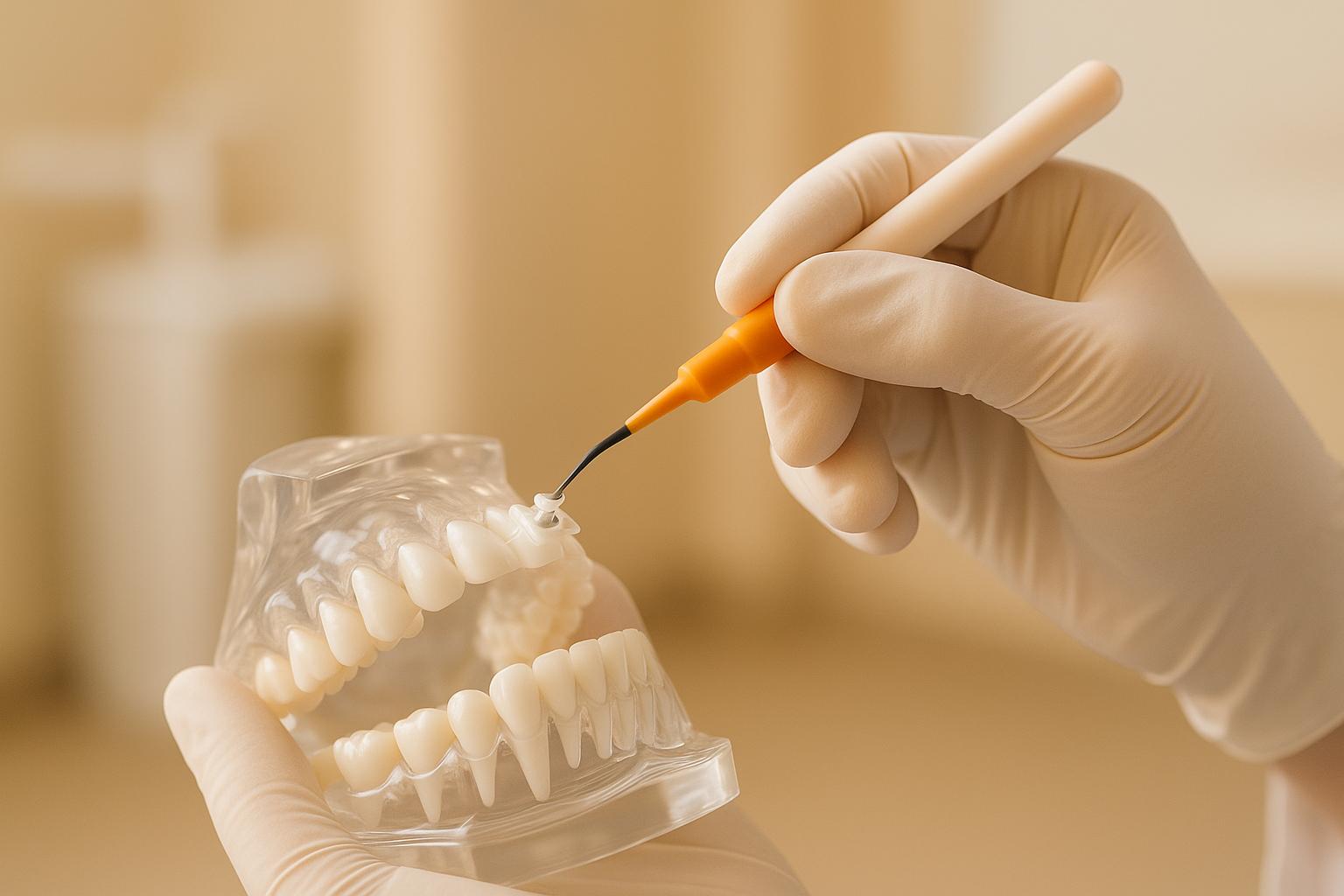
When bonding ceramic brackets, choosing the right adhesive is critical to balancing strength, aesthetics, and ease of removal. Here’s a quick breakdown of the three main adhesive types:
- Composite Resin Adhesives: Offer the highest bond strength (6-25 MPa) and best aesthetics. However, they require a multi-step process and precise technique, making them time-intensive.
- Resin-Modified Glass Ionomer Cements (RMGICs): Provide moderate bond strength (4-12 MPa) with added fluoride release for cavity protection. They work well in moisture-prone areas but may leave a faint outline around brackets.
- Self-Etching Adhesives: Simplify the bonding process by combining etching and priming, saving time. They deliver adequate bond strength and are ideal for routine cases but may not match the strength of composite systems.
Quick Comparison
| Adhesive Type | Bond Strength | Key Features | Best Use |
|---|---|---|---|
| Composite Resin | 6-25 MPa | Strongest bond, best aesthetics | High-stress areas, aesthetic zones |
| RMGIC | 4-12 MPa | Fluoride release, moisture-tolerant | High caries risk, challenging isolation |
| Self-Etching Adhesives | Moderate | Simplified workflow, reduced sensitivity | Routine cases, high-volume practices |
Selecting the right adhesive depends on patient needs, clinical conditions, and efficiency goals. Composite resins are ideal for strength and aesthetics, RMGICs for cavity prevention, and self-etching systems for speed and simplicity.
What Kind of Adhesive do you Use on Brackets?
1. Composite Resin Adhesives
Composite resin adhesives are the go-to bonding system for ceramic brackets in orthodontics. These light-cured materials combine resin with inorganic fillers, creating a chemical bond between the bracket and the enamel surface.
The bonding process starts with acid etching, where 37% phosphoric acid is applied to the enamel for 15-30 seconds. This step creates tiny irregularities on the enamel, allowing the adhesive to seep in and form mechanical retention tags. After etching, a bonding agent is applied, followed by the composite resin adhesive.
Below are key aspects that contribute to the effectiveness of composite resin adhesives.
Bond Strength
Composite resins deliver bond strengths ranging from 6-25 MPa, far exceeding the clinically required range of 0.7-1.4 MPa.
This impressive bond strength comes from a combination of mechanical retention (via enamel etching) and chemical adhesion to the bracket base. However, this strength can pose challenges during debonding, especially with ceramic brackets, which are more prone to breaking compared to metal ones.
Keeping the area dry is critical. Saliva contamination can slash bond strength by up to 50%, so meticulous moisture control is non-negotiable.
Bracket-Enamel Interface Quality
The quality of the bond between ceramic brackets and enamel hinges on proper technique. When done correctly, composite resin adhesives form a strong and reliable seal, with minimal gaps around the bracket edges.
Light curing, while essential, causes 2-3% shrinkage, which can stress the bond. To minimise this, use a curing light with at least 400 mW/cm² intensity and cure for 20-40 seconds. Maintaining an adhesive thickness of 100-150 µm reduces voids and ensures thorough curing.
Aesthetic Outcomes
Composite resin adhesives come in a variety of shades designed to complement ceramic brackets, ensuring a natural and appealing look. Tooth-coloured and clear options help sustain the brackets’ translucent appearance, which is a key reason patients choose ceramic brackets.
While high-quality adhesives maintain their optical properties over time, some may undergo slight discolouration due to water absorption or staining from foods like coffee, tea, or curry. Careful removal of excess adhesive around the bracket margins is essential before curing to avoid visible edges that could detract from the aesthetic finish.
Clinical Workflow
Bonding each bracket typically takes 2-3 minutes, with 60-90 seconds available for precise placement before light curing for 20-40 seconds.
Effective moisture isolation throughout the process is critical. If contamination occurs, the area must be cleaned and re-etched, which can significantly extend the appointment time. This technique-sensitive procedure demands proper training and consistent protocols to achieve dependable results.
Some practitioners use a tack-cure method, applying a quick 2-3 second cure to hold the bracket in place before completing the full curing cycle. This approach can improve efficiency while ensuring accurate bracket positioning.
2. Resin-Modified Glass Ionomer Cements (RMGICs)
RMGICs bring together fluoride release and mechanical reinforcement in a dual-cure system, making them a practical choice when moisture control is tricky. They are particularly useful for bonding ceramic brackets in challenging clinical scenarios.
These cements chemically bond to enamel through ionic interactions and set via both acid-base and light-polymerisation reactions. This dual-cure feature makes the bonding process more forgiving, even in less-than-ideal conditions.
One standout feature of RMGICs is their fluoride release, which continues throughout the treatment. This can help protect against white spot lesions around the bracket edges, making them especially suitable for patients with poor oral hygiene or those at higher risk of cavities. Below is a closer look at their performance across key bonding aspects.
Bond Strength
RMGICs deliver moderate bond strength that works well for ceramic brackets, typically ranging from 4-12 MPa. While this is lower than the bond strength of composite resins, it meets clinical requirements for orthodontic bonding. In fact, this moderate strength can be advantageous, as it reduces the risk of ceramic bracket fractures during debonding.
The bond strength gradually increases over the first 24 hours, as the acid-base reaction continues. Initially, about 60% of the final strength is achieved right after placement, with full strength reached within a day.
Another key benefit is their moisture tolerance, which is superior to that of composite resins. This makes RMGICs particularly reliable in situations where controlling moisture is difficult.
Bracket-Enamel Interface Quality
The bond formed by RMGICs creates a flexible interface between the ceramic bracket and enamel. This flexibility helps absorb orthodontic stresses, potentially lowering the risk of enamel fractures or bracket failures.
The chemical bond creates a continuous and adaptable interface, which not only absorbs stress but also provides a smoother transition zone. This may help prevent plaque build-up around the bracket margins.
Additionally, during the acid-base reaction, RMGICs undergo a slight setting expansion of around 1%. This expansion can help offset the polymerisation shrinkage of the resin component, resulting in a better marginal seal compared to systems made entirely of composite.
Aesthetic Outcomes
RMGICs are available in tooth-coloured shades, though they tend to be slightly more opaque than composite resins. This can create a faint outline around the bracket base, which may be noticeable in some cases.
However, the material offers good long-term colour stability and is less prone to staining compared to certain composite systems. Its ionic structure makes it less likely to absorb stains from food and drinks, which is a practical advantage for patients.
Clinical Workflow
Although precise handling is still necessary, RMGICs are easier to work with compared to composite resins. They are applied directly to the bracket base after enamel preparation, with a working time of 90-120 seconds, allowing for accurate placement.
Light curing for 40-60 seconds initiates the polymerisation process, while the acid-base reaction continues independently in the background.
Cleanup is straightforward, as excess material remains soft during the initial setting phase. This makes it easier to remove with a scaler or probe, unlike composite systems where excess material hardens quickly and becomes more challenging to trim.
Their moisture tolerance also reduces the need for perfect isolation, which is particularly helpful when bonding lower anterior brackets where saliva control can be difficult. This can save valuable chair time and simplify the process for both clinician and patient.
sbb-itb-2be92ed
3. Self-Etching Adhesives
Self-etching adhesives simplify the process of bonding ceramic brackets by combining the etching and priming steps into one. Using acidic monomers, these adhesives condition the enamel surface and prepare it for bonding, removing the need for a separate etching step.
This combination creates a hybrid layer where the adhesive integrates with demineralised enamel. By relying on both chemical bonding and micromechanical adhesion, these adhesives deliver reliable performance across different enamel conditions while also reducing the risk of sensitivity after treatment.
Bond Strength
Self-etch adhesives build bond strength steadily until they meet clinical standards. Their carefully balanced acidity ensures effective enamel conditioning without over-etching, resulting in a strong and lasting bond.
Bracket-Enamel Interface Quality
These adhesives create a consistent interface with controlled enamel penetration, preserving natural enamel while providing excellent marginal adaptation. The chemical bond with enamel calcium further enhances the stability of the bracket-enamel connection.
Aesthetic Outcomes
Available in clear or tooth-coloured options, self-etch adhesives blend seamlessly with enamel and ceramic brackets. Their precise application reduces excess material, creating a clean and visually appealing finish.
Clinical Workflow
By merging etching and priming into a single step, self-etch adhesives cut down on chair time and address moisture sensitivity, making the bonding process more efficient. This approach not only saves time but also ensures consistent and predictable results, offering a practical alternative to other adhesive systems without sacrificing bond quality.
Advantages and Disadvantages
Looking back at the characteristics outlined earlier, let’s explore the advantages and disadvantages of each adhesive type. The goal? Picking the right adhesive to match specific clinical needs.
Composite resin adhesives are known for their high bond strength and excellent aesthetics, making them a top choice for challenging orthodontic cases. However, they come with a trade-off: a multi-step process that extends chair time and requires a high level of precision.
Resin-modified glass ionomer cements (RMGICs) bring something unique to the table with their fluoride release and chemical bonding to enamel. This combination not only supports caries prevention but also provides sufficient bond strength for most orthodontic needs. Their forgiving nature makes them a go-to choice in situations where moisture control is tricky. That said, their lower initial bond strength and sensitivity to moisture during setting can be drawbacks in high-stress applications.
Self-etching adhesives streamline the bonding process by combining etching and priming into a single step, cutting down on both chair time and technique sensitivity. Their balanced acidity ensures reliable enamel conditioning without the risk of over-etching. While this simplified workflow is a boon for busy practices, the bond strength they achieve may not always match that of traditional composite systems.
Here’s a quick comparison of the three adhesive types:
| Adhesive Type | Key Advantages | Main Disadvantages | Best Applications |
|---|---|---|---|
| Composite Resin | Highest bond strength, excellent aesthetics | Multi-step process, longer chair time | Complex cases, high-stress areas, aesthetic zones |
| RMGIC | Fluoride release, chemical bonding, caries protection | Lower initial bond strength, moisture-sensitive | High caries risk patients, challenging isolation areas |
| Self-Etching | Simplified workflow, reduced chair time | Adequate bond strength, limited enamel conditioning control | Routine cases, high-volume practices, moisture-prone areas |
The choice of adhesive often boils down to balancing clinical needs with practical considerations. For practices prioritising efficiency, self-etching systems stand out. On the other hand, when maximum bond strength is critical, composite resins take the lead. Factors like a patient’s caries risk, enamel condition, and cooperation also play a role in the decision-making process.
Interface quality differs significantly across these systems. Composite resins excel in creating strong mechanical interlocks with etched enamel. RMGICs depend on chemical adhesion, while self-etching adhesives strike a balance, offering retention without aggressive enamel modification.
Efficiency in clinical workflow is increasingly important in today’s orthodontic world. Self-etching adhesives save the most time, followed by RMGICs. Composite systems, though requiring more time and precision, deliver superior bond strength in return. The key is weighing this efficiency against the specific demands of each case.
When it comes to aesthetic performance, all three adhesive types have seen significant improvements. Modern formulations now boast excellent colour stability and translucency. Composite resins still hold an edge in colour matching and polish retention, but self-etching and RMGIC systems deliver satisfactory results for most clinical scenarios.
Conclusion
Choosing between composite resin adhesives, resin-modified glass ionomer cements (RMGICs), and self-etching adhesives depends on clinical requirements and workflow priorities. Each adhesive type brings unique benefits tailored to different orthodontic situations.
Composite resin adhesives are the go-to option when maximum bond strength is crucial. Their superior aesthetics and long-term reliability often make the additional effort and technique sensitivity worthwhile.
RMGICs are a practical choice for patients at higher risk of tooth decay, thanks to their fluoride release, which may help reduce caries during treatment. Their chemical bonding ability and tolerance for less-than-ideal moisture control make them particularly suitable for younger patients or challenging clinical environments.
Self-etching adhesives simplify the bonding process without a significant compromise in bond strength. For routine cases or busy practices, their quick and straightforward application saves time while maintaining dependable performance.
The key to effective adhesive selection lies in aligning the product’s properties with both patient needs and the practice’s workflow. When used appropriately, all three adhesive types can deliver consistent and reliable results.
Orthodontic practices aiming to refine their bonding techniques could benefit from consulting experienced providers. For instance, Complete Smiles Bella Vista, led by Dr. James Hanna, offers insights into evidence-based bonding protocols.
As ceramic bracket bonding continues to evolve, advancements in adhesive formulations are improving handling, durability, and aesthetics. These innovations make bonding procedures more efficient and predictable, enhancing overall treatment outcomes.
FAQs
What should I consider when selecting an adhesive for ceramic bracket bonding?
When choosing an adhesive for bonding ceramic brackets, several factors come into play. You’ll need to think about the type of ceramic surface, the level of bond strength needed, and how well the adhesive works with ceramic materials. The design of the bracket base and the specific type of ceramic used are also key to ensuring strong adhesion.
The adhesive also has to withstand oral conditions, such as exposure to moisture and fluctuating temperatures, to maintain its stability over time. Prebonding steps, like proper surface preparation, can significantly impact the bond’s quality. Selecting the right adhesive is crucial for ensuring durability and reducing the chances of bond failure in the long run.
What are the benefits of fluoride release from Resin-Modified Glass Ionomer Cements (RMGICs) during orthodontic treatment?
Fluoride release from Resin-Modified Glass Ionomer Cements (RMGICs) offers notable benefits during orthodontic treatment. One key advantage is its role in protecting enamel by preventing demineralisation around brackets and wires, areas particularly vulnerable during treatment. This fluoride action creates a shield against potential enamel damage.
Beyond prevention, fluoride from RMGICs also helps inhibit bacterial growth. By reducing bacteria, it lowers the risk of cavities and other dental problems that can arise during orthodontic care.
What’s more, RMGICs encourage remineralisation, which strengthens enamel and supports better oral health throughout treatment. These combined benefits make RMGICs a reliable adhesive option for maintaining dental health over the course of orthodontic care.
Why might a dentist use self-etching adhesives instead of composite resin adhesives for bonding ceramic brackets?
Dentists often choose self-etching adhesives instead of composite resin adhesives due to their ability to streamline the bonding process while improving patient comfort. These adhesives minimise postoperative sensitivity, involve fewer application steps, and are less dependent on precise technique. As a result, they are quicker and simpler to use, boosting efficiency during procedures without sacrificing dependability.
Although composite resin adhesives are known for their stronger bond, self-etching adhesives perform well in many situations. Their ease of use and reduced sensitivity often make them a more practical option, especially for certain orthodontic treatments where convenience takes precedence over maximum bond strength.
Related Blog Posts
- Advances in Dental Adhesives: What to Know
- Ceramic Materials in Crowns and Bridges
- Chemical Adhesion in Dental Bonding: How It Works
- 5 Features of Next-Generation Composite Resins
Important Notice: Any surgical or invasive procedure carries risks. Before proceeding, you should seek a second opinion from an appropriately qualified health practitioner.
Individual results may vary. The information provided in this article is for educational purposes only and does not constitute medical advice.
Checkout Related Blogs



Get in touch with us
For more information, call us now to start feeling better. Or fill the form below to make appointment
The Latest News from Complete Smiles
How to Clean Clear Plastic Retainers
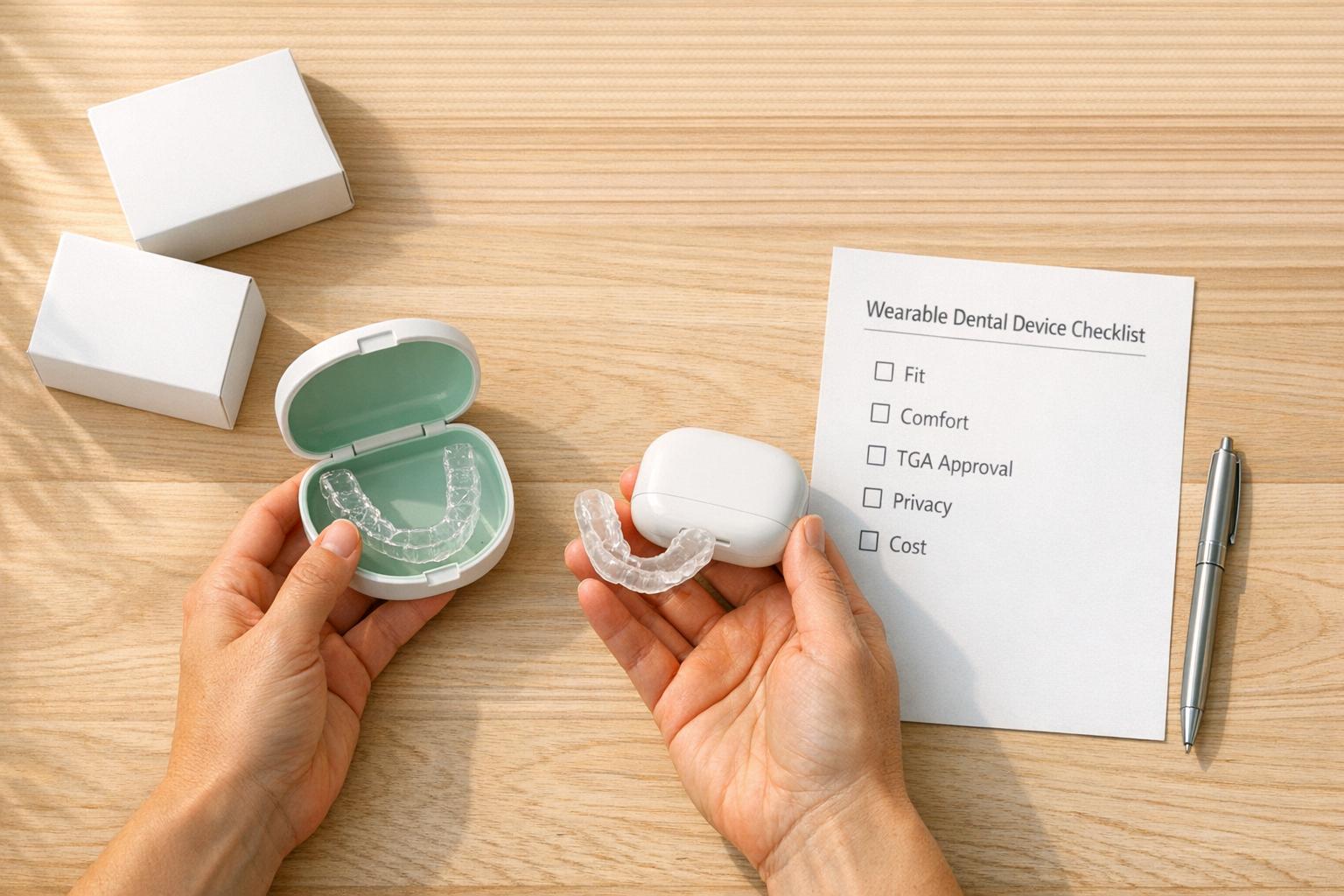
Checklist for Choosing Wearable Dental Devices
Checklist for Choosing Cloud AI Platforms in Dentistry
Complete Smiles Bella VistaAccepts All Major Health Funds, Including