





5 Essential Tips for Maintaining Porcelain Veneers
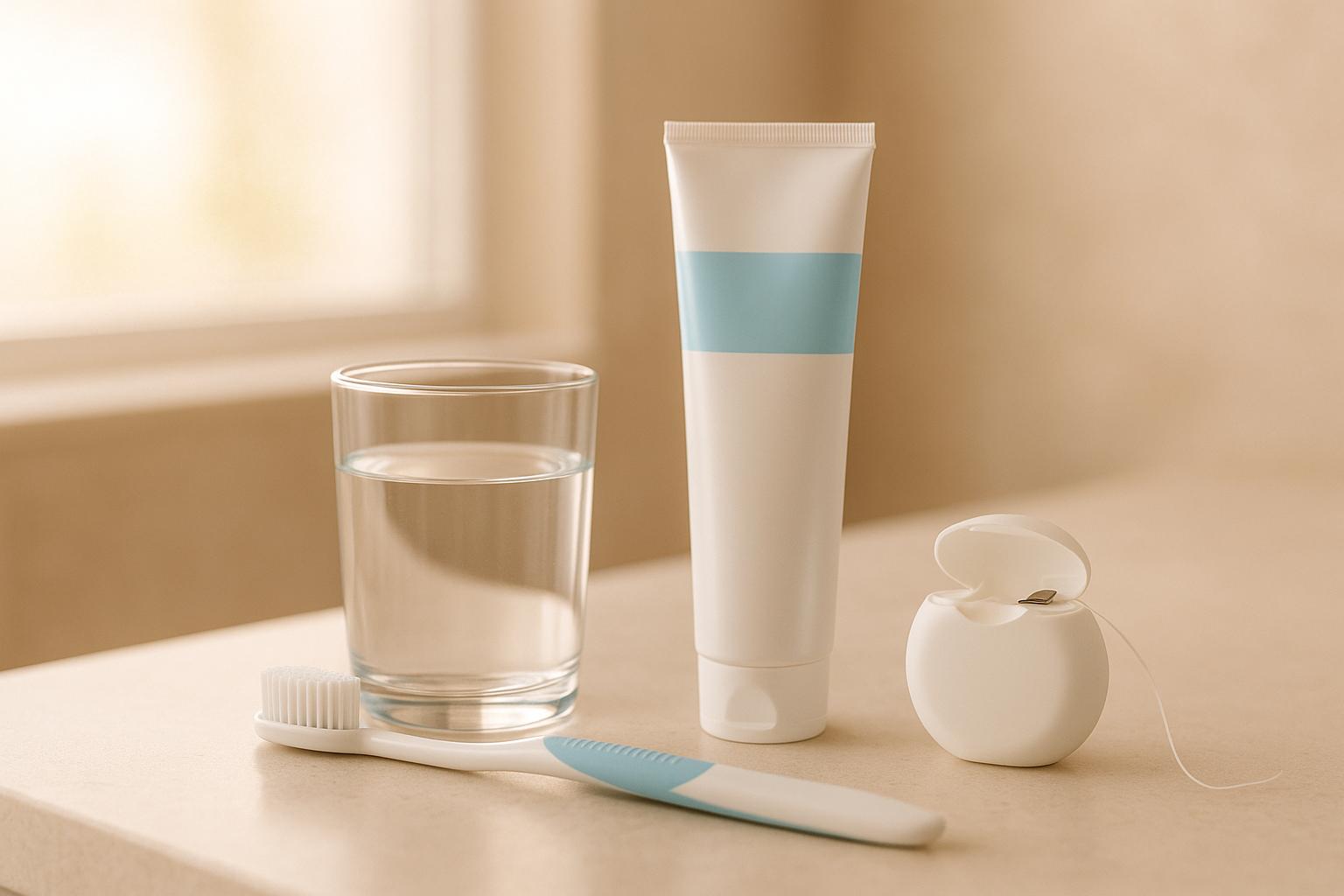
Porcelain veneers can transform your smile, but they require proper care to last 10–15 years. Here’s what you need to know:
- Clean daily: Use a soft-bristled toothbrush, non-abrasive fluoride toothpaste, and floss gently to protect veneers and natural teeth.
- Avoid damage: Stay away from hard or sticky foods, and never use your teeth as tools.
- Prevent stains: Limit dark foods and drinks like coffee, red wine, and soy sauce. Use a straw for beverages and rinse your mouth after consuming staining items.
- Protect physically: Wear a nightguard if you grind your teeth and a custom-fitted mouthguard for sports.
- Visit your dentist regularly: Schedule check-ups every six months for professional cleaning, veneer checks, and gum health monitoring.
How to Take Care of Your Porcelain Veneers | Reuben Sim
1. Daily Cleaning and Care
Taking care of your veneers and natural teeth requires a focused daily routine with the right tools. Here’s how to manage brushing, flossing, and using mouthwash effectively.
Choose the Right Toothbrush and Toothpaste
Using the correct tools is key to keeping your veneers in great shape. Opt for a soft-bristled toothbrush to avoid damaging the smooth surface of your veneers. Hard bristles can gradually wear down the protective coating, affecting their appearance [3].
For toothpaste, steer clear of abrasive options like:
- Charcoal-based formulas
- Whitening toothpaste with coarse textures
- Gritty baking soda varieties
Instead, go for a non-abrasive fluoride toothpaste to help prevent staining and protect the veneer surface [2].
Floss Every Day
Daily flossing is essential for removing debris between teeth and veneers. Use waxed or shred-resistant floss to avoid tearing. Gently curve the floss along each tooth and rinse your mouth thoroughly to clear away loosened particles [4].
Use Gentle Mouthwash
While mouthwash isn’t a must for veneer care, choosing the right type can make a difference if you decide to use one. Look for formulas suitable for cosmetic dental work.
| Mouthwash Type | Effect |
|---|---|
| Alcohol-free | Protects bonding |
| Fluoride-based | Helps prevent cavities |
| Alcohol-based | May weaken adhesive |
| Abrasive formulas | Can harm veneer surfaces |
"Non-alcoholic mouthwash is the way to go if you have veneers. This is because alcohol has the potential to damage and discolour your veneers, so it’s best to pick a mouthwash that doesn’t contain any." – Toorak Dental Studio [5]
If you choose to use mouthwash, stick to gentle options and rinse twice daily – once in the morning and again at night after brushing and flossing [6]. For the best results, consult your dentist about products suited to your veneers.
2. Foods and Habits to Watch
The foods you eat and your daily habits play a big role in keeping your veneers in top shape.
Be Mindful of Staining Foods
Certain foods and drinks can discolour veneers over time. Here are some common culprits:
| Category | Items to Limit |
|---|---|
| Beverages | Coffee, black tea, red wine, cola, dark beer |
| Fruits | Blueberries, blackberries, pomegranate |
| Sauces | Soy sauce, tomato-based sauces, curry, balsamic vinegar |
| Other | Beetroot, dark chocolate, turmeric, paprika |
To help prevent stains:
- Use a straw for dark drinks to limit contact with your veneers [8].
- Rinse your mouth with water after eating or drinking staining items [7].
- Choose lighter options for beverages and sauces when possible [7].
Avoid Hard and Sticky Foods
Hard and sticky foods can put unnecessary stress on veneers. To reduce the risk of damage, cut these foods into smaller, manageable pieces [2].
Examples of foods to approach with caution include:
- Raw carrots and apples
- Nuts and seeds
- Hard lollies
- Tough cuts of meat
- Sticky toffee or caramel
Don’t Use Your Teeth as Tools
Using your teeth for anything other than eating can damage veneers. Steer clear of these habits:
- Biting fingernails
- Opening packages or bottles with your teeth
- Chewing on pens or pencils
- Crunching ice cubes
- Holding items with your teeth
These actions can chip or loosen veneers, leading to expensive repairs [9].
3. Physical Protection Methods
Taking care of your veneers goes beyond cleaning and watching your diet. Protecting them from physical impact is just as important to keep them in great shape for longer.
Nightguards for Teeth Grinding
Grinding your teeth (also called bruxism) can lead to chips or cracks in your porcelain veneers. A well-made nightguard can help by acting as a cushion between your upper and lower teeth, lowering the risk of damage.
Here’s a quick look at the types of nightguards:
| Type | Features |
|---|---|
| Custom-fitted | Tailored to your teeth for the best fit and protection. |
| Soft | Comfortable and absorbs shock effectively. |
| Hard | Built to last, especially for heavy grinding. |
"A nightguard is one of the most effective tools for preventing veneer damage caused by teeth grinding." – Winter Park Dental [10]
To ensure your nightguard works well, make sure it fits snugly, doesn’t interfere with breathing or swallowing, and is checked during dental visits. Replace it when it shows signs of wear.
If you’re into sports, there’s another layer of protection you’ll need.
Sports Protection
Playing contact or physical sports? A custom-fitted mouthguard is a must. According to Dental Health Services Victoria (DHSV), these mouthguards offer the best protection [11].
Choose a mouthguard that fits perfectly, stays comfortable during activity, and gets checked by your dentist regularly. If you spot cracks or notice it doesn’t fit right anymore, consult your dentist to avoid further issues [12].
sbb-itb-2be92ed
4. Regular Dental Visits
Regular visits to your dentist are key to keeping your veneers in great shape and extending their lifespan. Professional care helps spot and address potential problems early on.
Professional Cleaning
Professional cleaning plays a big role in maintaining your veneers. Dentists use specialised tools to clean more thoroughly than you can at home. These cleanings may include:
| Procedure | Benefit |
|---|---|
| Deep plaque removal | Clears buildup from hard-to-reach spots |
| Professional polishing | Keeps veneers looking bright |
| Surface examination | Identifies early signs of wear |
| Gum health check | Reduces the risk of complications |
Pairing professional cleaning with a detailed examination ensures your veneers stay in top condition over the years.
Check-up Requirements
Dentists recommend visiting twice a year. A standard check-up, which costs between $160 and $310, typically includes an examination, cleaning, and fluoride treatment [13].
During these visits, your dentist will check the condition of your veneers, assess your gum health, and review the bonding. These evaluations can help catch:
| Issue | Impact |
|---|---|
| Chipping or cracking | May weaken veneer stability |
| Staining or discolouration | Reduces visual appeal |
| Weakened bonding | Could cause veneers to detach |
"We highly recommend you visit your dentist at least twice yearly for a check-up and clean to ensure proper porcelain veneer care. Your dentist can assess the condition of your veneers and advise a solution if needed." – The Dental Room [3]
With the right care and regular check-ups, porcelain veneers can last between 15 and 20 years [1]. After getting veneers, schedule your first follow-up visit a few weeks later to confirm the fit and check your gums. Then, stick to six-monthly visits to keep everything in check [13].
Regular professional attention is essential for keeping your veneers in excellent condition.
5. Long-term Care Planning
Taking care of your veneers goes beyond daily routines and regular dental visits. It’s crucial to think ahead and plan for their long-term upkeep. Understanding how long veneers last and what factors influence their durability can help you maintain them effectively.
Veneer Lifespan
Porcelain veneers generally last between 10 and 15 years, with about 95% still in good condition after a decade if properly cared for [14].
Here are some key factors that affect how long your veneers will last:
| Factor | Effect on Veneer Durability |
|---|---|
| Oral hygiene | Impacts the strength of the bond |
| Bite forces | Excessive pressure can cause damage |
| Material quality | High-quality porcelain is more durable |
| Professional maintenance | Regular dental visits help preserve veneers |
| Lifestyle choices | Diet and habits influence their condition |
You might need to replace your veneers if you notice:
- Chips or visible wear
- Gums receding, exposing the edges of veneers
- Changes in colour or appearance
- Loosening or weakening of the bonding cement
"With proper care, dental veneers can last for many years. Porcelain laminate veneers last up to a decade, while composite resin varieties commonly remain vibrant for 4-8 years – enabling beautiful teeth and renewed confidence!" – Dentistry on Coolum [15]
Smoking Effects
Lifestyle habits, like smoking, can have a big impact on how long your veneers last. While porcelain is resistant to staining, smoking can still cause several problems:
| Effect | Impact |
|---|---|
| Bonding deterioration | Weakens the adhesive holding veneers in place |
| Gum recession | Exposes the edges of veneers |
| Reduced blood flow | Affects the health of oral tissues |
| Surface discolouration | Alters the appearance of veneers |
Smoking reduces blood flow to the gums, which can weaken the foundation supporting your veneers [16]. This can lead to faster gum disease, weaker bonding agents, and higher maintenance needs.
If you’re a smoker, quitting can make a big difference. Pairing this change with proper care can help your veneers last longer and improve your oral health overall.
Conclusion: Key Care Points
Taking care of porcelain veneers involves consistent daily habits and regular dental visits. Here’s a quick overview of how to keep your veneers in top shape:
| Care Aspect | Actions to Follow |
|---|---|
| Daily Hygiene | Brush with a soft-bristled toothbrush and non-abrasive fluoride toothpaste; floss daily. |
| Protection | Use a nightguard if you grind your teeth and steer clear of hard or crunchy foods. |
| Preventive Care | Rinse with alcohol-free mouthwash and limit foods and drinks that can cause stains. |
Daily brushing with a soft-bristled brush and fluoride toothpaste helps maintain the veneers’ polish and supports overall oral health. Flossing removes debris that could harm your teeth or veneers.
Professional dental care is equally important. Scheduling check-ups every six months keeps your veneers bright and ensures any wear or damage is caught early. Avoiding staining foods and habits that put pressure on your veneers can also help them last longer.
FAQs
What’s the best way to clean porcelain veneers without causing damage?
To keep your porcelain veneers in great condition, use a soft-bristled toothbrush and a non-abrasive toothpaste to gently clean them twice daily. Avoid harsh scrubbing, as it can damage the surface of the veneers. Make sure to floss daily, being gentle around the gum line, and rinse with an alcohol-free mouthwash to protect both your veneers and your natural teeth.
Regular dental check-ups are essential to monitor the health of your veneers and surrounding teeth. Your dentist can provide personalised advice and ensure your veneers stay in top shape for years to come.
What foods and drinks should I avoid to keep my porcelain veneers in great condition?
To maintain the appearance and durability of your porcelain veneers, it’s best to avoid certain foods and drinks that can cause damage or staining. Highly pigmented beverages like coffee, tea, red wine, and cola can discolour your veneers over time, so consider drinking these in moderation or using a straw to minimise contact with your teeth.
You should also steer clear of hard or crunchy foods such as ice, nuts, and hard lollies, as biting into these can chip or crack your veneers. Additionally, sticky sweets like toffees or caramel can put unnecessary stress on your veneers and make cleaning more difficult. By being mindful of your diet, you can help ensure your veneers stay looking their best for years to come.
Why are regular dental visits important for maintaining porcelain veneers?
Regular dental check-ups are vital for keeping your porcelain veneers in top condition and ensuring their longevity. During these visits, your dentist can examine the veneers for any signs of wear, damage, or issues like plaque buildup that could impact their appearance or your oral health.
Professional cleanings during these appointments help maintain the veneers’ brightness and prevent staining. Additionally, your dentist can monitor your overall gum health, which is crucial for the long-term success of your veneers. By addressing potential problems early, you can enjoy a healthy, confident smile for years to come.
Related Blog Posts
- Invisalign vs Traditional Braces: A Complete Comparison
- Professional vs At-Home Teeth Whitening Methods
- Pre-Orthodontic Treatment Checklist: What to Know
- 5 Common Root Canal Myths Debunked
Important Notice: Any surgical or invasive procedure carries risks. Before proceeding, you should seek a second opinion from an appropriately qualified health practitioner.
Individual results may vary. The information provided in this article is for educational purposes only and does not constitute medical advice.
Checkout Related Blogs




Get in touch with us
For more information, call us now to start feeling better. Or fill the form below to make appointment
The Latest News from Complete Smiles
How to Clean Clear Plastic Retainers
Checklist for Choosing Wearable Dental Devices
Checklist for Choosing Cloud AI Platforms in Dentistry

Complete Smiles Bella VistaAccepts All Major Health Funds, Including





