





7 Ways Hydration Improves Oral Health

Drinking water is one of the simplest ways to support your oral health. Proper hydration keeps your mouth moist, boosts saliva production, and helps protect your teeth and gums from decay, disease, and discomfort. Here’s a quick breakdown of how staying hydrated benefits your oral health:
- Boosts saliva production: Saliva helps wash away food particles and acids, protecting your teeth.
- Prevents dry mouth: Dehydration can lead to xerostomia, increasing the risk of cavities and gum disease.
- Reduces tooth decay risk: Water rinses away sugars and acids while maintaining a balanced pH.
- Balances oral pH levels: Neutralises acids to prevent enamel erosion.
- Supports healthy gums: Keeps gum tissue moist and resilient.
- Reduces bad breath: Flushes out bacteria and food particles that cause odour.
- Strengthens teeth with fluoride: Fluoridated water repairs and fortifies enamel.
Key takeaway: Sip water throughout the day, opt for fluoridated tap water, and rinse your mouth after meals. These simple habits can make a big difference in maintaining a healthy smile.
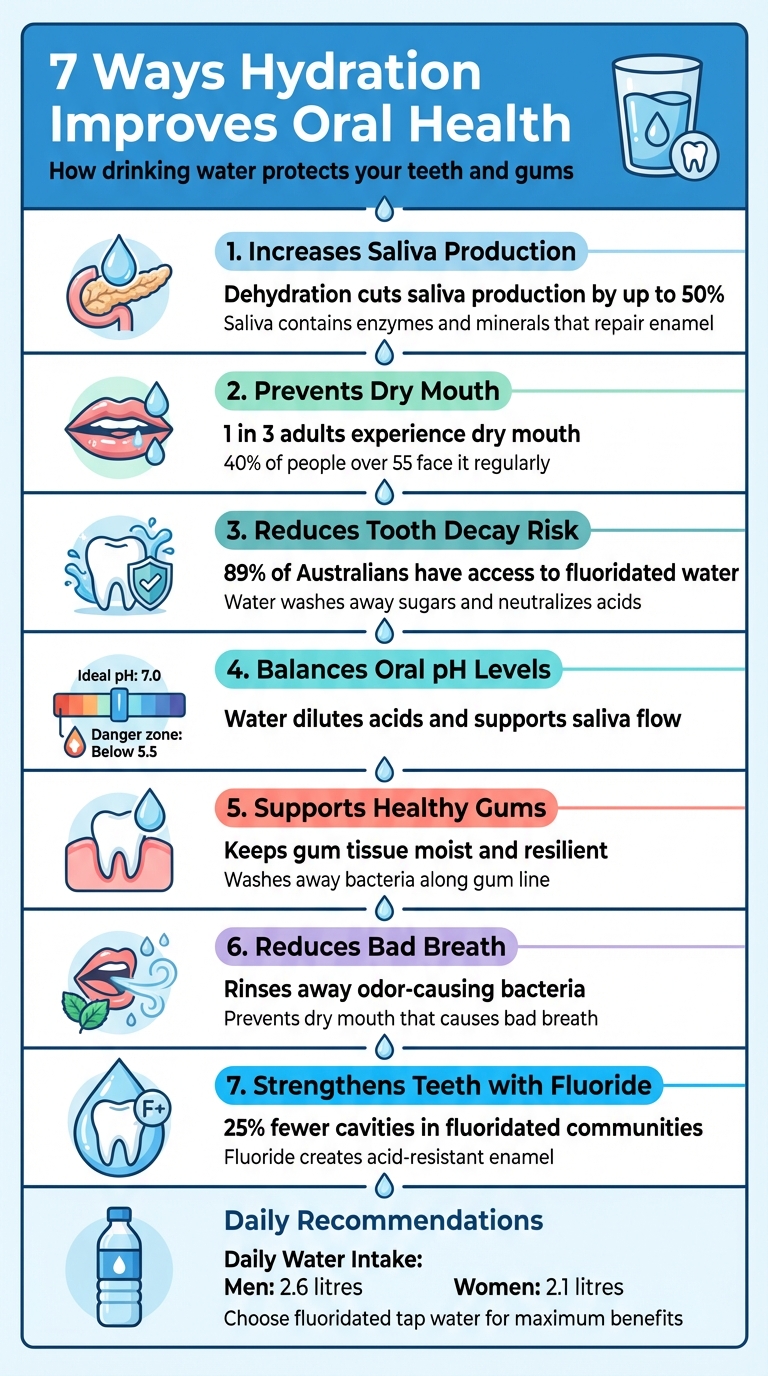
7 Ways Hydration Improves Oral Health Infographic
1. Increases Saliva Production
Your salivary glands depend on consistent hydration to generate saliva, which plays a key role in protecting your teeth and gum health [4]. When your body becomes dehydrated, it redirects water to essential organs, cutting salivary production by up to 50% [1][5]. This reduction weakens your mouth’s natural defences, as saliva contains enzymes, proteins, electrolytes, and minerals that help repair and fortify enamel [4].
To keep your saliva levels optimal, staying hydrated is essential. Thirst is a late-stage sign of dehydration, so it’s better to sip water throughout the day rather than waiting until you’re parched [2][3]. Carrying a reusable water bottle can serve as a helpful reminder. If you’re on medications that cause dry mouth – a side effect of over 500 medications [4] – upping your water intake becomes even more critical to maintaining healthy saliva production.
Boosting saliva production is just the beginning of how proper hydration supports your oral health.
sbb-itb-2be92ed
2. Prevents Dry Mouth
Dry mouth, or xerostomia, happens when your salivary glands don’t produce enough saliva to keep your mouth moist. Since saliva is mostly water, even slight dehydration can lead to a noticeable drop in saliva production [1]. This can cause symptoms like a sticky feeling in the mouth, trouble swallowing, and a burning sensation on the tongue.
Staying hydrated is key to preventing dry mouth. Adequate water intake ensures your salivary glands function properly. Research shows that one in three adults experiences dry mouth at some point in their lives [6], with about 40% of people over 55 facing it regularly. Women are particularly affected, with 27% reporting dry mouth compared to 21% of men [7]. Dr. Amanda Phoon Nguyen, an Oral Medicine Specialist, highlights the risks:
"A dry mouth is a dangerous mouth. This is because tooth decay can develop faster in a dry mouth" [6].
Without enough saliva, your risk of oral health issues like oral thrush, mouth ulcers, and gum disease increases significantly [7]. Everyday activities such as eating, speaking, and swallowing can also become more difficult.
To combat dry mouth, sip water consistently throughout the day. Aim for at least eight glasses, taking small sips rather than large gulps [7]. Keeping a water bottle handy and using a humidifier at night can help, as saliva production naturally slows while you sleep.
Certain habits can make dryness worse, so it’s best to avoid caffeine, alcohol, tobacco, and mouthwashes with alcohol [7]. Chewing gum sweetened with xylitol can also help stimulate saliva flow. If you’re taking medications like antihistamines or antidepressants, which can dry out your mouth, staying hydrated is even more crucial [1]. Proper hydration not only keeps your mouth moist but also supports your overall oral health.
3. Reduces Tooth Decay Risk
Staying hydrated does more than just prevent dry mouth – it also plays a key role in reducing the risk of tooth decay. Drinking water naturally washes away food particles and sugars that bacteria thrive on to produce enamel-damaging acids[9]. Beyond this, water helps neutralise those acids, keeping the mouth’s pH balanced and less favourable for cavity formation[2]. This simple, natural process is a powerful tool for oral health.
A dental expert highlights this benefit perfectly:
"Drinking water throughout the day acts as a gentle rinse. It clears away food debris and dilutes those harmful acids. It’s like a mini cleaning session every time you take a sip." – Gentle and Caring Dentistry
In Australia, about 89% of the population has access to fluoridated tap water[9]. This fluoridation strengthens enamel and works alongside saliva to naturally repair and protect teeth.
If brushing right after meals isn’t an option, swishing water in your mouth for 10–15 seconds can help remove debris that leads to cavities[10]. Similarly, sipping water between drinks like coffee, tea, or wine can dilute acids and pigments, reducing both enamel erosion and staining[3]. Starting and ending your day with water is also a great way to combat overnight dryness and keep your mouth refreshed.
4. Balances Oral pH Levels
The pH level in your mouth plays a key role in keeping your teeth protected from decay. Ideally, your mouth maintains a neutral pH of 7.0[12], but this balance can shift throughout the day. When you consume acidic or sugary foods and drinks, bacteria in your mouth produce acids that lower the pH. If it falls below 5.5, your enamel begins to weaken and soften[12][13]. This makes it essential to neutralise acids quickly.
Drinking water is one of the simplest ways to counteract this problem. Water works as a natural neutraliser, helping to restore a safe pH level[13]. It dilutes lingering acids on your teeth and washes away food particles that bacteria might otherwise convert into more acid. This simple step can disrupt acid production before it causes harm.
"Plain water helps dilute acids, supports saliva flow and encourages a faster return to a healthy oral pH balance." – Dr. Lekha Menon, Dentist[12]
Hydration also plays a crucial role in saliva production, which is your body’s natural defence against acid. Saliva contains minerals that buffer and neutralise acids, helping to repair enamel after an acid attack. Without enough water, saliva flow decreases, leaving teeth more vulnerable to damage.
If you’ve eaten something acidic, like citrus fruits or had a coffee, swishing water in your mouth can neutralise acids on the spot. Just remember to wait at least 30 minutes before brushing your teeth – this gives your enamel time to re-harden after being softened by the acid[12].
5. Supports Healthy Gums
Hydration doesn’t just keep your mouth comfortable – it plays a key role in protecting your gums from infection and periodontal disease. Healthy gum tissue relies on adequate moisture to stay resilient and fend off harmful bacteria. When you’re well-hydrated, your body produces enough saliva to keep your gums healthy, acting as a natural defence barrier.
Sipping water throughout the day, especially after meals, helps maintain this defence. It washes away food particles and debris along the gum line that could otherwise fuel bacteria and lead to inflammation. Plus, the moisture supports tissue repair and keeps your gums in top shape.
"Proper consumption of water also keeps gums healthy and infection-resistant." – Walsh Dental [2]
Dehydration, on the other hand, can leave your gums more susceptible to irritation and tenderness. If you notice these signs, upping your water intake can help restore the moisture your gums need to stay protected.
The fix is simple: drink water regularly, not just when you’re thirsty (thirst is already a sign of mild dehydration). After meals, swishing water around your mouth can help dislodge food particles and balance acids, helping your gums stay healthy and your breath stay fresh.
6. Reduces Bad Breath
Bad breath can make social situations awkward, and dehydration is often an overlooked culprit. A dry mouth creates the perfect conditions for bacteria to break down food particles, releasing compounds that cause unpleasant odours.
"Water kills bad breath… When your mouth lacks lubrication, bacteria grow and start breaking down food particles in the mouth and forming stinky-smelling molecules." – Walsh Dental [2]
Saliva plays a key role in keeping your mouth moist, neutralising acids, and delivering minerals that protect against decay and bad breath. Without enough hydration, your salivary glands may not work effectively, allowing odour-causing bacteria to thrive. Drinking water acts as a natural rinse, helping to wash away food debris and bacteria responsible for bad breath.
Rinsing with water after meals can help dislodge food particles and neutralise acids, especially when brushing your teeth isn’t an option [2][9]. Reducing your intake of dehydrating drinks like coffee and alcohol can also help maintain oral moisture [4][8].
While water is a powerful ally in tackling bad breath, it works best alongside oral hygiene practices. Regular brushing, flossing, and using a tongue scraper are essential for removing bacteria from areas water alone can’t reach [14]. If bad breath continues despite staying hydrated and maintaining proper oral care, it could be a sign of a deeper issue, such as gum disease, that requires a dentist’s attention [14][8].
7. Strengthens Teeth with Fluoride
Fluoridated water does more than just keep you hydrated – it actively supports your dental health by strengthening enamel. While water helps rinse away harmful acids, the fluoride in tap water plays a key role in repairing and fortifying your teeth.
Here’s how it works: fluoride combines with calcium and phosphate in your saliva to create fluorapatite. This compound is tougher and more resistant to acid, giving your enamel an extra layer of defence. Plus, regular exposure to fluoride throughout the day helps repair tiny areas of damage before they turn into full-blown cavities.
"Fluoride can halt this progression by repairing these weakened areas before they develop into cavities. This ability to reverse early demineralisation is one of fluoride’s most remarkable benefits." – Dr Stephen Wong, Complete Smile Dental [15]
The results speak for themselves. Communities with fluoridated water see 25% fewer cavities in both children and adults [11][15]. In Australia, tap water is carefully fluoridated to maintain levels between 0.6 and 1.1 mg/L – an optimal range for protecting teeth [15][9].
To make the most of these benefits, stick to tap water instead of bottled water, as many bottled options don’t contain enough fluoride. Drinking fluoridated water after meals not only helps clear away leftover food particles but also delivers fluoride directly to your enamel, keeping it strong and healthy. It’s a simple habit that pairs well with hydration’s other oral health perks [15].
Conclusion
Staying hydrated is one of the easiest and most effective ways to keep your teeth and gums healthy. By boosting saliva production, reducing dry mouth, neutralising acids, and helping enamel absorb fluoride, water plays a vital role in oral health. Every sip helps wash away bacteria, dilute harmful acids, and protect your gums and teeth.
Incorporating hydration into your routine doesn’t have to be complicated. Aim for 2.6 litres per day for men and 2.1 litres per day for women [16]. Opt for fluoridated tap water whenever possible for added dental benefits. Keep a reusable water bottle handy, rinse your mouth after meals, and sip water consistently throughout the day. You can also increase your hydration by including water-rich foods like cucumbers, watermelon, and oranges in your diet [2][9].
If you’re dealing with ongoing issues like dry mouth or bad breath despite staying hydrated, it might be time to consult a professional. Complete Smiles Bella Vista offers tailored advice to help you maintain proper hydration and protect your dental health.
FAQs
How much water should I drink for oral health?
For good oral health, women should aim to drink about 2.6 litres of water daily, while men need around 3.4 litres. Staying properly hydrated does more than just quench your thirst – it helps prevent dry mouth, promotes saliva production, and naturally rinses away food particles and bacteria from your teeth and gums. These simple yet powerful benefits are key to maintaining oral health, as emphasised by the Australian Dietary Guidelines.
Is tap water better than bottled water for teeth?
Tap water is often the better choice for your teeth because it typically contains fluoride – a mineral known for its ability to prevent cavities and strengthen tooth enamel. In contrast, bottled water often doesn’t include fluoride, meaning it offers fewer benefits for maintaining oral health.
When should I see a dentist about dry mouth or bad breath?
If you’re dealing with persistent dry mouth or bad breath, it’s a good idea to visit a dentist. These symptoms can impact your oral health and might point to deeper issues that need addressing. Catching the problem early and getting proper treatment can stop things from getting worse.
Related Blog Posts
- Diet and Hydration for Saliva Health
- Dehydration and Gum Health: What Research Says
- Ultimate Guide to Senior Nutrition for Oral Health
- 5 Ways To Prevent Tooth Decay From Snacking
Important Notice: Any surgical or invasive procedure carries risks. Before proceeding, you should seek a second opinion from an appropriately qualified health practitioner.
Individual results may vary. The information provided in this article is for educational purposes only and does not constitute medical advice.
Checkout Related Blogs




Get in touch with us
For more information, call us now to start feeling better. Or fill the form below to make appointment
The Latest News from Complete Smiles
How to Clean Clear Plastic Retainers
Checklist for Choosing Wearable Dental Devices
Checklist for Choosing Cloud AI Platforms in Dentistry

Complete Smiles Bella VistaAccepts All Major Health Funds, Including





