





5 Ways To Prevent Tooth Decay From Snacking
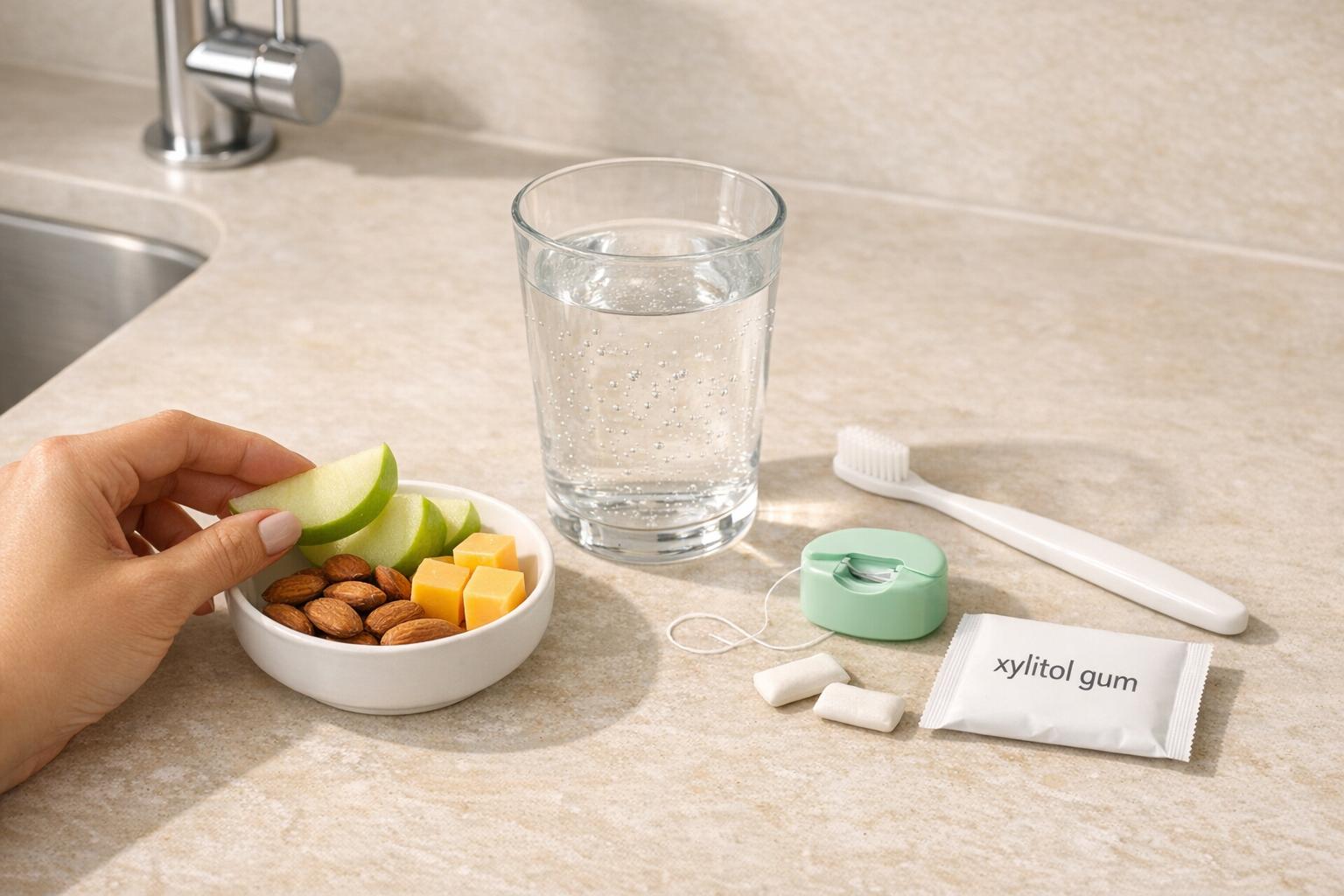
Frequent snacking can harm your teeth by exposing them to constant acid attacks, increasing the risk of tooth decay. Here’s how you can protect your enamel and maintain healthy teeth:
- Snack Less Often: Limit how frequently you eat to give your saliva time to repair enamel.
- Choose Better Snacks: Opt for crunchy vegetables, unsweetened dairy, nuts, and whole fruits instead of sugary or sticky foods.
- Drink Water: Rinse your mouth with tap water after eating to wash away food particles and neutralise acids.
- Chew Sugar-Free Gum: Use xylitol-sweetened gum to stimulate saliva and reduce harmful bacteria.
- Stick to Oral Hygiene: Brush twice daily with fluoride toothpaste, floss daily, and visit your dentist regularly.
Avoiding constant snacking, making smarter food choices, and maintaining a strong oral care routine can help prevent tooth decay. Pair these habits with regular dental check-ups for the best results.
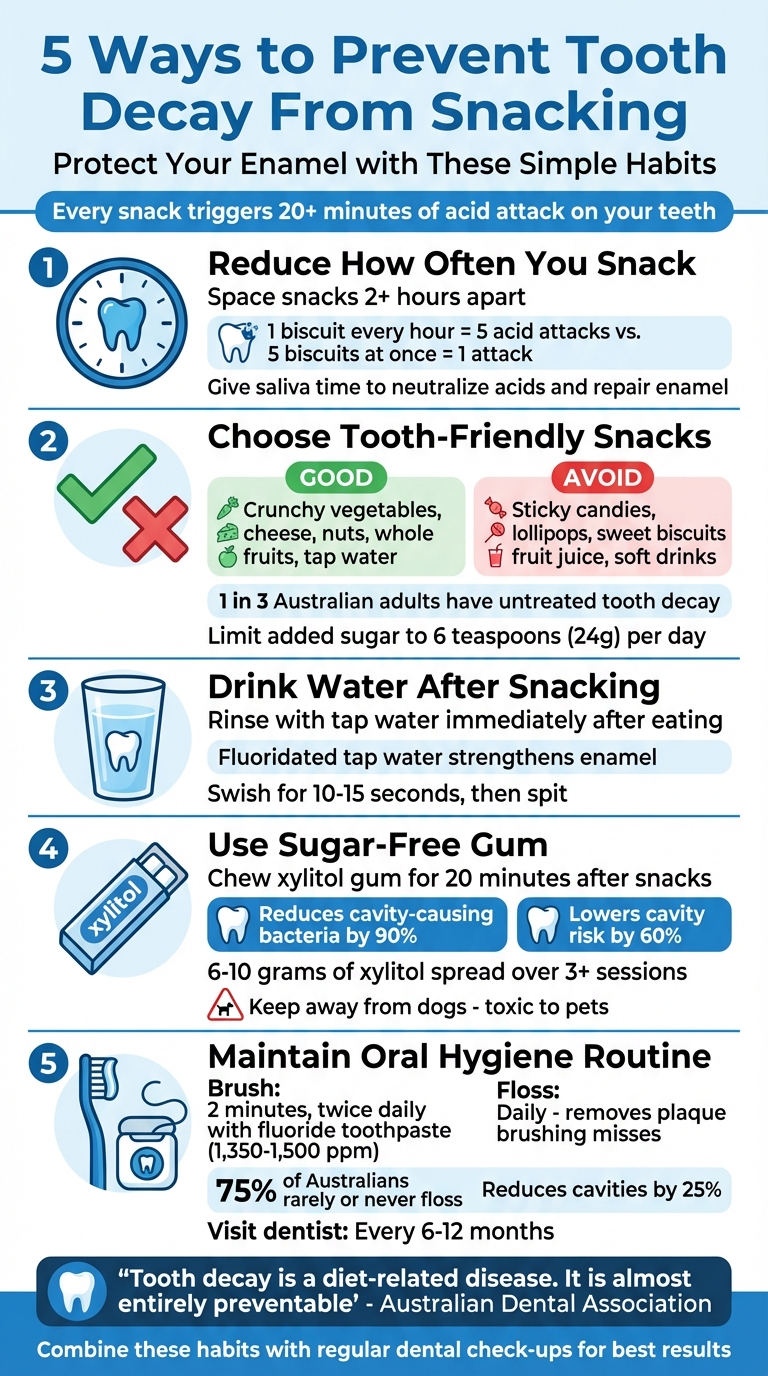
5 Ways to Prevent Tooth Decay From Snacking
Three tips to keep your child’s teeth healthy while snacking
1. Reduce How Often You Snack
Every time you eat, your mouth produces acid that attacks your enamel for at least 20 minutes before saliva steps in to repair the damage. It’s not just what you eat – it’s how often you eat it. Frequent snacking keeps your teeth under constant attack, weakening enamel over time.
Why Timing Matters
Snacking all day means your enamel doesn’t get the chance to recover. Dr. Tony Heilberg from Bayside Family Dental Practice explains:
"While it may only take just a couple of seconds for the mouth to become acidic, it takes at least 20 minutes for the pH levels to neutralize after food and beverage consumption" [6].
Here’s the kicker: how often you eat matters more than how much. For example, eating one biscuit every hour for five hours exposes your teeth to five separate acid attacks. On the other hand, eating five biscuits in one sitting only triggers one attack. The difference is huge when it comes to enamel health.
Set a Snack Schedule
To protect your teeth, try spacing out snacks by at least two hours [5]. This break gives your saliva time to neutralise acids, wash away sugars, and repair enamel.
If you’re craving something sweet, have it with a main meal instead of on its own. During meals, saliva production ramps up, offering extra protection for your teeth [2]. After snacking, rinse your mouth with tap water to clear away food particles and speed up recovery.
2. Choose Tooth-Friendly Snacks
What you snack on can either protect your teeth or contribute to decay. Dr James Fernando, a general dentist and researcher, explains it clearly: "The bacteria that use sugar for energy produce acids that dissolve our teeth, which can eventually cause a cavity in the tooth" [2]. Essentially, when bacteria feed on sugar, they create acids that erode your enamel, paving the way for cavities.
Best Snack Options
Some snacks work in your favour when it comes to oral health. Crunchy vegetables like carrots and celery are excellent choices – they boost saliva production and help clean your teeth naturally. Unsweetened dairy products, such as cheese, plain yoghurt, and milk, are also great because they provide calcium and phosphates, which strengthen enamel. For a sweet fix, opt for whole fruits like apples, pears, or berries instead of sugary juices that concentrate sugars.
Nuts are another smart pick, offering nutrition without added sugars. When it comes to drinks, tap water is your best bet – especially fluoridated water, which actively supports enamel health. Saliva plays a key role in clearing away sugars and acids, so snacks that stimulate saliva are a win [2]. Equally important is knowing which foods to steer clear of to keep acid damage at bay.
Snacks to Avoid
Certain snacks can prolong acid exposure, making them harmful to your teeth. Sticky treats like toffees, caramels, and dried fruits cling to your teeth, giving bacteria a steady supply of sugar to feed on. Similarly, lollipops and other slow-melting lollies keep your mouth under constant acid attack. Sweet biscuits, cakes, and even starchy snacks break down into sugars that can damage enamel over time.
The World Health Organisation advises limiting added sugar intake to 6 teaspoons (about 24 grams) per day to lower the risk of tooth decay [3]. With 1 in 3 Australian adults over 15 living with untreated tooth decay [4], making better snack choices is crucial – not just for your teeth, but for your overall health. Be mindful of hidden sugars in products like breakfast cereals, pre-made sauces, and flavoured yoghurts. And don’t forget that fruit juices and soft drinks, even the diet versions, expose your teeth to both sugar and enamel-eroding acids.
3. Drink Water After Snacking
Rinsing with water immediately after snacking is a simple yet effective way to protect your teeth. When brushing isn’t an option, a quick rinse helps wash away leftover food particles and sugars that feed harmful acids. Dr James Fernando, a general dentist and researcher, advises, "Drink water or plain milk to rinse out your mouth as soon as possible after having sugar" [2]. This quick step dilutes acids, reducing their impact on your enamel, and works alongside your saliva’s natural ability to neutralise those acids.
Tap water offers an added advantage. Most Australian tap water contains fluoride – a mineral that strengthens and protects your tooth enamel. The Australian Dental Association highlights this benefit, stating, "Tap water is a tooth-friendly drink. This is because it has fluoride added to help protect and strengthen teeth" [1]. Fluoride supports remineralisation, a process where essential minerals are restored to the tooth surface, helping to reverse early decay. In contrast, bottled water often lacks fluoride, making tap water the better choice for dental health.
Water also boosts your saliva’s natural defences. Saliva is rich in calcium and phosphate, which help repair weakened areas of your teeth. Drinking water enhances saliva’s ability to clean your mouth. For the best results, swish water around your mouth for 10–15 seconds after snacking and spit it out to remove food debris and bacteria. Keeping a reusable water bottle handy makes it easier to stick to this habit, whether you’re at work, school, or out and about. Just remember, avoid rinsing right after brushing to allow fluoride from your toothpaste to work its magic.
sbb-itb-2be92ed
4. Use Sugar-Free Gum
If brushing isn’t an option right after eating, sugar-free gum can come to the rescue. Chewing gum stimulates saliva production, which helps neutralise harmful acids and wash away food debris. Gum sweetened with xylitol is especially effective because oral bacteria can’t turn xylitol into enamel-damaging acids. Dr Casey Rhines, Clinical Assistant Professor at the University of Colorado School of Dental Medicine, highlights its benefits:
"Xylitol is my number one choice… because it literally cannot be broken down into acid" [8].
Studies show that xylitol can reduce acid-producing bacteria by up to 90% and lower the risk of cavities by nearly 60% when used regularly [7][8]. To get the best results, aim for 6 to 10 grams of xylitol daily, spread out over three or more chewing sessions [7][8].
For optimal acid neutralisation, chew gum for about 20 minutes after snacks [7][8]. Always check the label to ensure xylitol is the main sweetener, and go for mint-flavoured gum rather than acidic fruit options [9][10].
While sugar-free gum is helpful between meals, it’s not a substitute for brushing or flossing. It can’t clean between teeth or remove plaque as effectively. If you experience jaw discomfort or signs of TMJ (temporomandibular joint) issues, xylitol mints or lollies can be a good alternative [7][8].
Lastly, remember to keep xylitol gum out of reach of dogs – it’s highly toxic to them [8][11].
5. Maintain a Consistent Oral Hygiene Routine
While sugar-free gum and smart snacking can help protect your teeth in the short term, they’re no substitute for a solid oral hygiene routine. To keep your enamel strong and healthy, brushing and flossing should be non-negotiable. Aim to brush for two minutes, twice a day, using a soft-bristled toothbrush. Use gentle, circular motions to clean all tooth surfaces and along the gum line. Don’t forget to replace your toothbrush every three to four months – or sooner if the bristles start to fray [12][14][5].
The Importance of Fluoride Toothpaste
Fluoride is a game-changer for enamel health. It helps repair damage by encouraging remineralisation and makes enamel more resistant to future acid attacks [18][17]. Look for a toothpaste containing 1,350–1,500 ppm fluoride. For adults and kids over three, a pea-sized amount is enough, while younger children only need a smear [13][12]. After brushing, spit out the excess toothpaste but avoid rinsing with water. This allows the fluoride to stay on your teeth longer, as the Australian Dental Association advises:
"Spit out the excess toothpaste after brushing but do not rinse your mouth with water. This keeps a layer of toothpaste on the surface of the teeth and protects the teeth for longer" [1].
Research backs this up, showing that fluoride use can lower the risk of cavities by about 25% [18].
Floss Daily
Brushing alone isn’t enough to remove plaque from every nook and cranny of your teeth. That’s where flossing comes in. Dr Mayuri Hughes, a dentist, explains:
"You usually get decay between your teeth and toothbrush bristles are not fine enough to get in between the teeth to remove plaque" [16].
Flossing or using interdental brushes at least once a day is essential for cleaning those hard-to-reach spots [15][16][3]. For best results, floss before brushing to loosen debris, making it easier for your toothbrush to sweep it away [15][16]. This habit is particularly crucial for frequent snackers. Shockingly, around 75% of Australians rarely or never floss, even though brushing alone removes only about 42% of dental plaque on average [16]. If you find traditional floss tricky to use, try alternatives like interdental brushes or flossettes [15][3].
Conclusion
Protecting your teeth from decay is all about maintaining balance – minimising acid attacks while giving your teeth time to naturally repair. Simple steps like cutting back on frequent snacking, opting for tooth-friendly foods, rinsing with water, chewing sugar-free gum, and sticking to a solid oral hygiene routine can make a big difference. As the Australian Dental Association puts it:
"Tooth decay is a diet-related disease. It is almost entirely preventable" [1].
Spacing out snacks is key. It allows your saliva to neutralise acids and restore essential minerals, helping to keep demineralisation in check. Pair this with eating nutrient-rich foods instead of sugary ones, and you’re giving your enamel the best shot at staying strong and healthy.
Daily habits are important, but they work best alongside professional care. Even if you’re diligent with brushing and flossing, regular dental check-ups are crucial. Early signs of decay, like chalky white spots, often go unnoticed without professional examinations. Dentists can also provide fluoride treatments to reverse early-stage decay and prevent the need for more invasive procedures. Plus, professional cleanings help remove hardened plaque that your toothbrush can’t tackle. Aim to see your dentist every 6 to 12 months for optimal care.
For advice tailored to your needs, reach out to your local dentist. Combining mindful snacking, consistent oral hygiene, and professional check-ups sets the foundation for long-term oral health. Clinics like Complete Smiles Bella Vista offer thorough dental care, helping you take a proactive approach to keeping your smile healthy and bright.
FAQs
How can I snack without increasing my risk of tooth decay?
To keep your teeth in good shape and reduce the risk of decay, aim to stick to set mealtimes instead of snacking throughout the day. Constant grazing exposes your teeth to sugars and acids more frequently, which can lead to cavities over time.
When you do feel like snacking, go for tooth-friendly choices like cheese, nuts, or fresh veggies. Pair this with a glass of water to help rinse away any lingering food particles. And don’t forget the basics: brushing your teeth twice a day and flossing regularly are key to keeping your smile healthy, even if you indulge in the occasional snack.
What are some tooth-friendly snacks to enjoy?
Snacks that are kind to your teeth are typically low in sugar and don’t cling to the surface of your teeth, reducing the chances of tooth decay. Some great choices include fresh fruit, cheese, plain popcorn, vegetable sticks with dips like hummus, and unsalted nuts or seeds. These not only satisfy your hunger but also offer nutrients like calcium and fibre, which are essential for keeping your teeth and gums strong.
Crunchy raw veggies, such as carrots and celery, or a serving of natural yoghurt can do more than just nourish you – they also encourage saliva production. Saliva plays a crucial role in naturally rinsing your mouth and balancing harmful acids. On the flip side, try to steer clear of sugary or sticky snacks, like lollies and dried fruit. These can cling to your teeth and create a breeding ground for decay.
The key to protecting your teeth while enjoying snacks is simple: opt for whole, less processed foods and stick to good oral hygiene practices.
How does drinking tap water help protect your teeth?
Drinking tap water is an easy and practical way to boost your dental health. In Australia, the majority of tap water is fluoridated, which plays a key role in strengthening tooth enamel and guarding against cavities. Fluoride works by re-mineralising your enamel, helping to reduce the risk of tooth decay over time.
Beyond fluoride, tap water can also rinse away food particles and neutralise acids in your mouth, lessening the impact of harmful bacteria. It’s an affordable, everyday habit that pairs perfectly with regular brushing and flossing to support a healthier smile.
Related Blog Posts
- How Acidic Foods Damage Enamel
- Sugar vs. Acid: Which Harms Teeth More?
- How Diet Impacts Tooth Enamel
- How Diet Impacts Oral Health
Important Notice: Any surgical or invasive procedure carries risks. Before proceeding, you should seek a second opinion from an appropriately qualified health practitioner.
Individual results may vary. The information provided in this article is for educational purposes only and does not constitute medical advice.
Checkout Related Blogs




Get in touch with us
For more information, call us now to start feeling better. Or fill the form below to make appointment
The Latest News from Complete Smiles
How to Clean Clear Plastic Retainers
Checklist for Choosing Wearable Dental Devices
Checklist for Choosing Cloud AI Platforms in Dentistry

Complete Smiles Bella VistaAccepts All Major Health Funds, Including





