





How Diet Impacts Oral Health
Every meal and snack you choose affects your teeth and gums. Sugary and acidic foods fuel bacteria in your mouth, leading to cavities, gum disease, and enamel erosion. Frequent snacking, sticky sweets, and acidic drinks like soft drinks or fruit juices worsen the damage. On the flip side, foods rich in calcium, fibre, and vitamins, such as dairy, nuts, crunchy vegetables, and wholegrains, help protect and strengthen your teeth.
Key points to remember:
- Limit sugary and acidic foods/drinks: These harm enamel and promote decay.
- Choose tooth-friendly foods: Dairy, nuts, fibrous fruits, vegetables, and wholegrains support oral health.
- Timing matters: Stick to three meals daily and avoid constant snacking to reduce acid attacks.
- Stay hydrated: Drink fluoridated water to rinse away food particles and neutralise acids.
- Pair diet with oral hygiene: Brush twice daily with fluoride toothpaste, floss daily, and visit your dentist regularly.
Small changes, like swapping sugary snacks for healthier options, can significantly improve your oral health when combined with good dental care.
1 How Nutrition Affects Oral Health
How Diet Affects Oral Health
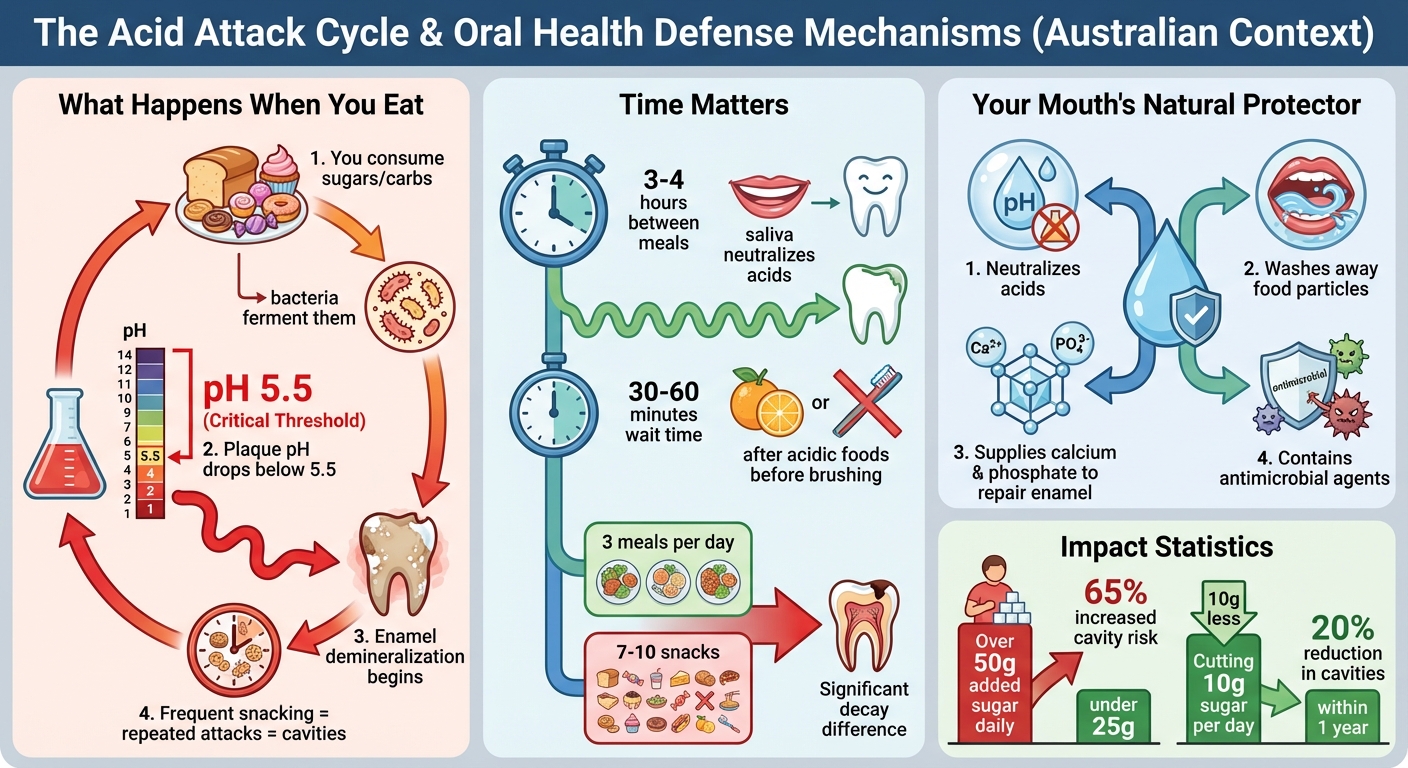
How Diet Affects Your Teeth: The Acid Attack Cycle and Protection Timeline
The connection between what we eat and the health of our teeth and gums boils down to three main factors: how sugars and acids interact with our teeth, the protective role of saliva, and the nutrients that keep oral tissues strong and resilient.
Sugars and Acids
When you consume sugars or refined carbohydrates, bacteria like Streptococcus mutans in dental plaque ferment them into acids. These acids lower plaque pH, and once it drops below 5.5, enamel starts losing minerals through a process called demineralisation [3][4][6]. If you snack frequently, the recovery time between acid attacks is reduced, leading to repeated demineralisation and eventually cavities [3][5].
Texture also matters. Sticky sweets, biscuits, and refined starchy foods like crisps or soft white bread cling to teeth, prolonging acid exposure. On the other hand, consuming sugars only during main meals – when saliva flow is naturally higher and other foods help clear debris – reduces the risk [5]. Frequency is critical: three balanced meals a day is far kinder to your teeth than constant snacking, as every eating session triggers a fresh acid attack [5].
Acidic foods and drinks, such as soft drinks, fruit juices, flavoured waters, and wine, can directly erode enamel without the need for bacteria [3][4]. The way you consume these also plays a role – slowly sipping, swishing drinks around your mouth, or brushing your teeth immediately after drinking acidic beverages can increase enamel damage. Signs of erosion include sensitivity to hot or cold, yellowish teeth from exposed dentine, rounded edges, and chipping [3][4]. This highlights the importance of your mouth’s natural defence system: saliva.
The Role of Saliva
While acids threaten enamel, saliva is your mouth’s natural protector. It neutralises acids, washes away food particles, supplies minerals like calcium and phosphate to repair enamel, and contains antimicrobial agents to control bacterial growth [3]. After eating, saliva helps restore plaque pH to a neutral level, shortening the time your teeth are under acid attack [3].
Certain nutrients play a role in maintaining healthy saliva. For instance, vitamin A supports the production of mucin glycoproteins, which form a protective barrier in the mouth [3]. Diets rich in fibrous fruits, vegetables, and wholegrains require more chewing, which stimulates saliva production. This extra saliva not only buffers acids but also helps clean teeth mechanically [3][5]. Sugar-free chewing gum, especially those sweetened with xylitol, can also boost saliva flow while reducing cavity risk by inhibiting S. mutans [3].
However, dehydration, excessive consumption of salty or caffeinated drinks instead of water, and poor nutrition can reduce saliva production, leaving teeth more vulnerable to cavities and erosion [2][3]. Additionally, certain medications can cause dry mouth, making tailored dietary advice particularly important for those affected [2].
Nutrients That Support Oral Health
Beyond saliva, specific nutrients strengthen your teeth and gums. Calcium is vital for maintaining tooth and jawbone density, and insufficient intake is linked to periodontal disease and tooth loss [1][3]. Dairy products like milk, yoghurt, and cheese (which also has cavity-fighting properties) are excellent sources, as are calcium-fortified plant milks [3]. Phosphorus, another key player in tooth and bone health, is found in foods like dairy, meat, fish, eggs, nuts, seeds, and legumes [3].
Vitamin D is essential for calcium and phosphorus absorption, supporting the density of the alveolar bone that anchors your teeth. In Australia, sunlight is a primary source, with dietary contributions from oily fish and fortified products. Meanwhile, vitamin C aids collagen production and has antioxidant properties. A lack of it can impair gum repair and increase the risk of periodontal disease. Citrus fruits, berries, capsicum, tomatoes, and leafy greens are great sources [1][3].
Fibre from fruits, vegetables, and wholegrains not only promotes chewing and saliva production but also helps clean teeth mechanically. Diets rich in fibre are linked to better overall nutrition, which is associated with fewer oral health problems [1][3]. Studies in older adults show that poor diet quality – characterised by low intake of nutrient-dense foods and high consumption of processed or saturated-fat-rich foods – leads to more tooth loss, poorer self-rated oral health, and an accumulation of oral issues over time [1]. This highlights that maintaining oral health is about adopting a balanced, nutrient-rich diet, not just cutting back on sugar.
Foods and Drinks to Limit
Understanding how diet impacts enamel is key to making better choices for your teeth. Let’s break down which foods and drinks are worth limiting to protect your smile.
Sugary Foods and Refined Carbohydrates
Sugary snacks like lollies, biscuits, cakes, pastries, sweetened cereals, and muesli bars are some of the biggest contributors to tooth decay. Refined starches – think white bread, chips, crackers, and savoury biscuits – quickly convert into sugars, which fuel acid production in your mouth. Research has shown that eating over 50 g of added sugar daily increases cavity risk by 65% compared to keeping sugar intake below 25 g [7].
Sticky foods, such as toffees, caramels, chewy lollies, fruit straps, and dried fruits, are especially problematic. They cling to your teeth, giving harmful bacteria more time to produce acid. Hard lollies are another concern – they dissolve slowly, keeping sugar in your saliva for longer and extending the acid attack. Interestingly, eating a large amount of sugar in one go may be less damaging than frequent snacking [7].
Sugary and Acidic Drinks
Drinks like soft drinks, energy drinks, sports drinks, iced teas, cordials, and many fruit drinks are a double threat. Their high sugar content feeds bacteria, while their acidity directly erodes enamel. Even drinks often considered healthy – like 100% fruit juices, lemon water, kombucha, and apple cider vinegar tonics – contain acids that can weaken enamel over time.
The way you consume these beverages also matters. Sipping slowly throughout the day keeps your mouth in an acidic state, extending the damage. Instead, try having these drinks occasionally with meals, when saliva flow is naturally higher, to reduce their impact.
How to Reduce Harmful Foods
Small changes in how and when you eat can make a big difference. Save sugary and refined snacks for mealtimes, pair them with foods that stimulate saliva, and choose less sticky options. Swapping refined carbohydrates for wholegrain alternatives can also support your overall health.
When it comes to drinks, make plain fluoridated tap water your go-to throughout the day. Using a straw can help minimise contact with your teeth, and rinsing with water immediately after sugary or acidic drinks can dilute harmful substances. Studies show that even a simple rinse can significantly reduce enamel damage [7]. If you’ve had something acidic, wait 30–60 minutes before brushing to avoid damaging softened enamel. Cutting just 10 g of added sugar per day – about 2.5 teaspoons – has been linked to a 20% reduction in cavity rates within a year [7].
Tooth-Friendly Foods to Include
Now that we’ve covered what to cut back on, let’s dive into foods that actively promote oral health. These options are packed with essential minerals, vitamins, and fibre that strengthen teeth and gums, helping to offset the damage caused by sugars and acids.
Foods Rich in Minerals
Dairy products like milk, cheese, and yoghurt are standout choices. They’re loaded with calcium, phosphorus, and casein, which help rebuild enamel and neutralise plaque acids by delivering minerals directly to your teeth after meals [3]. Incorporate these into your day with a glass of milk at breakfast, a slice of cheese on wholegrain crackers at lunch, or a bowl of plain yoghurt topped with nuts as a snack. Pairing these foods with good oral hygiene can make a noticeable difference in dental health.
If you’re avoiding dairy, calcium-fortified plant milks (like soy or almond milk) are excellent alternatives. Choose unsweetened versions with at least 300 mg of calcium per cup to avoid added sugars that can harm your teeth [2][3].
Nuts and seeds are another powerhouse for oral health. Almonds, chia seeds, sesame seeds (including tahini), and pumpkin seeds are rich in calcium, phosphorus, magnesium, and healthy fats that support teeth and gums [3]. A small handful of unsalted nuts makes a satisfying snack, or try sprinkling seeds over yoghurt, salads, or porridge for an extra boost.
Fibre-rich foods also play a vital role by stimulating saliva production, as we’ll explore next.
High-Fibre Fruits, Vegetables, and Wholegrains
Crunchy fruits and vegetables – like apples, pears, carrots, celery, and capsicum – are fantastic for oral health. They stimulate saliva flow, which helps neutralise acids and wash away food particles. Plus, their fibre provides a gentle scrubbing action for your teeth [3][4]. Leafy greens such as spinach, kale, and silverbeet are also excellent, offering calcium, folate, and vitamin C to support gum health and the surrounding bone structure [3].
When it comes to carbohydrates, wholegrains are the smarter pick over refined options. Foods like wholemeal bread, rolled oats, brown rice, and wholegrain breakfast cereals (think Weet-Bix) are higher in fibre and nutrients. They also digest more slowly, producing fewer fermentable sugars for oral bacteria to feast on [3]. Simple swaps – like using wholegrain bread for sandwiches or serving brown rice at dinner – can benefit both your teeth and overall health.
Healthy Snack Options
Snacking can be tooth-friendly if you make the right choices. Options like cheese with wholegrain crispbreads, veggie sticks with hummus, unsalted nuts, or yoghurt with oats are easy to find at any Australian supermarket [3][5]. Pairing fresh fruit with a source of protein – like apple slices with cheese or a banana with peanut butter – can also curb hunger while being kind to your teeth. These snacks are far better for your smile than sugary biscuits, lollies, or sweetened yoghurts.
sbb-itb-2be92ed
Planning Meals for Better Oral Health
Building a Balanced Meal
Creating meals that are kind to your teeth doesn’t have to be tricky. Following the Australian Guide to Healthy Eating is a great starting point: aim for half your plate to be filled with vegetables and legumes, one quarter with wholegrain or high-fibre cereals, and the remaining quarter with lean protein. Add a side of dairy or calcium-rich alternatives, and stick to water as your main drink [3][6].
For example, a balanced dinner might include grilled salmon, a generous portion of mixed roasted vegetables, a small serving of brown rice or quinoa, and plain yoghurt for dessert. This combination not only delivers the calcium and phosphorus needed to fortify enamel but also includes fibre to promote saliva production – all while keeping free sugars in check.
This thoughtful structure naturally supports better meal timing.
Meal Timing and Eating Habits
Every time you eat fermentable carbohydrates, plaque bacteria produce acids that weaken your enamel. Allowing 3–4 hours between meals – and cutting back on snacking – gives your saliva a chance to neutralise these acids and help repair your teeth [6][7]. The Oral Health Foundation recommends sticking to three main meals per day instead of grazing on 7–10 snacks, as each eating occasion triggers an acid attack [5].
In fact, a five-year study tracking 2,500 individuals found that those who ate fewer, well-defined meals with breaks had significantly less tooth decay compared to frequent snackers [7].
Drinking fluoridated tap water during and between meals can rinse away food particles and dilute harmful acids [5][6]. Save sugary and acidic foods for mealtimes, where saliva and other foods can help buffer their effects [6][7]. Wrapping up a meal with tooth-friendly choices like a small piece of cheese, plain milk, or sugar-free gum can further neutralise acids and protect your enamel [3][5].
These habits work hand in hand with your regular oral care routine.
Combining Diet with Oral Hygiene
Pairing smart dietary choices with proper oral hygiene is the ultimate way to keep your enamel strong. Brush your teeth twice daily with fluoride toothpaste to counteract the effects of dietary sugars and acids [5][6]. Use floss or interdental brushes every day to remove plaque and food debris from between your teeth, where fermentable carbohydrates often linger [3][6].
If you’ve consumed something acidic, wait 30–60 minutes before brushing to avoid further enamel damage [7][6][5]. Rinsing your mouth with water after meals can also help wash away sugars and restore a neutral pH before your next brushing session. Make these steps part of your daily routine – like brushing after breakfast and before bed – so they become second nature.
Working with Dental Professionals
Making smart diet choices and maintaining good oral hygiene are important, but regular check-ins with dental professionals add an extra layer of protection for your oral health.
When to Seek Professional Advice
Even with the best oral care routine, there are moments when professional guidance becomes crucial. If you notice recurring cavities, your teeth looking thinner, more yellow, or translucent at the edges, or if you experience ongoing sensitivity to hot, cold, or sweet foods, it’s time to book a visit to your dentist. Persistent gum inflammation, frequent bleeding, or chronic bad breath might also signal that your diet is impacting your oral health.
Certain medical conditions, like dry mouth, diabetes, acid reflux, or eating disorders, can increase your risk of dental issues. If any of these apply to you, seeking tailored advice early can make a big difference. Your dentist can assess your dietary habits and medical background using caries risk assessment tools to develop a plan that suits you. They might suggest practical changes, like swapping sugary snacks for healthier options such as cheese or nuts, and, if needed, refer you to dietitians or other medical specialists for more complex dietary concerns.
Complete Care Approach
Professional dental care goes hand in hand with your own efforts at home, offering strategies that are tailored to your specific needs. Many Australian dental clinics now embrace a more comprehensive approach to care. For instance, Complete Smiles Bella Vista incorporates dietary advice into regular check-ups and treatment plans. They’ll discuss how consuming sugary drinks, refined carbs, or acidic foods may contribute to problems like tooth decay or enamel erosion. From there, they combine dietary suggestions with preventive treatments like fluoride applications, fissure sealants, or gum therapy.
This integrated approach aligns with the standards set by AHPRA and the Dental Board of Australia, ensuring that all dietary advice is based on evidence, carefully documented, and customised for your individual circumstances.
Conclusion
Making smart dietary choices – like cutting back on sugars and acids while opting for tooth-friendly options such as dairy, wholegrains, nuts, and crunchy vegetables – can do wonders for both your oral health and overall wellbeing. Giving your meals some breathing room helps saliva naturally neutralise acids, lowering the risk of decay. These habits work hand-in-hand with your daily brushing and flossing routine.
To keep your oral health in top shape, combine a balanced diet with twice-daily fluoride brushing, daily interdental cleaning, and regular dental check-ups. Even the most diligent brushing and flossing can fall short if your teeth are constantly exposed to sugars and acids. A well-rounded approach is your best defence.
Professional advice can take your oral care to the next level. Your dentist can evaluate your diet, medical history, and oral health to create a personalised plan. This could include treatments like fluoride applications or sealants to further protect your teeth. Clinics like Complete Smiles Bella Vista provide comprehensive care, blending dietary advice with preventive and restorative treatments to help you align your eating habits with long-term oral health goals.
FAQs
How does snacking often impact my teeth?
Frequent snacking can leave your teeth vulnerable to sugars and acids all day long, raising the chances of tooth decay and enamel erosion. Why? Every time you eat, the bacteria in your mouth create acids that weaken your tooth enamel over time.
To keep your teeth in good shape, cut back on snacking between meals when possible. When you do snack, go for tooth-friendly options like fresh veggies, cheese, or nuts – these are much gentler on your teeth than sugary or acidic treats.
What foods can help boost saliva production for better oral health?
Eating foods rich in water, like fresh fruits and veggies – think apples, carrots, and celery – can give your saliva production a natural boost. Chewing sugar-free gum is another handy trick, as the chewing motion gets your salivary glands working. Citrus fruits, with their natural acids, can also help increase saliva flow. Just be mindful not to overdo it, as too much acidity can wear down your enamel over time.
What should I do to protect my teeth after drinking acidic beverages?
After having acidic drinks, rinse your mouth with water to help remove lingering acids. Hold off on brushing your teeth immediately afterward, as this can harm the softened enamel. Instead, wait at least 30 minutes before brushing. Using a fluoride mouthwash can also be a good idea – it helps strengthen enamel and provides extra protection for your teeth.
Related Blog Posts
- Best Foods for Healthy Teeth: Dentist Recommendations
- How Acidic Foods Damage Enamel
- Sugar vs. Acid: Which Harms Teeth More?
- How Diet Impacts Tooth Enamel
Important Notice: Any surgical or invasive procedure carries risks. Before proceeding, you should seek a second opinion from an appropriately qualified health practitioner.
Individual results may vary. The information provided in this article is for educational purposes only and does not constitute medical advice.
Checkout Related Blogs




Get in touch with us
For more information, call us now to start feeling better. Or fill the form below to make appointment
The Latest News from Complete Smiles
How to Clean Clear Plastic Retainers
Checklist for Choosing Wearable Dental Devices
Checklist for Choosing Cloud AI Platforms in Dentistry

Complete Smiles Bella VistaAccepts All Major Health Funds, Including





