





Ultimate Guide to Retainer Hygiene While Travelling
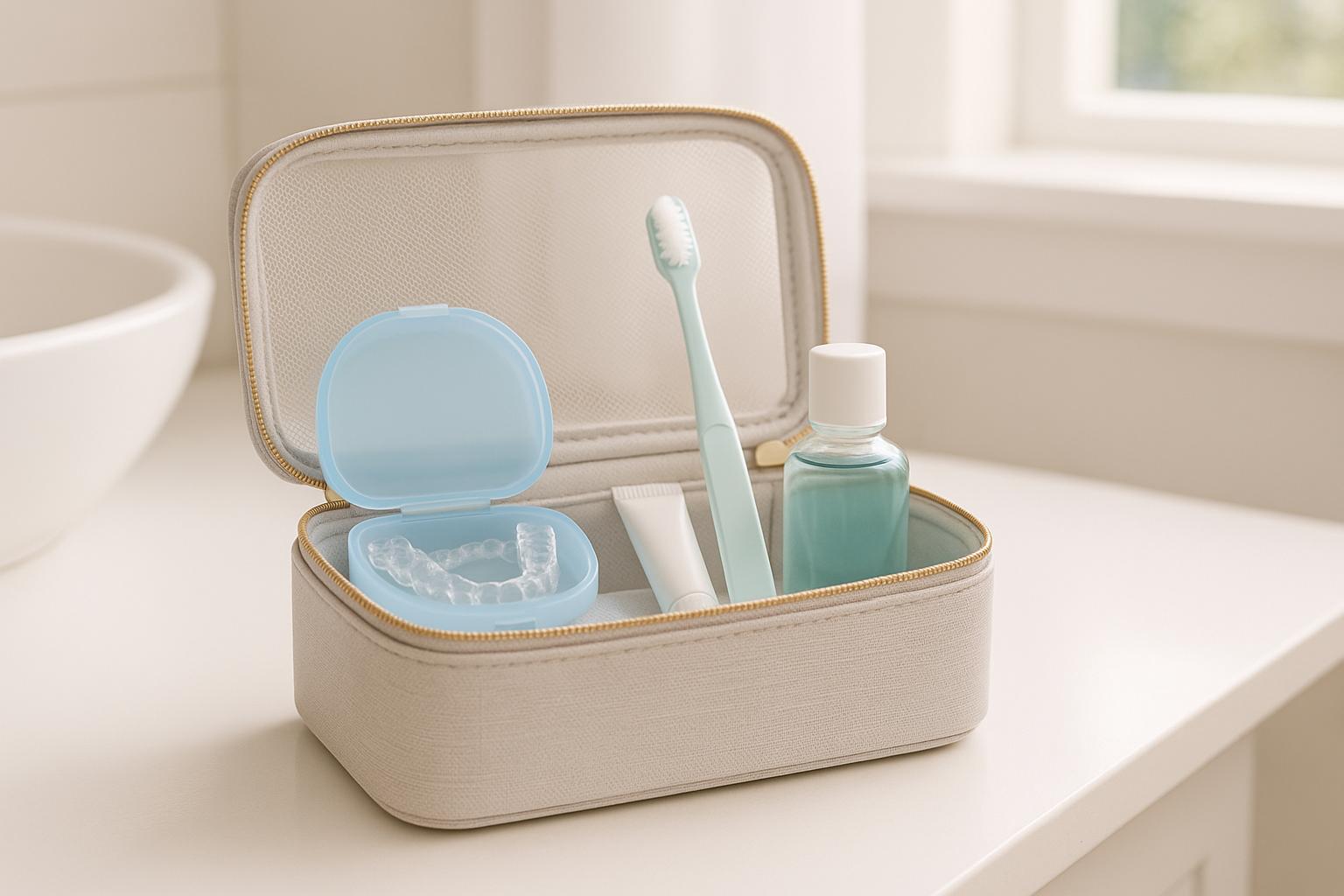
Travelling can make it harder to stick to your usual retainer care routine, but keeping your retainer clean and safe is essential for maintaining your orthodontic progress. Here’s what you need to know:
- Why Care Matters: Neglecting your retainer can lead to bacteria buildup, infections, bad breath, and even damage to your teeth or gums. Travel conditions like extreme temperatures and limited resources can also affect your retainer’s condition.
- Travel Challenges: Limited access to cleaning supplies, irregular schedules, and exposure to extreme heat or cold can complicate retainer care.
- Essentials to Pack: A durable retainer case, soft-bristled toothbrush, mild soap, retainer cleaning tablets, and dental floss. Consider extras like travel-sized mouthwash, dental wipes, and a compact mirror.
- Daily Tips: Rinse your retainer with lukewarm water after meals, clean it daily with mild soap, and avoid hot water or harsh chemicals. Always store it in a ventilated case.
- Quick Fixes: Use retainer cleaning wipes or bottled water for emergencies, and keep a backup retainer and case handy. For international travel, ensure your cleaning products meet TSA and local regulations.
Quick Comparison of Cleaning Methods:
| Cleaning Method | Effectiveness | Travel Convenience | Cost (AUD) | Time Required |
|---|---|---|---|---|
| Effervescent Tablets | 99.9% bacteria removal | High | $24–36 | 15–20 mins |
| UV Sanitisers | Kills 99.9% bacteria | Very High | $100+ | 10 mins |
| Ultrasonic Cleaners | Deep cleaning | Low | $100+ | 5 mins |
| Cleaning Sprays | 99.9% bacteria removal | Very High | $30–38 | 60 seconds |
| Manual Brushing (Soap) | Surface debris removal | High | <$10 | 2–3 mins |
Are There Special Retainer Cases For Travel? – The Pro Dentist
Must-Have Tools for Retainer Care on the Go
Travelling with a retainer doesn’t have to be a hassle. With a compact and efficient care kit, you can handle limited supplies and unpredictable conditions with ease. The key is packing smartly and ensuring your essentials are both practical and lightweight. Here’s how to prepare and store your retainer care items while on the move.
Packing a Travel-Friendly Retainer Care Kit
Start with a durable retainer case to shield your retainer from damage.
"Always store your retainers in a retainer box. This keeps them safe and clean." – makeO blog [1]
Add a travel-sized, soft-bristled toothbrush, which is gentle enough to avoid scratching your retainer. Pair this with a small tube of mild soap or a retainer-friendly toothpaste, as regular toothpaste can be too abrasive.
For cleaning on the go, retainer cleaning tablets are a game-changer. Just dissolve one in water, soak your retainer, and rinse – it’s simple and effective.
Also include dental floss or interdental brushes to clear debris from around your teeth. If you have room, a small bottle of travel-sized mouthwash can provide quick refreshment.
For added convenience, consider extras like:
- A folding cup for rinsing
- Dental picks
- A compact mirror
- Breath strips
- An aligner remover tool for tricky moments when your hands are wet or cold
Dental wipes are another great choice. They’re compact, don’t count as liquids for airport security, and offer a quick way to clean your retainer when you’re in a pinch.
Tips for Safe Storage During Travel
Your retainer case should do more than just hold your retainer – it should protect it properly. Look for one with ventilation holes to reduce moisture and discourage bacterial growth.
In February 2025, Dr. Pravin Shetty, known for his work in lingual orthodontics, highlighted the benefits of makeO toothsi oral care products, recommending their retainer boxes as an ideal travel solution [1].
It’s also wise to pack a spare case. If your primary case gets lost or damaged, you’ll have a backup ready.
To avoid damage from extreme temperatures, keep your retainer in your carry-on bag rather than checked luggage. This is especially important in Australia, where weather conditions can vary significantly.
Complying with Travel Regulations
Air travel comes with its own set of rules, so plan your retainer care kit accordingly. Ensure all liquids, such as toothpaste, mouthwash, or cleaning solutions, are in containers of 100ml or less to comply with TSA’s 3-1-1 rule.
If you can’t find travel-sized versions, decant your products into small, approved bottles available at most pharmacies.
Retainer cleaning wipes are particularly handy for flights since they’re not classified as liquids. An empty water bottle is another smart addition – fill it after passing through security, as airplane lavatory water isn’t safe for cleaning retainers.
Always pack your retainer care items in your carry-on bag to keep them accessible and safe. While TSA officers have the final say on what’s permitted, it’s a good idea to check the latest guidelines on tsa.gov before flying.
For international travel, research the rules for your destination, as some countries may have restrictions on specific cleaning products or oral care items. By preparing a travel-friendly kit that meets these requirements, you’ll be set to maintain your retainer hygiene wherever you go.
Daily Retainer Hygiene Practices While Travelling
Keeping your retainer clean while travelling doesn’t have to be complicated. With a few tweaks to your usual routine, you can ensure your retainer stays fresh and hygienic no matter where you are. The trick is to make the best use of the resources at hand.
Cleaning Retainers with Limited Resources
When you’re away from home, you don’t necessarily need fancy cleaning products to maintain your retainer. Lukewarm water and mild, unscented soap can do the job just as well.
Start by rinsing your retainer with lukewarm water as soon as you take it out. This quick step helps wash away saliva and any loose debris before they harden. Using a soft-bristled toothbrush reserved only for your retainer, apply a small amount of mild soap and gently scrub all surfaces, paying close attention to grooves where plaque might hide.
Make sure to rinse thoroughly to remove all soap residue – no one wants an unpleasant taste or irritation. If you’ve packed retainer cleaning tablets, dissolve one in a cup of lukewarm water and soak your retainer for the recommended time. This method is especially useful when you’re staying in a hotel with limited counter space.
"Antibacterial soap and water is a safe, easy, and cost-effective way to keep your clear appliances clean. Just be sure to rinse well." – Dr. Zientz [2]
If cleaning supplies are scarce, even a simple rinse and gentle scrub with lukewarm water can help maintain your retainer until you have access to better cleaning options.
Dos and Don’ts for Retainer Cleaning
To keep your retainer in great shape, follow these tips:
- Clean your retainer daily with a soft toothbrush and mild soap or a specialised cleaning solution.
- Rinse your retainer with lukewarm water after every meal to remove food particles.
- Always store your retainer in its protective case when not in use.
- Stick to lukewarm water for cleaning; if the water feels too hot for your hand, it’s too hot for your retainer, especially in warmer climates.
Avoid these common mistakes:
- Never use hot water – it can warp the plastic and ruin the fit of your retainer.
- Skip regular toothpaste, as its abrasive particles can scratch the surface and create spots for bacteria to grow.
- Don’t wrap your retainer in tissues or napkins; it’s an easy way to lose or accidentally throw it away.
- Stay away from harsh chemicals, bleach, or alcohol-based products, as they can damage the retainer and irritate your mouth.
Maintaining Oral Hygiene Alongside Retainer Care
Your retainer routine works best when paired with strong oral hygiene habits:
- Brush and floss regularly, ideally after every meal, before putting your retainer back in place.
- Carry a travel-sized toothbrush and toothpaste to stick to your routine while on the go.
- If brushing isn’t an option, rinse your mouth with water to clear out food particles.
- Keep a small, alcohol-free mouthwash handy for a quick refresh and extra bacterial control.
- Stay hydrated – dry mouth can encourage bacteria growth, which affects both your oral health and the cleanliness of your retainer.
sbb-itb-2be92ed
Troubleshooting Retainer Issues While Travelling
Travelling can come with unexpected challenges, and dealing with retainer mishaps is no exception. Whether you’ve misplaced your retainer at a café in Melbourne or damaged it during a camping trip in the Outback, knowing how to handle these situations can help you stay on track with your orthodontic care.
What to Do If You Lose or Break Your Retainer
If your retainer goes missing, start by retracing your steps. Common places to check include dining tables, hotel bathrooms, rental cars, or anywhere you might have taken it out for eating or cleaning.
Get in touch with your orthodontist as soon as possible. Most dental practices are prepared to assist with emergencies, even if you’re travelling internationally. If you have a backup retainer, use it until you can arrange a replacement.
For a broken retainer, resist the urge to fix it yourself using household adhesives like superglue or tape. These can be harmful to your teeth and gums. Instead, reach out to a professional for advice. In the meantime, use a backup retainer if you have one.
Hygiene Tips for Challenging Locations
Travelling can sometimes make it tricky to maintain your usual cleaning routine, especially in remote areas or during long flights. Here’s how to adapt:
- During flights: Use bottled water to rinse your retainer in the aircraft lavatory. Keep it in its case when eating, and consider bringing pre-moistened dental wipes for quick cleaning during long-haul trips.
- Camping or remote areas: If water quality is questionable, boiled (and cooled) water or bottled water works well for cleaning. Packing lightweight cleaning tablets is also a smart choice – they’re effective and don’t require refrigeration.
- Hard water areas: If mineral deposits build up on your retainer, a simple solution of equal parts white vinegar and water can help. Let it soak briefly, then rinse thoroughly with clean water.
- Dusty or sandy environments: Rinse your retainer more frequently to prevent particles from scratching its surface and creating spaces where bacteria can thrive.
Disinfecting Retainers After Illness
If you’ve been unwell, disinfecting your retainer is crucial to remove lingering bacteria or viruses.
Soak your retainer in a hydrogen peroxide solution (safe for oral use) for 10 minutes, or gently brush it with a baking soda paste. Be sure to rinse thoroughly afterward. If hydrogen peroxide isn’t available, an alcohol-free antibacterial mouthwash can work in a pinch – just limit soaking time to 2–3 minutes to avoid damaging the material.
"Retainers can accumulate bacteria, plaque, and food particles, which can lead to bad breath and even infections if not properly cleaned." – Walton & Maready Orthodontics [3]
Rinsing with water alone won’t eliminate harmful bacteria, so taking the time to disinfect is essential. Proper care ensures your retainer stays safe to use and helps you avoid setbacks in your orthodontic treatment.
Comparing Retainer Cleaning Methods and Products
When you’re travelling, keeping your retainer clean can be a bit of a challenge. But with a variety of cleaning methods available, it’s easier to find one that fits your travel style, resources, and budget. Here’s a breakdown of popular cleaning options to help you decide.
Comparison Table of Cleaning Methods
| Cleaning Method | Effectiveness | Travel Convenience | Price (AUD) | Time Required |
|---|---|---|---|---|
| Effervescent Tablets | Removes 99.9% of bacteria | High – lightweight, portable | $24–36 | 15–20 minutes |
| UV Sanitisers | Kills 99.9% of bacteria | Very High – compact, no liquids | $100+ | 10 minutes |
| Ultrasonic Cleaners | Deep cleaning with sound waves | Low – requires power source | $100+ | 5 minutes |
| Cleaning Sprays | Eliminates 99.9% of bacteria | Very High – instant application | $30–38 | 60 seconds |
| Manual Brushing with Soap | Removes surface debris effectively | High – basic supplies needed | Under $10 | 2–3 minutes |
| Natural Solutions | Results may vary | Medium – requires preparation | Under $5 | 10–15 minutes |
Effervescent tablets, such as Retainer Brite, are a practical choice for travellers. These tablets remove 99.9% of bacteria with a simple 15-minute soak. At about $24 for a 120-tablet pack, they’re cost-effective, lightweight, and individually wrapped, making them travel-friendly. However, some formulations contain persulfates, which can cause allergic reactions in sensitive users.
"We most commonly recommend Retainer Brite for daily use. It is an effervescent product made by a leading dental manufacturer that is inexpensive and safe on the material over time. Soak for a few minutes and then remove any debris with a brush and rinse."
- Dr. Mitch Zientz, Wellspring Dental [2]
UV sanitisers are a great option for frequent travellers who prefer a chemical-free solution. These compact, battery-powered devices kill 99.9% of bacteria in just 10 minutes. They’re especially handy in situations where liquid-based cleaners aren’t practical. However, while they sanitise effectively, they may not remove stains as thoroughly as other methods.
"I recommend the DentaDenta as a great additional accessory for cleaning your retainer when travelling. Although I don’t think it’s as good as the traditional tablets or ultrasonic baths for regular use, it offers a hygienic way to clean your retainer whilst you’re out, or unable to soak them."
- Dr Ambika Amini, Dentist [4]
Ultrasonic cleaners, like the Zima Dental Pod, use high-frequency sound waves to deliver a deep clean in just 5 minutes. While they’re effective, they require a power source and are bulkier, making them best suited for travellers with access to reliable accommodation.
Cleaning sprays, such as Movemints™ Smile Saver Spray, are all about convenience. They eliminate 99.9% of odour-causing bacteria in just 60 seconds, no rinsing needed. Their compact size makes them perfect for carry-on luggage and quick touch-ups throughout the day.
Choosing the Right Method for Your Travel Plans
Your travel plans will often dictate the best cleaning method:
- Business travellers staying in hotels with consistent power and water supplies might find ultrasonic cleaners ideal. Their quick 5-minute cleaning cycle fits well into busy schedules.
- Adventure travellers heading to remote areas should prioritise portability. Effervescent tablets work well here, as they don’t need electricity and are effective even when water quality is questionable. Packing them in a waterproof container with a leak-proof soaking cup adds extra convenience.
- International travellers need to consider airline restrictions and local availability of cleaning products. UV sanitisers are a smart choice since they don’t involve liquids and work regardless of water quality.
- Budget-conscious travellers can try natural solutions like baking soda or white vinegar. These options cost under $5 but require a little more effort and preparation.
For many, combining methods can offer the best results. For example, you could use effervescent tablets for a thorough clean and a cleaning spray for quick refreshes during the day. The trick is to adapt your cleaning routine to your travel circumstances, rather than trying to replicate your home setup.
Protecting Your Retainers and Oral Health While Travelling
Recap of Best Practices
Caring for your retainer while travelling doesn’t have to be complicated – it just takes a little planning. Make sure to pack the essentials: a soft-bristled toothbrush, mild non-abrasive soap, and cleaning tablets. These items will help you keep your retainer clean no matter where you are. Whether you prefer using cleaning tablets, UV sanitisers, or simply brushing by hand, sticking to a consistent routine is key. Aim to clean your retainer twice a day and store it in a sturdy, ventilated case to keep it safe and hygienic.
To further protect your retainer, establish travel-friendly habits. Stay hydrated to minimise bacterial growth and avoid sticky or hard foods that could damage your retainer. Even on a packed schedule, take a moment after meals to clean your retainer – it makes a world of difference. For longer trips, it’s wise to bring a backup retainer just in case, and always keep your retainer away from extreme temperatures to prevent warping or damage. These straightforward steps not only simplify your travels but also ensure your orthodontic progress stays on track.
Final Thoughts on Retainer Care
Your retainer is a key part of maintaining the results of your orthodontic treatment, and it deserves consistent care – even when you’re on the go. While travel disruptions are temporary, neglecting your retainer routine can lead to long-term issues like bacterial buildup, infections, and even damage to your teeth and gums.
FAQs
What should I do if my retainer is exposed to extreme temperatures while travelling?
If your retainer has been exposed to extreme temperatures – whether heat or cold – don’t use it right away. Instead, rinse it gently with cool or lukewarm water and check its shape. If it appears bent or doesn’t fit properly, stop wearing it and reach out to your orthodontist for guidance or a replacement.
To keep your retainer safe, always store it in a durable protective case. Avoid leaving it in hot places like a parked car or under direct sunlight, as this can cause warping. These simple steps can help ensure your retainer stays in good condition, even while you’re on the go.
How can I keep my retainer clean while travelling to places with limited water or cleaning supplies?
Keeping your retainer clean while travelling, even in areas with limited water or cleaning supplies, is entirely doable with a few practical tips. If water is hard to come by, rinse your mouth with any clean water you can find to clear away debris from the retainer. Another handy trick is to wrap the retainer in a damp paper towel to keep it from drying out until you’re able to clean it properly.
When you do have access to water, use a soft-bristled toothbrush with a little non-whitening toothpaste to gently clean the retainer. For a more natural alternative, mix baking soda and water into a paste and use that for cleaning. If denture cleaner is on hand, soaking the retainer for about 15–20 minutes can be effective – just make sure to rinse it thoroughly afterward to remove any leftover residue.
Keeping your retainer moist is key to preventing brittleness, and regular cleaning ensures it stays hygienic while you’re on the move.
Are there any rules for bringing retainer cleaning products on a plane while travelling?
When travelling with retainer cleaning products, make sure any liquid solutions in your carry-on are in containers of 100 mL or less. These need to fit into a single clear, resealable plastic bag, usually with a capacity of no more than 1 litre. If you’re packing these items in checked luggage, check with your airline for any specific rules. Since regulations can differ, it’s wise to double-check your airline’s policies before your trip.
Related Blog Posts
- Invisalign vs Traditional Braces: A Complete Comparison
- 5 Essential Tips for Maintaining Porcelain Veneers
- Pre-Orthodontic Treatment Checklist: What to Know
- 5 Steps of Professional Dental Cleaning
Important Notice: Any surgical or invasive procedure carries risks. Before proceeding, you should seek a second opinion from an appropriately qualified health practitioner.
Individual results may vary. The information provided in this article is for educational purposes only and does not constitute medical advice.
Checkout Related Blogs




Get in touch with us
For more information, call us now to start feeling better. Or fill the form below to make appointment
The Latest News from Complete Smiles
How to Clean Clear Plastic Retainers
Checklist for Choosing Wearable Dental Devices
Checklist for Choosing Cloud AI Platforms in Dentistry

Complete Smiles Bella VistaAccepts All Major Health Funds, Including





