





Types of Removable Dentures Explained
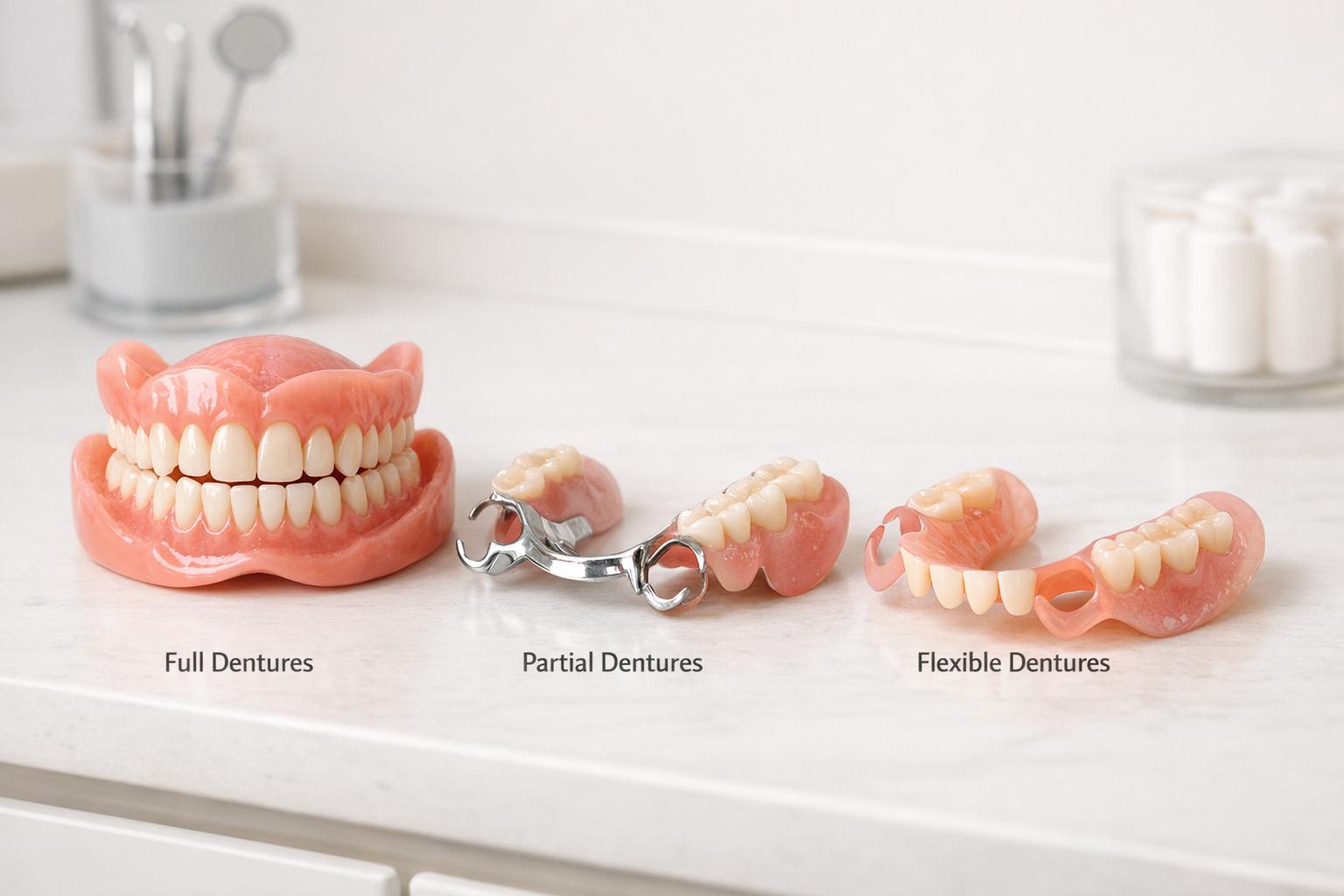
Removable dentures are a practical solution for replacing missing teeth, helping with chewing, speech, and facial structure. They come in three main types – full, partial, and flexible – each designed for specific needs. Here’s a quick breakdown:
- Full Dentures: Replace all teeth in the upper or lower jaw. They use suction or adhesives to stay in place and are available as conventional (post-healing) or immediate (post-extraction) options. Cost: $500–$5,000 per arch.
- Partial Dentures: Replace some missing teeth and prevent remaining teeth from shifting. Options include durable metal frameworks or more affordable acrylic-based designs. Cost: $700–$1,000 per arch.
- Flexible Dentures: Made from lightweight thermoplastic materials, these are more comfortable and natural-looking, with gum-coloured clasps instead of metal.
Materials Used: Dentures are made from acrylic resin (lightweight and affordable), porcelain (natural look but heavier), or metal frameworks (strong and less bulky). Modern materials like flexible nylon or high-density PMMA offer enhanced comfort and durability.
Care Tips: Clean dentures daily with a soft brush and avoid hot water to prevent warping. Remove them at night and store in water or a mild solution. Dentures typically last 5–10 years but may require relining every 1–2 years as your gums and jawbone change.
Removable dentures offer cost-effective, non-surgical options for tooth replacement, with various designs and materials to suit individual needs.
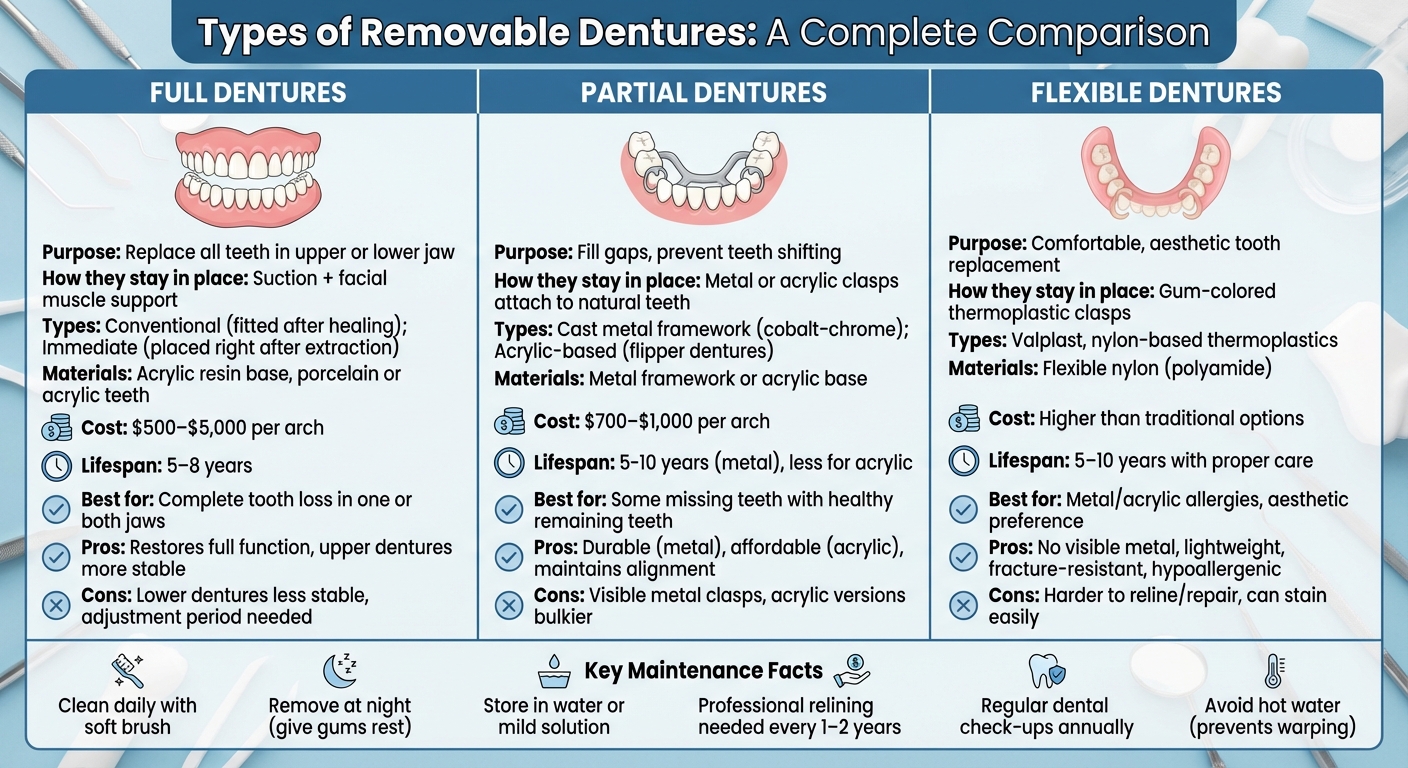
Types of Removable Dentures Comparison Chart
Different Types of Dentures: Which is Right for Your Mouth? Full, Partial, Immediate & More
Types of Removable Dentures
Choosing the right dentures depends on factors like the extent of tooth loss, your budget, and lifestyle. The three main types – full, partial, and flexible – each cater to specific needs and use different materials to achieve their purpose. Here’s a closer look at each type to help you make an informed decision.
Full Dentures
Full dentures are designed to replace all the teeth in either your upper or lower jaw. The upper denture covers the roof of your mouth (palate) to create suction, while the lower denture is shaped like a horseshoe to leave space for your tongue [3]. These dentures stay in place with suction and the support of your facial muscles [7].
There are two kinds of full dentures:
- Conventional dentures are fitted several months after tooth extraction, allowing time for the gums to heal and ensuring stability [2][3].
- Immediate dentures are placed immediately after tooth extraction. However, they often require adjustments or relining later as the jawbone and gums shift during healing [2][1][3].
Upper full dentures tend to be more stable than lower ones because the larger surface area of the palate provides better suction [7]. On average, full dentures need replacing every 5 to 8 years due to wear and changes in gum shape [2].
Partial Dentures
Partial dentures are ideal for filling gaps left by missing teeth. They help maintain chewing function and prevent your remaining teeth from shifting out of place [2][9].
- Cast metal framework partials are made from cobalt-chrome, offering strength and durability [2][9]. Their thinner design reduces coverage of soft tissue, improving taste and temperature sensation [9]. However, the metal clasps that anchor them to your natural teeth may be visible when you smile [2].
- Acrylic-based partials, sometimes called flipper dentures, are a more affordable option, often used as a temporary solution while waiting for a permanent replacement [9]. These cost between $700 and $1,000 per arch in Australia [2], but they are bulkier and less durable than metal alternatives.
Flexible Dentures
Flexible dentures are crafted from thermoplastic materials like nylon (polyamide). Instead of metal clasps, they use gum-coloured extensions that adapt to the contours of your gums and teeth [8]. This design offers a more natural appearance, free from visible metal.
These dentures are highly resistant to fractures and provide excellent comfort, as the material moulds to your gums [8][9]. They are a great choice for patients with allergies to metal or acrylic monomers [8][9]. Their lightweight construction also means they require less time to adjust to and tend to cause fewer sore spots [8].
However, flexible dentures come with some challenges. They are harder to reline or repair compared to traditional acrylic options [8][9] and can stain more easily if not cleaned thoroughly, especially from coffee, tea, or tobacco [8]. Some newer designs combine a sturdy metal framework with flexible, gum-coloured clasps to offer both strength and aesthetic appeal [8].
Each type of denture has its own strengths and limitations, making it important to weigh your personal needs and preferences when deciding.
Materials Used in Removable Dentures
The materials used in dentures play a key role in how comfortable they feel, how long they last, and how natural they look. Knowing the differences between acrylic, porcelain, metal, and newer flexible materials can help you make an informed choice that aligns with your needs.
Acrylic Resin
Acrylic resin is a popular choice for denture bases and teeth because it’s lightweight, budget-friendly, and easy for dentists to adjust or repair [2]. However, acrylic dentures generally need replacing every 5 to 8 years due to wear and natural changes in the jawbone [2]. They also require extra thickness for strength, which can make them feel bulkier and may reduce your ability to sense taste and temperature.
"Acrylic dentures are often called ‘gum strippers’ by dentists because they put all chewing force on the soft gums. This can lead to sore spots on the gums and faster bone loss." – Paul Millist, Dentist [10]
Porcelain and Metal Frameworks
Porcelain teeth are known for their natural appearance, closely mimicking the translucency and colour of real enamel. They’re also highly resistant to wear [2]. On the downside, porcelain is heavier than acrylic and prone to chipping if dropped [2].
Cobalt-chrome metal frameworks are commonly used in partial dentures for their strength and thinner design, which reduces bulk compared to acrylic [2][9]. This thinner structure means less coverage of the gums and palate, improving your ability to taste and feel temperature while eating [9]. These frameworks typically last 5 to 10 years, though the visible metal clasps can sometimes detract from their appearance [11][2].
Modern Denture Materials
Flexible nylon materials like Valplast represent a newer approach to denture design. These thermoplastics are hypoallergenic and free of monomers, making them a good option for people with sensitivities to traditional acrylic [2][11]. Flexible materials mould to the gums, offering superior comfort, and use gum-coloured clasps instead of visible metal ones for a more natural look [10].
"Flexible partials like Valplast use tooth-coloured nylon clasps that blend with the gums, enhancing aesthetics." – Paul Millist, Dentist [10]
High-density PMMA (polymethyl methacrylate) is another modern material, often used in digital dentures. It provides better fit and durability compared to traditional acrylic [2]. Some newer designs combine a cobalt-chrome base with thermoplastic materials, offering the strength of metal with the aesthetic appeal of flexible dentures [11]. While these hybrid options are more expensive, they deliver improved functionality and appearance.
Choosing the right material depends on your priorities – whether it’s cost, comfort, durability, or aesthetics. Your dentist can guide you in selecting the best option for your specific needs.
sbb-itb-2be92ed
Care and Maintenance for Removable Dentures
Taking proper care of your dentures not only helps them function well but also extends their lifespan. With the right maintenance, most dentures can last between 5 and 10 years before needing replacement [7].
Daily Cleaning Routine
Cleaning your dentures twice a day and rinsing them after meals is essential to remove food debris [1][12]. When handling your dentures, always do so over a folded towel or a water-filled basin. This precaution helps prevent damage if they are accidentally dropped [3].
To clean your dentures, use a specialised denture brush to scrub all surfaces. Avoid regular toothpaste as it can be too abrasive, potentially creating tiny scratches where bacteria can accumulate [1][12][13]. Instead, opt for mild soap, dishwashing liquid, or a non-abrasive denture cleaner. Also, steer clear of hot water, which can warp the plastic base [3].
"Brushing your dentures daily will remove food deposits and plaque, helping to prevent them from becoming stained." – Colgate [3]
It’s important to remove your dentures at night to give your gums a break and lower the risk of infections [1][7]. When not in use, store them in plain water or a mild denture-soaking solution to preserve their shape [12][13]. Even if you wear full dentures, gently brushing your gums, tongue, and palate with a soft toothbrush each day can improve circulation and remove plaque [7][3].
In addition to daily care, regular dental check-ups are essential to ensure your dentures fit well and your oral health is in good condition.
Professional Adjustments and Relining
Make it a point to visit your dentist annually to assess your dentures and overall oral health [14][15][18]. Over time, natural bone resorption can alter the fit of your dentures, making professional relining a necessary step. As your jawbone gradually changes, loose-fitting dentures can become a problem [16][17]. Dentists typically recommend relining every 1 to 2 years to maintain a proper fit [14][15].
There are two main types of relines:
- Soft relines: These use a cushioning polymer, making them ideal for those with sensitive gums. They generally last up to 18 months [15].
- Hard relines: Made with durable acrylic, these can last for two or more years [15].
If you notice your dentures feeling loose, causing soreness, or affecting your speech, see your dentist promptly. Avoid DIY adjustments or using household glues, as these can harm your oral health [1][19][3].
Even with proper adjustments, new denture wearers often face an initial adjustment period.
Common Problems and Solutions
For those new to dentures, the first few weeks can bring challenges such as increased saliva flow, mild irritation, and a feeling of bulkiness as the facial muscles adapt [1][3]. Speech difficulties are also common initially but can improve with practice, like reading aloud [19].
Eating may also take some getting used to. Start with soft foods cut into small pieces, and chew evenly on both sides to distribute pressure [19]. Denture adhesives, available in creams or strips, can improve stability and minimise food particles getting trapped underneath. Just make sure to clean off any adhesive residue daily [12][6].
If you experience bleeding gums, swelling, ulcers, or notice any cracks in your dentures, consult your dentist immediately. Repairs should always be handled by a professional – attempting to fix them yourself could cause more harm [19][3].
Conclusion
Removable dentures provide practical solutions for those dealing with tooth loss. Whether it’s full dentures to replace an entire arch, partial dentures to fill in gaps between natural teeth, or flexible dentures for added comfort and a metal-free alternative, each type serves a specific purpose. Full dentures help restore the structure of your mouth, partial dentures maintain proper alignment, and flexible options prioritise comfort. The choice of material further shapes these benefits.
The materials used in dentures play a key role in their durability and appearance. For instance, acrylic is lightweight and budget-friendly, while porcelain and metal frameworks offer strength and a more natural look. Meanwhile, thermoplastic nylon provides a discreet and comfortable option. Regardless of the material, proper care is essential to maximise their functionality and lifespan.
To keep your dentures in good shape, regular cleaning, careful handling, and removing them at night are essential. With these practices, dentures typically remain functional for around 5 to 7 years.
Professional dental care is equally important. Routine check-ups ensure your dentures fit correctly and allow for adjustments like relining, which is usually needed every 1 to 2 years. These visits also help monitor your overall oral health. Considering nearly 50% of Australians aged 65 and older wear dentures, professional guidance is vital to maintain both comfort and oral health[3][4][5].
FAQs
What are the advantages of flexible dentures compared to traditional ones?
Flexible dentures are crafted from soft thermoplastic materials, which mould to the shape of your gums. This gives them a more comfortable and natural fit compared to traditional rigid dentures. Their lightweight nature also eases pressure on the gums, allowing for extended wear without discomfort.
A key advantage of flexible dentures is their discreet look. The gum-coloured base blends seamlessly with your natural gums, making them less noticeable. Plus, they’re an excellent choice for individuals with metal allergies, as they don’t rely on metal clasps. Their flexibility also makes them easier to insert and remove, which is especially helpful for those with limited hand dexterity.
Combining comfort, visual appeal, and ease of use, flexible dentures have become a popular alternative to conventional options.
How often should I have my dentures relined to ensure they fit properly?
Dentures generally require relining every 2 to 3 years to keep them fitting comfortably and securely. That said, this timeframe isn’t set in stone – it can vary based on individual factors like changes in your gums or jawbone. For some, a reline might be necessary every 2 to 4 years, depending on their specific circumstances.
Routine dental check-ups play a key role in ensuring your dentures fit well and function as they should. If you experience discomfort, looseness, or irritation, it’s worth consulting your dentist sooner rather than later. These issues could indicate that your dentures need a reline.
What’s the difference between acrylic and porcelain dentures?
The main distinction between acrylic and porcelain dentures lies in the materials used for the artificial teeth and how they function.
Acrylic dentures are crafted from a lightweight resin, which makes them more flexible and generally more comfortable to wear. They’re also easier to adjust during relining and are less likely to chip or crack under pressure. However, one drawback is that they tend to stain more easily over time.
Porcelain dentures, in contrast, are made from a hard ceramic material that closely resembles natural teeth, offering a shiny, enamel-like finish. They are better at resisting stains but are more fragile, meaning they can chip or crack if dropped. Additionally, porcelain transfers more pressure to natural teeth, potentially causing wear over time.
People often choose acrylic dentures for their comfort and cost-effectiveness, while porcelain dentures are favoured for their realistic appearance and resistance to staining.
Related Blog Posts
- Denture Costs in Australia: 2025 Guide
- Pros and Cons of Dental Bridges and Dentures
- Denture Fitting Process: Step-by-Step Guide
- How to Clean Removable Dentures Daily
Important Notice: Any surgical or invasive procedure carries risks. Before proceeding, you should seek a second opinion from an appropriately qualified health practitioner.
Individual results may vary. The information provided in this article is for educational purposes only and does not constitute medical advice.
Checkout Related Blogs




Get in touch with us
For more information, call us now to start feeling better. Or fill the form below to make appointment
The Latest News from Complete Smiles
How to Clean Clear Plastic Retainers
Checklist for Choosing Wearable Dental Devices
Checklist for Choosing Cloud AI Platforms in Dentistry

Complete Smiles Bella VistaAccepts All Major Health Funds, Including





